Danggui Alcohol A: Natural Coumarin from Traditional Danggui to Modern Pharmacological Research
Introduction/Overview
Natural products have always been an important source of drug discovery, particularly exhibiting unique chemical diversity and biological activity in fields such as anti-inflammatory, analgesic, and immune regulation. Angelica sinensis(Angelica sinensis (Oliv.) Diels), As one of the most commonly used blood tonifying and blood activating herbs in traditional Chinese medicine, it has a clinical application history of thousands of years. Modern pharmacological research has revealed that Angelica sinensis contains various active ingredients, including volatile oils, organic acids, polysaccharides, and coumarin compounds. Among them, coumarin components have attracted much attention due to their significant anti-inflammatory, antioxidant, and neuroprotective activities.
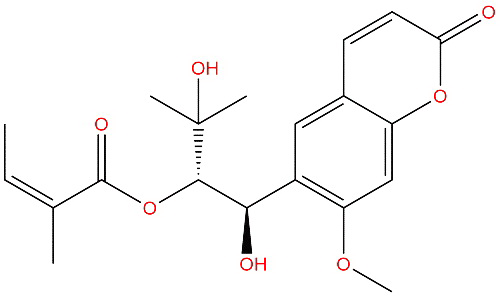
Angelol A (CAS number: 19625-17-3) is a linear furan coumarin compound isolated from the roots of Angelica sinensis, belonging to the complex family of coumarins. Since its first isolation and identification from Angelica sinensis, Angelica sinensis alcohol A has gradually become a hot molecule in natural product chemistry and pharmacology research. In recent years, with the deepening understanding of the pathogenesis of inflammation related diseases, the anti-inflammatory activity and molecular mechanism of Angelica sinensis alcohol A have been systematically elucidated. Research has shown that this compound can exert multi-target anti-inflammatory effects by regulating multiple inflammatory signaling pathways, including IL-6/STAT3, NF - κ B, and NLRP3 inflammasomes. In addition, its unique physicochemical properties and excellent pharmacological characteristics make it have the potential to become a lead compound or candidate drug.
This article will provide a systematic review of the research progress of Angelica sinensis alcohol A from multiple dimensions, including chemical structure, plant origin, pharmacological activity, molecular mechanism, pharmacological evaluation, and clinical application prospects. The aim is to provide comprehensive academic references for the in-depth development and utilization of this compound.
Chemical structure and physicochemical properties
The chemical structure of Angelica sinensis alcohol A belongs to linear furanocoumarin derivatives, and its parent nucleus structure is formed by linear condensation of coumarin (benzo [a] - pyranone) and furan ring. Specifically, its structural feature is that the 6,7 positions of the coumarin parent nucleus are fused with the furan ring, and there are substituents such as hydroxyl and isopentenyl groups at specific positions of the coumarin skeleton. This structure endows Angelica sinensis alcohol A with unique chemical properties and biological activity.
From the molecular formula, the molecular formula of Angelica sinensis alcohol A is C ₂₀ H ₂₄ O ₇, with a molecular weight of 376.4050 g/mol. This molecular weight is within the ideal range for small molecule drugs (usually considered<500 Da), which is beneficial for oral absorption and transmembrane transport. The LogP of its lipid water partition coefficient is 2.2753, indicating that the compound has moderate lipophilicity. According to Lipinski's "Five Rules," compounds with LogP values between 1-3 typically exhibit good membrane permeability and oral bioavailability. The LogP value of Angelica sinensis alcohol A falls within this range, indicating that it may have good intestinal absorption capacity.
Topological Polarity Surface Area (TPSA) is an important parameter for evaluating the oral absorption and blood-brain barrier penetration ability of compounds. The TPSA of Angelica sinensis alcohol A is 106.2000 Å ², which is higher than the recommended upper limit for oral medications (140 Å ²), but still within an acceptable range. The higher TPSA value is mainly due to the presence of multiple polar groups such as hydroxyl and ester groups in the molecule, which helps to form hydrogen bonds and enhance interaction with the target protein, but may also limit its passive diffusion through the biofilm. It is worth noting that the water solubility (logS) of Angelica sinensis alcohol A is 0.2111, which belongs to the category of slight solubility, which is consistent with its LogP value.
In terms of pharmacological parameters, Angelica sinensis alcohol A exhibits satisfactory characteristics. The blood-brain barrier penetration ability is evaluated as' low ', which means that the distribution of the compound in the central nervous system is limited, thereby reducing the risk of central related adverse reactions. The inhibition evaluation of hERG is' no ', indicating a low risk of cardiac toxicity, which is a key indicator in drug safety evaluation. In addition, the Ames test result was 0.0, indicating that the compound did not exhibit mutagenicity in the bacterial recovery mutation test and had a low risk of genetic toxicity. Overall, the physicochemical properties and pharmacological parameters of Angelica sinensis alcohol A meet the basic requirements of lead compounds, laying a solid foundation for its subsequent drug development.
Plant sources and extraction methods
Danggui alcohol A mainly comes from the Apiaceae family, which belongs to(Angelica)Plants, the most important source of which is Angelica sinensis(Angelica sinensis). Angelica sinensis is mainly distributed in provinces such as Gansu, Sichuan, and Yunnan in China, and its dried roots are commonly used in traditional Chinese medicine. In addition, other classified plants such as Japanese Angelica sinensis(Angelica acutiloba)And Ou Danggui(Angelica archangelica)It may also contain the compound, but the content is usually low.
In terms of distribution in plant tissues, Angelica sinensis alcohol A is mainly enriched in the roots of Angelica sinensis, especially in the root bark and rhizomes where the content is relatively high. Research has shown that the accumulation of coumarin compounds in Angelica sinensis roots is closely related to the plant's growth period, harvest season, and place of origin. Usually, the roots of Angelica sinensis grown for 2-3 years have a higher content of coumarins, and the active ingredients in the medicinal materials harvested in autumn are more abundant. In addition, the drying method and storage conditions can also affect the stability of Angelica sinensis alcohol A. Drying in the shade or at low temperatures is beneficial for maintaining its chemical integrity.
The extraction of Angelica sinensis alcohol A is usually carried out using organic solvent extraction method. Due to its moderate lipophilicity, commonly used extraction solvents include methanol, ethanol, ethyl acetate, and their mixed solvents. The classic extraction process is to crush the dried Angelica root, soak it in 70% -95% ethanol at room temperature or heating conditions for extraction, and concentrate the extract under reduced pressure to obtain the crude extract. Subsequently, the crude extract was subjected to liquid-liquid extraction with petroleum ether, chloroform, ethyl acetate, and n-butanol in sequence, and Angelica sinensis alcohol A was mainly enriched in the ethyl acetate extraction site.
Further separation and purification require the use of various chromatographic techniques. Silica gel column chromatography is the most commonly used preliminary separation method, typically using chloroform methanol or petroleum ether ethyl acetate gradient elution systems. For coumarin compounds with similar structures, reverse phase silica gel column chromatography (such as ODS) and preparative high-performance liquid chromatography (pre HPLC) can achieve more efficient separation. In recent years, high-speed countercurrent chromatography (HSCCC) and molecular imprinting techniques have also been applied to the separation and purification of Angelica sinensis alcohol A, which have the advantages of simple operation and high recovery rate.
It is worth noting that the content of Angelica sinensis alcohol A in plants is usually low, accounting for 0.01% -0.1% of the weight of dried medicinal materials. Therefore, large-scale preparation requires optimizing the extraction process to improve yield. Modern extraction techniques such as ultrasound assisted extraction, microwave-assisted extraction, and supercritical fluid extraction have been attempted to be applied to the extraction of coumarin from Angelica sinensis, which can significantly shorten the extraction time and improve the extraction efficiency. In addition, establishing a high-performance liquid chromatography-mass spectrometry (HPLC-MS) quantitative analysis method for Angelica sinensis alcohol A is of great significance for quality control and quality evaluation.
Pharmacological activity research
anti-inflammatory activity
Inflammation is the body's defense response to infection and tissue damage, but excessive or sustained inflammation can lead to the occurrence of various chronic diseases. Danggui alcohol A exhibits significant anti-inflammatory activity in various inflammatory models. In a macrophage model stimulated by lipopolysaccharide (LPS), Angelica sinensis alcohol A can dose dependently inhibit the production of pro-inflammatory cytokines, including tumor necrosis factor - α (TNF - α), interleukin-6 (IL-6), and interleukin-1 β (IL-1 β). In addition, the compound can also reduce the production of nitric oxide (NO) and prostaglandin E ₂ (PGE ₂), which are closely related to the inhibition of inducible nitric oxide synthase (iNOS/NOS2) and cyclooxygenase-2 (COX-2/PTGS2) expression.
In the in vivo inflammation model, Angelica sinensis alcohol A also showed good anti-inflammatory effects. In the carrageenan induced rat paw swelling model, oral or intraperitoneal injection of Danggui alcohol A can significantly reduce the degree of swelling, and its effect is comparable to the positive control drug indomethacin. In the acetic acid-induced model of increased peritoneal capillary permeability in mice, Angelica sinensis alcohol A can effectively inhibit dye exudation, indicating its anti exudation and anti edema effects. In addition, in chronic inflammation models such as adjuvant arthritis, Angelica sinensis alcohol A can reduce joint swelling and bone destruction, and improve pathological scores.
antioxidant activity
Oxidative stress is closely related to inflammation, and excessive reactive oxygen species (ROS) can activate inflammatory signaling pathways, exacerbating tissue damage. The coumarin core of Angelica sinensis alcohol A has a conjugated double bond system, which can effectively scavenge free radicals. In vitro DPPH radical scavenging experiments and ABTS ⁺ radical scavenging experiments showed that Angelica sinensis alcohol A has moderate antioxidant activity, with an IC ₅₀ value at the micromolar level. In cell models, Angelica sinensis alcohol A can reduce intracellular ROS levels induced by H ₂ O ₂ or LPS, protect mitochondrial function, and reduce oxidative damage.
Analgesic activity
Based on its anti-inflammatory activity, Angelica sinensis alcohol A has also been proven to have analgesic effects in pain models. In hot plate and formalin experiments, Angelica sinensis alcohol A can prolong the latency of pain threshold in mice and reduce pain response. It is worth noting that the analgesic effect of this compound may be partially achieved by inhibiting transient receptor potential (TRP) channels. Research has shown that Angelica sinensis alcohol A can inhibit the activation of TRPV1 and TRPA1 channels, which are key molecules for sensing thermal and chemical pain. This discovery provides a theoretical basis for the development of Danggui alcohol A as a novel analgesic drug.
Other pharmacological activities
In addition to the aforementioned activities, Angelica sinensis alcohol A also exhibits certain neuroprotective, anti-tumor, and hepatoprotective effects. In the model of neuronal injury, Angelica sinensis alcohol A can alleviate the cytotoxicity induced by glutamate or β - amyloid protein and inhibit the expression of apoptosis related proteins. In tumor cell lines, angelica A has a proliferation inhibitory effect on some cancer cell lines (such as HepG2, breast cancer MCF-7), but its anti-tumor activity is relatively weak, which may need to be combined with other drugs. In addition, in the carbon tetrachloride induced liver injury model, Angelica sinensis alcohol A can reduce serum transaminase levels, alleviate liver cell necrosis and inflammatory infiltration.
Mechanism of action and molecular targets
The anti-inflammatory effect of Angelica sinensis alcohol A involves the regulation of multiple molecular targets and signaling pathways, reflecting the multi-target nature of natural products. Based on existing research data, the main molecular mechanisms can be summarized as follows:
IL-6/STAT3 signaling pathway
IL-6 is a multifunctional pro-inflammatory cytokine that plays a central role in inflammation and immune responses. Danggui alcohol A can significantly inhibit the phosphorylation activation of STAT3 under LPS or IL-6 stimulation. STAT3 is a member of the signal transduction and transcriptional activation factor family. After phosphorylation, it forms a dimer and translocates to the nucleus, regulating the transcription of downstream target genes such as IL-6, SOCS3, and VEGF. By inhibiting the activation of STAT3, Angelica sinensis alcohol A can block the IL-6 mediated positive feedback inflammatory loop, thereby reducing the inflammatory response.
NF - κ B signaling pathway
Nuclear factor kappa B (NF - κ B) is the central regulatory factor of inflammatory response. In the resting state, NF - κ B binds to the inhibitory protein I κ B and exists in an inactive form in the cytoplasm. When stimulated by LPS, TNF - α, etc., I κ B kinase (IKK, including IKK α and IKK β/IKBKB) is activated, phosphorylates and degrades I κ B, releases NF - κ B and translocates it to the nucleus to initiate transcription of inflammatory genes. Research has shown that Angelica sinensis alcohol A can inhibit the activity of IKK β, reduce the phosphorylation degradation of I κ B, and thus prevent the nuclear translocation of NF - κ B. This mechanism explains why the compound can simultaneously inhibit the expression of multiple pro-inflammatory cytokines and inflammatory mediators.
NLRP3 inflammasome
NLRP3 inflammasome is an important component of the innate immune system, and its abnormal activation is associated with various inflammatory diseases. Danggui alcohol A can inhibit the assembly and activation of NLRP3 inflammasomes, reduce the activation of caspase-1 (CASP1) and mature secretion of IL-1 β. This effect may be achieved by inhibiting the production of reactive oxygen species or regulating the efflux of potassium ions. It is worth noting that the inhibition of caspase-1 not only reduces the production of IL-1 β, but may also affect the process of pyroptosis, thereby reducing inflammation related tissue damage.
TRP channel
Transient receptor potential (TRP) channels are important ion channels on sensory neurons, involved in the transmission of pain, itching, and inflammatory signals. Danggui alcohol A has inhibitory effects on TRPV1 and TRPA1 channels. TRPV1 (capsaicin receptor) can be activated by heat, acid, and capsaicin, mediating thermal pain and inflammatory pain; TRPA1 can be activated by various chemical stimuli and is involved in chemical pain and neurogenic inflammation. By inhibiting these two channels, Angelica sinensis alcohol A can block the transmission of peripheral nociceptive signals, exerting analgesic and anti-inflammatory effects.
Other targets
In addition, Angelica sinensis alcohol A can directly or indirectly regulate the transcriptional activity of RELA (NF - κ B p65 subunit), as well as the expression of PTGS1 (COX-1) and NOS2 (iNOS). The comprehensive regulation of these targets enables Angelica sinensis alcohol A to inhibit inflammatory responses at multiple levels and is less prone to the common problem of resistance to single target drugs.
Evaluation of drug properties and pharmacokinetics
Drugability assessment
Based on the aforementioned physicochemical properties, Angelica sinensis alcohol A exhibits good medicinal properties. Its molecular weight (376.4 Da) and LogP value (2.28) both conform to the classical rules of oral medication. Although the TPSA value (106.2 Å ²) is slightly high, it is still within an acceptable range, suggesting that it may pass through intestinal epithelial cells through passive diffusion and active transport mediated by transporters. It is worth noting that studies in the Caco-2 monolayer cell model have shown that the transmembrane transport of Angelica sinensis alcohol A is mainly passive diffusion, which further supports its feasibility for oral absorption.
In terms of safety evaluation, Angelica sinensis alcohol A exhibits low toxicity risk. A negative hERG inhibition indicates a low risk of cardiac toxicity; A negative Ames test indicates no genetic toxicity. In addition, preliminary acute toxicity experiments have shown that the LD ₅₀ value of Angelica sinensis alcohol A is high and the safety window is wide. These data provide safety assurance for its further preclinical development.
Pharmacokinetic characteristics
At present, there is insufficient systematic research on the pharmacokinetics of Angelica sinensis alcohol A in vivo, but there are some preliminary data available for reference. After oral administration, Angelica sinensis alcohol A can be absorbed by the gastrointestinal tract, but its absolute bioavailability may be limited due to its low water solubility. Its distribution volume is relatively large, indicating that the organization is widely distributed. In terms of metabolism, coumarin compounds usually undergo phase I metabolism (such as hydroxylation and dealkylation) and phase II metabolism (such as glucuronic acid binding and sulfuric acid binding), and Angelica sinensis alcohol A may be mainly metabolized through the liver CYP450 enzyme system. The main excretion pathways are bile and urine.
It is worth noting that the passive diffusion characteristics of Angelica sinensis alcohol A in the Caco-2 cell model suggest that its oral absorption may not be significantly affected by efflux transporters such as P-glycoprotein, which is beneficial for improving oral bioavailability. However, its high TPSA value may limit its absorption through cellular pathways, so formulation techniques such as solid dispersions and lipid nanoparticles may help improve its solubility and oral absorption.
Clinical application prospects and prospects
Development of anti-inflammatory and analgesic drugs
Based on the multi-target anti-inflammatory and analgesic activities of Angelica sinensis alcohol A, it has broad application prospects in the treatment of inflammatory diseases. Rheumatoid arthritis, osteoarthritis, inflammatory bowel disease, and neuropathic pain all involve complex inflammatory networks, and single target drugs often have limited efficacy and significant side effects. Danggui alcohol A can inhibit inflammatory response from multiple links by simultaneously regulating IL-6/STAT3, NF - κ B, NLRP3 inflammasome, and TRP channels, which may provide a more comprehensive therapeutic effect. In addition, its good safety features make it suitable for long-term use, which is particularly important for the management of chronic inflammatory diseases.
Optimization of natural product lead compounds
Although Angelica sinensis alcohol A has various ideal properties, its low water solubility and unclear oral bioavailability still need to be addressed. The structure based drug design (SBDD) strategy can be used to optimize its pharmacokinetic properties. For example, introducing hydrophilic groups (such as phosphate groups and amino acid esters) onto coumarin mother nuclei may improve water solubility; Pre drug design can improve oral absorption; Nanoformulation technology can improve bioavailability. In addition, through structure-activity relationship (SAR) studies, it is possible to identify which structural fragments are crucial for activity, thereby designing derivatives with stronger activity and higher selectivity.
Combination therapy strategy
Given the complexity of inflammatory diseases, combination therapy may have a synergistic effect. The combination of Angelica sinensis alcohol A with classical nonsteroidal anti-inflammatory drugs (NSAIDs) or biologics (such as TNF - α inhibitors) may achieve dose reduction and reduced side effects. In addition, the inhibitory effect of Angelica sinensis alcohol A on TRP channels suggests that it may be used in combination with other analgesics such as gabapentin and opioids for the treatment of refractory pain.
Challenges and Future Directions
Despite its broad prospects, the clinical translation of Angelica sinensis alcohol A still faces several challenges. Firstly, its plant derived content is low, and the cost of large-scale preparation is high, requiring the development of efficient chemical or biological synthesis methods. Secondly, the pharmacokinetic and toxicological data in vivo are not yet complete, and systematic preclinical studies are needed. In addition, although its multi-target effect has obvious advantages, it may also bring off target effects, and its selectivity needs to be further clarified.
Future research directions should include: (1) establishing chemical total synthesis or semi synthesis routes for Angelica sinensis alcohol A; (2) Conduct systematic pharmacokinetic and toxicological evaluations; (3) Using omics techniques such as transcriptomics and proteomics to comprehensively reveal its functional network; (4) Explore its therapeutic potential in inflammation related diseases such as metabolic inflammation and neuroinflammation; (5) Develop formulations suitable for clinical applications.
Conclusion
Danggui alcohol A, as an important active coumarin component in Danggui, has become an important molecule in the field of natural product research due to its unique chemical structure and multi-target pharmacological activity. This article provides a systematic review of its chemical structure, plant origin, pharmacological activity, molecular mechanism, and medicinal properties. This compound exerts anti-inflammatory, analgesic, and antioxidant effects by regulating multiple targets such as IL-6/STAT3, NF - κ B, NLRP3 inflammasome, and TRP channels, and exhibits good safety characteristics. Although there are still challenges in terms of oral bioavailability and large-scale preparation, Angelica sinensis alcohol A is undoubtedly a natural lead compound with development potential. With the deepening of modern medicinal chemistry and pharmacology research, Angelica sinensis alcohol A and its derivatives are expected to make breakthroughs in the treatment of inflammatory diseases, providing a new paradigm for the modernization development of traditional Chinese medicine.