


Product Name: Epigoitrin
Synonym name: (R)-Goitrin;[(R,S)-Goitrin; 13190-34-6]
Catalogue No.: BP0543
Cas No.: 1072-93-1
Formula: C5H7NOS
Mol Weight: 129.177
Botanical Source: Isatis indigotica
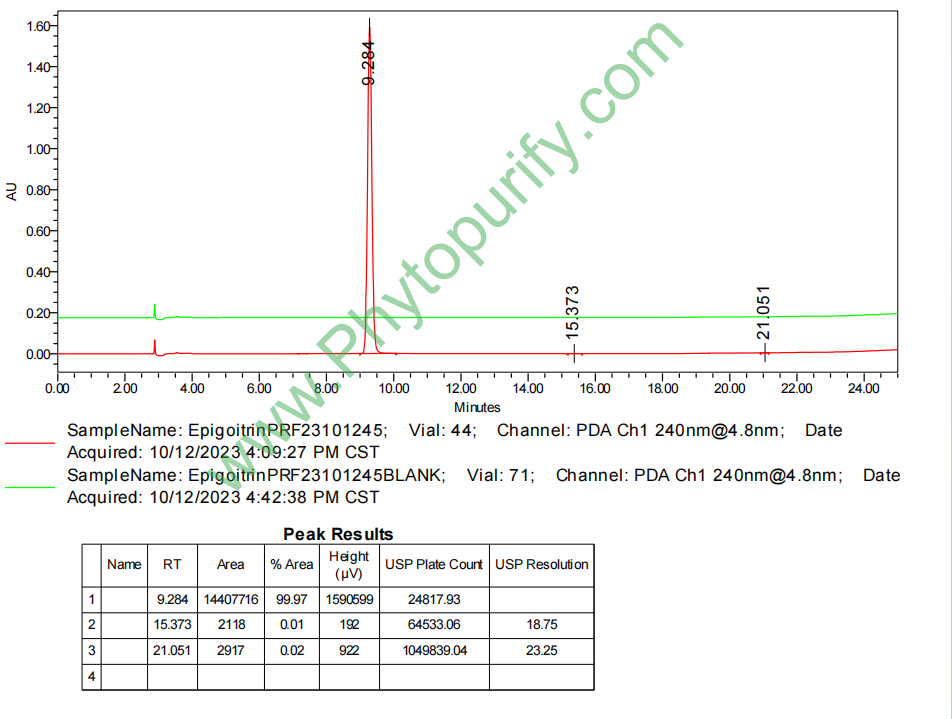
Purity: 95%~99%
Analysis Method: HPLC-DAD or/and HPLC-ELSD
Identification Method: Mass, NMR
Packing: Brown vial or HDPE plastic bottle
Can be supplied from milligrams to grams.
For Reference Standard and R&D, Not for Human Use Directly.
Inquire for bulk scale.
Description:
Epigoitrin and fructopyrano-(1→4)-glucopyranose(FG) from the traditional Chinese medicine Isatidis radix, exhibit in vitro cooperation, they have in vitro anti-virus activity.
References:
Chinese Journal of New Drugs, 2013(9).
The in vitro anti-virus effects and dose-effect relationship of epigoitrin and fructopyrano-(1→4)-glucopyranose based on
To investigate the in vitro anti-virus effects and dose-effect relationship of Epigoitrin and fructopyrano-(1→4)-glucopyranose(FG) from the traditional Chinese medicine Isatidis radix.
METHODS AND RESULTS:
Inhibitory effect of the target components on influenza virus neuraminidase(NA) was determined by fluorescent enzyme immunoassay.The 50% inhibitory concentration(IC50) was used as an indicator to research the relationship between Epigoitrin and FG by equivalent curve analysis.The effective concentrations of Epigoitrin and FG for in vitro anti-virus activity were determined.In the negative samples,the concentration range of target composition was gradually increased to obtain the key efficacy("incremental").Results: The equivalent point of Epigoitrin and FG samples was located below the equivalent line,and the IC50,mix value was less than IC50,add.For anti-influenza A virus activity of the incremental samples of Epigoitrin and FG,the effective concentrations were as follows: the lowest,optimum,and highest concentrations of Epigoitrin were 82.5,225.0 and 289.7 μg·mL-1;those of FG were 138.2,450.0 and 618.9 μg·mL-1.
CONCLUSIONS:
The equivalent curve analysis shows that Epigoitrin and FG exhibit cooperation.We have,for the first time,revealed the effective concentration range for in vitro anti-virus activity of Epigoitrin and FG from Isatidis radix.
HPLC of Epigoitrin
Storage conditions:Short-term storage at 2~8℃, long-term storage at -20 ~ -80℃
21.2600
.6818
.6809
7.7188
3.1099
16.1812
High
45.5597
4.7029
Yes
Yes
Yes
No
Yes
No
0.6
Yes
Yes
Yes
Yes
Natural products, as an important treasure trove for drug discovery, play an irreplaceable role in the long history of human fight against diseases. Among them, alkaloid compounds have always been a hot topic in medicinal chemistry and pharmacology research due to their structural diversity and significant biological activity. Epigoitrin (CAS number: 1072-93-1), as a relatively simple natural alkaloid, has attracted much attention in recent years due to its various pharmacological activities. The initial research revealed its potential in combating influenza virus, indicating that Yichun can provide protection by reducing the host's susceptibility to influenza virus under stress and effectively inhibiting the attachment and replication of influenza virus FM1 strain in vitro. In addition, research has found that it has lipid-lowering activity. What is even more remarkable is that with the deepening of research, the pharmacological effects of Bai Gao Yi Chun in the field of anti-tumor, especially for liver cancer, have gradually emerged. Its effects involve multiple key signaling pathways and targets such as BCL2, STAT3, and HIF1A, demonstrating the potential for multi-target and multi pathway intervention. This article aims to systematically review the chemical structure, plant origin, and pharmacological activity of Yichun, with a focus on its mechanism of action and molecular target network in anti influenza and anti liver cancer. It also evaluates and prospects its pharmacological properties and clinical application prospects, in order to provide comprehensive scientific references for the in-depth research and development of this compound.
The chemical name of Jingao Yichun is (R) -4,5-dihydro-2-amino-4-thiazolone, with a molecular formula of C3H7N3OS and a molecular weight of 129.1840. Its core structure is a partially hydrogenated thiazolone ring connected to an amino group. Although this structure is small, it contains unique chemical properties.
From the analysis of physical and chemical properties, it is reported that the lipid water partition coefficient (LogP) of Yichun is 0.6818, indicating that it has moderate lipophilicity and is conducive to transmembrane transport. Its topological polar surface area (TPSA) is 21.2600 Å ², which is a small value indicating low molecular polarity, consistent with its good membrane permeability prediction. The water solubility data shows 7.7188 (usually measured in mg/mL or logS, indicating moderate to high water solubility), which provides favorable conditions for its dissolution and distribution in organisms. Of particular importance, drug prediction shows that it has a high blood-brain barrier permeability, which provides potential applications related to the central nervous system, such as antiviral or neuroprotective effects. The preliminary safety assessment shows that the risk of hERG inhibition is "no", indicating a low potential risk of arrhythmogenic cardiac toxicity; The Ames test result is 0.6 (usually a value less than 1.5 is considered negative), indicating a low risk of mutagenicity and laying a preliminary safety foundation for subsequent development.
The main source of Bai Gao Yi Chun comes from the dried roots of the cruciferous plant Isatis indigotica Fortune, also known as the traditional Chinese medicine "Isatis indigotica root". Banlangen, as a traditional medicine for clearing heat and detoxifying, is widely used in traditional Chinese medicine clinical practice to treat warm diseases such as fever, sore throat, erysipelas, and mumps. The modern pharmacological basis of its antiviral effect can be attributed to active ingredients such as epigallocatechin sulfate.
The extraction of epigallocatechin gallate from plant materials usually uses solvent extraction method. The common process includes: crushing the dried Isatis root and performing reflux extraction or ultrasound assisted extraction with organic solvents such as ethanol or methanol. After vacuum concentration, the extract was extracted in stages using solvents such as petroleum ether and ethyl acetate for preliminary enrichment. Further purification often relies on column chromatography techniques, such as silica gel column chromatography, macroporous adsorption resin column chromatography, etc., to separate the crude product of Epimedium by polar gradient elution. Finally, high-purity monomer compounds can be obtained by recrystallization or preparative high-performance liquid chromatography (HPLC). With the development of technology, green extraction methods such as supercritical fluid extraction are also expected to be applied to the efficient preparation of this compound. It is worth noting that the content of Baijiu Yichun in plants is affected by factors such as origin, harvest season, and processing methods. Therefore, establishing stable and controllable extraction and purification processes and quality standards is crucial for its research and development.
The pharmacological activity research of Bai Gao Yi Chun presents a diversified expansion from antiviral to metabolic regulation, and then to anti-tumor.
Antiviral activity The most classic and extensively studied activity of Yichun is its anti influenza virus effect. In vitro and in vivo experiments have confirmed that it has a clear inhibitory effect on influenza A virus (such as FM1 strain). Its function is not only reflected in directly inhibiting the adsorption and replication processes of the virus, but more importantly, it can regulate the host state. Research has shown that Biao Gao Yi Chun can reduce the susceptibility of hosts to influenza virus under stress conditions such as cold stress. By regulating the host's immune and stress responses, it creates an internal environment that is not conducive to virus replication, reflecting the traditional Chinese medicine treatment concept of "strengthening the body and eliminating evil".
Lipid-lowering effect Preliminary pharmacological studies suggest that Biao Gao Yi Chun has a regulatory effect on lipid metabolism and can reduce blood lipid levels in experimental animal models. Although its specific mechanism remains to be fully elucidated, this provides clues for its potential applications in diseases such as metabolic syndrome and fatty liver.
Antitumor activity (focus: anti liver cancer)In recent years, the anti-tumor potential of Bai Gao Yi Chun, especially its role in the prevention and treatment of liver cancer, has become a new research hotspot. In vitro cell experiments have shown that Jingao Yichun can significantly inhibit the proliferation of various liver cancer cell lines (such as HepG2, Huh7, SMMC-7721) and induce their apoptosis. In animal models, administration of Yichun can effectively inhibit the growth of liver cancer transplanted tumors, and shows a certain dose dependence. Its anti liver cancer activity is not achieved through a single pathway, but involves the regulation of multiple biological processes such as cell apoptosis, proliferation, invasion and metastasis, angiogenesis, and inflammatory response, which is closely related to its multi-target action characteristics.
The molecular mechanism of its anti liver cancer effect, especially the expression of Yichun, involves a complex signaling network, and its known or potential targets include BCL2、STAT3、TOP1、HIF1A、RELA (p65)、MAPK1 (ERK2)、IKBKB (IKKβ)、TERT、PIK3CA、MMP9 Wait. These targets constitute the core of its multi-channel intervention.
Regulating cell apoptosis and survival:
Inhibition of tumor proliferation and telomerase activity:
Intervention in tumor microenvironment and metastasis:
Regulating key growth and survival signals:
In summary, by simultaneously acting on multiple targets and pathways mentioned above, Biaojiao Yichun forms a synergistic network that jointly inhibits the proliferation of liver cancer cells, promotes their apoptosis, inhibits angiogenesis and metastasis, thereby exerting anti liver cancer effects. This multi-target characteristic makes it possible to overcome the disadvantage of single target drugs easily developing resistance.
Based on its physicochemical parameters, it is reported that Yichun exhibits good potential for medicinal properties. Moderate LogP and smaller TPSA indicate good oral bioavailability potential and cell membrane permeability. The higher blood-brain barrier permeability provides an advantage for its potential in treating central nervous system related diseases or viral infections. The negative results of hERG inhibition and Ames test provide preliminary positive signals for its preclinical safety assessment.
However, pharmacokinetic studies on the epigallocatechin sulfate system are still relatively limited, which is a crucial link that must be addressed for its clinical development. Future research needs to clarify its absorption, distribution, metabolism, and excretion (ADME) characteristics in animals and humans, including oral absorption rate and degree, plasma protein binding rate, distribution in various tissues and organs (especially liver and lungs), major metabolic enzymes (such as CYP450 enzyme system) and metabolites, as well as elimination half-life and excretion pathways. Especially as a natural alkaloid, the existence of first pass effects, active metabolites, and species differences in its pharmacokinetic behavior all require rigorous experiments to answer. The establishment of sensitive and accurate plasma and tissue drug concentration detection methods (such as LC-MS/MS) is a prerequisite for conducting these studies.
The clinical application prospects of Bai Gao Yi Chun are broad, but it also faces challenges.
prospect:
Challenges and Prospects:
As a natural alkaloid derived from traditional Chinese medicine, Bai Gao Yi Chun's pharmacological activity spectrum has expanded from its initial anti influenza activity to multiple fields such as anti-tumor and lipid-lowering effects. In particular, its multi-target and multi pathway mechanism of action in anti liver cancer reveals its profound potential for drug development. Its good physical and chemical properties and preliminary safety predictions provide a favorable basis for its medicinal properties. However, the road from lead compounds to successful drugs is still long, and solid and in-depth research is urgently needed in terms of the depth of the mechanism of action, systemic pharmacokinetics, preclinical safety, and ultimate clinical efficacy. Fully integrating modern multi omics techniques, computational chemistry, and structural biology methods will accelerate the interpretation of the scientific connotation of the table report. Looking ahead to the future, Biaogao Yichun is not only expected to become a new source of research and development for antiviral and anti-tumor drugs, but also makes concrete and subtle contributions to explaining the scientific value of traditional Chinese medicine "Banlangen" and promoting the modernization and internationalization of traditional Chinese medicine.
