Introduction/Overview
Natural products, as an important source of drug discovery, play an irreplaceable role in the history of human disease prevention and treatment. As a traditional precious Chinese medicinal herb, ginseng (Panax ginseng C.A. Mey.) has always been a hot topic in modern pharmacological research due to its core pharmacological active ingredient, ginsenosides. Quinquenoside R1 is a rare saponin compound isolated and identified from wild ginseng in recent years, with a CAS number of 85013-02-1. Compared with well-known ginsenosides Rg1, Rb1, etc., the structure of ginsenoside R1 is more complex and its molecular weight is larger, indicating that it may have unique or stronger biological activity. With the advancement of separation and purification technology and the deepening of pharmacological research models, the potential value of ginsenoside R1 in neuroprotection, cardiovascular regulation, anti-tumor and anti-inflammatory aspects is gradually emerging. This article aims to systematically review the chemical properties, plant sources, pharmacological activities, mechanisms of action, and medicinal properties of ginsenoside R1 in American ginseng, in order to provide comprehensive scientific references for the in-depth research and future development of this compound.
Chemical structure and physicochemical properties
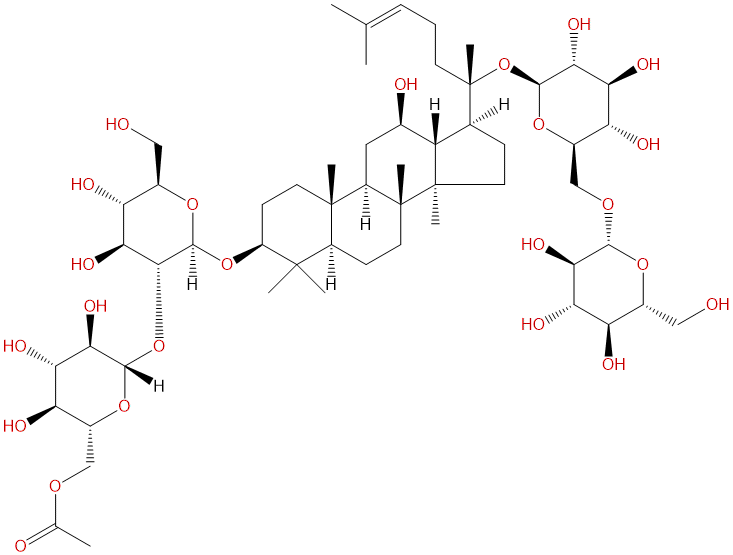
American ginseng saponin R1 is a triterpenoid saponin compound with a molecular formula of C ₅₄ H ₉₂ O ₂₅ and a molecular weight of 1151.3440 Da. Its structural skeleton is a damaane type tetracyclic triterpenoid, and the sugar chain is the key to its structural complexity and functional diversity. This compound is typically linked to multiple sugar groups, including glucose, xylose, arabinose, etc. The position and order of these sugar groups determine its unique spatial conformation and biological activity.
In terms of physical and chemical properties, the calculated value of the lipid water partition coefficient (LogP) of American ginseng saponin R1 is about 2.0175, indicating that it has a certain lipophilicity, but not highly hydrophobic. Its topological polar surface area (TPSA) is as high as 383.3600 Å ², which is mainly attributed to the abundant hydroxyl and sugar chain structures in the molecule, resulting in strong polarity. The predicted value of water solubility is about 0.2702 mg/mL, which belongs to the category of slightly soluble to poorly soluble, which poses certain challenges for formulation development. Based on its high TPSA and molecular weight, it is preliminarily predicted that its ability to cross the blood-brain barrier (BBB) is low, which has important implications for its application in central nervous system diseases. In addition, preliminary pharmacological risk assessment showed that the hERG inhibition risk and Ames mutagenicity risk were both negative (Ames test result was 0.0), providing preliminary favorable data for its safety evaluation.
Plant sources and extraction methods
Ginsenoside R1 mainly comes from plants of the Panax genus in the Araliaceae family, especially wild ginseng (Panax ginseng) and Panax quinquefolius L. It is worth noting that its content in total ginsenosides is relatively low and belongs to rare saponins, which increases the difficulty and value of its separation and purification. Wild ginseng, due to its long growth cycle and high environmental pressure, often produces more abundant and unique secondary metabolites, making it an important resource for discovering such rare saponins.
Its extraction and separation usually follow the conventional process of natural product chemistry, but require more refined steps:
1. Extract Alcohol extraction is commonly used, such as reflux extraction or ultrasound assisted extraction of ginseng roots using 70% -80% ethanol or methanol, to efficiently extract saponin components.
2. enrichment After vacuum concentration, the extract is preliminarily enriched using macroporous adsorption resins (such as D101, AB-8), washed with water to remove polar impurities such as polysaccharides and proteins, and then eluted with different concentrations of ethanol to collect the saponin enriched sites.
3. Separation and purification Due to the low content of ginsenoside R1 in American ginseng and its similarity in structure with other saponins, separation and purification are crucial. Normal phase silica gel column chromatography is commonly used for crude separation, combined with reverse phase high performance liquid chromatography (RP-HPLC, commonly C18 column) for multiple fine separations. Prepa HPLC is currently the most effective method for obtaining high-purity ginsenoside R1 in American ginseng, achieved by optimizing the mobile phase (such as acetonitrile water system) and elution gradient.
4. appraisal The purified compound needs to be structurally confirmed by nuclear magnetic resonance (NMR, including ¹ H-NMR, ¹ ³ C-NMR, 2D-NMR), mass spectrometry (MS, such as ESI-MS, HR-ESI-MS), and comparison with literature data.
Pharmacological activity research
In recent years, studies on the pharmacological activity of ginsenoside R1 in American ginseng have revealed its potential therapeutic value in multiple disease models.
-
Neuroprotective effect This is one of the most in-depth areas of research on ginsenoside R1 in American ginseng. In various Alzheimer's disease (AD) cell and animal models, American ginseng saponin R1 exhibits significant neuroprotective effects. It can improve neuronal damage induced by β - amyloid (A β) or glutamate, increase cell survival rate, and improve learning and memory dysfunction in model animals. Its function may be related to inhibiting oxidative stress, reducing inflammatory response, and regulating the cholinergic system.
-
Cardiovascular protective effect Research has shown that American ginseng saponin R1 has a protective effect on myocardial ischemia/reperfusion injury. In animal models, it can reduce the size of myocardial infarction and improve heart function by inhibiting myocardial cell apoptosis, reducing oxidative damage, and regulating energy metabolism. In addition, it may also have a certain improvement effect on endothelial function.
-
Antitumor activity Preliminary in vitro studies have shown that ginsenoside R1 has inhibitory effects on the proliferation of certain tumor cell lines, such as lung cancer, liver cancer, and colon cancer cells, and can induce tumor cell apoptosis and cell cycle arrest. Its anti-tumor activity may be mediated through the mitochondrial pathway or death receptor pathway, but the specific mechanism still needs to be further explored.
-
Anti inflammatory and immune regulation American ginseng saponin R1 can significantly inhibit the excessive production of pro-inflammatory factors such as nitric oxide (NO), prostaglandin E2 (PGE2), tumor necrosis factor - α (TNF - α), interleukin-6 (IL-6), etc. in a lipopolysaccharide (LPS) - induced macrophage inflammation model, indicating its anti-inflammatory potential. Its immunomodulatory effect may involve the regulation of key inflammatory signaling pathways such as NF - κ B and MAPK.
-
Other activities There are also studies reporting its potential activities such as anti fatigue, anti-aging, and liver protection, but the evidence chain is not yet complete and more research is needed to support it.
Mechanism of action and molecular targets
The multiple pharmacological activities of ginsenoside R1 in American ginseng stem from its regulation of multiple signaling pathways within cells. The potential mechanisms of action and molecular targets revealed by current research mainly include:
-
Antioxidant stress and Nrf2/ARE pathway Ginsenoside R1 from American ginseng can activate nuclear factor E2 related factor 2 (Nrf2), promote its nuclear translocation, and upregulate the expression of downstream antioxidant enzymes such as heme oxygenase-1 (HO-1) and quinone oxidoreductase 1 (NQO1), thereby enhancing the antioxidant defense ability of cells. This is one of the core mechanisms of its neuroprotective and cardiovascular protective effects.
-
Anti inflammatory and NF - κ B/MAPK pathway In the inflammatory model, ginsenoside R1 of Panax ginseng inhibits the degradation of I κ B α, prevents the nuclear translocation of nuclear factor kappa B (NF - κ B) p65 subunit, and downregulates the transcription of inflammatory mediators. Meanwhile, it can also inhibit the excessive activation of pro-inflammatory signaling pathways such as p38 MAPK and JNK.
-
Anti apoptosis and PI3K/Akt pathway In ischemia/reperfusion injury or neurotoxicity models, ginsenoside R1 can activate the phosphatidylinositol 3-kinase/protein kinase B (PI3K/Akt) signaling pathway. Activated Akt can phosphorylate and inhibit pro apoptotic proteins such as Bad and Caspase-9, while regulating the balance of Bcl-2 family proteins, ultimately inhibiting cell apoptosis.
-
Cholinergic system and AChE inhibition Partial studies suggest that ginsenoside R1 may have a mild inhibitory effect on acetylcholinesterase (AChE), thereby increasing the level of acetylcholine in synaptic cleft, which may be an auxiliary mechanism for improving cognitive function in AD models.
-
Mitochondrial function regulation Mitochondria, as the regulatory center of cellular energy and apoptosis, are important targets for the action of ginsenoside R1 in American ginseng. It can stabilize mitochondrial membrane potential, reduce the release of cytochrome C, and improve mitochondrial respiratory function.
It should be pointed out that as a large molecular saponin, the direct molecular targets of ginsenoside R1 (such as membrane receptors and enzyme active centers) are not yet very clear. Its function is likely to be multi-target and network like, achieved through various ways such as affecting cell membrane fluidity, interacting with membrane proteins, or producing active secondary products after metabolism.
Evaluation of drug properties and pharmacokinetics
Despite the significant pharmacological activity of ginsenoside R1 in American ginseng, its drug like properties face challenges, and related pharmacokinetic studies are still in their infancy.
-
Absorption and oral bioavailability As a polar molecule with a molecular weight exceeding 1000 Da and extremely high TPSA, the oral absorption of ginsenoside R1 is expected to be poor. Saponins are easily hydrolyzed or converted by acids and enzymes in the gastrointestinal tract, and their membrane permeability is limited, which may result in extremely low oral bioavailability. Studying the metabolites and activities of its gut microbiota is an important direction for evaluating its oral efficacy.
-
distribution As mentioned earlier, its high polarity results in weak ability to penetrate the blood-brain barrier, which limits its direct effects on central nervous system diseases. If it is developed as a central nervous system drug, it may require the use of formulation technologies (such as nanocarriers, prodrug strategies) or the search for active metabolites that can penetrate the BBB.
-
Metabolism and excretion The metabolism of saponins mainly occurs in the liver and intestines. The cytochrome P450 enzyme system and gut microbiota β - glucosidase may be involved in its metabolism, hydrolyzing it into secondary glycosides or smaller glycosides. The prototype drug and its metabolites are mainly excreted through the kidneys and bile. At present, there is a lack of detailed in vivo metabolic profiles and excretion kinetics data.
-
Formulation Challenge To improve its solubility and bioavailability, it may be necessary to develop advanced drug delivery systems such as phospholipid complexes, cyclodextrin inclusion complexes, nanoemulsions, liposomes, or solid dispersions.
-
Preliminary evaluation of safety Based on the limited in vitro data available, there is no significant risk of hERG channel inhibition (indicating low risk of cardiac toxicity) and genetic toxicity risk (Ames test negative), which is a positive signal. However, there has been no systematic report on the comprehensive preclinical safety evaluation of acute toxicity, chronic toxicity, reproductive toxicity, etc.
Clinical application prospects and prospects
The in-depth study of ginsenoside R1 in American ginseng has outlined multiple possibilities for its future applications, but there are also clear challenges.
Potential application directions:
1. Adjuvant therapy for neurological disorders As a neuroprotective agent, it is used for nerve repair after Alzheimer's disease, Parkinson's disease, stroke, etc. In view of its poor BBB penetrability, it may be a more realistic way to develop preparations for peripheral neuropathy (such as diabetes neuropathy) or drug administration through the nose brain pathway.
2. cardiovascular disease As a cardioprotective agent, it is used to prevent or treat myocardial ischemia/reperfusion injury, heart failure, etc., and may be developed as an injection or a new oral formulation.
3. Anti inflammatory adjuvant therapy: It is used for auxiliary treatment of chronic inflammatory diseases, such as arthritis and atherosclerosis.
4. neoadjuvant therapy Combined with conventional chemotherapy/radiotherapy, it may have a detoxifying and enhancing effect, or be used to improve cancer-related fatigue.
Future research prospects:
1. In depth mechanism research Using chemical biology methods such as photoaffinity labeling and proteomics to identify the protein targets directly affected by it and elucidate its precise initial mechanism of action.
2. Systematic pharmacokinetic study Conducting comprehensive research on ADME in animals, clarifying its absorption, distribution, metabolite identification, excretion pathways, and kinetic characteristics, is the cornerstone of promoting its development.
3. Structural optimization and derivative development To address its drug weakness, a series of derivatives are synthesized through chemical modifications (such as glycosylation modification and preparation of prodrugs) to improve its solubility, stability, and membrane permeability while maintaining its activity.
4. Research on Advanced Delivery Systems Vigorously invest in the research and development of new drug delivery systems, such as targeted delivery systems based on nanotechnology, to overcome their BBB penetration challenges and improve targeting.
5. Preclinical and clinical research After completing the pharmacological and safety evaluation of the system, gradually advance clinical research to verify its effectiveness and safety in humans.
Conclusion
Ginsenoside R1, a rare saponin discovered from the traditional medicinal plant ginseng, has become a promising research object in the field of natural product pharmacology due to its unique chemical structure and extensive and significant pharmacological activities. Its role in neuroprotection, cardiovascular protection, anti-inflammatory and other aspects has been preliminarily confirmed by experiments, and its multi-target mechanism of action has also begun to emerge. However, the inherent physicochemical properties of the drug pose challenges in terms of its pharmacological properties, particularly poor oral absorption and weak blood-brain barrier penetration ability, which are key bottlenecks restricting its clinical application. Future research needs to focus on pharmacokinetic exploration, structural optimization, and the development of novel delivery technologies based on a thorough elucidation of their molecular mechanisms. Only through interdisciplinary collaboration can we transform ginsenoside R1 from an active molecule in the laboratory into a potential drug that truly benefits patients and continues the modern scientific value of ginseng, an ancient medicinal herb.