


Product name: Rhapontin
Synonym name: Ponticin; Rhaponticin
Catalogue No.: BP1207
Cas No.: 155-58-8
Formula: C21H24O9
Mol Weight: 420.414
Botanical Source: Rheum hotaoense
Physical Description:
Type of Compound: Stibene glucosides
Purity: 95%~99%
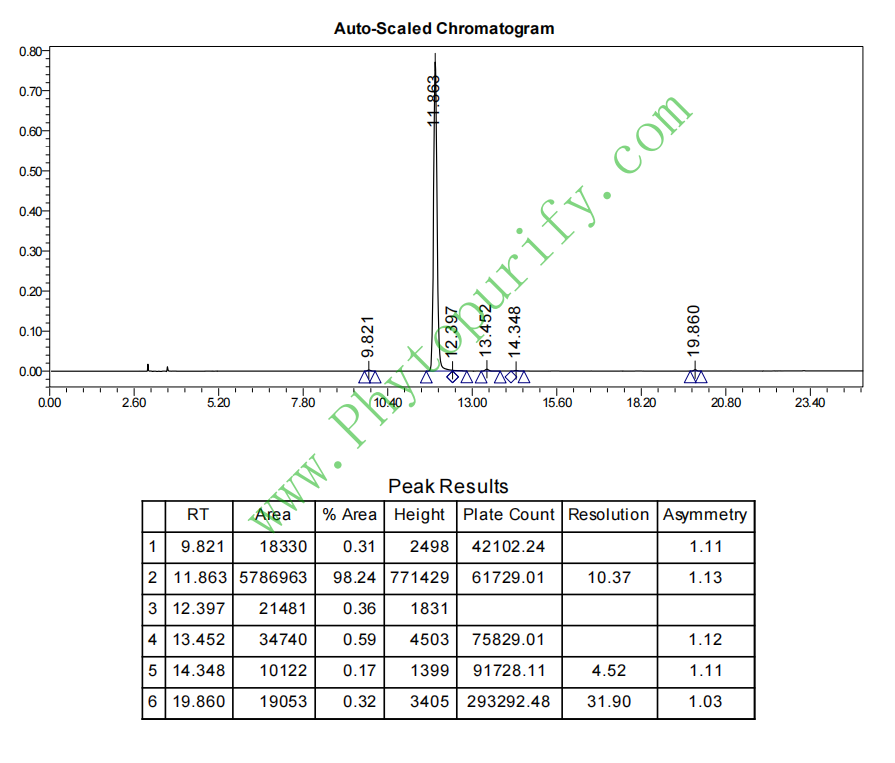
Analysis Method: HPLC-DAD or/and HPLC-ELSD
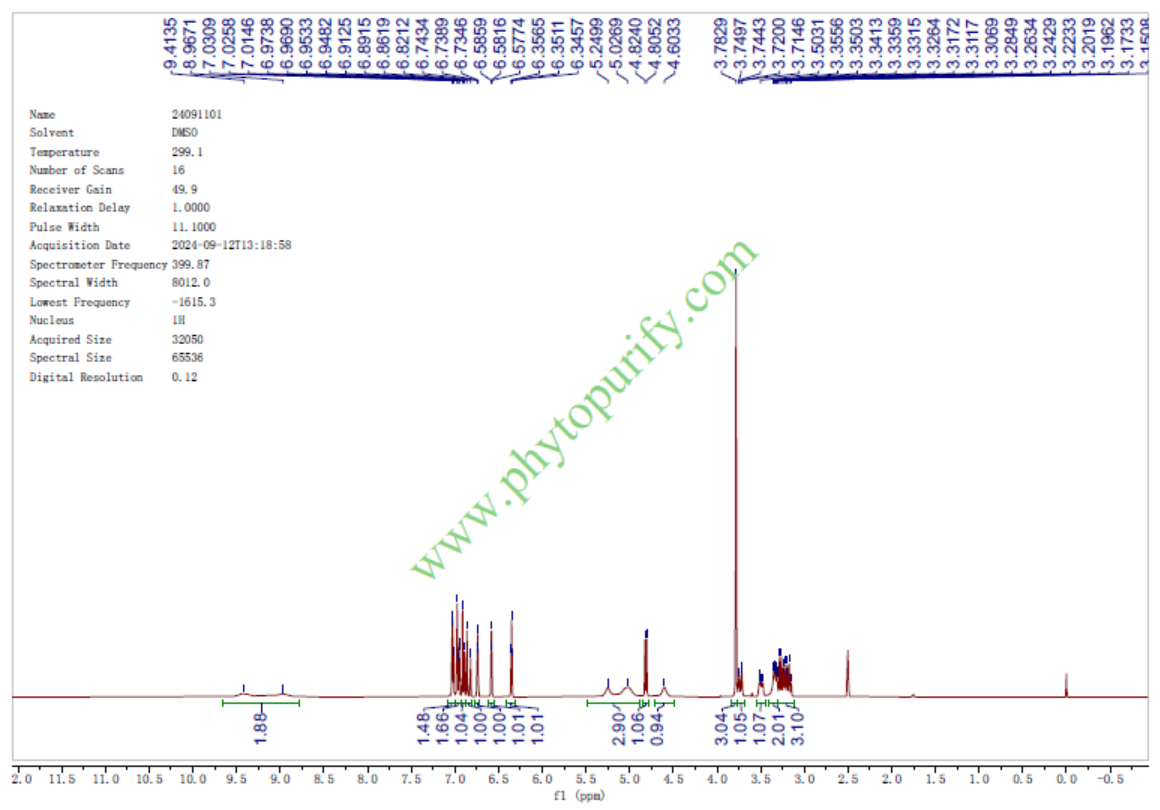
Identification Method: Mass, NMR
Packing: Brown vial or HDPE plastic bottle
Storage: Store in a well closed container, protected from air and light. Put into refrigerate or freeze for long term storage.
Whenever possible, you should prepare and use solutions on the same day. However, if you need to make up stock solutions in advance, we recommend that you store the solution as aliquots in tightly sealed vials at -20℃. Generally, these will be useable for up to two weeks.
The product could be supplied from milligrams to grams
Inquire for bulk scale.
Description:
Rhaponticin(Rhaponiticin) has a noticeable antidiabetic effect and could be potentially used as a new agent to treat type 2 diabetes mellitus and its complications, it can alleviate liver steatosis and improve blood glucose and lipid profiles in KK/Ay diabetic mice.
References:
Planta Med. 2009 Apr;75(5):472-7.
Rhaponticin from rhubarb rhizomes alleviates liver steatosis and improves blood glucose and lipid profiles in KK/Ay diabetic mice.
We isolated several stilbene compounds including rhaponticin (Rhaponiticin,3',5-dihydroxy-4'-methoxystilbene 3- O-beta- D-glucopyranoside) from extracts of rhubarb rhizomes. These compounds showed significant hypoglycemic effects in streptozotocin (STZ)-induced type 1 diabetic rats and mice.
METHODS AND RESULTS:
In this study, we investigated the effect of rhaponticin on glucose utilization, lipid metabolism, and liver and heart function in a KK/Ay type 2 diabetic mouse model. The results showed that oral administration of rhaponticin (125 mg/kg) significantly reduced blood glucose levels and improved oral glucose tolerance of KK/Ay diabetic mice. Elevated plasma triglyceride (TG), low density lipoprotein (LDL), cholesterol (CHO), non-esterified free fatty acids (NEFA), and insulin levels were also markedly attenuated. Serum enzymatic activities of lactate dehydrogenase (LDH), creatine kinase (CK), aspartate aminotransferase (AST), and alanine aminotransferase (ALT) in the rhaponticin-treated group significantly decreased in comparison to the untreated model group. Livers of rhaponticin-treated mice had relatively normal cellular size and decreased fibrosis and steatosis. In addition, rhaponticin administration caused a remarkable increase in the hepatic glycogen content and a significant reduction in the hepatic triglyceride content.
CONCLUSIONS:
These results indicate that rhaponticin has a noticeable antidiabetic effect and could be potentially used as a new agent to treat type 2 diabetes mellitus and its complications.
HPLC of Rhapontin
HNMR of Rhapontin
Storage conditions:Short-term storage at 2~8℃, long-term storage at -20 ~ -80℃
149.0700
.6825
.6796
3.3989
.7951
.0761
Low
80.8479
3.7630
Yes
No
No
No
No
No
0.0
Yes
Yes
Yes
Yes
As an important treasure trove for drug discovery, natural products continue to provide modern medicine with lead compounds with novel structures and diverse activities. Rhapontin, also known as Rhapontin or Rhapontin, is a type of stilbene compound isolated from traditional medicinal plants such as Rheum spp. Its CAS number is 155-58-8, and its chemical structure is 3,3 ', 5-trihydroxy-4' - methoxystilbene-3- β - D-glucoside. For a long time, plants containing emodin have been used in traditional medicine for purposes such as defecation and anti-inflammatory. With the deepening of modern pharmacological research, the biological activity spectrum of rhein has been greatly broadened, and its multiple pharmacological effects as an oral effective SIRT1 agonist and AMPK activator have been gradually revealed, showing anti-inflammatory, anti fibrosis, antithrombotic, anti allergic and anti diabetes potential. Especially in difficult to treat disease models such as inflammatory bowel disease (such as ulcerative colitis) and pulmonary fibrosis, it has shown clear therapeutic effects, making it a highly studied subject in the field of natural product pharmacology. This article aims to systematically review the chemical properties, plant sources, pharmacological activities, mechanisms of action, medicinal properties, and clinical application prospects of rhubarb glycoside, in order to provide comprehensive scientific references for the in-depth research and development of this compound.
The molecular formula of rhubarb glycoside is C21H24O9, with a molecular weight of 420.4140. Its core structure is a stilbene (stilbene) skeleton, with hydroxyl substitution at positions 3, 3 ', and 5, methoxy substitution at position 4', and a β - D-glucose group connected by an O-glycosidic bond at position 3. This structure belongs to the family of astragalosides and is the material basis for its biological activity.
In terms of physicochemical properties, the lipid water partition coefficient (LogP) of rhubarb glycoside is 0.6825, indicating that it has a certain degree of hydrophilicity. Its topological polar surface area (TPSA) is 149.0700 Å ², reflecting the strong polarity brought by multiple hydroxyl and sugar groups in the molecule. The water solubility data is 3.3989 (usually measured in mg/mL or log mol/L, relative here), indicating moderate solubility in water, which is beneficial for oral absorption. These preliminary parameters related to medicinal properties suggest that rhubarb glycoside has a good starting point for drug like properties. In addition, its blood-brain barrier permeability is predicted to be low, suggesting that the role of the central nervous system may be limited; The hERG inhibition test was negative, indicating a low potential risk of cardiac toxicity; The Ames test result is 0.0, which preliminarily supports its non mutagenicity and good safety characteristics.
Rhubarb glycoside mainly comes from various plants in the Rheum genus of the Polygonaceae family, such as Rheum palmatum, Rheum tanguticum, and medicinal Rheum officinale. In the rhizomes of these plants, emodin often coexists with other anthraquinone and astragalus components. In addition, it has also been detected in some non Rheum plants such as Polygonum cuspidatum.
The extraction method follows the conventional process of natural product chemistry. The solvent extraction method is usually used, using methanol, ethanol, or ethanol water solutions of different proportions as solvents, to perform reflux extraction or ultrasound assisted extraction on dried and crushed plant materials. Subsequently, preliminary enrichment and purification were carried out using macroporous adsorption resin (such as AB-8, D101) column chromatography, and eluted with water and different concentrations of ethanol. Rhubarb glycoside is usually obtained in the partially eluted portion with low to medium concentrations of ethanol. Further purification can be achieved through methods such as silica gel column chromatography, preparative high-performance liquid chromatography (HPLC), or recrystallization. The optimization of extraction process often focuses on factors such as solvent concentration, solid-liquid ratio, extraction temperature, and time to improve extraction rate and purity. Modern analysis and identification mainly rely on high-performance liquid chromatography-mass spectrometry (HPLC-MS) and nuclear magnetic resonance (NMR) techniques.
A large number of preclinical studies have revealed the extensive and significant pharmacological activities of emodin, providing a basis for its multi-target therapeutic application.
The multiple pharmacological effects of rhubarb glycoside stem from its precise regulation of key signaling pathways and molecular targets within cells, with its core mechanism revolving around the activation of SIRT1 and regulation of the AMPK signaling pathway.
Based on its physical and chemical parameters, rhubarb glycoside exhibits good potential for medicinal properties. Its oral efficacy has been confirmed in multiple animal models.
Pharmacokinetic studies have shown that rhubarb glycoside can be absorbed in the gastrointestinal tract after oral administration, but its prototype glycoside form may undergo extensive metabolism in the body. The main metabolic pathways include: ① hydrolysis Under the action of intestinal microbiota or tissue esterases, glycosidic bonds are broken to generate its aglycone, emodin. Glycosides typically have stronger cell membrane permeability and biological activity, and many observed pharmacological effects may be attributed to nucleosides or their further metabolites. ② Combination reaction Glycosides and prototype drugs may undergo glucuronic acid binding or sulfation in the liver, forming more water-soluble metabolites that are excreted through bile or urine.
Existing data indicate that the in vivo process of rhubarb glycoside conforms to the characteristics of most plant polyphenolic components: moderate absorption, extensive metabolism, rapid distribution and elimination. Its absolute bioavailability needs to be accurately determined. The low permeability of the blood-brain barrier limits its direct application in central nervous system diseases, but it may also reduce the risk of central side effects. The clear hERG inhibition negative and Ames test negative results provide early support for its safety assessment. However, comprehensive preclinical pharmacokinetic (such as tissue distribution, excretion pathways) and toxicological (long-term toxicity, reproductive toxicity) studies still need to be systematically conducted to support their clinical translation.
As a natural small molecule with multiple targets and effects, rhubarb glycoside has shown broad application prospects in the prevention and treatment of various chronic diseases.
However, there are still challenges and future research directions for clinical application: ① Deep exploration of mechanisms Further clarification is needed on the direct interaction mode between emodin and its active metabolites with targets such as SIRT1 and AMPK, and to explore whether there are other unknown important targets. ② Formulation optimization To improve its bioavailability, it may be necessary to develop novel drug delivery systems, such as nano formulations, phospholipid complexes, or prodrug strategies. ③ Preclinical and clinical research A systematic GLP toxicology evaluation must be completed, and rigorous clinical trials must be designed to verify its safety, efficacy, and optimal dosing regimen in humans. ④ Potential for combination therapy: Explore the joint application of rhein and existing standard treatment drugs (such as 5-ASA for IBD, pirfenidone for pulmonary fibrosis, and metformin for diabetes), which may produce synergistic effects and reduce their respective dosage and side effects.
Rhubarb glycoside is a natural active compound with important research value discovered from traditional medicinal plants. Its chemical structure is clear, with both oral efficacy and good preliminary safety characteristics. The most prominent feature is that it synergistically activates SIRT1 and AMPK, two key proteins that play a "guardian" role in metabolism, inflammation, and fibrosis, forming a sophisticated multi-target action network, thereby exerting comprehensive therapeutic effects in anti-inflammatory, anti fibrosis, metabolic regulation, and other aspects. Although there are still a lot of pharmacokinetic, toxicological and clinical efficacy studies to be completed before transforming it into clinical drugs, the existing preclinical evidence has fully demonstrated the great potential of rhein in the treatment of inflammatory bowel disease, organ fibrosis, diabetes and other major chronic diseases. With the continuous deepening of modern research on natural products and the application of systems biology technology, rhubarb glycoside is expected to transform from a traditional medicinal active ingredient into a modern drug lead compound derived from nature and acting on key pathways, bringing new therapeutic hope to patients with related diseases.
