


Product name: Ginsenoside F1
Synonym name:
Catalogue No.: BP0652
Cas No.: 53963-43-2
Formula: C36H62O9
Mol Weight: 638.883
Botanical Source: Panax spp.
Physical Description: White powder
Type of Compound: Triterpenoids
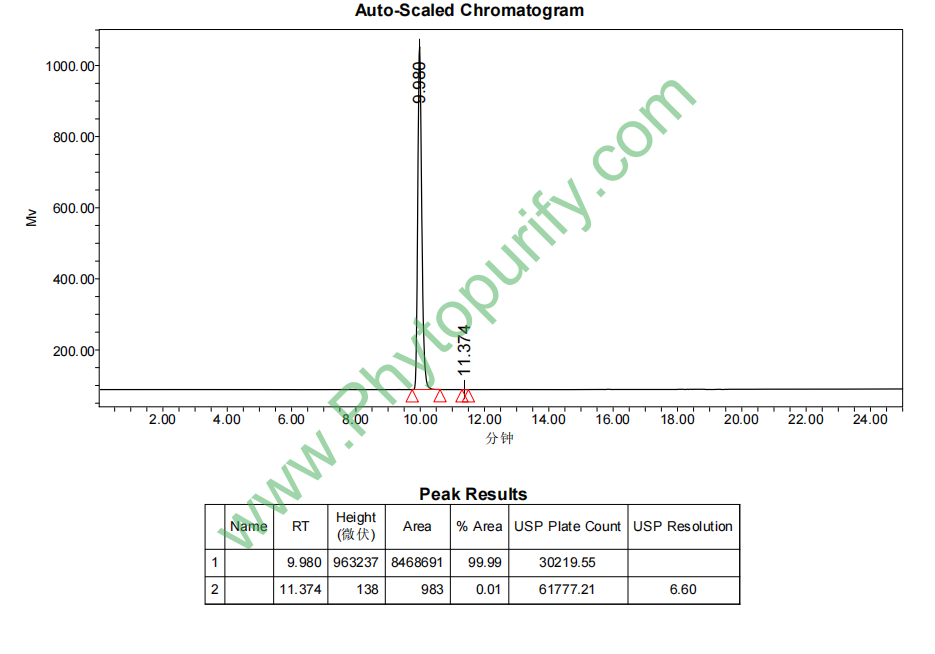
Purity: 95%~99%
Analysis Method: HPLC-DAD or/and HPLC-ELSD
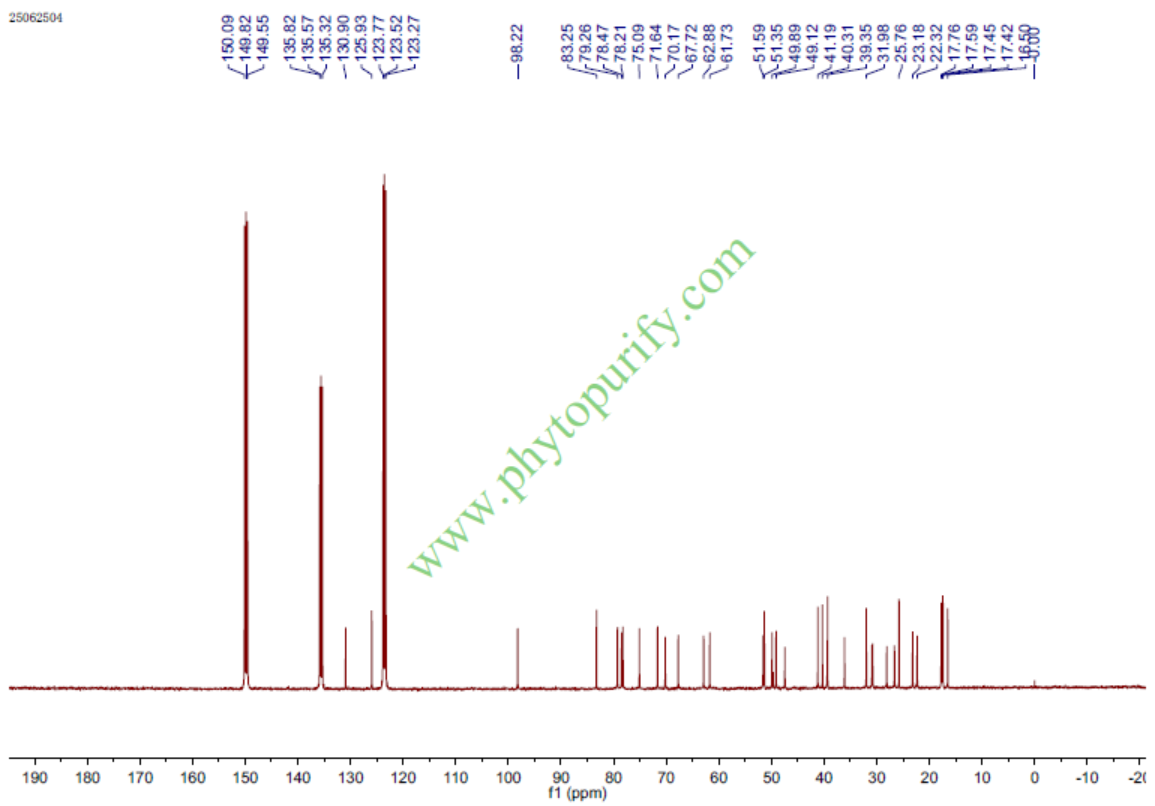
Identification Method: Mass, NMR
Packing: Brown vial or HDPE plastic bottle
Storage: Store in a well closed container, protected from air and light. Put into refrigerate or freeze for long term storage.
Whenever possible, you should prepare and use solutions on the same day. However, if you need to make up stock solutions in advance, we recommend that you store the solution as aliquots in tightly sealed vials at -20℃. Generally, these will be useable for up to two weeks.
The product could be supplied from milligrams to grams, up to kilograms
Inquire for bulk scale.
Descriptions:
Ginsenoside (G)-F1 is an enzymatic metabolite generated from G-Rg1, it has been reported to suppress platelet aggregation and to reduce gap junction-mediated intercellular communication, also as a novel anti-skin cancer drug with anti-proliferative and anti-migration features.[1]
Ginsenoside F1 significantly reduces ultraviolet-B-induced cell death by maintaining constant levels of Bcl-2 and protects HaCaT cells from apoptosis caused by ultraviolet B irradiation. [2]
Ginsenoside F1(GF1) has beneficial effects on skin, it reduces α-melanocyte-stimulating hormone-induced melanin secretion in B16F10 cell culture media by 60%, but does not suppress intracellular melanin levels, tyrosinase activity and expression; it primarily modulates the Rho family GTPases resulting in dendrite retraction, suggests that GF1 could act as a potent skin-whitening agent.[3]
Ginsenoside F1 has inhibitory effect of elastase and tyrosinase, indicates that ginsenoside F1 have a potential for industrial cosmetic materials.[4]
References:
[1] Yoo D S, Rho H S, Yong G L, et al. J Ginseng Res, 2011, 35(1):86-91.
[2] Lee E H, Cho S Y, Kim SJShin E S, et al.J Invest Dermatol, 2003, 121(3):607-13.
[3] Ji H K, Baek E J, Lee E J, et al. Exp Dermatol, 2014, 24(2):150-2.
[4] Hong, S.C., Korean J Pharm, 2013, 44(1):10-5.
[5] Chong G, Gao Y G, Pu Z, et al. Chinese Trad Herbal Drugs, 2014, 45(14):2009-13.
HPLC of Ginsenoside F1
NMR of Ginsenoside F1
Storage conditions:Short-term storage at 2~8℃, long-term storage at -20 ~ -80℃
160.0700
3.6485
3.6480
.0117
.6884
.3263
Low
78.8485
5.5701
No
No
No
No
No
No
0.0
Yes
No
No
No
Ginsenoside F1 (CAS number: 53963-43-2) is an important secondary metabolite derived from plants of the Panax genus in the Araliaceae family, such as ginseng and American ginseng, and is a member of the ginsenosides family. As a derivative of ginsenoside Rg1, which is hydrolyzed by enzymes such as β - glucosidase in vitro and in vivo, ginsenoside F1 exhibits both related and distinct biological activity and metabolic characteristics due to its reduced sugar number (usually monosaccharide or disaccharide), decreased molecular polarity, and increased lipid solubility. In recent years, with the deep integration of natural product chemistry and molecular pharmacology, the unique pharmacological effects of ginsenoside F1, especially its multi-target and multi pathway regulatory ability in the field of immune regulation, have received increasing attention from the academic community. It has been reported to competitively inhibit cytochrome P450 3A4 (CYP3A4) and have a weak inhibitory effect on CYP2D6, suggesting its potential role in drug drug interactions. This article aims to systematically review the chemical characteristics, sources, and pharmacological activities of ginsenoside F1, with a focus on its molecular mechanism of regulating immune response through key targets such as TLR4, STAT3, NF - κ B. It also evaluates and prospects its pharmacological properties and clinical application prospects, in order to provide comprehensive scientific references for the in-depth research and development of this compound.
Ginsenoside F1 belongs to the Damane type tetracyclic triterpenoid saponin and is a derivative of Protopanaxatriol (PPT). Its chemical structural feature is that the C-6 position of the PPT skeleton is connected to a β - D-glucopyranose group, while the C-20 position is usually not connected to a sugar group or connected to a simplified sugar chain different from Rg1 (the specific structure may vary slightly according to different literature reports, but the core is one or more sugar groups less than Rg1), which makes it a deglycosylation product of Rg1. This structural modification significantly affects its physicochemical properties.
According to the provided pharmacological parameters, the molecular weight of ginsenoside F1 is 638.8830, which belongs to the category of medium molecular weight compounds. The logarithmic (LogP) value of its lipid water partition coefficient is 3.6485, indicating that the compound has moderate lipophilicity, which is consistent with its structural characteristic of reduced sugar number and is conducive to its penetration of cell membranes. The topological polar surface area (TPSA) is 160.0700 Å ², reflecting the surface area occupied by polar groups (mainly hydroxyl groups) in the molecule. A higher value suggests that it has a certain degree of polarity. The water solubility parameter is 0.0117 (usually measured in mg/mL or mol/L, which is not specified here, but the value is small), confirming its low solubility in water and belonging to insoluble compounds. This may be one of the main challenges facing its oral bioavailability. Based on the comprehensive analysis of LogP and TPSA, ginsenoside F1 meets the relevant parameter range in the five rules of generic drugs and has a certain basis for drug development.
Ginsenoside F1 mainly comes from traditional medicinal plants such as Panax ginseng C.A. Mey. and Panax quinquefolius L. In plants, its content is usually much lower than its main precursor saponins such as Rg1, Re, etc. Therefore, directly isolating and purifying a large amount of ginsenoside F1 from Chinese herbal raw materials is costly and inefficient.
At present, the main strategy for obtaining ginsenoside F1 is Biotransformation method Specifically hydrolyzing abundant ginsenosides (such as Rg1) using microorganisms or enzymes. This is the most economical, environmentally friendly, and efficient method.
1. Microbial transformation Multiple bacteria (such as Bacteroides and Bacteroides in the gut microbiota) and fungi (such as Aspergillus and Penicillium) can secrete β - glucosidase, β - xylosidase, etc., selectively cleaving specific sugar groups on the Rg1 sugar chain to produce ginsenoside F1. The fermentation process can be optimized by optimizing the bacterial species, culture medium pH、 Temperature and time are used to increase the yield of F1.
2. Enzymatic conversion Use purified or crude glucosidase (such as β - glucosidase) to catalyze the hydrolysis of Rg1 in vitro. This method has mild conditions, strong specificity, few by-products, and is easy to control the reaction process and product purity, making it more suitable for standardized production.
3. Extraction and Separation Whether obtained from transformation products or directly from plant extracts, subsequent separation and purification usually involve multiple chromatographic techniques. Macroporous adsorption resins (such as D101, AB-8) are commonly used for initial enrichment, followed by fine separation using silica gel column chromatography, reverse phase high performance liquid chromatography (RP-HPLC), preparative high performance liquid chromatography, etc., to ultimately obtain high-purity ginsenoside F1 monomer. Modern analytical techniques such as LC-MS/MS are commonly used for monitoring the conversion process and identifying the final product.
The pharmacological activity research of ginsenoside F1 has made significant progress in recent years. Its effects are not limited to traditional nourishing and strengthening, but also show potential value in the fields of immune regulation, neuroprotection, anti-inflammatory, anti-tumor, etc. Among them, the immune regulatory effect is the most prominent and systematic.
1. Immune regulatory effect
This is the most in-depth field of research on ginsenoside F1. Research has shown that F1 has a bidirectional immune regulatory function, which can enhance the body's immune response against pathogens, suppress excessive immune reactions, and alleviate autoimmune diseases and inflammatory damage.
* Immune enhancement effect In immunocompromised models such as cyclophosphamide induced immunosuppression mice, ginsenoside F1 can promote the recovery of spleen and thymus indices, enhance macrophage phagocytic function, increase natural killer (NK) cell activity, and stimulate lymphocyte proliferation. It can promote the differentiation of T lymphocytes into helper T cell 1 (Th1), increase the secretion of Th1 cytokines such as interferon - γ (IFN - γ) and interleukin-2 (IL-2), thereby enhancing cellular immunity.
* Immunosuppressive/anti-inflammatory effects Ginsenoside F1 exhibits significant anti-inflammatory and immunosuppressive effects in autoimmune diseases such as rheumatoid arthritis and inflammatory bowel disease, or in models of excessive inflammation such as lipopolysaccharide induced sepsis. It can inhibit the excessive production of pro-inflammatory factors such as tumor necrosis factor - α (TNF - α), interleukin-1 β (IL-1 β), and interleukin-6 (IL-6), while upregulating the expression of anti-inflammatory factors such as interleukin-10 (IL-10). It can also promote the differentiation and function of regulatory T cells (Tregs), maintaining immune tolerance through its key transcription factor FOXP3.
2. Neuroprotective effect
Research has shown that ginsenoside F1 can penetrate the blood-brain barrier (although the provided parameters suggest a "low" transmittance, it is not completely impossible), and has a protective effect on neurodegenerative disease models such as Alzheimer's disease and Parkinson's disease, as well as cerebral ischemia-reperfusion injury. The mechanism may be related to inhibiting neuroinflammation, reducing oxidative stress, resisting neuronal apoptosis, and promoting the expression of neurotrophic factors.
3. Antitumor activity
Ginsenoside F1 has inhibitory effects on proliferation, induction of apoptosis, and differentiation of various tumor cells, such as lung cancer, liver cancer, and colon cancer cells. Its anti-tumor effect is partially attributed to its regulation of immune cells in the tumor microenvironment, such as enhancing the function of cytotoxic T lymphocytes and inhibiting the polarization of tumor associated macrophages towards the M2 pro tumorigenic phenotype.
4. Effects on drug metabolizing enzymes
Ginsenoside F1 has been identified as a competitive inhibitor of CYP3A4, with weak inhibition of CYP2D6. CYP3A4 is the most important drug metabolizing enzyme in the human body, involved in approximately 50% of clinical drug metabolism. This characteristic suggests that ginsenoside F1 may interact with drugs metabolized by CYP3A4, affecting the blood drug concentration of co administered drugs. It should be paid attention to in clinical combination therapy, but it also provides research ideas for its use as an adjuvant to regulate drug metabolism.
The immunomodulatory and other pharmacological effects of ginsenoside F1 are achieved by interacting with multiple molecular targets and regulating complex signal transduction networks. Based on the provided target information, its core mechanism of action can be summarized as follows:
1. Regulating pattern recognition receptors and innate immune signaling: TLR4/NF - κ B pathway
Toll like receptor 4 (TLR4) is a key receptor for recognizing pathogen associated molecular patterns, such as LPS. Ginsenoside F1 can exert anti-inflammatory effects by intervening in the activation or downstream signaling of TLR4. Research has shown that F1 can inhibit LPS induced TLR4 expression and its binding to myeloid differentiation factor 88 (MyD88), thereby blocking the activation of the nuclear factor kappa B (NF - κ B, encoded by NFKB1) signaling pathway. NF - κ B is the core transcription factor of inflammatory response, controlling the gene transcription of many pro-inflammatory factors such as TNF - α, IL-1 β, IL-6, etc. F1 suppresses the "inflammatory storm" at its source by inhibiting the nuclear translocation of NF - κ B and its binding activity with DNA.
2. Regulating cytokine signaling and JAK/STAT pathway
The signal transduction and transcription activator (STAT) family, particularly STAT3 and STAT4, plays a decisive role in immune cell differentiation and function.
* STAT3 It is often continuously activated in cancer and chronic inflammation. Ginsenoside F1 can inhibit STAT3 phosphorylation and activation induced by factors such as IL-6, thereby suppressing its mediated pro-inflammatory, pro proliferative, and anti apoptotic signals. This is closely related to its anti-tumor and anti rheumatoid arthritis effects.
* STAT4 It is a key driving factor for Th1 cell differentiation. F1 may balance Th1 (IFN - γ/STAT4 dependent) and Th2 immune responses by subtly regulating STAT4 activity under appropriate conditions, but its specific regulatory mode (promotion or inhibition) may depend on the immune environment.
3. Key targets for regulating T cell differentiation and function
* TGF - β 1/Smad and FOXP3 Transforming growth factor - β 1 (TGFB1) is the core cytokine that induces the differentiation of initial T cells into immunosuppressive Treg cells. Ginsenoside F1 can promote the secretion of TGF - β 1 or enhance its signaling, thereby upregulating the expression of the specific transcription factor FOXP3 in Treg cells, promoting the expansion and function of Treg cells. This is an important mechanism for inducing immune tolerance and treating autoimmune diseases.
* IL-2 and CTLA-4 Interleukin-2 (IL2) is a key factor in T cell growth and activation. F1 may affect T cell response by regulating the production of IL-2. Meanwhile, cytotoxic T lymphocyte associated protein 4 (CTLA4) is a negative regulatory checkpoint molecule for T cell activation. F1 may regulate the activation threshold of T cells and prevent excessive immune response by affecting the expression or function of CTLA4.
* Balance between IFN - γ and IL-10 Ginsenoside F1 can regulate the dynamic balance of Th1 characteristic cytokine IFN - γ (encoded by IFNG) and anti-inflammatory cytokine IL-10 (encoded by IL10). When enhancing immunity, it may moderately promote the production of IFN - γ; When inflammation needs to be suppressed, IL-10 levels are significantly upregulated, reflecting its "bidirectional regulation" wisdom.
In summary, ginsenoside F1 does not act on a single target, but rather acts as a "multi-target regulator" that precisely regulates innate and adaptive immunity through a network composed of TLR4, STAT3, NF - κ B, TGF - β 1, FOXP3, etc., maintaining immune homeostasis.
Based on the provided parameters and existing research, a preliminary evaluation of the pharmacological properties of ginsenoside F1 is conducted
Advantage:
1. High potential for safety The Ames test result is 0.0, indicating that no mutagenicity was observed under the conditions of this experiment, and the risk of genetic toxicity is low. HERG inhibition is' no ', indicating that it may not inhibit cardiac potassium channels, and the potential risk of cardiac toxicity (such as causing long QT syndrome) is relatively low. This is a significant advantage of it as a drug candidate.
2. Complies with the properties of some drug classes Molecular weight<500, LogP value in the ideal range (2-5), moderate TPSA, preliminary compliance with multiple items in Lipinski's "Five Rules", possessing the chemical basis for becoming an oral medication.
3. Clear biological activity and targets It has precise and multi-target pharmacological activities such as immune regulation, and its mechanism of action has been extensively studied.
Challenges and shortcomings:
1. Poor water solubility The extremely low water solubility (0.0117) is the main bottleneck limiting its oral absorption and formulation development. It may be necessary to use formulation technologies such as nanocrystals, liposomes, cyclodextrin inclusion complexes, solid dispersions, etc. to improve its dissolution and bioavailability.
2. Low blood-brain barrier permeability The parameter indicates that its BBB permeability is "low", which is an unfavorable factor for the treatment of central nervous system diseases. But 'low' is not zero and can be improved through structural modifications or targeted drug delivery systems.
3. Potential drug interactions As a competitive inhibitor of CYP3A4, when used in combination with drugs metabolized by this enzyme (such as statins, calcium channel blockers, and some anti-tumor drugs), it may increase the blood drug concentration of the latter and increase the risk of adverse reactions, which requires strict monitoring in clinical applications.
4. Pharmacokinetic (PK) characteristics to be optimized The existing literature on the PK research of ginsenoside F1 is relatively limited. Usually, such saponins are easily metabolized by gastric acid and gut microbiota after oral administration, with low absorption rates, and may have first pass effects. Its distribution, metabolism (excluding its impact on CYP), and excretion pathways in the body still require systematic research. The enzymatic generation of its precursor Rg1 is one of the important pathways through which it works in vivo, but the PK behavior of F1 itself needs to be clarified.
Ginsenoside F1, as a natural small molecule with unique immune regulatory functions, has broad clinical application prospects, but it still needs to cross many steps to enter the market.
Potential application directions:
1. Autoimmune disease therapeutic agents Based on its strong anti-inflammatory and induction of immune tolerance abilities (via the TGF - β 1/FOXP3/Treg axis), it has great potential in the treatment of diseases such as rheumatoid arthritis, systemic lupus erythematosus, inflammatory bowel disease (such as ulcerative colitis), psoriasis, etc. It may serve as a new option to replace or supplement existing immunosuppressants (such as glucocorticoids and methotrexate), with both efficacy and lower side effects.
2. Tumor immunotherapy adjuvant In anti-tumor therapy, F1 can regulate the tumor immune microenvironment, such as inhibiting STAT3 mediated immune suppression and enhancing anti-tumor immune response. When combined with chemotherapy, radiotherapy, or immune checkpoint inhibitors (such as PD-1/PD-L1 antibodies), it may produce synergistic effects and overcome tumor immune escape.
3. Immune regulating health food/medication Used to improve immune dysfunction in sub-health conditions, such as chronic fatigue syndrome and immune decline in the elderly, and to leverage its bidirectional regulatory advantages.
4. Organ transplantation for anti rejection It promotes the function of Treg and inhibits effector T cells, which may be used for the prevention and treatment of rejection reactions after organ transplantation.
Future research and development prospects:
1. In depth mechanism research Using proteomics, metabolomics, single-cell sequencing and other technologies, further map the global action network of ginsenoside F1 in specific disease models, and discover new direct targets (such as receptors and kinases).
2. Structural optimization and derivative development In response to its poor water solubility and low BBB penetration, a series of derivatives or prodrugs were synthesized through rational chemical structure modification, and candidate compounds with higher activity and better pharmacokinetic properties were screened.
3. Research on Advanced Drug Delivery System Vigorously developing nano targeted delivery systems, such as preparing active targeted (targeting immune cells, inflammatory sites) nano formulations of ginsenoside F1, to improve its bioavailability, targeting, and efficacy, while reducing potential side effects caused by systemic exposure.
4. Preclinical and clinical research of the system Complete comprehensive pharmacological (on disease models closer to humans), toxicological, and pharmacokinetic evaluations in accordance with new drug development standards. It is particularly necessary to conduct in-depth research on its clinical relevance as a CYP3A4 inhibitor and clarify its drug interaction profile. Ultimately advancing to clinical trials to validate its safety and efficacy in humans.
5. Quality Control and Standardized Production Establish stable, controllable, and large-scale production processes based on biotransformation and enzymatic transformation, and establish strict quality standards to ensure the purity, content, and batch consistency of active ingredient F1, laying the foundation for industrialization.
Ginsenoside F1, as an important active metabolic derivative of ginsenoside Rg1, has shown extraordinary potential in the fields of immune regulation and related disease treatment due to its unique chemical structure and multi-target action characteristics. It balances pro-inflammatory and anti-inflammatory, immune activation and immune suppression by finely regulating core signaling pathways such as TLR4/NF - κ B, JAK/STAT, TGF - β/FOXP3, reflecting the complexity and superiority of natural product multi-component, multi-target, and systemic regulation. Although it faces challenges such as water solubility and blood-brain barrier permeability in drug development, and requires attention to its CYP enzyme inhibition properties, its good safety foundation (no hERG inhibition, Ames negative) and clear pharmacological activity provide strong support for its further development. In the future, through deepening mechanism exploration, utilizing modern pharmaceutical chemistry and formulation techniques for optimization, and conducting standardized clinical research, ginsenoside F1 is expected to transform from a natural product component with a long history of application into a modern innovative drug for the treatment of autoimmune diseases, adjuvant tumor immunotherapy, and other fields, contributing its unique value to human health.
