


Synonym name:
Catalogue No.: BP1178
Cas No.: 68027-15-6
Formula: C47H76O17
Mol Weight: 913.108
Botanical Source: Pulsatilla cernum and Pulsatilla koreana
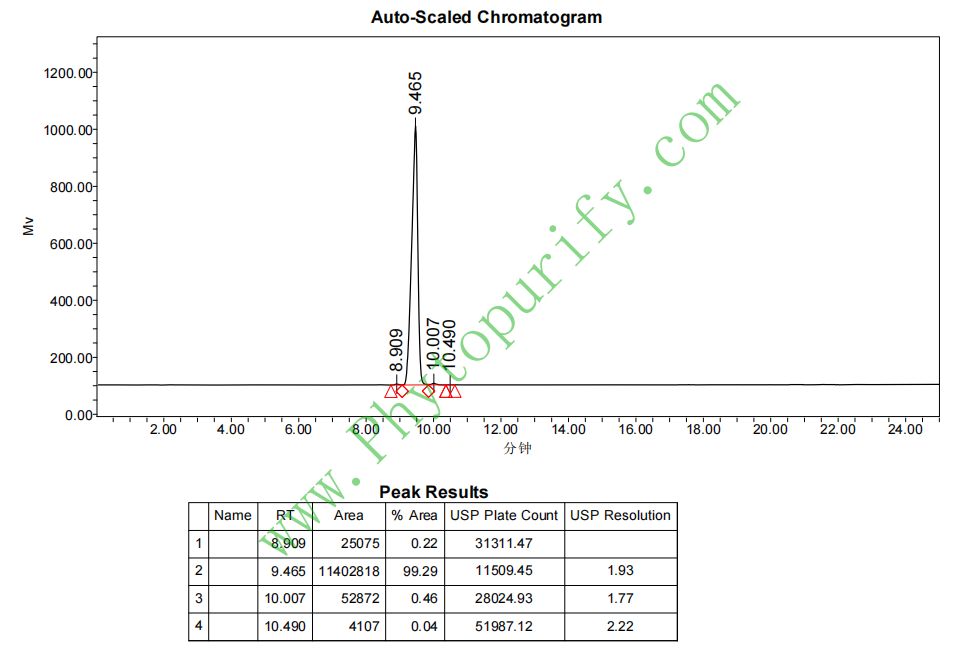
Purity: 95%~99%
Analysis Method: HPLC-DAD or/and HPLC-ELSD
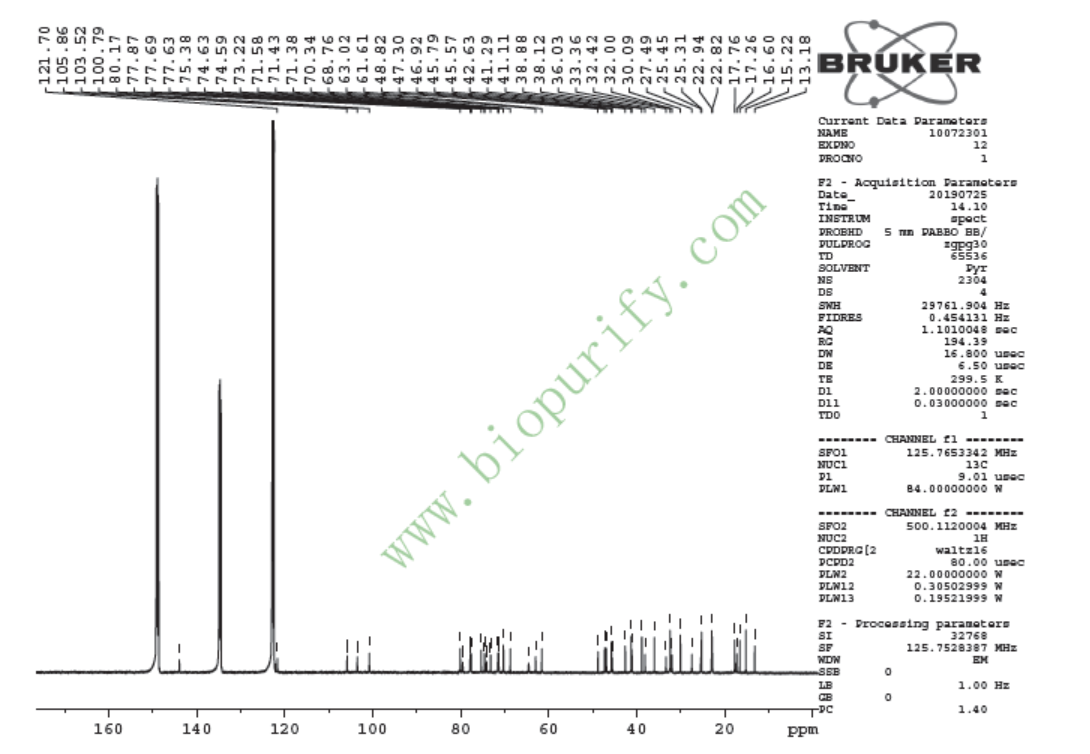
Identification Method: Mass, NMR
Packing: Brown vial or HDPE plastic bottle
Can be supplied from milligrams to grams.
For Reference Standard and R&D, Not for Human Use Directly.
Inquire for bulk scale.
NMR of Pulsatilla saponin D
HPLC of Pulsatilla saponin D
Storage conditions:Short-term storage at 2~8℃, long-term storage at -20 ~ -80℃
274.7500
2.2244
.4452
.1172
.5187
.1780
Low
79.3284
6.2812
No
No
Yes
No
No
No
0.0
Yes
No
Yes
No
Natural products, as an important treasure trove for drug discovery, have always played a crucial role in the long history of human fight against diseases. Among them, saponin compounds have attracted much attention due to their structural diversity and wide range of biological activities. Pulsatilla saponin D (also known as SB365, CAS number: 68027-15-6) is derived from the traditional Chinese medicine Pulsatilla chinensis(Pulsatilla chinensis A triterpenoid saponin isolated from the roots of Bunge Regel. As a classic heat clearing and blood cooling medicine, Bai Tou Weng is commonly used in traditional Chinese medicine clinical practice to treat diseases such as heat toxicity, blood dysentery, sores, abscesses, swelling, and pain. Modern pharmacological studies have revealed the significant potential of its extracts and monomeric components in anti-inflammatory, antibacterial, and anti-tumor aspects. In recent years, with a deeper understanding of the molecular mechanisms of tumor occurrence and development, Paeonia lactiflora saponin D has become a hot topic in the field of natural anti-tumor drug research due to its potent anti-cancer activity demonstrated in various tumor models. This article aims to systematically review the chemical structure, plant origin, pharmacological activity, mechanism of action, pharmacological evaluation, and clinical application prospects of Paeonia lactiflora saponin D, in order to provide comprehensive academic references for the in-depth research and development of this compound.
Baitouweng saponin D belongs to the oleane type pentacyclic triterpenoid saponin. Its molecular formula is C47H76O18The molecular weight is 913.1080. Its basic skeleton is oleanolic acid, with a trisaccharide chain composed of glucose, xylose, and arabinose connected at the C-3 position, which is an important structural basis for its biological activity. This glycosylation modification significantly affects its water solubility and ability to interact with target proteins.
From the analysis of physicochemical parameters related to drug properties, the lipid water partition coefficient (LogP) of Paeonia lactiflora saponins D is 2.2244, indicating its lipophilicity but not high hydrophobicity. Its topological polar surface area (TPSA) is as high as 274.7500 Å ², which is mainly attributed to the abundant hydroxyl groups in the molecule and multiple oxygen atoms on the sugar chain. High TPSA is usually not conducive to transmembrane permeation. Its water solubility value is 0.1172 (usually measured in mg/mL or log mol/L, relative here), indicating limited solubility in water and belonging to insoluble compounds. These physicochemical properties (high TPSA, moderate LogP, low water solubility) collectively determine its poor membrane permeability, which is reflected in its pharmacokinetic behavior, such as its predicted "low" blood-brain barrier permeability. In addition, preliminary drug safety screening showed that the risk of hERG inhibition was "no", and the Ames test result was 0.0 (negative), indicating a low potential risk of arrhythmia and genetic toxicity, providing preliminary safety evidence for its further development.
The main source of Paeonia lactiflora saponin D is Paeonia lactiflora, a plant in the genus Paeonia of the Ranunculaceae family(Pulsatilla chinensis)Dry roots. This plant is widely distributed in various regions of Northeast and North China, and its roots are the main medicinal parts. The extraction process usually uses organic solvent extraction combined with various chromatographic separation techniques. The classic process is as follows: first, the dried white haired Weng root is crushed, and then heated with methanol or ethanol (such as 70% -95% concentration) for reflux or ultrasound assisted extraction. After concentration, the crude extract of total saponins is obtained. Subsequently, macroporous adsorption resins (such as D101, AB-8) were used for preliminary enrichment and decolorization, followed by gradient elution with water and different concentrations of ethanol to collect saponin rich fractions. Further purification relies on techniques such as normal or reverse phase silica gel column chromatography, high performance liquid chromatography (HPLC), and preparative liquid chromatography (pre HPLC). C18 reverse phase chromatography column is commonly used, with methanol water or acetonitrile water as the mobile phase for gradient elution, monitored by UV detector (usually detected at wavelengths of 203-210 nm) or evaporative light scattering detector (ELSD), and finally separated to obtain high-purity paeoniflorin D monomer. Optimizing the extraction solvent, temperature, time, and adopting modern technologies such as high-speed countercurrent chromatography (HSCCC) can help improve its extraction efficiency and yield.
Numerous in vitro and in vivo studies have confirmed that Paeonia lactiflora saponin D has broad and potent anti-tumor activity, which is its core pharmacological action.
1. Antitumor activity:
* In vitro studies: Pulsatilla saponin D has significant proliferation inhibition and cytotoxicity effects on a variety of human tumor cell lines, including liver cancer (such as HepG2, SMMC-7721), gastric cancer (such as SGC-7901, MKN-45), colon cancer (such as HCT-116, SW480), lung cancer (such as A549, NCI-H460), breast cancer (such as MCF-7, MDA-MB-231), and leukemia cells (such as HL-60). Its half maximal inhibitory concentration (IC50) is usually at the micromolar (μ M) or even sub micromolar level, and its activity is stronger than many other homologous saponins.
* In vivo studies: In a nude mouse transplant tumor model, intraperitoneal injection or gavage of Paeonia lactiflora saponin D can significantly inhibit the growth of tumors such as liver cancer, gastric cancer, and colon cancer in a dose-dependent manner. The study also observed that there was no significant decrease in body weight in the treatment group mice, suggesting that they may have good tolerance within a certain dose range.
2. Other potential activities:
In addition to anti-tumor effects, some studies suggest that Paeonia lactiflora saponins D may also have anti-inflammatory and immunomodulatory effects, which are consistent with their traditional medicinal properties. However, relevant research is not yet in-depth and needs further clarification.
The anti-tumor effect of Paeonia lactiflora saponin D is not achieved through a single pathway, but involves the synergistic effect of multiple targets and pathways, reflecting the complexity of the mechanism of action of natural products. Its mechanism of action mainly includes inducing cell apoptosis, inhibiting cell proliferation, invasion and metastasis, and angiogenesis.
1. Inducing cell apoptosis: This is one of the core mechanisms of action of Paeonia lactiflora saponin D. It mainly initiates the endogenous mitochondrial apoptosis pathway by regulating members of the Bcl-2 protein family.
* Targeting MCL1 and BCL2: MCL1 and BCL2 are important anti apoptotic proteins. Baitouweng saponin D can downregulate the expression of MCL1 and BCL2, while upregulating the expression of pro apoptotic proteins such as Bax, leading to a decrease in mitochondrial membrane potential, release of cytochrome C, and activation of caspase cascade reaction, ultimately resulting in cell apoptosis.
* Inhibition of STAT3 signaling pathway: STAT3 is a key transcription factor that continuously activates to promote cell survival, proliferation, and inhibit apoptosis. Baitouweng saponin D can effectively inhibit the phosphorylation (activated form) of STAT3 and the expression of downstream target genes (such as Survivor, Cyclin D1), thereby relieving its inhibition of apoptosis.
2. Inhibit cell proliferation and DNA damage:
* Inhibition of Topoisomerase: Research has shown that saponins D from Paeonia lactiflora can inhibit the activity of topoisomerase I (TOP1) and topoisomerase II α (TOP2A). Topoisomerase is a key enzyme in DNA replication and transcription, and its inhibition can lead to DNA damage and replication fork arrest, triggering cell cycle arrest and apoptosis.
* Regulating the cell cycle: This compound can block tumor cells in the G0/G1 or G2/M phase, and its mechanism is related to the downregulation of cyclins (such as Cyclin D1, Cyclin B1) and cyclin dependent kinases (CDKs), as well as the upregulation of cyclin dependent kinase inhibitors (such as p21).
3. Inhibit tumor invasion and metastasis:
* Downregulation of matrix metalloproteinases (MMPs): Especially MMP2 and MMP9, these two enzymes can degrade the extracellular matrix and are key to tumor cell invasion and metastasis. Baitouweng saponin D weakens the invasive ability of tumor cells by inhibiting its expression and activity.
* Inhibition of HIF-1 α signaling pathway: Hypoxia inducible factor-1 alpha (HIF1A) plays a central role in tumor adaptation to hypoxic microenvironment, promotion of angiogenesis, and metastasis. Baitouweng saponin D can reduce the protein stability or expression of HIF-1 α, thereby inhibiting the expression of downstream vascular endothelial growth factor (VEGF) and exerting anti angiogenic effects.
4. Regulating other signaling pathways:
* Regulating the MAPK pathway: The mitogen activated protein kinase (MAPK) pathway, especially ERK (MAPK1), is involved in the transmission of cell proliferation and survival signals. The effect of Paeonia lactiflora saponins D on ERK signaling is cell type dependent, manifested as inhibition in some studies, thereby contributing to its anti proliferative effect.
* Affects estrogen signaling: For estrogen receptor positive (ER+) breast cancer, Pulsatilla saponin D may block estrogen driven tumor growth by interfering with estrogen receptor alpha (ESR1) signal or inhibiting the activity of aromatase (CYP19A1), which provides ideas for its application in hormone dependent tumors.
In summary, Baitouweng saponin D forms a multi-layered anti-tumor network by simultaneously acting on multiple key targets such as MCL1, BCL2, STAT3, TOP1/2A, MMP2, HIF1A, etc. This may be one of the reasons for its high efficiency and low susceptibility to drug resistance.
Although the in vitro activity of Paeonia lactiflora saponin D is significant, its pharmacological properties, especially pharmacokinetic properties, are the main challenges facing its conversion into drugs.
1. Absorption, distribution, metabolism, and excretion (ADME):
* Absorption: As a highly polar saponin, its oral bioavailability is expected to be low. This is mainly limited by its large molecular weight, poor intestinal permeability caused by high TPSA, and possible hydrolysis (deglycosylation) of intestinal microbiota or epithelial cell enzymes. Non oral routes (such as intravenous injection) may be a more effective way of administration.
* Distribution: Its blood-brain barrier permeability is low, which limits its therapeutic potential for brain tumors, but may also reduce the risk of central nervous system side effects. It may tend to be distributed in tissues with abundant blood flow, but the specific tissue distribution data needs to be confirmed by more in vivo studies.
* Metabolism and excretion: Saponin compounds typically undergo extensive metabolism in the body, including hydrolysis (gradual removal of glycosides), oxidation, binding, and so on. The main excretion pathways of the prototype drug and its metabolites may be bile and feces, with a relatively small proportion excreted by the kidneys. Whether it serves as a substrate for efflux pumps such as P-glycoprotein (P-gp), thereby affecting its intracellular accumulation and drug resistance, deserves further investigation.
2. Formulation strategy:
In order to improve its water solubility and bioavailability, modern pharmaceutical strategies are crucial. Feasible directions include: making it into nano formulations (such as liposomes, polymer nanoparticles, micelles), phospholipid complexes, cyclodextrin inclusion complexes, or self microemulsion delivery systems. These technologies can enhance their solubility, improve stability, promote intestinal lymphatic absorption, or achieve targeted delivery, thereby improving efficacy and reducing systemic toxicity.
3. Security:
The preliminary hERG and Ames test results are negative, indicating a positive signal. However, saponin compounds generally have hemolytic potential (due to their surface activity), so the hemolytic toxicity of Paeonia lactiflora saponin D needs to be systematically evaluated. In addition, its treatment window (the range between effective dose and toxic dose) needs to be determined through systematic acute and long-term toxicity experiments.
Baitouweng saponin D shows broad clinical application prospects, but also faces many challenges.
As a new candidate for anti-tumor drugs: Its multi-target mechanism of action makes it potentially effective against various solid tumors and hematological malignancies, especially for patients who develop resistance to single target drugs. Future research can explore its combination therapy with existing chemotherapy drugs such as topoisomerase inhibitors, paclitaxel, etc., in order to generate synergistic effects and reduce their respective doses and toxic side effects.
2. Precise treatment targeting specific targets: Given its inhibitory effect on difficult to drug targets such as STAT3 and MCL1/BCL2, paeoniflorin D or its structurally optimized derivatives may become a precise tool for treating specific tumor subtypes that rely on the activation of these pathways.
3. Structural modification and optimization: Reasonable structural modification using it as the mother nucleus is the key path to enhance its drug properties. For example, modifying its sugar moiety or synthesizing sugar simplified analogues may improve its pharmacokinetic properties; Masking polar groups through prodrug strategies may enhance their oral absorption.
4. Application of modern formulation technology: Developing a targeted delivery system based on nanotechnology can specifically deliver paeoniflorin D to tumor tissues, achieving "enhanced efficacy and reduced toxicity", which is a practical strategy to promote its clinical application.
5. Challenges and Future Directions: The current main challenge is that: ① there is still a lack of systematic and in-depth pharmacokinetic and toxicological research data; ② Although the network of mechanisms of action has been preliminarily outlined, the interaction relationships and dominant mechanisms between various targets still need to be validated in a more complex in vivo microenvironment; ③ The issue of process cost for large-scale and high-purity preparation. Future research should focus on: completing preclinical ADME and safety evaluation of the system; Using models such as gene knockout/knock in and organoid to further elucidate their in vivo mechanisms of action; Accelerate the development of preclinical studies that comply with drug registration standards, laying the foundation for clinical trial applications.
As a natural triterpenoid saponin derived from traditional Chinese medicine, Paeonia lactiflora saponin D has shown great potential in the field of anti-tumor drug development due to its potent inhibitory effects on multiple key tumor targets such as MCL1, BCL2, STAT3, TOP1/2A. Its multi pathway and multi-target characteristics are in line with current treatment strategies for complex disease networks. Despite challenges in drug formulation, particularly in terms of solubility and permeability, these obstacles are expected to be overcome through the empowerment of modern medicinal chemistry and pharmaceutical technology. In the future, through interdisciplinary in-depth research, including precise analysis of the mechanism of action, structural optimization, development of novel delivery systems, and standardized preclinical evaluation, Paeonia lactiflora saponin D is expected to gradually develop from a promising lead compound into a clinically valuable anti-tumor drug. It not only provides new treatment options for cancer patients, but also serves as a model for the modernization of traditional Chinese medicine and the development of innovative natural product drugs.
