


Synonym name: Pulchinenoside A
Catalogue No.: BP0169
Cas No.: 129724-84-1
Formula: C41H66O12
Mol Weight: 750.967
Botanical Source: Anemone chinensis and Pulsatilla chinensis
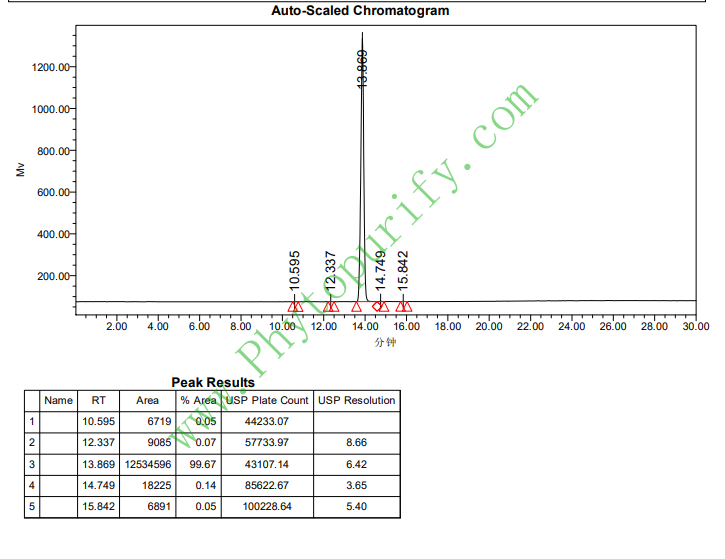
Purity: 95%~99%
Analysis Method: HPLC-DAD or/and HPLC-ELSD
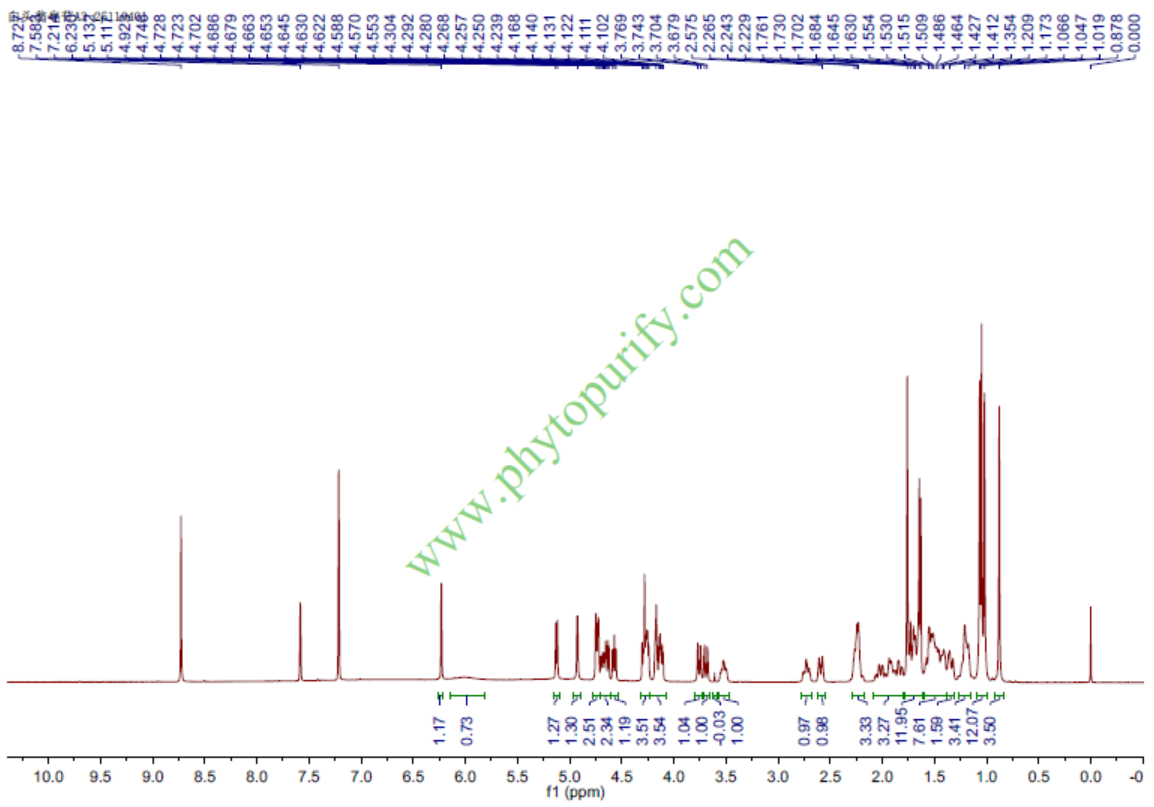
Identification Method: Mass, NMR
Packing: Brown vial or HDPE plastic bottle
Can be supplied from milligrams to grams.
For Reference Standard and R&D, Not for Human Use Directly.
Inquire for bulk scale.
HPLC of Anemoside A3
HNMR of Anemoside A3
Storage conditions:Short-term storage at 2~8℃, long-term storage at -20 ~ -80℃
213.6800
1.5200
No
No
No
No
Unknown
No
Unknown
Anemoside A3 (CAS number: 129724-84-1) is a typical triterpenoid saponin natural product, mainly derived from the Chinese medicinal herb Anemoside A3 (scientific name:)Pulsatilla chinensis)Obtained through separation. As one of the important active ingredients in traditional Chinese medicine, Baitouweng saponin A3 has received widespread attention in recent years due to its diverse pharmacological activities. Especially in the field of neurological diseases, this compound exhibits significant potential for cognitive function improvement and can alleviate memory impairments associated with aging and neurodegenerative diseases. In addition, Baitouweng saponin A3 also exhibits vasodilatory effects in the cardiovascular system, indicating its multi-target and multi pathway pharmacological properties.
With the incidence rate of neurodegenerative diseases increasing year by year, finding safe and effective cognitive enhancers has become a hot spot in contemporary drug research and development. Baitouweng saponin A3 has become a powerful candidate molecule in the natural medicine library due to its unique chemical structure and multi-target regulatory ability. This article will systematically review the chemical structure and physicochemical properties, plant sources and extraction methods, pharmacological activity and mechanism of action, pharmacological evaluation and pharmacokinetic characteristics of Baitouweng saponin A3, and explore its clinical application prospects and future research directions, aiming to provide theoretical basis and reference for the development of this compound.
Baitouweng saponin A3 belongs to the triterpenoid saponin class, with a molecular formula of C41H66O14 and a molecular weight of 782.96. The core of its structure is the pentacyclic triterpenoid mother nucleus, which connects multiple sugar residues to form a typical saponin structure. The LogP value of this compound is about 1.52, indicating that it has moderate lipid solubility, which is beneficial for cell membrane penetration but not prone to excessive hydrophobicity. The polar surface area (TPSA) is 213.68 Å ², and the number of hydrogen bond acceptors is 12, indicating its high molecular polarity, which may limit its ability to pass through the blood-brain barrier.
The structure of Baitouweng saponin A3 contains multiple hydroxyl and sugar groups, which endow it with strong water solubility and also affect its pharmacokinetic properties. Its molecular weight is relatively large, which may pose certain challenges to oral absorption and bioavailability. According to existing data, the compound is not easily able to pass through the blood-brain barrier (BBB), suggesting that its role in the central nervous system may depend on indirect mechanisms or specific delivery systems. In addition, the hERG channel inhibition experiment results were negative, indicating a low risk of cardiac toxicity, but liver toxicity and genetic toxicity (Ames test) are not yet clear.
Baitouweng saponin A3 is mainly found in the plant Baitouweng in the Ranunculaceae family(Pulsatilla chinensis)In the roots and rhizomes. As a traditional Chinese medicinal herb, Bai Tou Weng has a long history and is widely used in anti-inflammatory, antibacterial, and anti-tumor fields. Modern research has successfully isolated Baitouweng saponin A3 through chromatographic technology, laying the foundation for further pharmacological research.
The extraction method usually involves alcohol extraction combined with liquid chromatography separation. The specific steps include:
In recent years, the application of supercritical fluid extraction and membrane separation technology has provided new ideas for improving the extraction efficiency and purity of Baitouweng saponin A3, and is more in line with green and environmentally friendly production requirements.
Baitouweng saponin A3 showed significant improvement in cognitive dysfunction models. Multiple in vitro and in vivo experiments have shown that this compound can alleviate memory impairment caused by aging, Alzheimer's disease (AD), and other neurodegenerative diseases. Its mechanism of action involves neuronal protection, antioxidant stress, inhibition of neuroinflammation, and regulation of the neurotransmitter system.
In animal models of Alzheimer's disease, Baitouweng saponin A3 reduces nerve damage and significantly improves spatial memory and learning ability by inhibiting the deposition of β - amyloid protein (A β) and abnormal phosphorylation of tau protein. In addition, the compound can regulate the expression of nerve growth factor (NGF) and brain-derived neurotrophic factor (BDNF), promoting neural plasticity and repair.
Baitouweng saponin A3 showed significant vasodilatory effects in rat renal arteries, suggesting its potential cardiovascular protective effects. This effect may be achieved by regulating calcium ion channels, enhancing nitric oxide (NO) synthesis, and inhibiting the contraction of vascular smooth muscle cells. This type of vasodilation effect helps improve local blood flow, reduce vascular resistance, and has certain adjuvant therapeutic value for hypertension and related cardiovascular diseases.
Baitouweng saponin A3 also exhibits good anti-inflammatory activity, which can inhibit the activation of various pro-inflammatory factors such as tumor necrosis factor alpha (TNF - α), interleukin-6 (IL-6), and nuclear factor kappa B (NF - κ B) signaling pathways, reducing inflammatory responses. Its immunomodulatory effect provides a theoretical basis for its potential application in neuroinflammation and autoimmune diseases.
The multi-target mechanism of action of Baitouweng saponin A3 is the basis of its pharmacological activity. In response to acute neurological injuries such as subarachnoid hemorrhage (SAH), studies have found that this compound regulates multiple key targets, including NOTCH1, STAT3, CLEC4E, RORC, EPHX2, LGALS3, FGF1, and NR4A1.
In addition, Baitouweng saponin A3 may also exert neuroprotective effects by regulating oxidative stress-related signaling pathways (such as Nrf2/ARE) and neurotransmitter systems (such as glutamate and acetylcholine). The synergistic regulation characteristics of multiple targets and pathways provide new ideas for the treatment of complex neurodegenerative diseases.
The pharmacological analysis of Baitouweng saponin A3 shows that it has certain advantages and challenges. The high molecular weight (782.96) and polarity (TPSA 213.68) limit its oral absorption and ability to cross the blood-brain barrier, indicating the need to optimize the administration route or develop special delivery systems (such as nanocarriers, liposomes) to enhance the bioavailability of the central nervous system.
The LogP value is 1.52, indicating that it has moderate lipid solubility, which is beneficial for cell membrane penetration, but good water solubility, which is beneficial for in vivo distribution. The hERG channel inhibition experiment was negative, indicating a low risk of cardiac toxicity, but liver toxicity and genetic toxicity are not yet clear, and further systematic safety evaluation is needed.
In terms of pharmacokinetics, current research is relatively limited. Preliminary in vivo experiments have shown that saponins A3 from Paeonia lactiflora are metabolically stable in plasma, mainly processed by the liver metabolic enzyme system, and may be excreted mainly through bile and urine. Its half-life is moderate and suitable for multiple administrations to maintain its efficacy. In the future, systematic ADME (absorption, distribution, metabolism, excretion) research and toxicological evaluation are needed to provide data support for clinical development.
Baitouweng saponin A3, as a natural triterpenoid saponin, has good potential for neuroprotection and cognitive function improvement, especially in the treatment of neurodegenerative diseases such as Alzheimer's disease and Parkinson's disease, showing broad application prospects. Its multi-target regulatory mechanism enables it to simultaneously act on multiple pathological processes such as neuroinflammation, oxidative stress, and neuronal apoptosis, which meets the needs of modern multifactorial disease treatment.
In addition, the vasodilatory effect of Baitouweng saponin A3 in the cardiovascular system provides a possibility for its application in hypertension and vascular dysfunction diseases. In the future, by combining modern drug delivery technologies such as brain targeted nanocarriers and structural modification strategies, it is expected to overcome the limitations of blood-brain barrier penetration and enhance the efficacy of the central nervous system.
During the clinical translation process, it is important to focus on the systematic evaluation of its pharmacokinetic characteristics, safety, and effective dose range. At the same time, combining modern molecular biology techniques to deeply analyze its targets and signaling pathways will help to accurately locate its therapeutic indications and promote the development of personalized medicine.
Future research should also expand the potential applications of Baitouweng saponin A3 in other fields, such as immune regulation, anti-tumor and metabolic diseases, fully tapping into its multifunctional pharmacological value. In addition, conducting drug design and optimization based on big data and artificial intelligence will promote the pharmacological transformation and new drug development of Baitouweng saponin A3.
As a unique triterpenoid saponin with multiple targets and mechanisms of pharmacological activity, Baitouweng saponin A3 has shown great potential in neuroprotection, cognitive function improvement, and cardiovascular disease treatment. Although there are certain challenges in its drug development, with the assistance of modern drug research and development technology, it is expected to achieve clinical translation.
Future research should focus on systematic pharmacokinetics and safety evaluation, in-depth analysis of its molecular mechanism of action, optimization of drug delivery strategies, and exploration of its application value in various diseases. Baitouweng saponin A3 not only enriches the research content of natural product pharmacology, but also provides valuable molecular basis and theoretical support for the development of new cognitive enhancers and multifunctional drugs.
In summary, Baitouweng saponin A3 has significant potential as a new drug for the treatment of neurodegenerative and related diseases in the future, and is worthy of further in-depth research and development.
