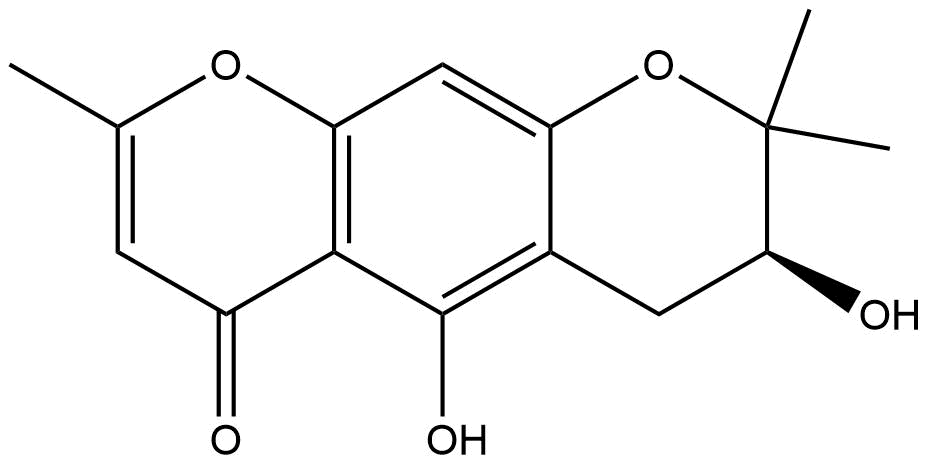


Product name: Hamaudol
Synonym name: (3'S)-(-)-Hamaudol
Catalogue No.: BP2082
Cas No.: 735-46-6
Formula: C15H16O5
Mol Weight: 276.288
Botanical Source: Saposhnikoviae Radix
Physical Description:
Type of Compound: Flavonoids
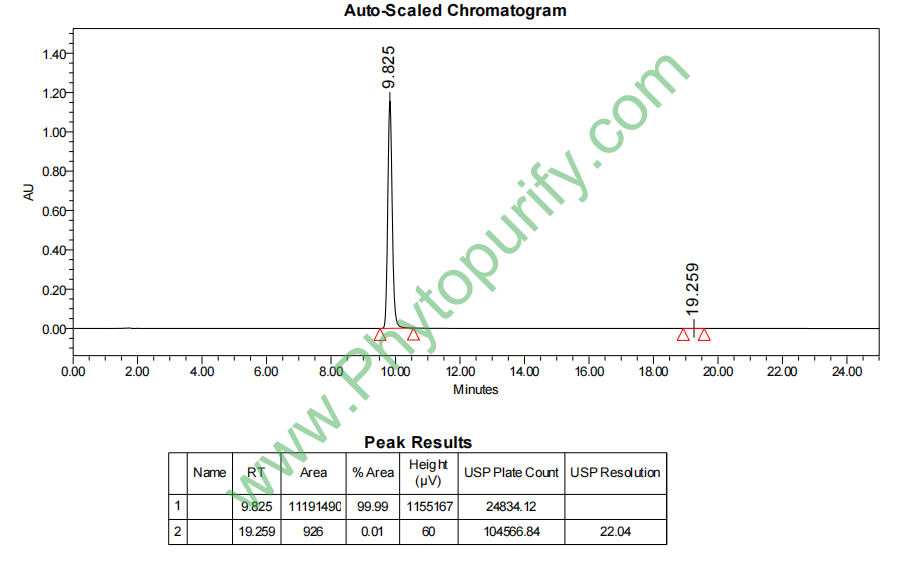
Purity: 95%~99%
Analysis Method: HPLC-DAD or/and HPLC-ELSD
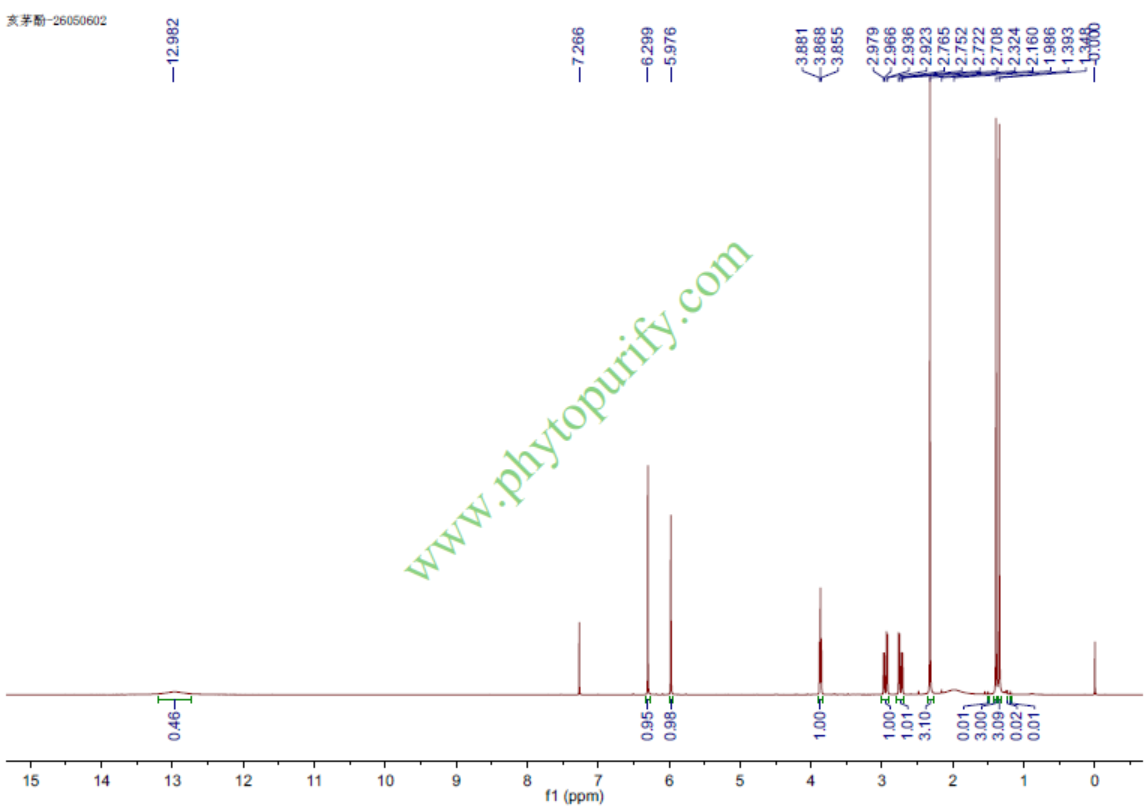
Identification Method: Mass, NMR
Packing: Brown vial or HDPE plastic bottle
Storage: Store in a well closed container, protected from air and light. Put into refrigerate or freeze for long term storage.
Whenever possible, you should prepare and use solutions on the same day. However, if you need to make up stock solutions in advance, we recommend that you store the solution as aliquots in tightly sealed vials at -20℃. Generally, these will be useable for up to two weeks.
The product could be supplied from milligrams to grams
Inquire for bulk scale.
For Reference Standard and R&D, Not for Human Use Directly.
HPLC of Hamaudol
HNMR of Hamaudol
Storage conditions:Short-term storage at 2~8℃, long-term storage at -20 ~ -80℃
79.9000
1.8048
1.7862
.1793
2.0203
10.2762
Low
78.4120
3.4328
Yes
No
No
No
Yes
Yes
0.6
Yes
No
Yes
No
Hamaudol (CAS number: 735-46-6) is a natural ketone compound isolated from the traditional Chinese medicine Saposhnikovia divaricata. As one of the main active ingredients in windproof, coumarin has attracted widespread attention due to its significant anti-inflammatory effects and inhibitory activity on cyclooxygenase (COX) enzymes. In recent years, as the incidence rate of inflammatory diseases continues to rise, the potential therapeutic value of Haimao phenol in inflammatory bowel disease, rheumatoid arthritis, psoriasis, osteoarthritis, gout and other chronic inflammatory diseases has gradually been revealed. This article aims to systematically review the chemical structure and physicochemical properties, plant sources and extraction methods, pharmacological activity and mechanism of action, pharmacological evaluation, and clinical application prospects of Sophora flavescens, providing theoretical basis and reference for its research in natural product pharmacology and new drug development.
Haimaofen is a typical chromone compound with a molecular formula of C16H16O5 and a molecular weight of 276.2880. Its structural features include a benzene ring with multiple hydroxyl substituents and a chromone core structure, endowing it with strong biological activity. In terms of physicochemical properties, the LogP value of Haimaofen is 1.8048, indicating that it has moderate lipid solubility, which is beneficial for membrane penetration and bioavailability. Its topological polar surface area (TPSA) is 79.9 Å ², indicating moderate polarity that may affect its absorption and distribution characteristics. Low water solubility (0.1793 mg/mL) suggests limited solubility in aqueous phase and may require improvement in bioavailability through formulation techniques. Low blood-brain barrier penetration ability reduces the risk of central nervous system side effects. The hERG channel inhibition experiment was negative, indicating a low risk of cardiac toxicity from berberine. The Ames test result is 0.6, indicating a low risk of genetic toxicity and meeting safety requirements.
Haimao phenol is mainly extracted from the roots of Saposhnikovia divaricata. Windproof is a plant of the Umbelliferae family, widely distributed in Northeast and North China. It has always been used in traditional Chinese medicine to treat diseases such as wind cold, cold, headache, rheumatism, and pain. The extraction of Haimao phenol is usually carried out using organic solvent extraction combined with chromatographic separation technology. The specific methods include:
In recent years, supercritical CO2 extraction and membrane separation technologies have also been attempted to improve extraction efficiency and purity, reduce solvent residue, and promote industrial production.
The pharmacological activity of Haimaofen mainly focuses on its anti-inflammatory and analgesic effects. Its inhibitory effect on cyclooxygenase-1 (COX) and COX-2 is the core of its anti-inflammatory mechanism. Experimental data showed that the IC50 values of berberine on COX-1 and COX-2 were 0.30 mM and 0.57 mM, respectively, demonstrating effective inhibitory ability on both enzymes, especially exhibiting strong selective inhibition on COX-1.
Both in vitro and in vivo experiments have confirmed that berberine has significant anti-inflammatory effects. In the acute inflammation model of mice, berberine can significantly inhibit the release of inflammatory mediators, reduce tissue edema and inflammatory cell infiltration. Its anti-inflammatory effect is not limited to inhibiting COX enzyme activity, but also involves the regulation of various inflammatory signaling pathways.
Haimaofen exerts analgesic effects by inhibiting the synthesis of inflammatory mediators and reducing the levels of prostaglandins (PGs). In animal experiments, berberine significantly prolonged the latency period of pain caused by thermal and chemical stimuli, demonstrating good analgesic activity.
Some studies have shown that berberine also has antioxidant and immune regulatory effects, but the relevant mechanisms still need further clarification.
The mechanism of action of berberine is complex, involving multiple signaling pathways and molecular targets, especially its regulatory role in inflammatory diseases has attracted much attention.
Haimaofen competitively binds to the active sites of COX-1 and COX-2, inhibiting the synthesis of prostaglandins and reducing inflammatory reactions. This mechanism is similar to nonsteroidal anti-inflammatory drugs (NSAIDs), but its lower hERG inhibition and genetic toxicity risk may lead to better safety.
Haimaofen affects various inflammation related targets, including key factors such as nuclear factor kappa B (NF - κ B), signal transduction and transcription activator 3 (STAT3), tumor necrosis factor alpha (TNF - α), and interleukin-6 (IL-6). For example:
Haimaofen enhances cellular antioxidant capacity and reduces tissue damage caused by oxidative stress by activating the NFE2L2 (NRF2) signaling pathway. Meanwhile, its regulation of immune regulatory molecules helps to restore immune homeostasis and alleviate chronic inflammation.
The pharmacological parameters of Haimaofen show that it has good potential for drug development:
In terms of pharmacokinetics, Haimaofen has good oral absorption, but its bioavailability may be affected due to its limited water solubility. Metabolism in the body mainly occurs through the liver enzyme system, and the safety of metabolites still needs further research. The main excretion pathways are the kidneys and bile.
Haimaofen, as a natural ketone anti-inflammatory active ingredient, has broad clinical application potential. Its targeted effects in various inflammatory diseases provide important clues for the development of new anti-inflammatory drugs. The clinical application prospects of Haimaofen in the future are mainly reflected in the following aspects:
However, the clinical translation of berberine still faces many challenges, including improving water solubility and bioavailability, systematic safety evaluation, pharmacokinetic optimization, and large-scale clinical trial validation. Future research needs to combine modern medicinal chemistry, pharmacy, and molecular biology techniques to deeply reveal its mechanism of action, optimize formulation design, and promote its clinical application.
Haimaofen, as a natural ketone compound derived from windbreak, has shown broad application prospects in the treatment of inflammatory diseases due to its significant anti-inflammatory activity and multi-target regulatory effects. Its good pharmacokinetic parameters and low safety risks provide favorable conditions for the development of new drugs. In the future, through systematic pharmacological mechanism research, pharmacokinetic optimization, and clinical validation, berberine is expected to become an important candidate for the development of natural anti-inflammatory drugs, promoting the application and development of natural medicines in modern medicine.
