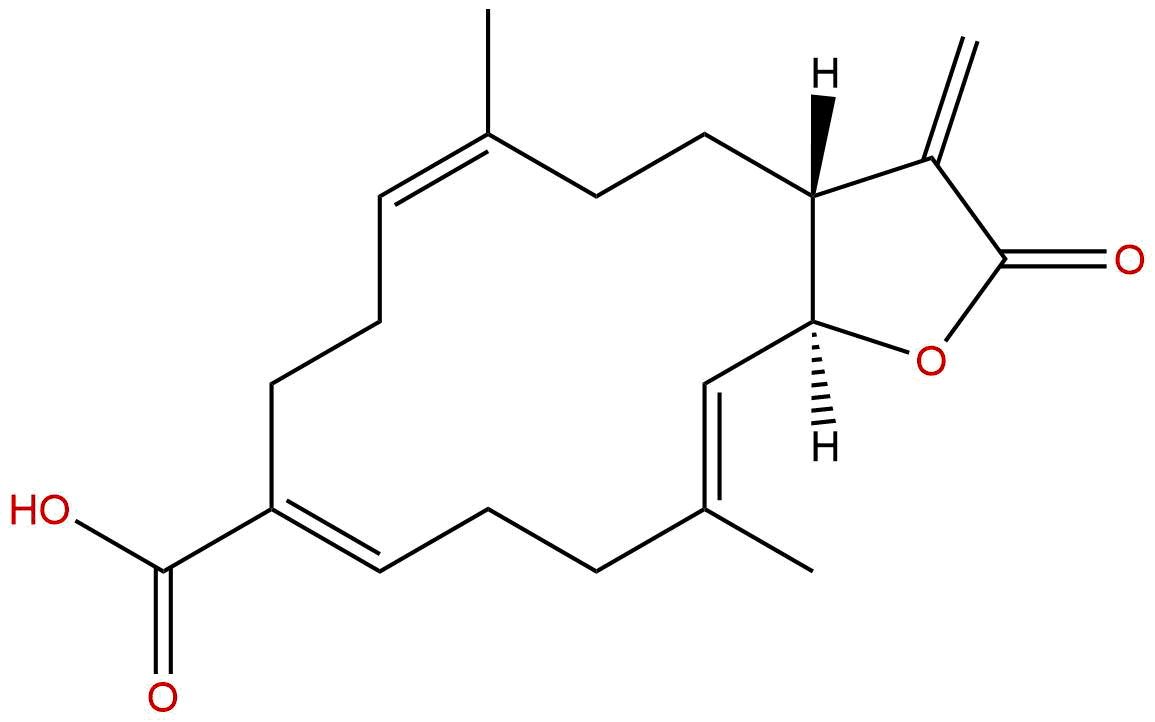


Product name: Anisomelic acid
Synonym name: Ovatodiolide acid;Anisomelolide
Catalogue No.: BP5291
Cas No.: 59632-76-7
Formula: C20H26O4
Mol Weight: 330.424
Botanical Source:
Type of Compound:
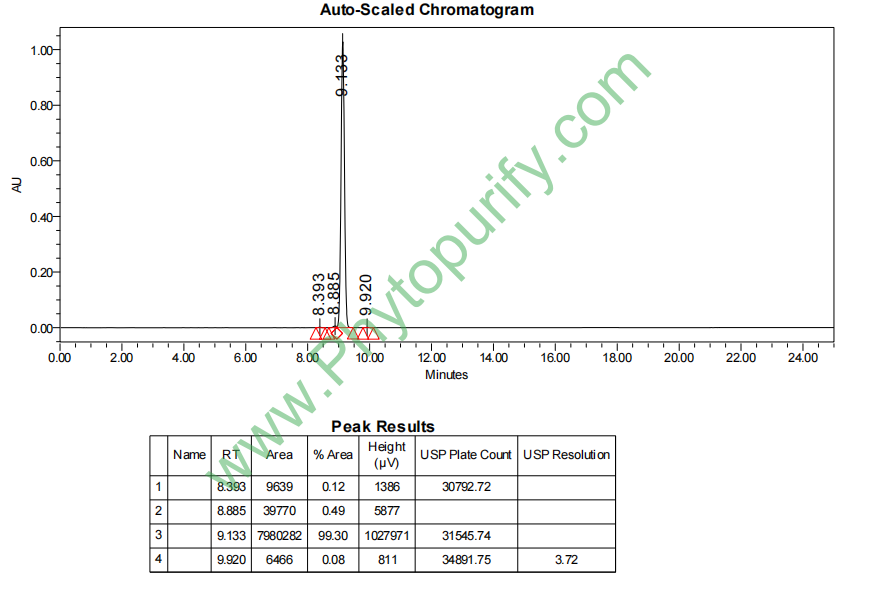
Purity: 95%~99%
Analysis Method: HPLC-DAD or/and HPLC-ELSD
Identification Method: Mass, NMR
Packing: Brown vial or HDPE plastic bottle
Storage: Store in a well closed container, protected from air and light. Put into refrigerate or freeze for long term storage.
Whenever possible, you should prepare and use solutions on the same day. However, if you need to make up stock solutions in advance, we recommend that you store the solution as aliquots in tightly sealed vials at -20℃. Generally, these will be useable for up to two weeks.
The product could be supplied from milligrams to grams
Inquire for bulk scale.
For Reference Standard and R&D, Not for Human Use Directly.
HPLC of Anisomelic acid
Storage conditions:Short-term storage at 2~8℃, long-term storage at -20 ~ -80℃
63.6000
3.1003
.4785
.2018
4.9802
3.9277
Low
89.1584
4.3799
No
Yes
No
No
Yes
No
0.0
Yes
Yes
Yes
Yes
Natural products, as an important source of drug discovery, play a crucial role in the long struggle between humans and diseases. Isolating and identifying small molecule compounds with biological activity from traditional herbs, and elucidating their pharmacological mechanisms, is an important paradigm in modern medicinal chemistry and pharmacology research. In this field, terpenoids derived from traditional medicinal plants have attracted much attention due to their structural diversity and wide range of biological activities. Anisomelic acid, a natural product with a unique chemical framework, is a shining pearl among these compounds.
Windbreak acid, chemical name (+) - Isomelic acid, CAS registration number 59632-76-7, was originally isolated from plants in the Lamiaceae family as a diterpenoid compound. Its discovery history can be traced back to the 1970s, when Indian scientists were studying traditional herbs Parsnip(Anisomeles indica (L.) Kuntze, When conducting systematic research on the chemical composition of the plant (also known as Guangfengfeng or Mayiye), this compound was extracted and identified for the first time from the aboveground part of the plant.Anisomeles indica The Ayurveda medical system in India and folk medicine in China have a long history of application, commonly used to treat rheumatism, fever, skin eczema, snake and insect bites, and allergic diseases. The discovery of windproof acid provides an important chemical basis for explaining these traditional effects.
In recent years, with the increasing incidence of allergic diseases (such as allergic rhinitis, asthma, atopic dermatitis, food allergy, etc.) worldwide, it has become a serious public health problem. Existing anti allergic drugs, such as antihistamines, glucocorticoids, and leukotriene receptor antagonists, can effectively alleviate symptoms, but often come with side effects such as drowsiness, metabolic disorders, and poor tolerance to long-term use. Therefore, searching for anti allergic lead compounds with new mechanisms of action and high efficiency and low toxicity from natural products has become a hot direction in drug development. Windproof acid, with its significant anti allergic activity, especially its ability to regulate multiple key allergic reaction targets, has gradually emerged from numerous natural products and attracted widespread attention from scholars at home and abroad. This article aims to systematically review the chemical structure, plant sources, pharmacological activity, mechanism of action, pharmacological evaluation, and clinical application prospects of windbreak acid, in order to provide comprehensive references for the in-depth research and development of this natural product.
Windbreak acid belongs to the enantiomeric kaempferol type(ent-The core skeleton of kaurane diterpenoid compounds consists of four isoprene units, forming a highly rigid four ring system. Specifically, its structural features include a fully hydrogenated phenanthrene ring (A, B, C ring) fused with a cyclopentane ring (D ring) via a helical or bridged ring. The unique feature of windbreak acid is that it is linked to an α, β - unsaturated γ - lactone ring (butenolide) at the C-16 position, which is considered a key pharmacophore for its anti allergic activity. In addition, there are multiple chiral centers in the molecule that give it a specific stereoconfiguration, which is crucial for its precise identification with biological targets. Its absolute configuration is usually reported as (5 β, 8 α, 9 β, 10 α, 13 α, 16 α) -16,19-dihydroxy enantiomer-11-en-18-acid lactone, or simply (+) - Isomelic acid.
From the perspective of physical and chemical properties, the molecular formula of windproof acid is C ₂₀ H ₂₆ O ₄, with a precise molecular weight of 330.4240 g/mol. The LogP value of its lipid water partition coefficient is 3.1003, indicating that the compound has moderate lipophilicity, which facilitates its penetration of the cell membrane and interaction with intracellular targets. The topological polar surface area (TPSA) is 63.6000 Å ², which is lower than the threshold commonly considered for good oral drug absorption (approximately 140 Å ²), suggesting that it may have good oral absorption potential. In terms of water solubility, its calculated water solubility is 0.2018 mg/mL, which belongs to the category of slight solubility. This is common in many diterpenoid compounds and also poses challenges for subsequent formulation development. It is worth noting that pharmacological evaluation shows that the blood-brain barrier (BBB) penetration ability of windbreak acid is relatively low, which to some extent reduces its risk of central nervous system side effects (such as drowsiness), which is a favorable characteristic for the development of anti allergic drugs. In addition, the hERG inhibition prediction result was negative, and the Ames test prediction value was 0.0, indicating a low risk of cardiac and genetic toxicity and demonstrating good safety potential. These physicochemical properties and preliminary pharmacological parameters have laid a solid foundation for windbreak acid as an oral anti allergic candidate drug.
The main plant source of windproof acid is the family Lamiaceae Parsnip(Anisomeles indica (L.) Kuntze)。 This plant is widely distributed in tropical and subtropical regions such as southern China, Taiwan, India, Sri Lanka, Southeast Asia, and Australia. In China, it often grows on slopes, roadsides, forest edges, and wastelands at an altitude of 100-800 meters. Except Anisomeles indica Other plants belonging to the same genus, such as Anisomeles malabarica It has also been reported to contain windbreak acid, but the content is usually low. Therefore,Anisomeles indica It is the main biological resource for obtaining windproof acid.
The traditional extraction method usually uses organic solvent extraction. Given that windbreak acid is a moderately polar diterpenoid acid, commonly used extraction solvents include methanol, ethanol, or their aqueous solutions. The typical extraction process is as follows: dry the Anisomeles indica After crushing the above ground parts, multiple extractions were carried out using 95% ethanol or methanol at room temperature or under heating conditions (such as reflux extraction). Combine the extracts and concentrate under reduced pressure to obtain the total extract. Subsequently, the total extract was dispersed in water and subjected to liquid-liquid extraction using solvents of different polarities such as petroleum ether, ethyl acetate, and n-butanol to achieve preliminary enrichment. Due to the good solubility of windproof acid in ethyl acetate, its active ingredients are usually enriched in the ethyl acetate extraction site.
Further separation and purification require the use of modern chromatographic techniques. Silica gel column chromatography is the most commonly used method, typically using mixed solvent systems such as chloroform methanol or petroleum ether acetone for gradient elution. Collect the fraction containing oxalic acid through thin-layer chromatography (TLC) monitoring. For samples with high purity requirements, Sephadex LH-20 gel column chromatography (methanol or chloroform methanol as mobile phase) can be used in combination for molecular sieve separation to remove pigments and other impurities. Finally, high-purity oxalic acid monomer can be obtained through preparative high-performance liquid chromatography (Pre HPLC). In recent years, with the promotion of green chemistry concepts, some new extraction techniques such as supercritical fluid extraction (SFE), ultrasound assisted extraction (UAE), and microwave-assisted extraction (MAE) have also been attempted for the extraction of windbreak acid. These methods have the advantages of high extraction efficiency, short time, and low solvent dosage, showing good application prospects. The extracted windbreak acid is usually a white or off white crystalline powder, and its structure can be confirmed by techniques such as nuclear magnetic resonance spectroscopy (NMR), mass spectrometry (MS), and circular dichroism (CD).
The pharmacological activity research of windbreak acid mainly focuses on the field of anti allergy, but recent studies have also revealed its potential in anti-inflammatory and immune regulation.
Antiallergic activity This is the most core and extensively studied pharmacological activity of windbreak acid. Multiple in vitro and in vivo experiments have confirmed its powerful anti allergic effect.
* Inhibit degranulation of mast cells Mast cells are the core effector cells of allergic reactions. Research has shown that windbreak acid can significantly inhibit the degranulation process of mast cells mediated by immunoglobulin E (IgE). In RBL-2H3 (rat basophilic leukemia cells) or human derived mast cell lines (such as LAD2), pretreatment with windbreak acid can dose dependently reduce the release of β - hexosaminase and histamine, which are markers of mast cell activation. Its mechanism of action may be related to stabilizing the cell membrane and inhibiting the increase of intracellular calcium ion concentration.
* Inhibition of eosinophil activation Eosinophils are key inflammatory cells in allergic inflammation, especially in asthma and allergic rhinitis. Windbreak acid has been found to inhibit the chemotaxis, adhesion, and degranulation of eosinophils. In a mouse asthma model induced by ovalbumin (OVA), oral or intraperitoneal injection of windbreak acid significantly reduced the number of eosinophils in bronchoalveolar lavage fluid (BALF) and decreased the activity of eosinophil peroxidase (EPO).
* Inhibit Th2 type immune response Allergic reactions are essentially an overactivation of Th2 type immune responses. Windbreak acid can significantly inhibit the production of Th2 cytokines (such as IL-4, IL-5, IL-13). In the OVA sensitized mouse model, the mRNA expression levels and protein secretion of IL-4 and IL-5 in spleen cells of the windbreak acid treatment group were significantly lower than those of the model group. Meanwhile, it can also downregulate the expression of transcription factor GATA-3, which is a key regulatory factor for Th2 cell differentiation.
* Improve symptoms of allergic rhinitis In animal models of allergic rhinitis, administration of windbreak acid through the nasal cavity or orally can effectively alleviate behavioral symptoms such as sneezing and scratching, as well as reduce eosinophil infiltration and goblet cell proliferation in the nasal mucosa.
* Antiallergic dermatitis In mouse models of dinitrochlorobenzene (DNCB) or atopic dermatitis, local application or oral administration of windbreak acid can significantly alleviate skin redness, thickening, and itching symptoms, reduce serum IgE levels and Th2 cytokine levels in skin tissue.
anti-inflammatory activity In addition to anti allergic effects, windbreak acid also exhibits broad-spectrum anti-inflammatory effects. In a macrophage model stimulated by lipopolysaccharide (LPS), windbreak acid can inhibit the production of pro-inflammatory factors such as tumor necrosis factor - α (TNF - α), interleukin-1 β (IL-1 β), and IL-6, as well as inhibit the synthesis of nitric oxide (NO) and prostaglandin E2 (PGE2). These effects are related to their regulation of the nuclear factor kappa B (NF - κ B) and mitogen activated protein kinase (MAPK) signaling pathways.
Other activities Preliminary studies also suggest that windbreak acid may have anti-tumor, antibacterial, and hepatoprotective activities, but research in these areas is not yet in-depth and needs further verification.
The complex pharmacological activity of windbreak acid stems from its regulatory effect on multiple key molecular targets, especially in the anti allergic signaling network. According to existing research, its main mechanism of action can be summarized as follows:
Targeting the arachidonic acid metabolic pathway This is one of the core mechanisms of the anti allergic effect of windbreak acid. Research has confirmed that windbreak acid is an effective inhibitor of 5-lipoxygenase (ALOX5). ALOX5 is a key enzyme that catalyzes the conversion of arachidonic acid into leukotrienes (LTs), and leukotrienes (especially LTC4, LTD4, LTE4) are potent pro-inflammatory and sensitizing mediators that play a central role in asthma and allergic rhinitis. By inhibiting ALOX5, windbreak acid can effectively block the synthesis of leukotrienes, thereby reducing airway spasms, inflammation, and mucus secretion. In addition, it can also inhibit the activity of thromboxane A2 receptor (TBXA2R), which is another important lipid mediator that causes bronchial constriction and platelet aggregation.
Regulating the histamine signaling pathway Histamine is one of the earliest released mediators in allergic reactions, causing vasodilation, increased permeability, and itching by acting on the histamine receptor (HRH1). Although windbreak acid is not a direct HRH1 receptor antagonist, it can indirectly exert its antihistamine effect by inhibiting degranulation of mast cells and reducing histamine release from the source.
Key transcription factors that inhibit Th2 type immune response STAT6 (Signal Transduction and Transcription Activation Factor 6) is a key transcription factor downstream of the IL-4/IL-13 signaling pathway, which is crucial for the differentiation of Th2 cells and the production of Th2 cytokines (IL-4, IL-5, IL-13). Research has shown that windbreak acid can inhibit the phosphorylation and nuclear translocation of STAT6, thereby blocking the signaling of IL-4/IL-13, downregulating the expression of GATA-3, and ultimately inhibiting the overactivation of Th2 type immune response. This explains why it can simultaneously inhibit multiple Th2 cytokines such as IL-4, IL-5, IL-13, etc.
Acting on epithelial derived cytokines Thymic stromal lymphopoietin (TSLP) is a cytokine mainly produced by epithelial cells and is the "main switch" that initiates the chain of allergic reactions. TSLP can activate dendritic cells, promoting their induction of initial T cell differentiation into Th2 cells. Research has found that windbreak acid can inhibit the expression and release of TSLP in airway epithelial cells, thereby exerting a blocking effect at the initial stage of allergic reactions.
Inhibition of high affinity IgE receptor (FCER1A) signaling FCER1A encodes the high affinity receptor alpha chain of IgE. When allergens crosslink with IgE bound to FCER1A on the surface of mast cells, it triggers mast cell activation. Windbreak acid may inhibit the activation of mast cells by downregulating the expression of FCER1A or interfering with the phosphorylation of downstream signaling molecules such as Syk kinase and Lyn kinase.
In summary, windbreak acid does not act on a single target, but exerts its anti allergic effect through a network regulation mode of "multi-target, multi pathway". Its target network covers key stages of allergic reactions, from initiation (TSLP), effector cell activation (FCER1A, ALOX5, HRH1), inflammatory mediator synthesis (ALOX5, TBXA2R) to immune response amplification (STAT6, IL4, IL5, IL13). This multi-target mode of action may make it more effective than single target drugs and reduce compensatory side effects caused by single pathway blockade.
To push windbreak acid from laboratory research to clinical application, a systematic evaluation of its pharmacological properties is necessary. The physical and chemical parameters mentioned earlier (LogP 3.1, TPSA 63.6, water solubility 0.2 mg/mL) have preliminarily shown that it meets the Lipinski's Rule of Five and has good oral drug potential. However, its low water solubility is a potential bottleneck that restricts its bioavailability.
Pharmacokinetic (ADME) characteristics At present, there is insufficient systematic research on the pharmacokinetics of windbreak acid in vivo, but some preliminary findings have been made.
* absorb Given its moderate LogP value, windbreak acid can theoretically be absorbed by the gastrointestinal tract through passive diffusion. However, low water solubility may result in a slow dissolution rate, thereby affecting the absorption rate and degree. There are studies attempting to prepare it into phospholipid complexes or cyclodextrin inclusion complexes to improve its water solubility and oral bioavailability.
* distribution Low BBB penetration is a significant advantage, meaning it is mainly distributed in peripheral tissues and difficult to enter the central nervous system, thus avoiding the central side effects such as drowsiness and dizziness commonly seen with traditional antihistamines (such as first generation antihistamines).
* Metabolism As a diterpenoid compound, windbreak acid is likely to undergo phase I metabolism (such as oxidation and reduction) and phase II metabolism (such as glucuronidation and sulfation) in the liver. The CYP450 enzyme system may be involved in its metabolism. The specific metabolic pathways and metabolites need further identification.
* excretion Its excretion pathway is speculated to be mainly through bile and kidneys. Due to its moderate molecular weight, some prototype drugs may be excreted into the intestine through bile, and there is a possibility of enterohepatic circulation.
safety evaluation The preliminary toxicological evaluation results are encouraging. A negative Ames test indicates no mutagenicity, while a negative hERG inhibition indicates a lower risk of inducing QT interval prolongation in the heart. In acute toxicity experiments, no significant lethal toxicity was observed with windbreak acid at higher doses (such as intraperitoneal injection of 200 mg/kg in mice). Subchronic toxicity studies have also shown that it has a good safety window. However, long-term toxicology research (such as chronic toxicity, reproductive toxicity, carcinogenicity) is still a necessary task before its clinical development.
Formulation development strategy To address the issue of poor water solubility, various formulation technologies can be used to enhance its bioavailability, such as solid dispersions, nanoparticles, liposomes, self microemulsifying drug delivery systems (SMEDS), etc. In addition, considering its application in the treatment of allergic rhinitis and asthma, the development of nasal sprays or inhalants is also a promising direction, which can directly deliver drugs to the site of action, increase local drug concentration and reduce systemic exposure.
Based on the unique anti allergic mechanism and preliminary safety evaluation of windbreak acid, it has shown broad application prospects in the treatment of various allergic diseases.
Future research directions:
* In depth mechanism research Using modern molecular biology techniques such as CRISPR-Cas9 gene editing, proteomics, transcriptomics, to further elucidate the precise molecular patterns of its binding to targets such as ALOX5, STAT6, TSLP, and whether there are other undiscovered targets.
* Research on Structural Optimization and Structure Activity Relationship (SAR)Using oxalic acid as the lead compound, the structure is modified through chemical synthesis methods (such as modifying the lactone ring and introducing new functional groups) in order to obtain derivatives with higher activity, better selectivity, and better pharmacokinetic properties.
* Systematic pharmacokinetic study Conduct standardized preclinical pharmacokinetic experiments, including oral bioavailability, tissue distribution, metabolic pathways, and excretion studies in animal models such as rats and dogs.
* Long term toxicological evaluation According to the requirements of new drug application, complete comprehensive toxicology research, including reproductive toxicity, developmental toxicity, carcinogenicity, etc.
* clinical trial After completing sufficient preclinical studies, rigorous Phase I, II, and III clinical trials should be designed to validate their safety, efficacy, and optimal dosing regimen in humans.
As a diterpenoid natural product derived from the traditional medicinal plant Windproof Grass, Windproof Acid provides new ideas and candidate molecules for the treatment of allergic diseases with its unique chemical structure and multi-target anti allergic mechanism. It can not only inhibit the production of key allergic mediators such as leukotrienes and histamine, but also regulate Th2 type immune response and epithelial cytokine signaling upstream, demonstrating potential beyond traditional single target anti allergic drugs. Its good initial drug parameters, especially low BBB penetration and low toxicity prediction, give it significant advantages in developing a new generation of safe, efficient, and central side effect free anti allergic drugs.
Although the research on windbreak acid is still in the preclinical stage, there is still a long way to go before it becomes a formal clinical drug, including solving its water solubility problems, completing systematic pharmacokinetic and toxicological evaluations, and ultimately passing clinical trials for testing. But there is no doubt that the study of windbreak acid not only reveals the scientific connotation of traditional herbal medicine "windbreak" in treating allergies, but also provides a highly valuable natural lead compound for modern drug discovery. With the continuous deepening of research and advances in technology, we have reason to believe that windbreak acid and its derivatives have the potential to become important members of the anti allergic drug family in the future, bringing new treatment options to billions of allergy patients worldwide.
