


Product name: Cimifugin
Synonym name: Cimitin
Catalogue No.: BP0356
Cas No.: 37921-38-3
Formula: C16H18O6
Mol Weight: 306.314
Botanical Source: Bitter principle from the rhizomes of Cimicifuga simplex. Angelica japonica and Ledebouriella seseloides
Physical Description: Powder
Type of Compound: Flavonoids
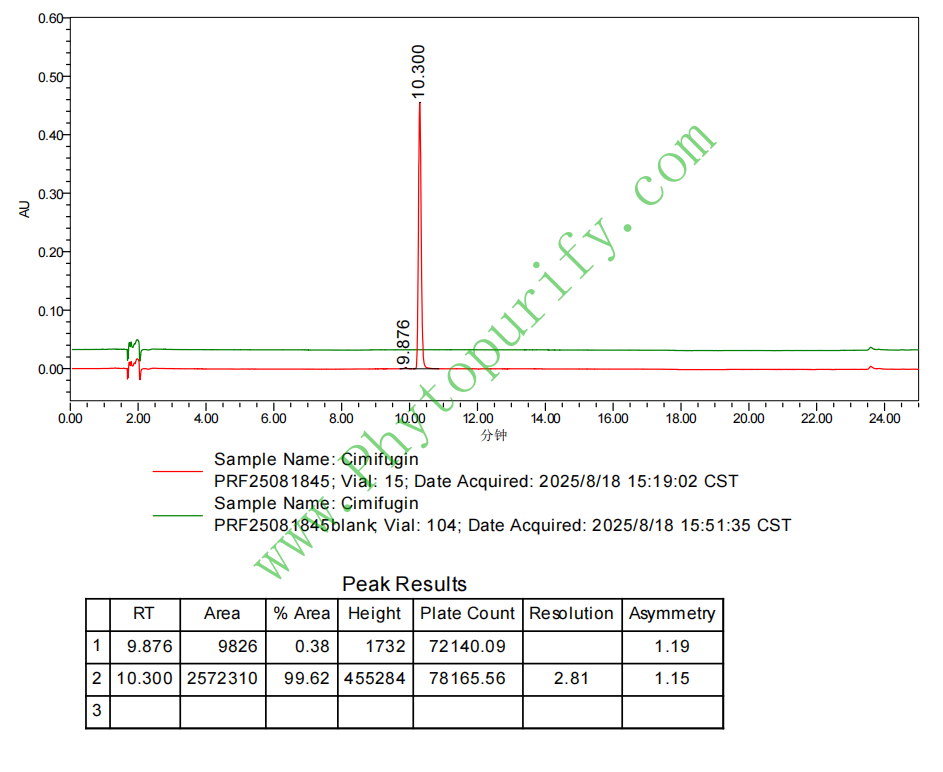
Purity: 95%~99%
Analysis Method: HPLC-DAD or/and HPLC-ELSD
Identification Method: Mass, NMR
Packing: Brown vial or HDPE plastic bottle
Storage: Store in a well closed container, protected from air and light. Put into refrigerate or freeze for long term storage.
Whenever possible, you should prepare and use solutions on the same day. However, if you need to make up stock solutions in advance, we recommend that you store the solution as aliquots in tightly sealed vials at -20℃. Generally, these will be useable for up to two weeks.
The product could be supplied from milligrams to grams, up to kilograms
Inquire for bulk scale.
Descriptions:
Cimifugin, isolated from Peucedanum schottii, displays low to moderate inhibition towards AChE and BChE (3.12 and 21.63%, respectively) at 200 μg mL-1.[1]
Cimifugin evidently inhibits FITC-induced type 2 allergic contact dermatitis,and its mechanism might related to regulating the balance of Th1 /Th2 by inhibiting type 2 cytokines.[2]
References:
[1] Koziol E, Senol F S, Orhan I E, et al. Natl Prod Communicat, 2016, 6.
[2] Jiang X, Wang H, Gui L, et al. Pharmacol Clin Chinese Mat Med, 2014, 30(2):28-30.
[3] Wang X, Wang Z, Sun H, et al. Arzneimittel-Forschung, 2008, 58(9):445-50.
HPLC of Cimifugin
Storage conditions:Short-term storage at 2~8℃, long-term storage at -20 ~ -80℃
89.1300
1.0715
1.0713
.3352
1.1426
6.4954
High
72.9847
3.5333
Yes
No
No
No
Yes
Yes
0.9
Yes
No
Yes
Yes
Natural products, as an important treasure trove for drug discovery, play an irreplaceable role in the history of human disease prevention and treatment. Among them, active ingredients derived from traditional medicinal plants have shown great potential in the treatment of complex diseases such as cancer and inflammatory diseases due to their structural diversity and multi-target action characteristics. Cimifugin (CAS number: 37921-38-3), also known as Cimitin, is an important phenylpropanoid compound isolated from traditional Chinese medicine plants in the genus Cimicifuga, especially from the genus Cimicifuga racemosa (now mostly classified as Actaea racemosa). Black cohosh is commonly used in traditional medicine in North America and Europe to treat menopausal syndrome, rheumatic pain, and inflammatory diseases in women. The material basis of its pharmacological effects has always been a research hotspot.
In recent years, with the deepening of modern pharmacological research, the biological activity spectrum of gastrodin has been continuously expanded and elucidated. Early research mainly focused on its anti-inflammatory and anti allergic properties, such as its ability to inhibit allergic inflammatory reactions by regulating tight junctions of epithelial cells and reducing the release of key inflammatory mediators. More notably, a series of cutting-edge studies have revealed the significant activity of gastrodin in anti-tumor, especially in the field of prostate cancer. Its effects involve inducing apoptosis, inhibiting proliferation, blocking cell cycle, anti metastasis, and reversing multidrug resistance at multiple levels, and interact with multiple key signaling pathways and molecular targets. These findings elevate gastrodin from a traditional anti-inflammatory ingredient to a lead compound with multi-target anti prostate cancer potential.
This article aims to provide a systematic review of the chemical structure, plant sources, pharmacological activities, especially the mechanism and molecular targets of its anti prostate cancer effect, of gastrodin, and to preliminarily evaluate its pharmacological properties, in order to provide comprehensive scientific references for the deep development and clinical application of this natural product.
Cimicin is a typical phenylpropanoid compound, with the chemical name (2S) -2- [(2R, 3R) -7-hydroxy-2,3-dihydro-2- (1-hydroxy-1-methylethyl) -2,3-dihydrobenzofuran-3-yl] propionic acid-4-methoxyphenyl ester. Its molecular formula is C17H22O6 and its molecular weight is 306.3140.
Structurally, the core skeleton of coumarin is composed of a benzodihydrofuran ring (chromophore structure) connected to a p-methoxyphenyl group through a propionate chain. This structure contains multiple chiral centers, giving it a specific stereoconfiguration that is crucial for its biological activity. There are functional groups such as hydroxyl, methoxy, and ester bonds in the molecule, which not only affect its physical and chemical properties, but also serve as key sites for its interaction with biomolecules such as enzymes and receptors.
According to the provided pharmacological parameters, the lipid water partition coefficient (LogP) of gastrodin is 1.0715, indicating its moderate lipophilicity and favorable transmembrane transport. Its topological polar surface area (TPSA) is 89.13 Å ², which is at a moderate level, indicating that it may have good membrane permeability. The water solubility value is 0.3352 (usually measured in mg/mL or log mol/L, not specified here, but the value is relatively small), indicating limited solubility in water, which may need to be considered in formulation development. It is worth noting that its blood-brain barrier (BBB) penetration is predicted to be "high", suggesting that the compound may have central nervous system activity or be able to act on brain related disease targets, providing a structural basis for its potential anti brain tumor or neuroinflammatory applications. In addition, hERG inhibition was predicted as' no ', reducing the likelihood of inducing QT interval prolongation in the heart; The Ames test value is 0.9 (usually less than 1.5 is considered negative), indicating that there is no significant genetic toxicity risk. These physicochemical and preliminary toxicological parameters have laid a relatively favorable foundation for its subsequent development.
Cimicifuga is mainly derived from various plants in the genus Cimicifuga or Actaea of the Ranunculaceae family. Among them, the most famous and primary source is black cohosh (Cimicifuga racemosa (L.) Nutt. or Actaea racemosa L.). Black cohosh is native to eastern North America, and its dried rhizomes and roots are traditional medicinal parts, as well as the raw materials for modern extraction of coumarins and related triterpenoid saponins. In addition, other plants belonging to the same genus, such as C. dahurica and C. heracleifolia, commonly used Asian varieties of kenaf, also contain coumarin, but the content and composition may vary.
The extraction of gastrodin from plant materials is usually carried out using organic solvent extraction method. The common process includes: first, degreasing the dried and crushed black cohosh roots with petroleum ether or n-hexane to remove non-polar impurities such as oil and chlorophyll. Subsequently, medium polarity solvents such as ethanol, methanol, or ethanol water mixed solvents with different ratios are used for reflux extraction or ultrasound assisted extraction. The alcohol extract is concentrated under reduced pressure to obtain a paste. To further enrich gastrodin, the extract can be suspended in water and subjected to liquid-liquid extraction using solvents such as ethyl acetate and n-butanol. Cimicin is mainly distributed in the ethyl acetate extraction site.
After obtaining the crude extract, further separation and purification are required to obtain high-purity coumarin monomers. Column chromatography technology is commonly used, with silica gel as the stationary phase and gradient elution systems such as chloroform methanol and petroleum ether ethyl acetate for separation. Combined with thin-layer chromatography (TLC) or high-performance liquid chromatography (HPLC) for tracking and detection. Prepa HPLC is currently the most effective and commonly used method for obtaining high-purity coumarin monomers, typically using a reverse phase C18 chromatography column with methanol water or acetonitrile water as the mobile phase. In recent years, new separation techniques such as high-speed counter current chromatography (HSCCC) have also been applied to the efficient preparation and separation of phenylpropanoid compounds in plants of the Cistanche genus.
Cimicifugin exhibits a wide range of pharmacological activities, and its research has expanded from traditional anti-inflammatory and anti allergic fields to multiple aspects such as anti-tumor, neuroprotective, and cardiovascular protection.
1. Anti inflammatory and anti allergic activity:
This is the earliest pharmacological effect of gastrodin that has been extensively studied. Research has shown that gastrodin can effectively inhibit the excessive production of inflammatory factors (such as TNF - α, IL-6, IL-1 β, NO, PGE2) in mouse macrophages RAW264.7 induced by lipopolysaccharide (LPS). In the allergic inflammation model, gastrodin stabilizes and enhances the expression of tight junction proteins (such as ZO-1 and Occludin) in respiratory epithelial cells, reduces epithelial barrier damage, and inhibits the release of key alarm factors such as thymic stromal lymphopoietin (TSLP) caused by allergens such as dust mites, ultimately reducing airway hyperresponsiveness and inflammatory infiltration. In addition, it can inhibit degranulation of mast cells and histamine release, exhibiting anti allergic properties.
2. Antitumor activity (focus: prostate cancer):
The anti-tumor activity of gastrodin, especially its effects on androgen dependent and non androgen dependent prostate cancer, is currently at the forefront and focus of research. Both in vivo and in vitro experiments have confirmed its significant effect.
* In vitro studies: Cistanche can dose dependently inhibit the proliferation activity of various prostate cancer cell lines (such as LNCaP, PC-3, DU145). Its mechanism of action is complex, including inducing cell cycle arrest (such as blocking cells in G0/G1 phase or G2/M phase); Activate mitochondrial apoptosis pathway, upregulate pro apoptotic protein Bax, downregulate anti apoptotic protein Bcl-2, leading to activation of Caspase cascade reaction and cell apoptosis; Inhibiting the migration, invasion, and epithelial mesenchymal transition (EMT) process of cancer cells is related to its ability to downregulate the expression of matrix metalloproteinases such as MMP-2 and MMP-9.
* In vivo studies: In the nude mouse prostate cancer transplant tumor model, gastric or intraperitoneal administration of gastrodin significantly inhibited tumor growth and volume, and no significant toxic reactions were observed. It can not only directly kill tumor cells, but also exert indirect anti-tumor effects by regulating the tumor microenvironment, such as inhibiting the pro tumor function of tumor associated macrophages.
3. Other pharmacological activities:
* Neuroprotective effect: Thanks to its high blood-brain barrier penetration, gastrodin has shown protective effects in models such as cerebral ischemia-reperfusion injury and Alzheimer's disease, which may be related to anti-inflammatory, antioxidant, and anti apoptotic mechanisms.
* Cardiovascular protective effect: It is suggested that Cimicifuga may have anti atherosclerosis potential by inhibiting the proliferation and migration of vascular smooth muscle cells and reducing endothelial inflammation.
* Antioxidant activity: Cimicifugin has a certain ability to scavenge free radicals, which helps alleviate oxidative stress-related damage.
The pharmacological effects of gastrodin, especially its anti prostate cancer activity, are achieved by regulating multiple cellular signaling pathways and acting on multiple key molecular targets, reflecting the advantages of natural products with multi-target effects.
1. Regulation of core signaling pathways:
* MAPK signaling pathway: Cimicin can inhibit the phosphorylation activation of MAPK family members (ERK, JNK, p38) induced by LPS or growth factors. In prostate cancer, inhibition of the ERK pathway is associated with impaired cell proliferation, while regulation of the JNK/p38 pathway is associated with apoptosis induction and inflammation inhibition.
* NF - κ B signaling pathway: This is one of the core targets of anti-inflammatory and anti-tumor effects of gastrodin. It can prevent the degradation of I κ B α and p65 nuclear translocation, thereby inhibiting the transcriptional activity of NF - κ B, leading to downregulation of downstream pro-inflammatory factors (TNF - α, IL-6), anti apoptotic proteins (Bcl-2, Survivor), and invasion related proteins (MMP-9) expression.
* STAT3 signaling pathway: STAT3 is a key oncogenic transcription factor that is continuously activated in prostate cancer. Cistanche can inhibit tyrosine phosphorylation of STAT3, block its dimerization and nuclear DNA binding activity, thereby downregulating the expression of its target genes (such as Cyclin D1, Bcl-2, VEGF), inhibiting cell proliferation, promoting apoptosis, and anti angiogenesis.
2. Key molecular target interactions:
According to the provided target information, the interaction between gastrodin and prostate cancer involves multiple levels:
* Apoptosis regulatory targets: Direct or indirect reduction BCL2 The expression and activity of anti apoptotic proteins may also be activated CASP1 Apoptosis executing proteins such as cysteine protease-1 jointly promote cancer cell apoptosis.
* Survival and stress response targets: inhibit HIF1A The stability or activity of hypoxia inducible factor-1 α disrupts the adaptability of tumor cells to hypoxic microenvironments; Possible through influence NFE2L2 The NRF2 pathway regulates cellular oxidative stress response, but its specific role in activation or inhibition depends on the context.
* Proliferation and resistance targets: inhibit STAT3(As mentioned earlier) and PRKCA The activity of protein kinase C α, which is involved in cell proliferation, differentiation, and migration signaling. Of particular importance, it has been reported that coumarin can be downregulated ABCB1 The expression or function of P-glycoprotein can reverse multidrug resistance in prostate cancer cells and enhance the efficacy of chemotherapy drugs such as docetaxel.
* Hormones and epigenetic related targets: Perhaps as ESR2 The regulator of estrogen receptor beta, ER β, usually plays an anti-cancer role in the prostate, and its activation may inhibit cell proliferation. Correct TOP1 The potential inhibitory effect of topoisomerase I may interfere with DNA replication. And its impact on PTPN1 The effect of protein tyrosine phosphatase 1B may involve the regulation of insulin and leptin signaling pathways, which are related to cancer metabolism.
These targets do not exist in isolation, but form a complex network. Cistanche may exert synergistic effects by simultaneously acting on multiple nodes in the network, ultimately achieving multidimensional inhibition of prostate cancer growth, metastasis, and drug resistance.
Based on the parameters provided in the previous text and existing research, a preliminary evaluation of the pharmacological properties of coumarin is conducted.
Pharmacokinetic studies:
At present, there is relatively limited pharmacokinetic research on the coumarin system, but there are some animal experimental data available. After oral administration of gastrodin in rats or mice, its absolute bioavailability still needs to be accurately determined, but it suggests that it can be absorbed orally. Its metabolism in the body may be relatively rapid, with main metabolic pathways including hydrolysis of ester bonds, glucuronic acid or sulfate binding of hydroxyl groups, and demethylation. The prototype drug and its metabolites may be mainly excreted through urine and bile. Its high blood-brain barrier penetration prediction has been indirectly confirmed in some neuroprotective studies. In depth pharmacokinetic research, including the entire process of absorption, distribution, metabolism, and excretion, as well as species differences, is a necessary step for future preclinical development.
Analysis of advantages of drug properties:
1. Clear structure and significant activity: As a single compound, it has a clear structure and clear in vitro and in vivo anti prostate cancer activities, and its mechanism of action has been extensively studied.
2. Multi target effect: For complex prostate cancer, multi-target intervention may have advantages over single target drugs, helping to overcome drug resistance.
3. Preliminary safety is good: Predicted no hERG cardiac toxicity and genotoxicity (Ames negative), and no severe acute toxicity was reported in animal experiments at effective doses, providing preliminary support for its safety.
4. The drug like parameters are still acceptable: The molecular weight is moderate (~306), the LogP is moderate, and the TPSA is moderate, meeting the basic requirements of the Rule of Five and having the potential to develop into oral drugs.
Challenges and improvement directions for drug development:
1. Low water solubility: Limited solubility may affect its oral absorption and formulation development. Improvements can be made by preparing formulations such as salts (if salt forming groups are present), solid dispersions, cyclodextrin inclusion complexes, nanocrystals, or liposomes.
2. Lack of PK data in the system: It is necessary to comprehensively study its ADME characteristics in different animal models, clarify its oral bioavailability, half-life, tissue distribution, and main metabolites.
3. Accuracy of mechanism of action and target interaction: At present, many target relationships are still at the level of "correlation" or "regulation", requiring more direct evidence (such as co crystallization, surface plasmon resonance, chemical proteomics, etc.) to confirm their direct binding and mode of action with specific target proteins.
4. Re evaluation of in vivo efficacy and toxicity: Long term efficacy evaluation needs to be conducted in prostate cancer animal models that are closer to human diseases, such as PDX models, and standardized GLP toxicology studies need to be completed to clarify their safety window.
As a natural lead compound with multi-target anti prostate cancer activity, the clinical application prospects of gastrodin are mainly reflected in the following aspects:
1. As a candidate drug or lead compound for anti prostate cancer:
* Single drug development: On the basis of further optimizing its solubility, metabolic stability, and bioavailability, the development of coumarin or its derivatives as a novel small molecule drug for anti prostate cancer is particularly suitable for patients who have developed resistance to existing hormone therapy or chemotherapy.
* Combination therapy sensitizer: Given its ability to downregulate ABCB1 (P-gp) and inhibit survival promoting pathways such as NF - κ B and STAT3, the combination of gastrodin with conventional chemotherapy drugs (such as docetaxel) or novel targeted drugs has the potential to synergistically enhance efficacy and reverse drug resistance, and has important clinical translational value.
2. Application in inflammation related diseases:
Based on its clear anti-inflammatory and anti allergic mechanisms, gastrodin can be used to develop drugs for the treatment of inflammatory diseases such as allergic asthma, atopic dermatitis, and chronic obstructive pulmonary disease (COPD). The characteristic of regulating epithelial barrier function provides a new approach for treating diseases related to impaired barrier function.
3. Potential applications in neurodegenerative diseases:
Its excellent blood-brain barrier penetration and neuroprotective effects against inflammation, oxidation, and apoptosis make it of exploratory value in the prevention and treatment of diseases such as ischemic stroke, Alzheimer's disease, and Parkinson's disease.
Future research prospects:
1. Structural optimization and derivative design: Based on the parent nucleus structure of coumarin, modifications were made through medicinal chemical methods to enhance its activity, selectivity, water solubility, and metabolic stability, and to discover candidate molecules with better drug properties.
2. In depth study of the mechanism of action: Using chemical biology methods, accurately identify the protein group of its direct target and draw a complete pharmacological action network map.
3. Development of a new delivery system: Develop a nano targeted delivery system (such as prostate-specific membrane antigen (PSMA) targeted nanoparticles) to address its solubility issue, improve its accumulation at the prostate tumor site, reduce systemic exposure and potential side effects.
4. Preclinical and clinical research advancement: After completing preclinical pharmacological, pharmacokinetic, and toxicological studies of the system, actively promote its entry into clinical trials to verify its safety and efficacy in humans.
Cistanche, a phenylpropanoid compound discovered from the traditional medicinal plant black cohosphae, has evolved from an initial anti-inflammatory ingredient to a highly promising multi-target lead compound in the field of anti-tumor, especially in the treatment of prostate cancer. It exhibits multiple effects of inhibiting prostate cancer cell proliferation, inducing apoptosis, anti metastasis, and reversing drug resistance by synergistically regulating key signaling pathways such as MAPK, NF - κ B, STAT3, and affecting multiple molecular targets related to cell apoptosis, drug resistance, and microenvironment adaptation such as BCL2, ABCB1, and HIF1A. Despite facing challenges such as water solubility and insufficient systematic pharmacokinetic data in drug development, its clear activity, multi-target advantages, and preliminary good safety predictions have laid a solid foundation for its subsequent development.
In the future, through interdisciplinary cooperation, combined with medicinal chemistry, pharmacology, pharmacy, and clinical medicine, in-depth exploration and systematic development of gastrodin are expected to provide new treatment strategies for difficult to treat diseases such as prostate cancer, as well as a vivid practice to promote the modernization of traditional Chinese medicine and the creation of new natural product drugs. The research process of gastrodin fully demonstrates that in-depth interpretation of the modern scientific connotation of active ingredients in traditional Chinese medicine is the key path to realizing its value transformation and enhancement.
