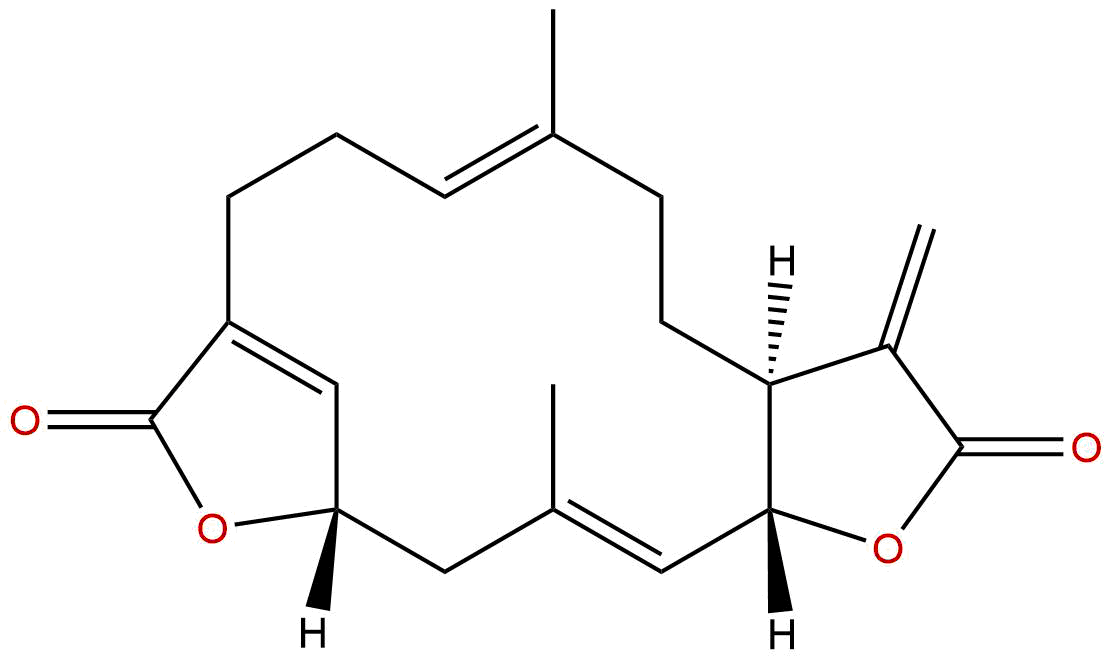


Product name: Ovatodiolide
Synonym name:
Catalogue No.: BP5292
Cas No.: 3484-37-5
Formula: C20H24O4
Mol Weight: 328.408
Botanical Source:
Type of Compound:
Purity: 95%~99%
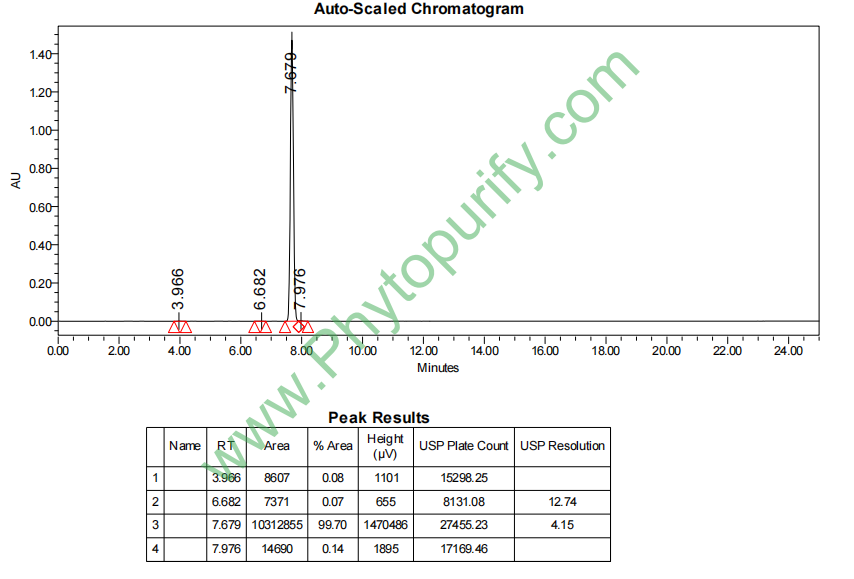
Analysis Method: HPLC-DAD or/and HPLC-ELSD
Identification Method: Mass, NMR
Packing: Brown vial or HDPE plastic bottle
Storage: Store in a well closed container, protected from air and light. Put into refrigerate or freeze for long term storage.
Whenever possible, you should prepare and use solutions on the same day. However, if you need to make up stock solutions in advance, we recommend that you store the solution as aliquots in tightly sealed vials at -20℃. Generally, these will be useable for up to two weeks.
The product could be supplied from milligrams to grams
Inquire for bulk scale.
For Reference Standard and R&D, Not for Human Use Directly.
HPLC of Ovatodiolide
Storage conditions:Short-term storage at 2~8℃, long-term storage at -20 ~ -80℃
52.6000
3.0607
3.0607
.0683
6.0891
7.3124
High
80.2614
5.5691
No
Yes
No
No
Yes
No
0.0
Yes
Yes
Yes
Yes
Natural products, as an important source of drug discovery, play an irreplaceable role in the long history of human struggle against diseases. Isolating and identifying small molecule compounds with biological activity from traditional herbs, and elucidating their mechanisms of action, is an important paradigm in modern medicinal chemistry and pharmacology research. In this context, it originates from the traditional medicinal plant Guangfengfeng(Anisomeles indica)Ovadotiolide, with its unique chemical structure and various pharmacological activities, especially its significant anti-cancer, anti-inflammatory, and antiviral potential, has attracted widespread attention from scholars at home and abroad.
Windproof grass lactone is a diterpenoid compound belonging to the enantiomeric kaempferol type(ent-Kaurane) diterpenoid lactones. Its name comes from its plant origin - Guangfengfeng, which has a long history of application in traditional medical systems in India, China, and Southeast Asia. It is commonly used to treat rheumatism, rheumatism, fever, skin eczema, and snake and insect bites. Modern pharmacological research has preliminarily revealed the scientific connotation of these traditional effects, confirming that the extract of Guangfengfeng has antibacterial, anti-inflammatory, antipyretic, analgesic, and immune regulatory effects. As one of its main active ingredients, windbreak grass lactone is considered to be the key material basis for these pharmacological effects.
In recent years, breakthrough progress has been made in the research of windbreak lactone. Research has confirmed that this compound not only has broad-spectrum antibacterial activity, but also exerts strong anti-inflammatory effects by regulating multiple signaling pathways. What is particularly noteworthy is its enormous potential in the field of anti-tumor treatment. Windproof grass lactone can induce the production of reactive oxygen species (ROS), activate the ATM/ATR (ataxia telangiectasia mutation/Rad3 related protein) signaling pathway, and trigger G2/M phase arrest and apoptosis of cells, exhibiting selective cytotoxicity to various cancer cell lines. In addition, preliminary studies suggest that it may possess antiviral activity by acting on multiple viral targets such as MPO, UL42, UL54, CCR5, CXCR4, etc., providing new candidate molecules for combating viral infectious diseases.
This article aims to provide a systematic review of the current research status of windbreak lactone. The article will first introduce its chemical structure and physicochemical properties, followed by an explanation of its plant origin and extraction and isolation methods, with a focus on sorting out its pharmacological activities in anti-cancer, anti-inflammatory, antibacterial, and antiviral aspects, and delving into its mechanism of action and molecular targets. Based on this, the potential of this natural product as a lead compound or candidate drug is evaluated by combining its pharmacological parameters and pharmacokinetic characteristics, and its future clinical application prospects and research directions are discussed, in order to provide reference for the in-depth development and utilization of this natural product.
The chemical structure of Ovatidiolide is the basis of its biological activity. From a chemical classification perspective, it belongs to the diterpenoid class, specifically the enantiomeric kaempferol diterpenoid lactones. Its core skeleton is composed of four isoprene units, forming a polycyclic system with multiple chiral centers. The unique feature of windbreak grass lactone lies in the presence of an α, β - unsaturated γ - lactone ring (pentagonal lactone ring) within its molecule, which is considered a key pharmacophore for its interaction with biological targets and various pharmacological activities. In addition, the molecule contains multiple hydroxyl groups and double bonds, which provide the possibility for further chemical modification and derivatization.
According to the provided compound information, the molecular formula of windbreak grass lactone is C ₂₀ H ₂₄ O ₄, with a molecular weight of 328.4080 Da. Its lipid water partition coefficient (LogP) is 3.0607, indicating that the compound has moderate lipophilicity, which is beneficial for its penetration of cell membranes, but may also affect its solubility in aqueous environments. In fact, its water solubility parameter is 0.0683 mg/mL, indicating its low solubility in water, which may be one of the reasons why its oral bioavailability is facing challenges. The polar surface area (TPSA) is 52.6000 Å ², which is within a reasonable range. Molecules with TPSA less than 140 Å ² are generally considered to have good oral absorption potential. It is worth noting that its blood-brain barrier (BBB) penetration has been evaluated as "high", suggesting that windbreak lactone may have the ability to enter the central nervous system, providing a possibility for its treatment of central nervous system diseases such as brain tumors and neuroinflammation. However, on the other hand, it may also pose potential risks of central nervous system toxicity that need to be addressed in subsequent research.
In terms of safety prediction, the hERG (human Ether - à - go Related Gene) inhibition prediction result is "no", which is a positive signal indicating that the compound has a low risk of causing cardiac QT interval prolongation and fatal arrhythmias (such as apical torsion transition ventricular tachycardia). In addition, the Ames test result was 0.0, indicating that it did not show significant mutagenicity in the bacterial recovery mutation test, preliminarily ruling out its risk as a genotoxic carcinogen. These preliminary toxicological assessment data provide a favorable safety window for the further development of windbreak lactone.
Overall, windbreak grass lactone possesses a bioactive diterpenoid lactone skeleton, and its physicochemical properties (such as moderate lipid solubility, good BBB penetration) and preliminary safety predictions (low hERG inhibition risk, no Ames mutagenicity) make it an attractive lead compound. However, its poor water solubility is a key bottleneck restricting its drug development, which needs to be improved through formulation techniques such as nanoliposomes and cyclodextrin inclusion complexes, or prodrug design strategies.
The main natural source of windproof grass lactone is the Lamiaceae plant of the genus Platycodon, which belongs to the family Lamiaceae(Anisomeles indica (L.) Kuntze), Also known as windproof grass, fallen horse clothes, dirty grass, etc. Guangfengfeng is an annual or perennial herbaceous plant widely distributed in tropical and subtropical regions of southern China (such as Guangdong, Guangxi, Yunnan, Fujian, Taiwan), India, Southeast Asia, and Australia. The whole plant can be used as medicine, traditionally used to treat colds, headaches, rheumatism, eczema, venomous snake bites, etc. In addition to the broad windbreak, plants belonging to the same genus such as Anisomeles malabarica It has also been reported to contain windbreak lactone, but broad-leaved windbreak is still its main source.
The content of windbreak lactone in broad-leaved windbreak plants is influenced by various factors, including growth environment, harvesting season, plant parts, etc. Research has shown that windbreak lactone mainly accumulates in the aboveground parts of plants, especially in leaves and stems. Therefore, reasonable harvesting time and location selection are crucial for obtaining high content raw materials. Usually, it is harvested during the vigorous growth period or before the flowering period of plants, and its active ingredient content is relatively high.
The extraction and isolation of windbreak lactones from broad-leaved windbreak plants usually follow the classic process of natural product chemistry, which mainly includes the following steps:
Raw material pretreatment and extraction Crush the dried aboveground parts of the broad windbreak and extract them using organic solvents. Due to its moderate lipophilicity, commonly used extraction solvents include ethanol, methanol, or their mixed solutions with water. Cold soaking, percolation, or heating reflux extraction are commonly used methods. In order to improve extraction efficiency and selectivity, modern technologies such as ultrasound assisted extraction and microwave-assisted extraction have also been adopted in recent years.
Preliminary separation and enrichment After concentrating the crude extract, liquid-liquid extraction is usually used for preliminary separation. For example, ethanol extract is suspended in water and extracted sequentially with solvents of different polarities such as petroleum ether, ethyl acetate, n-butanol, etc. Due to the moderate polarity of windproof grass lactone, it is mainly enriched in the ethyl acetate extraction layer. Through this step, a large amount of water-soluble impurities (such as sugars and tannins) and fat soluble impurities (such as chlorophyll and wax) can be removed.
Chromatographic Separation and Purification Further chromatographic separation is required for the ethyl acetate extract enriched with windbreak lactone. Silica gel column chromatography is the most commonly used method, usually using solvent systems such as chloroform methanol or petroleum ether ethyl acetate for gradient elution. Combine the fractions containing the target compound through thin-layer chromatography (TLC) detection. For components that are difficult to separate, other chromatographic techniques can be used in combination, such as Sephadex LH-20 gel column chromatography (for pigment removal and further purification), preparative high performance liquid chromatography (Pre HPLC), etc., to obtain high-purity fangfeng lactone monomer.
Structural Identification The final pure compound needs to be structurally confirmed through spectroscopic methods. Common techniques include nuclear magnetic resonance spectroscopy (¹ H-NMR, ¹ ³ C-NMR, DEPT, HMQC, HMBC, NOESY, etc.), mass spectrometry (MS, especially high-resolution mass spectrometry HR-MS), infrared spectroscopy (IR), and ultraviolet spectroscopy (UV). By comparing with the data reported in the literature, its chemical structure was ultimately determined to be windbreak lactone.
In summary, the extraction and separation of windbreak lactone is a classic natural product chemistry research process. With the development of green chemistry and efficient separation technology, it is expected that more environmentally friendly and efficient extraction processes will be developed in the future to meet the material needs for in-depth research on its pharmacological activity and drug properties.
The pharmacological activity research of windbreak grass lactone has covered multiple fields such as anti-inflammatory, antibacterial, anticancer, and antiviral, demonstrating its enormous potential as a multifunctional natural product.
1. Anti inflammatory activity
Inflammation is a defense response of the body against harmful stimuli, but excessive or persistent inflammation can lead to various diseases. Windproof grass lactone exhibits significant anti-inflammatory activity. In vitro studies have shown that it can effectively inhibit the production of nitric oxide (NO), prostaglandin E2 (PGE2), and various pro-inflammatory cytokines (such as TNF - α, IL-1 β, IL-6) in macrophages (such as RAW264.7 cells) stimulated by lipopolysaccharide (LPS). Its mechanism of action is closely related to the inhibition of the activation of nuclear factor kappa B (NF - κ B) and mitogen activated protein kinase (MAPK) signaling pathways. By blocking these key inflammatory signaling pathways, windbreak lactone can downregulate the expression of inflammatory related enzymes such as inducible nitric oxide synthase (iNOS) and cyclooxygenase-2 (COX-2) at the transcriptional level, thereby exerting anti-inflammatory effects. These findings provide a theoretical basis for its application in the treatment of inflammatory diseases such as arthritis, dermatitis, and colitis.
2. Antibacterial activity
Traditionally, Saposhnikovia divaricata was used to treat infectious diseases, and modern research has confirmed the antibacterial effect of Saposhnikovia divaricata lactone. Research has shown that windbreak grass lactone has inhibitory effects on various bacteria and fungi, including Staphylococcus aureus(Staphylococcus aureus)Staphylococcus epidermidis(Staphylococcus epidermidis)Bacillus subtilis(Bacillus subtilis)Waiting for Gram positive bacteria and Escherichia coli(Escherichia coli)Pseudomonas aeruginosa(Pseudomonas aeruginosa)Waiting for Gram negative bacteria. Its antibacterial mechanism may involve disrupting the integrity of bacterial cell membranes, inhibiting the synthesis of bacterial nucleic acids or proteins, and so on. Although its antibacterial activity may be weaker compared to traditional antibiotics, as a natural product, its characteristic of not easily developing resistance makes it potentially valuable in the development of new antibacterial drugs, especially for combating drug-resistant strains.
3. Anti cancer activity
The anti-cancer activity is currently the most concerned area in the research of windbreak lactones. A large number of studies have confirmed that Saposhnikolide has significant proliferation inhibition and cytotoxic effects on a variety of human cancer cell lines, including liver cancer (HepG2, Hep3B), lung cancer (A549), breast cancer (MCF-7, MDA MB-231), colorectal cancer (HCT-116, HT-29), prostate cancer (PC-3), gastric cancer (SGC-7901), leukemia (HL-60), etc. More importantly, its toxicity to normal cells is relatively low, demonstrating a certain degree of selectivity.
The mechanism of windbreak lactone induced cancer cell death is multifaceted, mainly including:
4. Antiviral activity
According to the provided compound information, windbreak lactone has potential antiviral activity, and its related targets include MPO, UL42, UL54, ICP27, TK, gD, CCR5, CXCR4, HIV1-PR, INT, etc. These targets cover a variety of viruses, such as herpes simplex virus (HSV, targets UL42, UL54, ICP27, TK, gD) and human immunodeficiency virus (HIV, targets CCR5, CXCR4, HIV1-PR, INT). This suggests that windbreak lactone may exert broad-spectrum antiviral effects by acting on different stages of the virus lifecycle, such as DNA replication, transcription, protein processing, and virus entry into host cells. For example, inhibiting CCR5 and CXCR4, two co receptors required for HIV to enter host cells, suggests that they may serve as inhibitors of HIV entry. Inhibiting HIV integrase (INT) and protease (HIV1-PR) may interfere with the integration and maturation process of the virus. Although direct experimental evidence on its antiviral activity may not be sufficient at present, these target predictions point the way for its application in antiviral drug development and are worth further experimental verification.
The pharmacological activity of windbreak grass lactone, especially its anti-cancer effect, is achieved by interacting with multiple molecular targets and regulating a complex signal network. Among them, the activation of ROS dependent ATM/ATR signaling pathway is the core mechanism for inducing G2/M phase arrest and apoptosis in cancer cells.
1. ROS mediated DNA damage response
Reactive oxygen species (ROS) are byproducts of cellular metabolism that participate as signaling molecules in physiological processes such as cell proliferation and differentiation at low concentrations. However, at high concentrations, they can cause oxidative stress and damage DNA, proteins, and lipids. Windproof grass lactone can selectively induce a large amount of ROS production in cancer cells, which may be the key to its anti-cancer selectivity. The accumulation of ROS directly leads to DNA double strand breaks (DSBs) and single strand breaks (SSBs), thereby activating the cellular DNA damage response (DDR) mechanism.
2. Activation of ATM/ATR signaling pathway
ATM and ATR are the two core kinases in DDR. ATM mainly responds to DNA double strand breaks, while ATR mainly responds to replication stress and DNA single strand breaks. The ROS induced by windbreak grass lactone may activate both pathways simultaneously. Activated ATM and ATR cascade amplify damage signals by phosphorylating downstream checkpoint kinases Chk2 and Chk1. Phosphorylated Chk2 and Chk1 then act on the Cdc25 phosphatase family. Cdc25C is a key phosphatase that regulates G2/M phase transition. It activates the Cyclin B1/Cdk1 complex by removing inhibitory phosphorylation sites (Thr14/Tyr15) on Cdk1 (Cdc2), promoting cell division. The activation of Chk1 and Chk2 leads to the phosphorylation and inactivation of Cdc25C, which is isolated in the cytoplasm and unable to activate the Cyclin B1/Cdk1 complex in the nucleus, resulting in cell cycle arrest at the G2/M checkpoint. This blockade provides time for cells to repair damaged DNA, but when the damage is too severe to repair, it triggers cell apoptosis.
3. Trigger of mitochondrial apoptosis pathway
Continuous G2/M blockade and excessive ROS can damage mitochondria, leading to a decrease in mitochondrial membrane potential (Δ PSI m), opening of mitochondrial permeability transition pores (mPTP), and the release of pro apoptotic factors including cytochrome c, Smac/DIABLO, and AIF. After entering the cytoplasm, cytochrome c binds with Apaf-1 and Caspase-9 precursors to form an "apoptotic body", activating Caspase-9 and subsequently activating downstream executive Caspase-3 and Caspase-7, ultimately leading to cell apoptosis. Windproof grass lactone can also regulate the expression of Bcl-2 family proteins, usually manifested as upregulation of pro apoptotic proteins (such as Bax, Bak) and downregulation of anti apoptotic proteins (such as Bcl-2, Bcl xL), further promoting mitochondrial pathway apoptosis.
4. Potential targets for antiviral effects
As mentioned earlier, windbreak lactone may exert antiviral effects by acting on multiple viral targets. Taking HIV as an example:
- CCR5 and CXCR4 They are co receptors required for HIV-1 to enter target cells. Windbreak lactone may inhibit virus entry by binding to or downregulating the expression of these receptors, blocking the interaction between virus envelope protein gp120 and co receptors.
- HIV-1 protease (HIV1-PR)This enzyme is responsible for cleaving viral precursor proteins into functional structural proteins and enzymes, and is an important target for anti HIV drugs. Windproof grass lactone may inhibit the activity of this enzyme and prevent the production of mature virus particles.
- Integrate enzyme (INT)This enzyme is responsible for integrating the viral DNA produced by reverse transcription into the host cell genome. Inhibition of integrase can prevent latent infection and sustained replication of viruses.
For HSV, targets such as UL42 (DNA polymerase helper protein), UL54 (RNA polymerase II transcription factor), ICP27 (immediate early protein), TK (thymidine kinase), and gD (glycoprotein D) are involved in key steps such as viral DNA replication, gene transcription, viral protein expression, nucleotide metabolism, and viral entry, respectively. The potential inhibitory effect of windbreak grass lactone on these targets makes it a promising multi-target antiviral lead compound.
To push windbreak lactone from laboratory research to clinical application, a comprehensive evaluation of its drug like and pharmacokinetic (ADME) properties is necessary. Based on the provided parameters and existing research, a preliminary assessment of its pharmacological potential can be conducted.
1. Evaluation of drug properties
2. Pharmacokinetic characteristics
At present, there are relatively limited detailed research reports on the pharmacokinetics of windbreak grass lactone in vivo, but based on its physicochemical properties, it can be inferred that:
- absorb Its moderate LogP suggests good membrane permeability, but low water solubility limits its dissolution rate in the gastrointestinal tract, thereby affecting oral absorption. It is expected that its oral bioavailability may be low. Absorption may mainly occur in the small intestine.
- distribution Due to its high lipid solubility and BBB penetration, windbreak lactone may be widely distributed in the body, especially in lipid rich tissues such as the brain and adipose tissue. The binding rate with plasma proteins is not yet clear, but it is expected to be relatively high.
- Metabolism The α, β - unsaturated lactone rings and hydroxyl groups of Windproof Grass Lactone are its main metabolic sites. It may undergo biotransformation through phase I metabolism (such as cytochrome P450 enzyme mediated oxidation, reduction, hydrolysis) and phase II metabolism (such as glucuronic acid binding, sulfate binding). Its metabolites may retain or lose their biological activity.
- excretion Metabolites and small amounts of prototype drugs may be mainly excreted from the body through bile and urine.
Summary Windproof grass lactone has a certain basis for medicinal properties, such as meeting the rules of generic drugs and having good preliminary safety. However, its poor water solubility and potential metabolic instability are its main shortcomings. Future research in medicinal chemistry and pharmacy should focus on:
1. structural optimization By reasonable structural modifications (such as introducing polar groups and blocking metabolic sites), water solubility and metabolic stability can be improved without affecting activity.
2. Development of new formulations Utilizing modern formulation technologies such as nanoliposomes, polymer micelles, and self microemulsifying drug delivery systems to enhance their bioavailability.
3. In depth ADME research Establish sensitive biological sample analysis methods (such as LC-MS/MS), systematically study their absorption, distribution, metabolism, and excretion processes in animals, and clarify their pharmacokinetic characteristics and metabolic pathways.
Based on its various pharmacological activities and preliminary pharmacological evaluation, windbreak grass lactone has shown promising clinical application prospects in multiple therapeutic fields.
1. Anti tumor field
This is the most promising application direction of windbreak lactone. It selectively kills cancer cells by inducing ROS and activating the ATM/ATR signaling pathway, while having low toxicity to normal cells. This characteristic makes it an ideal lead compound for developing new anti-cancer drugs. Future research priorities include:
- combination therapy Explore the synergistic effect of windbreak lactone with commonly used chemotherapy drugs (such as cisplatin, paclitaxel, doxorubicin) or targeted drugs (such as sorafenib, imatinib) in clinical practice, in order to reduce the dosage and toxic side effects of chemotherapy drugs and overcome drug resistance.
- Sensitization effect Study its potential as a sensitizer for radiotherapy or immunotherapy. ROS mediated DNA damage may enhance the efficacy of radiotherapy, while inducing immunogenic cell death (ICD) may enhance the efficacy of immunotherapy.
- Targeting specific types of cancer Given its excellent BBB penetration, the focus should be on studying its therapeutic potential for central nervous system tumors such as gliomas.
2. Anti inflammatory and autoimmune diseases
Its strong anti-inflammatory activity, especially by inhibiting the NF - κ B and MAPK pathways, makes it potential for treating chronic inflammatory diseases such as rheumatoid arthritis, inflammatory bowel disease (Crohn's disease, ulcerative colitis), psoriasis, etc. It may be a relatively easy path to develop local topical preparations (such as ointment and gel) for the treatment of dermatitis, eczema and other skin diseases.
3. Anti infection field
4. Challenges faced and future research directions
Despite its broad prospects, the clinical translation of windbreak lactone still faces many challenges:
- Pharmacokinetic bottleneck Poor water solubility and potential metabolic instability are the primary issues. Future pharmaceutical chemistry research should focus on optimizing its ADME properties through structural modifications, such as synthesizing a series of analogs or prodrugs.
- In depth elucidation of the mechanism of action Although the ROS/ATM/ATR pathway is the core mechanism, its upstream targets (i.e. directly acting protein targets) are not yet clear. Finding the protein targets directly bound to it through techniques such as chemical proteomics (such as activity-based proteomics analysis, ABPP) is crucial for understanding its mechanism of action and guiding structural optimization.
- In vivo efficacy and safety verification Current research is mostly focused on the in vitro cellular level. It is necessary to establish multiple animal models (such as xenograft tumor models, inflammation models, virus infection models) to systematically verify its in vivo efficacy and conduct comprehensive toxicological evaluations, including toxicity to normal tissues and organs, and impact on gut microbiota.
- Resource sustainability Although Guangfengfeng is a common plant, in order to meet the needs of large-scale drug development, a sustainable raw material supply system needs to be established, such as artificial cultivation, tissue culture, or the use of synthetic biology techniques (such as yeast engineering bacteria) to produce windbreak lactone.
Windbreak grass lactone, a diterpenoid lactone derived from the traditional herb Guangfeng, has grown from an active ingredient in folk medicine to a remarkable new star in modern drug development due to its unique chemical structure and multi effect pharmacological activity. This article systematically reviews the research progress in chemistry, botany, pharmacology, mechanism research, and drug evaluation.
Research has shown that windbreak lactone induces G2/M phase arrest and apoptosis in cancer cells through the ROS dependent ATM/ATR signaling pathway, which is the core mechanism of its anticancer activity. Meanwhile, its significant anti-inflammatory, antibacterial, and potential antiviral activities have demonstrated its potential for application in multiple therapeutic fields. Its physical and chemical properties that comply with the rules of drug properties and preliminary good safety characteristics lay the foundation for its use as a lead compound. However, poor water solubility, unclear pharmacokinetic properties, and unclear direct targets are the main bottlenecks that restrict its clinical translation.
Looking ahead to the future, the research on windbreak lactone is in a critical period of transition from "discovery" to "development". Future work should focus on: 1) addressing drug defects through medicinal chemistry and formulation methods; 2) Using advanced chemical biology techniques to elucidate its direct target of action; 3) Validate its efficacy and safety in various in vivo models; 4) Explore its synergistic effects with other drugs. We have reason to believe that, with the deepening of research, Saposhnikolide and its derivatives are expected to provide new and effective treatment strategies for human beings to fight against cancer, inflammation and infectious diseases in the future, and continue to write a brilliant chapter of natural products in the history of drug discovery.
