


Product name: Isoicaritin
Synonym name: Isoanhydroicaritin; 3,4′,5-Trihydroxy-7-methoxy-8-prenylflavone; 4′,5-Dihydroxy-7-methoxy-8-prenylflavonol
Catalogue No.: BP0772
Cas No.: 28610-30-2
Formula: C21H20O6
Mol Weight: 368.385
Botanical Source: Epimedii folium
Physical Description:
Type of Compound: Flavonoids
Purity: 95%~99%
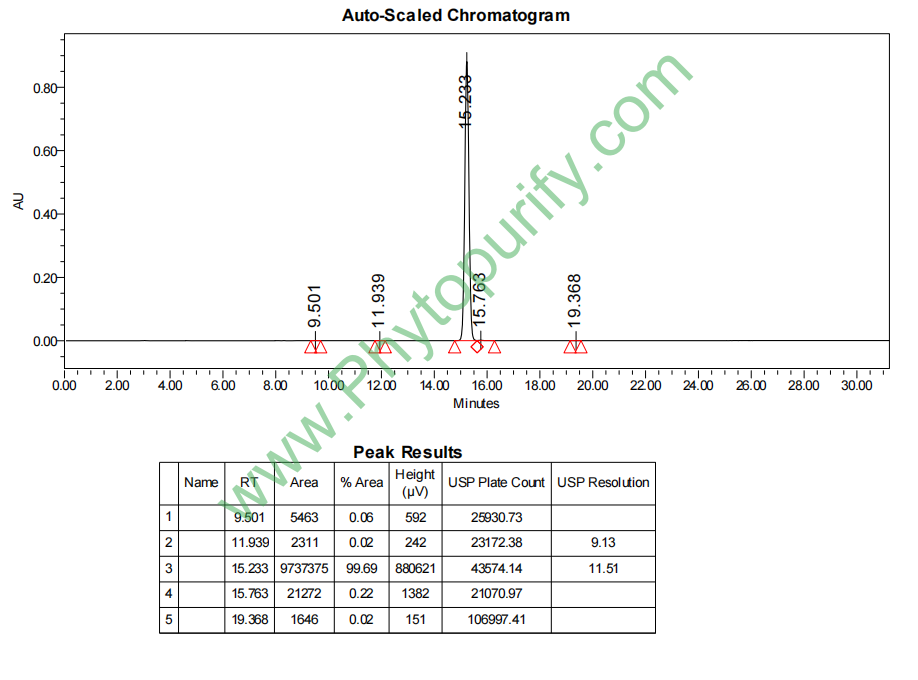
Analysis Method: HPLC-DAD or/and HPLC-ELSD
Identification Method: Mass, NMR
Packing: Brown vial or HDPE plastic bottle
Storage: Store in a well closed container, protected from air and light. Put into refrigerate or freeze for long term storage.
The product could be supplied from milligrams to grams
Inquire for bulk scale.
Description:
Isoanhydroicaritin is a natural product from Epimedium brevicornu Maxim.
References:
Chinese Pharmaceutical Journal, 2016 , 51 (24) :2169-2174
Isolation of antibacterial activity constituents of total flavonoids from sophora flavescens and simultaneous determination of seven flavonoids by HPLC
To study the chemical constituents of the total flavonoids from Sophora flavescens and establish a method for simultaneous determination of seven compounds.
METHODS AND RESULTS:
The compounds were isolated by chromatography on silica gel and ODS column and their structures were elucidated by spectroscopic analysis. The samples were analyzed on a Dikma C18 column (4.6 mm × 250 mm, 5 μm) ; gradient elution was performed using mobile phase composed of methanol (A) and water (B); the detection was carried out using a photodiode array detector at 280 nm. Seven compounds were isolated and their structures were identified as kuratidine (1), sophoraflavanone G (2), kurarinone (3), Isoanhydroicaritin (4), isoxanthohumol (5), formononetin (6), and trifolirhizin (7). The calibration curve was linear within 8.70-87.00, 44.25-442.50, 128.10-1 281.00, 9.40-94.00, 48.40-484.00, 14.20-142.00, and 25.70-257.00 μg·mL⁻1 for kuraridine, sophoraflavanone G, kurarinone, Isoanhydroicaritin, isoxanthohumol, formononetin, and trifolirhizin, respectively (r > 0.999 0), and the extraction recoveries varied from 95% to 105%.
CONCLUSIONS:
The main chemical components contributing to antibacterial activity of total flavonoids may be sophoraflavanone G, kurarinone, and isoxanthohumol. The method is simple, rapid, accurate, and can be used simultaneously to determine the contents of the seven active ingredients.
HPLC of Isoicaritin
Storage conditions:Short-term storage at 2~8℃, long-term storage at -20 ~ -80℃
100.1300
3.6193
3.5229
.0647
3.3419
8.5579
Low
90.5046
2.7217
Yes
No
Yes
No
Yes
No
0.6
Yes
Yes
Yes
No
Natural products, as an important source of drug discovery, play an irreplaceable role in human health maintenance and disease treatment. Among the numerous natural flavonoids with biological activity, isoicariin is receiving increasing attention from researchers both domestically and internationally due to its unique chemical structure and significant pharmacological activity, particularly its potential application value in the field of bone health. Epimedium is an isopentenyl flavonoid compound, which is a traditional kidney tonifying and yang strengthening Chinese medicine called Epimedium(Epimedium One of the main active ingredients of spp. Compared with Icariin, which is more abundant in Epimedium, icariin is one of its main metabolites in vivo and is generally considered to have higher bioavailability and stronger pharmacological activity.
Osteoporosis is a systemic bone disease characterized by low bone mass, destruction of bone microstructure, increased bone fragility, and susceptibility to fractures. With the acceleration of global population aging, osteoporosis and the resulting fractures have become an increasingly serious public health problem, bringing a heavy economic burden to the social healthcare system. The commonly used anti osteoporosis drugs in clinical practice, such as bisphosphonates, selective estrogen receptor modulators (SERMs), parathyroid hormone analogues, etc., although have certain therapeutic effects, long-term use often accompanies side effects such as mandibular necrosis, atypical femoral fractures, increased risk of thrombosis, or gastrointestinal discomfort. Therefore, the search for efficient and low toxicity new anti osteoporosis active molecules from natural products has become a hot topic in the field of drug development.
Epimedium stands out in this context. Numerous studies have shown that icariin can regulate bone metabolism balance through multiple targets and pathways, promoting the differentiation and mineralization of osteoblasts while inhibiting the formation and activity of osteoclasts, demonstrating the potential for bidirectional regulation of bone remodeling. Its targets include multiple key molecules such as estrogen receptor alpha (ESR1), vitamin D receptor (VDR), Runt related transcription factor 2 (RUNX2), osteoprotegerin (OPG)/receptor activator of nuclear factor kappa B ligand (RANKL) system, demonstrating a complex network regulatory mechanism. This article aims to provide a systematic review of the chemical properties, plant sources, pharmacological activities, mechanisms of action, medicinal properties, and clinical application prospects of icariin, in order to provide reference for the in-depth research and development of this compound.
The chemical name of Isoicariin is 3,5,7-trihydroxy-2- (4-methoxyphenyl) -8- (3-methyl-2-butenyl) -4H-1-benzopyran-4-one, which belongs to the class of isopentenyl flavonoids. Its molecular formula is C ₂₁ H ₂₀ O ₆, and its molecular weight is 368.3850 g/mol. Structurally, the core skeleton of icariin is the flavonoid nucleus (2-phenylchromenone), with an isopentenyl side chain (3-methyl-2-butenyl) attached to the C-8 position of the A ring, a methoxy group substituted at the C-4 'position of the B ring, and three phenolic hydroxyl groups at the C-5 and C-7 positions of the A ring and the C-3 position of the C ring. This specific substitution pattern, especially the presence of isopentenyl groups, is considered a key structural feature that distinguishes it from other flavonoids and endows it with unique biological activity.
In terms of physical and chemical properties, isoicariin appears as a pale yellow crystalline powder. Its lipophilic water partition coefficient (LogP) is 3.6193, indicating that the compound has a certain lipophilicity, which facilitates its penetration of cell membranes and interaction with membrane receptors or intracellular targets. Its polar surface area (TPSA) is 100.1300 Å ², which conforms to the general rules for oral medication (usually TPSA<140 Å ²), indicating that it has good oral absorption potential. However, its water solubility is only 0.0647 mg/mL, making it a poorly soluble compound, which may be one of the main bottlenecks limiting its in vivo bioavailability. Isoicariin has good solubility in organic solvents such as methanol, ethanol, and dimethyl sulfoxide (DMSO). In addition, this compound is sensitive to light, heat, and air, and should be protected from light, low temperatures, and inert gases during storage and experimental operations.
Isoicariin mainly comes from the Epimedium genus in the Berberidaceae family(Epimedium)Plants, such as Epimedium(E. brevicornum Maxim.)、 Arrow leaf Epimedium(E. sagittatum (Sieb. et Zucc.) Maxim.)、 Soft haired Epimedium(E. pubescens Maxim.)、 Korean Epimedium(E. koreanum Nakai and others. These plants are commonly used in traditional Chinese medicine to treat conditions such as erectile dysfunction, nocturnal emissions, muscle and bone weakness, rheumatism, and pain. It is worth noting that the content of icariin in native plants is usually low, and it is mainly a secondary metabolite produced by its precursor compound, icariin, through intestinal microbiota or enzymatic metabolism in vivo or in vitro. Epimedium glycoside is abundant in plants, and after hydrolysis to remove glycosides (glucose and rhamnose), isoicariin can be produced. Therefore, there are usually two strategies for obtaining icariin: one is to extract it directly from plants, and the other is to prepare it by hydrolyzing icariin.
extraction method:
1. Solvent extraction method This is the most traditional method. Usually, dried Epimedium herb is crushed and subjected to reflux extraction or cold soaking extraction with ethanol (such as 70% or 95% ethanol) or methanol. The crude extract of total flavonoids is obtained by concentration, defatting, and extraction (such as ethyl acetate extraction) of the extraction solution. Subsequently, the crude extract was systematically separated and purified by using modern separation technologies such as silica gel column chromatography, polyamide column chromatography, Sephadex LH-20 gel column chromatography and preparative high performance liquid chromatography (Pre HPLC), and finally the high-purity icariin monomer was obtained. Due to the low content in native plants, this method is inefficient and costly.
2. Enzymatic hydrolysis/acid hydrolysis method Given that icariin is a glycoside of icariin, efficient conversion of icariin to icariin can be achieved by hydrolyzing extracts rich in icariin using enzymes (such as cellulase, β - glucosidase) or dilute acids (such as hydrochloric acid, sulfuric acid). This method is easy to operate, cost-effective, and has a high conversion rate. It is currently the mainstream method for preparing icariin both laboratory and industrial production. After hydrolysis, high-purity products can be obtained by adjusting the pH value, extraction, recrystallization and other steps.
3. Biotransformation method The use of specific microorganisms (such as certain fungi or bacteria) or their enzyme systems for biotransformation of icariin is also a green and efficient preparation strategy. This method has mild reaction conditions and good selectivity, but the process is relatively complex.
The pharmacological activity research of icariin mainly focuses on its effects on the skeletal system, and also involves multiple aspects such as cardiovascular protection, neuroprotection, anti-inflammatory, anti-tumor, etc. Among them, anti osteoporosis activity is its most concerned core pharmacological effect.
1. Anti osteoporosis activity
A large number of in vitro and in vivo experiments have confirmed the positive regulatory effect of icariin on bone metabolism.
* Promote osteogenic differentiation In vitro cell experiments, icariin can significantly promote the proliferation, differentiation, and mineralization of primary osteoblasts or osteogenic precursor cells such as MC3T3-E1. It can upregulate the expression of osteoblast specific marker genes, such as alkaline phosphatase (ALP), osteopontin (OPN), osteocalcin (BGLAP), and type I collagen protein (COL1A1).
* Inhibit osteoclast formation In the RANKL induced osteoclast differentiation model, icariin can dose dependently inhibit osteoclast formation and bone resorption function. It can downregulate the expression of osteoclast specific marker genes, such as tartrate resistant acid phosphatase (TRAP), tissue protease K (CTSK), matrix metalloproteinase 9 (MMP9), etc.
* Animal model validation In a postmenopausal osteoporosis rat model induced by ovariectomy (OVX), oral administration of icariin can effectively prevent bone loss, improve bone microstructural parameters (such as trabecular thickness, quantity, separation, etc.), and increase bone density (BMD). Its effect is comparable to positive control drugs (such as estradiol), but no significant estrogen like side effects such as uterine hyperplasia were observed.
2. Other pharmacological activities
* Cardiovascular protection Research has shown that icariin has effects such as vasodilation, anti myocardial ischemia-reperfusion injury, and inhibition of vascular smooth muscle cell proliferation. Its mechanism may be related to regulating nitric oxide (NO) production, inhibiting oxidative stress, and inflammatory response.
* neuroprotection In neurodegenerative disease models such as Alzheimer's disease and Parkinson's disease, icariin has shown potential to protect neurons, inhibit neuroinflammation, reduce β - amyloid (A β) deposition, and hyperphosphorylate tau protein.
* Anti inflammatory and immune regulation Isoicariin can inhibit the production of pro-inflammatory factors (such as TNF - α, IL-6, IL-1 β) in macrophages induced by lipopolysaccharide (LPS), and regulate the function of T cell subsets, demonstrating anti-inflammatory and immunomodulatory activities.
* antitumor Some studies have reported that icariin can inhibit the proliferation and induce apoptosis of a variety of tumor cells (such as liver cancer, breast cancer, prostate cancer cells), but its anti-tumor activity is generally weaker than its regulatory effect on bone metabolism.
The mechanism of action of icariin against osteoporosis is complex, involving the synergistic regulation of multiple signaling pathways and molecular targets. Its core lies in maintaining the balance of bone reconstruction through the bidirectional regulatory effects of "promoting osteogenesis" and "inhibiting osteoclastogenesis".
1. Regulatory mechanism of osteoblasts
* Activate BMP/Smad and Wnt/β - catenin signaling pathways Epimedium can upregulate the expression of bone morphogenetic protein 2 (BMP-2), thereby activating downstream Smad1/5/8 signaling molecules and promoting the expression of key osteogenic transcription factors RUNX2 and Osterix (SP7). At the same time, it can also inhibit the expression of SOST (osteopontin, a negative regulator of the Wnt signaling pathway), thereby activating the Wnt/β - catenin classical pathway, further promoting osteoblast differentiation and mineralization.
* Targeting ESR1 and VDR The molecular structure of icariin enables it to bind to estrogen receptor alpha (ESR1) and vitamin D receptor (VDR). As a plant estrogen, it can partially stimulate ESR1, simulate the osteogenic protective effect of estrogen, and avoid its excessive stimulation on the uterus and breast. At the same time, it can enhance the transcriptional activity of VDR and synergistically promote calcium absorption and bone mineralization with 1,25-dihydroxyvitamin D3.
* Regulating OPG/RANKL/RANK systems Epimedium can upregulate the expression of osteoprotegerin (TNFRSF11B, also known as OPG) in osteoblasts, while downregulating the expression of RANKL, thereby significantly increasing the OPG/RANKL ratio. OPG, as a bait receptor for RANKL, can competitively inhibit the binding of RANKL to RANK receptors on the surface of osteoclast precursor cells, thereby blocking the differentiation and activation of osteoclasts.
2. Regulatory mechanism of osteoclasts
* Inhibition of NF - κ B and MAPK signaling pathways After binding to its receptor RANK, RANKL recruits adapter proteins such as TRAF6, which in turn activate the NF - κ B and MAPK (such as p38, JNK, ERK) signaling pathways, initiating the osteoclast differentiation program. Isoicariin can inhibit RANKL induced phosphorylation and degradation of I κ B α, thereby blocking nuclear translocation of NF - κ B. At the same time, it can also inhibit the phosphorylation level of the MAPK pathway.
* Inhibit the transcriptional activity of NFATc1 NFATc1 is a key transcription factor for osteoclast differentiation. Epimedium inhibits the upstream calcium ion signaling and NF - κ B/MAPK pathway, ultimately downregulating the expression and transcriptional activity of NFATc1, thereby suppressing the expression of osteoclast specific genes such as CTSK, MMP9, and TRAP.
* Targeting CTSK and MMP9 Cathepsin K (CTSK) and matrix metalloproteinase 9 (MMP9) are key enzymes secreted by osteoclasts for the degradation of bone matrix (type I collagen). Epimedium can directly or indirectly inhibit the activity and expression of these two enzymes, thereby weakening the bone resorption function of osteoclasts.
In summary, icariin has formed a complex and networked regulatory system by acting on multiple targets such as ESR1, VDR, RUNX2, SP7, SOST, TNFRSF11B, CTSK, MMP9, COL1A1, BGLAP, etc., achieving precise regulation of bone metabolism.
The development of icariin as a clinical drug requires a comprehensive evaluation of its drug like and pharmacokinetic (ADME) properties.
1. Evaluation of drug properties
According to Lipinski's "Rule of Five", the molecular weight (368.38<500), LogP (3.62<5), number of hydrogen bond donors (3 phenolic hydroxyl groups<5), and number of hydrogen bond acceptors (6 oxygen atoms<10) of icariin all meet the requirements, indicating that it has the basic chemical skeleton to become an oral drug. In addition, its TPSA (100.13<140) also suggests that it has good intestinal absorption potential. Computer assisted prediction shows that isoicariin has a low risk of inhibiting hERG potassium channels (hERG inhibition: No), and the Ames test result is 0.6 (usually considered negative if<0.5, and suspicious positive if 0.5-0.9), indicating a low risk of genetic toxicity. However, its extremely low water solubility (0.0647 mg/mL) is the main pharmaceutical defect, which may lead to incomplete oral absorption and low bioavailability.
2. Pharmacokinetic characteristics
* absorb After oral administration, icariin is mainly absorbed in the intestine. However, due to its poor water solubility, its absolute bioavailability is usually low. Studies have shown that its absorption may be influenced by the efflux of P-glycoprotein (P-gp). The use of novel drug delivery systems such as nano formulations, phospholipid complexes, and cyclodextrin inclusion complexes is an effective strategy to improve their oral bioavailability.
* distribution Isoicariin has a high plasma protein binding rate. Its blood-brain barrier permeability is low (blood-brain barrier: low), which may limit its application in the treatment of central nervous system diseases, but also reduces the risk of central toxicity. Its tissue is widely distributed, especially with high concentrations in bones, liver, and kidneys.
* Metabolism Isoicariin mainly undergoes phase II metabolic reactions in the body, such as glucuronidation and sulfation, to generate corresponding complexes. These complexes have increased water solubility and are easily excreted through urine and bile. The liver and intestines are its main metabolic sites. The CYP450 enzyme system may be less involved in its phase I metabolism.
* excretion Isoicariin and its metabolites are mainly excreted into the intestine through bile, and some can be reabsorbed through the enterohepatic circulation, thereby prolonging their duration of action in the body. A small amount is excreted in the form of urine through the kidneys.
Based on its clear pharmacological activity against osteoporosis, multi-target mechanism of action, and relatively good safety, icariin has shown great clinical application prospects in the prevention and treatment of osteoporosis, especially postmenopausal osteoporosis.
1. Development of new anti osteoporosis drugs
Epimedium is expected to be developed as a novel anti osteoporosis drug with dual effects of "osteogenesis" and "anti bone resorption". Compared to traditional selective estrogen receptor modulators such as raloxifene, it may have a lower risk of uterine and breast irritation; Compared to bisphosphonates, it may have better long-term safety and will not cause serious side effects such as mandibular necrosis. Future research should focus on:
* Improve bioavailability Develop efficient drug delivery systems, such as nanoliposomes, polymer micelles, phospholipid complexes, etc., to overcome the bottleneck of poor water solubility.
* Optimize dosing regimen Explore combination therapy strategies, such as combining with calcium supplements, vitamin D, or other anti osteoporosis drugs, in order to achieve synergistic effects and reduce toxicity.
* Conduct high-quality clinical research At present, research on icariin is mostly at the cellular and animal levels, and there is an urgent need to conduct randomized controlled clinical trials with rigorous design and sufficient sample size to confirm its efficacy and safety in humans.
2. Expanded application in bone related diseases
In addition to primary osteoporosis, icariin may also have therapeutic potential for diseases such as glucocorticoid induced osteoporosis, disuse osteoporosis, osteoarthritis, and fracture healing. Its anti-inflammatory and osteogenic properties make it worthy of further exploration in these fields.
3. As a functional food or dietary supplement
Given that it originates from the traditional Chinese medicine Epimedium and has high safety, isoicariin or its extract rich in isoicariin has the potential to be developed into a functional food or dietary supplement for maintaining bone health, especially for sub healthy populations with reduced bone mass.
4. Challenges Faced
Despite its broad prospects, the development of icariin still faces challenges. In addition to the issue of bioavailability, the safety of long-term medication (especially the impact on liver and kidney function and reproductive system) still needs to be comprehensively evaluated. In addition, the comparative advantages of its anti osteoporosis activity with other active ingredients of Epimedium such as icariin, as well as the differences in its pharmacological effects in different races, genders, and age groups, also need further clarification.
As a natural isopentenyl flavonoid compound derived from the traditional Chinese medicine Epimedium, icariin has become a remarkable new star in the field of anti osteoporosis drug development due to its unique chemical structure and pharmacological properties of multi-target and bidirectional regulation of bone metabolism. It exhibits excellent activity in promoting osteogenesis and inhibiting osteoclasts by acting on multiple key targets and signaling pathways such as ESR1, VDR, RUNX2, OPG/RANKL systems. Despite the urgent need to address the issues of poor water solubility and low oral bioavailability in drug development, these obstacles are expected to be overcome through modern pharmaceutical methods and in-depth pharmacokinetic studies. With a deeper understanding of its mechanism of action and the gradual advancement of clinical research, icariin is expected to become an important candidate drug for the prevention and treatment of osteoporosis and related bone diseases in the future, bringing new treatment options to the increasingly large global population of osteoporosis patients. The development process of icariin is undoubtedly a vivid practice of exploring the value of modern medicine from traditional Chinese medicine.
