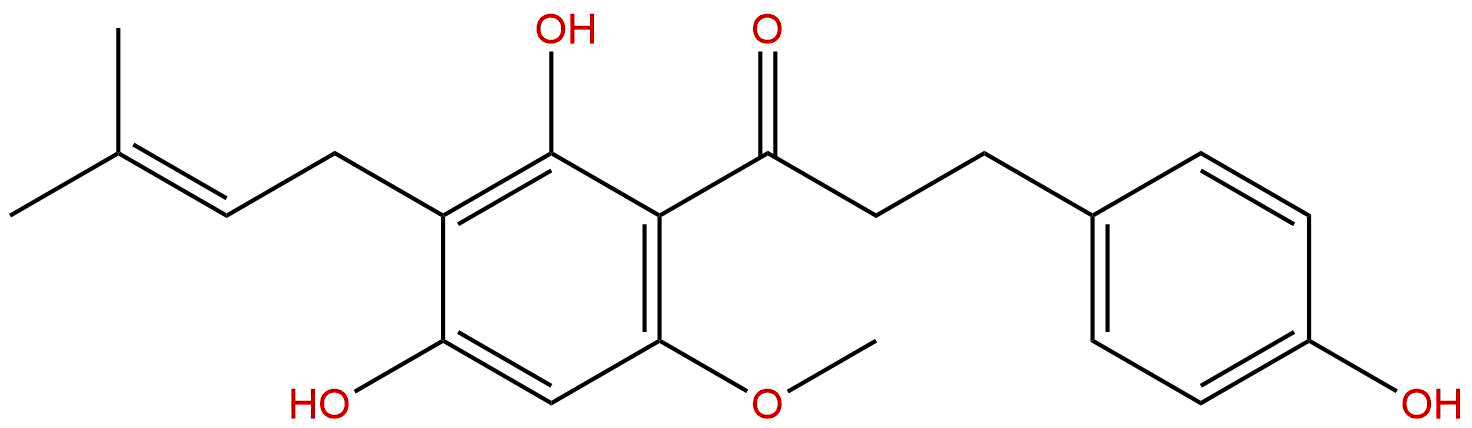


Product name: Dihydroxanthohumol
Synonym name: α,β-Dihydroxanthohumol
Catalogue No.: BP5364
Cas No.: 102448-00-0
Formula: C21H24O5
Mol Weight: 356.418
Botanical Source:
Type of Compound: Phenols
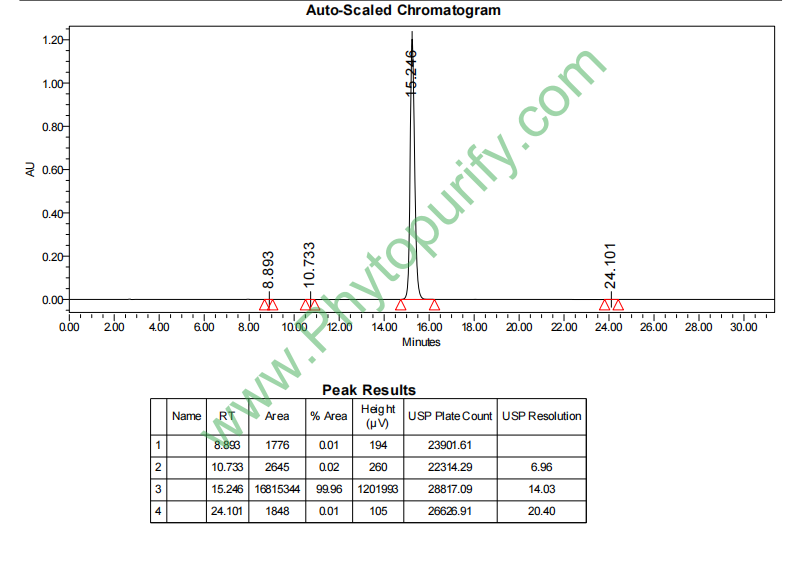
Purity: 95%~99%
Analysis Method: HPLC-DAD or/and HPLC-ELSD
Identification Method: Mass, NMR
Packing: Brown vial or HDPE plastic bottle
Storage: Store in a well closed container, protected from air and light. Put into refrigerate or freeze for long term storage.
Whenever possible, you should prepare and use solutions on the same day. However, if you need to make up stock solutions in advance, we recommend that you store the solution as aliquots in tightly sealed vials at -20℃. Generally, these will be useable for up to two weeks.
The product could be supplied from milligrams to grams
Inquire for bulk scale.
For Reference Standard and R&D, Not for Human Use Directly.
HPLC of Dihydroxanthohumol
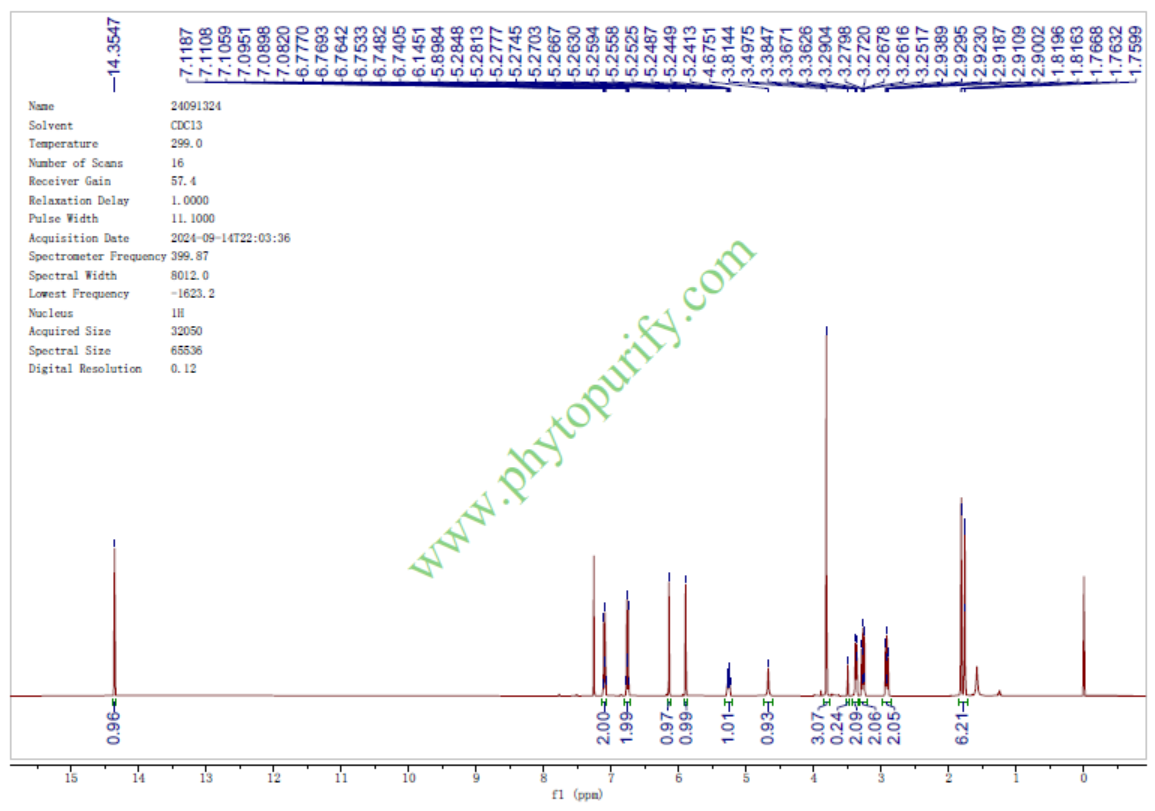
HNMR of Dihydroxanthohumol
Storage conditions:Short-term storage at 2~8℃, long-term storage at -20 ~ -80℃
86.9900
4.3444
4.1821
.1211
4.5696
14.4034
Low
92.6373
2.5274
No
No
Yes
No
No
No
0.0
No
Yes
Yes
No
Natural products, as an important source of drug discovery, play an irreplaceable role in the long history of human fight against diseases. Among them, polyphenolic compounds derived from plants, rich in structural diversity and biological activity, have always been a hot topic in pharmaceutical research. Hops(Humulus lupulus L.), As a key ingredient in brewing beer, it not only gives beer a unique bitterness and aroma, but also attracts attention due to its rich chemical composition. Among the numerous active ingredients in hops, Xanthohumol, as a representative isopentenyl chalcone, has become a research focus due to its extensive anti-cancer, anti-inflammatory, antioxidant, and metabolic regulatory activities. However, humic acid is not constant in plants and during processing. The reduction product of its α, β - unsaturated double bonds, dihydroxanthohumol (DXN), also exhibits unique and undeniable pharmacological value.
Dihydroxanthohumol (CAS number: 102448-00-0) is a dihydro derivative of xanthohumol, belonging to dihydrochalcone compounds. Compared with the parent compound humic acid, DXN loses a conjugated double bond in its structure, but this subtle chemical modification leads to significant differences in its physicochemical properties, metabolic stability, and biological activity. Early research often regarded DXN as a secondary metabolite or processing byproduct of humic acid, but in recent years, with the deepening of research, the pharmacological activity of DXN itself, especially its potential in antioxidant, anti-inflammatory, and cell protective effects through regulating key signaling pathways, has gradually been revealed. Especially as a nitric oxide synthase (NOS) inhibitor, it can effectively inhibit the excessive production of nitric oxide (NO), providing new ideas for the treatment of various diseases related to inflammation and oxidative stress.
This article aims to provide a systematic professional review of dihydroxanthohumol. We will start with its chemical structure and physicochemical properties, trace its origin and extraction process in the plant kingdom, deeply explore its pharmacological activities such as antioxidant and anti-inflammatory, and analyze its molecular mechanism of action, especially its regulatory effect on the NFE2L2/NRF2 signaling axis. At the same time, based on its pharmacological parameters, evaluate its potential and challenges as a lead compound, and ultimately look forward to its application prospects in the fields of functional foods, health products, and drug development. By comprehensively reviewing the research status of DXN, this article aims to provide a clear and in-depth knowledge framework for researchers in the field of natural product pharmacology, and stimulate further exploration of this highly promising natural dihydrochalcone compound.
The chemical structure of dihydrohumic acid is the basis of its biological activity. From a chemical classification perspective, it belongs to dihydrochalcones and is a derivative of the chalcone family where the α, β - unsaturated double bonds are saturated. Its IUPAC name is 1- [2,4-dihydroxy-6-methoxy-3- (3-methyl-2-buten-1-yl) phenyl] -3- (4-hydroxyphenyl) -1-propanone, with a molecular formula of C ₂ ₁ H ₂ ₄ O ₅ and a molecular weight of 356.4180 g/mol.
structural characteristics The core skeleton of DXN consists of a dihydrochalcone core, which is a phenylacetone structure (C6-C3-C6), with the C3 chain being a saturated propane chain. Specifically, its structure consists of an A ring and a B ring. There are multiple substituents attached to the A ring (phenyl moiety): two hydroxyl groups (- OH) at positions 2 and 4, one methoxy group (- OCH ∝) at position 6, and one isopentenyl group (3-methyl-2-buten-1-yl) at position 3. The B ring (hydroxyphenyl moiety) has a hydroxyl group at position 4. The key difference between DXN and its parent compound, humic acid, is that the carbon carbon double bond (C α=C β) between the carbonyl groups connecting the A and B rings and the B ring is reduced to a single bond (C α - C β). This reduction reaction eliminates the conjugated system in the molecules of humic acid, causing a blue shift in the UV absorption spectrum of DXN and significantly affecting its molecular conformation, polarity, and chemical reactivity.
Physicochemical properties:
1. Solubility and lipid solubility According to calculations, the lipid water partition coefficient (LogP) of DXN is 4.3444, indicating its strong lipophilicity and ease of penetration through biological membranes. Its calculated water solubility value is 0.1211 mg/mL, which belongs to low water solubility compounds. The characteristic of high lipid solubility and low water solubility is a common feature of many natural polyphenolic compounds, which is beneficial for their enrichment and transmembrane transport on the cell membrane, but also poses challenges for their absorption and bioavailability in vivo.
2. Polar Surface Area The topological polar surface area (TPSA) is 86.99 Å ². TPSA is an important parameter for predicting drug oral absorption and blood-brain barrier penetration ability. Generally, compounds with TPSA less than 140 Å ² have good oral absorption potential, while those with TPSA less than 90 Å ² are more likely to penetrate the blood-brain barrier. The TPSA value of DXN is close to the critical value of 90 Å ², indicating that it may have some potential exposure to the central nervous system. However, the computational model shows that its blood-brain barrier penetration ability is "low", which may be related to the combined effects of its molecular weight and lipid solubility.
3. Stability As a dihydrochalcone, the chemical stability of DXN is usually superior to its parent chalcone humic acid. The α, β - unsaturated ketone structure in humic acid is an electrophilic center that easily undergoes Michael addition reactions with nucleophilic substances (such as glutathione) in the body, which is also one of the mechanisms by which it exerts various biological activities. Due to the saturation of double bonds, DXN loses its reactivity, resulting in significant differences in its metabolic pathway and biological activity mechanism compared to humic acid. DXN may undergo cyclization reactions under acidic or alkaline conditions, generating corresponding flavanone compounds (such as isohumol), which is also an important conversion pathway in its processing and storage of hops.
4. spectral characteristics The maximum absorption wavelength (λ max) of DXN in the UV visible region is usually around 290 nm and 330 nm, which shows a blue shift compared to humic acid (λ max of about 370 nm), directly reflecting the reduction of the conjugated system. In infrared spectroscopy, the stretching vibration peak of carbonyl (C=O) is usually around 1630-1650 cm ⁻¹. Nuclear magnetic resonance hydrogen and carbon spectra are the most powerful tools for identifying the structure of DXN, with characteristic signals including: methylene and methylene proton signals on the dihydrochalcone propane chain (δ H 2.7-3.5 ppm), olefin protons on the isopentenyl group (δ H 5.1-5.2 ppm) and two methyl protons (δ H 1.6-1.8 ppm), as well as multiple aromatic ring proton signals.
Dihydroxanthohumol mainly comes from hops(Humulus lupulus L.), It is a secondary component with relatively low content in hops. There are two main pathways for its formation: first, during the biosynthesis process of humic acid in plants, it is directly generated through the catalytic action of reductases; The second is that humic acid is converted through non enzymatic chemical reduction reactions during the processing, drying, storage, or beer brewing of hops. Therefore, the content of DXN in fresh hops is usually low, while its content increases in processed hops products (such as granular hops, hop extracts) or aged hops.
Plant-based:
* hops The female inflorescence of hops (i.e. snakehead) is the main source of DXN. The content of DXN varies greatly among different varieties of hops. Generally speaking, bitter hops with high alpha acid content have higher levels of humic acid and potential DXN content. However, the proportion of DXN in total flavonoids is usually much lower than that of humic acid.
* Other sources Although hops are the most famous and abundant source of DXN, dihydrochalcone compounds are also present in a few other plants. For example, Phloretin and its glycoside Phloridzin found in fruits such as apples and lychees are also typical dihydrochalcones. However, DXN with isopentenyl modification is currently only clearly identified in hops and related products.
extraction method:
Due to the low content of DXN in plant materials and its coexistence with a large number of structurally similar compounds such as xanthohumol and isoxanthohumol, its extraction and purification pose certain challenges. Common methods include:
Although the pharmacological activity of dihydrohumic acid is not as extensive as its parent compound humic acid, existing evidence suggests that it exhibits unique potential in antioxidant, anti-inflammatory, anti-tumor, and metabolic regulation.
antioxidant activity This is one of the core pharmacological activities of DXN. Multiple in vitro experiments have confirmed that DXN has significant ability to scavenge free radicals, including DPPH free radicals, ABTS cationic free radicals, and superoxide anions. Its antioxidant capacity is closely related to the multiple phenolic hydroxyl groups in its molecular structure (especially the ortho dihydroxy group on the A ring), which can act as hydrogen atom donors, neutralize free radicals, and terminate chain oxidation reactions. More importantly, the antioxidant effect of DXN is not limited to direct free radical scavenging, but is also reflected in its regulation of the endogenous antioxidant defense system in cells (see the mechanism of action section for details). Research has shown that DXN can effectively protect cells from oxidative stress-induced damage. For example, it can alleviate oxidative damage induced by hydrogen peroxide (H ₂ O ₂) or tert butyl hydroperoxide (t-BHP) in liver cells, neuronal cells, etc., reduce intracellular reactive oxygen species (ROS) levels, and inhibit the generation of lipid peroxidation products.
anti-inflammatory activity Inflammation is a defensive response of the body to injury and infection, but excessive or persistent inflammation is a common pathological basis for various chronic diseases. DXN exhibits good anti-inflammatory activity. The most direct evidence is its use as a nitric oxide synthase (NOS) inhibitor, particularly its inhibitory effect on inducible nitric oxide synthase (iNOS). In the macrophage model activated by lipopolysaccharide (LPS), DXN can significantly inhibit the expression and activity of iNOS, thereby reducing the excessive production of inflammatory mediator NO. NO is an important inflammatory mediator, and its excessive production is closely related to pathological processes such as tissue damage and increased vascular permeability. In addition, DXN can also inhibit the production of other pro-inflammatory factors, such as prostaglandin E ₂ (PGE ₂), tumor necrosis factor - α (TNF - α), interleukin-1 β (IL-1 β), and interleukin-6 (IL-6). These effects together form the basis of DXN's anti-inflammatory activity.
Antitumor activity There is relatively limited research on the anti-tumor activity of DXN, but some preliminary findings have been made. Compared with humic acid, DXN has a weaker inhibitory effect on the proliferation of certain cancer cells, which may be related to its loss of the α, β - unsaturated ketone Michael receptor structure. However, DXN still exhibits certain cytotoxicity in certain types of cancer cells. For example, it has been reported that DXN can induce apoptosis of colon cancer cells and breast cancer cells. The mechanism may involve cell cycle arrest, mitochondrial membrane potential disruption, and activation of the caspase protease family. In addition, the antioxidant and anti-inflammatory activities of DXN may indirectly exert chemopreventive effects, reducing the risk of tumor occurrence by inhibiting inflammation related carcinogenesis processes.
Metabolic regulatory activity Given the traditional application of hops extract in improving metabolic syndrome, the metabolic regulatory activity of DXN has also attracted attention. Preliminary studies suggest that DXN may improve insulin resistance and hyperlipidemia by activating the AMP activated protein kinase (AMPK) signaling pathway, promoting glucose uptake and fatty acid oxidation. In addition, DXN has been found to inhibit adipocyte differentiation (adipogenesis) and reduce the accumulation of fat within cells. These findings suggest that DXN has potential value in the prevention and treatment of metabolic diseases such as obesity, type 2 diabetes and non-alcoholic fatty liver disease (NAFLD).
Other activities In addition to the main activities mentioned above, DXN has also been reported to have antibacterial, antiviral, and neuroprotective activities. For example, it has inhibitory effects on certain Gram positive bacteria and fungi. In terms of neuroprotection, DXN can alleviate the neurotoxicity induced by β - amyloid protein (A β) through its antioxidant and anti-inflammatory effects, providing new clues for the prevention and treatment of Alzheimer's disease.
The pharmacological activity of dihydrohumic acid is the result of multi-target and multi pathway synergistic effects. A deep understanding of its molecular mechanism is crucial for developing it into a therapeutic drug.
Activation of NFE2L2/NRF2-ARE signaling pathway This is the core mechanism by which DXN exerts antioxidant and cell protective effects. NFE2L2 (also known as NRF2) is a key transcription factor responsible for regulating the expression of a range of antioxidant and detoxifying enzymes within cells. Under normal physiological conditions, NRF2 binds to the inhibitory protein KEAP1 in the cytoplasm, remains inactive, and is degraded by ubiquitination. When cells are stimulated by oxidative stress or electrophilic agents, NRF2 dissociates from KEAP1, translocates into the nucleus, binds to antioxidant response elements (ARE), and initiates transcription of downstream target genes. DXN can effectively activate the NRF2 signaling pathway. Research has shown that DXN may modify key cysteine residues on KEAP1 protein, leading to conformational changes and the release of NRF2. The activated NRF2 further upregulates the expression of a series of protective genes, including:
Inhibition of nitric oxide synthase (NOS)DXN is explicitly described as an EC 1.14.13.39 (nitric oxide synthase) inhibitor. Its main target is inducible nitric oxide synthase (iNOS). Under inflammatory stimulation, immune cells such as macrophages express a large amount of iNOS, catalyzing the production of a large amount of NO from L-arginine. Excessive NO not only has cytotoxicity itself, but also reacts with superoxide anions to generate more destructive peroxynitrite (ONOO ⁻), leading to protein nitrification, lipid peroxidation, and DNA damage. DXN effectively blocks the excessive production of NO by inhibiting the transcription of iNOS and/or directly inhibiting its enzyme activity, thereby exerting anti-inflammatory effects. This selective inhibition of iNOS gives it an advantage in treating inflammatory diseases, while potentially avoiding interference with constitutive NOS such as eNOS and nNOS, thereby reducing cardiovascular and neurological side effects.
Regulation of NF - κ B signaling pathway Nuclear factor kappa B (NF - κ B) is the core transcription factor in inflammatory response. In resting cells, NF - κ B binds to the inhibitory protein I κ B and remains in the cytoplasm. Inflammatory stimuli (such as LPS, TNF - α) activate I κ B kinase (IKK), leading to phosphorylation and degradation of I κ B, releasing NF - κ B into the nucleus and initiating transcription of pro-inflammatory genes (such as iNOS, COX-2, TNF - α, IL-6, etc.). DXN has been shown to inhibit the activation of NF - κ B. The mechanism may include inhibiting the activity of IKK, reducing the degradation of I κ B, and thus preventing the nuclear translocation of NF - κ B. By inhibiting the NF - κ B pathway, DXN suppresses the production of various pro-inflammatory mediators at the transcriptional level, which is another important molecular basis for its anti-inflammatory activity.
Other potential targets:
To push natural products from laboratory research to clinical applications, a systematic evaluation of their pharmacological properties is necessary. The pharmacological parameters of dihydrohumic acid provide us with preliminary evaluation basis.
Analysis of drug properties parameters:
* molecular weight:356.42 Da, Meets the requirement of Lipinski's Rule of Five for molecular weight less than 500.
* LogP 4.34, slightly higher than the limit of less than 5 in the "Five Rules for Classified Drugs", indicates strong lipid solubility. High LogP may lead to poor water solubility, high metabolic clearance, and potential toxicity issues.
* TPSA 86.99 Å ², less than 140 Å ², indicates good oral absorption potential.
* Water solubility:0.1211 mg/mL, Belonging to low water solubility compounds. This is a major obstacle to the drug development of DXN. Low water solubility can limit its dissolution and absorption in the gastrointestinal tract, resulting in low oral bioavailability.
* blood-brain barrier Predicted as "low" penetration, this is a disadvantage for drugs that require central nervous system targets, but may be an advantage for drugs that primarily act on peripheral tissues (such as anti-inflammatory and metabolic regulation), which can reduce central nervous system side effects.
* HERG inhibition Predicting as' no 'is a very favorable parameter. HERG potassium channel inhibition is the main cause of drug-induced cardiac toxicity (QT interval prolongation), while DXN does not have this risk, greatly reducing its cardiac safety hazards.
* Ames test The result is 0.0, indicating that it has no mutagenicity in the in vitro bacterial recovery mutation test, which is an important genetic toxicity safety indicator.
Pharmacokinetic challenges and strategies:
Although DXN has shown some potential as a drug in terms of physicochemical properties and preliminary safety, its pharmacokinetic properties, especially oral bioavailability, are the main challenges it faces. Similar to most polyphenolic compounds, DXN may face the following issues in vivo:
1. Low water solubility Causing poor dissolution and incomplete absorption after oral administration.
2. First pass effect In the intestine and liver, DXN may undergo extensive phase II metabolism, including glucuronidation, sulfation, and methylation, producing more polar metabolites that are rapidly excreted from the body.
3. Metabolism of gut microbiota After entering the colon, unabsorbed DXN will be degraded by the gut microbiota, producing phenolic acids with smaller molecular weights.
To improve the bioavailability of DXN, the following strategies can be adopted:
* Formulation technology Develop new drug delivery systems, such as liposomes, nanoparticles, cyclodextrin inclusion complexes, solid dispersions, etc., to improve their water solubility and dissolution rate.
* Structural modification Design prodrugs for the phenolic hydroxyl group of DXN, such as introducing phosphate ester, amino acid ester and other functional groups, to improve its water solubility and intestinal permeability, and release the original drug after enzymatic hydrolysis in vivo.
* Combined administration When used in combination with bioavailability enhancers such as piperine, a known glucuronidation inhibitor, it may reduce its first pass metabolism and increase blood drug concentration.
Based on the unique pharmacological activity and preliminary safety evaluation of dihydrohumic acid, its application prospects in multiple disease fields are worth looking forward to.
Functional foods and health products Given the strong antioxidant and anti-inflammatory activities of DXN, as well as its origin from hops, a recognized safe food ingredient, it is highly suitable for development as a functional food or dietary supplement. For example, it can be added to beer, beverages, or health foods to prevent diseases related to oxidative stress and chronic low-grade inflammation, such as cardiovascular disease, metabolic syndrome, and neurodegenerative diseases. As a natural ingredient of hops, its identity is also more easily accepted by consumers.
Development of anti-inflammatory drugs DXN, as an iNOS inhibitor and NF - κ B pathway inhibitor, has the potential to treat acute or chronic inflammatory diseases. For example, it can be used to develop drugs for the treatment of inflammatory bowel disease (IBD), rheumatoid arthritis, asthma, and other diseases. Its low hERG inhibition risk and Ames negative results provide strong support for its safety as an oral anti-inflammatory drug.
Prevention and treatment of metabolic diseases DXN activates AMPK and inhibits adipocyte differentiation, making it a potential candidate compound for the treatment of obesity, type 2 diabetes and NAFLD. By improving insulin sensitivity, promoting energy expenditure, and reducing fat accumulation, DXN is expected to become a part of the management plan for metabolic syndrome.
Neuroprotective agent Although the blood-brain barrier penetration ability of DXN is predicted to be "low", its strong antioxidant and anti-inflammatory activities may still indirectly protect the central nervous system by regulating peripheral immune and oxidative states. In addition, improving its brain delivery efficiency through technologies such as nanomedicine may also enable it to play a role in the treatment of neurodegenerative diseases such as Alzheimer's disease and Parkinson's disease.
Future research directions:
* In depth pharmacokinetic research Systematic in vivo pharmacokinetic experiments are required to clarify the absorption, distribution, metabolism, and excretion (ADME) characteristics of DXN in animals and humans, and to identify its main metabolites and their activities.
* Pharmacodynamic study in vivo Using various animal models of diseases (such as DSS induced colitis model, high-fat diet induced obesity model, A β - induced Alzheimer's disease model, etc.), verify the in vivo efficacy of DXN and determine its effective dosage range.
* toxicological evaluation Conduct systematic acute and chronic toxicity studies, including their effects on the liver, kidneys, reproductive system, etc., and comprehensively evaluate their safety.
* Study on Structure Activity Relationship Synthesize a series of structural analogues of DXN, compare their activity differences, identify key pharmacophores, and provide guidance for structural optimization and lead compound discovery.
* Multi target collaborative mechanism Using systems biology and network pharmacology methods, we will delve into the molecular network of DXN's multi-target and multi pathway synergistic effects, and elucidate the complexity of its overall pharmacological effects.
Dihydroxanthohumol, as a unique dihydrochalcone in hops, is emerging from the shadow of xanthohumol and demonstrating its unique value as a natural active molecule. It exhibits significant pharmacological activities in antioxidant, anti-inflammatory, and metabolic regulation through multiple mechanisms such as activating the NRF2 antioxidant pathway and inhibiting the iNOS/NF - κ B inflammatory pathway. Its good preliminary safety (no hERG inhibition, no Ames mutagenicity) and physicochemical properties that comply with the drug class rules have laid the foundation for its further drug development. Although low oral bioavailability is the main challenge it faces, this problem is expected to be solved through modern formulation technology and structural modification strategies.
Looking ahead to the future, with the continuous deepening of research on the pharmacokinetics, in vivo pharmacodynamics, and toxicology of DXN, we have reason to believe that this natural product derived from hops will find its place in the fields of functional foods, health products, and even innovative drugs. It not only provides new scientific basis for understanding the health benefits of hops, but also offers new candidate molecules for developing intervention strategies for chronic diseases related to oxidative stress and inflammation. The continuous exploration of dihydroxanthohumol will be a promising and valuable research direction in the field of natural product pharmacology.
