Research Progress on Natural Product Decamerophenol: A Systematic Review from Plant Chemistry to Pharmacological Activity
Introduction/Overview
Natural products, as an important source of drug discovery, play an irreplaceable role in human health maintenance and disease treatment. Hops(Humulus lupulus L.), As an indispensable raw material in beer brewing, it not only endows beer with unique bitterness and aroma, but also attracts the attention of pharmaceutical researchers due to its rich secondary metabolites. Among the numerous active ingredients contained in hops, xanthohumol and its derivatives have become a research hotspot due to their significant biological activity. Desmethylxanthohumol (DMX), as a natural analogue of humic acid, has gradually entered the field of researchers in recent years due to its unique pharmacological activity and potential therapeutic value.
Decamerophenol is an allyl hydroxy chalcone compound that was first isolated and identified from hop cones. Compared with humic acid, demethylated humic acid lacks a methyl group in its structure, but this subtle structural difference endows it with a unique biological activity spectrum. Research has shown that demethylated humic acid has strong apoptosis inducing ability and exhibits significant activities in antioxidant and anti proliferative aspects. With a deeper understanding of the anti-tumor and antioxidant mechanisms of natural products, the value of demethylphenol as a potential lead compound in drug development is increasingly prominent.
This article will provide a systematic review of the research progress on demethyl humic acid from multiple dimensions, including chemical structure, plant origin, pharmacological activity, mechanism of action, pharmacological evaluation, and clinical application prospects, in order to provide reference for the in-depth research and development of this natural product.
Chemical structure and physicochemical properties
Chemical structural characteristics
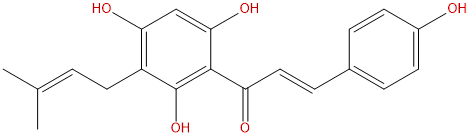
Decamerophenol (chemical name: 2 ', 4', 6 ', 4-tetrahydroxy-3' - allyl chalcone) belongs to chalcone compounds, and its basic skeleton is composed of two aromatic rings (A ring and B ring) connected by α, β - unsaturated carbonyl groups. Compared with xanthohumol, demethyl xanthohumol lacks a methoxy group at the 6 'position of the A ring and remains as a hydroxyl group. This structural difference significantly affects its molecular polarity and biological activity.
Specifically, the molecular formula of demethyl humic acid is C ₂₀ H ₂₀ O ₅, with a molecular weight of 340.3750. Its structure contains four hydroxyl (- OH) groups located at the 2 ', 4', and 6 'positions of the A ring and the 4' position of the B ring, as well as an allyl (- CH ₂ CH=CH ₂) substituent connected to the 3 'position of the A ring. This multi hydroxyl structure endows demethyl humic acid with strong hydrogen bond donor ability and also gives it the potential to chelate metal ions. α. The β - unsaturated carbonyl group, as a characteristic structural unit of chalcone, is not only a key site for its interaction with biological targets, but also an important structural basis for its antioxidant activity.
Physical and chemical property parameters
The physicochemical properties parameters of demethyl humic acid provide important basis for its pharmacological evaluation. Its lipid water partition coefficient (LogP) is 4.1100, indicating that the compound has moderate lipid solubility, which is conducive to transmembrane transport and interaction with lipid membranes. The topological polar surface area (TPSA) is 97.9900 Å ², which is within the acceptable range for oral medication (usually considered to be less than 140 Å ²), indicating its good oral absorption potential.
Water solubility is one of the key factors affecting the bioavailability of drugs. The water solubility of phenol formaldehyde is 0.0869 mg/mL, which belongs to low water solubility compounds, which to some extent limits its in vivo absorption and bioavailability. However, chalcone compounds can usually improve their solubility through formulation techniques such as nanoemulsions, liposomes, cyclodextrin inclusion complexes, etc.
In terms of blood-brain barrier penetration, demethylphenol has been evaluated as low penetration, which means that the risk of central nervous system side effects is relatively low, making it advantageous for development as a peripheral tissue targeted drug. In addition, the hERG inhibition test result was negative, indicating a low risk of cardiac toxicity. The Ames test result is 0.6, indicating a low level of genetic toxicity risk, but further in vivo experiments are needed for verification.
Plant sources and extraction methods
Plant-based
Deoxypyruvic acid is mainly derived from hops in the Moraceae genus of plants(Humulus lupulus L. The female inflorescence of hops, commonly known as hop cones. Hops are a perennial climbing herbaceous plant, native to temperate regions of Europe, Asia, and North America, and widely cultivated in hop producing areas around the world.
In hops, the content of demethylated humic acid is usually lower than its main chalcone component, humic acid. Research has shown that the content of demethylated humic acid in hops is about 1/10 to 1/5 of that of humic acid, and the specific content varies depending on the variety, place of origin, harvesting time, and processing method. It is worth noting that during the processing of hops and beer brewing, demethyl xanthohumol can undergo isomerization reactions and be converted into corresponding dihydrochalcone compounds, such as demethylisoxanthohumol. This conversion process is influenced by factors such as pH, temperature, and reaction time.
Except for hops, the distribution of decahumol in other plants is relatively limited. Some studies have reported the presence of trace amounts in other plants of the mulberry family, such as those in the Eucommia genus, but hops are still the most commonly known natural source.
Extraction and purification methods
The extraction of demethyl humic acid is usually carried out by organic solvent extraction, and commonly used solvents include methanol, ethanol, ethyl acetate, and their mixed solvents. Due to the low content of norphenol in hops and its frequent coexistence with other chalcone compounds, efficient separation and purification strategies are required.
Extraction process optimization Research has shown that using a 70% -80% ethanol aqueous solution as the extraction solvent and conducting reflux extraction at 50-60 ℃ can achieve a high extraction rate of formaldehyde. Modern extraction techniques such as ultrasound assisted extraction and microwave-assisted extraction can significantly shorten extraction time and improve extraction efficiency. Supercritical CO ₂ extraction technology has also been applied to the extraction of active ingredients from hops due to its green and environmentally friendly advantages, as well as good selectivity. However, this technology requires high equipment requirements and is relatively expensive.
Separation and purification Crude extracts usually need to be separated and purified by column chromatography technology. Common chromatographic methods include silica gel column chromatography, polyamide column chromatography, Sephadex LH-20 gel column chromatography and high performance liquid chromatography (HPLC). Among them, silica gel column chromatography often uses solvent systems such as chloroform methanol or petroleum ether ethyl acetate for gradient elution; Polyamide column chromatography utilizes the hydrogen bonding between chalcone compounds and polyamides to achieve separation. In recent years, high-speed countercurrent chromatography (HSCCC) and preparative HPLC have shown promising application prospects in the purification of demethyl humic acid, which can obtain high-purity target compounds.
quality control The qualitative and quantitative analysis of demethylphenol is usually carried out using HPLC-UV or HPLC-MS methods. Using a C18 reverse phase chromatography column as the stationary phase and acetonitrile water (containing 0.1% formic acid) as the mobile phase for gradient elution, detection can be achieved in the wavelength range of 254-370 nm. Mass spectrometry detection can be confirmed by molecular ion peaks ([M+H] ⁺ m/z 341) and characteristic fragment ions.
Pharmacological activity research
antioxidant activity
Oxidative stress is a common pathophysiological basis for various diseases, including cancer, cardiovascular disease, neurodegenerative diseases, and aging. As a polyhydroxychalcone compound, the antioxidant activity of demethyl humic acid has attracted much attention.
In vitro studies have shown that demethylxanthohumol can effectively scavenge various free radicals, including 1,1-diphenyl-2-trinitrophenylhydrazine (DPPH) free radical, 2,2 '- diazobis (3-ethylbenzothiazoline-6-sulfonic acid) (ABTS) cationic free radical, and hydroxyl free radical. Its antioxidant capacity is closely related to the hydrogen supply ability of multiple phenolic hydroxyl groups in its molecule. Compared with humic acid, demethyl humic acid exhibits stronger free radical scavenging activity due to an additional free hydroxyl group.
At the cellular level, demethylated humic acid can upregulate the expression of a series of antioxidant enzymes, including superoxide dismutase (SOD1, SOD2), catalase (CAT), glutathione peroxidase 1 (GPX1), and heme oxygenase 1 (HMOX1), by activating the nuclear factor E2 related factor 2 (NFE2L2/NRF2) signaling pathway. This multi-target antioxidant regulatory mechanism gives it a unique advantage in protecting cells from oxidative damage.
It is worth noting that the inhibitory effect of demethyl humic acid on tyrosinase (TYR) is also related to its antioxidant activity. Tyrosinase is a key enzyme in melanin synthesis, and its abnormally elevated activity is associated with pigmentation disorders. Deoxypyruvic acid inhibits tyrosinase activity by chelating copper ions in its active center, thereby exerting whitening and anti pigmentation effects.
Anti proliferative and apoptosis inducing activity
One of the most notable pharmacological activities of demethylated humic acid is its strong anti proliferative and apoptosis inducing ability. Many studies have confirmed that norxanthohumol has significant cytotoxic effects on a variety of tumor cell lines, including breast cancer, prostate cancer, colon cancer, liver cancer and melanoma.
In breast cancer cell lines (such as MCF-7, MDA-MB-231), norxanthohumol inhibits cell proliferation in a dose and time-dependent manner, induces cell cycle arrest in G2/M phase, and induces apoptosis by activating caspase cascade reactions (caspase-3, caspase-8, caspase-9). Compared with normal breast epithelial cells, demethylphenol exhibits selective toxicity to tumor cells, which gives it a better therapeutic window.
In prostate cancer research, demethylphenol induces apoptosis in prostate cancer cells by downregulating the androgen receptor (AR) signaling pathway and inhibiting the PI3K/Akt/mTOR pathway. In addition, demethyl humic acid can also inhibit the expression and activity of matrix metalloproteinases (MMP1, MMP3), thereby suppressing the invasion and metastasis ability of tumor cells.
The anti proliferative activity of demethylated humic acid is also related to its regulation of cell cycle regulatory factors. Research has shown that demethylated humic acid can upregulate the expression of cell cycle inhibitory proteins such as p21 and p53, while downregulating the levels of cell cycle promoting factors such as cyclin D1 and CDK4, thereby achieving negative regulation of the cell cycle.
Other pharmacological activities
In addition to antioxidant and anti-tumor activities, demethyl humic acid also exhibits other pharmacological effects that are worth noting. In terms of anti-inflammatory effects, demethylphenol can inhibit the release of pro-inflammatory factors (such as TNF - α, IL-6, IL-1 β) in macrophages induced by lipopolysaccharide (LPS), and its mechanism is related to the inhibition of NF - κ B signaling pathway activation.
In terms of metabolic regulation, norxanthohumol can promote glucose uptake and fatty acid oxidation by activating AMPK signaling pathway, improve insulin sensitivity, and show potential anti diabetes activity. In addition, the inhibitory effect of demethylphenol on adipocyte differentiation also suggests its potential value in the treatment of obesity.
It is worth noting that the antibacterial activity of demethyl humic acid has also received attention. Research has shown that demethyl humic acid has inhibitory effects on gram-positive bacteria such as Staphylococcus aureus and Staphylococcus epidermidis, but its activity against gram-negative bacteria is relatively weak.
Mechanism of action and molecular targets
NRF2/ARE signaling pathway
The antioxidant activity of demethylated humic acid is mainly achieved by activating the NRF2/ARE signaling pathway. NRF2 (encoded by the NFE2L2 gene) is a core transcription factor in the cellular antioxidant defense system. In the basal state, NRF2 binds to Kelch like ECH related protein 1 (KEAP1) and is in an inhibited state. Norpyruvic acid can modify the cysteine residues of KEAP1, disrupt the stability of KEAP1-NRF2 complex, and promote the release and translocation of NRF2 into the nucleus.
NRF2 entering the nucleus forms heterodimers with small Maf proteins, recognizes and binds to antioxidant response element (ARE) sequences, and initiates transcription of a series of antioxidant enzyme genes, including SOD1, SOD2, CAT, GPX1, and HMOX1. These enzymes together form the cell's antioxidant defense network, effectively clearing reactive oxygen species (ROS) and maintaining intracellular redox balance.
Apoptosis signaling pathway
The mechanism of cell apoptosis induced by demethylated humic acid involves the cross regulation of multiple signaling pathways. Firstly, demethylphenol can induce apoptosis through the mitochondrial pathway (endogenous pathway). Research has shown that treatment with demethylated humic acid can lead to a decrease in mitochondrial membrane potential (Δ PSI m), promote the release of cytochrome c from mitochondria to the cytoplasm, activate caspase-9 and downstream caspase-3, and ultimately lead to cell apoptosis. The Bcl-2 family proteins play a key regulatory role in this process, and demethylphenol can downregulate the expression of anti apoptotic proteins Bcl-2 and Bcl xL, while upregulating the levels of pro apoptotic proteins Bax and Bak.
Secondly, demethylphenol can also induce apoptosis through the death receptor pathway (exogenous pathway). Research has found that demethylated humic acid can upregulate the expression of death receptors Fas and TRAIL, activate caspase-8, and then generate cross talk with the mitochondrial pathway by cleaving Bid protein (forming tBid), amplifying apoptotic signals.
In addition, demethylated humic acid can induce apoptosis through the endoplasmic reticulum stress pathway. Treatment with demethylated humic acid can activate the unfolded protein response (UPR) in the endoplasmic reticulum, upregulate the expression of pro apoptotic proteins such as CHOP/GADD153, and ultimately induce cell apoptosis by activating caspase-12.
Matrix metalloproteinases regulation
The regulation of matrix metalloproteinases (MMPs) by demethylated humic acid is an important mechanism for its anti invasion and anti metastasis activity. MMP1 (interstitial collagenase) and MMP3 (matrix metalloproteinase) are key enzymes that degrade extracellular matrix and play important roles in tumor invasion and metastasis. Noroxytetracycline can inhibit the invasion ability of tumor cells by suppressing the MAPK/ERK and PI3K/Akt signaling pathways, downregulating the transcription and protein expression levels of MMP1 and MMP3, and upregulating the expression of tissue metalloproteinase inhibitors (TIMPs).
Multi target action characteristics
The pharmacological activity of demethylated humic acid exhibits typical multi-target action characteristics. In addition to the main targets mentioned above, demethylphenol can also interact with various cell signaling molecules, including inhibiting NF - κ B activation, regulating STAT3 phosphorylation, and affecting the Wnt/β - catenin signaling pathway. This multi-target mode of action has potential advantages in the treatment of complex diseases such as cancer, as it can improve treatment efficacy and reduce the risk of drug resistance by simultaneously acting on multiple pathogenic pathways.
Evaluation of drug properties and pharmacokinetics
Analysis of drug properties parameters
Based on Lipinski's "Rule of Five" for oral drug screening criteria, the pharmacological parameters of demethylphenol are as follows: molecular weight 340.3750 (<500), LogP 4.1100 (<5), number of hydrogen bond donors 4 (<5), and number of hydrogen bond acceptors 5 (<10). These parameters all meet the basic requirements for oral medication, indicating that demethylphenol has good potential for oral medication.
However, the low water solubility (0.0869 mg/mL) of phenol formaldehyde may be the main factor limiting its oral bioavailability. In addition, chalcone compounds are prone to metabolic transformations in the body, including glucuronic acid binding, sulfuric acid binding, methylation, and reduction reactions, which may affect their in vivo exposure and activity duration.
Pharmacokinetic characteristics
At present, there is relatively limited systematic research on the pharmacokinetics of demethylated humic acid, but research based on its structurally similar compound humic acid can provide important references. The oral bioavailability of humic acid is relatively low (about 1-2%), mainly attributed to first pass metabolism in the intestine and liver. Due to its higher polarity, demethylphenol may exhibit similar pharmacokinetic characteristics.
In terms of absorption, demethylphenol can be absorbed by intestinal epithelial cells through passive diffusion and carrier mediated transport. Its LogP value indicates good membrane permeability, but low water solubility may limit its dissolution rate and absorption degree. In terms of distribution, the binding rate of demethylphenol to plasma proteins (especially albumin) is relatively high, which facilitates its transport in the blood, but may also affect its free drug concentration.
In terms of metabolism, demethylated humic acid mainly undergoes phase II metabolic reactions, including glucuronidation and sulfation. UGT enzymes (such as UGT1A1, UGT1A9) and SULT enzymes (such as SULT1A1) are involved in its metabolic process. In addition, the α, β - unsaturated carbonyl groups of phenol can also be reduced by reductases to produce the corresponding dihydrochalcone metabolites. In terms of excretion, demethylphenol and its metabolites are mainly excreted through bile and urine.
safety evaluation
The safety evaluation data of demethylphenol mainly come from in vitro experiments and limited animal studies. As mentioned earlier, a negative hERG inhibition test indicates a lower risk of cardiac toxicity; The Ames test result (0.6) suggests a low level of genetic toxicity risk. However, chalcone compounds may exhibit pro oxidative activity under certain conditions, such as high concentrations or specific microenvironments, which may induce oxidative stress. This "double-edged sword" effect needs to be addressed in drug development.
Clinical application prospects and prospects
Antioxidant and anti-aging applications
Based on its strong antioxidant activity, demethylphenol has potential application value in the development of antioxidant health products and anti-aging products. By activating the NRF2/ARE signaling pathway, demethylated humic acid can enhance the body's antioxidant defense ability, alleviate oxidative stress damage, and delay the aging process. In addition, its inhibitory effect on tyrosinase also makes it promising for application in the development of whitening skincare products.
Development of anti-tumor drugs
The strong activity of demethylphenol as an apoptosis inducer makes it a candidate compound for the development of anti-tumor drugs. Its multi-target action characteristics and selective toxicity give it unique advantages in tumor treatment. However, low water solubility and low bioavailability caused by first pass metabolism are key issues that need to be addressed. Nanoformulation technology (such as liposomes, polymer nanoparticles, micelles, etc.) and structural modification (such as prodrug design, molecular optimization) are possible strategies to improve their pharmacokinetic characteristics.
Treatment of metabolic diseases
The activity of norxanthohumol in metabolic regulation suggests its potential value in the treatment of metabolic diseases such as diabetes and obesity. By activating the AMPK signaling pathway and improving insulin sensitivity, methotrexate may become a new option for the treatment of metabolic syndrome. However, current research mainly remains at the cellular and animal levels, and more preclinical and clinical studies are needed to validate its effectiveness and safety.
Challenges and Prospects
Despite exhibiting various pharmacological activities, the conversion of demethylated humic acid from natural products to clinical drugs still faces many challenges. Firstly, the low content and high extraction cost of natural sources are the main factors restricting their large-scale application. The development of chemical synthesis and biosynthetic methods is a possible way to solve this problem. Secondly, optimizing the pharmacokinetic properties is the key to improving its drug properties. In addition, a deep understanding of its mechanism of action, especially its metabolic fate and active forms in the complex biological environment of the body, is the foundation for promoting its clinical translation.
Future research should focus on the following aspects: firstly, establishing efficient and green synthetic or semi synthetic methods for demethyl humic acid; The second is to improve its pharmacokinetic characteristics through structural modification and formulation technology; Thirdly, conduct systematic in vivo pharmacological and toxicological studies; The fourth is to explore its synergistic effects with other drugs and develop combination therapy plans.
Conclusion
As an important natural chalcone compound in hops, demethyl xanthohumol has attracted widespread attention for its unique chemical structure and multifaceted pharmacological activities. From antioxidant, anti proliferation to apoptosis induction, demethyl humic acid exhibits a rich spectrum of biological activities through multi-target and multi pathway mechanisms of action. Its good pharmacokinetic parameters and low safety risks have laid the foundation for its drug development.
However, from laboratory research to clinical application, demethylphenol still faces many challenges. The main bottlenecks restricting its development are low water solubility, low bioavailability caused by first pass metabolism, and limitations of natural sources. With the collaborative development of disciplines such as synthetic chemistry, pharmaceutical formulation, and molecular pharmacology, the resolution of these issues will drive the transformation of demethylphenol from a natural product to a clinical candidate drug.
Natural products have always been an important source of drug discovery, and the research process of demethylphenol once again confirms this concept. I believe that in the near future, with the deepening of research and the advancement of technology, demethylphenol and its derivatives will play a greater role in human health maintenance and disease treatment.