


Product name: Isoxanthohumol
Synonym name: 4′,7-Dihydroxy-5-methoxy-8-prenylflavanone; Humulol; 521-48-2
Catalogue No.: BP0805
Cas No.: 70872-29-6
Formula: C21H22O5
Mol Weight: 354.402
Botanical Source: Humulus lupulus Linn.
Physical Description:
Type of Compound: Flavonoids
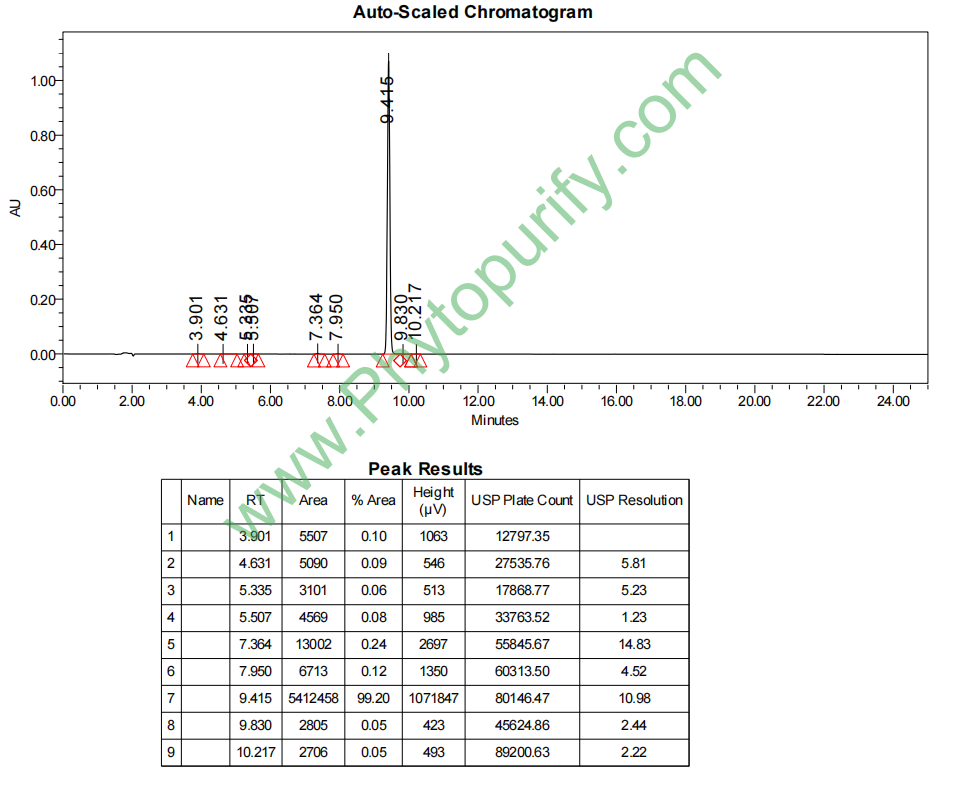
Purity: 95%~99%
Analysis Method: HPLC-DAD or/and HPLC-ELSD
Identification Method: Mass, NMR
Packing: Brown vial or HDPE plastic bottle
Storage: Store in a well closed container, protected from air and light. Put into refrigerate or freeze for long term storage.
Whenever possible, you should prepare and use solutions on the same day. However, if you need to make up stock solutions in advance, we recommend that you store the solution as aliquots in tightly sealed vials at -20℃. Generally, these will be useable for up to two weeks.
The product could be supplied from milligrams to grams
Inquire for bulk scale.
Description:
Isoxanthohumol is a polyphenol with antioxidant, anti-inflammatory, and antiangiogenic properties, seems to regulate in vivo vascular proliferation and stabilization and the EC-VSMC-inflammatory crosstalk. Isoxanthohumol shows an antiviral activity towards herpes viruses (HSV1 and HSV2) and bovine viral diarrhea virus (BVDV).
References:
Fitoterapia. 2015 Jun;103:71-82.
Isoxanthohumol - Biologically active hop flavonoid.
Isoxanthohumol (IXN), apart from xanthohumol (XN) and 8-prenylnaringenin (8PN), is one of the most important prenylflavonoids found in hops. Another natural source of this compound is a shrub Sophora flavescens, used in traditional Chinese medicine. Main dietary source of Isoxanthohumol is beer, and the compound is produced from XN during wort boiling.
METHODS AND RESULTS:
In the human body, the compound is O-demethylated to 8PN, the strongest known phytoestrogen. This process takes place in the liver and in the intestine, where it is mediated by local microflora. It has been reported in some studies that even though beer contains small amounts of hops and its preparations, these compounds may affect the functioning of the human body. Isoxanthohumolexhibits an antiproliferative activity against human cell lines typical for breast cancer (MCF-7), ovarian cancer (A-2780), prostate cancer (DU145 and PC-3), and colon cancer (HT-29 and SW620) cells. It strongly inhibits the activation of the following carcinogens: 2-amino-3-methylimidazol-[4,5-f]quinoline and aflatoxin B1 (AFB1) via human cytochrome P450 (CYP1A2). It also inhibits the production of prostate specific antigen (PSA). Isoxanthohumol significantly reduces the expression of transforming growth factor-β (TGF-β) in the case of invasive breast cancer MDA-MB-231. It interferes with JAK/STAT signaling pathway and inhibits the expression of pro1inflammatory genes in the monoblastic leukemia cell line (MonoMac6). It activates apoptosis in human umbilical vein endothelial cells (HUVEC) and human aortic smooth muscle cells (HASMCs). In addition, Isoxanthohumol shows an antiviral activity towards herpes viruses (HSV1 and HSV2) and bovine viral diarrhea virus (BVDV).
Biofactors. 2013 Nov-Dec;39(6):608-22.
Isoxanthohumol modulates angiogenesis and inflammation via vascular endothelial growth factor receptor, tumor necrosis factor alpha and nuclear factor kappa B pathways.
Angiogenesis and inflammation are becoming distinguished players in the pathogenesis of many heterogeneous diseases, such as diabetes, cardiovascular disease, and cancer. Therefore, it is crucial to study new compounds that are able to modulate these events. Isoxanthohumol (IXN) is a polyphenol with antioxidant, anti-inflammatory, and antiangiogenic properties.
METHODS AND RESULTS:
The aim of this study was to evaluate the effects of IXN on blood vessel proliferation and maturation and describe underlying molecular mechanisms in endothelial cells (ECs) and vascular smooth muscle cells (VSMCs). Angiogenic profile of IXN was analyzed by retinal angiogenesis at different time points. IXN modulation of angiogenic and inflammatory signaling pathways was evaluated by Western blotting on EC and VSMC cultures. IXN inhibited by 20% sprouting angiogenesis and decreased vascular coverage by mural cells up to 39%. IXN of 10 µM also decreased inflammatory signals, namely tumor necrosis factor alpha (TNF-α) (26 and 40%) and factor nuclear kappa B (24 and 42%) in human aortic smooth muscle cells (HASMCs) and human umbilical vein endothelial cells (HUVECs). Angiogenic regulators, including vascular endothelial growth factor receptor 2 (HUVEC, 55%), angiopoietins 1 (HUVEC, 39%; HASMC, 35%), angiopoietin 2 (HUVEC, 38%), and Tie2 (HUVEC, 56%) were also inhibited by 10 µM of IXN treatments. Akt activation was reduced by 47% in HUVEC-treated cells and Erk activation was also reduced by 52 and 69% upon IXN treatment of HUVEC and HASMC.
CONCLUSIONS:
IXN seems to regulate in vivo vascular proliferation and stabilization and the EC-VSMC-inflammatory crosstalk, leaving this molecule as an interesting nutritional player for angiogenesis and inflammation-related diseases.
Eur J Nutr. 2016 Feb;55(1):257-65.
Isoxanthohumol, a constituent of hop (Humulus lupulus L.), increases stress resistance in Caenorhabditis elegans dependent on the transcription factor DAF-16.
The flavanone Isoxanthohumol (IX) has gained attention as antioxidative and chemopreventive agent, but the molecular mechanism of action remains unclear. We investigated effects of this secondary plant compound in vivo using the model organism Caenorhabditis elegans.
METHODS AND RESULTS:
Adult C. elegans nematodes were incubated with Isoxanthohumol, and then, the stress resistance was analysed in the SYTOX assay; lifespan was monitored by touch-provoked movement method, the amount of reactive oxygen species (ROS) was measured in the DCF assay, and the nuclear localisation of the transcription factor DAF-16 was analysed by using a transgenic strain. By the use of a DAF-16 loss-of-function strain, we analysed whether the effects are dependent on DAF-16. Isoxanthohumol increases the resistance of the nematode against thermal stress. Additionally, a reduction in ROS in vivo was caused by Isoxanthohumol. Since the flavanone only has a marginal radical-scavenging capacity (TEAC assay), we suggest that Isoxanthohumolmediates its antioxidative effects indirectly via activation of DAF-16 (homologue to mammalian FOXO proteins). The nuclear translocation of this transcription factor is increased by Isoxanthohumol. In the DAF-16-mutated strain, the Isoxanthohumol-mediated increase in stress resistance was completely abolished; furthermore, an increased formation of ROS and a reduced lifespan was mediated by Isoxanthohumol.
CONCLUSIONS:
Isoxanthohumol or a bacterial metabolite of Isoxanthohumol causes antioxidative effects as well as an increased stress resistance in C. elegans via activation of DAF-16. The homologous pathway may have implications in the molecular mechanism of Isoxanthohumol in mammals.
HPLC of Isoxanthohumol
Storage conditions:Short-term storage at 2~8℃, long-term storage at -20 ~ -80℃
75.9900
4.0054
3.9842
.1135
2.3247
46.7580
Low
90.3314
3.1602
No
No
Yes
No
Yes
No
0.0
Yes
Yes
Yes
No
Natural products, as an important source of drug discovery, play an irreplaceable role in the long struggle between humans and diseases. Among them, flavonoids have always been a hot topic in pharmaceutical research due to their extensive and significant biological activities. Isoxanthohumol (IXN), as an isopentenyl flavonoid compound, has attracted widespread attention in the scientific community in recent years due to its unique chemical structure and multifaceted pharmacological potential. Isohumol is a type of hops(Humulus lupulus L. One of the main flavonoid components in Xanthohumol, it is also an important product of the transformation of its isomer Xanthohumol in vitro and in vivo. Compared with humic acid, isohumic acid is structurally more stable and exhibits complementary and even superior biological activity in certain aspects.
Early research mainly focused on the application of hops in the brewing industry and their impact on beer flavor and stability. However, with the development of modern pharmacology and molecular biology techniques, the medicinal value of isohumol has gradually been revealed. Research has shown that isohumol has orally effective properties, which means it has good potential for oral bioavailability and lays the foundation for its development as a candidate drug or dietary supplement. Its biological activity spectrum is extremely broad, covering multiple aspects such as anti-tumor, anti-inflammatory, antioxidant, antiviral, antifungal, and metabolic regulation. Especially in the field of tumor research, isohumol can exhibit potential anti-tumor activity by inducing apoptosis and autophagy in tumor cells, and inhibiting their migration. In addition, it exhibits inhibitory effects on various viruses such as herpes simplex virus (HSV), bovine viral diarrhea virus (BVDV), cytomegalovirus (CMV), and rhinovirus (Rhino), indicating its potential in antiviral drug development. In view of its pleiotropy, isoflavone has shown broad application prospects in the research of tumor, metabolic diseases (such as obesity, diabetes) and inflammatory diseases. This review aims to systematically summarize the chemical characteristics, sources, pharmacological activities, mechanisms of action, and medicinal properties of isohumol, in order to provide comprehensive references for the in-depth research and development of this natural product.
The chemical name of Isoxanthohumol is 5,7-dihydroxy-4 '- methoxy-8-isoprenylflavanone, which belongs to the class of flavanone compounds. Its chemical structure consists of three rings: A ring, C ring, and B ring. There are two phenolic hydroxyl groups (5-OH and 7-OH) and one prenyl group connected to the C-8 position on the A ring. On the B ring, there is a methoxy group (4 '- OCH ∝). The C-ring is a dihydropyranone structure, with the C-2 position as the chiral center. Therefore, isohumol exists in two enantiomers, (S) - and (R) -, with the naturally occurring (S) - type being more common.
Isohumol and Xanthohumol, another important component in hops, are isomers of each other. Huangfufen belongs to chalcones, and its structure is 2 ', 4', 6 '- trihydroxy-4-methoxy-3' - isopentenyl chalcone. Under acidic or enzyme catalyzed conditions, the chalcone structure of humic acid can be cyclized to form isohumic acid with a flavanone structure. This transformation occurs during both beer brewing and metabolic processes in the body. Structurally, the C-8 isopentenyl group of isohumol is a key feature that distinguishes it from other common flavonoids. This group significantly enhances its lipophilicity and binding ability to biofilms and proteins, thereby affecting its biological activity and pharmacokinetic behavior.
In terms of physical and chemical properties, the molecular weight of isohumol is 354.40 g/mol, and the molecular formula is C ₂₁ H ₂₂ O ₅. Its lipid water partition coefficient (LogP) is 4.0054, indicating strong lipophilicity, which is consistent with its structural feature of containing isopentenyl groups. A higher LogP value is beneficial for its penetration into the cell membrane, but it may also lead to poor water solubility. The solubility of isohumol is 0.1135 mg/mL, which is a low water solubility compound, posing a challenge for the development of its oral formulations. Its topological polar surface area (TPSA) is 75.99 Å ², which is lower than the commonly believed passive diffusion upper limit (140 Å ²), indicating its potential for oral absorption. In addition, pharmacological evaluations have shown that isohumol has a lower blood-brain barrier (BBB) penetration ability, which to some extent limits its application in central nervous system diseases, but may also mean that its peripheral effects are more concentrated, reducing central nervous system side effects. HERG inhibition is predicted as' no ', indicating a lower risk of causing arrhythmias such as prolonged QT interval in the heart. The Ames test result is 0.0, indicating that it does not have significant mutagenicity. These physicochemical properties and preliminary pharmacological evaluations provide a favorable basis for the further development of isohumol.
The main natural source of isohumol is hops from Moraceae plants(Humulus lupulus L. The female inflorescence of hops, commonly referred to as hops. Hops are an essential ingredient in beer brewing, endowing beer with a unique bitterness and aroma, and possessing preservative properties. The content of isohumol in hops is usually lower than its isomer, humol, but it is still the second highest content of flavonoids. Its content is influenced by various factors such as hop variety, origin, growth conditions, harvesting time, and processing methods. Generally speaking, the content of humic acid is higher in fresh hop cones, and during drying, storage, or processing, some humic acid may be converted to isohumic acid through non enzymatic or enzymatic cyclization reactions. Therefore, the content of isohumol is relatively high in hop extract and beer.
In addition to hops, isohumol has also been reported to exist in a few other plants, such as certain leguminous plants, but hops remain its most abundant and economical source. Due to the widespread cultivation of hops in the beer industry worldwide, their by-products (such as discarded hop branches and leaves) or waste materials during processing may also become potential sources for extracting isohumol, which is in line with the concepts of green chemistry and circular economy.
The method of extracting isohumol is mainly based on its physicochemical properties, especially its lipophilicity. Traditional extraction methods include organic solvent extraction. Common solvents include methanol, ethanol, ethyl acetate, or their mixed solvents. Due to its good solubility in ethanol and the high safety of ethanol as a food grade solvent, the ethanol extraction method is widely used in industry. Usually, dried and crushed hop cones are soaked or percolated with a certain concentration of ethanol (such as 70% -95%) at room temperature or heating conditions, and then filtered and concentrated to obtain the crude extract.
In order to obtain higher purity of isohumol, it is necessary to separate and purify it based on the crude extract. Common separation methods include:
1. Liquid-liquid extraction Preliminary purification of selective distribution of isohumol using different solvents. For example, first degreasing with n-hexane or petroleum ether, and then extracting the target component with ethyl acetate or n-butanol.
2. Column chromatography technology This is the most commonly used purification method. Silica gel column chromatography is a classic method for separating isohumol by adjusting the polarity of the eluent (such as petroleum ether ethyl acetate or chloroform methanol system). In addition, polyamide column chromatography is commonly used for the purification of isohumol due to its unique hydrogen bonding adsorption of flavonoids. In recent years, modern separation techniques such as high-performance counter current chromatography (HSCCC) and preparative high-performance liquid chromatography (Prep HPLC) have also been applied to the efficient and high-purity preparation of isohumol, especially for obtaining high-purity standards ranging from milligrams to grams.
It is worth noting that due to the possible cyclization of humic acid during extraction and purification, it is necessary to control the operating conditions (such as pH, temperature, time) to avoid artificially increasing the content of humic acid, in order to obtain components that reflect the true proportion in plants. At the same time, developing green, efficient, and low-cost extraction and purification processes is the key to promoting the research and application of isohumol.
The pharmacological activity spectrum of isohumol is very broad, covering multiple aspects such as anti-tumor, anti-inflammatory, antioxidant, antiviral, antifungal, and metabolic regulation, demonstrating its enormous potential as a multi-target natural product.
1. Antitumor activity
The anti-tumor effect of isohumol is one of the most extensively studied fields. A large number of in vitro and in vivo studies have shown that it can inhibit the proliferation and induce cell death of many types of tumor cells, including breast cancer, prostate cancer, colon cancer, liver cancer, lung cancer and melanoma.
* Inducing apoptosis Isohumol can induce tumor cell apoptosis through endogenous (mitochondrial) and exogenous (death receptor) pathways. It can upregulate the expression of pro apoptotic proteins (such as Bax, Bad) and downregulate the expression of anti apoptotic proteins (such as Bcl-2, Bcl xL), leading to loss of mitochondrial membrane potential, release of cytochrome c, and activation of the Caspase-9 and Caspase-3 cascade reaction. In addition, it can activate the JNK and p38 MAPK signaling pathways, promoting apoptosis.
* Induce autophagy In addition to apoptosis, isohumol can also induce autophagic death in tumor cells. Research has shown that it can initiate autophagy by inhibiting the PI3K/Akt/mTOR signaling pathway, activating the AMPK pathway. In some cells, autophagy may serve as a survival promoting mechanism, but under the action of isohumol, excessive autophagy ultimately leads to cell death.
* Inhibit migration and invasion Isohumol can significantly inhibit the migration and invasion ability of tumor cells, which is an important manifestation of its anti metastatic potential. The mechanism may be related to the inhibition of epithelial mesenchymal transition (EMT) process, such as upregulating the expression of E-cadherin and downregulating the expression of N-cadherin and vimentin. At the same time, it can also inhibit the activity of matrix metalloproteinases (MMPs, such as MMP-2 and MMP-9), thereby reducing the degradation of extracellular matrix.
2. Antioxidant and anti-inflammatory activities
Isohumol exhibits strong antioxidant capacity, which can directly scavenge free radicals (such as DPPH, ABTS+free radicals) and chelate transition metal ions (such as Fe ² ⁺), thereby inhibiting lipid peroxidation. More importantly, it can upregulate the expression of a series of antioxidant enzymes, such as superoxide dismutase (SOD1, SOD2), catalase (CAT), glutathione peroxidase 1 (GPX1), and heme oxygenase 1 (HMOX1), by activating the nuclear factor E2 related factor 2 (Nrf2) signaling pathway. This indirect antioxidant mechanism enables it to continuously and efficiently enhance the antioxidant defense ability of cells.
In terms of anti-inflammatory effects, isohumol can inhibit lipopolysaccharide (LPS) - or cytokine induced inflammatory responses. It can significantly reduce the production of pro-inflammatory mediators such as nitric oxide (NO), prostaglandin E2 (PGE2), and pro-inflammatory cytokines such as TNF - α, IL-1 β, IL-6. The mechanism is mainly related to the inhibition of key inflammatory signaling pathways such as nuclear factor kappa B (NF - κ B) and signal transduction and transcriptional activation factor 3 (STAT3) activation.
3. Antiviral activity
Isohumol has inhibitory effects on various viruses and demonstrates broad-spectrum antiviral potential. Research has confirmed that it is active against herpes simplex virus types 1 and 2 (HSV-1, HSV-2), bovine viral diarrhea virus (BVDV, a substitute model for hepatitis C virus HCV), human cytomegalovirus (HCMV), and rhinovirus. Its antiviral mechanism may involve multiple steps, including direct inhibition of virus adsorption and entry into host cells, inhibition of virus genome replication, and interference with virus protein synthesis and assembly. For example, research on HSV suggests that isohumol may exert its effects by inhibiting the activity of viral DNA polymerase or interfering with the function of viral envelope glycoproteins.
4. Antifungal activity
Isohumol also exhibits inhibitory effects on certain pathogenic fungi, especially on Candida albicans(Candida albicans)Wait. Its antifungal mechanism may be related to the destruction of fungal cell membrane integrity, inhibition of hyphal formation, and the influence of fungal virulence factors. This provides potential lead compounds for the development of novel antifungal drugs.
5. Metabolic regulatory activity
Isohumol has also shown positive effects in the field of metabolic diseases. Research has shown that it can inhibit adipogenesis. In the 3T3-L1 preadipocyte model, isohumol can reduce lipid accumulation by inhibiting the expression of key adipogenic transcription factors such as peroxisome proliferator activated receptor gamma (PPAR gamma) and CCAAT/enhancer binding protein alpha (C/EBP alpha). In addition, it can also improve insulin sensitivity, promote glucose uptake, and regulate lipid metabolism, suggesting that it has potential value in the treatment of obesity and type 2 diabetes.
The pharmacological activity of isohumol originates from its interactions with multiple molecular targets, thereby regulating complex cellular signaling networks. Its mechanism of action can be summarized as follows:
1. Regulating oxidative stress and antioxidant defense system
This is one of the core mechanisms by which isohumol exerts multiple protective effects. Its key target is transcription factors NFE2L2(NRF2)Under normal physiological conditions, NRF2 binds to Kelch like ECH related protein 1 (Keap1) and is in an inhibited state. When isohumol enters the cell, it can directly modify the cysteine residues on Keap1, leading to the dissociation and stabilization of NRF2 and Keap1. The released NRF2 translocates into the nucleus, forms heterodimers with small Maf proteins, binds to antioxidant response elements (ARE), and initiates transcription of a series of downstream antioxidant enzyme genes, including SOD1、SOD2、CAT、GPX1 and HMOX1 Wait. These enzymes work together to effectively eliminate reactive oxygen species (ROS), alleviate oxidative damage, and play a key role in anti-inflammatory, anti-tumor, and cell protection.
2. Regulating cell proliferation and death signaling pathways
* Inducing apoptosis Isohumol induces apoptosis of tumor cells through multiple pathways. It can inhibit PI3K/Akt The signaling pathway reduces the phosphorylation level of Akt, thereby relieving the inhibition of downstream pro apoptotic protein Bad and inhibiting the activity of mTOR. Meanwhile, it can activate JNK and p38 MAPK Pathways, the activation of these stress kinases can phosphorylate and activate transcription factors c-Jun and ATF-2, upregulate the expression of death receptor ligands such as FasL, and initiate exogenous apoptotic pathways. In addition, isohumol can directly act on mitochondria by regulating the proportion of Bcl-2 family proteins (upregulating Bax and downregulating Bcl-2), leading to increased mitochondrial membrane permeability, release of cytochrome c, activation of Caspase cascade reaction, and initiation of endogenous apoptosis pathway.
* Induce autophagy The autophagy induced by isohumol is mainly related to inhibition PI3K/Akt/mTOR The signal axis is related. MTOR is a negative regulator of autophagy, and when its activity is inhibited, it can release the inhibition of the autophagy initiation complex (ULK1/2-Atg13-FIP200), thereby initiating autophagy. In addition, isohumol can also activate AMPK, AMPK, as an energy receptor, can directly phosphorylate ULK1 to promote autophagy, and indirectly promote autophagy by inhibiting mTOR activity.
* Inhibit migration and invasion The anti migration and invasion effects and inhibition of isohumol EMT The process is closely related. It can be inhibited by TGF-β/Smad or Wnt/β-catenin Upregulate the expression of epithelial marker E-cadherin and downregulate the expression of stromal markers N-cadherin and vimentin through signaling pathways. Meanwhile, it can also inhibit the expression of transcription factors Snail, Slug, and Twist. In addition, isohumol inhibits by NF-κB and AP-1 Reduce the activity of transcription factors MMP-2 and MMP-9 The transcription and secretion of tumor cells reduce their ability to degrade extracellular matrix.
3. Regulating inflammatory signaling pathways
The anti-inflammatory effect of isohumol is mainly achieved through its effects on NF-κB and STAT3 To achieve inhibition of signaling pathways. It can inhibit the activity of I κ B kinase (IKK), prevent the phosphorylation and degradation of I κ B α, thereby anchoring NF - κ B (p65/p50) in the cytoplasm and preventing it from entering the nucleus to initiate the transcription of pro-inflammatory genes (such as TNF - α, IL-1 β, IL-6, COX-2, iNOS). Similarly, isohumol can also inhibit the activity of JAK kinase, prevent the phosphorylation and dimerization of STAT3, thereby inhibiting its nuclear translocation and transcriptional activity.
4. Other targets
Isohumol may also exert its pleiotropy by affecting epigenetic modifications (such as inhibiting the activity of histone deacetylase HDACs), regulating estrogen receptor (ER) activity (with dual effects of weak estrogen and anti estrogen), and directly binding to certain enzymes (such as aromatase and aldose reductase).
Whether a natural product can move from laboratory research to clinical application depends on its drug like and pharmacokinetic (ADME) properties. Based on the provided parameters and existing research, evaluate the pharmacological properties of isohumol.
1. Physical and chemical properties and drug like properties
The molecular weight of isohumol is 354.40 Da, which conforms to the Lipinski Five Rules (molecular weight<500). Its LogP is 4.0054, slightly higher than the ideal range (<5), indicating strong lipophilicity, which may lead to poor water solubility. The water solubility (0.1135 mg/mL) is indeed low, which may be a limiting step for its oral absorption. The TPSA is 75.99 Å ², which is lower than 140 Å ², indicating its good potential for cell membrane permeability. Overall, the physicochemical properties of isohumol generally meet the requirements for drug like properties, but its water solubility is a key issue that needs to be improved through formulation methods such as solid dispersions, liposomes, cyclodextrin inclusion complexes, etc.
2. Pharmacokinetic characteristics
* absorb Isohumol has been reported to be orally effective, indicating its ability to be absorbed through the gastrointestinal tract. However, its absorption degree and rate are affected by poor water solubility and first pass effects. Research has shown that isohumol may be absorbed in the intestine through passive diffusion and/or transporter mediated pathways. Its isomer, humic acid, is partially converted into isohumic acid in the body, which is also an important source of isohumic acid in the body.
* distribution Due to its high lipophilicity, isohumol is easily distributed in tissues. Its blood-brain barrier penetration ability is low, indicating limited distribution in the central nervous system, which may be due to its high molecular weight or the presence of efflux transporters such as P-glycoprotein.
* Metabolism Isohumol mainly undergoes phase II metabolism in the liver and intestines, which combines with glucuronic acid, sulfate, etc. to form more water-soluble complexes, making it easier to excrete. In addition, its isopentenyl side chain may also undergo I-phase oxidative metabolism. It is worth noting that isohumol is also one of the main metabolites of humol in the body.
* excretion Isohumol and its metabolites are mainly excreted through bile and urine.
3. Safety evaluation
Preliminary pharmacological evaluation shows that isohumol does not have hERG inhibitory activity (No), reducing the risk of cardiac toxicity. The Ames test result is 0.0, indicating that it has no mutagenicity. These preliminary data suggest that it has good security potential. However, comprehensive toxicological evaluation, including acute toxicity, chronic toxicity, reproductive and developmental toxicity, still requires systematic in vitro and in vivo experiments.
4. Challenges and strategies for drug development
Despite the multifaceted pharmacological activities and preliminary safety advantages of isohumol, its medicinal properties still face challenges:
* Poor water solubility This is the most prominent issue, which may directly lead to lower oral bioavailability.
* First pass effect Widespread phase II metabolism may lead to insufficient systemic exposure after oral administration.
* Metabolic stability Rapid metabolism may lead to a shorter half-life.
In response to these challenges, future research in medicinal chemistry and pharmacy can adopt the following strategies:
* Prodrug design By introducing water-soluble groups such as phosphate esters and amino acid esters, the water solubility is improved, and the original drug is released after enzymatic hydrolysis in vivo.
* Formulation technology Utilizing modern formulation technologies such as nanoparticles, liposomes, and self microemulsifying drug delivery systems (SMEDS) to enhance their solubility and oral bioavailability.
* Structural modification Modify isopentenyl or phenolic hydroxyl groups while maintaining their activity to improve their metabolic stability.
Based on its extensive pharmacological activity and preliminary safety evaluation, isohumol has shown promising clinical application prospects in the prevention and treatment of various diseases.
1. Tumor treatment and prevention
Isohumol inhibits tumors through multiple mechanisms such as inducing apoptosis, autophagy, and inhibiting migration, making it a promising candidate compound for anti-tumor treatment. It can be used as both a direct chemotherapy drug and a chemopreventive agent to reduce the risk of cancer in high-risk populations. In particular, its activity to hormone related tumors such as breast cancer and prostate cancer, as well as its low toxicity characteristics, make it have unique advantages in adjuvant treatment and long-term prevention of tumors. More in vivo pharmacological studies are needed in the future, especially using in situ tumor models and transgenic mouse models, to verify their anti-tumor effects and explore their synergistic effects with existing chemotherapy or immunotherapy drugs.
2. Management of metabolic diseases
Isoxanthohumol has the potential to treat obesity and type 2 diabetes by inhibiting fat formation and improving insulin sensitivity. It may exert its metabolic regulatory effect by regulating adipocyte differentiation, promoting energy expenditure, and improving chronic low-grade inflammation. Developing isoflavones as dietary supplements or functional food ingredients for weight control and improvement of glucose and lipid metabolism disorders is a direction worth exploring.
3. Treatment of inflammatory diseases
Its strong anti-inflammatory and antioxidant activities, especially by activating Nrf2 and inhibiting NF - κ B pathway, make it valuable in the treatment of a variety of chronic inflammatory diseases (such as inflammatory bowel disease, rheumatoid arthritis, atherosclerosis). Local application (such as skin inflammation) or oral administration may exert its anti-inflammatory effect.
4. Antiviral and antifungal applications
The broad-spectrum antiviral activity of isohumol, especially its inhibitory effect on common viruses such as HSV and CMV, suggests that it can serve as a lead for the development of novel antiviral drugs. Its antifungal activity also provides new ideas for solving the increasingly serious problem of fungal drug resistance.
5. Future research directions
Despite its broad prospects, research on isohumol is still in its early stages. Future research should focus on the following areas:
* In depth mechanism research Using omics techniques such as proteomics and metabolomics to systematically reveal its multi-target action network and clarify the protein targets it directly acts on.
* Optimize pharmacokinetics By drug chemical modification and advanced formulation technology, the problems of poor water solubility and low bioavailability can be solved, and derivatives or formulations with better pharmacokinetic properties can be obtained.
* Toxicological evaluation of the system Conduct a comprehensive preclinical safety evaluation, including long-term toxicity, reproductive toxicity, and carcinogenicity studies.
* clinical trial After completing sufficient preclinical research, it should be pushed into clinical trials as soon as possible to verify its safety and efficacy in humans. Firstly, it can be considered for exploratory clinical research as a dietary supplement or adjuvant therapy.
* Study on Structure Activity Relationship Systematically study the structure-activity relationship of isohumol and its analogues, clarify the contributions of key functional groups such as isopentenyl, phenolic hydroxyl, and methoxy to activity, and provide guidance for designing more efficient and safer derivatives.
Isohumol, as a natural isopentenyl flavonoid derived from hops, has become a new star in the field of natural product drug research due to its unique chemical structure and pleiotropic pharmacological activity. From anti-tumor, anti-inflammatory and antioxidant to antiviral and metabolic regulation, its broad spectrum of biological activity demonstrates enormous therapeutic potential. Its mechanism of action involves the regulation of multiple key signaling pathways such as Nrf2, NF - κ B, PI3K/Akt/mTOR, reflecting its characteristics as a multi-target natural product. The preliminary pharmacological evaluation shows that it has good drug like properties and safety foundation, but poor water solubility and potential metabolic instability remain the main challenges for its clinical translation.
Although the road from laboratory discovery to clinical application is still long and challenging, the research on isoflavones undoubtedly provides valuable lead compounds and scientific basis for the development of new drugs or functional foods. With a deeper understanding of its mechanism of action, optimization of medicinal chemistry, and advances in formulation technology, we have reason to believe that isohumol and its derivatives have the potential to make important contributions to the prevention and treatment of diseases such as tumors, metabolic disorders, and inflammation in the future. The continuous research on isohumol will not only deepen our understanding of pharmacology of natural products, but also bring new hope to human health.
