Introduction/Overview
Melanoma is a malignant tumor originating from melanocytes in the skin, with strong invasiveness, easy metastasis, and resistance to traditional chemotherapy and radiation therapy. It is the main cause of cancer-related death in skin cancer. Despite breakthroughs in targeted therapy and immunotherapy in recent years, drug resistance, toxic side effects, and high treatment costs remain serious challenges in clinical practice. Therefore, exploring lead compounds with novel structures and diverse mechanisms of action from natural products has become one of the important strategies for the development of anti melanoma drugs.
Impatiens flower(Impatiens balsamina L. As a traditional medicinal plant, its seeds are often used in folk medicine to treat various diseases. Modern plant chemistry research has isolated and identified a series of bioactive glycosides from Impatiens seeds, among which Hosenkoside B (CAS number: 156764-82-8) has attracted much attention due to its unique chemical structure and potential anti-tumor activity. Preliminary studies have shown that the compound exhibits significant inhibitory activity against melanoma cells, involving multiple aspects such as apoptosis induction, cell cycle arrest, metastasis inhibition, and metabolic reprogramming. It exerts its effects by regulating key targets such as AMPK, STAT3, BCL2, and TYR. This article aims to provide a systematic review of the chemical properties, plant sources, pharmacological activities, mechanisms of action, and pharmacological properties of Balsaminaceae terpenoid glycoside B, and to explore its potential as a candidate drug for melanoma treatment.
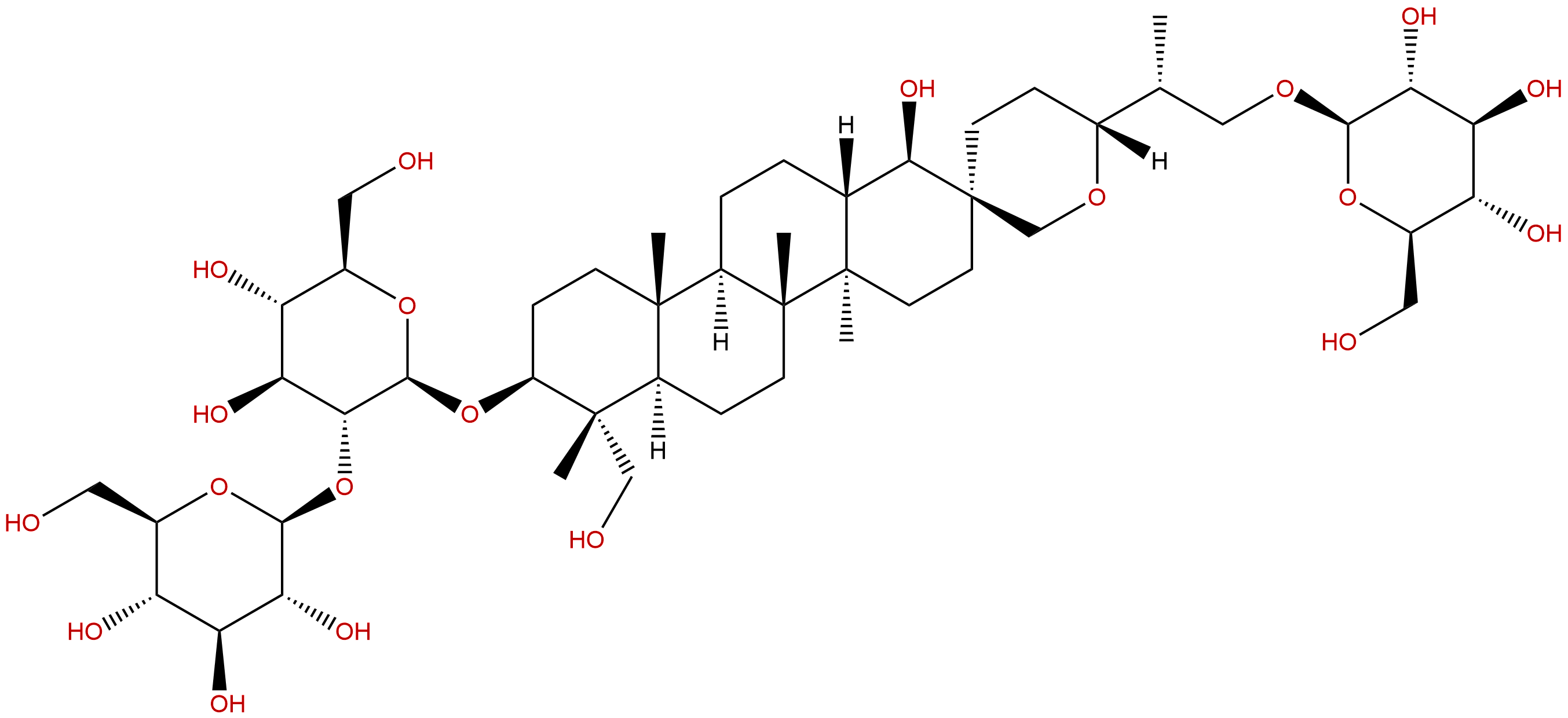
Chemical structure and physicochemical properties
Fengxian terpenoid tetraol glycoside B is a structurally complex glycoside natural product. The molecular formula of this compound is C ₄₈ H ₈₂ O ₂₀, with a molecular weight of 979.1640 Da. The core skeleton of this compound is a terpenoid or steroid derived terpenoid glycoside (Balsaminaceae tetraol), which is connected to multiple sugar units through glycosidic bonds. A typical sugar chain may contain glucose, xylose, xylose, etc. This highly glycosylated structure is an important basis for its water solubility and biological activity.
From the analysis of the parameters related to drug properties, Fengxian terpenoid tetranol glycoside B exhibits typical polar molecular characteristics. Its lipid water partition coefficient (LogP) is 1.3098, indicating that it has a certain degree of lipophilicity, but overall leans towards hydrophilicity. The topologically polar surface area (TPSA) is as high as 327.6000 Å ², which is closely related to the presence of multiple hydroxyl and sugar ring structures in its molecule, and also indicates that it has many hydrogen bond donor and acceptor sites. Its water solubility value is 0.1786, belonging to the range of slightly soluble to soluble, which provides the possibility for its formulation development, but may also affect its transmembrane absorption. The preliminary assessment of critical safety showed that the Ames test result was 0.0, indicating no mutagenicity under the experimental conditions; The inhibition of hERG is' no ', indicating a low potential risk of inducing QT interval prolongation in the heart, which is a positive signal in the early stages of drug development. However, its blood-brain barrier permeability is predicted to be "low", which may be a limitation for the treatment of primary brain melanoma metastasis, but for those primarily targeting the peripheral system, it may help reduce central neurotoxicity.
Plant sources and extraction methods
Balsaminaceae terpenoid tetraol glycoside B is mainly derived from Balsaminaceae, a plant of the genus Balsaminaceae in the family Balsaminaceae(Impatiens balsamina L. Dry and mature seeds. Impatiens is widely distributed in China, and its seeds are called "acute seeds" in traditional Chinese medicine. They have the effects of softening hardness, dispersing knots, breaking blood, and eliminating symptoms. Traditionally, they are used to treat diseases such as constipation, obstruction of menstruation, and sore throat.
The extraction and separation of triterpenoid glycoside B from plant materials usually follows the following process:
1. Extract After crushing the seeds of Impatiens balsamina, medium polarity solvents such as methanol, ethanol, or aqueous ethanol (such as 70% -80% ethanol) are often used for extraction. Heating reflux extraction or ultrasound assisted extraction methods are used to improve efficiency.
2. Rough classification The extract is concentrated under reduced pressure to obtain a paste. The extract is usually suspended in water and subjected to gradient extraction using organic solvents such as petroleum ether, ethyl acetate, and n-butanol in sequence. Due to its strong polarity and water solubility, the triterpenoid glycoside B of Impatiens is mainly enriched in the n-butanol extraction site.
3. Separation and Purification The n-butanol fraction is further separated and purified using various chromatographic techniques. Silica gel column chromatography is commonly used for preliminary separation, and a gradient elution system such as chloroform methanol water is employed for elution. Then, fine purification was carried out in combination with reverse phase silica gel column chromatography (such as ODS, methanol water or acetonitrile water as mobile phase), dextran gel column chromatography (such as Sephadex LH-20) and high performance liquid chromatography (HPLC, preparative or semi preparative) to finally obtain high-purity monomer compounds of Impatiens terpene tetraol glycosides B. Structural identification is accomplished through the comprehensive use of spectroscopic techniques such as nuclear magnetic resonance (NMR, including ¹ H-NMR, ¹ ³ C-NMR, 2D-NMR), mass spectrometry (MS), and infrared spectroscopy (IR).
Pharmacological activity research
A large number of in vitro and partially in vivo studies have confirmed that the triterpenoid glycoside B of Impatiens has multiple pharmacological activities against melanoma.
1. Inhibit cell proliferation and induce apoptosis Fengxian terpenoid tetranol glycoside B can dose dependently inhibit the proliferation of various human melanoma cell lines (such as A375, SK-MEL-28, B16-F10). Its function is not limited to inhibiting cell growth, but can also effectively induce programmed cell death - apoptosis - in tumor cells. Flow cytometry analysis showed that the proportion of early and late apoptosis in cells significantly increased after treatment with Impatiens triterpenoid glycoside B, accompanied by typical morphological features of apoptosis such as cell nucleus condensation and DNA fragmentation.
2. Block the cell cycle This compound can block melanoma cells at specific phases of the cell cycle, commonly G0/G1 or G2/M, thereby preventing the cells from entering the DNA synthesis or mitotic phase and fundamentally inhibiting their unlimited proliferation ability.
3. Inhibit invasion and metastasis The high mortality rate of melanoma is mainly attributed to its strong invasion and metastasis ability. Research has shown that the triterpenoid glycoside B of Impatiens can significantly reduce the migration and invasion ability of melanoma cells. The mechanism is related to the downregulation of the expression and activity of matrix metalloproteinases (such as MMP2 and MMP9), which are key molecules for degrading extracellular matrix and opening the way for tumor cells.
4. Inhibit melanin production Although melanin production itself is not the core goal of melanoma treatment, tyrosinase (TYR) is the rate limiting enzyme for melanin synthesis and a target for certain treatment strategies. Fengxian terpenoid glycoside B exhibits certain tyrosinase inhibitory activity, which may provide potential value for its use in the treatment of pigmentary disorders or as an adjuvant therapy.
5. In vivo anti-tumor activity In a melanoma xenograft mouse model, intraperitoneal injection or gavage of Impatiens triterpenoid glycoside B significantly inhibited tumor volume and weight growth in a dose-dependent manner. Meanwhile, no significant weight loss or major organ toxicity was observed in the study, indicating that it has good tolerance within a certain dose range.
Mechanism of action and molecular targets
The anti melanoma effect of Fengxian terpenoid tetraol glycoside B is not achieved through a single pathway, but through a complex molecular network, and its key targets that have been reported or predicted include:
- AMPK (PRKAA1)AMP activated protein kinase is a core regulatory factor in cellular energy metabolism. Fengxian terpenoid tetranol glycoside B may activate the AMPK pathway, leading to inhibition of downstream mTOR signaling, thereby inhibiting protein synthesis and cell growth, while inducing autophagy and promoting tumor cell death under energy stress conditions.
- STAT3 (STAT3)Signal transducer and activator of transcription factor 3 is an important oncogenic transcription factor that is continuously activated in melanoma, promoting cell proliferation, survival, immune escape, and angiogenesis. Fengxian terpenoid tetraol glycoside B can inhibit the phosphorylation (activated form) and nuclear translocation of STAT3, thereby downregulating the expression of its target genes (such as BCL2, Cyclin D1, MMP2, etc.) and exerting a multifunctional anti-tumor effect.
- BCL2 (BCL2)B-cell lymphoma 2 protein is a key anti apoptotic protein. Fengxian terpenoid tetranol glycoside B downregulates the expression of BCL2 by inhibiting upstream signals such as STAT3, and may upregulate the expression of pro apoptotic protein BAX, disrupting mitochondrial membrane potential and leading to the release of cytochrome C, ultimately activating the Caspase cascade reaction and executing the apoptotic program.
- TYR (TYR)As a direct target or by regulating its expression, Impatiens triterpenoid glycoside B inhibits tyrosinase activity and affects the melanin synthesis pathway.
- PRKCA (PKCα)Protein kinase C α is involved in signal transduction for cell proliferation, differentiation, and apoptosis. Fengxian terpenoid tetraol glycoside B may inhibit cell growth by interfering with the activity of PKC α, affecting downstream signaling pathways such as MAPK/ERK.
- MAPT (Tau protein)Although Tau protein is mainly associated with neurodegenerative diseases, recent studies have found its abnormal expression in certain cancers. Its specific mechanism of action is not yet clear in melanoma, and may involve cytoskeletal stability and signal transduction.
- MMP2 (MMP2)As mentioned earlier, Impatiens triterpenoid glycoside B reduces the expression and secretion of MMP2 by inhibiting transcription factors (such as STAT3) or acting directly, thereby weakening the invasion and metastasis ability of tumor cells.
- NFE2L2 (Nrf2)Nuclear factor E2 related factor 2 is the main regulator of antioxidant stress response. In tumors, sustained activation of Nrf2 may help tumor cells resist oxidative damage and chemotherapy drugs. Fengxian terpenoid tetraol glycoside B may regulate the Nrf2 pathway, but its specific action of activation or inhibition may depend on the cellular environment and dosage, and further research is needed.
- HIF1A (HIF-1α)Hypoxia inducible factor 1 alpha plays a central role in tumor adaptation to the hypoxic microenvironment, promoting angiogenesis and metabolic reorganization. Inhibiting HIF-1 α can suppress tumor growth. Fengxian terpenoid tetranol glycoside B may interfere with tumor hypoxia adaptation by affecting its stability or transcriptional activity.
- EDNRB (endothelin receptor B)The endothelin system plays a role in the proliferation, survival, and angiogenesis of melanoma. Antagonistic EDNRB signaling has the potential to combat melanoma. It is worth further exploring whether Fengxian terpenoid tetraol glycoside B serves as a regulator of EDNRB.
In summary, the pharmacological basis of the anti melanoma effect of Balsaminaceae terpenoid tetraol glycoside B is formed through multi-target and multi pathway synergistic effects.
Evaluation of drug properties and pharmacokinetics
Based on its physical and chemical parameters and preliminary biological activity data, a preliminary evaluation of the pharmacological properties of Balsaminaceae terpenoid glycoside B was conducted
Advantage:
1. Clear activity Has shown significant anti melanoma activity at both cellular and animal levels.
2. Multi-target effect May overcome the disadvantage of single target drugs easily developing resistance.
3. Preliminary safety warning is good Ames test negative, no hERG inhibition warning, reducing early risk for subsequent development.
4. natural source As a component of plant extracts, it has a certain foundation in traditional applications.
Challenges and unknowns:
1. Pharmacokinetic properties to be elucidated At present, there is almost no research on the in vivo absorption, distribution, metabolism, and excretion (ADME) process of triterpenoid glycoside B in Impatiens. Its high TPSA and molecular weight may limit its oral bioavailability, and the predicted low blood-brain barrier permeability also needs experimental verification.
2. Solubility and permeability Moderate water solubility and high polarity may affect its transmembrane transport and intestinal absorption. It is necessary to study its stability at different physiological pH levels and its absorption mechanism in the gastrointestinal tract.
3. Metabolic stability As a glycoside compound, it is easily hydrolyzed by glycosidases in the gut microbiota or tissues in the body to generate aglycones. The activity, toxicity, and pharmacokinetic behavior of aglycones may be significantly different from the prototype compound and require systematic research.
4. Difficulty in formulation development Due to its complex structure and physicochemical properties, developing stable and efficient formulations suitable for oral or injection administration may pose challenges.
5. Potential off target effects and long-term toxicity The multi-target characteristic is a double-edged sword, which may bring unpredictable off target effects and toxicity, and requires comprehensive preclinical safety evaluation.
Future research priorities should include: systematic in vitro ADME studies (such as Caco-2 cell permeability, liver microsomal metabolic stability, plasma protein binding rate, etc.); Establish sensitive biological analysis methods and conduct pharmacokinetic studies in rats or mice; Explore prodrug strategies, nano delivery systems, etc. to improve their bioavailability and targeting.
Clinical application prospects and prospects
As a natural lead compound with multi-target anti melanoma activity, Fengxian terpenoid tetraol glycoside B has broad clinical application prospects, but the road ahead is long.
Potential development direction:
1. Single drug development Develop as a new candidate drug for anti melanoma treatment. The key is to address the bottleneck of drug development, optimize its pharmacokinetic properties through structural modification, and improve bioavailability and stability while maintaining activity.
2. combination therapy Due to its unique mechanism of action (such as activating AMPK and inhibiting STAT3), it can be combined with existing targeted drugs (such as BRAF/MEK inhibitors) or immune checkpoint inhibitors (such as PD-1 antibodies), which may produce synergistic effects, reverse or delay the occurrence of drug resistance.
3. Adjuvant therapy Utilizing its inhibition of melanin production and anti-inflammatory properties, it is developed for the treatment of hyperpigmentation disorders or as an adjuvant therapy for melanoma surgery to prevent recurrence.
4. Research on Modernization of Traditional Chinese Medicine Elaborate on the scientific connotation of the traditional efficacy of the "acute seed" of Impatiens balsamina at the molecular level in breaking blood and eliminating symptoms, and treating "pathological disorders" (similar to tumors), promoting the modernization and international recognition of traditional Chinese medicine formulas.
Future research focus:
1. In depth mechanism research Using techniques such as gene knockout/knockdown, chromatin immunoprecipitation, proteomics, etc., accurately verify its direct interaction with the above targets and draw a more complete signal network map.
2. Optimization of drug formulation system Conduct systematic medicinal chemistry research, conduct structure-activity relationship analysis, and rationally modify its sugar chains or glycosides to improve solubility, metabolic stability, and targeting.
3. Preclinical comprehensive evaluation Validate its efficacy in animal models closer to human diseases, such as human tumor xenograft models and genetically engineered mouse models, and complete GLP standard toxicology studies.
4. Explore delivery systems Develop targeted delivery systems based on liposomes, polymer nanoparticles, or exosomes to increase drug concentration at tumor sites, reduce systemic exposure, and minimize toxic side effects.
Conclusion
Balsaminaceae terpenoid tetraol glycoside B is a structurally unique glycoside compound isolated from the traditional medicinal plant Balsaminaceae. In recent years, research has shown that it exhibits various pharmacological activities in inhibiting melanoma cell proliferation, inducing apoptosis, blocking the cell cycle, and inhibiting invasion and metastasis by regulating multiple key targets such as AMPK, STAT3, BCL2, and MMP2. It has the potential to be developed into a novel anti melanoma drug. Although its clear in vitro activity and preliminary in vivo effects are encouraging, the compound still faces many challenges on its path towards clinical application, especially in terms of its pharmacological properties such as oral bioavailability and metabolic stability, which are not yet clear. Future research needs to focus on clarifying its molecular mechanism of action, addressing its pharmacokinetic and formulation bottlenecks, and laying a solid scientific foundation for its ultimate translation into clinically available anti-tumor drugs through systematic preclinical evaluation. The continuous research on the triterpenoid glycoside B of Impatiens not only helps to discover new anti-cancer lead compounds, but also provides valuable examples for a deeper understanding of multi-target therapeutic strategies for natural products.