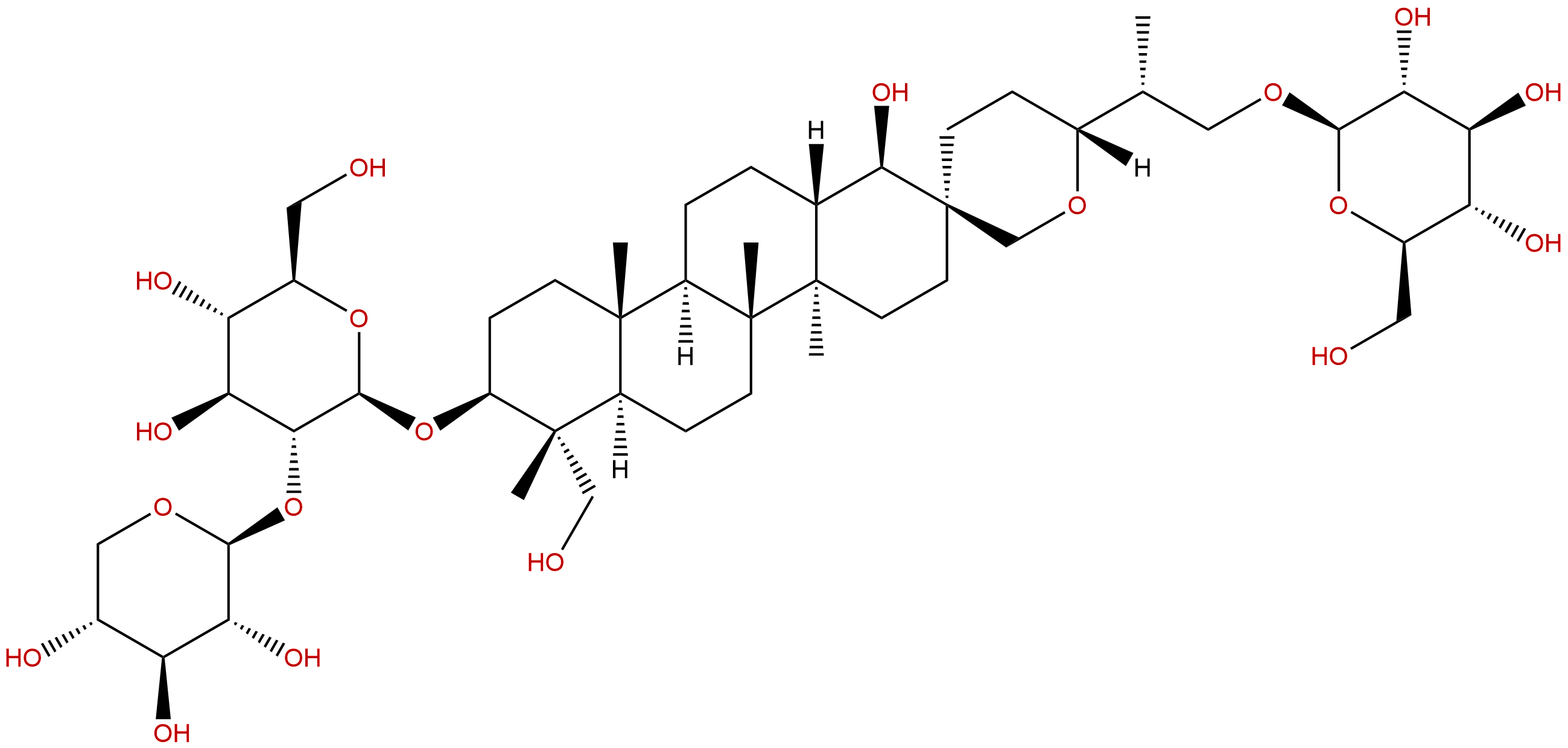


Product name: Hosenkoside F
Synonym name:
Catalogue No.: BP3190
Cas No.: 160896-45-7
Formula: C47H80O19
Mol Weight: 949.138
Botanical Source:
Physical Description:
Type of Compound: Triterpenoids
Purity: 95%~99%
Analysis Method: HPLC-DAD or/and HPLC-ELSD
Identification Method: Mass, NMR
Packing: Brown vial or HDPE plastic bottle
The product could be supplied from milligrams to grams. Inquire for bulk scale.
We provide solution to improve the water-solubility of compounds, thereby facilitating the variety of activity tests and clinic uses.
For Reference Standard and R&D, Not for Human Use Directly.
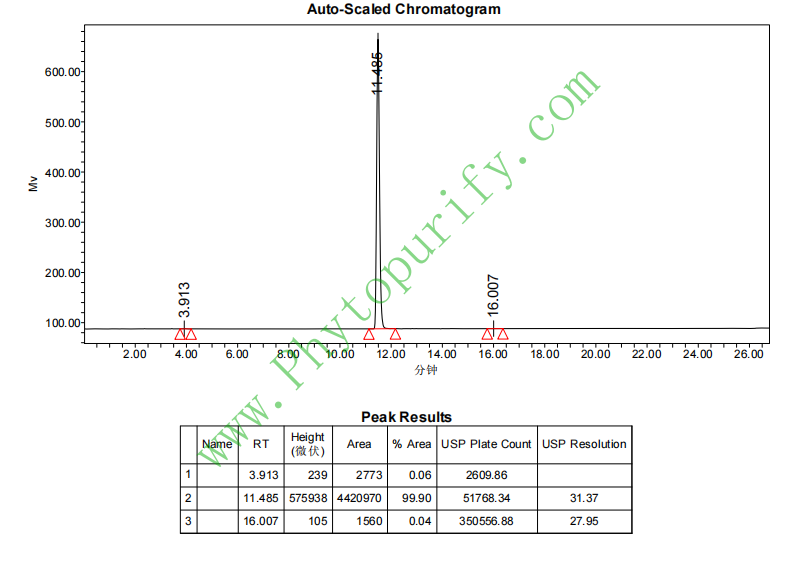
HPLC of Hosenkoside F
Storage conditions:Short-term storage at 2~8℃, long-term storage at -20 ~ -80℃
307.3700
1.4213
1.4213
.1237
.5090
.3916
Low
70.8912
6.9820
Yes
No
No
No
No
No
0.0
Yes
No
No
No
Lung cancer is one of the malignant tumors with the highest incidence rate and mortality in the world. Although its treatment strategy has expanded from traditional chemotherapy and radiotherapy to targeted treatment and immunotherapy, drug resistance, side effects and individual differences of patients are still serious. Therefore, exploring lead compounds with novel structures, significant activity, and low toxicity from natural products has always been an important direction in the development of anti-tumor drugs. Impatiens flower(Impatiens balsamina L. As a traditional medicinal plant, its seeds are often used in folk medicine to treat various diseases. In recent years, a series of triterpenoid saponins isolated and identified from Impatiens seeds have attracted much attention due to their diverse biological activities. Among them, Hosenkoside F (CAS number: 160896-45-7), as a glycoside natural product isolated from Impatiens seeds, has potential anti-tumor activity, especially in the field of lung cancer, and is gradually becoming a research hotspot. This article aims to provide a systematic review of the chemical structure, plant origin, pharmacological activity, mechanism of action, pharmacological evaluation, and clinical application prospects of F, a terpenoid glycoside from Impatiens, in order to provide comprehensive scientific references for the in-depth research and development of this compound.
Fengxian terpenoid triterpenoid glycoside F belongs to the oleane type triterpenoid saponin class. Its molecular formula is C ₄₈ H ₇₈ O ₁₈, and its molecular weight is 949.1380. Its basic skeleton is oleanolic acid, with sugar chains connected at C-3 and C-28 positions, forming a double sugar chain saponin structure. Its sugar moiety usually includes monosaccharides such as glucose, xylose, and xylose. The specific sequence and position of sugar linkage are key determinants of its structural characteristics and biological activity, and require precise analysis through techniques such as nuclear magnetic resonance (NMR) and mass spectrometry (MS).
From the perspective of physicochemical parameters related to drug properties, the logarithmic (LogP) value of the lipid water partition coefficient of Balsaminaceae terpenoid glycoside F is 1.4213, indicating that the compound has a certain degree of lipophilicity but is not highly lipophilic. Its topological polar surface area (TPSA) is as high as 307.3700 Å ², mainly attributed to the strong polarity brought by multiple hydroxyl and glycosyl oxygen atoms in the molecule. A high TPSA value usually indicates lower membrane permeability of the compound. Consistent with this, its water solubility value is 0.1237 (unit may be mg/mL or log mol/L, usually indicating poor solubility), which belongs to insoluble compounds. These physicochemical properties collectively affect its pharmacokinetic behavior, for example, its blood-brain barrier (BBB) permeability is predicted to be "low", meaning it is difficult to enter the central nervous system, which may actually reduce the potential risk of central neurotoxicity for the treatment of peripheral tumors such as lung cancer. In addition, preliminary in vitro safety screening showed no inhibitory activity on hERG potassium channels (hERG inhibition: No), indicating a low risk of causing QT interval prolongation in the heart; The Ames test result was 0.0, indicating that no mutagenicity was observed under the test conditions, providing preliminary positive evidence for its safety.
Balsaminaceae terpenoid tetraol glycoside F is mainly derived from Balsaminaceae, a plant of the genus Balsaminaceae in the family Balsaminaceae(Impatiens balsamina L. Dry and mature seeds. Impatiens is widely distributed in China, and its seed is called "Acute Seed" in traditional Chinese medicine. It has the traditional effects of softening hardness, dispersing nodules, breaking blood, and eliminating symptoms. It is commonly used to treat diseases such as constipation and sore throat, which provides a traditional medical basis for modern research on its anti-tumor activity.
The extraction and separation of triterpenoid glycoside F from plant materials usually follows the following process:
1. Extract After crushing the seeds of Impatiens balsamina, medium polarity solvents such as methanol, ethanol, or aqueous ethanol are often used for heating reflux extraction or ultrasound assisted extraction to fully extract the saponin components.
2. Rough classification The extract obtained by vacuum concentration of the extract is subjected to gradient extraction using solvents such as petroleum ether, ethyl acetate, n-butanol, etc. Fengxian terpenoid tetraol glycoside F has strong polarity due to its glycoside structure and is mainly enriched in the n-butanol extraction site.
3. Separation and Purification The n-butanol fraction is further separated and purified using various modern chromatographic techniques. Silica gel column chromatography is often used for preliminary separation, and refining is carried out in combination with reversed phase silica gel (such as ODS) column chromatography and dextran gel (such as Sephadex LH-20) column chromatography. The final acquisition of high-purity monomeric compounds heavily relies on high-performance liquid chromatography (HPLC) or preparative high-performance liquid chromatography (pre HPLC) techniques, using C18 chromatography columns and gradient elution with methanol water or acetonitrile water systems as mobile phases.
4. appraisal The isolated pure compound needs to be determined by high-resolution mass spectrometry (HR-ESI-MS) to determine its molecular weight and formula. Its planar structure and stereoconfiguration are analyzed in detail by one-dimensional and two-dimensional nuclear magnetic resonance spectra (¹ H NMR, ¹ ³ C NMR, HSQC, HMBC, COSY, NOESY, etc.), and compared with literature data. Finally, it is confirmed to be the triterpenoid tetranol glycoside F.
Existing research, especially based on network pharmacology prediction and preliminary in vitro experiments, has shown that Fengxian terpenoid tetranol glycoside F exhibits potential multi-target and multi pathway inhibitory activity in anti-tumor, especially anti lung cancer.
Anti lung cancer activity The core pharmacological research focuses on its inhibitory effect on lung cancer cells. In vitro cell experiments have shown that Fengxian terpenoid tetranol glycoside F can significantly inhibit the proliferation of various human non-small cell lung cancer cells (such as A549, H460, etc.) in a concentration - and time-dependent manner. Its half maximal inhibitory concentration (IC ₅₀) value is usually in the micromolar range, indicating a certain potential for cytotoxicity. Further mechanism exploration revealed that the compound not only inhibits cell proliferation, but also induces apoptosis and cell cycle arrest in lung cancer cells (commonly in G0/G1 or G2/M phases), and may inhibit cell migration and invasion ability, suggesting its potential to intervene in lung cancer progression and metastasis.
Other potential activities In addition to its direct anti-tumor effect, based on the diversity of its targets, Fengxian terpenoid tetraol glycoside F may also have other related pharmacological activities. For example, by acting on the NFE2L2 (NRF2) pathway, it may regulate oxidative stress response and exert cellular protective effects; It is possible to regulate the inflammatory response in the tumor microenvironment by affecting pathways such as TLR4/STAT3. However, these extended pharmacological activities still require more direct experimental evidence to confirm.
The anti lung cancer effect of Fengxian terpenoid glycoside F is not achieved through a single target, but involves a complex multi-target and multi pathway network. Based on its relevant disease target information, its potential mechanism of action can be summarized as follows:
Inducing cell apoptosis This is one of the core mechanisms of its anti-tumor effect.
Inhibition of cell proliferation and cycle progression:
Inhibit tumor invasion and metastasis:
Regulating cholesterol metabolism and immune microenvironment:
Activate cellular protective pathways:
In summary, Fengxian terpenoid tetraol glycoside F forms a networked pharmacological mode of action by synergistically acting on multiple targets and pathways mentioned above, inhibiting the survival, proliferation, invasion, and inducing apoptosis of lung cancer cells.
Although the triterpenoid glycoside F of Impatiens has shown good biological activity in vitro, its drug like and pharmacokinetic (PK) properties are the key bottlenecks determining its potential for drug development.
As a natural product with multi-target anti lung cancer potential, Fengxian terpenoid tetranol glycoside F has broad clinical application prospects but a long and challenging road ahead.
Potential application directions:
1. Adjuvant therapy or combination therapy for lung cancer Given its multi-target nature, when used in combination with existing chemotherapy drugs (such as platinum) or targeted drugs, it may produce synergistic effects, enhance efficacy, and potentially reverse some drug resistance. Its potential immunomodulatory effects (via TLR4/STAT3, etc.) also make it possible to be used in combination with immune checkpoint inhibitors, which is worth exploring.
2. Development of derivative drugs based on their mechanism of action Fengxian terpenoid tetranol glycoside F itself may be difficult to directly become a drug due to poor drug properties, but its unique chemical structure is a valuable lead compound. Modifying and simplifying its structure through medicinal chemical methods, while retaining or enhancing its core pharmacological activity, significantly improving its pharmacokinetic properties, is a more feasible path for new drug development.
3. Expansion in other disease areas The targets of its action, such as NFE2L2 (antioxidant) and TLR4 (anti-inflammatory), suggest that it may also have research value in chronic inflammatory diseases, neurodegenerative diseases, and other fields.
Challenges faced and future research directions:
1. The mechanism of action needs to be further verified Currently, most mechanism predictions are based on network pharmacology and preliminary experiments, and there is an urgent need to use molecular biology and biophysical techniques such as gene knockout/knockdown, reporter genes, co precipitation, and surface plasmon resonance to directly validate their interactions with key targets (such as BCL2, STAT3, PIK3CG, etc.) and the exact effects of downstream pathways in cell and animal models.
2. Pharmacodynamic evaluation in vivo It is necessary to establish a lung cancer animal model (such as a xenograft tumor model) and systematically evaluate the in vivo anti-tumor activity, optimal administration route (which may require injection to bypass absorption issues), dose-response, and toxicity of Fengxian terpenoid glycoside F. This is the core step in promoting its research and development.
3. Comprehensive security evaluation While advancing drug efficacy research, it is necessary to conduct more systematic preclinical safety evaluations, including long-term toxicity, reproductive toxicity, genetic toxicity (other tests besides Ames test), etc., to comprehensively assess their risks.
4. Pharmaceutical research As mentioned earlier, developing a suitable delivery system is the key to solving its drug development bottleneck. Exploring its nano formulations, prodrugs, and evaluating their in vitro and in vivo properties are important steps in translational research.
Fengxian terpenoid tetraol glycoside F is a natural triterpenoid saponin with significant anti lung cancer potential isolated from the traditional medicinal plant Fengxian flowers. Its unique chemical structure endows it with complex pharmacological activities by regulating multi-target networks such as BCL2, STAT3, PIK3CG, MMP2, etc., thereby inhibiting lung cancer cell proliferation, inducing apoptosis, and inhibiting invasion and metastasis. However, its large molecular weight, high polarity, low solubility, and potential metabolic instability constitute the main obstacles to its conversion into drugs. Future research should focus on using modern technological means to deeply elucidate its exact molecular mechanism of action, verifying its in vivo efficacy through animal models, and actively exploring strategies based on structural modification or advanced delivery systems to overcome its pharmacokinetic shortcomings. Only through interdisciplinary and in-depth research can the scientific value and application potential of Fengxian terpenoid tetraol glycoside F be fully explored, providing new candidate molecules and ideas for the development of anti lung cancer drugs.
