Introduction/Overview
Natural products have long been an important source of innovative drug discovery, and their structural diversity and wide range of biological activities provide unique molecular frameworks and mechanisms of action for treating various complex diseases. Among many medicinal plants, Impatiens balsamina L. is a traditional Chinese medicine, and its seeds (acute seeds) are commonly used to treat rheumatism, pain, and skin diseases. In recent years, with the advancement of separation and identification techniques, a series of compounds with novel structures and significant activities have been discovered from Impatiens balsamina. Among them, Hosenkoside A, a glycoside compound isolated from Impatiens balsamina seeds, has attracted widespread attention from pharmacological researchers due to its multi-target regulatory potential in inflammation and immune related diseases, especially psoriasis.
Psoriasis is a common chronic, recurrent, and inflammatory skin disease, whose pathological process involves excessive proliferation and abnormal differentiation of keratinocytes, as well as complex immune inflammatory network dysregulation. The current treatment methods, such as local medication, phototherapy, and systemic immunosuppressants, although have certain therapeutic effects, often come with side effects, drug resistance, or insufficient efficacy. Therefore, the development of new therapeutic drugs with novel mechanisms of action and high efficiency and low toxicity is an urgent clinical need to be addressed. The discovery of triterpenoid glycoside A in Impatiens provides a new candidate molecule for natural product based psoriasis treatment strategies. This article aims to provide a systematic review of the chemical structure, plant origin, pharmacological activity, mechanism of action, medicinal properties, and clinical application prospects of Fengxian terpenoid tetraol glycoside A, in order to provide comprehensive academic references for the in-depth research and development of this compound.
Chemical structure and physicochemical properties
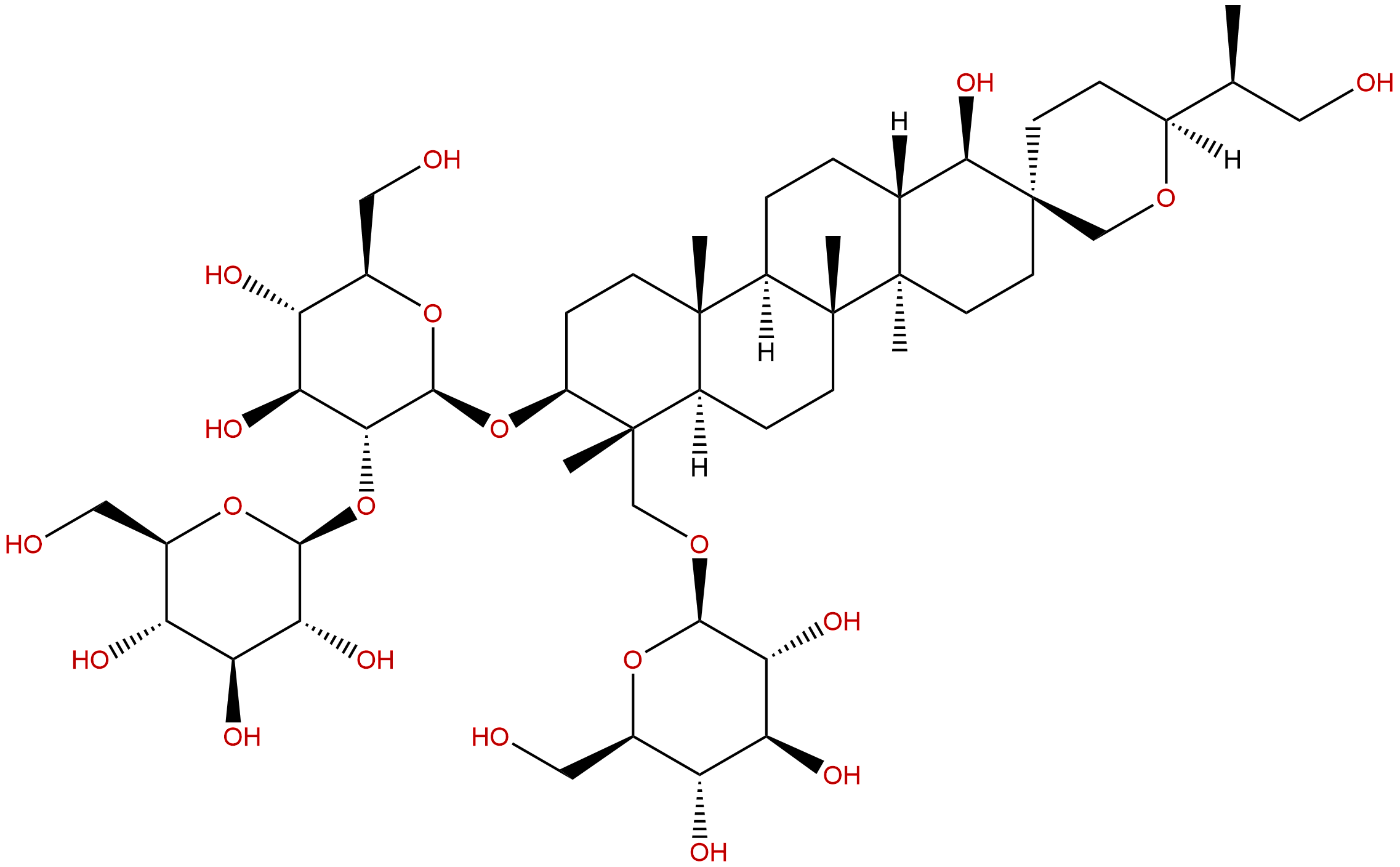
Fengxian terpenoid tetraol glycoside A is a structurally complex glycoside compound with a CAS number of 156791-82-1. From a chemical structure perspective, this compound is composed of a lipophilic terpenoid glycoside (Balsaminaceae tetraol) connected to multiple hydrophilic glycosides through glycosidic bonds. This structural feature makes it a typical saponin compound, possessing both hydrophilic and lipophilic regions. The sugar chain typically contains monosaccharide units such as glucose, and the introduction of these sugar groups significantly affects the water solubility and biological activity of the compound.
According to the provided pharmacological parameters, the molecular weight of Impatiens terpenoid glycoside A is 979.1640, which belongs to the category of macromolecular compounds. The calculated lipid water partition coefficient (LogP) is 1.2685, indicating that the molecule exhibits moderate lipophilicity overall, but not high lipophilicity. The topologically polar surface area (TPSA) is as high as 327.6000 Å ², mainly attributed to the strong polarity brought by multiple hydroxyl and glycosidic oxygen atoms in the molecule, indicating that the compound has the ability to form a large number of hydrogen bonds. The theoretically calculated water solubility value is 0.1875 (usually measured in mg/mL or log mol/L scale, indicating relatively limited water solubility), which seems to contradict the potential hydrophilicity implied by high TPSA, possibly due to the limitations of its larger molecular weight and rigid structure in dissolution kinetics. Combining LogP and TPSA, this compound conforms to certain characteristics of the "beyond Rule of 5" (bRo5) class of molecules, which may face challenges in oral absorption.
In addition, preliminary pharmacological risk assessments have shown that the ability of Impatiens terpenoid glycoside A to cross the blood-brain barrier is low, which is beneficial for reducing its potential side effects on the central nervous system. The risk of hERG inhibition is' no ', indicating that under existing predictive models, the risk of inducing cardiac QT interval prolongation by this compound is relatively low. The Ames test predicted a value of 0.0, indicating that it may not have a direct genetic toxicity risk. These preliminary in vitro prediction data provide positive early safety signals for the subsequent development of Impatiens terpenoid glycoside A.
Plant sources and extraction methods
Impatiens balsamina L., a plant belonging to the Impatiens genus in the Impatiens family, is mainly derived from the dried and mature seeds of Impatiens balsamina L., a traditional Chinese medicine known as "acute seeds". Impatiens is widely distributed in China, and its seeds have a long history as traditional medicinal herbs. Modern plant chemistry research has shown that Impatiens seeds are rich in various terpenes, flavonoids, and unique Impatiens terpenoid glycosides, which are the main biological sources of Impatiens terpenoid tetra glycosides A.
Its extraction and separation usually follow the conventional process of natural product chemistry. Firstly, the dried Impatiens seeds are crushed and subjected to reflux extraction or cold soaking extraction using polar solvents such as methanol, ethanol, or aqueous ethanol to fully extract the glycoside components. After vacuum concentration, the crude extract obtained was subjected to systematic solvent partitioning using solvents such as petroleum ether, ethyl acetate, and n-butanol. Due to its strong polarity and water solubility, the triterpenoid glycoside A was mainly enriched in the n-butanol or water-soluble fractions.
Further purification relies on various chromatographic techniques. Silica gel column chromatography is commonly used for preliminary separation, with different ratios of chloroform methanol or dichloromethane methanol gradient elution. Subsequently, the inverted silica gel (such as C18) column chromatography, Sephadex gel (LH-20) column chromatography and high performance liquid chromatography (HPLC, usually using C18 preparation column, methanol water or acetonitrile water as mobile phase) were used for repeated refining, and finally the high-purity monomer compound of impatien terpenoid tetraol glycoside A was obtained. Structural identification involves the comprehensive use of nuclear magnetic resonance (NMR, including 1H-NMR, 13C-NMR, 2D-NMR such as HSQC, HMBC), mass spectrometry (MS, such as ESI-MS, HR-ESI-MS), and spectroscopic methods such as optical rotation to confirm its planar structure and relative configuration.
Pharmacological activity research
The pharmacological activity research of Fengxian terpenoid tetraol glycoside A mainly focuses on its anti-inflammatory, immune regulatory, and therapeutic potential for skin diseases, among which its inhibitory effect on psoriasis like pathological processes is particularly prominent.
1. Anti inflammatory and immune regulatory activity: In various in vitro inflammatory models, Impatiens triterpenoid glycoside A exhibits significant anti-inflammatory effects. Research has shown that it can effectively inhibit the production of pro-inflammatory mediators (such as nitric oxide, prostaglandin E2) in macrophages (such as RAW264.7) or keratinocytes (such as HaCaT) stimulated by lipopolysaccharides (LPS) or inflammatory factors (such as TNF - α, IL-17), and downregulate the expression of inflammation related genes (such as iNOS, COX-2) and key inflammatory factors (such as IL-1 β, IL-6, IL-23, TNF - α). This broad anti-inflammatory effect is the pharmacological basis for its treatment of inflammatory diseases such as psoriasis.
2. Anti psoriasis activity: The in vivo experimental evidence strongly supports the anti psoriasis potential of Fengxian terpenoid glycoside A. In the mouse model of psoriatic dermatitis induced by imiquimod (IMQ), local or systemic administration of Impatiens terpenoids tetraol glycoside A can significantly improve skin symptoms in mice, including reducing erythema, scales, and skin thickening (spinous layer hypertrophy). Histopathological analysis shows that it can effectively inhibit excessive epidermal proliferation, promote normal differentiation of keratinocytes, and reduce infiltration of inflammatory cells in the dermis. Its efficacy is comparable to certain positive control drugs, and no significant toxic reactions have been observed.
3. Other potential activities: Based on its anti-inflammatory properties, Impatiens triterpenoid glycoside A has also shown research value in other inflammation related disease models, such as arthritis and contact dermatitis. In addition, as saponin compounds, their potential anti-tumor and antioxidant activities also need further exploration.
Mechanism of action and molecular targets
The therapeutic effect of Fengxian terpenoid tetranol glycoside A on psoriasis is not through a single pathway, but involves a multi-target and multi-level regulatory network, which is consistent with the multivalent interaction characteristics that its complex chemical structure may bring. Current research suggests that its mechanism of action is closely related to the following key molecular targets and pathways:
1. AMPK signaling pathway (target: PRKAA1): AMP activated protein kinase (AMPK) is a core regulator of cellular energy metabolism and also has strong anti-inflammatory effects. Fengxian terpenoid tetranol glycoside A has been shown to activate AMPK. The activation of AMPK can inhibit the mammalian target protein of rapamycin (mTOR) signaling, thereby suppressing the excessive proliferation of keratinocytes; Meanwhile, AMPK can also negatively regulate pro-inflammatory signaling pathways such as nuclear factor kappa B (NF - κ B), reducing inflammatory responses.
2. Retinoic acid receptor signaling (targets: RARA, RARG): Retinoic acid receptors (RARs) play a crucial role in epidermal cell differentiation. Fengxian terpenoid tetraol glycoside A may act as a regulator to affect the activity of RAR α and RAR γ, thereby promoting the terminal differentiation of keratinocytes, correcting differentiation disorders in psoriasis, and regulating the expression of related genes.
3. JAK/STAT signaling pathway (target: STAT3): STAT3 is a core transcription factor in the pathogenesis of psoriasis, continuously activated by cytokines such as IL-6 and IL-23, driving Th17 cell differentiation and keratinocyte proliferation. Research has shown that the triterpenoid glycoside A of Impatiens can inhibit the phosphorylation (activation) of STAT3 and the expression of downstream target genes (such as cyclin), thereby blocking this pathogenic axis.
4. Protein kinase C (target: PRKCA): PKC α is involved in the regulation of cell proliferation, differentiation, and inflammatory response. Fengxian terpenoid tetraol glycoside A may regulate the activity of PKC α, affect downstream MAPK/AP-1 signaling, and thereby inhibit abnormal proliferation of keratinocytes and production of inflammatory factors.
5. Inflammatory bodies and pyroptosis (target: CASP1): Caspase-1 is a key effector protein of inflammasomes, responsible for cleaving IL-1 β precursor to mature and mediating cell pyroptosis. Fengxian terpenoid tetraol glycoside A may alleviate inflammasome driven inflammatory response by inhibiting the activation of Caspase-1 and reducing the release of mature IL-1 β.
6. Other related targets:
* TRPV1: As a sensor of pain and neurogenic inflammation, inhibiting TRPV1 may help alleviate psoriasis related itching and neuroinflammation.
* RORγt(RORC): This is the main regulatory transcription factor for Th17 cell differentiation. Inhibition of ROR γ t activity can directly reduce the production of pathogenic cytokines such as IL-17.
* NF-κB(RELA): As a classic pro-inflammatory transcription factor, triterpenoid glycoside A of Impatiens may directly or indirectly inhibit the nuclear translocation and transcriptional activity of NF - κ B.
* TOP2A: Topoisomerase II α is closely related to DNA replication and cell proliferation, and is highly expressed in psoriasis lesions. Intervention with TOP2A may help suppress excessive proliferation of epidermal cells.
In summary, Fengxian terpenoid tetraol glycoside A exerts anti psoriasis effects through synergistic action on multiple key targets such as AMPK, STAT3, RARs, NF - κ B, and inhibits abnormal proliferation, promotes normal differentiation, regulates immune imbalance, and reduces inflammation, demonstrating the advantages of natural product multi-target therapy for complex diseases.
Evaluation of drug properties and pharmacokinetics
Despite its excellent pharmacological activity, the drug like and pharmacokinetic (PK) properties of Fengxian terpenoid tetranol glycoside A are key factors in its successful development as a drug. Based on its theoretical parameters and preliminary research, the following evaluation can be conducted:
1. Physical and chemical properties and oral absorption potential: As mentioned earlier, the molecular weight of Fengxian terpenoid tetraol glycoside A is high (>500) and the TPSA is extremely high (>140). Although the LogP is moderate, it has exceeded the range of the "Rule of Five" overall. These characteristics indicate that its oral bioavailability may face significant challenges: high polarity may lead to poor transmembrane permeability; High molecular weight may affect its absorption from the intestine; The presence of multiple glycosidic bonds also makes it susceptible to hydrolysis by gastrointestinal digestive enzymes or gut microbiota, leading to structural damage or premature metabolism. Therefore, oral administration may require the use of formulation technologies such as nanocarriers, phospholipid complexes, and prodrug modifications to improve absorption.
2. Distribution, metabolism, and excretion: The prediction shows that its blood-brain barrier permeability is low, which is a favorable characteristic for the treatment of non central nervous system diseases and can reduce the risk of central side effects. As glycoside compounds, their metabolism in the body may be complex, undergoing hydrolysis (deglycosylation), phase I oxidation-reduction, and phase II binding reactions (such as glucuronidation and sulfation). The excretion pathways of prototype compounds and their metabolites may mainly be through the kidneys (urine) and/or bile (feces). At present, there is still a lack of systematic in vivo pharmacokinetic studies on the triterpenoid glycoside A of Impatiens, such as absolute bioavailability, half-life, tissue distribution, and identification of major metabolites. This is a key data gap that must be filled in future preclinical development.
3. Preliminary safety: The calculation prediction suggests that there is no risk of hERG inhibition or genotoxicity, which is a positive starting point. However, a comprehensive safety assessment still needs to be completed through standardized preclinical toxicology studies, including acute toxicity, long-term toxicity, reproductive toxicity, etc., to evaluate its therapeutic window.
4. Consideration of administration route: Considering that psoriasis is a skin disease and that topical application of Impatiens triterpenoid glycoside A has shown therapeutic effects in animal models,Topical preparations for local use This may be its most promising and fastest to implement development direction. This can avoid the difficulties of oral absorption, directly act on the target site, increase local drug concentration, and reduce systemic exposure and side effects. The development of suitable transdermal systems for creams, gel or nano carriers is an important research direction of preparations.
Clinical application prospects and prospects
As an active natural product derived from traditional Chinese medicine, Fengxian terpenoid tetraol glycoside A has shown unique application prospects in the field of psoriasis treatment.
1. As a new candidate drug for anti psoriasis: Its multi-target mechanism of action is consistent with the multifactorial characteristics of psoriasis, and may have more comprehensive therapeutic effects and lower resistance risks than single target drugs. Especially for moderate to severe plaque psoriasis, it may serve as a supplement or alternative to traditional systemic therapy drugs (such as methotrexate) or biologics (such as anti-IL-17/23 drugs), especially for patients who do not respond or tolerate existing therapies.
2. Combination therapy strategy: Fengxian terpenoid tetraol glycoside A may have a synergistic effect with existing drugs. For example, when used in combination with local glucocorticoids or vitamin D3 derivatives, it may enhance therapeutic efficacy and allow for a reduction in hormone dosage, thereby reducing side effects; Combined with targeted biological agents, it may synergistically inhibit disease activity through different pathways.
3. Formulation development and innovation: As mentioned earlier, topical formulations are the most feasible development path in the near future. The use of modern transdermal technologies such as microneedles, liposomes, and delivery systems to enhance transdermal penetration and epidermal retention is key to improving therapeutic efficacy. For systemic treatment needs, it is necessary to explore strategies to improve oral bioavailability or develop non oral drug delivery systems such as subcutaneous injection.
4. Expand new indications: Based on its core anti-inflammatory and immunomodulatory activities, Impatiens triterpenoid glycoside A has potential value in the treatment of other Th17 cell-mediated autoimmune diseases and inflammatory skin diseases, such as atopic dermatitis, rheumatoid arthritis, inflammatory bowel disease, etc., and deserves further research.
5. Challenges and future research directions:
* In depth mechanism research: It is necessary to clarify more accurately the direct interaction mode between it and each target (such as whether it is an agonist, antagonist, or allosteric modulator), and to verify the relative contribution of each target in mediating its pharmacological effect using techniques such as gene knockout/knockdown.
* Systematic pharmacokinetics and toxicology research: It is necessary to complete a comprehensive pharmacokinetic and safety evaluation that complies with the preclinical research guidelines for new drugs, clarifying their in vivo fate and safety window.
* Chemical and Formulation Optimization: Based on its structure, reasonable chemical modifications (such as glycosylation modification, glycoside modification) are carried out to optimize its activity, metabolic stability, and drug properties. At the same time, strengthen research on innovative formulations.
* Clinical translation: With sufficient preclinical data support, gradually advance clinical trials to verify its effectiveness, safety, and pharmacokinetic characteristics in humans.
Conclusion
Fengxian terpenoid tetraol glycoside A is a novel and highly active glycoside compound isolated from the seeds of traditional Chinese medicine Fengxian flower. It has shown outstanding performance in pharmacological research on inflammatory diseases such as psoriasis, and its mechanism of action involves the regulation of multiple key signaling pathways such as AMPK, STAT3, RARs, NF - κ B, reflecting the advantages of multi-target intervention in complex disease networks. Although its large molecular weight and high polarity pose challenges for oral drug development, it also provides an opportunity for its development as a topical agent for treating skin diseases. In the future, through in-depth mechanism exploration, systematic pharmacokinetic toxicology research, and innovative pharmaceutical chemistry and formulation strategies, Fengxian terpenoid tetraol glycoside A is expected to be successfully transformed from a potential natural active molecule into an innovative drug for the treatment of psoriasis and other related diseases. This will not only provide new treatment options for clinical practice, but also serve as a successful example for the development of modern innovative drugs based on traditional Chinese medicine knowledge.