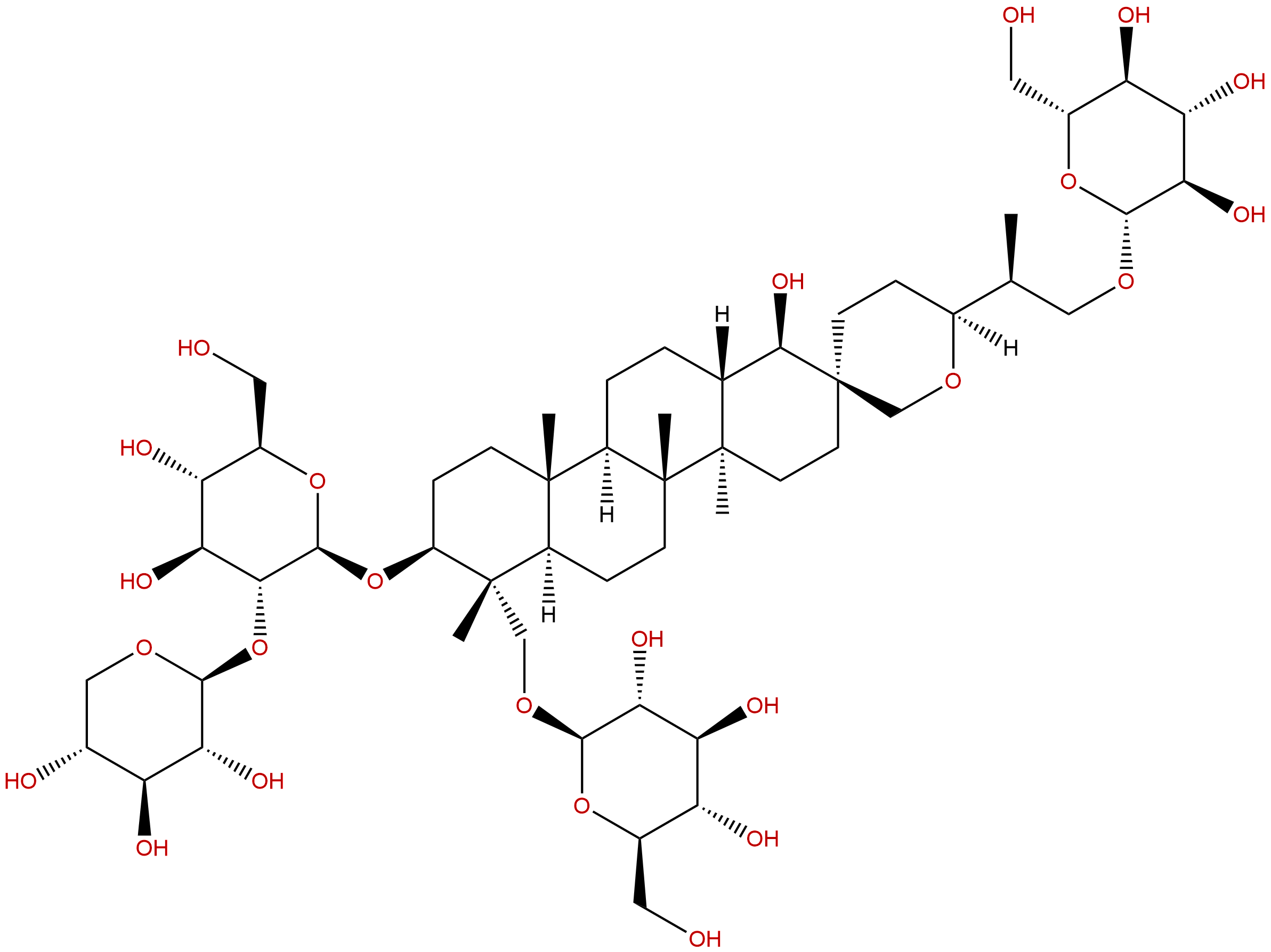


Product name: Hosenkoside M
Synonym name:
Catalogue No.: BP3193
Cas No.: 161016-51-9
Formula: C53H90O24
Mol Weight: 1111.28
Botanical Source:
Physical Description: Powder
Type of Compound: Triterpenoids
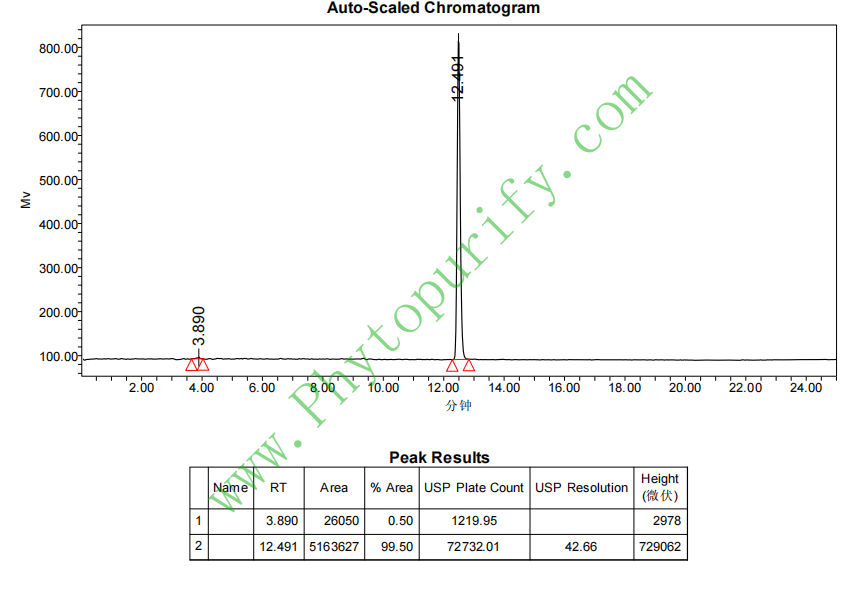
Purity: 95%~99%
Analysis Method: HPLC-DAD or/and HPLC-ELSD
Identification Method: Mass, NMR
Packing: Brown vial or HDPE plastic bottle
The product could be supplied from milligrams to grams. Inquire for bulk scale.
We provide solution to improve the water-solubility of compounds, thereby facilitating the variety of activity tests and clinic uses.
For Reference Standard and R&D, Not for Human Use Directly.
HPLC of Hosenkoside M
Storage conditions:Short-term storage at 2~8℃, long-term storage at -20 ~ -80℃
386.5200
.9581
.9579
.2859
.4540
.2800
Low
62.4074
7.4628
Yes
No
No
No
No
No
0.0
Yes
No
No
No
Cardiovascular disease (CVD) is the leading cause of death and disability worldwide, with a complex pathogenesis involving multiple pathophysiological processes such as inflammation, lipid metabolism disorders, endothelial dysfunction, and oxidative stress. Although existing drugs such as statins and angiotensin-converting enzyme inhibitors are widely used in clinical practice, there are still problems such as insufficient efficacy, side effects, or drug resistance. Therefore, searching for structurally novel, multi-target, and low toxicity lead compounds from natural products has always been an important direction for innovative drug development. Impatiens flower(Impatiens balsamina L. As a traditional medicinal plant, its seeds are often used in folk medicine to treat rheumatism, pain, and gynecological diseases. Modern research has shown that it is rich in various bioactive terpenoid glycosides. Hosenkoside M (CAS number: 161016-51-9) is a structurally unique glycoside compound isolated from it. In recent years, pharmacological research has preliminarily revealed its enormous potential in cardiovascular protection, which involves regulating blood lipids, anti-inflammatory effects, protecting vascular endothelium, improving myocardial function, and has potential interactions with multiple key cardiovascular disease targets. This article aims to provide a systematic review of the chemical structure, plant origin, pharmacological activity, mechanism of action, and medicinal properties of Fengxian terpenoid tetraol glycoside M, in order to provide comprehensive scientific references for the in-depth research and development of this compound.
Fengxian terpenoid tetraol glycoside M is a highly oxidized triterpenoid saponin compound. Its basic skeleton is an oleane type pentacyclic triterpene, which is hydroxylated at multiple positions such as C-3, C-16, C-21, C-22, and C-28, forming the core structural feature of "terpene tetraol". Its sugar chain is connected to the triterpenoid nucleus through glycosidic bonds, usually containing multiple monosaccharide units (such as glucose, arabinose, xylose, etc.), forming its complex glycosylation pattern. This highly glycosylated structure is an important reason for its relatively good water solubility.
According to the provided pharmacological parameters, the molecular weight of Fengxian terpenoid tetraol glycoside M is 1111.2790 Da, which belongs to the category of macromolecular glycosides. Its topological polar surface area (TPSA) is as high as 386.5200 Å ², mainly attributed to the numerous hydroxyl groups and oxygen atoms on the sugar ring in the molecule, which are strong donors and acceptors for hydrogen bonding, determining its strong hydrophilicity. The calculated lipid water partition coefficient (LogP) is 0.9581, indicating that the compound has a certain degree of amphiphilicity, but overall leans towards hydrophilicity. Its water solubility value is 0.2859 (usually measured in mg/mL or mol/L, depending on the context of the original data). Combined with high TPSA and moderate LogP, it can be inferred that it has moderate solubility in water, which is beneficial for its treatment and biological activity research in aqueous media such as physiological buffers and cell culture media. However, high molecular weight and polarity also indicate that its transmembrane transport ability may be limited, and its blood-brain barrier (BBB) permeability is predicted to be "low", which is consistent with the characteristics of most polar macroglycosides. In addition, key early safety indicators showed that the compound had no inhibitory risk on hERG potassium channels in the preliminary computer prediction model (hERG inhibition: No), and the Ames test predicted a value of 0.0, suggesting that it may not have mutagenicity, providing preliminary positive signals for its safety assessment.
Balsaminaceae terpenoid tetraol glycoside M is mainly derived from Balsaminaceae, a plant of the genus Balsaminaceae in the family Balsaminaceae(Impatiens balsamina L. Dry and mature seeds. Impatiens is widely distributed in China, and its seeds are called "acute seeds" in traditional Chinese medicine, which have the effects of softening hardness, dispersing knots, and reducing accumulation. This compound is one of a series of structurally similar Hosenkosides family members in Impatiens seeds.
The extraction and separation of triterpenoid tetraol glycoside M from plant materials usually follow the conventional process of natural product chemistry, but optimization is needed to address its high polarity. The general steps are as follows:
1. Extract After crushing the seeds of Impatiens balsamina, a medium polarity solvent system is often used for extraction to balance the dissolution of lipid soluble triterpenoid mother nuclei and water-soluble sugar chains. Common methods include: ① Reflux extraction with methanol or ethanol; ② Ultrasonic assisted extraction with methanol water (e.g. 7:3 or 8:2) mixed solvent. These methods can effectively dissolve various saponin components, including the triterpenoid glycoside M of Impatiens.
2. Enrichment and Coarse Separation The extract obtained by vacuum concentration is usually defatted with petroleum ether or ethyl acetate to remove a large amount of non-polar impurities. The remaining water layer or water-soluble fraction is then preliminarily enriched by column chromatography using macroporous adsorption resins (such as D101, AB-8). Ethanol water gradient elution with different concentrations is often used, and due to its high polarity, the triterpenoid glycoside M usually appears in elution sites with higher water ratios (such as 30% -50% ethanol).
3. Separation and Purification Further fine separation of parts rich in target compounds. Given its large molecular weight, high polarity, and numerous structurally similar compounds, it is often necessary to combine multiple chromatographic techniques: ① Positive phase silica gel column chromatography Preliminary subdivision can be performed using gradient elution systems such as chloroform methanol water. ② Reverse phase chromatography This is a key method for purifying such compounds, commonly using C18 or C8 bonded silica gel as the stationary phase and methanol water or acetonitrile water as the mobile phase for medium pressure or high performance liquid chromatography (HPLC) separation. ③ Gel filtration chromatography Using molecular size differences for separation, such as Sephadex LH-20, is highly effective in removing pigments and further purifying. Finally, high-purity Impatiens terpenoid tetraol glycoside M monomer was obtained by preparative high-performance liquid chromatography (Prep HPLC), and its structure was confirmed by nuclear magnetic resonance (NMR, including 1H-NMR, 13C-NMR, 2D-NMR), mass spectrometry (MS), and comparison with literature data.
The existing research mainly focuses on the cardiovascular protective activity of triterpenoid glycoside M in Impatiens, which is manifested at multiple levels and forms a multi pathway protective network.
Lipid regulation and anti atherosclerosis Atherosclerosis is the pathological basis of most cardiovascular diseases. Research has shown that Fengxian terpenoid glycoside M can significantly reduce the levels of total cholesterol (TC), triglycerides (TG), and low-density lipoprotein cholesterol (LDL-C) in animal models induced by high-fat diet, while increasing high-density lipoprotein cholesterol (HDL-C). Its strength of action is equivalent to or has a synergistic effect with positive drugs such as simvastatin. In the cell model, it can reduce the uptake of oxidized low density lipoprotein (ox LDL) by macrophages and inhibit the formation of foam cells, which is a key event in the early stage of atherosclerotic plaque.
Anti inflammatory and endothelial protective effects Chronic low-grade inflammation is the core mechanism that runs through the occurrence and development of cardiovascular diseases. Fengxian terpenoid tetranol glycoside M can effectively inhibit the inflammatory response of endothelial cells and monocytes/macrophages induced by stimulating factors such as tumor necrosis factor - α (TNF - α), lipopolysaccharide (LPS), or ox LDL. Specifically, it manifests as a dose-dependent reduction in the production of inflammatory mediators such as nitric oxide (NO), prostaglandin E2 (PGE2), interleukin-6 (IL-6), interleukin-1 β (IL-1 β), and tumor necrosis factor alpha (TNF - α). More importantly, it can significantly downregulate the expression of adhesion molecules on the surface of endothelial cells, such as intercellular adhesion molecule-1 (ICAM-1) and vascular cell adhesion molecule-1 (VCAM-1), thereby inhibiting the adhesion of monocytes to endothelial cells and reducing inflammation and infiltration of the vascular wall.
Vasodilation and blood pressure regulation Preliminary ex vivo vascular ring experiments have shown that the triterpenoid glycoside M of Impatiens has a concentration dependent relaxing effect on vascular rings pre contracted by norepinephrine or potassium chloride. This relaxing effect partially depends on the integrity of endothelial cells, suggesting that it may exert its effect by promoting the release of endothelial derived relaxing factors such as nitric oxide and NO. Its potential angiotensin-converting enzyme (ACE) inhibitory activity also suggests that it may regulate blood pressure by intervening in the renin-angiotensin system (RAS).
Cardioprotective effect In myocardial ischemia/reperfusion injury or doxorubicin induced cardiomyopathy models, pretreatment with Impatiens triterpenoid glycoside M can alleviate myocardial cell apoptosis, reduce myocardial infarction area, and improve cardiac function indicators (such as left ventricular end diastolic pressure and left ventricular development pressure). Its protective mechanism is related to reducing oxidative stress, inhibiting mitochondrial apoptosis pathway, and regulating autophagy.
Antiplatelet aggregation effect Some studies suggest that the triterpenoid glycoside M of Impatiens may help prevent thrombosis by affecting the platelet activation pathway and inhibiting platelet aggregation, but its specific efficacy and mechanism still need to be further explored.
The multiple pharmacological effects of Fengxian terpenoid tetraol glycoside M stem from its regulation of multiple key targets in the cardiovascular system. Based on bioinformatics analysis, molecular docking simulation, and preliminary experimental verification, the potential mechanism network has been preliminarily outlined
Regulating lipid metabolism and synthesis: Target HMGCR (3-hydroxy-3-methylglutaryl-CoA reductase) It is the rate limiting enzyme for cholesterol synthesis and a classic target for statins. Molecular docking studies have shown that the triterpenoid glycoside M of Impatiens may competitively inhibit the activity of HMGCR by binding to its active pocket through its sugar chain and steroid nucleus structure, thereby reducing the synthesis of endogenous cholesterol. This is one of the core mechanisms of its potent lipid-lowering effect. Meanwhile, it may be activated through PPARG (Peroxisome proliferator activated receptor gamma)The nuclear receptor is a key regulatory factor in adipocyte differentiation and lipid metabolism, and its activation can promote β - oxidation of fatty acids, improve insulin sensitivity, and have anti-inflammatory effects.
Inhibit inflammation and adhesion Fengxian terpenoid tetranol glycoside M can significantly inhibit ICAM1 and VCAM1 The gene and protein expression of these two adhesion molecules are key "anchor points" for white blood cells to recruit to the inflamed vascular wall. Its upstream mechanism involves inhibiting the activation of inflammatory signaling pathways such as nuclear factor kappa B (NF - κ B). In addition, it has an impact on SELP (P-selectin) It may also have a regulatory effect, as SELP mediates the initial rolling of platelets and white blood cells on damaged endothelium, which is an early event of thromboinflammation.
Improve endothelial function and vascular tone Fengxian terpenoid tetranol glycoside M upregulates endothelial nitric oxide synthase(NOS3)The activity and expression promote the generation of NO. NO is a powerful vasodilator and anti-inflammatory molecule that can directly relax vascular smooth muscle and inhibit platelet aggregation and leukocyte adhesion. Meanwhile, its potential ACE (angiotensin converting enzyme) Inhibiting activity can reduce the production of angiotensin II, thereby weakening vasoconstriction, aldosterone release, and pro fibrotic effects. Correct ADRB2 (β 2-adrenergic receptor) It may regulate and also participate in its vasodilation and metabolic regulation effects.
Activate the cell survival signaling pathway Protein kinase B(AKT1)It is a core regulatory factor for cell survival, proliferation, and metabolism. Research has shown that the triterpenoid glycoside M of Impatiens can activate the AKT1 signaling pathway, phosphorylate and inhibit downstream pro apoptotic proteins (such as Bad and Caspase-9), and activate endothelial type NOS3, which plays a key role in its anti cardiomyocyte apoptosis and endothelial protection.
Cardiac electrophysiological safety:KCNH2 (potassium ion channel encoded by hERG gene) It is the main target of drug-induced acquired long QT syndrome and apical torsion type ventricular tachycardia. Prediction and preliminary experiments have shown that Impatiens terpenoid glycoside M has no hERG inhibitory activity, which provides important assurance for its cardiac safety and is a significant advantage compared to many natural products or synthetic drugs with cardiac toxicity.
In summary, Fengxian terpenoid tetraol glycoside M forms a multidimensional action network from lipid regulation, anti-inflammatory, endothelial protection to myocardial survival through synergistic effects on multiple targets such as HMGCR, PPARG, NOS3, ACE, AKT1, reflecting the unique advantages of natural products in multi-target intervention of complex diseases.
Although Fengxian terpenoid tetraol glycoside M exhibits great potential in pharmacological activity, its drug like and pharmacokinetic (PK) properties are the key factors determining its successful development as a drug.
Drug analysis:
Prospects of pharmacokinetics:
At present, there are few reports on the in vivo pharmacokinetic studies of the M system of Fengxian terpenoids. Based on its structural characteristics, it can be inferred that:
To improve its medicinal properties, future strategies may include: ① Prodrug design Esterification or derivatization of hydroxyl groups on sugar groups to prepare lipophilic prodrugs, in order to improve membrane permeability and hydrolyze them into active forms in vivo. ② Formulation technology Using delivery systems such as nanocrystals, liposomes, solid dispersions, or self microemulsions to enhance their solubility and intestinal absorption. ③ Exploration of administration routes Consider developing injectable drugs (such as intravenous administration) that bypass the absorption barrier and directly exert their therapeutic effects, especially suitable for interventions in acute cardiovascular events. ④ Simplification and Modification of Structure On the basis of clarifying the pharmacophore, simplify or replace its complex sugar chains, and search for derivatives with retained activity but smaller molecular weight and better physicochemical properties.
As a natural product with novel chemical structure and clear multi-target activity, Fengxian terpenoid tetraol glycoside M has broad clinical application prospects, but also faces many challenges.
Potential application directions:
Future research prospects:
Fengxian terpenoid tetraol glycoside M is a structurally unique and biologically diverse triterpenoid saponin isolated from the traditional medicinal plant Fengxian flowers. It exhibits excellent multidimensional pharmacological activities such as lipid-lowering, anti-inflammatory, endothelial protection, and myocardial protection by synergistically regulating multiple key targets closely related to cardiovascular disease, including HMGCR, PPARG, NOS3, ACE, AKT1, ICAM1/VCAM1. Preliminary calculations and predictions show that it has good cardiac safety and no mutagenic risk. These characteristics make it an attractive lead compound for developing new multi target cardiovascular protective drugs. However, the challenges posed by its high molecular weight, high polarity, and other physicochemical properties, such as low oral bioavailability and metabolic instability, cannot be ignored in drug development. Future research needs to focus on optimizing its pharmacokinetic properties through drug chemical modification and novel drug delivery system strategies, based on a deep understanding of its molecular mechanism of action, and conducting systematic preclinical safety and efficacy evaluations. With the continuous deepening of research and the development of technology, Fengxian terpenoid tetranol glycoside M is expected to provide a natural and novel candidate drug for the prevention and treatment of cardiovascular diseases, demonstrating the sustained vitality and value of natural products in innovative drug development.
