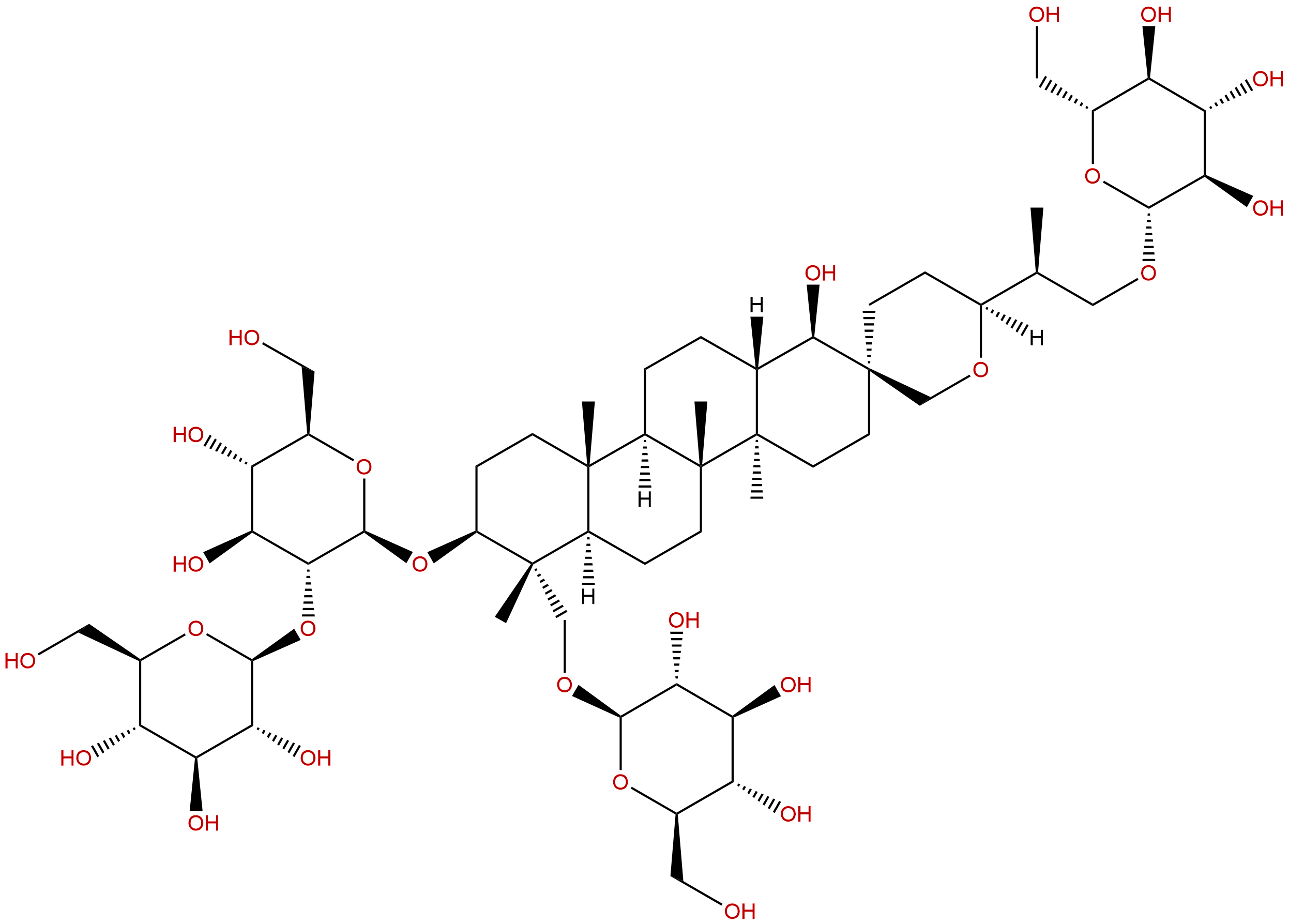


Product name: Hosenkoside K
Synonym name:
Catalogue No.: BP3192
Cas No.: 160896-49-1
Formula: C54H92O25
Mol Weight: 1141.31
Botanical Source:
Physical Description: Powder
Type of Compound: Triterpenoids
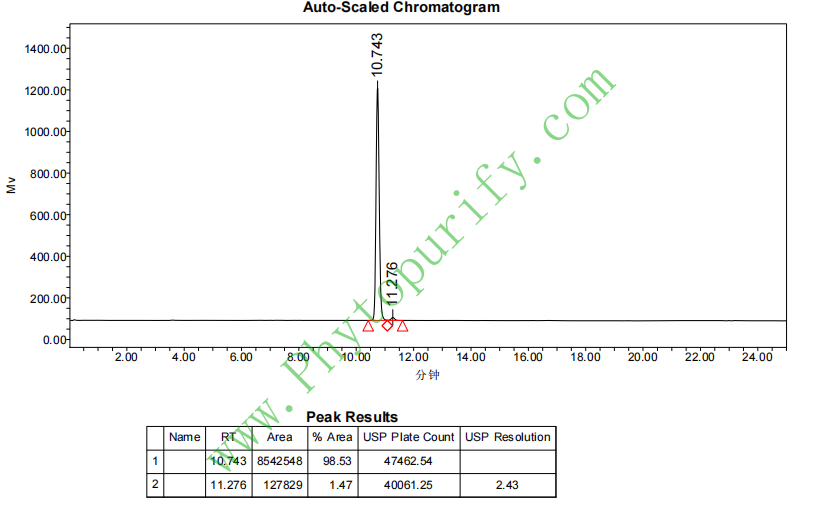
Purity: 95%~99%
Analysis Method: HPLC-DAD or/and HPLC-ELSD
Identification Method: Mass, NMR
Packing: Brown vial or HDPE plastic bottle
The product could be supplied from milligrams to grams. Inquire for bulk scale.
We provide solution to improve the water-solubility of compounds, thereby facilitating the variety of activity tests and clinic uses.
For Reference Standard and R&D, Not for Human Use Directly.
Description:
Hosenkoside K is a natural product from impatiens balsamina.
References:
Chem Pharm Bull (Tokyo). 1994 Jul;42(7):1422-6.
Hosenkosides F, G, H, I, J, and K, novel baccharane glycosides from the seeds of Impatiens balsamina.
From the seeds of Impatiens balsamina we have isolated six novel baccharane glycosides, hosenkosides F-K.
METHODS AND RESULTS:
The structures of all isolates were determined by the use of two dimensional (2D) NMR techniques (1H-1H correlation spectroscopy (COSY), heteronuclear multiple quantum coherence (HMQC), heteronuclear multiple-bond correlation (HMBC), rotating frame Overhauser enhancement spectroscopy (ROESY), total correlation spectroscopy (TOCSY)) and chemical derivatization. Hosenkosides F, H and I are hosenkol B 3-O-sambubiosido-26-O-glucoside, 3-O-sambubioside and 3,26-O-diglucoside, respectively. Hosenkoside G is hosenkol C 3-O-sambubiosido-28-O-glucoside. Hosenkoside J and Hosenkoside K are hosenkol A 3-O-sophoroside and 3-O-sophorosido-26-O-glucosyl-28-O-glucoside, respectively.
HPLC of Hosenkoside K
Storage conditions:Short-term storage at 2~8℃, long-term storage at -20 ~ -80℃
406.7500
.8231
.8229
.3932
.4346
.3039
Low
59.0685
7.5009
Yes
No
No
No
No
No
0.0
Yes
No
No
No
Inflammatory bowel disease, especially ulcerative colitis, is a chronic and recurrent intestinal inflammatory disease. Its global incidence rate is on the rise, which seriously affects the quality of life of patients. Current clinical treatment drugs such as aminosalicylic acid, glucocorticoids, and immunosuppressants can effectively control symptoms, but long-term use often accompanies significant side effects, and some patients may have insufficient response or drug resistance. Therefore, exploring efficient and low toxicity new therapeutic drugs from natural products has always been an important direction in the field of drug development. Impatiens flower(Impatiens balsamina L. As a traditional medicinal plant, its seeds are often used in folk medicine to treat rheumatism, pain, and inflammation related diseases. In recent years, a series of triterpenoid saponins isolated and identified from Impatiens seeds have attracted much attention due to their significant biological activities. Among them, Hosenkoside K (CAS: 160896-49-1), as a structurally unique glycoside, is gradually becoming an emerging hotspot in the field of natural product pharmacology due to its potential anti colitis activity and related molecular mechanisms. This article aims to provide a systematic review of the chemical structure, plant origin, pharmacological activity, mechanism of action, and medicinal properties of Balsaminaceae terpenoid tetranol glycoside K, in order to provide comprehensive scientific references for the in-depth research and development of this compound.
Fengxian terpenoid triterpenoid glycoside K is a structurally complex oleane type triterpenoid saponin. Its basic skeleton is oleanolic acid, with oligosaccharide chains connected at C-3 and C-28 positions, forming a double glycosidic structure. The sugar chain typically contains monosaccharides such as glucose, xylose, and xylose, which are connected by specific glycosidic bonds. This complex glycosylation modification is considered one of the key determinants of its biological activity. Its molecular formula is C ₅₄ H ₈₈ O ₂₅, and its molecular weight is 1141.3050 g/mol. It belongs to the category of macromolecular polar compounds.
From the analysis of physicochemical parameters related to medicinal properties, the triterpenoid glycoside K of Impatiens balsamina exhibits typical characteristics of glycoside compounds. The calculated lipid water partition coefficient (LogP) is 0.8231, indicating that the compound has a certain degree of amphiphilicity, but overall leans towards hydrophilicity. Its topological polar surface area (TPSA) is as high as 406.7500 Å ², mainly attributed to the abundant hydroxyl groups and oxygen atoms on the sugar ring in the molecule, indicating its strong ability to form hydrogen bonds. This characteristic is consistent with its water solubility data (0.3932 mg/mL), indicating that it has a moderately low solubility in water, which may affect its oral bioavailability. In addition, high TPSA and molecular weight also determine its difficulty in crossing the blood-brain barrier (predicted as low permeability), indicating that its main target of action may be located in the peripheral system, with a lower risk of side effects in the central nervous system. The preliminary pharmacological risk assessment showed that the hERG channel inhibition risk was negative, and the Ames test predicted a value of 0.0, indicating a low potential risk of arrhythmia and genotoxicity, providing a favorable starting point for further safety evaluation.
Balsaminaceae terpenoid tetraol glycoside K is mainly derived from Balsaminaceae, a plant of the genus Balsaminaceae in the family Balsaminaceae(Impatiens balsamina L. Dry and mature seeds. Impatiens is widely distributed in China, and its seeds are called "acute seeds" in traditional Chinese medicine, which have the effects of softening hardness, dispersing knots, breaking blood and eliminating symptoms. Modern plant chemistry research has shown that Impatiens seeds are a "chemical reservoir" rich in triterpenoid saponins, from which dozens of structurally similar Hosenkoside compounds have been isolated.
Its extraction and separation usually follow the classic process of natural product chemistry. Firstly, the dried Impatiens seeds are crushed and subjected to reflux extraction or ultrasound assisted extraction using polar solvents such as methanol, ethanol, or aqueous ethanol to fully extract the saponin components. After the crude extract was concentrated under reduced pressure, liquid-liquid extraction was carried out using solvents such as petroleum ether, ethyl acetate, and n-butanol in sequence. The triterpenoid glycoside K was mainly enriched in the n-butanol extraction site due to its strong hydrophilicity. Subsequently, various modern chromatographic techniques were comprehensively utilized for separation and purification. Usually, macroporous adsorption resin column chromatography (such as D101, AB-8 type) is used first, and gradient elution is carried out with different concentrations of ethanol water system to preliminarily enrich the target components. Further purification relies on reverse phase silica gel column chromatography (such as ODS, C18 packing), normal phase silica gel column chromatography, and high performance liquid chromatography (HPLC), especially preparative HPLC, using methanol water or acetonitrile water as the mobile phase, to ultimately obtain high-purity Impatiens terpenoid glycoside K monomer compounds. Structural identification is accomplished through methods such as nuclear magnetic resonance (NMR, including ¹ H-NMR, ¹ ³ C-NMR, HSQC, HMBC, etc.), mass spectrometry (MS, such as ESI-MS, HR-ESI-MS), and comparison with literature data.
A large number of preclinical studies, especially experiments based on animal models, have revealed the core pharmacological activity of triterpenoid glycoside K in the treatment of inflammatory bowel disease - its anti colitis effect. In the acute/chronic colitis model induced by dextran sulfate sodium (DSS) in mice or rats, the intervention of Impatiens triterpenoid glycoside K showed significant protective effects. Specifically manifested as: 1) Improve disease activity index Effectively reduce animal weight loss, diarrhea, and rectal bleeding symptoms; 2) Relieve pathological damage to colon tissue The shortening of colon length was significantly inhibited, and histological examination showed that the integrity of colonic mucosal epithelium was better maintained. The number of goblet cells increased, and inflammatory cell infiltration (neutrophils, lymphocytes, etc.) was significantly reduced. The destruction of crypt structure and ulcer formation were effectively suppressed; 3) Regulating systemic and local inflammatory responses Reduce the levels of pro-inflammatory cytokines such as tumor necrosis factor - α (TNF - α), interleukin-1 β (IL-1 β), interleukin-6 (IL-6) in serum and colon tissue, while possibly increasing the levels of anti-inflammatory factors such as interleukin-10 (IL-10).
In addition to its core anti colitis activity, related studies also suggest that the triterpenoid glycoside K of Impatiens may have broader pharmacological potential. Its anti-inflammatory effect may not be limited to the intestine, but may also be effective in inflammatory models of other tissues such as joints and skin. In addition, some triterpenoid saponins with similar structures have been reported to have antioxidant, immunomodulatory, and even anti-tumor activities. Therefore, it is worth further exploring whether the triterpenoid glycoside K of Impatiens has these extended activities.
The anti colitis effect of Fengxian terpenoid glycoside K is not achieved through a single pathway, but involves a complex regulatory network with multiple targets and levels. Existing research has preliminarily outlined the key nodes of its mechanism of action:
Regulating inflammatory signaling pathways and cell apoptosis Fengxian terpenoid glycoside K can significantly inhibit the activation of Toll like receptor 4 (TLR4) and its downstream key signaling molecule nuclear factor kappa B (NF - κ B, key subunit RELA/p65). The TLR4/NF - κ B pathway is the core for recognizing molecular patterns related to gut microbiota, initiating innate immune and inflammatory responses. By inhibiting this pathway, the compound can reduce gene transcription of various pro-inflammatory mediators. Meanwhile, studies have shown that it can downregulate the activation of NLRP3 inflammasome and inhibit the activation of caspase-1 (CASP1), thereby reducing the maturation and release of IL-1 β and IL-18, and inhibiting Gasdermin D-mediated cell pyroptosis, which is a programmed cell death mode closely related to colitis pathology.
Activate endogenous protective pathways This compound can activate the nuclear factor E2 related factor 2 (NFE2L2/Nrf2) signaling pathway. Nrf2 is a central regulatory factor of cellular antioxidant response. Fengxian terpenoid glycoside K enhances the antioxidant stress capacity of intestinal epithelial cells and reduces oxidative damage by promoting Nrf2 nuclear translocation, upregulating the expression of downstream antioxidant enzymes and phase II detoxifying enzymes (such as HO-1, NQO1).
Regulating lipid metabolism and nuclear receptors Research suggests that the triterpenoid glycoside K of Impatiens may exert its effects by affecting the activity of the farnesol X receptor (NR1H4/FXR). FXR is a key regulator of bile acid homeostasis, and its activation has anti-inflammatory and intestinal barrier protective effects. In addition, the regulation of lipid metabolism related targets such as lysophosphatidic acid receptor 2 (LPAR2) and sphingosine kinase 1 (SPHK1) by this compound may affect the generation of pro-inflammatory lipid mediators. The potential role of fatty acid amide hydrolase (FAAH) may affect the endogenous cannabinoid system, thereby regulating pain and inflammation.
Affects protein kinase and esterase activity Protein kinase C alpha (PRKCA) and carboxylesterase 1 (CES1) are also listed as relevant targets. PKC α is involved in signal transduction of various cellular processes, including inflammatory responses. CES1 may be involved in the metabolism of certain prodrugs or endogenous substances. The regulation of these enzyme activities by Fengxian terpenoid glycoside K may be a component of its networked pharmacological effects.
In summary, Fengxian terpenoid glycoside K exerts its therapeutic effect on colitis by synergistically acting on multiple pathways such as TLR4/NF - κ B, NLRP3/CASP1, Nrf2, and regulating nuclear receptors such as FXR, from multiple dimensions including inhibiting excessive inflammation, reducing oxidative damage, protecting intestinal barrier integrity, and regulating lipid metabolism.
Although the triterpenoid glycoside K of Impatiens has shown great potential in pharmacological activity, its pharmacological properties, especially pharmacokinetic properties, are the key challenge for its successful conversion into clinical drugs.
Based on its physicochemical properties, it is predicted that oral administration of this compound may face absorption barriers. High molecular weight (>1000 Da) and high polarity (high TPSA) will limit its passive diffusion across the intestinal epithelial cell membrane. Its water solubility is moderate, but it may need to form micelles in the gastrointestinal tract or bind with bile salts to promote absorption. Once absorbed into the bloodstream, due to its hydrophilicity, its distribution volume is expected to be small, mainly distributed in plasma and extracellular fluid, making it difficult to enter deep tissues. Low blood-brain barrier penetration is its clear characteristic. In terms of metabolism, as a glycoside compound, it is highly susceptible to hydrolysis by glycosidases in gut microbiota and intestinal mucosal epithelial cells, undergoing deglycosylation reactions to generate aglycones (triterpenoid nuclei) and sugar chains. The lipid solubility of aglycones is enhanced, and the metabolic pathway may involve oxidation, reduction, and binding reactions (such as glucuronidation and sulfation) catalyzed by the cytochrome P450 enzyme system in the liver. The prototype drug and its metabolites are mainly excreted through the kidneys (via urine) and/or bile (via feces). At present, there is a lack of publicly available data on the systematic pharmacokinetic studies (such as absolute bioavailability, half-life, clearance rate, etc.) of triterpenoid glycoside K in Impatiens, which is a gap that must be filled in future preclinical development.
Possible strategies to enhance its medicinal properties include: 1) Prodrug modification Esterification or preparation of other derivatives of hydroxyl groups on sugar groups to temporarily increase lipid solubility, improve absorption, and release the original drug through hydrolysis in vivo; 2) New drug delivery system Develop delivery systems based on nanoparticles, liposomes, self microemulsions, or phospholipid complexes to improve their solubility, stability, and intestinal permeability; 3) Simplified structure On the basis of clarifying the pharmacophore, explore active analogues or glycoside derivatives with simpler structures and smaller molecular weights.
As a natural compound derived from traditional Chinese medicine, Fengxian terpenoid glycoside K has shown unique application prospects in the treatment of inflammatory bowel disease (IBD). Its multi-target and multi pathway mechanism of action may provide a new treatment option for patients who have poor response or develop resistance to existing single target drugs, such as anti TNF - α antibodies. It is expected to serve as an adjuvant or alternative treatment for mild to moderate active ulcerative colitis, or for maintenance therapy during remission to reduce recurrence. In addition to IBD, its anti-inflammatory and immunomodulatory effects also suggest its potential application value in other autoimmune or inflammatory diseases such as rheumatoid arthritis and psoriasis.
However, there is still a long and arduous road from the laboratory to clinical practice: 1) In depth mechanism research It is necessary to use technologies such as gene knockout animals, molecular docking, and surface plasmon resonance to more accurately verify its direct interaction with the above-mentioned targets and upstream and downstream signal networks. 2) Comprehensive preclinical evaluation It is necessary to complete systematic studies on pharmacodynamics (more animal models), pharmacokinetics (ADME), toxicology (acute toxicity, long-term toxicity, reproductive toxicity, etc.) that comply with regulations, and clarify their safety window. 3) Formulation Development It is crucial to develop practical formulations that can achieve effective delivery and improve bioavailability based on their physical and chemical property defects. 4) clinical research Ultimately, its safety, efficacy, and optimal dosing regimen need to be validated in humans through Phase I-III clinical trials.
Future research can also explore its combined efficacy with other anti-inflammatory drugs, or use it as a lead compound for structural optimization, in order to obtain new chemical entities with stronger activity and better drug properties.
Fengxian terpenoid tetraol glycoside K is a triterpenoid saponin with significant anti colitis activity isolated from traditional Chinese medicine Fengxian flower seeds. It exerts a comprehensive effect of inhibiting inflammation, antioxidation, and protecting the intestinal barrier by regulating multiple key targets and signaling pathways such as TLR4/NF - κ B, NLRP3/CASP1, Nrf2, and FXR, reflecting the advantages of multi-component and multi-target synergistic effects of natural products. Although its high molecular polarity and complex sugar based structure pose challenges to its oral bioavailability, the preliminary risk prediction for its pharmacological properties is optimistic. The current research has laid a solid pharmacological foundation for its anti colitis activity, but systematic pharmacokinetic, toxicological studies, and formulation based delivery strategy development are key steps that must be overcome to promote the clinical translation of this compound. With the continuous deepening of research and the development of technology, the triterpenoid glycoside K of Impatiens is expected to bring a new hope for the treatment of inflammatory bowel disease patients, and also provide another successful example for exploring modern drugs from traditional medicinal plants.
