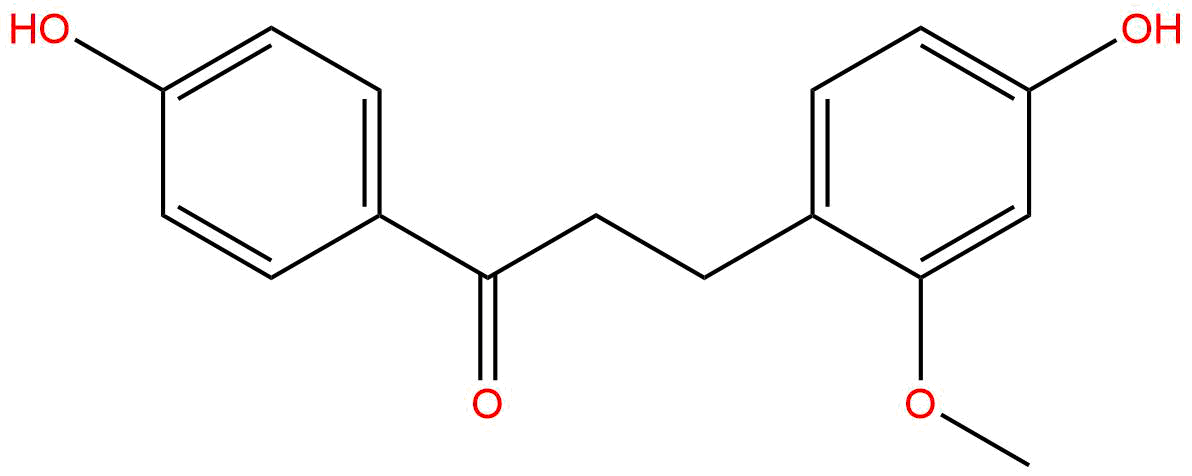


Product name: Loureirin C
Synonym name:
Catalogue No.: BPF2858
Cas No.: 116384-24-8
Formula: C16H16O4
Mol Weight: 272.30
Botanical Source: Dracaena cochinchinensis (Lour.) S. C. Chen
Physical Description:
Type of Compound: Chalcones
Purity: 95%~99%
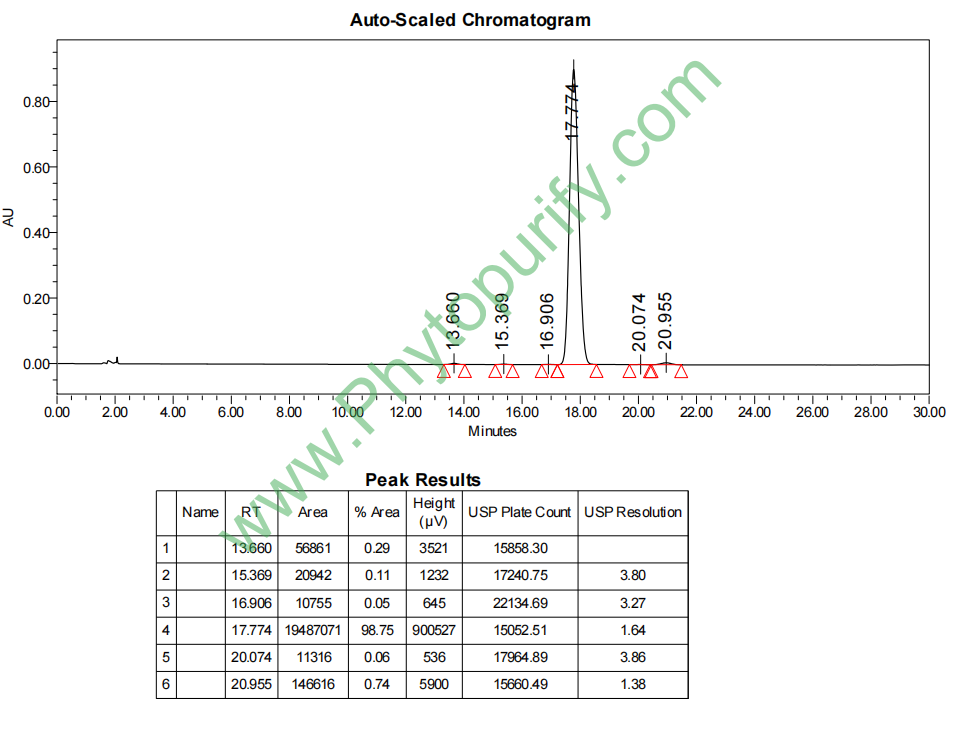
Analysis Method: HPLC-DAD or/and HPLC-ELSD
Identification Method: Mass, NMR
Packing: Brown vial or HDPE plastic bottle
Storage: Store in a well closed container, protected from air and light. Put into refrigerate or freeze for long term storage.
Whenever possible, you should prepare and use solutions on the same day. However, if you need to make up stock solutions in advance, we recommend that you store the solution as aliquots in tightly sealed vials at -20℃. Generally, these will be useable for up to two weeks.
The product could be supplied from milligrams to grams
Inquire for bulk scale.
For Reference Standard and R&D, Not for Human Use Directly.
HPLC of Loureirin C
Storage conditions:Short-term storage at 2~8℃, long-term storage at -20 ~ -80℃
66.7600
2.5894
2.5435
.3588
3.6765
23.6515
High
88.9185
1.9005
Yes
No
Yes
No
Yes
No
0.0
No
Yes
Yes
No
Natural products, as an important source of drug discovery, play an irreplaceable role in the long history of human struggle against diseases. From the records of ancient herbal literature to the precise authentication of modern molecular pharmacology, the active small molecules found in nature continue to provide lead compounds and structural templates for the development of innovative drugs. Among the numerous natural products with biological activity, dragon blood extract compounds derived from traditional Chinese medicine blood exhaustion have attracted much attention due to their unique pharmacological lineage. Loureirin C, as an important dihydrochalone component in Dragon's Blood, has gradually become one of the hot spots in natural product pharmacology research in recent years due to its potential therapeutic value in many disease fields such as antibacterial, anti-inflammatory, analgesic, anti diabetes and even anti-tumor.
Blood exhaustion, as a precious traditional medicinal herb for promoting blood circulation and removing blood stasis, has been used in traditional Chinese medicine for over a thousand years. It is commonly used to treat injuries caused by falls, bruises, swelling and pain, and ulcers. Modern scientific research has revealed that the pharmacological activity of dragon's blood is closely related to the various chemical components it contains, among which dragon's blood extract compounds (including dragon's blood extract A, B, C, D, etc.) are considered the key material basis for its pharmacological effects. Longxuesu C, also known as 4,4 '- dihydroxy-2,6-dimethoxydihydrochalcone, has a unique substitution pattern that endows it with more abundant and distinctive biological activity compared to other members of the same family. Early research mainly focused on its antibacterial and anti-inflammatory effects, which is highly consistent with the traditional treatment experience of blood exhaustion for trauma and infection. However, with the deepening of research, the potential of Longxuesu C in regulating glucose and lipid metabolism, inhibiting tumor cell proliferation, and promoting wound healing has gradually been revealed, demonstrating its enormous development prospects as a multi-target natural lead compound.
The purpose of this paper is to systematically review the research progress of dracaena C, trace its plant origin and extraction process from its chemical structure and physical and chemical properties, deeply analyze its pharmacological activities in antibacterial, anti-inflammatory, analgesic, anti diabetes, anti-tumor and promoting wound healing, and explore its potential mechanism of action and molecular targets. At the same time, based on its pharmacological parameters and pharmacokinetic characteristics, the clinical application prospects and challenges faced are discussed, in order to provide comprehensive and in-depth references for the subsequent research and development of Longxuesu C.
Loureirin C belongs to dihydrochalcone compounds, with its chemical structure centered around a 1,3-diphenylpropane skeleton. The C-2 and C-3 positions are saturated bonds, distinguishing it from chalcones with α, β - unsaturated ketone structures. Its system is named (E) -1- (2,6-dimethoxy-4-hydroxyphenyl) -3- (4-hydroxyphenyl) propan-2-en-1-one, but it should be noted that although its name includes "ene", according to the definition of dihydrochalcone, its propane chain should be in a saturated state. A more accurate name would be 1- (4-hydroxyphenyl) -3- (2,6-dimethoxy-4-hydroxyphenyl) propan-1-one. Its molecular formula is C ₁₇ H ₁₈ O ₅, and its CAS registration number is 116384-24-8.
From the perspective of structural features, the A ring (the benzene ring connected to the carbonyl group) of Longxuesu C is connected to two methoxy groups (- OCH ∝) and one hydroxyl group (- OH), located at positions 2, 6, and 4, respectively; There is a hydroxyl group attached to the 4 'position of the B ring (the benzene ring far from the carbonyl group). The substitution mode of multiple hydroxyl and methoxy groups is the structural basis for its various biological activities. Phenolic hydroxyl groups are important hydrogen bond donors that can form hydrogen bonds with biomolecules such as proteins and enzymes, thereby affecting their activity; Meanwhile, the phenolic hydroxyl group also endows the molecule with certain antioxidant capacity. Methoxy groups affect the lipophilicity and spatial conformation of molecules, thereby regulating their binding ability to targets.
In terms of physicochemical properties, the molecular weight of Longxuesu C is 272.30 g/mol, which belongs to the category of small molecule compounds and is conducive to its transmembrane transport and interaction with intracellular targets. Its lipid water partition coefficient LogP is 2.5894, indicating that the molecule has moderate lipid solubility, which can dissolve in organic solvents and has a certain degree of water solubility, providing favorable conditions for its absorption and distribution in organisms. The calculated topological polar surface area (TPSA) is 66.76 Å ², which is lower than 100 Å ² and is generally considered an important indicator of good oral absorption. Its water solubility (LogS) is 0.3588, indicating limited solubility in water, but acceptable. It is worth noting that computer predictions show that dragon blood serum C has a high blood-brain barrier (BBB) penetration ability, which suggests that it may have the potential to act on the central nervous system, for example, its analgesic effect may be partially derived from central mechanisms. In addition, the predicted results indicate that it does not pose a risk of hERG cardiac toxicity (hERG inhibition: No), and the Ames test result is negative (0.0), suggesting no significant mutagenicity, providing preliminary positive evidence for its safety as a candidate drug.
Longxuesu C mainly comes from the Liliaceae family, Longxueshu genus(Dracaena)Plants, such as the Cambodian dragon blood tree(Dracaena cambodiana)The Sword Leaf Dragon Blood Tree(Dracaena cochinchinensis), as well as the palm family (Palmae) and the yellow vine genus(Daemonorops)Plants, such as Qilin's exhaustion(Daemonorops draco)Wait. When these plants are subjected to mechanical damage or microbial infection, their stems secrete red resin, which is processed to become the traditional Chinese medicine "Bloodthirsty". The production areas of Bloody Dragon are mainly distributed in Southeast Asia (such as Indonesia, Thailand, Cambodia) as well as Yunnan, Hainan and other places in China. There are differences in the chemical composition spectrum of dragon's blood produced by different primitive plants, but dragon's blood C is usually one of the active ingredients with higher content, especially in the dragon's blood derived from the sword leaf dragon's blood tree.
The extraction method of dragon blood extract C is usually combined with the extraction and purification process of total resin in blood. Traditional extraction methods include solvent extraction. Due to the moderate polarity of dragon blood extract C, commonly used extraction solvents include ethanol, methanol, or their aqueous solutions. For example, after crushing the raw materials of blood exhaustion, heating reflux extraction or cold soaking extraction is carried out with 70% -95% ethanol, and the extract is concentrated to obtain the total extract. Subsequently, the total extract was preliminarily separated using liquid-liquid extraction methods (such as sequential extraction with petroleum ether, ethyl acetate, and n-butanol), and Longxuesu C is usually enriched in the ethyl acetate extraction layer.
In order to obtain high-purity Longxuesu C monomer, further separation and purification steps are required. Modern chromatographic technology is the core means. The most commonly used method is silica gel column chromatography, which uses gradient elution with different ratios of petroleum ether ethyl acetate or chloroform methanol mixed solvents, combined with thin-layer chromatography (TLC) detection, to preliminarily separate crude Longxuesu C. Subsequently, Sephadex LH-20 gel column chromatography can be used for further purification and molecular sieve effect can be used to remove impurities. In recent years, high-performance liquid chromatography (HPLC), especially preparative HPLC, has been widely used for the high-purity preparation of Longxuesu C, which has the advantages of high separation efficiency and good reproducibility. In addition, high-speed countercurrent chromatography (HSCCC), as a liquid-liquid distribution chromatography technique, has been successfully applied to the separation and purification of dihydrochalcones in dragon blood such as dragon blood C due to its irreversible adsorption and high sample recovery rate. With the promotion of green chemistry concepts, some new extraction techniques, such as ultrasound assisted extraction and microwave-assisted extraction, have also been attempted to improve the extraction efficiency and yield of dragon blood extract C.
The pharmacological activity spectrum of dracaena C is very broad, covering anti-inflammatory, analgesic, antibacterial, anti diabetes, anti-tumor, and promoting wound healing, etc. These activities are highly consistent with its traditional uses and modern pharmacological research results.
1. Anti inflammatory and analgesic effects
Inflammation and pain are common pathological processes in various diseases. Longxuesu C exhibits significant anti-inflammatory activity. In vitro experiments, it can inhibit the production of nitric oxide (NO), prostaglandin E2 (PGE2), and various pro-inflammatory cytokines (such as TNF - α, IL-1 β, IL-6) in macrophages (such as RAW264.7 cells) induced by lipopolysaccharide (LPS). The mechanism may be related to the inhibition of the activation of nuclear factor kappa B (NF - κ B) and mitogen activated protein kinase (MAPK) signaling pathways. In in vivo animal models, Longxuesu C can effectively alleviate paw swelling induced by carrageenan or complete Freund's adjuvant in rats, demonstrating anti-inflammatory effects comparable to the positive control drug. Its analgesic effect is also significant. In both acetic acid writhing test and hot plate test, Longxuesu C can significantly increase the pain threshold of mice and reduce the number of writhing times, indicating its dual analgesic effects in both peripheral and central nervous systems. Its analgesic mechanism may be partially derived from anti-inflammatory effects, or may be related to the activation of opioid receptors or the influence of ion channels (such as voltage-gated sodium channels).
2. Antibacterial effect
Longxuesu C has inhibitory effects on various pathogenic bacteria. Research has shown that it is effective against Staphylococcus aureus(Staphylococcus aureus)Staphylococcus epidermidis(Staphylococcus epidermidis)Streptococcus, Streptococcus(Streptococcus Gram positive bacteria such as spp. have strong antibacterial activity against Escherichia coli(Escherichia coli)Pseudomonas aeruginosa(Pseudomonas aeruginosa)The inhibitory effect of Gram negative bacteria is relatively weak. Its antibacterial mechanism may include disrupting the integrity of bacterial cell membranes, inhibiting the synthesis of bacterial nucleic acids or proteins, and interfering with the formation of bacterial biofilms. When combined with certain conventional antibiotics such as penicillin and gentamicin, Longxuesu C also exhibits a synergistic antibacterial effect, providing new ideas for addressing the increasingly severe problem of bacterial resistance.
3. Anti diabetes effect
Longxuesu C has also shown potential in regulating glucose and lipid metabolism. In vitro experiments have found that it can promote glucose uptake in insulin resistant HepG2 liver cancer cells or 3T3-L1 adipocytes, and enhance the phosphorylation level of key proteins in the insulin signaling pathway, such as Akt. In addition, Longxuesu C can also inhibit the activity of alpha glucosidase, thereby delaying the digestion and absorption of carbohydrates and reducing postprandial blood glucose peak. In the streptozotocin (STZ) - induced diabetes rat model, LongxueC can significantly reduce fasting blood glucose, improve abnormal glucose tolerance, and regulate blood lipid levels (such as reducing total cholesterol and triglycerides). These results suggest that dracaena C may play an anti diabetes role by improving insulin resistance, promoting glucose utilization and inhibiting glucose absorption.
4. Antitumor effect
Longxuesu C exhibits proliferation inhibition and apoptosis induction activity on various tumor cell lines. It has been found that it can inhibit the growth of many kinds of cancer cells, such as human liver cancer cells (HepG2, SMMC-7721), human breast cancer cells (MCF-7, MDA-MB-231), human cervical cancer cells (HeLa) and human melanoma cells (A375). Its anti-tumor mechanism is relatively complex, mainly including: ① inducing cell cycle arrest, usually blocking cells in G0/G1 phase or G2/M phase, which is related to regulating the expression of cyclins and cyclin dependent kinases (CDKs); ② Inducing cell apoptosis by activating mitochondrial pathways (upregulating Bax/Bcl-2 ratio, releasing cytochrome c, activating Caspase-9 and Caspase-3) or death receptor pathways; ③ Inhibiting tumor cell migration and invasion may be related to downregulating the expression of matrix metalloproteinases (MMPs); ④ Reverse multidrug resistance in tumor cells by inhibiting the function of P-glycoprotein (P-gp) and increasing the accumulation of chemotherapy drugs in cells.
5. Promote wound healing effect
This is the most distinctive pharmacological activity of Longxuesu C, which is most related to its traditional application of "promoting blood circulation and generating muscle". Wound healing is a complex process involving multiple stages such as inflammation, proliferation, and remodeling. Research has shown that Longxuesu C can significantly promote the proliferation and migration of skin fibroblasts (such as NIH-3T3 cells) and keratinocytes (such as HaCaT cells), which is an important basis for wound re epithelialization. Meanwhile, it can also promote the expression of vascular endothelial growth factor (VEGF), induce neovascularization, and provide sufficient oxygen and nutrition for wounds. More importantly, Longxuesu C can upregulate the expression of type I collagen (COL1A1) and transforming growth factor - β 1 (TGFB1), promote the synthesis and deposition of extracellular matrix, and accelerate the formation of granulation tissue. In addition, its anti-inflammatory and antibacterial activities also create a favorable microenvironment for wound healing, preventing infection and reducing excessive inflammatory reactions. In animal models of full-thickness skin defects, local application of Longxuesu C can significantly reduce wound area, accelerate healing process, and improve healing quality.
The pleiotropic pharmacological activity of Longxuesu C originates from its ability to interact with multiple molecular targets and regulate multiple signaling pathways. Its core mechanism of action can be summarized as follows:
1. Regulating inflammation and oxidative stress signaling pathways
Longxuesu C is an effective inhibitor of the NF - κ B and MAPK (including p38, JNK, ERK) signaling pathways. Under stimulation such as LPS, it inhibits the nuclear translocation of NF - κ B by blocking its phosphorylation and degradation, thereby downregulating the transcription of downstream target genes such as iNOS, COX-2, TNF - α, IL-6, etc. Meanwhile, it can also inhibit the phosphorylation activation of the MAPK pathway. In addition, the phenolic hydroxyl structure of Longxuesu C endows it with certain free radical scavenging ability, which can directly neutralize reactive oxygen species (ROS), alleviate oxidative stress damage, and is closely related to its anti-inflammatory, anti-aging, and cell protective effects.
2. Key target network for promoting wound healing
During the wound healing process, the target of Longxuesu C forms a synergistic network. Specifically:
- TGFB1 (TGFB1)Longxuesu C can upregulate the expression of TGF - β 1. TGF - β 1 is a core regulatory factor for wound healing, which can chemotaxis into fibroblasts and inflammatory cells, stimulate fibroblast proliferation and differentiation, and strongly promote the synthesis of extracellular matrix such as collagen.
- COL1A1 (COL1A1)As the main coding gene for type I collagen, upregulation of COL1A1 expression is a direct manifestation of the promotion of collagen synthesis and enhancement of wound tensile strength by Longxuesu C.
- VEGFA (VEGFA)Vascular endothelial growth factor A is a key driver of angiogenesis. Longxuesu C promotes endothelial cell proliferation, migration, and luminal formation by upregulating the expression of VEGFA, providing blood supply to wound tissues.
- FGF2 (FGF2)Basic fibroblast growth factor (bFGF) also has strong pro angiogenic and pro mitotic effects, which can stimulate the proliferation of fibroblasts and keratinocytes. Longxuesu C may synergistically promote angiogenesis and tissue regeneration by upregulating FGF2 and VEGFA.
- MMP9 (MMP9)Matrix metalloproteinase-9 plays a double-edged sword role in wound healing. In the early stages, MMP9 is involved in clearing damaged extracellular matrix and necrotic tissue, creating space for the growth of new tissue; However, in chronic wounds, overexpression of MMP9 can lead to excessive degradation of the matrix, hindering healing. The regulation of MMP9 by Longxuesu C may be bidirectional, with moderate activation in the acute phase and inhibition of its overexpression in the chronic phase, thereby maintaining the dynamic balance of the matrix during the healing process. The specific regulatory mode still needs further research.
3. Molecular mechanism of anti diabetes and anti-tumor
In terms of anti diabetes, dracaena C mainly improves insulin resistance by activating insulin signaling pathway (such as IRS-1/PI3K/Akt pathway), promotes the translocation of glucose transporter 4 (GLUT4) to cell membrane, and thus increases glucose uptake. Meanwhile, as an alpha glucosidase inhibitor, it directly acts on digestive enzymes in the brush border of the small intestine. In terms of anti-tumor effects, its mechanism involves the regulation of cell cycle checkpoints (such as the p53/p21 pathway) and apoptosis signals (such as the mitochondrial pathway), as well as the inhibition of tumor metastasis related proteins (such as MMP-2/9) and drug-resistant proteins (such as P-gp).
Based on computer-aided prediction and preliminary experimental research, Longxuesu C has shown certain potential for medicinal properties. Its molecular weight (272.3 Da) and LogP value (2.59) both comply with the Lipinski's Rule of Five, indicating that it has good oral absorption potential. The TPSA value (66.76 Å ²) also supports its good intestinal permeability. More importantly, its hERG inhibition risk and Ames mutagenicity were both negative, indicating that it has a low risk of cardiac toxicity and genetic toxicity, which is an important guarantee for the safety of candidate drugs.
However, the pharmacokinetic (ADME) properties of Longxuesu C are currently not fully studied, which is a key bottleneck restricting its clinical translation. Preliminary research suggests that Longxuesu C may face the following challenges:
- Poor water solubility Its LogS value is 0.3588, which belongs to low water solubility compounds, which may lead to low solubility after oral administration and affect bioavailability.
- First pass effect As a phenolic compound, Longxuesu C may undergo extensive phase II metabolism (such as glucuronidation and sulfation) in the liver, resulting in low systemic exposure after oral administration.
- Metabolic stability The phenolic hydroxyl and methoxy groups in its molecule are potential sites of action for metabolic enzymes such as CYP450 enzymes, which may result in a shorter half-life in vivo.
At present, there are relatively few systematic reports on the pharmacokinetic parameters of Longxuesu C in animals, such as Cmax, Tmax, AUC, t1/2. In order to improve its pharmacological properties, future research needs to focus on: ① developing new drug delivery systems, such as liposomes, nanoparticles, cyclodextrin inclusion complexes, etc., to enhance their water solubility and bioavailability; ② Perform structural modifications, such as prodrug design, by introducing phosphate groups or amino acids to improve its water solubility and metabolic stability; ③ Systematically evaluate its pharmacokinetic characteristics in different species of animals and predict human pharmacokinetic parameters.
The unique pharmacological activity spectrum of dracaena C, especially its potential in promoting wound healing, anti-inflammatory and analgesic, and anti diabetes, has drawn a broad prospect for its clinical application.
1. Wound healing and skin regeneration
This is the most direct clinical application direction of Longxuesu C. Based on its multiple effects of promoting the proliferation and migration of fibroblasts and keratinocytes, inducing angiogenesis and collagen synthesis, LongxueC has great potential to be developed as a new topical agent for treating acute wounds (such as surgical incision and burns) and chronic refractory wounds (such as diabetes foot ulcers and pressure ulcers). The dosage form can be ointment, gel, spray or dressing. Compared with existing growth factor drugs such as recombinant human epidermal growth factor, Longxuesu C, as a small molecule compound, has the advantages of low cost, good stability, and not easy degradation. Meanwhile, its own antibacterial and anti-inflammatory activities can effectively control wound infection and excessive inflammation, creating a more favorable microenvironment for wound healing. Combining Longxuesu C with biomaterials such as chitosan, hyaluronic acid, and collagen to construct functional wound dressings will be a research hotspot in the future.
2. diabetes and its complications
Longxuetin C has dual functions of improving insulin resistance and inhibiting α - glucosidase activity, which makes it possible to develop a new oral anti diabetes drug or dietary supplement. Especially for early stage patients with type 2 diabetes, LongxueC may reduce blood sugar and improve dyslipidemia through multi-target regulation. In addition, its role in promoting wound healing has unique value for the treatment of diabetes foot ulcer, a serious complication of diabetes. Developing an "integrated" treatment plan that can both orally lower blood sugar and locally promote ulcer healing will have great clinical significance.
3. Inflammatory diseases and pain management
The anti-inflammatory and analgesic effects of Longxuesu C make it potential for the treatment of various inflammatory diseases, such as arthritis, dermatitis, periodontitis, etc. Its mechanism of action is different from classical nonsteroidal anti-inflammatory drugs (NSAIDs), possibly by inhibiting the NF - κ B pathway, which may avoid the common gastrointestinal side effects of NSAIDs. As an analgesic, it may provide a new option, especially for chronic inflammatory pain.
Challenges and Future Directions Faced
Despite the bright prospects, the clinical translation of Longxuesu C still faces many challenges. Firstly, its pharmacokinetic properties are poor, especially its low oral bioavailability, which is the biggest obstacle. Future research must focus on addressing this issue through pharmaceutical methods or structural modifications. Secondly, most pharmacological research currently remains at the cellular and animal levels, and its mechanism of action, especially the precise regulatory network targeting wound healing related targets such as MMP9, TGFB1, and VEGFA, still needs to be further validated in models closer to the human body, such as humanized mouse models and 3D skin models. Thirdly, the long-term toxicity, reproductive toxicity, and other safety evaluation data are still blank, and a systematic preclinical safety evaluation is needed. Finally, establishing a stable, efficient, and controllable extraction and purification process or total synthesis route for dragon blood extract C is the foundation for ensuring its future industrial supply.
Longxuecu C, a natural product of dihydrochalcones derived from the traditional Chinese medicine Dragon's Blood, is gradually moving from the experience of drug use recorded in ancient books to the spotlight of modern molecular pharmacology with its multiple pharmacological activities such as antibacterial, anti-inflammatory, analgesic, anti diabetes, anti-tumor and wound healing. Its mechanism of action involves the regulation of multiple key signaling pathways such as NF - κ B, MAPK, PI3K/Akt, and forms a complex interaction network with wound healing core targets such as TGFB1, VEGFA, COL1A1, FGF2, MMP9, etc. Preliminary pharmacological evaluation shows that it has the advantages of low toxicity and low cardiac risk, but poor water solubility and potential metabolic instability are the main bottlenecks for its clinical translation.
Looking ahead to the future, the research on Longxuesu C is at a critical turning point. On the one hand, it is necessary to utilize modern medicinal chemistry and pharmacology methods to overcome its ADME deficiency and enhance its drug properties; On the other hand, it is necessary to use systems biology and network pharmacology methods to comprehensively analyze its multi-target mechanism of action and accurately locate its optimal indications. Especially in the field of chronic wound healing, diabetes and its complications, LongxueC shows a unique therapeutic potential different from existing drugs. We have reason to believe that with the continuous deepening of research, Longxuesu C and its derivatives have the potential to become a new type of natural medicine lead compound with independent intellectual property rights, making new contributions to human health. The in-depth exploration of Longxuesu C is not only a modern interpretation of the treasure trove of traditional Chinese medicine, but also a valuable practice in the field of natural product drug discovery.
