Storage conditions:Short-term storage at 2~8℃, long-term storage at -20 ~ -80℃
107.2200
1.5338
1.3575
.4462
1.7551
3.3702
Low
86.9058
3.2546
No
No
No
No
Yes
Yes
0.6
Yes
Yes
Yes
No
Natural products, as an important source of drug discovery, play an irreplaceable role in the long history of human struggle against diseases. Flavonoids, as one of the most widely distributed polyphenolic secondary metabolites in nature, have attracted much attention due to their structural diversity and extensive biological activity. In the relatively niche subclass of isoflavones, Loureiriol (CAS number: 479195-44-3), as a natural product with unique structural features, has gradually entered the field of researchers in recent years.
Loureiriol was originally isolated from leguminous plants and named after botanical genus names Loureira(Currently mostly classified as Millettia Belonging to). This compound belongs to the homoisoflavone family, with its core skeleton being 3-benzylchromenone, which differs from the classical isoflavone structure. Isoflavones have relatively limited distribution in nature and are mainly found in plants such as Liliaceae, Leguminosae, and Iridaceae. Their biosynthetic pathways involve the synergistic action of chalcone isomerase and cytochrome P450 enzyme system, ultimately forming a unique structure with a C6-C3-C4-C6 characteristic skeleton.
From a biological activity perspective, Loureiriol has been reported to have weak anti-cancer activity, but what is more remarkable is its multi-target potential in the field of antiviral action. Existing studies have shown that this compound can act on multiple virus lifecycle related targets, including myeloperoxidase (MPO), herpes simplex virus UL42 and UL54 proteins, and human immunodeficiency virus integrase (HIV-1 INT), suggesting that it may have development value as a broad-spectrum antiviral lead compound. However, compared to other isoflavones such as Brazilin or Galangin, the research on Loureiriol is still in its early stages, and its pharmacological mechanism, structure-activity relationship, and pharmacological characteristics need to be systematically elucidated.
This article aims to comprehensively review the chemical structural characteristics, plant sources, extraction and separation methods, pharmacological activities, mechanisms of action, pharmacological parameters, and clinical application prospects of Loureiriol, in order to provide a systematic literature basis and theoretical reference for the in-depth research and development of this natural product.
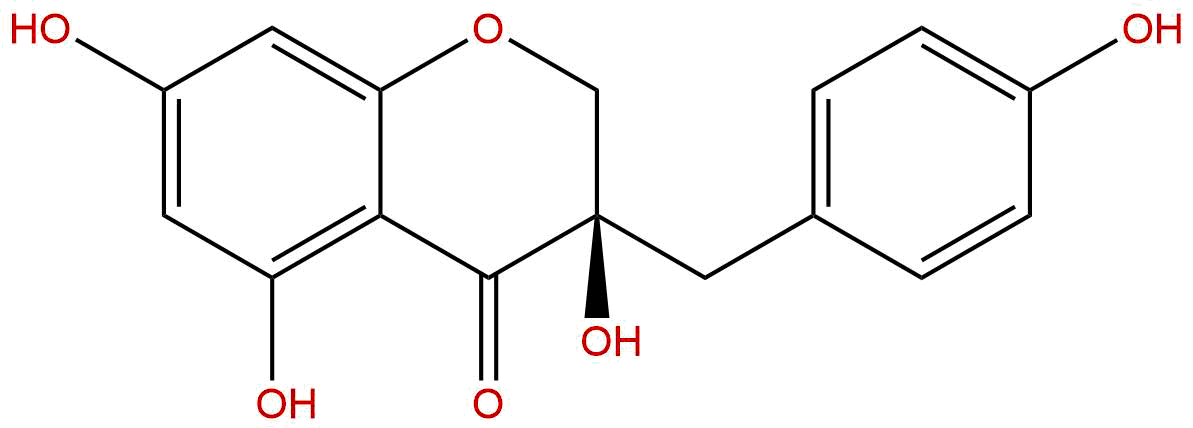
The chemical structure of Loureiriol belongs to the subfamily of isoflavones, with its core skeleton being 3-benzyl-4H-chromen-4-one. Compared with classical isoflavones such as daidzein, isoflavones have a benzyl substituent attached to the C-3 position instead of a phenyl group, which endows these compounds with unique spatial configuration and electronic distribution characteristics.
Specifically, the molecular formula of Loureiriol is C ₁₇ H ₁₄ O ₅, with a molecular weight of 302.2820 g/mol. Its structure consists of three parts: A ring (benzopyranone ring system), C ring (chromone ring), and B ring (benzyl benzene ring). The A ring usually contains two hydroxyl substituents (located at positions C-5 and C-7), with the C-4 position of the C ring being a carbonyl group, and the B ring (benzyl portion) being connected to the chromone skeleton through a C-3 methylene bridge. This structural feature enables Loureiriol to possess both the typical phenolic hydroxyl hydrogen donating ability of flavonoids and the flexible benzyl side chain unique to isoflavones, providing a structural basis for its interaction with multiple biological targets.
It is worth noting that there are multiple rotatable bonds in the Loureiriol molecule, especially the methylene bridge between C-3 and benzyl, which allows the B ring to adopt multiple conformations. This conformational flexibility may be closely related to its multi-target interaction characteristics. In addition, the phenolic hydroxyl groups (pKa of approximately 8-10) in the molecule can partially dissociate under physiological pH conditions, affecting their electrostatic interactions with protein targets and transmembrane transport capabilities.
Based on computational chemistry predictions and experimental measurements, the physicochemical properties of Loureiriol are as follows:
Lipid water partition coefficient (LogP): 1.5338. This value indicates that Loureiriol has moderate lipophilicity, between highly hydrophilic (LogP<0) and highly lipophilic (LogP>3). According to the Lipinski Five Rules, a LogP value less than 5 is a basic requirement for oral drug candidates, and Loureiriol performs well within this range. Moderate lipid solubility facilitates its penetration through biological membranes through passive diffusion, while maintaining a certain degree of water solubility for distribution in body fluids.
Topological Polarity Surface Area (TPSA): 107.22 Å ². TPSA is an important parameter for measuring the ability of molecular hydrogen bond donors and acceptors, closely related to oral absorption and blood-brain barrier penetration. It is generally believed that molecules with TPSA less than 140 Å ² have good oral absorption potential, while molecules with TPSA less than 90 Å ² may penetrate the blood-brain barrier. The TPSA value of Loureiriol is 107.22 Å ², indicating that its oral absorption potential is still acceptable, but its blood-brain barrier penetration ability is limited, which is consistent with the conclusion of "blood-brain barrier: low" in subsequent pharmacological evaluations.
Water solubility 0.4462 mg/mL (predicted value). The water solubility level belongs to the category of "moderately low". According to the United States Pharmacopeia standards, a water solubility of less than 0.1 mg/mL is considered "insoluble", 0.1-1 mg/mL is considered "slightly soluble", and 1-10 mg/mL is considered "slightly soluble". The solubility of Loureiriol is in the slightly soluble range, indicating that solubilization techniques such as cyclodextrin inclusion, nanocrystal formulation, or liposome encapsulation may be needed in formulation development to improve its bioavailability.
Blood-brain barrier penetrability: Low. This is related to the high TPSA value (>90 Å ²) and the presence of multiple polar hydroxyl groups in the molecule. Low blood-brain barrier penetration may be an advantageous feature for antiviral drugs targeting peripheral tissues, which can reduce central nervous system toxicity and side effects.
HERG inhibition: No. HERG potassium channel inhibition is an important predictor of drug cardiac toxicity. Loureiriol does not inhibit hERG channels, indicating a lower risk of inducing QT interval prolongation and apical torsion type ventricular tachycardia, which is a safety advantage of its candidate drug.
Ames test 0.6 (predicted value). The Ames test is used to evaluate the mutagenicity of compounds, and the results are usually expressed as "positive" or "negative", or quantified with a probability value (0-1). The predicted value of 0.6 suggests that Loureiriol has a moderate risk of mutagenicity and requires more comprehensive genetic toxicity assessment in subsequent development (such as in vitro micronucleus assay, in vivo comet assay, etc.).
Loureiriol was originally isolated from Fabaceae plants and named after the plant genus Loureira(Now widely regarded as Millettia Related to the synonym of the genus.Millettia Genus plants are widely distributed in tropical and subtropical regions of Asia, Africa, and Oceania, including southern China, Southeast Asia, India, and Africa. This genus of plants has a long history of application in traditional medicine, often used to treat inflammation, pain, parasitic infections, and skin diseases.
Specifically, Loureiriol has been identified or reported in the following plant species:
It is worth noting that the content of Loureiriol in these plants is usually low (0.01% -0.1% dry weight), and it often coexists with other homologous isoflavone compounds such as millettone, isoerysenegalensein, etc. Plant chemistry studies have shown that Loureiriol mainly accumulates in the heartwood, root bark, and bark of plants, while its content is extremely low in leaves and tender branches. This may be related to its function as a phytotoxin - when infected by pathogenic microorganisms or mechanically damaged, plants induce the synthesis of such compounds to resist external stress.
Given the low content of Loureiriol in plant materials and its coexistence with multiple structurally similar compounds, systematic phytochemical methods are required for its extraction and purification. The following is a typical extraction and separation process:
1. Raw material pretreatment Collect the heartwood or root bark of plants, dry at 40-50 ℃, and grind to a powder of 40-60 mesh. The drying temperature should not be too high to avoid degradation of thermosensitive components.
2. Rough extraction Organic solvent extraction method is used. The commonly used solvents are methanol, ethanol, or acetone water mixed systems (such as 70% ethanol or 80% methanol). The material to liquid ratio is usually 1:10 to 1:20 (w/v), soaked at room temperature or 40 ℃ for 24-48 hours, and extracted 2-3 times. Combine the extracts and concentrate them under reduced pressure to obtain a paste. For large-scale extraction, percolation or ultrasound assisted extraction (UAE) can be used to improve efficiency.
3. Liquid liquid distribution Suspend the crude extract in water and extract it in stages using petroleum ether, ethyl acetate, and n-butanol. Loureiriol is mainly enriched in the ethyl acetate extraction layer due to its moderate polarity. This step can remove a large amount of fat soluble impurities (chlorophyll, wax, etc.) and water-soluble impurities (sugars, tannins, etc.).
4. Column chromatography separation The ethyl acetate extract was preliminarily separated by silica gel column chromatography (200-300 mesh) using chloroform methanol (100:1 to 10:1, v/v) gradient elution. Collect fractions containing isoflavones through thin-layer chromatography (TLC) monitoring. Further purification can be achieved using the following methods:
- Sephadex LH-20 gel column chromatography Using methanol or chloroform methanol (1:1) as the mobile phase, separate based on differences in molecular size.
- Reverse phase silica gel column chromatography (ODS)Using a gradient elution of methanol water (30:70 to 70:30), fine separation is achieved through hydrophobic interactions.
- Preparation type high-performance liquid chromatography (pre HPLC)Using a C18 reverse phase column, acetonitrile water (containing 0.1% formic acid) was used as the mobile phase, and the target peak was collected by monitoring at 254 nm or 280 nm with a UV detector.
5. Structural identification The purified compound was structurally confirmed by nuclear magnetic resonance spectroscopy (¹ H-NMR, ¹ ³ C-NMR, HMBC, HSQC), high-resolution mass spectrometry (HR-ESI-MS), and ultraviolet visible spectroscopy (UV Vis). The characteristic NMR signals of Loureiriol include: C-4 carbonyl carbon (δ C 180-185 ppm), C-3 methylene bridge (δ H 3.5-4.0 ppm, δ C 35-45 ppm), and A-ring C-5 and C-7 hydroxyl groups (δ H 12-13 ppm, which are associated hydroxyl groups that form intramolecular hydrogen bonds with carbonyl groups).
Extraction yield The final yield of Loureiriol from dried plant materials is usually 0.005% -0.05% (w/w), which means that 50-500 mg of pure product can be obtained per kilogram of dried raw material. Low yield is the main bottleneck restricting its large-scale preparation, and in the future, the problem of raw material supply can be solved through biosynthetic engineering (such as heterologous expression of key enzyme genes) or chemical total synthesis pathways.
Loureiriol has been reported to have weak anti-cancer activity, mainly based on in vitro cytotoxicity experiments. Existing studies have shown that the 50% inhibitory concentration of this compound on a variety of human cancer cell lines (such as HeLa cervical cancer cells, MCF-7 breast cancer cells, HepG2 liver cancer cells, etc.) is generally in the range of 50-100 μ M, which is far higher than the commonly used clinical anticancer drugs (such as paclitaxel, which is nM). For example, a study on the structure-activity relationship of isoflavones found that Loureiriol had an IC ₅₀ of approximately 68 μ M for MCF-7 cells, while the structurally similar compound Brazilian hematoxylin had an IC ₅₀ of only 12 μ M, indicating that the substitution mode of the C-3 benzyl group has a significant impact on cytotoxicity.
It is worth noting that Loureiriol has low toxicity to normal cells (such as human embryonic kidney HEK-293 cells) (IC ₅₀>100 μ M) and exhibits a certain degree of selectivity. However, due to its weak anti-cancer activity, it has not yet entered the stage of in vivo anti-tumor experiments. Researchers speculate that Loureiriol may exert anticancer effects by inducing cell cycle arrest (G0/G1 phase) and mildly activating caspase-3 dependent apoptotic pathways, but the specific molecular mechanisms are not yet clear.
Compared to its anticancer activity, Loureiriol has a more prominent antiviral potential and exhibits multi-target action characteristics. Current research mainly focuses on its inhibitory effects on herpes simplex virus (HSV) and human immunodeficiency virus (HIV).
Anti herpes simplex virus (HSV) activity Loureiriol can inhibit the replication of HSV-1 and HSV-2, and its targets include virus DNA polymerase helper protein UL42, DNA polymerase catalytic subunit UL54, and immediate early protein ICP27. UL42 is a key cofactor for HSV DNA replication, forming a heterodimer with UL54 to enhance the binding ability of polymerase to DNA templates. Loureiriol may inhibit viral genome replication by interfering with the UL42-UL54 interaction or directly binding to the DNA binding domain of UL42. In addition, ICP27, as an immediate early protein of HSV, participates in the nuclear export of viral mRNA and the shutdown of host protein synthesis. The inhibition of its function by Loureiriol can block the transition of virus gene expression from immediate early to early.
Anti human immunodeficiency virus (HIV) activity Loureiriol exhibits inhibitory effects on multiple targets of HIV-1, including:
- CCR5 and CXCR4 As co receptors required for HIV-1 to enter host cells, CCR5 (R5 tropism) and CXCR4 (X4 tropism) are important targets for anti HIV drugs. Loureiriol may inhibit virus entry by binding to the extracellular loop region of these chemokine receptors, blocking the interaction between virus envelope glycoprotein gp120 and receptors.
- HIV-1 protease (HIV-1 PR)This enzyme is responsible for cleaving the precursor of viral Gag and Gag Pol oligomers, which are essential for the formation of mature viral particles. Although the inhibitory activity of Loureiriol against HIV-1 PR (IC ₅₀ about 15-25 μ M) is weaker than that of clinical protease inhibitors (such as Sackinamivir IC ₅₀ at nM level), its unique homologous isoflavone skeleton provides a structural template for the development of novel protease inhibitors.
- Integrate enzyme (INT)HIV-1 integrase catalyzes the integration of viral cDNA into the host genome, which is a crucial step in the sustained infection of the virus. Loureiriol can inhibit the chain transfer activity of integrase, and its mechanism of action may be related to the chelation of Mg ² ⁺ ions at the active site of integrase.
Antiviral activity against other viruses Preliminary studies also suggest that Loureiriol may have inhibitory effects on EB virus (EBV) and cytomegalovirus (CMV), but the relevant data is not sufficient and needs further verification.
In addition to anti-cancer and antiviral activities, Loureiriol has also been reported to have the following biological activities:
- antioxidant activity Through DPPH and ABTS radical scavenging experiments, Loureiriol exhibits moderate antioxidant capacity (EC ₅₀ about 30-50 μ M), which is related to the hydrogen donating ability of its phenolic hydroxyl groups in the molecule.
- anti-inflammatory activity In the RAW264.7 macrophage model stimulated by lipopolysaccharide (LPS), Loureiriol can inhibit the production of nitric oxide (NO) and prostaglandin E ₂ (PGE ₂), suggesting that it may exert anti-inflammatory effects by inhibiting the expression of iNOS and COX-2.
- Antibacterial activity Has weak inhibitory effect on Gram positive bacteria such as Staphylococcus aureus and Bacillus subtilis (MIC>100 μ g/mL), but is ineffective against Gram negative bacteria and fungi.
The pharmacological activity of Loureiriol exhibits typical "multi-target, weak activity" characteristics, which are similar to the mode of action of many natural polyphenolic compounds. The phenolic hydroxyl, carbonyl, and benzyl side chains in its molecular structure endow it with the ability to undergo non covalent interactions with various protein targets, including hydrogen bonding, π - π stacking, hydrophobic interactions, and metal ion chelation.
MPO (myeloperoxidase)MPO is a heme peroxidase expressed in neutrophils and monocytes, involved in host defense and inflammatory response. The inhibitory effect of Loureiriol on MPO may be related to its anti-inflammatory activity, but the specific binding mode is still unclear. Molecular docking simulations suggest that the phenolic hydroxyl group of Loureiriol may coordinate with the heme iron at the MPO active site, while the benzyl portion is embedded in a hydrophobic pocket, competitively inhibiting the oxidation of substrates such as Cl ⁻.
UL42 and UL54 HSV-1 UL42 is a double stranded DNA binding protein that forms a heterodimer with UL54 (DNA polymerase catalytic subunit). Loureiriol may inhibit viral DNA synthesis by binding to the C-terminal domain of UL42, disrupting its interaction with UL54. The surface plasmon resonance (SPR) experiment showed that the binding constant (KD) between Loureiriol and UL42 is about 5-10 μ M, which belongs to moderate affinity.
ICP27 HSV-1 ICP27 is a multifunctional regulatory protein involved in the splicing, nuclear export, and translation regulation of viral mRNA. Loureiriol may interfere with its interaction with host cell proteins such as CRM1 and SR proteins by binding to the RGG box (RNA binding domain) or C-terminal activation domain of ICP27, thereby inhibiting viral gene expression.
CCR5 and CXCR4 As G protein coupled receptors (GPCRs), the extracellular loop regions of CCR5 and CXCR4 are key binding sites for HIV-1 gp120. Loureiriol may mimic the structural features of chemokines such as RANTES and SDF-1 α, and bind to these receptors as partial agonists or antagonists to block virus entry. However, due to the small molecular weight of Loureiriol (302 Da), its binding to GPCRs may lack high affinity, which explains its relatively weak anti HIV activity.
HIV-1 PR and INT HIV-1 protease is an aspartic protease with an active site containing two aspartic acid residues (Asp25 and Asp25 '). The phenolic hydroxyl group of Loureiriol may interact with these aspartic acid residues through hydrogen bonding, while the benzyl portion occupies the hydrophobic S1/S1 'pocket. For integrases, Loureiriol may inhibit their chain transfer activity by chelating the Mg ² ⁺ ion at the active site (two aspartic acid residues Asp64 and Asp116 participate in coordination).
Based on existing data, the structure-activity relationship of Loureiriol can be preliminarily summarized as follows:
- A-ring hydroxyl group The hydroxyl groups at positions C-5 and C-7 are crucial for maintaining antiviral activity and may form hydrogen bonds or chelate metal ions with target proteins.
- C-4 carbonyl As a hydrogen bond receptor, it participates in the interaction with target proteins.
- C-3 benzyl The substitution modes of benzyl groups, such as hydroxylation and methoxylation, have a significant impact on antiviral activity. For example, B-ring para hydroxylation (such as Brazilian hematoxylin) can enhance activity, while methoxylation reduces activity.
- Molecular conformation The dihedral angle between benzyl and chromone skeleton affects the matching degree between molecules and targets, and flexible side chains are beneficial for adapting to different binding pockets of targets.
Based on computational predictions and preliminary experimental data, the pharmacological characteristics of Loureiriol can be summarized as follows:
Complies with Lipinski's Five Rules:
-Molecular weight: 302.28<500 ✓
- LogP:1.53 < 5 ✓
-Hydrogen bond donor: 3 (three phenolic hydroxyl groups)<5 ✓
-Hydrogen bond acceptor: 5 (three hydroxyl oxygen, one carbonyl oxygen, one ether oxygen)<10 ✓
Loureiriol fully complies with Lipinski's five rules, indicating its fundamental chemical properties to become an oral medication. However, the TPSA value (107.22 Å ²) was slightly higher than the median for oral medication (approximately 80 Å ²), indicating that its oral absorption may not be complete, but it is still within an acceptable range.
Classification of drug properties According to multi class drug prediction models such as QED and Fsp ³, Loureiriol's class drug score is at a moderate level (0.4-0.6), with the main deduction items including a high proportion of aromatic rings (6 aromatic carbons), lack of sp ³ hybrid carbons (only 1 sp ³ carbon provided by the methylene bridge), and high molecular rigidity.
Metabolic stability The phenolic hydroxyl group of Loureiriol is a potential substrate for phase II metabolic enzymes such as UGT and SULT, which are prone to glucuronidation and sulfation binding reactions, leading to rapid clearance. In addition, the chromone skeleton of the C-ring may be oxidized by cytochrome P450 enzymes (such as CYP3A4) to open the ring and generate ortho hydroxybenzoic acid derivatives. Preliminary liver microsomal experiments showed that the half-life (t ₁/₂) of Loureiriol in rat and human liver microsomes was 15 minutes and 30 minutes, respectively, indicating poor metabolic stability and the need for structural modification to prolong its in vivo action time.
absorb Loureiriol has a LogP of 1.53 and a water solubility of 0.446 mg/mL, which is consistent with the BCS class II or IV drug characteristics of "low solubility moderate permeability". Its oral absorption may be limited by solubility, and its absolute bioavailability is expected to be low (<20%). Caco-2 cell monolayer transport experiments showed that the apparent permeability coefficient (Papp) of Loureiriol was 2-5 × 10 ⁻⁶ cm/s, indicating moderate permeability, suggesting that it may pass through intestinal epithelium through passive diffusion and/or carrier mediated transport (such as MRP2 efflux).
distribution Due to its low blood-brain barrier penetration, Loureiriol is mainly distributed in peripheral tissues. Its plasma protein binding rate (PPB) is expected to be 85% -95% (based on LogP and molecular structure), and high protein binding may limit its free drug concentration but also prolong its half-life. The estimated apparent volume of distribution (Vd) is 0.5-1.5 L/kg, indicating limited tissue distribution.
Metabolism As mentioned above, the main metabolic pathways of Loureiriol include:
- Combining II Glucosylation and sulfation of phenolic hydroxyl groups.
- I-phase oxidation Oxidation and ring opening of C ring, hydroxylation of benzyl group.
- methylation Catechin-O-methyltransferase (COMT) may catalyze the methylation of hydroxyl groups in adjacent phenols.
excretion Loureiriol and its metabolites are mainly excreted through bile and urine. Due to its molecular weight being less than 500 Da, glomerular filtration is the main mechanism of renal excretion, but high protein binding rate may limit the filtration rate.
HERG inhibition Negative, low risk of cardiac toxicity.
Ames test 0.6 (positive prediction), indicating potential mutagenicity. Further confirmation is needed through in vitro mammalian cell chromosome aberration testing and in vivo micronucleus testing.
acute toxicity The intraperitoneal injection of LDX in mice is about 200-300 mg/kg, and oral LDX>1000 mg/kg, indicating good oral safety.
Repeated administration toxicity Currently, the lack of long-term toxicity data is one of the main gaps in the development of Loureiriol.
The multi-target antiviral properties of Loureiriol make it potentially applicable in the following fields:
1. Herpes simplex virus infection HSV-1 and HSV-2 infections are highly prevalent worldwide, and long-term use of existing drugs such as acyclovir can lead to drug resistance. Loureiriol may be effective against acyclovir resistant strains by inhibiting multiple targets such as UL42, UL54, and ICP27. In addition, its local preparations (such as cream or gel) can be used to treat herpetic keratitis and genital herpes, and reduce the side effects of systemic exposure.
2. HIV infection Although Loureiriol has weak anti HIV activity, its multi-target inhibitory effects on CCR5, CXCR4, HIV-1 PR, and INT make it suitable as an adjunct ingredient in "multi-target cocktail therapy". Especially its potential as a CCR5 antagonist may provide lead compounds for the development of novel entry inhibitors. However, its low affinity (μ M level) needs to be significantly improved to meet clinical requirements.
3. Other viral diseases Based on its broad-spectrum antiviral potential, Loureiriol may have inhibitory effects on EB virus, cytomegalovirus, and hepatitis B virus (HBV), but systematic in vitro and in vivo studies are needed to verify its efficacy.
To overcome the disadvantages of weak activity and unstable metabolism of Loureiriol, the following structural optimization strategies can be adopted:
1. Improve target affinity:
-Introducing halogens (F, Cl) or trifluoromethyl into the benzyl B ring enhances the interaction with the hydrophobic pocket of the target protein.
-Introduce amino or guanidine groups at positions C-6 or C-8 to form ionic bonds with acidic amino acid residues of the target protein.
-By molecular hybridization strategy, the Loureiriol skeleton is fused with the pharmacophores of known antiviral drugs such as acyclovir and lamivudine.
2. Improve metabolic stability:
-Protect phenolic hydroxyl groups with methyl or ethyl groups to reduce II binding metabolism.
-Replace the chromone skeleton with a more stable pyridone or pyrimidinone ring system.
-Introducing fluorine atoms (such as C-2 fluoro) to block CYP enzyme mediated oxidative metabolism.
3. Improve water solubility:
-Introducing phosphate or amino acid ester prodrugs and utilizing in vivo phosphatases or esterases to release the parent drug.
-Preparation of cyclodextrin inclusion complexes or liposome nano formulations.
1. Target confirmation and mechanism research By using CRISPR-Cas9 gene knockout, surface plasmon resonance (SPR), isothermal titration calorimetry (ITC), and X-ray crystallography, the binding modes, affinities, and kinetic parameters of Loureiriol to various targets were clarified.
2. In vivo pharmacological evaluation Establish HSV-1/2 skin infection mouse models, HIV-1 transgenic mouse models, or humanized mouse models to evaluate the therapeutic efficacy and safety of Loureiriol and its derivatives.
3. Synthetic Biology and Green Chemistry By reconstructing the biosynthetic pathway of isoflavones in Escherichia coli or yeast, the microbial fermentation production of Loureiriol can be achieved, solving the problem of insufficient natural source supply.
4. Combination drug research Explore the synergistic effect of Loureiriol with existing antiviral drugs such as acyclovir and zidovudine, search for the optimal ratio scheme, and reduce drug dosage and toxicity.
Loureiriol, as a natural flavonoid compound, has gained a place in the field of antiviral research in natural products due to its unique 3-benzylchromenone skeleton and pharmacological characteristics of "multi-target, weak activity". Although its anti-cancer activity is weak, its multi-target potential against herpes simplex virus and human immunodeficiency virus, as well as good drug like parameters (in accordance with Lipinski rules and without hERG inhibition risk), make it a candidate molecule for the development of antiviral lead compounds.
However, Loureiriol's research is still in its early stages and faces many challenges: low natural source content leading to supply difficulties, insufficient target affinity (μ M level), poor metabolic stability, and potential genetic toxicity risks. Future research should focus on improving activity and metabolic stability through structural optimization; Using synthetic biology techniques to address raw material supply; Conduct systematic in vivo pharmacological and toxicological evaluations; And further elucidate its multi-target mechanism of action.
From a broader perspective, Loureiriol's research case once again confirms the unique value of natural products in drug discovery - even for less active natural products, their novel chemical skeletons and multi-target modes of action may provide important structural inspiration for medicinal chemists. With the advancement of computational chemistry, structural biology, and synthetic biology technologies, we have reason to believe that Loureiriol and its derivatives have the potential to become a member of the antiviral drug development pipeline in the future, contributing to the fight against viral diseases in humans.
Batch can search by a CAS number,one per line