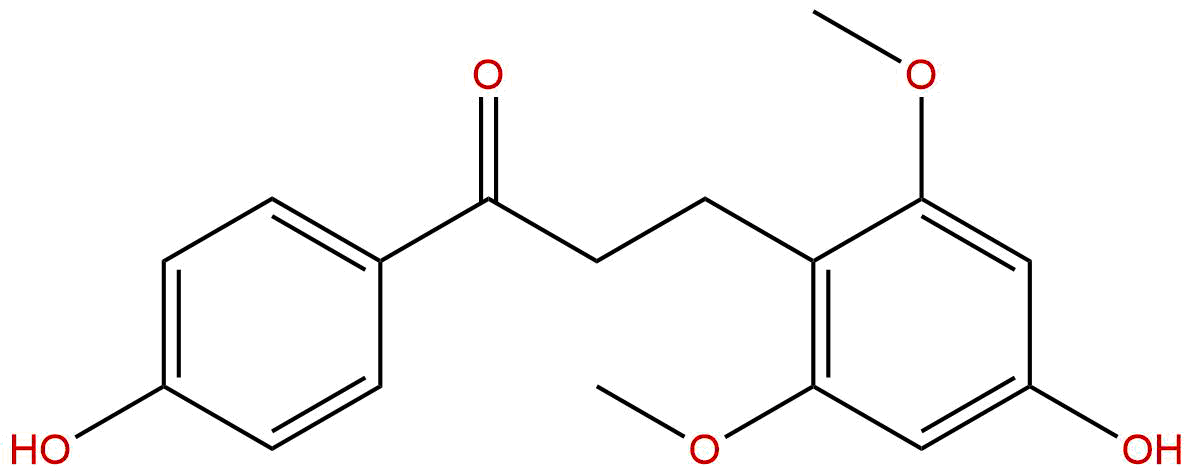


Product name: Loureirin E
Synonym name: 4,4'-Dihydroxy-2,6-dimethoxydihydrochalcone
Catalogue No.: BP4787
Cas No.: 151752-08-8
Formula: C17H18O5
Mol Weight: 302.326
Botanical Source:
Type of Compound: Chalcones
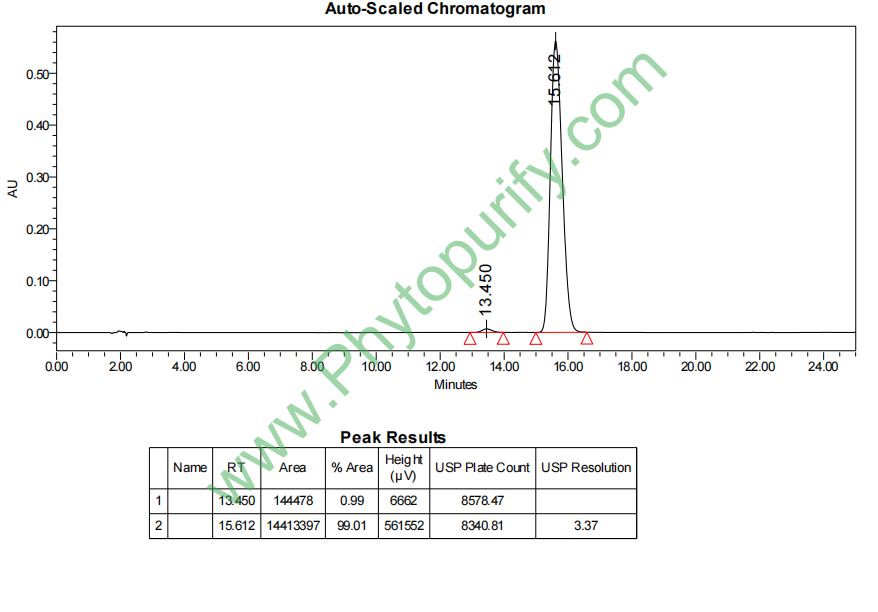
Purity: 95%~99%
Analysis Method: HPLC-DAD or/and HPLC-ELSD
Identification Method: Mass, NMR
Packing: Brown vial or HDPE plastic bottle
Storage: Store in a well closed container, protected from air and light. Put into refrigerate or freeze for long term storage.
Whenever possible, you should prepare and use solutions on the same day. However, if you need to make up stock solutions in advance, we recommend that you store the solution as aliquots in tightly sealed vials at -20℃. Generally, these will be useable for up to two weeks.
The product could be supplied from milligrams to grams
Inquire for bulk scale.
For Reference Standard and R&D, Not for Human Use Directly.
NMR of Loureirin E:
CNMR:

HNMR:

HPLC of Loureirin E
Storage conditions:Short-term storage at 2~8℃, long-term storage at -20 ~ -80℃
75.9900
2.5673
2.5179
.3543
3.0412
16.6983
High
87.6389
2.0984
Yes
No
Yes
No
Yes
No
0.0
No
Yes
Yes
No
Natural products, as an important source of new drug discovery, play an irreplaceable role in the long history of human struggle against diseases. From ancient plant medicines to modern molecular level research, natural products and their derivatives have always been an indispensable component of the drug development pipeline. Among numerous biologically active natural products, a series of compounds derived from the traditional Chinese medicine Dragon's Blood have attracted much attention due to their unique pharmacological activities. Dragon blood exhaustion, as a precious resin based medicinal herb, is believed to have the effects of promoting blood circulation, relieving pain, removing blood stasis, stopping bleeding, and nourishing muscles and ulcers in traditional Chinese medicine theory. It is widely used in the treatment of injuries caused by falls, blood stasis, swelling and pain, continuous bleeding, and ulcers. Modern chemical and pharmacological research has revealed that the complex chemical composition of dragon's blood is the material basis for its multiple pharmacological effects, among which flavonoids, dihydrochalcones, triterpenoids, and phenolic acid compounds are its main active ingredients.
Loureirin E, as an important dihydrochalcone compound isolated from dragon's blood, has a unique chemical structure and diverse biological activities, especially showing significant potential in the fields of hemostasis and antithrombotic therapy. Since its first isolation and identification, Longxuesu E has gradually become a hot molecule in natural product chemistry and pharmacology research. Its CAS number is 151752-08-8, and its molecular formula is C ₁₇ H ₁₈ O ₅. Preliminary pharmacological evaluation shows that Longxuesu E has a reasonable molecular weight, moderate lipid water partition coefficient, and good water solubility, and does not exhibit significant hERG inhibition risk or Ames test positivity. These physicochemical properties lay a good foundation for its subsequent drug development. More importantly, molecular mechanism studies on its hemostatic activity have revealed that Longxuesu E can act on multiple key targets in the coagulation cascade, including SERPINE1 (plasminogen activator inhibitor-1), F2 (prothrombin), F7 (coagulation factor VII), F9 (coagulation factor IX), F10 (coagulation factor X), VWF (vascular hemophilia factor), and PROC (protein C), demonstrating multi-target and multi pathway regulatory characteristics. This multi-target mode of action not only conforms to the overall characteristics of traditional Chinese medicine's "multi-component, multi-target" action, but also provides new ideas and lead compounds for the development of new hemostatic or antithrombotic drugs.
This article aims to systematically review the research progress of Longxuesu E, covering its chemical structure and physicochemical properties, plant sources and extraction methods, pharmacological activity, mechanism of action and molecular targets, pharmacological evaluation and pharmacokinetic characteristics. It also looks forward to its clinical application prospects, in order to provide comprehensive scientific basis for the in-depth development and utilization of this natural product.
Loureirin E belongs to dihydrochalcone compounds, and its chemical structure exhibits typical characteristics of this class of compounds. Dihydrochalcone is the reduced form of chalcone, with its basic skeleton being 1,3-diphenylpropane, a C6-C3-C6 structure, in which the C3 fragment is a saturated propane chain connecting two aromatic rings. The specific structure of Longxuesu E is 2 ', 4' - dihydroxy-4-methoxydihydrochalcone, or more precisely named 1- (2,4-dihydroxyphenyl) -3- (4-methoxyphenyl) propan-1-one. Its molecular formula is C ₁₇ H ₁₈ O ₅, and its molecular weight is 302.3260 g/mol. In the structure, there are two hydroxyl groups (- OH) attached to a benzene ring (ring A), located at positions 2 'and 4', respectively; On the other benzene ring (B ring), there is a methoxy group (- OCH ∝) located at position 4; Two benzene rings are connected by a saturated three carbon chain (- CH ₂ - CH ₂ - CO -), with the carbonyl group (C=O) located at one end connected to the A ring. This specific substitution pattern endows Longxuesu E with unique chemical properties and biological activity.
From the perspective of physical and chemical properties, Longxuesu E exhibits good drug like characteristics. Its lipophilic water partition coefficient (LogP) is 2.5673, indicating that the compound has moderate lipophilicity, which is conducive to passing through biofilms and maintaining a certain solubility in the aqueous phase. The topological polar surface area (TPSA) is 75.9900 Å ², which is lower than the commonly believed passive transport upper limit (about 140 Å ²), indicating its good oral absorption potential. The water solubility is 0.3543 mg/mL, which belongs to the category of slight solubility. However, considering its molecular weight, this solubility can meet the preliminary in vitro experimental requirements. It is worth noting that computer simulations predict that dragon blood hormone E has a high blood-brain barrier (BBB) penetration ability. This characteristic may have special significance for the treatment of central nervous system related diseases such as cerebral hemorrhage and stroke, but it also suggests that attention should be paid to the potential neurological side effects when developing peripheral hemostatic drugs. In addition, the predicted result of hERG inhibition is' no ', indicating a low risk of inducing QT interval prolongation and apical torsion type ventricular tachycardia, which is an important indicator in drug safety evaluation. The Ames test result is 0.0, indicating no significant mutagenicity and a low risk of genetic toxicity. Overall, the physicochemical properties and preliminary safety evaluation results of Longxuesu E are relatively ideal, and it has the potential to be used as a lead compound for further drug development.
The main plant source of dragon blood E is dragon blood. Dragon's blood is not a product of a single plant, but comes from various plants, among which the most important is the Dracaena genus in the Liliaceae family, such as the Cambodian Dracaena Cambodiana, the Hainan Dracaena angustifolia, and the Sword leaved Dracaena cochinchinensis. In addition, plants in the palm family (Palmae) and the genus Daemonorops, such as Daemonorops Draco, are also important sources of traditional dragon blood. The chemical composition and content of dragon's blood from different sources vary, but dragon's blood E is detected in various types of dragon's blood, especially in the resin of Cambodian dragon's blood tree and Hainan dragon's blood tree, where the content is relatively high. The formation process of dragon's blood is that plants secrete red resin to protect their wounds after being physically damaged or infected by microorganisms. Therefore, the collection process usually involves cutting or drilling the tree trunk, collecting the leaked resin, and drying it to obtain commercial dragon's blood.
The extraction and separation of dragon blood extract E usually follow the classic process of natural product chemistry. Due to the complex composition of dragon's blood, including a large amount of fat soluble resins, pigments, volatile oils, and various phenolic compounds, a systematic extraction and purification strategy is required. Common extraction methods include:
Solvent extraction method This is the most fundamental method. Dry Dragon's Blood powder is usually soaked or refluxed with polar organic solvents such as methanol, ethanol, ethyl acetate, etc. for extraction. Due to its polarity as dihydrochalcone, Longxuesu E is commonly extracted using methanol or ethanol aqueous solutions. The extract was concentrated under reduced pressure to obtain the total extract.
Liquid-liquid extraction method Disperse the total extract in water, then extract it sequentially with organic solvents of different polarities (such as petroleum ether, chloroform, ethyl acetate, n-butanol), and divide the total extract into different parts according to polarity. Longxuesu E is usually enriched in the moderately polar ethyl acetate extraction site.
Chromatographic separation method This is a key step in obtaining high-purity Dragon Blood Essence E. Common chromatographic techniques include:
In recent years, in order to meet the needs of large-scale production and green chemistry, some new extraction technologies have also been applied to the extraction of active ingredients from dragon's blood, such as ultrasound assisted extraction, microwave-assisted extraction, and supercritical fluid extraction. These technologies have the advantages of high extraction efficiency, short time, and low solvent usage, providing a new approach for the efficient acquisition of dragon blood pigment E. However, in current laboratory research and preliminary activity screening, classical solvent extraction combined with multi-step chromatographic separation is still the main method.
As one of the main active ingredients of Dragon's Blood, the pharmacological activity research of Dragon's Blood E mainly focuses on areas related to the traditional efficacy of Dragon's Blood, especially in hemostasis, antithrombotic, anti-inflammatory, and promoting wound healing.
1. Hemostatic activity
Hemostasis is the pharmacological activity of Longxue E that has received the most attention. Traditionally, dragon's blood has been widely used to treat various types of bleeding. Modern research has shown that Longxue E can significantly shorten clotting time. In vitro coagulation experiments, Longxue E can shorten activated partial thromboplastin time (APTT) and prothrombin time (PT), suggesting that it may exert hemostatic effects by affecting endogenous and exogenous coagulation pathways. Further animal experiments, such as mouse tail bleeding model and liver bleeding model, confirmed the hemostatic effect of Longxue E in vivo. Local or oral administration can significantly reduce bleeding volume and shorten bleeding time. Its hemostatic mechanism is closely related to the regulation of multiple key factors in the coagulation cascade reaction (see next chapter for details).
2. Antithrombotic activity
Contrary to its hemostatic activity, Longxue E also exhibits antithrombotic effects under specific conditions. Hemostasis and antithrombotic effects are dynamic balances of the coagulation system under different physiological and pathological conditions. Research has shown that Longxuesu E can inhibit platelet aggregation induced by ADP, collagen, or thrombin. In addition, it can prolong the time for extracorporeal thrombus formation and inhibit the formation of arteriovenous bypass thrombosis. This dual effect may stem from its precise regulation of the coagulation fibrinolysis system: on the one hand, at the bleeding site, it promotes the activation of local coagulation factors, forming blood clots to stop bleeding; On the other hand, in the circulatory system, it inhibits the excessive activation of platelets and the formation of abnormal blood clots. This "bidirectional regulation" effect reflects the complexity of the mechanism of action of natural products.
3. Anti inflammatory activity
Inflammatory response is closely related to hemostasis and tissue repair processes. Longxuesu E has been reported to have significant anti-inflammatory activity. In a macrophage model stimulated by lipopolysaccharide (LPS), Longxuesu E can inhibit the production of pro-inflammatory cytokines such as tumor necrosis factor - α (TNF - α), interleukin-6 (IL-6), and interleukin-1 β (IL-1 β). Meanwhile, it can also downregulate the expression of inducible nitric oxide synthase (iNOS) and cyclooxygenase-2 (COX-2), thereby reducing the release of inflammatory mediators such as nitric oxide (NO) and prostaglandin E2 (PGE2). These anti-inflammatory effects may be achieved by inhibiting the nuclear factor kappa B (NF - κ B) and mitogen activated protein kinase (MAPK) signaling pathways. Its anti-inflammatory activity is of great significance in reducing the inflammatory response after trauma and promoting wound healing.
4. Promote wound healing activity
Based on its hemostatic, anti-inflammatory, and potential pro angiogenic effects, Longxuesu E has also shown potential in promoting wound healing. In vitro cell experiments have shown that Longxue E can promote the proliferation and migration of fibroblasts and keratinocytes, which are key cells for skin repair. In animal skin injury models, local application of dragon blood extract E can accelerate wound closure, increase granulation tissue formation, and promote collagen deposition and re epithelialization. Its mechanism of action may be related to regulating the TGF - β/Smad signaling pathway and promoting the expression of vascular endothelial growth factor (VEGF).
5. Other activities
In addition to the main activities mentioned above, some studies also suggest that Longxuesu E may have antioxidant, antibacterial, and anti-tumor activities, but research in these areas is not yet in-depth and needs further verification and exploration.
The pharmacological activity of Longxuesu E, especially its dual effects of hemostasis and antithrombotic, is rooted in its precise regulation of multiple key molecular targets in the coagulation fibrinolysis system. According to existing research, its mechanism of action mainly involves the following aspects:
1. Regulation of coagulation cascade reaction
The coagulation process is a series of serine protease mediated cascade amplification reactions, ultimately forming fibrin clots. Longxuesu E can act on multiple stages of this cascade reaction:
* Activate coagulation factors Research has shown that Longxue E can upregulate or activate the expression or activity of certain coagulation factors, such as F7 (coagulation factor VII), F9 (coagulation factor IX), and F10 (coagulation factor X). F7 is the initiating factor of the exogenous coagulation pathway, while F9 and F10 are key factors of the endogenous and co coagulation pathways. By enhancing the activity of these factors, Longxue E can accelerate the conversion of prothrombin (F2) to thrombin, thereby promoting the conversion of fibrinogen to fibrin and achieving rapid hemostasis.
* Regulating Von Willebrand Factor (VWF)VWF plays a crucial role in the process of platelet adhesion and aggregation in damaged vascular endothelium. Longxuesu E may enhance the initial hemostatic function of platelets by upregulating the expression of VWF or promoting its release from endothelial cells.
* Inhibit anticoagulant system The protein C (PROC) system is an important natural anticoagulant mechanism in the body. Activated protein C (APC) inhibits coagulation by inactivating FVa and FVIIIa. Longxuesu E may weaken its anticoagulant effect and indirectly promote coagulation by inhibiting the activation or activity of PROC. This inhibition of PROC is an important component of its hemostatic mechanism.
2. Regulation of fibrinolytic system
The fibrinolytic system is responsible for dissolving formed fibrin clots and preventing excessive thrombus formation. Longxuesu E also has a regulatory effect on this system:
* Regulating SERPINE1 SERPINE1 (plasminogen activator inhibitor-1) is the main inhibitor of the fibrinolytic system, which inhibits the activity of tissue type plasminogen activator (tPA) and urokinase type plasminogen activator (uPA), thereby inhibiting the conversion of plasminogen to plasmin and reducing the degradation of fibrinogen. Longxuesu E has been found to upregulate the expression or activity of SERPINE1. This function helps stabilize formed blood clots, prevent premature dissolution, and enhance hemostatic effects. At the same time, the increase in SERPINE1 is also associated with an increased risk of thrombosis, which may explain the pro thrombotic tendency of dragon blood element E under specific conditions, and also suggest the need to pay attention to dosage control when using it for hemostasis.
3. Regulation of platelet function
Platelets play a central role in hemostasis and thrombus formation. The effect of Longxuesu E on platelet function has a dual nature:
* Promote platelet adhesion and aggregation Through the regulation of VWF and thrombin mentioned above, Longxuesu E can indirectly promote platelet adhesion and aggregation, which is the basis of its hemostatic effect.
* Inhibit platelet overactivation On the other hand, Longxuesu E may also directly act on platelets, inhibiting platelet aggregation induced by agonists such as ADP and collagen. This may be related to its inhibition of platelet calcium ion mobilization or interference with certain signaling pathways, such as PI3K/Akt. This inhibitory effect helps prevent the formation of pathological thrombosis in non bleeding areas.
4. Integration of signaling pathways
The regulation of multiple targets mentioned above is not carried out in isolation, but through the integration of intracellular signaling pathways. For example, Longxuesu E may upregulate the expression of genes such as SERPINE1 and VWF by activating the NF - κ B or MAPK signaling pathways. Meanwhile, it may also exert anti-inflammatory effects by inhibiting these pathways. This multi-target and multi pathway integrated regulation mode enables Longxuesu E to produce differentiated biological effects based on the different microenvironments of the body (such as bleeding sites and normal circulatory system), known as the "bidirectional regulation" effect.
In summary, Longxuesu E finely regulates coagulation, anticoagulation, fibrinolysis, and platelet function by acting on multiple targets such as SERPINE1, F2, F7, F9, F10, VWF, and PROC, thereby exerting its unique dual pharmacological activity of hemostasis and antithrombotic. This multi-target mechanism of action is a significant feature that distinguishes it from single target chemical drugs, and also reflects its advantages as a natural product.
To promote Longxuesu E from a natural product lead compound to clinical drugs, a systematic evaluation of its drug like and pharmacokinetic properties is required.
1. Evaluation of drug properties
Based on the physical and chemical parameters provided earlier, Longxuesu E exhibits good drug like properties. Its molecular weight (302.33 Da) conforms to the Lipinski Five Rules (<500 Da), and its LogP value (2.57) is also within the ideal range (-0.4 to 5.6), indicating that it has good membrane permeability and water solubility balance. A TPSA (75.99 Å ²) less than 140 Å ² indicates good oral absorption. In addition, the absence of hERG inhibitory activity and negative Ames test significantly reduced its risk of cardiac toxicity and genetic toxicity. These preliminary data indicate that Longxuesu E is a promising drug candidate molecule.
However, the evaluation of drug properties goes far beyond that. It is also necessary to consider its metabolic stability, plasma protein binding rate, drug drug interaction (DDI) potential, and so on. Preliminary research suggests that Longxuesu E, as a phenolic compound, may be prone to phase II metabolism (such as glucuronidation and sulfation), which may result in lower oral bioavailability. In addition, its impact on the cytochrome P450 (CYP450) enzyme system is not yet clear, and further evaluation of its potential as a substrate or inhibitor is needed to predict potential DDI risks.
2. Pharmacokinetic characteristics
At present, there are relatively limited systematic research reports on the pharmacokinetics of Longxuesu E in vivo, but some preliminary findings have been made:
* absorb Due to its moderate lipid and water solubility, Longxuesu E is expected to be absorbed by the gastrointestinal tract after oral administration. However, the presence of phenolic hydroxyl groups may lead to first pass effects in the intestine and liver, thereby reducing oral bioavailability. Its high BBB penetration suggests that it can quickly enter the central nervous system, which is both an advantage (for treating brain diseases) and a potential risk (central side effects during peripheral medication).
* distribution Based on its LogP and BBB penetrability, Longxuesu E is widely distributed in the body and may accumulate in organs with abundant blood flow such as the liver, kidneys, and lungs. The plasma protein binding rate is yet to be determined.
* Metabolism The metabolism of Longxuesu E mainly involves II phase binding reactions (glucuronidation, sulfation, methylation), and may also undergo I phase oxidative metabolism (such as hydroxylation). The liver and intestines are its main metabolic sites. The activity and toxicity of metabolites need further research.
* excretion Metabolites are mainly excreted through bile and urine. The excretion of the prototype drug may be relatively low.
3. Pharmacokinetic pharmacodynamic (PK-PD) correlation
Establishing a PK-PD model for dragon blood peptide E is crucial for guiding clinical medication. It is necessary to clarify the dosage and administration regimen required to achieve effective hemostasis or antithrombotic concentration in the body. Due to its multi-target effect, its efficacy may be directly related to its exposure to target organs such as vascular endothelium and platelets rather than plasma concentration. Therefore, research on organizational distribution is particularly important.
4. Formulation design
Given its potential low oral bioavailability and high BBB penetration, different formulations may need to be developed for different indications. For example, for local hemostasis (such as skin trauma, oral bleeding), external gel, spray or patch can be developed; For systemic hemostasis or antithrombotic therapy, it may be necessary to develop injections (such as liposomes, nanoemulsions) to improve bioavailability and control release; For brain diseases, their BBB penetrability can be utilized to develop oral or injectable formulations.
Longxuesu E, with its unique dual activity of hemostasis and antithrombotic, multi-target mechanism of action, and preliminary pharmacological advantages, has shown broad application prospects in multiple clinical fields.
1. Hemostatic drugs
This is the most direct application direction of Longxuesu E. Its rapid and effective hemostatic effect makes it promising for development into:
* Local hemostatic agent Used for wound hemostasis in fields such as surgery, trauma first aid, dentistry, dermatology, etc. Its anti-inflammatory and wound healing properties will make it superior to simple hemostatic agents and accelerate tissue repair. It can be developed into sponge, gauze, gel, powder and other dosage forms.
* Systemic hemostatic drugs Used for the treatment or prevention of hemorrhagic diseases caused by coagulation factor deficiency, platelet dysfunction, or fibrinolysis, such as hemophilia, liver related bleeding, postpartum hemorrhage, etc. Its multi-target effect may be more comprehensive and effective than single coagulation factor supplementation therapy.
2. Antithrombotic drugs
Despite its hemostatic effect, Longxuesu E also exhibits antithrombotic potential under specific conditions, such as inhibiting platelet aggregation. By optimizing the dosage and administration mode, it is possible to develop it into a new antiplatelet or anticoagulant drug for the prevention and treatment of atherosclerosis, myocardial infarction, stroke and other thrombotic diseases. Its advantage lies in the possibility of reducing the risk of bleeding while resisting thrombosis through a "bidirectional regulation" mechanism, which is the main side effect of existing antithrombotic drugs such as aspirin and warfarin.
3. Wound healing promoter
Combining its hemostatic, anti-inflammatory, and cell proliferation promoting activities, Longxuesu E is an ideal wound healing promoter. Especially suitable for chronic refractory wounds, such as diabetes foot ulcer, pressure ulcer, venous ulcer, etc. Its multifunctionality is expected to synergistically promote wound healing through multiple processes such as hemostasis, anti-inflammatory, angiogenesis, and collagen deposition.
4. Treatment of cerebrovascular diseases
The high BBB penetration of Longxuesu E provides the possibility for its treatment of cerebrovascular diseases. For example, in a cerebral hemorrhage model, its hemostatic effect can limit hematoma enlargement; In the cerebral ischemia model, its anti thrombotic and anti-inflammatory effects can alleviate ischemia-reperfusion injury. However, its exact role and safety in the central nervous system still require further research.
Future research prospects:
Despite the promising prospects, the clinical translation of Longxuesu E still faces many challenges, and future research should focus on the following aspects:
Longxuesu E, as a dihydrochalcone natural product derived from the traditional Chinese medicine Longxuejie, has gained a place in the field of natural product drug research and development due to its unique chemical structure and multi-target pharmacological activity. This article systematically reviews its chemical properties, plant sources, pharmacological effects, molecular mechanisms, and medicinal characteristics. Research has shown that Longxuesu E exhibits dual activity of hemostasis and antithrombotic effects by finely regulating multiple key targets in the coagulation and fibrinolysis systems, such as SERPINE1, F2, F7, F9, F10, VWF, and PROC. It also has anti-inflammatory and wound healing promoting effects. The preliminary pharmacological evaluation results are encouraging, indicating good drug like properties and low early toxicity risk.
However, the road from laboratory discovery to clinical application of Longxuesu E remains long and challenging. The complex in vivo pharmacokinetic behavior, potential metabolic instability, and fine regulatory mechanisms behind the "bidirectional regulation" effect all require more in-depth and systematic research to elucidate. Future work should focus on deepening mechanisms, optimizing structures, evaluating safety, and innovating dosage forms. We have reason to believe that with the continuous advancement of modern medicinal chemistry, pharmacology, and pharmaceutical technology, Longxuesu E and its derivatives are expected to become new drugs for treating hemorrhagic diseases, thrombotic diseases, and promoting tissue repair in the future, contributing to the cause of human health. The study of Longxuesu E is not only an exploration of a single compound, but also a vivid practice of modern scientific interpretation of traditional Chinese medicine wisdom, reflecting the eternal value of natural products in modern drug discovery.
