Introduction/Overview
Natural products have always been an important source of drug discovery and development, and their diverse chemical structures and unique biological activities provide valuable lead compounds for overcoming major human diseases. Among the many natural products with a long history of medicinal use, the active ingredient derived from the traditional Chinese medicine Sanguis Draconis, Dracorhodin, has attracted much attention in recent years due to its significant anti-tumor, anti-inflammatory, and wound healing promoting pharmacological activities. Hematospermin belongs to the flavonoid class of compounds, but its structure is different from typical flavonoids, with a unique benzopyranium salt structure. Due to the poor stability of free sanguinarine in water and organic solvents, its perchlorate form, Dracrhodin perchlorate (DP), has become the more commonly used stable form in research.
Dracogenin perchlorate (CAS number: 125536-25-6) is one of the main active monomers in the red resin extracted from the fruit of Daemonorops Draco, a plant in the palm family. Modern pharmacological research has shown that the high chloride salt of blood dragon's blood has various biological activities, especially outstanding in the field of anti-tumor. It can promote apoptosis of various tumor cells by inhibiting the activation of phosphatidylinositol 3-kinase/protein kinase B (PI3K/Akt) and nuclear factor kappa B (NF - κ B) signaling pathways, upregulating the expression of tumor suppressor p53, activating the caspase cascade reaction, and inducing the production of reactive oxygen species (ROS). In addition, draconin perchlorate can also regulate the expression of Toll like receptor 4 (TLR4), play an anti-inflammatory role, and improve diabetes and its complications, wound healing, etc. These findings reveal the enormous potential of hemosiderin perchlorate as a multi-target natural product in the treatment of complex diseases.
This article will provide a systematic review of the research progress on the high chloride salt of Draconis from multiple dimensions, including chemical structure and physicochemical properties, plant sources and extraction methods, pharmacological activity, mechanism of action, evaluation of drug properties, and clinical application prospects. The aim is to provide reference for the further development and transformation of this natural product.
Chemical structure and physicochemical properties
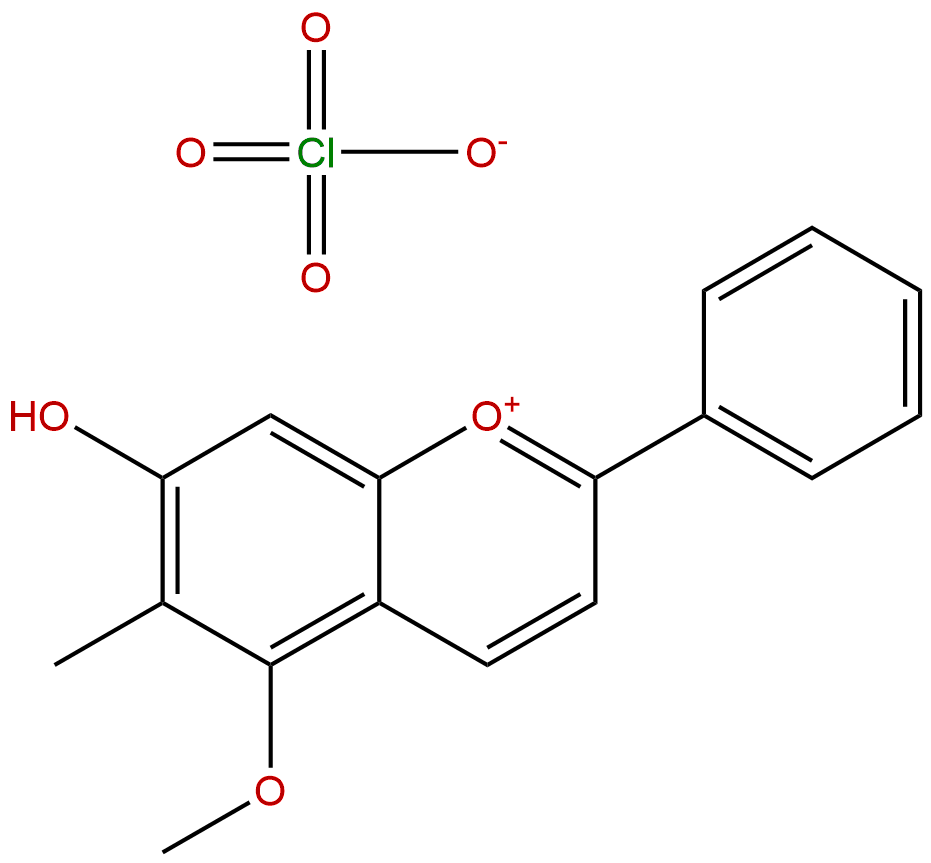
The chemical essence of sanguinarine perchlorate is the salt formed by the combination of sanguinarine cation and perchlorate anion. The parent nucleus structure of Dracorhodin belongs to the 7-hydroxy-5-methoxy-2-methyl-6- (2-phenylethenyl) - benzopyranium salt. Its core skeleton is a benzopyran ring, in which the oxygen atom on the pyran ring carries a positive charge, forming a stable onium salt structure. The C-2 position is connected to a methyl group, the C-5 position is a methoxy group, the C-7 position is a hydroxyl group, and the C-6 position is bridged to a benzene ring through an vinyl group, forming a conjugated system. This unique conjugated structure endows the molecule with a bright red color and gives it characteristic absorption in the UV visible region.
From the perspective of physical and chemical properties, the molecular weight of hemoglobin perchlorate is 267.3040 g/mol (the cationic portion of free hemoglobin). Its lipophilic water partition coefficient (LogP) is 1.0549, indicating that the compound has a certain degree of lipophilicity, which is beneficial for penetrating cell membranes. Its polar surface area (TPSA) is 40.7600 Å ², which meets the basic requirements for oral medication. The water solubility data (0.0355 mg/mL) shows poor water solubility, which to some extent limits its bioavailability and suggests the need to consider solubilization strategies in formulation development. It is worth noting that the blood-brain barrier (BBB) penetration ability of blood glucose perchlorate has been evaluated as "high", which may have potential value for the treatment of central nervous system diseases such as gliomas, but may also increase the risk of toxic side effects in the central nervous system. In addition, the hERG inhibition assessment result is' no ', indicating a low risk of inducing QT interval prolongation and arrhythmia in the heart, which is a positive pharmacological indicator. The Ames test result is 0.9, indicating that it may have potential genetic toxicity, which requires more rigorous toxicological evaluation in subsequent drug development.
Plant sources and extraction methods
The natural source of Draconis perchlorate is Draconis, which mainly comes from plants in the palm family Daemonorops, such as Daemonorops Draco Blume. In addition, plants of the Dracaena genus in the family Gentianaceae, such as Dracaena cochinchinensis and Dracaena cambadiana, whose resin is extracted from their fatty wood, are widely used as substitutes for blood. The chemical composition of dragon's blood from different sources varies slightly, but dragon's blood extract and its derivatives are important active ingredient groups.
The traditional method for extracting dried blood is relatively simple, mainly collecting and drying the red resin that seeps out from the damaged parts of plant fruits or stems to obtain the crude product. Modern separation and purification techniques are usually required to obtain high-purity Draconis perchlorate. The general extraction process is as follows: first, the raw material of blood is crushed and subjected to reflux extraction or cold soaking extraction with organic solvents (such as ethanol, methanol, or ethyl acetate) to obtain the total extract. Then, the total extract is subjected to acid-base treatment or directly separated by column chromatography. Common column chromatography packing materials include silica gel, polyamide, Sephadex LH-20, etc. By gradient elution, it is possible to preliminarily enrich the fraction containing sanguinarine. Due to the cationic form of sanguinarine in solution, its binding properties with perchlorate ions can be utilized to add perchloric acid during the separation process, causing sanguinarine to precipitate in the form of perchlorate, thereby obtaining high-purity sanguinarine perchlorate crystals. High performance liquid chromatography (HPLC) technology is also widely used for the quantitative analysis and preparation level separation of hemosiderin perchlorate. With the promotion of green chemistry concepts, new extraction technologies such as supercritical fluid extraction and microwave-assisted extraction have also been applied to the extraction of active ingredients in blood, in order to improve efficiency and reduce the use of organic solvents.
Pharmacological activity research
The pharmacological activity spectrum of draconin perchlorate is very broad, covering many aspects such as anti-tumor, anti-inflammatory, promoting wound healing, improving diabetes and its complications.
1. Antitumor activity
This is the most in-depth and extensive field of research on the high chloride salts of sanguinarine. A large number of in vitro and in vivo experiments have confirmed that the high chloride salt of sanguinarine has significant inhibitory effects on proliferation and induces apoptosis in various types of cancer cells.
- prostate cancer Draconis perchlorate can inhibit the proliferation of prostate cancer PC-3 and LNCaP cells, and induce cell apoptosis by inhibiting the PI3K/Akt signaling pathway.
- breast cancer In breast cancer MCF-7 and MDA-MB-231 cells, draconin perchlorate induces apoptosis of mitochondrial pathway by up regulating the expression of p53 and Bax, down regulating the expression of Bcl-2, and activating caspase-3 and caspase-9.
- cervical cancer Draconis perchlorate can inhibit the growth of cervical cancer HeLa cells, and its mechanism is related to inducing ROS production, activating JNK and p38 MAPK signaling pathways.
- Other cancers The study also found that the high chloride salt of sanguinarine exhibits certain cytotoxicity to cell lines such as liver cancer, gastric cancer, melanoma, and osteosarcoma.
2. Anti inflammatory activity
Inflammation is the common pathological basis of many diseases, including cancer, diabetes and cardiovascular diseases. Blood dragon's blood extract perchlorate shows good anti-inflammatory effects. It can significantly inhibit the production of pro-inflammatory factors such as tumor necrosis factor - α (TNF - α), interleukin-6 (IL-6), and nitric oxide (NO) in macrophages induced by lipopolysaccharide (LPS). Its anti-inflammatory mechanism is closely related to inhibiting the activation of the NF - κ B signaling pathway and regulating the expression of TLR4. In addition, the high chloride salt of sanguinarine can inhibit the activity of cyclooxygenase-1 (PTGS1/COX-1) and inducible nitric oxide synthase (NOS2/iNOS), thereby reducing the synthesis of inflammatory mediators such as prostaglandins and NO.
3. Promote wound healing and improve diabetes
In traditional medicine, blood exhaustion is often used to treat wounds and ulcers. Modern research has confirmed that high chloride salts of sanguinarine can promote the proliferation and migration of fibroblasts, accelerate the deposition of collagen, and thus promote wound healing. In the model of diabetes, draconin perchlorate showed the effects of improving insulin resistance, reducing blood sugar and protecting the function of pancreatic islet β cells. These effects may be related to their antioxidant, anti-inflammatory, and regulation of signaling pathways related to glucose and lipid metabolism.
4. Other activities
Preliminary studies also suggest that high chloride salts of sanguinarine may have neuroprotective, antibacterial, and antiviral activities, but research in these areas is still in its infancy and requires further in-depth exploration.
Mechanism of action and molecular targets
The pharmacological activity of sanguinarine perchlorate originates from its regulation of multiple molecular targets and signaling pathways, reflecting the characteristic of multi-target action of natural products.
1. Inducing cell apoptosis
This is the core mechanism of the anti-tumor effect of sanguinarine perchlorate. It is mainly achieved through the following channels:
- Inhibition of PI3K/Akt pathway Akt is a key kinase that promotes cell survival. Dracogenin perchlorate can inhibit the activity of PI3K, leading to a decrease in Akt phosphorylation levels, thereby relieving its inhibition of downstream pro apoptotic proteins (such as Bad and caspase-9) and promoting apoptosis.
- Activate p53 signal P53 is an important tumor suppressor. Hematospermin perchlorate can upregulate the expression and transcriptional activity of p53, thereby upregulating its target genes Bax, PUMA, etc., downregulating the anti apoptotic protein Bcl-2, breaking the integrity of the mitochondrial outer membrane, releasing cytochrome c, activating caspase-9 and caspase-3, and initiating the mitochondrial apoptosis pathway.
- Generate ROS Draconis perchlorate can induce a sharp increase in intracellular ROS levels. Excessive ROS can damage mitochondria, leading to a decrease in mitochondrial membrane potential and acting as a second messenger to activate stress kinases such as JNK, ultimately synergistically promoting apoptosis.
- Inhibition of NF - κ B pathway NF - κ B is a key transcription factor that regulates cell survival, proliferation, and inflammation. Dracogenin perchlorate inhibits the activity of I κ B kinase (IKBKB/IKK β), preventing the degradation of I κ B α and thus retaining NF - κ B (such as RELA/p65) in the cytoplasm, preventing it from entering the nucleus to initiate the transcription of its target genes (such as Bcl xL, cIAPs, TNF - α, IL-6), thereby inhibiting tumor cell survival and inflammatory response.
2. Anti inflammatory mechanism
The anti-inflammatory effect of sanguinarine perchlorate is closely related to its regulation of NF - κ B and TLR4. TLR4 is a key receptor for recognizing molecular patterns related to pathogens such as LPS. Dracogenin perchlorate can downregulate the expression of TLR4 and reduce its mediated downstream signaling. Meanwhile, by inhibiting the activity of IKK β and blocking the activation of the NF - κ B pathway, the expression of pro-inflammatory factors such as TNF - α, IL-6, IL-1 β, COX-2 (PTGS2), and iNOS (NOS2) is reduced. In addition, it may also exert anti-inflammatory effects by regulating the STAT3 signaling pathway.
3. Other targets
The study also found that the high chloride salt of sanguinarine can regulate transient receptor potential channels (such as TRPV1 and TRPA1), which may be related to its analgesic and anti itch effects. Meanwhile, it also affects the activity of caspase-1 (CASP1), suggesting that it may be involved in regulating pyroptosis, a novel inflammatory cell death mechanism.
Evaluation of drug properties and pharmacokinetics
A systematic evaluation of its pharmacological properties is necessary to advance the laboratory research of sanguinarine perchlorate into clinical applications.
1. Analysis of pharmacological parameters
- Physicochemical properties The molecular weight (267.3 Da) conforms to the "Five Rules for Drug Types" (<500 Da). LogP (1.05) is moderate, balancing water solubility and fat solubility. But poor water solubility (0.0355 mg/mL) is its main physicochemical weakness, which may lead to poor oral absorption. TPSA (40.76 Å ²) suggests that it has good cell membrane permeability.
- safety The low risk of hERG inhibition is a significant advantage. But a positive Ames test result (0.9) is a signal that requires high vigilance, indicating that it may have mutagenicity, which will be one of the key obstacles to its clinical entry. Further comprehensive in vitro and in vivo genetic toxicity tests (such as micronucleus tests and chromosomal aberration tests) are needed to confirm and evaluate the risk.
- Blood-brain barrier penetrability High penetration is a double-edged sword. This is advantageous for treating brain tumors or inflammatory diseases of the nervous system; But for the treatment of peripheral diseases, it may bring side effects to the central nervous system.
2. Pharmacokinetic characteristics
At present, there is insufficient systematic research report on the pharmacokinetics of hemosiderin perchlorate. Preliminary research suggests that its oral bioavailability may be low due to its poor water solubility. Intravenous injection may be a more effective route of administration, but the safety of perchlorate ions also needs to be considered. In the body, the high chloride salt of sanguinarine may undergo extensive metabolism, such as glucuronidation, sulfation, or methylation in phase II metabolic reactions. The specific pathways of its distribution, metabolism, and excretion still need to be further studied through advanced technologies such as radiolabeling or LC-MS/MS. Given its high blood-brain barrier penetration, its distribution and accumulation in the central nervous system should also be of concern.
Clinical application prospects and prospects
As a natural product with multi-target activity, the high chloride salt of sanguinarine has shown promising clinical application prospects in the following fields:
1. Anti tumor therapy
Given its inhibitory effect on various types of cancer, the high chloride salt of sanguinarine is expected to be developed as a novel anti-tumor drug. Especially by simultaneously inhibiting the PI3K/Akt and NF - κ B pathways, and activating p53 and ROS, this multi pathway synergistic effect may be effective for drug-resistant tumor cells. In the future, it can be explored to combine it with chemotherapy drugs (such as cisplatin, paclitaxel) or targeted drugs in order to enhance efficacy and reduce toxic side effects. However, the positive results of its Ames test must first be addressed, such as through structural modifications (prodrug design, analog synthesis) to reduce genetic toxicity while retaining or enhancing anti-tumor activity.
2. Treatment of inflammatory diseases
The anti-inflammatory activity of sanguinarine perchlorate makes it potential for the treatment of chronic inflammatory diseases such as rheumatoid arthritis, inflammatory bowel disease, dermatitis, etc. By local administration (such as topical formulations) or targeted delivery systems, its local anti-inflammatory effects can be maximized while reducing potential risks from systemic exposure.
3. diabetes and its complications
Its characteristics of improving insulin resistance and promoting wound healing make it unique in the treatment of type 2 diabetes and diabetes foot ulcers. The development of oral preparations or external dressings may provide new treatment options for patients with diabetes.
4. Challenges and Future Directions
Despite its broad prospects, the development of blood clotting hormone perchlorate still faces many challenges:
- Toxicity issue A positive Ames test is the biggest obstacle. It is necessary to clarify the mechanism of genetic toxicity, dose-response relationship, and actual risks in vivo through systematic toxicology research. If it is confirmed that there is a risk, it needs to be avoided through medicinal chemical methods.
- bioavailability The low oral bioavailability caused by poor water solubility needs to be addressed through formulation techniques (such as nanoparticles, liposomes, cyclodextrin inclusion complexes) or structural modifications.
- Deep analysis of the mechanism of action Although it is known to act on multiple targets, the primary secondary relationships, synergistic mechanisms, and key targets in specific disease models among these targets still need further clarification. Systems biology and network pharmacology methods will help build a more complete "compound target disease" network.
- quality control As a natural product, its source, extraction process, and purity have a significant impact on its efficacy and safety. We need to establish stable, controllable, and scalable production processes and strict quality standards.
Conclusion
As a key active ingredient in traditional Chinese medicine, dragon's blood extract perchlorate has become a hot topic in the field of natural product research due to its unique benzopyranium salt structure and various pharmacological activities. It exhibits significant effects in anti-tumor, anti-inflammatory, and wound healing by regulating multiple signaling pathways and targets such as PI3K/Akt, NF - κ B, p53, caspase, ROS, TLR4, etc. Its good hERG safety and high blood-brain barrier penetration provide advantages for its specific field applications. However, poor water solubility and potential genetic toxicity are the two major obstacles that must be overcome in the development of its medicinal properties. Future research should focus on structural optimization through modern medicinal chemistry methods, combined with advanced formulation techniques to improve its pharmacokinetic properties, and conduct in-depth and systematic toxicological evaluations. Meanwhile, utilizing multi omics techniques to comprehensively analyze its functional network will provide scientific basis for precise application and combination therapy strategies. In depth research on the perchlorate of blood stasis extract not only helps to reveal the pharmacological substance basis of traditional Chinese medicine blood stasis, but also has the potential to provide new candidate drug molecules for humans to overcome complex diseases such as cancer, inflammation, and metabolic disorders, achieving modernization and internationalization of traditional Chinese medicine.