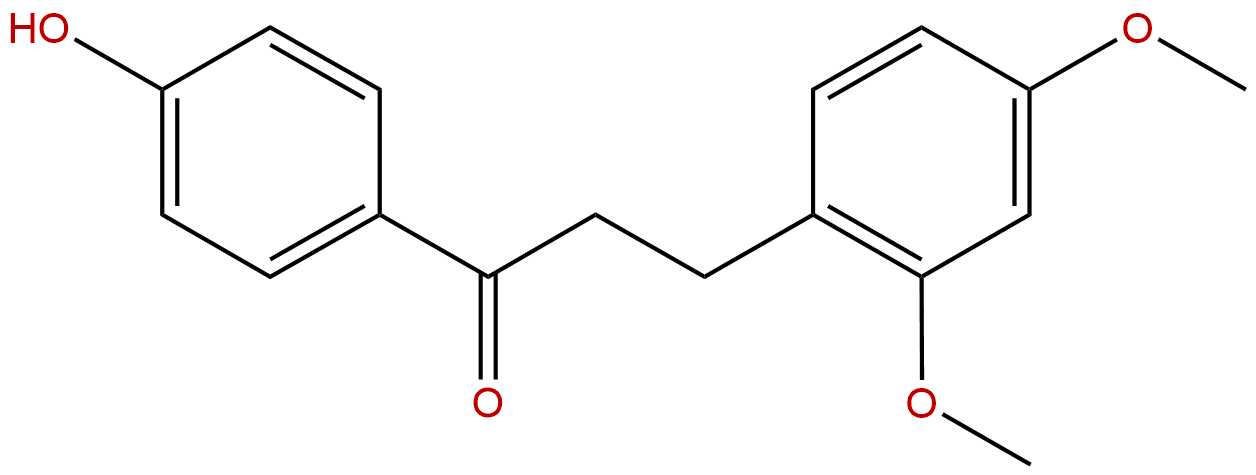


Product name: Loureirin A
Synonym name:
Catalogue No.: BP3235
Cas No.: 119425-89-7
Formula: C17H18O4
Mol Weight: 286.327
Botanical Source:
Physical Description: Powder
Type of Compound: Chalcones
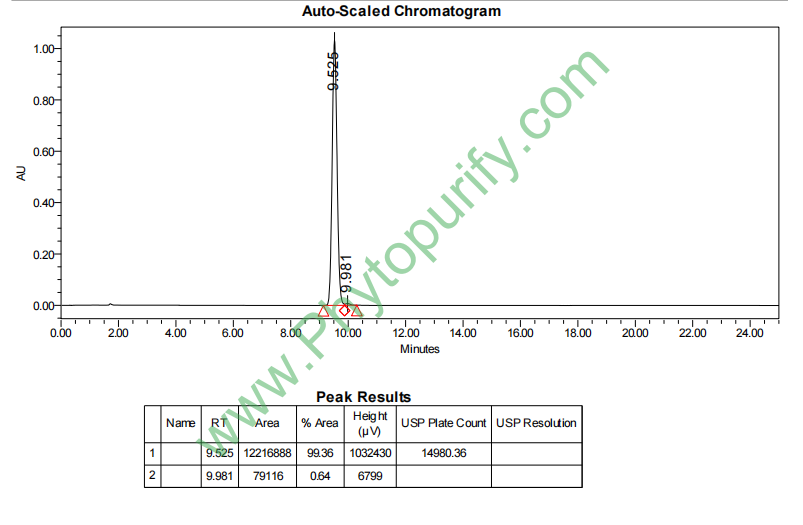
Purity: 95%~99%
Analysis Method: HPLC-DAD or/and HPLC-ELSD
Identification Method: Mass, NMR
Packing: Brown vial or HDPE plastic bottle
The product could be supplied from milligrams to grams. Inquire for bulk scale.
We provide solution to improve the water-solubility of compounds, thereby facilitating the variety of activity tests and clinic uses.
For Reference Standard and R&D, Not for Human Use Directly.
Description:
Loureirin A has an inhibitory effect on platelet activation, perhaps through an impairment of PI3K/Akt signaling. Loureirin A activates Wnt/-catenin pathway and promotes hair follicle stem cells (FSCs)-seeded tissue-engineered skin to repair skin wound.The molecular mechanism of Loureirin A and Wnt signaling pathway mediated anti- hepatic fibrosis and anti- angiogenesis may involve down- regulation the expression of Frizzled- 4,inhibiting the synthesis and secretion of α- SMA,TGF- β1and the proliferation of HSCs.
References:
Eur J Pharmacol. 2015 Jan 5;746:63-9.
Antiplatelet activity of loureirin A by attenuating Akt phosphorylation: In vitro studies.
Loureirin A is a flavonoid extracted from Dragon׳s Blood that has been used to promote blood circulation and remove stasis in Chinese traditional medicine. However, the mechanisms of these effects are not fully understood.
METHODS AND RESULTS:
We explored the anti-platelet activity and underlying mechanism of Loureirin A in vitro. Our results indicated that Loureirin A negatively affected agonist-induced platelet aggregation such as collagen, collagen-related peptide (CRP), ADP and thrombin. Loureirin A inhibited collagen-induced platelet ATP secretion and thrombin-stimulated P-selectin expression in a dose-dependent manner. Platelet spreading on immobilized fibrinogen was significantly impaired in the presence of Loureirin A. Immunoblotting analysis indicated that 100μM of Loureirin A almost completely eliminated collagen-induced Akt phosphorylation at Ser473. Interestingly, a submaximal dose (50μM) of Loureirin A had an additive inhibitory effect with the phosphoinositide 3-kinase (PI3K) inhibitor Ly294002 on collage-induced Akt phosphorylation in platelets.
CONCLUSIONS:
Taken together, Loureirin A had an inhibitory effect on platelet activation, perhaps through an impairment of PI3K/Akt signaling.
Journal of Kunming Medical University, 2016 , 37 (6) :13-17.
Effect of Loureirin A on Proliferation and Frizzled-4Expression of Rat Hepatic Stellate Cells in vitro
To investigate the molecular mechanism of Loureirin A mediated anti- hepatic fibrosis by evaluting its effects on proliferation,secretion of α- smooth muscle actin(α- SMA) and transforming growth factor- beta1(TGF- β1), and expression of rat hepatic stellate cells in vitro.
METHODS AND RESULTS:
Primary hepatic stellate cells were isolated and cultured from Sprague- Dawley rats. After activating and inducing primary hepatic stellate cells from q HSC to a HSC, the activated hepatic stellate cells model in vitro was established. Then we observed the morphological changes of static hepatic stellate cells and activated hepatic stellate cells with inverted phase contrast microscope. Cultured hepatic stellate cells were treated with different concentrations of Loureirin A and the inhibitory rate of HSCs proliferation was measured by MTT assay. The expression of Frizzled- 4 was measured by western blot analysis. The content of α- SMA and TGF- β1 in the cultured HSCs' supernatant were measured by enzyme- linked immunosorbent assay(ELISA). Loureirin A the proliferation of inhibited activated hepatic stellate cells in a time- dose- dependent manner compared with the control group,IC50=0.30 μg/μL. After Loureirin A treatment of the HSCs, western blot analysis showed that Frizzled- 4 expression level was obviously lower than control group.Loureirin A also inhibited α- SMA and TGFβ1(P0.05) secretion in the cultured HSCs' supernatant in different degree by the assay of ELISA.
CONCLUSIONS:
The molecular mechanism of Loureirin A and Wnt signaling pathway mediated anti- hepatic fibrosis and anti- angiogenesis may involve down- regulation the expression of Frizzled- 4,inhibiting the synthesis and secretion of α- SMA,TGF- β1and the proliferation of HSCs.
HPLC of Loureirin A
Storage conditions:Short-term storage at 2~8℃, long-term storage at -20 ~ -80℃
55.7600
3.0172
2.9727
.1449
5.1499
31.7889
High
89.7049
1.7873
Yes
No
Yes
No
Yes
No
0.0
No
Yes
No
No
Natural products have long been an important treasure trove for the discovery and development of new drugs, among which flavonoids have attracted much attention due to their broad biological activity and low toxicity. Loureirin A, as a characteristic flavonoid compound isolated from the traditional medicinal plant dragon blood tree, has gradually become a hot topic in pharmacological research in recent years due to its significant pharmacological activities in antiplatelet aggregation and promoting wound healing. Its CAS number is 119425-89-7, and its molecular structure is clear, laying the foundation for further research on its structure-activity relationship. Modern pharmacological studies have shown that Longxuesu A not only exerts antiplatelet effects by intervening in the Akt signaling pathway, but also demonstrates great potential in regulating key factors closely related to tissue repair, such as MMP9, FGF2, TGFB1, VEGFA, and COL1A1. This article aims to systematically review the chemical properties, plant sources, pharmacological activities, mechanisms of action, medicinal properties, and application prospects of Longxuesu A in wound healing and other fields, in order to provide comprehensive scientific references for the in-depth research and future drug development of this compound.
The chemical name of Longxuesu A is (2S) -7-hydroxy-5-methoxy-8-methyl-6-isoprentenyl flavanone, with a molecular formula of C17H18O4 and a molecular weight of 286.3270. Its core structure is a flavanone skeleton, belonging to the class of dihydroflavonoids. The structural features include 7-hydroxy and 5-methoxy substituents on the A ring, as well as an isopentenyl side chain and a methyl group connected to the B ring, with the C-2 position being the chiral center in an S configuration. These structural modifications, especially the introduction of isopentenyl groups, have a significant impact on their lipid solubility and biological activity.
Based on the analysis of physicochemical parameters related to drug properties, the lipid water partition coefficient (LogP) of Longxuesu A is 3.0172, indicating its moderate lipophilicity, which is conducive to transmembrane transport and absorption. Its topological polar surface area (TPSA) is 55.7600 Å ², which is relatively small due to its compact molecular structure. The water solubility parameters show a solubility of approximately 0.1449 mg/mL, which belongs to the category of slightly soluble to poorly soluble. This suggests that solubilization strategies may need to be considered in formulation development. It is worth noting that its blood-brain barrier permeability is predicted to be "high", suggesting its potential to act on the central nervous system. In terms of early safety indicators, hERG inhibition was predicted as' no ', and the Ames test result was 0.0, indicating a low risk of cardiac toxicity and genetic toxicity, and promising development prospects.
Dragon blood A mainly comes from plants of the Dragon Blood Tree genus, especially Dracaena cochinchinensis (Lour.) S.C. Chen and Dracaena cambadiana Pierre ex Gagnop. The red resin of these plants, also known as the traditional precious Chinese medicine "Xuejie" or "Longxuejie", has the effects of promoting blood circulation, relieving pain, removing blood stasis, stopping bleeding, and nourishing muscles and ulcers in traditional Chinese medicine theory. It is commonly used to treat injuries caused by falls, internal injuries, blood stasis, and long-term non healing of wounds. Longxuesu A is one of the key active ingredients that exert pharmacological effects in dragon's blood.
The extraction and separation of dragon blood A from plant materials are usually carried out using organic solvent extraction combined with modern chromatographic techniques. The conventional process is as follows: first, the dried dragon's blood resin is crushed, and then subjected to reflux extraction or ultrasound assisted extraction with high concentration ethanol (such as 95% ethanol) or methanol to fully dissolve the flavonoids, astragalus and other components. The extract is concentrated under reduced pressure to obtain a paste. Subsequently, preliminary separation and enrichment were carried out using silica gel column chromatography, macroporous adsorption resin column chromatography, etc. Due to the relatively high content and clear structure of Longxuesu A in the resin, high-performance liquid chromatography is often used for final purification, especially for preparative high-performance liquid chromatography. Suitable reverse phase chromatography columns (such as C18 columns) are selected, and methanol water or acetonitrile water is used as the mobile phase for gradient elution. The target peak fraction is collected by UV detector (usually with characteristic absorption at around 280 nm), and high-purity Longxuesu A monomer can be obtained after concentration and drying. In recent years, green extraction techniques such as supercritical fluid extraction have also been applied to improve extraction efficiency and reduce residual organic solvents.
Numerous in vitro and in vivo pharmacological studies have confirmed that Longxuesu A has multiple biological activities, mainly focusing on the fields of blood system and tissue repair.
Antiplatelet aggregation effect This is one of the earliest extensively studied activities of dragon blood extract A. Research has shown that Longxuesu A can significantly inhibit platelet aggregation in vitro in rabbits or rats induced by various inducers such as adenosine diphosphate, collagen, arachidonic acid, etc., in a dose-dependent manner. Its antiplatelet effect is strong, providing candidate molecules for the development of new antithrombotic drugs.
Promote wound healing activity Based on its traditional use as a medicinal herb, dragon blood extract A has been scientifically validated for its role in wound healing. In animal models of full-thickness skin defects, the local application of preparations containing Longxuesu A can significantly accelerate wound contraction and shorten healing time. Organizational analysis shows that it can promote granulation tissue growth, increase collagen deposition, stimulate neovascularization, and improve epithelial regeneration.
Anti inflammatory and antioxidant effects Inflammation and oxidative stress are important factors that hinder wound healing. Longxuesu A can inhibit the excessive production of nitric oxide, prostaglandin E2, and pro-inflammatory cytokines (such as TNF - α, IL-6) in macrophages stimulated by lipopolysaccharides and other factors. At the same time, it exhibits the ability to eliminate free radicals and enhance endogenous antioxidant enzyme activity, thereby reducing tissue damage.
Other potential activities Preliminary studies also suggest that Longxuesu A may have neuroprotective and anti-tumor activities, but its specific effects and mechanisms still need further exploration.
The multiple pharmacological effects of Longxuesu A stem from its regulation of multiple key signaling pathways and molecular targets.
The core mechanism of antiplatelet aggregation: inhibition of Akt phosphorylation Akt (protein kinase B) is a core molecule in the PI3K/Akt signaling pathway and plays a crucial role in platelet activation. Longxuesu A has been shown to significantly reduce the phosphorylation level of Akt at Ser473 site in platelets. Akt activation is inhibited, leading to downregulation of downstream effector molecules such as glycogen synthase kinase-3 β activity, ultimately resulting in key activation steps such as platelet shape change, granule release, and integrin activation being blocked, thereby exerting anti aggregation effects.
Multi target regulatory network promoting wound healing Longxuesu A promotes wound healing by coordinating and affecting multiple growth factors, proteases, and extracellular matrix components related to tissue repair.
In summary, Longxuesu A exerts antiplatelet effects by inhibiting Akt phosphorylation, and forms a synergistic network by positively regulating FGF2, VEGFA, TGFB1, COL1A1, and negatively regulating MMP9. It promotes cell proliferation, angiogenesis, collagen synthesis, and inhibits excessive protein degradation, comprehensively accelerating the wound healing process.
Based on the physical and chemical parameters and preliminary toxicity prediction mentioned earlier, Longxuesu A exhibits certain potential for drug development. Its moderate LogP value and small TPSA are beneficial for oral absorption and bioavailability. However, lower water solubility is the main obstacle that needs to be overcome in the development of its formulations, which may require the use of formulation technologies such as cyclodextrin inclusion, nanocrystals, liposomes, or solid dispersions for improvement.
At present, there are relatively limited reports on the pharmacokinetic studies of Longxuesu A, but preliminary inferences can be made based on its structural characteristics and research on similar compounds. As flavonoids, they may undergo phase I metabolism such as hydrolysis and demethylation, as well as phase II binding reactions such as glucuronidation and sulfation in the gastrointestinal tract after oral administration. Its isopentenyl structure may slow down metabolic rate and prolong in vivo action time. It is predicted that its oral absorption will be acceptable, but the first pass effect may be more pronounced. High blood-brain barrier permeability suggests the possibility of central distribution. The pharmacokinetic study of the system, including its concentration time curve in plasma, distribution volume, clearance rate, half-life, and identification of major metabolites, is a necessary step for future preclinical development. In addition, although the initial prediction of hERG inhibition and genotoxicity risk is low, it still needs to be confirmed through complete preclinical safety pharmacology and toxicology studies.
The unique pharmacological spectrum of Longxuesu A has brought broad application prospects in multiple therapeutic fields.
The future research focus should include: ① conducting systematic preclinical pharmacological, pharmacokinetic, and toxicological studies to clarify their therapeutic window and safety. ② Thoroughly investigate the precise interaction mode of its target protein and whether there is a direct interaction with the target protein. ③ Optimize synthesis or biosynthetic processes to solve the problem of limited natural sources. ④ Reasonable chemical modification based on its structure can improve water solubility and metabolic stability, and enhance drug properties. ⑤ Actively explore its combination therapy strategies in different disease models.
Longxuesu A, as an active flavonoid monomer derived from the traditional Chinese medicine Longxuejie, is a successful example of modern natural product drug research. From chemical structure identification to pharmacological mechanism analysis, preliminary studies have revealed that it exerts antiplatelet effects by inhibiting Akt phosphorylation, and synergistically promotes wound healing through multi-target regulation of key factors such as MMP9, FGF2, TGFB1, VEGFA, and COL1A1. Its pharmacological potential and clear multiple activities make it uniquely valuable in the development of new wound healing agents and antithrombotic drugs. However, pushing it from laboratory research to clinical application still faces challenges such as optimizing pharmacokinetic properties, evaluating system safety, and scaling up preparation. I believe that with the continuous deepening of interdisciplinary research, Longxuesu A is expected to become a modern innovative drug derived from traditional wisdom in the future, contributing to the cause of human health.
