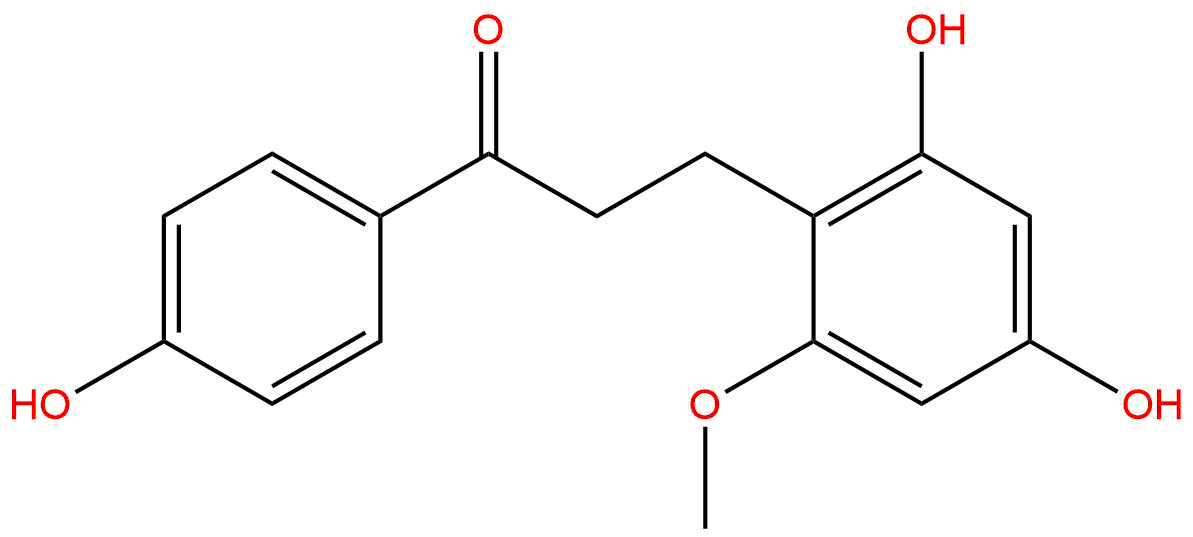


Product name: Loureirin D
Synonym name:
Catalogue No.: BP2163
Cas No.: 119425-91-1
Formula: C16H16O5
Mol Weight: 288.299
Botanical Source:
Type of Compound:
Purity: 95%~99%
Analysis Method: HPLC-DAD or/and HPLC-ELSD
Identification Method: Mass, NMR
Packing: Brown vial or HDPE plastic bottle
Storage: Store in a well closed container, protected from air and light. Put into refrigerate or freeze for long term storage.
Whenever possible, you should prepare and use solutions on the same day. However, if you need to make up stock solutions in advance, we recommend that you store the solution as aliquots in tightly sealed vials at -20℃. Generally, these will be useable for up to two weeks.
The product could be supplied from milligrams to grams
Inquire for bulk scale.
For Reference Standard and R&D, Not for Human Use Directly.
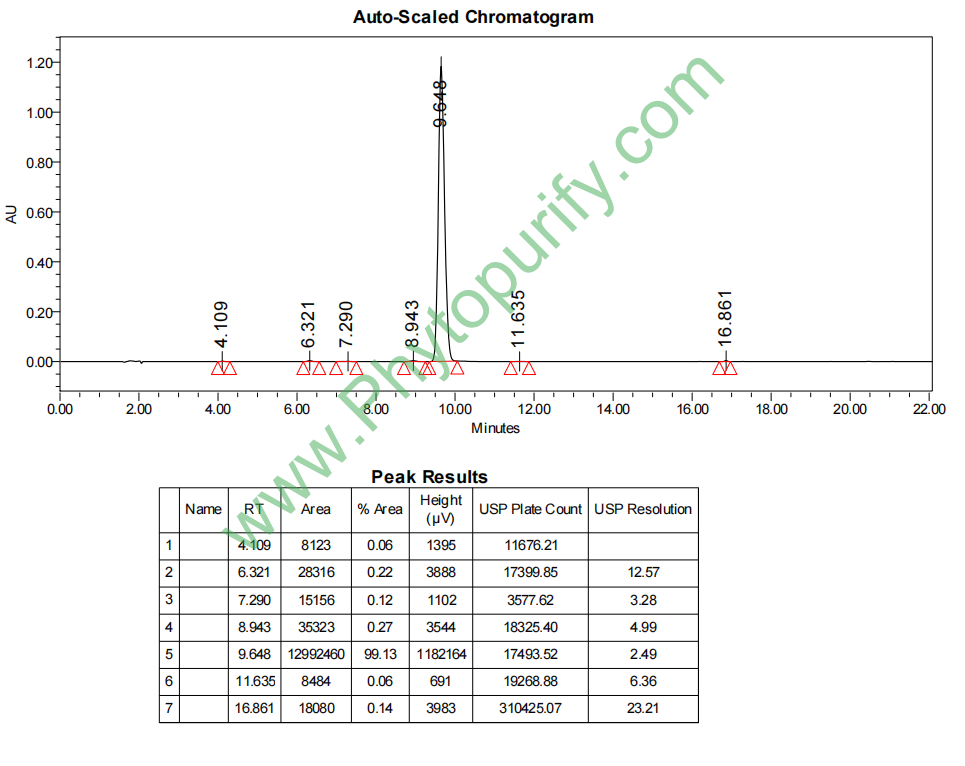
HPLC of Loureirin D
Storage conditions:Short-term storage at 2~8℃, long-term storage at -20 ~ -80℃
86.9900
2.2245
2.1607
.5648
2.5104
12.2556
Low
86.7726
2.1477
Yes
No
Yes
No
Yes
No
0.0
No
Yes
Yes
No
Natural products, as an important source of drug discovery, play an irreplaceable role in the history of human disease prevention and treatment. Among them, active ingredients derived from traditional medicinal plants continue to provide lead compounds for modern drug development due to their structural diversity and rich biological activity. Dragon's Blood, as a traditional precious medicinal herb with a long history of application, mainly comes from the Liliaceae plant Sword Leaf Dragon's Blood Tree(Dracaena cochinchinensis)Resin, in traditional Chinese medicine theory, has the effects of promoting blood circulation, relieving pain, removing blood stasis, stopping bleeding, and healing sores and muscles. It is commonly used to treat injuries caused by falls, external bleeding, and ulcers that do not heal. Modern pharmacological research has confirmed that the pharmacological substance basis of Dragon's Blood Dragon is mainly a class of structurally unique dihydrochalcone compounds, among which Loureirin D is one of the representative active monomers.
Longxuesu D (CAS number: 119425-91-1) has attracted much attention since its discovery due to its significant potential in promoting tissue repair, especially wound healing. Wound healing is a highly coordinated and complex biological process that involves multiple stages such as inflammatory response, cell proliferation, migration, differentiation, and extracellular matrix remodeling. Any disruption in these stages can lead to delayed healing or pathological scar formation. Therefore, finding safe and effective drugs that can regulate the healing process through multiple targets and links is an important research direction in the field of trauma treatment. Longxuesu D exhibits positive regulatory effects on various aspects of the healing process by regulating key targets such as matrix metalloproteinase 9 (MMP9), fibroblast growth factor 2 (FGF2), transforming growth factor beta 1 (TGFB1), vascular endothelial growth factor A (VEGFA), and type I collagen alpha 1 chain (COL1A1), making it a highly valuable candidate molecule for development. This article aims to systematically review the chemical properties, plant sources, pharmacological activities, mechanisms of action, pharmacological evaluation, and clinical application prospects of Longxuesu D, in order to provide comprehensive scientific references for the in-depth research and future transformation of this compound.
Longxuesu D is a typical dihydrochalcone compound. Its basic chemical skeleton is composed of A and B rings connected by a three carbon chain (- CH2-CH2-CO -), and the carbonyl group of the three carbon chain is reduced, thus distinguishing it from the classical chalcone structure. Specifically, the molecular formula of Longxuesu D is C17H20O4, with a molecular weight of 288.2990. Its structural feature is that the A ring is usually substituted with resorcinol or triphenylphenol, while the B ring is attached with specific methoxy or hydroxyl substituents. This unique substitution pattern is an important structural basis for its biological activity.
From the analysis of physical and chemical properties, the lipid water partition coefficient (LogP) of Longxuesu D is 2.2245, indicating that the compound has moderate lipophilicity, which is conducive to its penetration of cell membranes and interaction with intracellular targets, and also suggests that it may have certain oral absorption potential. Its topological polar surface area (TPSA) is 86.9900 Å ², reflecting the surface area occupied by polar functional groups (mainly hydroxyl groups) in the molecule, which is at a moderate level. The water solubility data is 0.5648 mg/mL, belonging to the category of slightly soluble to poorly soluble, which may be a challenge that needs to be overcome in its formulation development. In the preliminary drug risk assessment, Longxuesu D showed a lower ability to cross the blood-brain barrier, indicating a lower risk of central nervous system related side effects; The hERG inhibition experiment result was negative, preliminarily ruling out the potential clinical risk of inducing QT interval prolongation in the heart; The Ames test result was 0.0, indicating that no mutagenicity was observed under the experimental conditions, providing preliminary favorable evidence for its safety. These basic physicochemical and early safety parameters together outline the basic profile of Longxuesu D as a drug lead compound: it has the necessary structural features for activity, suitable membrane permeability, and a good initial safety signal, but water solubility issues need to be addressed in subsequent development.
Dragon blood extract D is mainly derived from the sword leaf dragon blood tree of the Liliaceae family(Dracaena cochinchinensis)The resin, also known as the traditional medicinal herbs "Dragon Blood Dragon" or "Kirin Dragon". This plant is mainly distributed in Yunnan, Guangxi and some parts of Southeast Asia in China. Its resin is blood red in color and is a defensive substance secreted by damaged plant trunks. After collection and processing, it is used as medicine.
The extraction and separation of dragon blood extract D from dragon blood resin usually use organic solvent extraction combined with modern chromatographic separation techniques. The conventional process is as follows: first, the dried dragon's blood resin is crushed and subjected to reflux extraction or ultrasound assisted extraction with high concentration ethanol (such as 95% ethanol) or acetone, fully utilizing the solubility of dihydrochalcone such as dragon's blood D in polar organic solvents. After merging the extracts, the extract was concentrated under reduced pressure to obtain a paste. Subsequently, the extract was subjected to systematic solvent extraction segmentation using solvents of different polarities, such as petroleum ether, ethyl acetate, n-butanol, etc. Dragon blood extract D was mostly enriched in the ethyl acetate extraction site. Further purification relies on column chromatography techniques, often using silica gel column chromatography with different ratios of petroleum ether ethyl acetate or chloroform methanol gradient elution, and combining similar fractions based on thin-layer chromatography (TLC) detection. After obtaining the crude product, it is often necessary to use preparative high performance liquid chromatography (Prep HPLC) with a reverse phase C18 chromatographic column and methanol water or acetonitrile water as the mobile phase for final purification to obtain high-purity Longxuesu D monomer compound. In recent years, liquid-liquid distribution chromatography techniques such as high-speed counter current chromatography (HSCCC) have also been applied to the separation of such compounds, as they can avoid irreversible adsorption caused by solid adsorbents and are particularly suitable for preparative separation.
Numerous in vitro and in vivo pharmacological studies have confirmed that the core pharmacological activity of Longxuesu D is focused on promoting wound healing and related tissue repair processes, specifically reflected in the following key aspects:
Promote cell proliferation and migration In the early stage of wound healing, rapid proliferation and migration of epithelial cells and fibroblasts are the basis for covering the wound and initiating repair. Research has shown that Longxuesu D can significantly promote the proliferation activity of human keratinocytes (HaCaT), human skin fibroblasts, and other cells within a safe concentration range. Scratch experiments and Transwell migration experiments further demonstrate that Longxuesu D can effectively accelerate the lateral migration ability of these cells, which is crucial for epithelialization and granulation tissue formation.
Stimulate angiogenesis The neovascularization network transports oxygen, nutrients, and metabolic waste to healing tissues, which is a necessary condition for the growth and maturation of granulation tissue. Longxuesu D has been shown to induce luminal formation in human umbilical vein endothelial cells (HUVECs), and its promoting effect on angiogenesis has also been observed in chicken embryo chorioallantoic membrane (CAM) models and Matrigel thrombus models implanted subcutaneously in mice. This indicates that Longxuesu D has the ability to improve local microcirculation of wounds and provide a material basis for repair.
Regulating extracellular matrix (ECM) synthesis and remodeling In the middle and late stages of healing, fibroblasts synthesize ECM components such as collagen and reshape them in an orderly manner, determining the strength and appearance of the healing tissue. Longxuesu D can upregulate the expression and secretion of major structural proteins such as type I collagen (COL1A1) in fibroblasts. At the same time, it can also regulate the activity of matrix metalloproteinases (such as MMP9) in a dose-dependent manner, prevent excessive degradation of ECM, promote its orderly deposition, and thus facilitate the formation of repair tissues with more complete structures and better mechanical properties.
Anti inflammatory and antioxidant effects Excessive or sustained inflammatory response is an important cause of chronic and difficult to heal wounds. Research has shown that Longxuesu D can inhibit the excessive production of pro-inflammatory cytokines (such as TNF - α, IL-6) in macrophages induced by stimuli such as lipopolysaccharide (LPS). In addition, it can alleviate oxidative stress damage, protect repair cells from reactive oxygen species (ROS) attacks, and create a more favorable microenvironment for healing.
Validation of in vivo wound healing model: In several mice or rats with full-thickness skin defects, local application of gel or ointment containing dragon blood D can significantly accelerate the contraction and closure rate of the wound. Histopathological examination showed that the granulation tissue in the treatment group was thicker, the collagen arrangement was more compact and orderly, the new blood vessels were more abundant, and the epithelial regeneration was more complete, which proved its excellent healing promoting effect on the whole.
The excellent efficacy of dragon blood extract D in promoting wound healing stems from its precise regulation of multiple key signaling pathways and molecular targets during the healing process. Existing research reveals that its mechanism of action network mainly revolves around the following core targets:
Regulating the TGF - β 1/Smad signaling pathway Transforming growth factor beta 1 (TGFB1) is a core regulatory factor in wound healing, involved in multiple processes such as inflammation, fibrosis, and ECM synthesis. Longxuesu D can upregulate the expression of TGFB1 and activate its downstream Smad2/3 signaling pathway. Activated Smad complexes are transferred into the nucleus as transcription factors, directly promoting the transcription of ECM component genes such as COL1A1. This is the main molecular basis for enhancing collagen synthesis and promoting tissue fibrosis. Meanwhile, moderate TGF - β 1 signaling is also beneficial for the differentiation of fibroblasts into myofibroblasts with synthetic functions.
Activate FGF2 mediated pathway for promoting proliferation and angiogenesis Fibroblast growth factor 2 (FGF2) is a potent mitogen and inducer of angiogenesis. Longxuesu D can induce the expression and release of FGF2. FGF2 activates downstream RAS/MAPK (such as ERK1/2) and PI3K/Akt signaling pathways by binding to FGFR receptors on the cell surface. The phosphorylation of ERK1/2 directly drives the cell cycle progression, promoting the proliferation of fibroblasts and endothelial cells; The activation of Akt not only supports cell survival, but also upregulates the expression of hypoxia inducible factor-1 α (HIF-1 α), thereby inducing the transcription of VEGFA.
Inducing VEGFA expression to promote angiogenesis Vascular endothelial growth factor A (VEGFA) is the most critical regulatory factor for angiogenesis. Longxuesu D significantly upregulates the expression of VEGFA through the aforementioned FGF2/Akt/HIF-1 α pathway and possible other mechanisms. High levels of VEGFA act on VEGFR2 on endothelial cells, strongly promoting endothelial cell proliferation, migration, and luminal formation, thereby efficiently stimulating the formation of neovascularization networks in wounds.
Balancing the activity of MMP9 to optimize ECM remodeling Matrix metalloproteinase 9 (MMP9) mainly degrades basement membrane components such as type IV collagen and plays an important role in inflammatory cell infiltration, epithelial cell migration, and ECM remodeling. The regulation of MMP9 by Longxuesu D exhibits bidirectionality: in the early stages of healing, MMP9 may be indirectly regulated by inhibiting excessive inflammation, preventing its destructive degradation of the basement membrane and newly formed tissues; During the remodeling phase, it is possible to regulate the expression of tissue metalloproteinase inhibitors (TIMPs) to balance the MMP9/TIMP ratio, ensuring a dynamic balance between ECM degradation and synthesis, and achieving orderly remodeling.
Directly promote the transcription and synthesis of COL1A1 In addition to being regulated by the TGF - β 1/Smad pathway, there may be other direct or indirect mechanisms that promote the gene expression and protein synthesis of type I collagen alpha 1 chain (COL1A1) in Longxuesu D. High levels of COL1A1 are the main structural proteins in mature granulation tissue and later scar tissue, providing tensile strength for tissue repair.
In summary, Longxuesu D does not act on a single target, but rather forms a mechanism for Upregulation of TGFB1/FGF2 → activation of downstream ERK/Akt pathway → induction of VEGFA expression to promote angiogenesis and COL1A1 synthesis → bidirectional regulation of MMP9 to optimize remodeling A collaborative network at the core. This multi-target and multi link regulatory characteristic enables it to comprehensively and harmoniously promote the natural process of wound healing, which may be the mechanism basis for its advantages over single target drugs.
Based on the physical and chemical parameters and preliminary safety data mentioned earlier, Longxuesu D has demonstrated good potential as a drug lead compound. However, its comprehensive pharmacological evaluation and pharmacokinetic characteristics still require systematic research.
Drugability assessment:
- absorb A moderate LogP value (2.2245) suggests that it may have a certain passive transmembrane absorption ability, which is beneficial for intestinal absorption after oral administration or skin penetration after local administration. But its lower water solubility may limit its dissolution rate in gastrointestinal fluids, thereby affecting oral bioavailability. The formulation strategy, such as making solid dispersions, cyclodextrin inclusion complexes, or nanocrystals, is a potential direction to improve their dissolution and absorption efficiency.
- distribution A lower predicted blood-brain barrier permeability implies limited exposure to the central nervous system, which may reduce related side effects, but also suggests that it is not suitable for the treatment of central nervous system diseases. The distribution of it in traumatic tissues needs further clarification through in vivo radioactive labeling or mass spectrometry imaging studies.
- Metabolism As a dihydrochalcone compound, the phenolic hydroxyl group in its structure is a potential metabolic site that may undergo glucuronic acid binding or sulfation binding reactions (II phase binding), as well as oxidative metabolism (I phase metabolism) catalyzed by the liver cytochrome P450 enzyme system (CYP450). Clarifying its main metabolic enzymes, metabolites, and activities is crucial for evaluating drug interactions and individual differences.
- excretion It is speculated that its metabolites are mainly excreted through the kidneys or bile. The excretion pathway and rate of the prototype drug need to be experimentally determined.
- toxicity Preliminary hERG inhibition negative and Ames test negative results are positive early safety signals. However, systematic preclinical toxicology studies are still needed, including repeated administration toxicity (acute toxicity, long-term toxicity), complete genetic toxicity tests, reproductive toxicity, and irritation and allergy tests of local medication, to comprehensively evaluate its safety.
Pharmacokinetics (PK):
At present, there are insufficient reports on the pharmacokinetic studies of Longxuesu D system administration (such as intravenous injection and oral administration). Future research requires the establishment of sensitive and specific biological analysis methods (such as LC-MS/MS) to systematically examine core PK parameters such as drug time curves, peak time (Tmax), peak concentration (Cmax), half-life (t1/2), area under the drug time curve (AUC), and absolute bioavailability (F) in animal models (rats, mice, dogs, etc.) under different administration routes. Especially for the expected local topical administration method, it is necessary to study its retention in various layers of the skin, transdermal absorption rate, and possible systemic exposure level to evaluate the effectiveness and safety of local administration. These PK data serve as a bridge between their pharmacological activity and clinical application, guiding the design of drug administration regimens.
The clear pharmacological activity and multi-target mechanism of action of Longxuesu D in the field of wound healing have depicted broad prospects for its clinical application, but also face several challenges.
Application Prospects:
1. Development of drugs for the treatment of chronic non healing wounds: Chronic wounds such as diabetes foot ulcers, venous leg ulcers, and pressure injuries are difficult to treat in clinical practice, and their healing obstacles involve multiple factors such as vascular disease, persistent inflammation, and infection. Longxuetin D has multiple functions such as promoting angiogenesis, anti inflammation, and promoting ECM synthesis. It is very suitable for developing new local drugs (such as gel, creams, sprays, hydrocolloid dressings, etc.) to treat such diseases.
2. Surgical postoperative and acute trauma repair adjuvant therapy Can be used for postoperative incision care and acute wound management in fields such as general surgery, plastic surgery, and burn care, accelerating healing and reducing the risk of infection and scar formation.
3. Ingredients of cosmetics and functional skincare products Its properties of promoting collagen synthesis, antioxidation, and anti-inflammatory make it have potential applications in cosmetics such as anti-aging, repairing skin barriers, and improving post acne erythema and scars.
4. Structural optimization as a lead compound Chemical modification with it as the core structure aims to further enhance activity, improve water solubility or pharmacokinetic properties, and is expected to obtain better candidate drugs.
Challenges and Prospects:
1. Deep exploration of the mechanism of action At present, the understanding of the action network of dragon blood hormone D is still incomplete. In the future, proteomics, transcriptomics, gene knockout/knockdown and other technologies need to be utilized to more accurately depict their direct targets (such as whether they act on specific receptors or kinases) and complete signaling networks, and elucidate the interactive dialogue between different targets.
2. Systematic drug research and formulation development Urgent need for systematic ADMET (absorption, distribution, metabolism, excretion, and toxicity) research and comprehensive preclinical toxicology evaluation. Meanwhile, the development of innovative formulation technology is a key breakthrough in addressing the issue of poor water solubility.
3. Clinical research validation After completing sufficient preclinical research, it is necessary to conduct standardized Phase I, II, and III clinical trials to validate its effectiveness, safety, and optimal dosing regimen for treating different types of wounds in humans. This is the necessary path for it to eventually enter the market.
4. Expand into new therapeutic fields Based on its role in regulating pathways such as TGF - β and FGF, its potential application value in organ fibrosis (such as pulmonary fibrosis, liver fibrosis), osteoarthritis (promoting cartilage repair), and other tissue repair and fibrosis related diseases can be explored.
Longxuesu D, as a characteristic dihydrochalcone monomer isolated from the traditional precious medicinal herb Longxuejie, is a successful example of modern Chinese medicine material basis research and innovative drug discovery. Numerous studies have shown that it plays a positive role in promoting cell proliferation and migration, stimulating angiogenesis, optimizing extracellular matrix remodeling, and significantly accelerating wound healing process by synergistically regulating multiple key targets closely related to tissue repair, such as TGFB1, FGF2, VEGFA, MMP9, and COL1A1. Its moderate physicochemical properties, good preliminary safety, and clear multi-target mechanism highlight its enormous potential as a lead compound for novel healing promoting drugs.
However, there is still a long and rigorous road from active compounds to successful drugs. Future research needs to continue to focus on in-depth analysis of its molecular mechanism network, comprehensive evaluation of its drug properties, overcoming technical challenges in formulation, and promoting clinical translational research. I believe that with the continuous deepening of interdisciplinary research, Longxuesu D is expected to move from the laboratory to clinical practice, bringing a new treatment option based on traditional wisdom and modern science to billions of patients with acute and chronic wounds worldwide. At the same time, it also provides useful references for the modern research and development of natural products.
