Introduction/Overview
Natural products, as an important source of drug discovery, play an irreplaceable role in the long history of human struggle against diseases. From the classic analgesic morphine to the anticancer drug paclitaxel, countless natural compounds with unique chemical structures and significant biological activities provide valuable molecular templates for modern pharmacological research. Among numerous natural products, isoflavones derived from leguminous plants (Caesarpinia genus) have attracted widespread attention due to their diverse pharmacological activities, such as anti-inflammatory, antioxidant, anti-tumor, and immune regulation. Dihydrobonduchelli is a member of this family with significant research value.
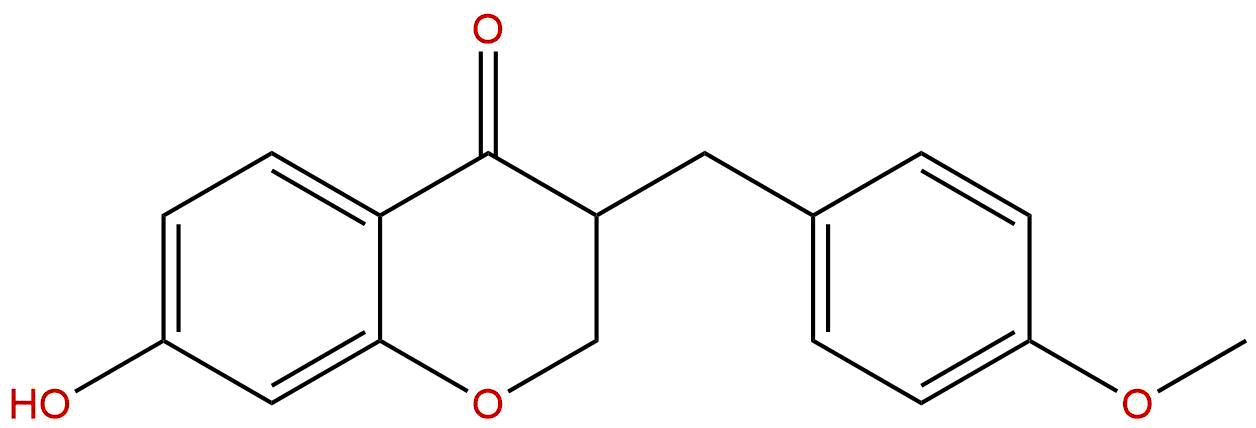
Dihydrobonducellin (CAS number: 103680-87-1) is a naturally occurring dihydroisoflavone compound. The prefix 'Dihydro' in its name reveals its structural association with bonducellin, where the C2-C3 double bond in the parent nucleus is reduced. Early research mainly focused on its significance as a plant chemical taxonomic marker, but in recent years, its unique biological activity, especially its immune regulatory function, has gradually become a research hotspot. Existing studies have shown that Dihydrobonducellin can significantly inhibit the proliferation of peripheral blood mononuclear cells (PBMCs) and downregulate the production of key inflammatory factors interleukin-2 (IL-2) and interferon - γ (IFN - γ), suggesting its potential application value in the treatment of autoimmune diseases and transplant rejection. More notably, based on its physicochemical properties (such as high blood-brain barrier permeability) and computer-aided drug design (CADD) predictions, Dihydrobonducelli has also shown potential interactions with various antidepressant targets (such as MAOA, MAOB, GSK3B, SLC6A4, etc.), opening up new possibilities for its application in the field of neurological and psychiatric disorders.
This article aims to provide a comprehensive professional review of Dihydrobonducellin, systematically sorting out its chemical structure and physicochemical properties, plant sources and extraction methods, pharmacological activity, mechanism of action, drug evaluation, and clinical application prospects, in order to provide reference for the in-depth research and development of this natural product.
Chemical structure and physicochemical properties
Chemical structure analysis
Dihydrobonducellin belongs to the subfamily of isoflavones in the flavonoid class. Its core skeleton is 3-phenylchroman-4-one. Compared with classical isoflavones (3-phenylchroman-4-one), the C2-C3 positions on the C ring are single bonds, so it does not have a conjugated double bond system. This structural difference directly affects its molecular conformation, electron distribution, and related biological activity.
Specifically, the chemical structural characteristics of Dihydrobonducellin are as follows: its A and B rings are both benzene rings, and the C ring is a saturated dihydropyranone ring. According to existing literature reports, Dihydrobonducellin (compound 5) usually refers to 7,4 '- dimethoxy-dihydroisoflavone, with the molecular formula C17H16O4. Two methoxy groups (- OCH3) are located at the C-7 position of the A ring and the C-4 'position of the B ring, respectively. This methoxy substitution pattern is a common feature of many bioactive isoflavone compounds. The presence of methoxy groups typically enhances the lipophilicity and metabolic stability of molecules, and may affect their binding to target proteins.
Physical and chemical property parameters
Based on computational chemistry and experimental data, the key physicochemical properties of Dihydrobonducelli are as follows, which have a decisive impact on its drug development potential:
- Molecular weight (MW): 284.3110 Da. This molecular weight fully complies with the Lipinski's Rule of Five, which requires a molecular weight of less than 500, indicating its good potential for oral drug development.
- Lipid water partition coefficient (LogP): 3.0663. The LogP value is between 2-4, indicating that the compound has moderate lipophilicity. This characteristic allows it to dissolve well in the lipid bilayer to penetrate biological membranes, while maintaining a certain solubility in aqueous environments, which is beneficial for its absorption and distribution in the body.
- Topological Polarity Surface Area (TPSA): 55.7600 Å ². TPSA is an important indicator for measuring molecular polarity, hydrogen bonding ability, and ability to penetrate biological membranes, especially the blood-brain barrier. Generally, molecules with TPSA less than 60-70 Å ² are considered to have good cell membrane permeability. The TPSA value of Dihydrobonducellin is 55.76 Å ², far below the common threshold for oral medication (140 Å ²), indicating its excellent oral absorption and biofilm permeability potential.
- Water solubility (LogS): 0.1111 mg/mL。 This compound has low water solubility and belongs to poorly soluble drugs. This may be a key obstacle that needs to be overcome in its development process, and its bioavailability needs to be improved through formulation methods such as solid dispersions, nanocrystals, liposomes, etc.
- Blood-brain barrier (BBB) permeability: High. Combining its low TPSA and moderate LogP value, it is predicted that Dihydrobonducellin can efficiently cross the blood-brain barrier. This characteristic is an important structural basis for its predicted antidepressant activity, as most antidepressant drugs require targeting within the central nervous system.
- HERG inhibition: No. HERG (human Ether - à - go Related Gene) potassium channel inhibition is the main cause of drug induced cardiac toxicity (QT interval prolongation). The prediction results show that Dihydrobonducellin does not have hERG inhibitory activity, which greatly reduces its risk of causing cardiac toxicity and is an important safety advantage.
- Ames test: 0.0. The Ames test is used to predict the mutagenicity (genotoxicity) of compounds. The result is 0.0, indicating that it has no mutagenicity in the prediction model and demonstrates good genetic safety.
In summary, the physicochemical properties of Dihydrobonducellin exhibit a combination of "drug like" and "challenging" characteristics. The molecular weight, LogP, TPSA, hERG inhibition, and Ames test results all point to an ideal drug candidate molecule that is safe, oral, and can enter the brain; However, its low water solubility is a key issue that needs to be addressed in the development of subsequent formulations.
Plant sources and extraction methods
Main plant sources
Dihydrobonducellin mainly comes from Fabaceae, a type of legume(Caesalpinia)Plants. There are over 100 species of this genus of plants worldwide, mostly distributed in tropical and subtropical regions, and many species have a long history of application in traditional medicine. Among them, Dihydrobonducellin has been reported to be isolated from the following plants:
- Ci Yun Shi(Caesalpinia bonduc (L.) Roxb.)This is the most famous source of Dihydrobonducellin and the origin of its name. Ciyunshi, also known as Datuoye Yunshi or Philippine Yunshi, is a climbing shrub widely distributed in tropical regions around the world. Its seeds, leaves and roots are used in traditional medicine in India, Africa and Southeast Asia to treat fever, inflammation, parasitic infection, diabetes and other diseases. Dihydrobonducellin was initially isolated and identified from the seeds of this plant.
- Sumu(Caesalpinia sappan L.)The heartwood of Sumu is a famous traditional Chinese medicine with the effects of promoting blood circulation, removing blood stasis, reducing swelling, and relieving pain. Modern research has shown that Sumu contains abundant isoflavones, including Dihydrobonducellin.
- Golden Phoenix Flower(Caesalpinia pulcherrima (L.) Sw.)As a common ornamental plant, goldenrod has also been reported to contain Dihydrobonducellin.
- Other clouds are actually plants As research progresses, Dihydrobonducellin may also exist in other cloud dwelling plants, such as Caesalpinia crista Wait.
Extraction and Separation Purification Methods
Dihydrobonducellin, as a secondary metabolite in plants, usually has low levels, so a systematic extraction and purification strategy is needed.
-
Extract:
- Solvent selection According to the moderate polarity of Dihydrobonducelli, organic solvents are often used for extraction. The most commonly used solvents include methanol, ethanol, or their aqueous solutions. For example, dry and crushed plant materials (such as prickly cloud seeds or sappan heartwood) are repeatedly leached or percolated with 95% ethanol or methanol at room temperature or under heating conditions.
- Extraction process After the extraction solution is concentrated under reduced pressure, the total extract is obtained. Subsequently, the total extract was dispersed in water and subjected to liquid-liquid extraction using organic solvents of different polarities, such as petroleum ether, ethyl acetate, and n-butanol. Due to the LogP of Dihydrobonducellin being approximately 3, it typically accumulates in the moderately polar ethyl acetate extraction layer.
-
Separation and purification:
- Column chromatography method This is the core method for separating Dihydrobonducellin. Common stationary phases include silica gel, reverse phase silica gel (such as C18), Sephadex LH-20, etc. Usually, normal phase silica gel column chromatography is used for preliminary separation of ethyl acetate extract, using gradient elution systems such as petroleum ether ethyl acetate or chloroform methanol. The fraction rich in isoflavones is further refined by reverse phase column chromatography or Sephadex LH-20 column chromatography.
- High performance liquid chromatography (HPLC)For isomers with similar structures that are difficult to separate, preparative HPLC is the ultimate method for obtaining high-purity Dihydrobonducelli. Usually, a reverse phase C18 column is used, with methanol water or acetonitrile water system as the mobile phase, monitored by a UV detector at 254-280 nm wavelength.
- Structural Identification The isolated pure product was structurally confirmed by spectroscopic methods, mainly including nuclear magnetic resonance spectroscopy (¹ H-NMR, ¹ ³ C-NMR, 2D-NMR) and high-resolution mass spectrometry (HR-ESI-MS). By comparing with the spectral data reported in the literature, it was ultimately determined to be Dihydrobonducellin.
Pharmacological activity research
The pharmacological activity research of Dihydrobonducellin is still in its early stages, but there is evidence to suggest that it has significant immunomodulatory effects and exhibits antidepressant potential.
Immune regulatory activity
This is currently the most clear pharmacological activity of Dihydrobonducellin. The study used human peripheral blood mononuclear cells (PBMCs) as a model to evaluate the immunomodulatory effects of Dihydrobonducellin.
- Inhibition of PBMCs proliferation Under the stimulation of mitogens such as phytohemagglutinin (PHA) or lipopolysaccharides (LPS), PBMCs undergo proliferation. The experimental results showed that Dihydrobonducellin can significantly inhibit the proliferation of PBMCs in a dose-dependent manner. This suggests that it may exert immunosuppressive effects by interfering with the cell cycle or inhibiting key proliferation signaling pathways.
- Inhibit cytokine production Cytokines are key mediators of immune response. Research has found that Dihydrobonducellin can significantly inhibit the secretion of interleukin-2 (IL-2) and interferon - γ (IFN - γ) by activated PBMCs. IL-2 is a key growth factor for T cell proliferation and differentiation, while IFN - γ is a core effector molecule of Th1 type immune response, playing an important role in antiviral immunity and autoimmune inflammation. The inhibition of these two cytokines by Dihydrobonducellin suggests its potential for treating Th1 mediated autoimmune diseases such as rheumatoid arthritis, multiple sclerosis, and inflammatory bowel disease, as well as preventing organ transplant rejection.
Antidepressant potential
The antidepressant activity of Dihydrobonducellin is currently mainly predicted based on computer simulations (in silica) and its superior physicochemical properties (high BBB permeability).
- Multi target action prediction Through computer-aided drug design techniques such as molecular docking and pharmacophore modeling, researchers predict that Dihydrobonducellin can bind to multiple target proteins closely related to the pathogenesis of depression. These targets include:
- Monoamine oxidase A/B (MAOA/MAOB)The key enzyme that degrades monoamine neurotransmitters such as serotonin, dopamine, and norepinephrine. Inhibition of MAO can increase the level of monoamine in synaptic cleft, which is the mechanism of action of classical antidepressants.
- Glycogen synthase kinase-3 β (GSK3B)Involved in various cellular processes, related to emotional regulation and neural plasticity. The overactivity of GSK3B is believed to be associated with the pathophysiology of depression.
- 5-hydroxytryptamine transporter (SLC6A4)Responsible for retrieving serotonin reuptake from synaptic cleft to presynaptic neurons. Inhibition of SLC6A4 is the core mechanism of selective serotonin reuptake inhibitors (SSRIs) class antidepressants.
- 5-hydroxytryptamine 1A receptor (HTR1A)An important subtype of serotonin receptors, whose excitatory effects are believed to have anti anxiety and anti depressive effects.
- Gamma aminobutyric acid type A receptor alpha 1 subunit (GABRA1)GABA is the main inhibitory neurotransmitter in the central nervous system. Regulating the GABAergic system can affect emotions and stress responses.
- CAMP response element binding protein 1 (CREB1) and brain-derived neurotrophic factor (BDNF)CREB1 is a key transcription factor that regulates BDNF expression. BDNF is crucial for the survival, growth, and synaptic plasticity of neurons. Depressive patients often have a decrease in BDNF levels.
- Catechin-O-methyltransferase (COMT)Participate in the metabolic degradation of dopamine and norepinephrine.
- Potential significance The multi-target mode of action of Dihydrobonducellin on these targets suggests that it may have a mechanism of action different from traditional single target antidepressants, which may provide more comprehensive efficacy and fewer side effects. Especially its high BBB permeability allows it to smoothly enter the central nervous system and exert its pharmacological effects. However, these predicted results urgently need to be validated through in vitro enzyme activity and cell experiments, as well as in vivo animal models.
Mechanism of action and molecular targets
Based on existing pharmacological activity research and computer predictions, the mechanism of action of Dihydrobonducellin can be preliminarily elucidated from two levels: immune regulation and neural regulation.
Immune regulatory mechanism
The mechanism by which Dihydrobonducellin inhibits the proliferation of PBMCs and the production of IL-2 and IFN - γ is not fully understood, but it can be speculated that it may act on key signaling pathways downstream of T cell receptors (TCR).
- Possible signaling pathways T cell activation requires the combined action of TCR signals and co stimulatory signals, which activate a series of downstream pathways such as NF - κ B, MAPK (ERK, JNK, p38), and calcineurin NFAT pathway. These pathways ultimately initiate the transcription of cytokine genes such as IL-2 and IFN - γ. Dihydrobonducellin may exert its effect by inhibiting one or more of these pathways.
- NF - κ B pathway NF - κ B is a core transcription factor involved in inflammatory and immune responses. Many natural products inhibit the nuclear translocation and transcriptional activity of NF - κ B by suppressing the activity of I κ B kinase (IKK) and preventing its degradation. Dihydrobonducellin may inhibit the production of IL-2 and IFN - γ through a similar mechanism.
- NFAT pathway The calcineurin NFAT pathway is a key pathway for inducing IL-2 expression in T cell activation. Immunosuppressants cyclosporine A and tacrolimus exert their effects by inhibiting calcineurin. It is worth further investigating whether Dihydrobonducellin also targets this pathway.
- MAPK pathway P38 MAPK and JNK play important roles in T cell activation and IFN - γ production. Inhibiting these kinases can also effectively suppress the production of cytokines.
- Target protein The direct protein target of Dihydrobonducellin remains to be identified. Future research can use techniques such as affinity chromatography, drug affinity response target stability (DARTS), or cellular thermal transition analysis (CETSA) to identify the proteins directly bound to it.
Antidepressant mechanism (prediction)
Based on computer simulation results, Dihydrobonducellin may exert antidepressant effects through the following mechanisms:
- Enhance monoamine neurotransmission By inhibiting MAOA/MAOB and COMT, the degradation of monoamine neurotransmitters is reduced; Simultaneously, by inhibiting SLC6A4 (5-hydroxytryptamine transporter), the reuptake of 5-hydroxytryptamine is reduced. This "three pronged" strategy can synergistically increase the levels of serotonin, norepinephrine, and dopamine in synaptic cleft, thereby rapidly improving depressive symptoms.
- Regulating neural plasticity and neurogenesis By inhibiting the activity of GSK3B, the Wnt/β - catenin signaling pathway can be activated, promoting neuronal survival and neurogenesis. Meanwhile, upregulating the phosphorylation level of CREB1 can increase the expression of BDNF. BDNF is a key neurotrophic factor that promotes hippocampal neuronal regeneration and synaptic plasticity, and its elevated levels are closely related to antidepressant efficacy.
- Regulating the GABAergic system The potential interaction with GABRA1 may enhance the inhibitory neurotransmission of GABA, thereby alleviating anxiety and stress responses, which is equally important in the treatment of depression.
- 5-hydroxytryptamine receptor agonistic effect As a potential agonist of the HTR1A receptor, Dihydrobonducellin may directly activate this receptor, producing rapid anti anxiety and anti depressive effects.
Evaluation of drug properties and pharmacokinetics
Drugability assessment
Based on its physicochemical properties and preliminary pharmacological activity, the pharmacological properties of Dihydrobonducellin can be summarized as a combination of advantages and disadvantages.
Advantage:
1. Complies with the drug classification rules: Molecular weight LogP、 The number of hydrogen bond donors/acceptors conforms to Lipinski's five rules and has the basic characteristics of oral medication.
2. Good security prediction The absence of hERG inhibitory activity and Ames mutagenicity suggests a lower risk of cardiac toxicity and genetic toxicity.
3. High BBB permeability This is the key advantage of its development as a central nervous system drug, allowing it to directly act on targets within the brain.
4. Novel mechanism of action The multi-target mode of action may lead to better therapeutic efficacy and lower risk of drug resistance.
Disadvantages and challenges:
1. Poor water solubility LogS is only 0.1111 mg/mL, which is a poorly soluble drug. This can lead to low dissolution and incomplete absorption after oral administration, thereby seriously affecting its oral bioavailability.
2. Metabolic stability unknown Currently, there is a lack of data on the metabolic stability of Dihydrobonducellin in vivo. The methoxy and chromone rings in its structure may undergo extensive phase I and phase II metabolism (such as demethylation, glucuronidation, sulfation), resulting in a short half-life and low systemic exposure.
3. Pharmacological activity data is limited Currently, only in vitro PBMC experimental data is available, lacking in vivo pharmacological validation. Its antidepressant activity is entirely based on computer predictions and there is no experimental evidence to support it.
Pharmacokinetic prediction
Due to the lack of experimental data, preliminary pharmacokinetic predictions can only be made based on its physicochemical properties
- absorb Oral absorption may be poor, mainly due to its low water solubility. But moderate LogP values indicate good membrane permeability, and once dissolved, it may be effectively absorbed through passive diffusion. Its absorption may be affected by food and gastrointestinal pH values.
- distribution High lipophilicity and low TPSA indicate a large apparent distribution volume (Vd), which can be widely distributed in tissues throughout the body, especially efficiently entering the central nervous system through the BBB. It may have a high degree of binding with plasma proteins such as albumin.
- Metabolism The liver is the main metabolic organ. The CYP450 enzyme system (such as CYP3A4, CYP2D6) may be involved in its oxidative metabolism, particularly in the demethylation of methoxy groups. In addition, II binding reactions (glucuronidation, sulfation) may also occur.
- excretion Metabolites may be mainly excreted through bile and urine. The renal excretion of the prototype drug may be low due to its high LogP, making it easily reabsorbed by renal tubules.
Clinical application prospects and prospects
Although research on Dihydrobonducellin is still in its early stages, its unique pharmacological activity and good drug properties indicate broad clinical application prospects.
Potential application areas
- Autoimmune diseases and transplant rejection reactions Based on its clear inhibitory activity on PBMC proliferation and IL-2/IFN - γ production, Dihydrobonducellin has the potential to be developed as a novel immunosuppressant. Compared with existing calcineurin inhibitors such as cyclosporine A and tacrolimus, it may have different mechanisms of action and side effect profiles. For example, it may be used to treat Th1 type autoimmune diseases such as rheumatoid arthritis, psoriasis, and multiple sclerosis, or as an adjuvant medication for preventing organ transplant rejection. Its lack of hERG inhibition and Ames mutagenicity makes it potentially advantageous in terms of long-term drug safety.
- depression This is the most imaginative application direction of Dihydrobonducelli. Its high BBB permeability and multi-target (MAO, SERT, GSK3B, etc.) mode of action suggest that it may become a "multimodal" antidepressant. This type of medication aims to simultaneously act on multiple neurotransmitter systems associated with depression, in order to achieve faster onset, more comprehensive efficacy, and fewer side effects. Especially its inhibitory effect on MAO makes it potentially effective in treating refractory depression. However, MAO inhibitors typically require strict dietary restrictions (avoiding tyramine intake) when used, which is a potential issue that needs to be cautious in their development.
Future research directions
In order to push Dihydrobonducellin from the laboratory to clinical practice, in-depth research is needed in the following areas in the future:
- Target validation and mechanism elucidation Identify the direct protein targets of Dihydrobonducellin through biophysical and chemical biology methods such as surface plasmon resonance (SPR), biological layer interference (BLI), or drug affinity reaction target stability (DARTS). Utilizing gene knockout/knockdown or overexpression techniques to validate the necessity of these targets in their immunosuppressive and neuroregulatory functions at the cellular level.
- Pharmacodynamic study in vivo Establish corresponding animal disease models, such as collagen induced arthritis (CIA) model (rheumatoid arthritis), experimental autoimmune encephalomyelitis (EAE) model (multiple sclerosis), and chronic unpredictable mild stress (CUMS) or forced swimming test (FST) depression models, and systematically evaluate the in vivo efficacy of Dihydrobonducelli.
- Pharmacokinetic and Toxicological Studies Conduct systematic pharmacokinetic studies in vivo, including oral bioavailability, tissue distribution, metabolic pathways, and excretion. Conduct acute and chronic toxicity experiments to evaluate their safety window.
- Formulation development Develop suitable drug delivery systems, such as phospholipid complexes, self microemulsifying drug delivery systems (SMEDS), nanosuspensions, or cyclodextrin inclusion complexes, to address their poor water solubility and improve their oral bioavailability.
- structural optimization Conduct a systematic structure-activity relationship (SAR) study using Dihydrobonducellin as the lead compound. By chemical modification (such as introducing different substituents on the parent nucleus, changing the position of methoxy groups, synthesizing their analogues), the aim is to improve their activity, water solubility, and metabolic stability, reduce potential toxicity, and ultimately obtain better candidate drugs.
Conclusion
Dihydrobonducellin, This dihydroisoflavone, originating from ancient medicinal plants, is emerging on the stage of modern drug development with its unique chemical structure and potential biological activity. It is both an effective immune modulator and a promising multi-target antidepressant candidate molecule. Its superior physicochemical properties, especially high blood-brain barrier permeability and good safety prediction, make it an extremely attractive lead compound.
However, the road from "potential stocks" to "star drugs" is still long and full of challenges. At present, research data, especially in vivo efficacy and pharmacokinetic data, are still lacking. Its low water solubility is a key bottleneck restricting its development. Future research needs to focus on target validation, mechanism elucidation, in vivo efficacy confirmation, and formulation innovation. We have reason to believe that with the continuous deepening of research, Dihydrobonducellin and its derivatives have the potential to provide new strategies and choices for the treatment of complex diseases such as autoimmune diseases and depression, continuing the legend of natural products in human health. The exploration of it is not only the study of a single compound, but also a beneficial practice for the deep integration of traditional medical wisdom and modern pharmaceutical science.