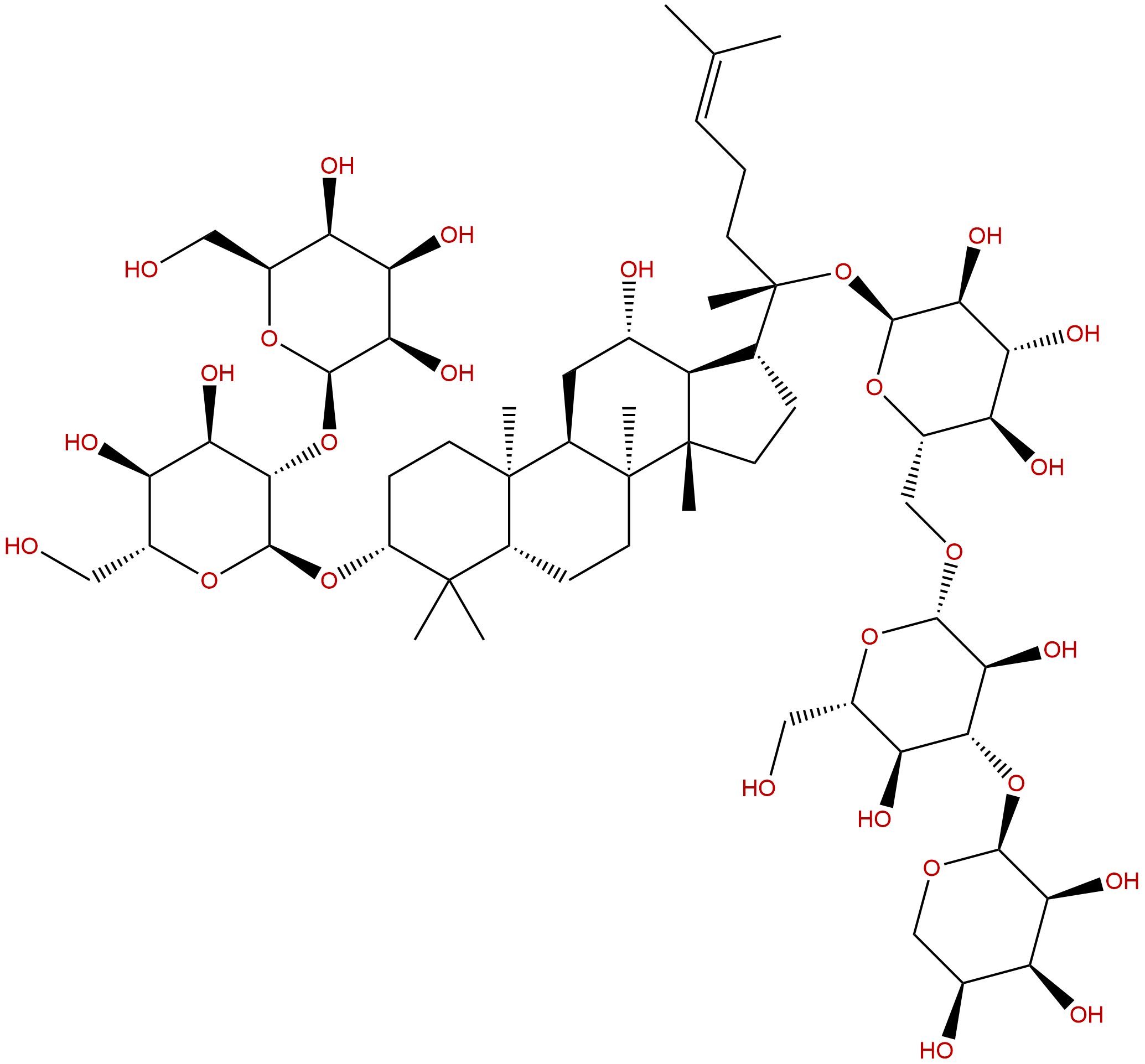


Product name: Ginsenoside Ra3
Synonym name:
Catalogue No.: BP3458
Cas No.: 90985-77-6
Formula: C59H100O27
Mol Weight: 1241.42
Botanical Source:
Physical Description:
Type of Compound: Triterpenoids
Purity: 95%~99%
Analysis Method: HPLC-DAD or/and HPLC-ELSD
Identification Method: Mass, NMR
Packing: Brown vial or HDPE plastic bottle
Storage: Store in a well closed container, protected from air and light. Put into refrigerate or freeze for long term storage.
Whenever possible, you should prepare and use solutions on the same day. However, if you need to make up stock solutions in advance, we recommend that you store the solution as aliquots in tightly sealed vials at -20℃. Generally, these will be useable for up to two weeks.
The product could be supplied from milligrams to grams
Inquire for bulk scale.
For Reference Standard and R&D, Not for Human Use Directly.
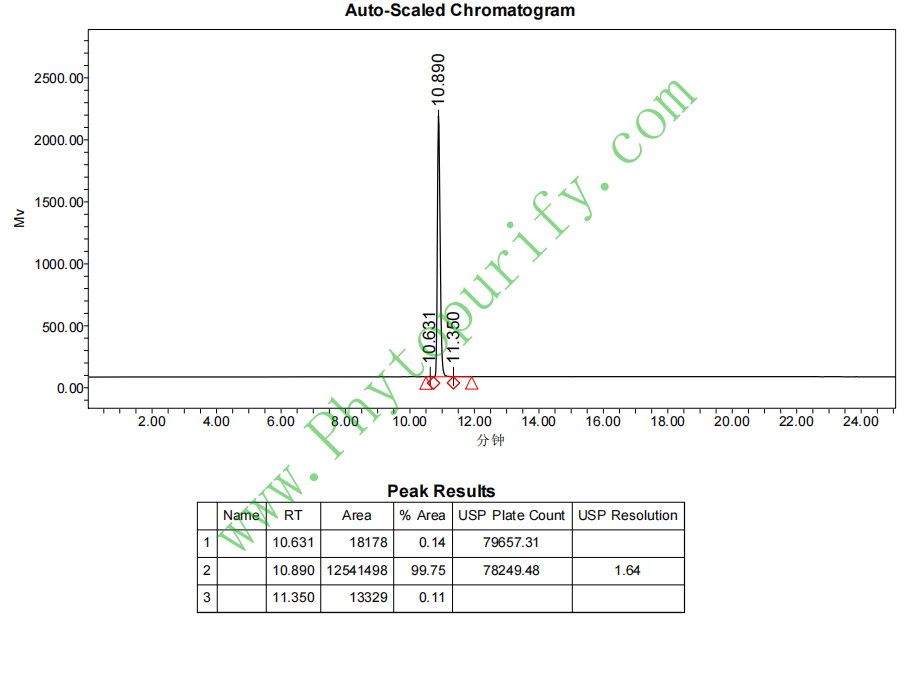
HPLC of Ginsenoside Ra3
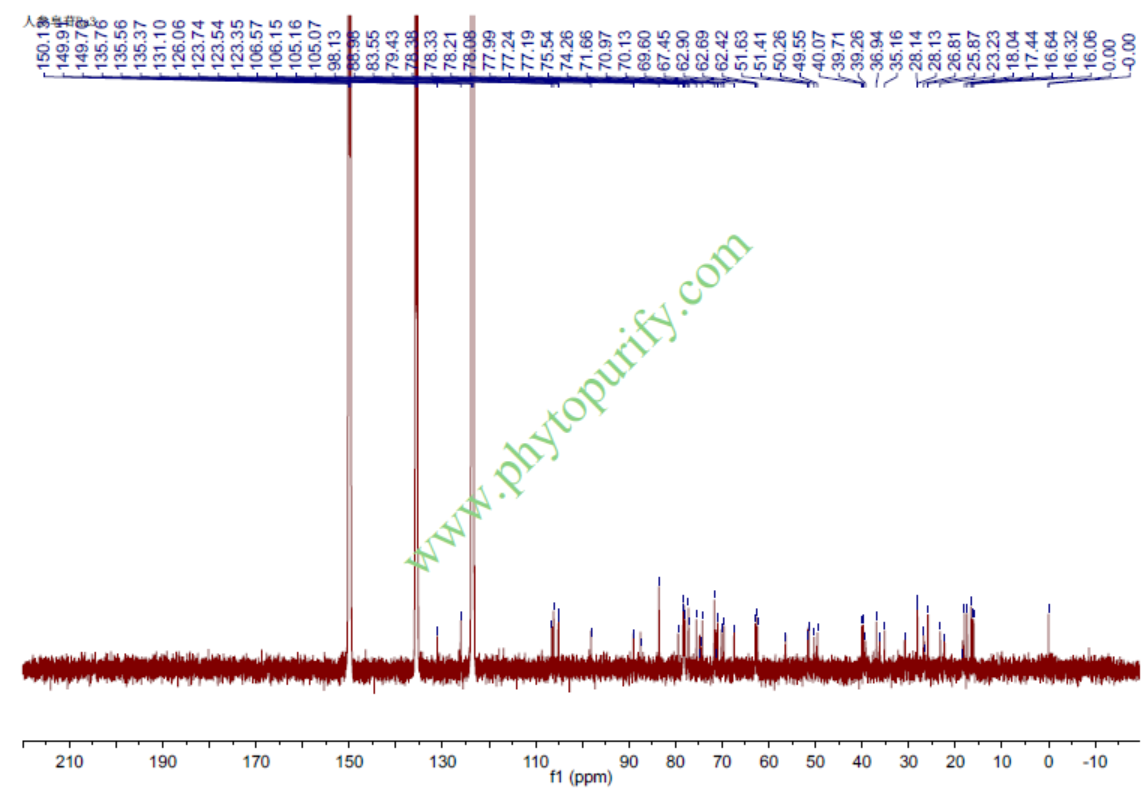
NMR of Ginsenoside Ra3
Storage conditions:Short-term storage at 2~8℃, long-term storage at -20 ~ -80℃
436.2100
1.6421
1.6419
.4320
.4476
.1097
Low
67.7956
7.3154
Yes
No
No
No
No
No
0.0
Yes
No
No
No
Ginsenoside Ra3 is a traditional precious medicinal herb derived from ginseng(Panax ginseng)Natural triterpenoid saponins extracted through separation and extraction. Its CAS number is 90985-77-6, molecular formula is C59H100O27, and molecular weight is as high as 1241.4200 g/mol. It belongs to one of the rare ginsenosides with complex molecular structure and large molecular weight. In the large family of ginsenosides, they are mainly divided into damaane type (such as Rb1, Rg1) and oleanane type according to the different glycoside structures. Ginsenoside Ra3 belongs to the damaane type saponins, which are structurally linked to multiple sugar groups, endowing them with unique physicochemical properties and biological activity.
Ginseng, as the "king of all herbs", has a history of thousands of years of application in traditional East Asian medicine, mainly used for tonifying qi, promoting diuresis, and calming the mind. Modern pharmacological research has revealed that the many benefits of ginseng are closely related to its abundant saponin components. Ginsenoside Ra3, as one of the important active ingredients, has shown significant effects in recent years due to its remarkable properties anticancer activity And potential Cardiovascular protective effect And it has received widespread attention from researchers. According to database information, its function involves multiple key biological targets, including SELP, ACE, NOS3, AGTR1, and VEGFA, which are closely related to cardiovascular core pathophysiological processes such as inflammation, vascular tension, endothelial function, and angiogenesis. Therefore, ginsenoside Ra3 is not only an ideal molecule for studying the pharmacological substance basis of ginseng, but also a potential lead compound for developing new cardiovascular disease treatment drugs. This article will provide a systematic professional science popularization interpretation of this natural product from its chemical structure, plant origin, pharmacological mechanism, medicinal properties, and research prospects.
The chemical structure of ginsenoside Ra3 is the material basis for its biological activity. The SMILES string provides a detailed description of the stereochemistry and connectivity of the complex molecule: a damaane type tetracyclic triterpenoid sapogenin (aglycone) is linked to multiple glycosides, including glucose, rhamnose, etc., through glycosidic bonds, forming a highly glycosylated structure. The structural characteristics of these polyhydroxy and polysaccharide chains directly determine their physical and chemical properties.
From the analysis of the provided pharmacological parameters:
- Molecular weight (MW)1241.4220, far exceeding conventional small molecule drugs (usually<500 Da), suggests that it may have a large spatial volume and complex molecular recognition properties.
- Topological Polarity Surface Area (TPSA)Up to 436.210 Å ², which is closely related to the presence of a large number of hydroxyl groups (- OH) and ether bonds (- O -) in its molecules. High TPSA usually means high molecular polarity and strong ability to form hydrogen bonds.
- Lipid water partition coefficient (LogP/LogD)They are 1.6421 and 1.6419 respectively. LogP/LogD values are used to measure the lipophilicity of compounds. This value is between 1-3, indicating that ginsenoside Ra3 has a certain degree of amphiphilicity, but considering its huge molecular weight and extremely high TPSA, its overall properties are more inclined towards hydrophilicity.
- Water solubility The value is 0.4320 (usually measured in mg/mL or mol/L, although the database is not clear here, relative values can be referred to), combined with high TPSA and moderate LogP, it is inferred that it has some solubility in water, but may not be as good as monosaccharides or small molecule saponins.
- Permeability The Caco-2 cell permeability (Caco2_permeability) is only 0.1097, indicating that its ability to passively diffuse through intestinal epithelial cells is very low. The blood-brain barrier penetrability (BBB-permeability) is "low", which is consistent with the characteristics of large molecules and highly polar substances, meaning that it is difficult to enter the central nervous system.
In summary, ginsenoside Ra3 is a typical natural glycoside with high molecular weight, high polarity, and low permeability. Its strong hydrogen bond donor and acceptor ability (high TPSA) is the basis for its interaction with various protein targets, but at the same time, it also poses a huge challenge to its oral bioavailability.
The only natural source of ginsenoside Ra3 is the Araliaceae plant ginseng(Panax ginseng C. A. Mey.)。 Ginseng is mainly distributed in Northeast China, the Korean Peninsula, and the Far East of Russia. Its dried roots and rhizomes are famous traditional medicinal herbs. In China, ginseng is known as a "top-quality" medicinal herb, as recorded in the "Shennong Bencao Jing". Its nature is slightly warm, with a sweet and slightly bitter taste, and it can nourish the spleen, lungs, heart, and kidneys. It has the effects of tonifying vital energy, strengthening the pulse, nourishing the spleen and lungs, generating fluids and nourishing blood, and calming the mind and improving intelligence. In clinical practice, it is commonly used to treat diseases such as body deficiency and desire to leave, cold limbs and weak meridians, spleen deficiency and insufficient food intake, lung deficiency, wheezing and cough, fluid damage and thirst, internal heat and thirst reduction, qi and blood deficiency, chronic illness and deficiency, palpitations and insomnia, impotence and uterine coldness.
In Korea (Korean ginseng) and Japan, ginseng also has a long history of application and is regarded as a treasure for enhancing physical strength, resisting fatigue, improving immunity, and promoting health. Traditional applications often take the form of decoction, soaking in wine, stewing, or making into pills and powders. Its therapeutic effect is the result of the combined action of multiple active ingredients (including ginsenosides, polysaccharides, peptides, etc.). Ginsenoside Ra3, as a rare saponin with relatively low content in ginseng, is an important node in the overall pharmacological network of ginseng. The expressions of "tonifying qi and activating blood circulation" and "promoting circulation and nourishing the heart" in traditional medicine have formed an interesting ancient and modern correspondence with the scientific connotation of the effect of ginsenoside Ra3 on cardiovascular related targets discovered in modern research. This reflects the scientific inheritance from traditional experience to modern material foundation research, and also provides historical basis and inspiration for further exploring its specific functions.
The existing description clearly indicates that ginsenoside Ra3 has "anti-cancer activity", while the target information provided by the database strongly points to it Cardiovascular protection The core potential. This seemingly different direction actually reflects the characteristics of natural products with multiple targets and pathways. The following will elaborate on its possible mechanism of action by combining its five key targets.
1. Core target analysis and cardiovascular protection mechanism:
Angiotensin converting enzyme (ACE) and angiotensin II receptor 1 (AGTR1)These are two core targets in the renin angiotensin aldosterone system (RAAS). ACE catalyzes the conversion of angiotensin I into the potent vasoconstrictor angiotensin II (Ang II), which primarily exerts its effects on hypertension, vascular inflammation, and fibrosis through AGTR1. If ginsenoside Ra3 can inhibit ACE activity or antagonize AGTR1, it can effectively dilate blood vessels, lower blood pressure, reduce cardiac afterload, and inhibit myocardial remodeling and vascular damage caused by excessive activation of RAAS. This is the direct and classic pathway through which it exerts cardiovascular protective effects.
Nitric oxide synthase 3 (NOS3, also known as endothelial NOS)NOS3 is a key enzyme that catalyzes the production of nitric oxide (NO) in endothelial cells. NO is an endogenous vasodilator that has anti platelet aggregation, inhibition of smooth muscle cell proliferation, anti-inflammatory effects, and protection of endothelial function. Upregulation or activation of NOS3 and increase the bioavailability of NO are important strategies to improve endothelial dysfunction, prevent atherosclerosis and hypertension. The potential regulatory effect of ginsenoside Ra3 on NOS3 may protect the cardiovascular system by enhancing endothelial dependent vasodilation.
Vascular endothelial growth factor A (VEGFA)VEGFA is a core factor regulating angiogenesis. In ischemic cardiovascular diseases such as myocardial infarction and peripheral arterial disease, moderate promotion of VEGFA expression can stimulate the establishment of collateral circulation and improve blood supply to ischemic tissues, known as "therapeutic angiogenesis". Ginsenoside Ra3 may promote protective angiogenesis under conditions such as myocardial ischemia by regulating VEGFA. However, VEGFA promotes pathological angiogenesis in tumors, which is partially associated with its' anticancer activity '.
P-selectin (SELP)SELP is an adhesion molecule expressed on the surface of activated platelets and endothelial cells, mediating the initial rolling and adhesion of white blood cells (such as neutrophils and monocytes) at the site of inflammation, and is an early key event in the inflammatory response. In cardiovascular pathological processes such as atherosclerosis and ischemia-reperfusion injury, inhibition of SELP can reduce the infiltration of leukocytes into the vascular wall, thereby reducing inflammatory reaction and tissue damage. Ginsenoside Ra3 acts on SELP, suggesting that it has anti-inflammatory and anti atherosclerosis potential.
2. Multi target synergistic network:
Ginsenoside Ra3 may not strongly inhibit or activate a single target, but rather regulate multiple targets simultaneously at moderate intensity, forming a synergistic network effect by inhibiting ACE/AGTR1 and activating NOS3 Improve vascular tone and endothelial function By regulating VEGFA in specific pathological environments Promote beneficial vascular reconstruction By inhibiting SELP Containing vascular inflammation This multi-target and multi pathway mild regulation is in line with the principles of "holistic regulation" and "strengthening the body and consolidating the foundation" in traditional Chinese medicine. It may be particularly suitable for complex diseases such as cardiovascular disease, which have multiple factors and chronic progression, to improve the internal environment at the root rather than just controlling a single symptom.
3. Association of anti-cancer activity:
Its anti-cancer activity may be achieved through indirect mechanisms. For example, by regulating immunity (possibly related to SELP mediated inflammation regulation), inhibiting tumor associated angiogenesis (regulating the VEGFA pathway), or inducing tumor cell differentiation and apoptosis (common mechanisms of saponin components). Cardiovascular protection and anti-cancer may seem different, but there are shared pathways in biological processes such as cell proliferation, apoptosis, inflammation, and angiogenesis, which provide a biological basis for the pleiotropy of ginsenoside Ra3.
To develop ginsenoside Ra3 into a modern drug, an objective evaluation of its pharmacological properties is necessary. We usually use Lipinski's Rule of Five (Ro5) as an empirical rule for preliminary screening of orally active small molecules. Compare with Ro5:
1. Hydrogen bond donor number (HBD)>5: Its structure is rich in hydroxyl groups, with HBD far exceeding 5.
2. The number of hydrogen bond acceptors (HBA) is greater than 10: there are extremely many oxygen atoms in the molecule, and HBA far exceeds 10.
3. Molecular weight (MW)>500:1241.42, far exceeding 500.
4. The lipid water partition coefficient LogP is greater than 5:1.64, which is consistent.
Obviously, ginsenoside Ra3 seriously violates three of them (HBD, HBA, MW) and completely does not meet the definition of Ro5 as a small molecule with good oral absorption. This is highly consistent with the results of its physical and chemical property analysis:High polarity, large molecules, low permeability。
Further analysis based on other pharmacological parameters:
- absorb The extremely low Caco-2 permeability (0.1097) and moderately low predicted effective permeability (Peff: 0.4476) suggest that its oral bioavailability is likely to be very low. It may mainly be absorbed through the hydrolysis of some glycosides by gut microbiota, converting them into secondary saponins (such as Compound K), which is also the main metabolic and functional pathway of many prototype ginsenosides in vivo.
- distribution The plasma protein binding rate (PPB) is about 67.8%, which is at a moderate level, indicating that some free drugs can be distributed to tissues. But the BBB penetration is' low ', which clearly excludes the direct role of the central nervous system.
- Metabolism and toxicity The Ames test, chromosomal aberration, hERG inhibition, skin sensitization, respiratory sensitization, phototoxicity and other toxicity prediction results are all negative or "none/no", indicating a low risk of genetic toxicity and acute toxicity. The prediction of serum alkaline phosphatase (Ser_LK) is "yes", indicating that its potential impact on the liver may need attention, but other liver enzymes (GGT, AST, ALT) did not show positive results, and the overall liver toxicity signal is weak. The maximum recommended therapeutic dose (MRTD) prediction is' yes', indicating an acceptable safety window at a reasonable dose.
- Feasibility of synthesis The synthetic accessibility index is 7.3154 (the lower the value, the easier it is to synthesize). Considering its complex sugar chains and multiple chiral centers, full chemical synthesis is extremely challenging and costly. Currently and in the future, the extraction, isolation, or utilization of biosynthesis (such as synthetic biology and enzyme catalysis) from ginseng remains its main source.
Conclusion Ginsenoside Ra3 itself as a The prospect of developing prototype compounds directly into oral small molecule chemical drugs is bleak Its main value lies in: 1) serving as Pharmacological probes Used to study the deep mechanism of ginseng's cardiovascular protective effect; 2) As lead compound It can be structurally optimized, such as simplifying sugar chains, preparing glycosides or low glycosylated derivatives, to improve its pharmacokinetic properties; 3) Developed as Injection preparation(such as intravenous administration for acute myocardial ischemia), bypassing absorption barriers; Or 4) as Health supplements or traditional Chinese medicine formulas The key quality marker components are synergistically utilized to achieve overall therapeutic effects.
At present, there are relatively few specialized studies on ginsenoside Ra3 compared to mainstream saponins such as Rb1 and Rg1. Most studies mention it as a component of total ginsenosides or extracts from specific parts of ginseng. The existing literature and database information have identified its targets related to anti-cancer and cardiovascular protection, which provides direction for targeted in-depth research.
Current research status:
1. basic research Mainly focused on isolating and identifying Ra3 from various parts of ginseng (roots, stems, leaves, fruits), and preliminarily evaluating its in vitro activity, such as inhibiting the proliferation of specific cancer cells and regulating the function of vascular endothelial cells. The research on the mechanism of action is still in its infancy, mostly based on network pharmacology prediction or preliminary molecular docking simulation. In depth validation of cell signaling pathways and in vivo pharmacological experiments need to be strengthened.
2. Analytical techniques Technologies such as high-performance liquid chromatography (HPLC) and liquid chromatography-mass spectrometry (LC-MS) have been used for qualitative and quantitative analysis of Ra3, providing methods for its quality control.
Future application prospects and research directions:
1. In depth mechanism clarification Using techniques such as gene knockout/knockdown, reporter genes, and co precipitation (Co IP), the regulatory effects on ACE, NOS3, SELP targets and downstream signaling pathways (such as AKT/eNOS, NF - κ B, etc.) were empirically demonstrated in cell and animal models, and a clear "compound target pathway phenotype" action map was drawn.
2. Structural modification and optimization Using Ra3 as the lead compound, its glycosylation mode can be modified through synthetic biology methods, or its aglycone (protopanaxadiol/triol) derivatives can be prepared through chemical semi synthesis, aiming to obtain candidate molecules with higher activity, better oral bioavailability, or stronger targeting.
3. New delivery system To address the issues of poor water solubility and permeability, research is being conducted on delivery technologies such as nano formulations (such as liposomes and polymer nanoparticles), phospholipid complexes, and self microemulsions to improve oral absorption or achieve targeted delivery.
4. Preclinical and clinical research: Carry out systematic pharmacokinetic, toxicological and pharmacodynamic evaluation of disease models (such as hypertension, atherosclerosis, myocardial ischemia models) on the basis of clarifying the mechanism and optimizing the preparation, and accumulate data for its final clinical application.
5. As a quality marker In the process of modernizing traditional Chinese medicine, ginsenoside Ra3 can serve as one of the important chemical markers for evaluating the quality of ginseng medicinal materials, extracts, and related health products, and is associated with its cardiovascular protective effects.
In summary, ginsenoside Ra3, as a rare saponin with clear biological activity in ginseng, serves as a bridge connecting the wisdom of traditional Chinese medicine with modern life sciences. Despite the challenges it faces as a proprietary drug, deep exploration and modification through modern science and technology have the potential to lead to the development of new cardiovascular treatment drugs or high-end functional products with independent intellectual property rights, demonstrating broad application prospects.
