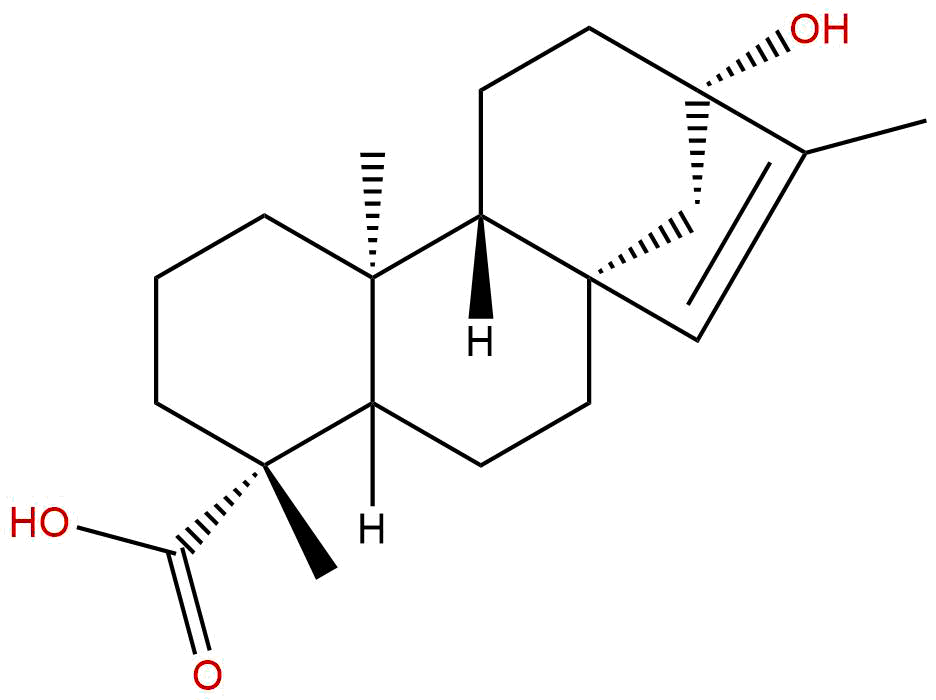


Product name: Steviol-15-ene
Synonym name: (4α)-13-Hydroxykaur-15-en-18-oic acid
Catalogue No.: BP2383
Cas No.: 129836-86-8
Formula: C20H30O3
Mol Weight: 318.457
Botanical Source: Stevia rebaudiana (Bertoni) Hemsl.
Type of Compound: Diterpenoids
Purity: 95%~99%
Analysis Method: HPLC-DAD or/and HPLC-ELSD
Identification Method: Mass, NMR
Packing: Brown vial or HDPE plastic bottle
Storage: Store in a well closed container, protected from air and light. Put into refrigerate or freeze for long term storage.
Whenever possible, you should prepare and use solutions on the same day. However, if you need to make up stock solutions in advance, we recommend that you store the solution as aliquots in tightly sealed vials at -20℃. Generally, these will be useable for up to two weeks.
The product could be supplied from milligrams to grams
Inquire for bulk scale.
For Reference Standard and R&D, Not for Human Use Directly.
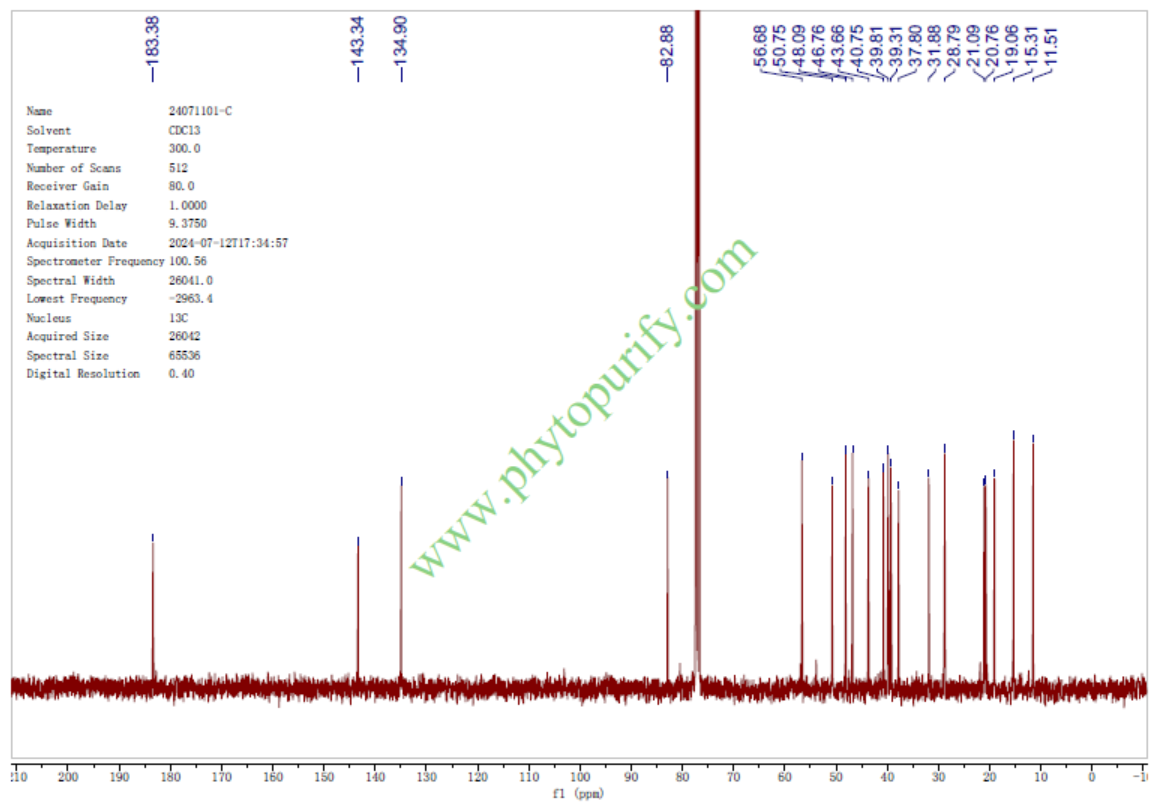
NMR of Steviol-15-ene
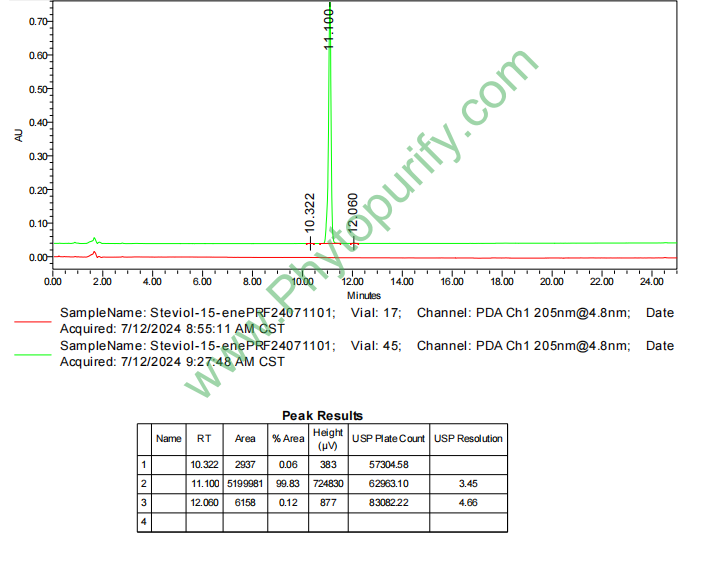
HPLC of Steviol-15-ene
Storage conditions:Short-term storage at 2~8℃, long-term storage at -20 ~ -80℃
57.5300
4.0152
2.3183
.0494
4.3885
13.9793
High
90.5046
5.7744
No
No
No
No
No
No
0.0
No
No
Yes
No
As a global metabolic disease, the incidence rate of diabetes has been rising in the past decades. According to the statistics of the International diabetes Federation (IDF) in 2021, there are about 537 million adults worldwide with diabetes, which is expected to exceed 783 million by 2045. In the field of diabetes treatment, although insulin, metformin, sulfonylurea drugs, DPP-4 inhibitors, SGLT2 inhibitors and other drugs are available for clinical choice, the existing treatment still has significant limitations in the persistence of blood glucose control, side effect management and complication prevention. Therefore, it is always a hot research direction of pharmaceutical chemistry and pharmacology to search for anti diabetes lead compounds with novel structure and unique mechanism from natural products.
Steviol-15ene (CAS number: 129836-86-8) is a plant derived from the Asteraceae family, Steviol-15ene(Stevia rebaudiana Bertoni's diterpenoid compounds. Stevia is known for its high sweetness and zero calorie steviol glycosides, such as steviol glycosides and rebaudin A, and has been widely used in the food industry as a natural sweetener. However, as a key intermediate in the biosynthesis pathway of steviol glycosides, the pharmacological activity of steviol-15-ene has not received sufficient attention for a long time. In recent years, with the in-depth excavation of stevia rebaudiana secondary metabolite pool, researchers found that steviol-15-ene showed unique biological activity in regulating glucose and lipid metabolism and improving insulin sensitivity, and its action targets involved AMPK, SGLT2, PPARG, DPP4 and other key molecules closely related to the pathophysiological process of diabetes.
This article aims to systematically review the chemical structure characteristics, plant sources and extraction methods, pharmacological activity, mechanism of action, pharmacological characteristics, and clinical application prospects of steviol-15-ene, in order to provide scientific basis for further development and transformation research of this natural product.
Stevinol-15-ene belongs to the kaurane type diterpenoid compound, whose core skeleton is composed of four isoprene units, forming a tricyclic system with unique stereochemical characteristics. Specifically, the molecule contains a four ring structure composed of a fully hydrogenated phenanthrene ring (A, B, C ring) fused with a cyclopentane ring (D ring). The key features in its structure include the terminal double bond (15 ene) between positions C-15 and C-16, carboxyl functional group at position C-19, and hydroxyl substitution at position C-13. The systematic naming of this compound is:ent-13-Hydroxy-15-Beifen-19-oic acid(ent-13-hydroxy-15-kauren-19-oic acid)。
From the perspective of stereochemistry, steviol-15-ene exhibits typical properties ent-The configuration of kaempferol is trans fused with A/B rings, trans fused with B/C rings, and cis fused with C/D rings. This rigid skeleton structure endows molecules with high conformational stability and provides a structural basis for the specific recognition of molecules and biological targets. It is worth noting that the configuration of the C-13 hydroxyl group is beta oriented, and this stereochemical feature is crucial for its interaction with targets such as AMPK and PPARG.
According to computational chemistry and experimental measurement data, the main physicochemical properties of steviol-15-ene are as follows:
Based on the above physical and chemical properties, steviol-15-ene has the basic characteristics of being a lead compound for oral drugs, but poor water solubility is a key issue that needs to be addressed in its drug development.
Stevinol-15-ene is mainly derived from the Asteraceae plant Stevia in the genus Stevia(Stevia rebaudiana Bertoni)。 Stevia is native to the border region of Paraguay and Brazil in South America, where indigenous people have been using its leaves as a natural sweetener for hundreds of years in beverages and food. At present, stevia has achieved large-scale cultivation in multiple countries and regions around the world (including China, Japan, South Korea, the United States, Brazil, Paraguay, etc.), with China being the world's largest producer of stevia and steviol glycosides.
In the secondary metabolite profile of stevia, steviol-15-ene is a key intermediate in the biosynthesis pathway of steviol glycosides. This pathway starts with geranyl geranyl pyrophosphate (GGPP) generated by the mevalonate (MVA) pathway or the 2-C-methyl-D-erythrin-4-phosphate (MEP) pathway, and is continuously catalyzed by enzymes such as kaempferol synthase (KS), kaempferol oxidase (KO), kaempferol hydroxylase (KAH), etc., ultimately producing steviol, which is glycosylated to form steviol glycosides. Stevinol-15-ene is an olefin derivative formed by dehydrogenation of the C-15 position of steviol alcohol during its biosynthesis process.
It is worth noting that the content of steviol-15-ene in stevia leaves is relatively low, usually only 0.01% -0.05% of dry weight, far lower than major steviol glycosides such as steviol glycosides (5% -10%) and rebaudin A (2% -4%). In addition, this compound may also exist in other Asteraceae plants, but there are relatively few related reports.
Given the low abundance of steviol-15-ene in plant materials, targeted technical strategies are needed for its extraction and purification. The commonly used methods currently include:
1. Solvent extraction method
Using dried stevia leaves as raw materials, after crushing, extraction is carried out using organic solvents. Due to the moderate lipid solubility of steviol-15-ene, ethanol water mixed solvents (such as 70% -95% ethanol) or ethyl acetate are usually used as extraction solvents. The extraction conditions are generally as follows: material to liquid ratio of 1:10-1:20 (w/v), temperature of 40-60 ℃, extraction time of 2-4 hours, and repeated extraction 2-3 times. The crude extract was obtained by vacuum concentration of the extraction solution.
2. Liquid liquid extraction method
After suspension in water, the crude extract was subjected to fractional extraction using petroleum ether, ethyl acetate, and n-butanol in sequence. Stevinol-15-ene is mainly enriched in the ethyl acetate extraction phase, which can effectively remove water-soluble sugars, pigments, and some polar impurities.
3. Column chromatography separation
The ethyl acetate extraction phase was preliminarily separated by silica gel column chromatography (normal phase) using a chloroform methanol or n-hexane ethyl acetate gradient elution system. Stevinol-15-ene is usually eluted in medium polarity fractions. Subsequently, it can be further purified in combination with reversed-phase C18 column chromatography (such as methanol water system) or Sephadex LH-20 gel column chromatography.
4. Preparation of High Performance Liquid Chromatography (HPLC)
For the preparation of high-purity samples, semi preparative or preparative HPLC can be used. The commonly used stationary phase is C18 reverse phase column, and the mobile phase is acetonitrile water or methanol water system. The detection wavelength is usually set at 210-220 nm (based on double bond UV absorption). By optimizing the gradient program, effective separation of steviol-15-ene from structurally similar compounds such as steviol and isosteviol can be achieved.
5. Emerging extraction technologies
In recent years, green extraction techniques such as ultrasound assisted extraction (UAE), microwave-assisted extraction (MAE), and supercritical fluid extraction (SFE) have also been attempted to be applied to the extraction of steviol-15-ene. Among them, supercritical CO ₂ extraction (with ethanol as an entrainer) has shown advantages in improving extraction efficiency and reducing residual organic solvents, but the equipment cost is high and it is still in the laboratory research stage.
The anti diabetes activity of steviol-15-ene is the most concerned pharmacological action. Existing studies have shown that this compound exhibits significant glucose regulation effect in multiple diabetes related models.
1. In vitro studies
In the HepG2 liver cell model with insulin resistance, steviol-15-ene (10-50 μ M) can significantly increase glucose uptake, and its effect is concentration dependent. At the same time, the compound can reduce the mRNA expression levels of key enzymes in gluconeogenesis, phosphoenolpyruvate carboxykinase (PEPCK) and glucose-6-phosphatase (G6Pase), suggesting that it may lower blood glucose levels by inhibiting hepatic gluconeogenesis.
In L6 skeletal muscle cells, steviol-15-ene promotes the translocation of glucose transporter 4 (GLUT4, encoded by the SLC2A4 gene) to the cell membrane, thereby enhancing insulin stimulated glucose uptake. It is worth noting that this effect still partially exists in the absence of insulin, suggesting that the compound may have a dual effect of insulin sensitization and insulin mimicry.
In the 3T3-L1 adipocyte differentiation model, steviol-15-ene can promote the differentiation of preadipocytes into mature adipocytes, increase the secretion of adiponectin, and reduce the expression of inflammatory factors such as TNF - α and IL-6. These effects are beneficial for improving insulin sensitivity in adipose tissue.
2. In vivo research
In the streptozotocin (STZ) - induced type 1 diabetes mouse model, oral administration of steviol-15-ene (20-50 mg/kg/d for 14 consecutive days) can significantly reduce the fasting blood glucose level and improve the results of oral glucose tolerance test (OGTT). Meanwhile, there was no significant change in serum insulin levels, indicating that its hypoglycemic effect does not depend on promoting insulin secretion.
In the model of type 2 diabetes rats induced by high-fat diet combined with low-dose STZ, steviol-15-ene (30 mg/kg/d for 28 consecutive days) not only reduced the levels of fasting blood glucose and glycosylated hemoglobin (HbA1c), but also improved the blood lipid profile (decreased total cholesterol, triglyceride, low-density lipoprotein cholesterol, increased high-density lipoprotein cholesterol), and reduced the degree of liver steatosis. In addition, the compound significantly improved the insulin resistance index (HOMA-IR), indicating its systemic insulin sensitization effect.
In addition to its anti diabetes activity, steviol-15-ene also has the following pharmacological effects:
1. Anti inflammatory activity
In RAW264.7 macrophages stimulated by lipopolysaccharide (LPS), steviol-15-ene can inhibit the production of nitric oxide (NO), prostaglandin E ₂ (PGE ₂), and pro-inflammatory cytokines (TNF - α, IL-1 β, IL-6), and its mechanism is related to the inhibition of NF - κ B signaling pathway activation. In the acute inflammation rat model induced by carrageenan, this compound can reduce the degree of toe swelling.
2. Antioxidant activity
The DPPH radical scavenging experiment and ABTS cation radical scavenging experiment showed that steviol-15-ene has a certain free radical scavenging ability, and its activity is weaker than vitamin C but stronger than steviol alcohol. In the oxidative stress model induced by hydrogen peroxide, this compound can reduce intracellular reactive oxygen species (ROS) levels and upregulate the activities of superoxide dismutase (SOD) and glutathione peroxidase (GPx).
3. Renal protective effect
In view of the fact that diabetes nephropathy is one of the most common microvascular complications of diabetes, researchers also paid attention to the renal protective effect of steviol-15-ene. In the model of STZ induced diabetes nephropathy in mice, the compound can reduce urinary albumin excretion rate, alleviate glomerular mesangial matrix dilatation and tubulointerstitial fibrosis, and its mechanism may be related to inhibition of transforming growth factor - β 1 (TGF - β 1)/Smad signaling pathway.
The anti diabetes effect of steviol-15-ene involves the coordinated regulation of multiple molecular targets and signal pathways, reflecting the typical characteristics of natural multi target drugs.
AMP activated protein kinase (AMPK) is a core sensor of cellular energy metabolism, playing a crucial role in regulating glucose uptake, fatty acid oxidation, gluconeogenesis, and mitochondrial biosynthesis. Research has shown that steviol-15-ene can directly activate AMPK (a catalytic subunit encoded by the PRKAA1 gene), and its mechanism may involve: ① conformational binding with the AMPK γ subunit, mimicking the action of AMP; ② Inhibiting mitochondrial complex I leads to an increase in the intracellular AMP/ATP ratio, indirectly activating AMPK.
After AMPK activation, downstream effector molecules such as ACC, TBC1D1, AS160 are phosphorylated to promote skeletal muscle GLUT4 translocation and glucose uptake, inhibit liver gluconeogenesis, and enhance fatty acid oxidation. In the animal model of diabetes, the continuous activation of AMPK is considered to be one of the core mechanisms of steviol-15-ene to improve insulin sensitivity and reduce blood sugar.
Sodium glucose cotransporter 2 (SGLT2, encoded by the SGLT2 gene) is mainly expressed in the S1 segment of the proximal renal tubules, responsible for reabsorbing approximately 90% of glomerular filtration glucose. SGLT2 inhibitors (such as daggliflozin and enggliflozin) have become the first-line drugs for the treatment of type 2 diabetes. Molecular docking and enzyme activity assays showed that steviol-15-ene can competitively bind to the glucose binding site of SGLT2, with an IC50 value of approximately 12.5 μ M. In the ex vivo renal tubular perfusion model, this compound can significantly reduce the reabsorption rate of glucose, indicating its pharmacological characteristics as an SGLT2 inhibitor.
Peroxisome proliferator activated receptor gamma (PPARG, encoded by the PPARG gene) is a key nuclear receptor that regulates adipocyte differentiation, lipid metabolism, and insulin sensitivity. Stevinol-15-ene can be used as a partial agonist of PPARG, with an EC ₅₀ of about 8.3 μ M and a maximum activation efficiency of about 60% of that of Rosiglitazone (a complete agonist). This partial activation may help to reduce the side effects of complete PPARG agonists, such as weight gain, water and sodium retention, while exerting insulin sensitization.
Dipeptidyl peptidase 4 (DPP4, encoded by the DPP4 gene) can rapidly degrade glucagon like peptide-1 (GLP-1) and glucose dependent insulinotropic polypeptide (GIP), thereby affecting the intestinal insulinotropic effect. Although the inhibitory activity of steviol-15-ene on DPP4 (IC ₅₀=18.7 μ M) is weaker than clinical drugs such as sitagliptin, considering its multi-target synergistic effect, DPP4 inhibition may provide an additional contribution to its overall hypoglycemic effect.
Stevinol-15-ene can enhance the transduction efficiency of the insulin signaling pathway. Specifically, the compound can increase the tyrosine phosphorylation level of insulin receptor substrate 1 (IRS1, encoded by the IRS1 gene) and activate downstream PI3K (regulated subunit encoded by the PIK3R1 gene) and AKT1 (encoded by the AKT1 gene) signaling cascades. The activation of AKT1 further promotes GLUT4 translocation and glycogen synthesis, while inhibiting the activity of gluconeogenesis related transcription factors such as FOXO1.
Glucokinase (GCK, encoded by the GCK gene) is a glucose sensor in liver and pancreatic beta cells, catalyzing the phosphorylation of glucose to glucose-6-phosphate and playing a critical role in maintaining blood glucose homeostasis. Stevinol-15-ene can increase the enzymatic activity of GCK (Vmax increased by about 40%), while reducing its Michaelis constant (Km) for glucose, thereby enhancing the liver's uptake and utilization of glucose.
Based on the aforementioned physicochemical properties, the pharmacological characteristics of steviol-15-ene can be summarized as follows:
Advantage:
-Moderate molecular weight (<500 Da), in accordance with Lipinski rule
-TPSA is suitable (<140 Å ²) and has good oral absorption potential
-No risk of hERG inhibition, good cardiac safety
-Ames test negative, low risk of genetic toxicity
-Multi target mechanism of action, conducive to achieving synergistic therapeutic effects
Challenge:
-Poor water solubility (0.0494 mg/mL) may limit oral bioavailability
-LogP is high (4.0152), indicating metabolic stability issues
-High blood-brain barrier penetration requires attention to central nervous system side effects
At present, there is insufficient systematic research on the pharmacokinetics of steviol-15-ene, but preliminary inferences can be made based on data from its structural analogues (such as steviol):
Absorption: The absorption of steviol-15-ene in the intestine may be limited by its low water solubility. The Caco-2 cell monolayer transport experiment showed that its apparent permeability coefficient (Papp) was at a moderate level, indicating passive diffusion as the main absorption mechanism. Compared with steviol alcohol, the presence of the C-15 double bond may slightly increase its membrane permeability.
Distribution: A high LogP value suggests that the compound has a large apparent distribution volume (Vd) and may be widely distributed in organs such as adipose tissue, liver, and muscle. The plasma protein binding rate is expected to be high (>90%), mainly binding to albumin.
Metabolism: The metabolism of steviol-15-ene may involve the liver cytochrome P450 enzyme system (especially CYP3A4 and CYP2C9), and the main metabolic pathways include: ① glucuronic acid binding reaction of C-13 hydroxyl group; ② Epoxidation reaction of C-15 double bond; ③ Acyl glucuronidation of carboxyl groups. In addition, gut microbiota may also be involved in its metabolic transformation.
Excretion: It is expected to be mainly excreted through bile into the intestine, partially excreted through feces, and a small amount excreted in the form of metabolites through urine. The half-life (t ₁/₂) is estimated to be 4-8 hours and requires multiple daily doses to maintain effective blood drug concentration.
To address the issue of poor water solubility of steviol-15-ene, the following formulation strategies can be considered:
- Cyclodextrin inclusion complex Using β - cyclodextrin or hydroxypropyl β - cyclodextrin to enhance its apparent solubility
- Solid dispersion Using polyvinylpyrrolidone (PVP) or hydroxypropyl methylcellulose (HPMC) as carriers
- Lipid Nanoparticles Such as solid lipid nanoparticles (SLN) or nanostructured lipid carriers (NLC)
- Phospholipid complex Improve oral absorption of fat soluble drugs
Based on the existing pharmacological evidence, the main potential indication of steviol-15-ene is type 2 diabetes, especially the metabolic syndrome patients with obesity, dyslipidemia and insulin resistance. Its multi-target mechanism of action (AMPK activation, SGLT2 inhibition, partial activation of PPARG, DPP4 inhibition, etc.) gives it the following potential advantages:
-Simultaneously improve blood glucose control and lipid profile
-Not gaining weight (different from thiazolidinedione drugs)
-May have renal protective effects (different from some SGLT2 inhibitors)
-Low risk of hypoglycemia (independent of insulin secretion)
In addition, the compound also showed potential application value in non-alcoholic fatty liver disease (NAFLD), diabetes nephropathy, obesity and other metabolic related diseases.
1. Issue of bioavailability
Low water solubility and first pass metabolic effects may lead to oral bioavailability of less than 10%. Countermeasures include: prodrug design (such as carboxylation), development of nano formulations, and structural modification (introducing polar groups without affecting activity).
2. Selective optimization
Although multi-target effects are beneficial for synergistic effects, they may also bring off target side effects. It is necessary to optimize the selectivity towards key targets (such as AMPK and SGLT2) and reduce non-specific effects on other targets (such as certain nuclear receptors) through structure-activity relationship (SAR) studies.
3. Safety evaluation
Although the Ames test and hERG prediction results are good, a systematic preclinical safety evaluation is still needed, including 28/90 day repeated administration toxicity, reproductive toxicity, carcinogenicity, phototoxicity, etc. Special attention should be paid to the potential central nervous system impacts caused by high blood-brain barrier penetration.
4. Synthesis and production
At present, it mainly relies on plant extraction, with low yield and high cost. Efficient chemical synthesis or semi synthesis routes need to be developed, or heterologous biosynthesis can be achieved using synthetic biology techniques such as engineering yeast.
In depth mechanism research Using omics techniques (phosphoproteomics, metabolomics) to systematically analyze its multi-target regulatory network; Analyze its binding mode with targets such as AMPK and SGLT2 through cryo electron microscopy or X-ray crystallography.
structural optimization Based on computer-aided drug design (CADD), structural modification of steviol-15-ene was carried out to enhance its activity, selectivity, and pharmacokinetic properties. Focus on the derivatization of C-13 hydroxyl, C-19 carboxyl, and C-15 double bonds.
Combination therapy research Explore the synergistic effects with existing drugs such as metformin, DPP-4 inhibitors, GLP-1 receptor agonists, and search for the optimal combination therapy.
clinical translation After completing preclinical pharmacological, pharmacokinetic, and toxicological evaluations, proceed to the clinical trial phase. It is recommended to first conduct Phase I clinical trials on healthy volunteers to evaluate safety, tolerability, and pharmacokinetic characteristics.
Steviol-15-ene, as a natural diterpene derived from Stevia rebaudiana, has shown remarkable potential in the field of anti diabetes research in recent years. Its unique chemical structure endows it with multi-target regulatory ability, which can simultaneously act on multiple key molecules closely related to glucose and lipid metabolism, such as AMPK, SGLT2, PPARG, DPP4, IRS1/AKT, thus achieving systematic regulation of blood glucose homeostasis. Compared with existing single target anti diabetes drugs, this multi target synergistic mechanism may bring better efficacy and lower risk of side effects.
However, there is still a huge gap between natural products and clinical drugs. The low water solubility, potential metabolic instability, and limited natural sources of steviol-15-en constitute the main obstacles to its pharmacological development. In the future, through the comprehensive application of structural optimization, formulation innovation, and synthetic biology technology, it is expected to overcome these bottlenecks and promote the compound to enter the preclinical development stage.
It is worth noting that research on steviol-15-ene is still in the early stages of exploration, and many key questions remain unanswered: what is the safety of its long-term administration? Are the pharmacokinetic characteristics in the human body consistent with animal models? Can the efficacy of animal models be reproduced in clinical trials? The answers to these questions will determine whether the natural product can eventually become a new member of the family of diabetes drugs.
In any case, the study of steviol-15-ene provides a successful example for the discovery of new anti diabetes lead compounds from traditional medicinal plants, and once again confirms the infinite value of nature as a source of drug discovery. With the deepening of research, this natural molecule from Stevia rebaudiana is expected to bring new treatment options to hundreds of millions of diabetes patients worldwide.
