


Product name: Ginsenoside F3
Synonym name:
Catalogue No.: BP0655
Cas No.: 62025-50-7
Formula: C41H70O13
Mol Weight: 770.998
Botanical Source: Ginseng Radix Et Rhizoma
Physical Description:
Type of Compound: Triterpenoids
Purity: 95%~99%
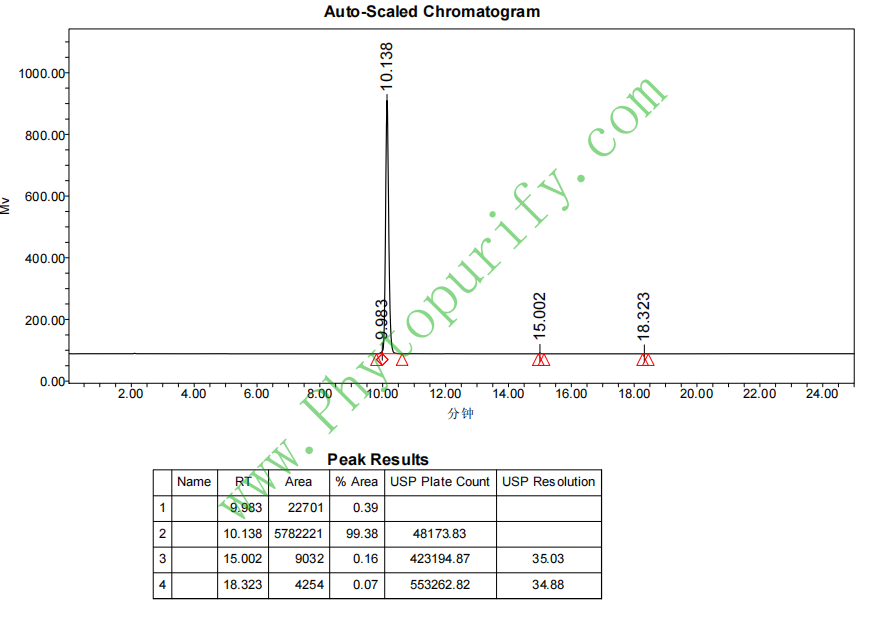
Analysis Method: HPLC-DAD or/and HPLC-ELSD
Identification Method: Mass, NMR
Packing: Brown vial or HDPE plastic bottle
Storage: Store in a well closed container, protected from air and light. Put into refrigerate or freeze for long term storage.
Whenever possible, you should prepare and use solutions on the same day. However, if you need to make up stock solutions in advance, we recommend that you store the solution as aliquots in tightly sealed vials at -20℃. Generally, these will be useable for up to two weeks.
The product could be supplied from milligrams to grams
Inquire for bulk scale.
Chengdu Biopurify Phytochemicals Ltd. is a leading company in the research, development, manufacture and marketing of High Quality Phytochemicals and Extracts(especially Active Ingredients from Traditional Chinese Medicine,TCM), Natural Active Pharmaceutical Ingredients worldwide.
The main services:
A. Supply active ingredients and reference standards of TCM, from mgs to kgs scale
B. Custom extraction and purification, target Herb Active Ingredients
C. Custom synthesis and semi-synthesis for Natural Active Ingredients
D. CR(contract research), CM(contract manufacture) and PD(process development) services from lab scale, pilot scale to commercial scale(GMP is also available)
E. TCM compounds library for drug screen,more than 3000 compounds available, many of them are rare and unique.
HPLC of Ginsenoside F3
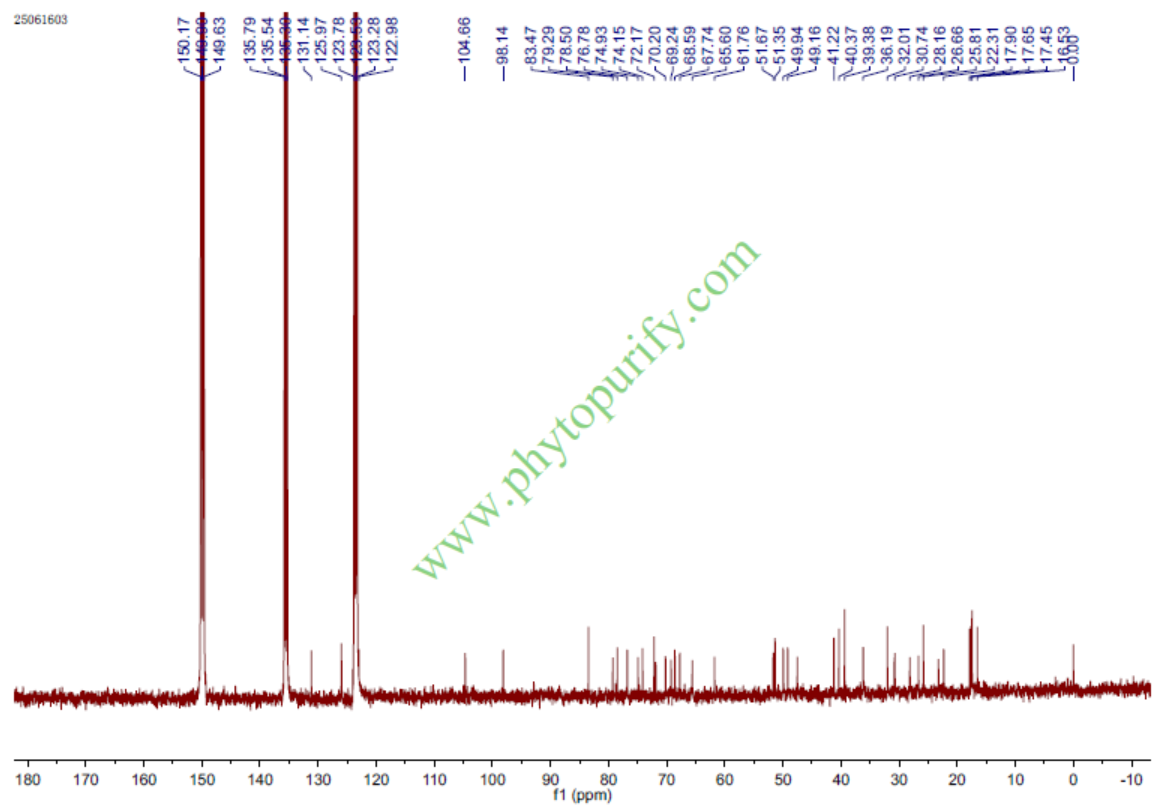
NMR of Ginsenoside F3
Storage conditions:Short-term storage at 2~8℃, long-term storage at -20 ~ -80℃
218.9900
2.9638
2.9636
.0285
.6100
.2859
Low
75.4164
6.0193
No
No
No
No
No
No
0.0
Yes
No
No
No
Ginseng(Panax ginseng C. As a traditional precious medicinal herb, the efficacy of "strengthening the body and consolidating the foundation" of A. Mey has been proven by thousands of years of clinical practice. Modern pharmacological research has shown that the various biological activities of ginseng are mainly attributed to its abundant saponin components - ginsenosides. Ginsenosides are mainly divided into two categories based on the different glycosidic frameworks: damane type and oleanane type, with damane type saponins being the main active ingredient. Ginsenoside F3 (CAS number: 62025-50-7) is a rare saponin that has attracted much attention in recent years. Its uniqueness lies in that it is mainly isolated from ginseng leaves, rather than the traditional main root. Early studies have revealed its significant immunomodulatory effects, which can bidirectionally regulate the balance of type 1 (Th1) and type 2 (Th2) cytokines, demonstrating great potential as an immunomodulatory agent. With the rapid development of immunology and molecular biology techniques, the mechanism of action of ginsenoside F3 has been continuously analyzed, and its interaction with key immune signaling pathway targets such as Toll like receptor 4 (TLR4), signal transduction and transcription activators (STATs), and nuclear factor kappa B (NF - κ B) has gradually become clear. This article aims to systematically review the chemical properties, plant sources, pharmacological activities, molecular mechanisms of action, medicinal properties, and clinical application prospects of ginsenoside F3, in order to provide comprehensive scientific references for the deep development and transformation research of this natural product.
Ginsenoside F3 belongs to the dammarane type tetracyclic triterpenoid saponin. Its molecular formula is C ₄₂ H ₇₄ O ₁₄, and its molecular weight is 770.9980. Its chemical structural characteristics are: the glycoside is Protopanaxadiol (PPD), which is connected to a disaccharide chain (Glc (β 1-2) Ara) composed of glucose (Glc) and arabinose (Ara) at the C-3 position, and a single glucose unit at the C-20 position. This specific glycosylation pattern is the structural basis that distinguishes it from other ginsenosides (such as Rb1, Rc, Rd, etc.) and produces unique biological activities.
From the analysis of physical and chemical properties, the calculated value of the lipid water partition coefficient (LogP) of ginsenoside F3 is about 2.96, indicating that it has a certain lipophilicity, but not high lipid solubility. Its topological polar surface area (TPSA) is as high as 218.99 Å ², mainly attributed to multiple hydroxyl groups and oxygen atoms on the sugar ring in the molecule, indicating strong molecular polarity. The theoretical water solubility value is relatively low (about 0.0285 mg/mL), making it a poorly soluble compound, which to some extent limits its bioavailability. In the early screening of drug safety, ginsenoside F3 did not show significant hERG potassium channel inhibitory activity (low risk of QT interval prolongation), and the Ames test result was negative (0.0), indicating that it has no genetic toxicity risk. In addition, its blood-brain barrier permeability is predicted to be "low", indicating that it mainly acts on the peripheral system, and its direct effect on the central nervous system may be limited. These basic pharmacokinetic parameters provide a key starting point for subsequent formulation design and pharmacokinetic studies.
Traditionally, research and development of ginsenosides have mainly focused on the main and lateral roots of ginseng. However, ginsenoside F3, as a rare saponin, has a relatively low content in roots and a relatively abundant content in ginseng leaves. This has opened up new avenues for utilizing non-traditional parts of ginseng (leaves, stems, flowers, fruits) for resource development, which not only enhances the comprehensive utilization value of ginseng resources, but also conforms to the concept of sustainable development.
The extraction and purification of ginsenoside F3 from ginseng leaves usually follow the conventional process of natural product chemistry, combined with modern separation techniques. The general steps are as follows:
1. Extract After crushing the dried ginseng leaves, alcohol solvents such as methanol and ethanol are usually used for reflux extraction or ultrasound assisted extraction. In recent years, green extraction technologies such as pressurized liquid extraction and microwave-assisted extraction have also been applied to improve extraction efficiency and reduce solvent consumption.
2. enrichment After vacuum concentration, the crude extract is preliminarily enriched using macroporous adsorption resins (such as D101 and AB-8). Wash with water to remove impurities, then perform gradient elution with ethanol solutions of different concentrations to collect elution sites rich in saponins.
3. Separation and Purification The enriched saponin fraction is further separated by normal phase or reverse phase silica gel column chromatography. Gradient elution is often performed using solvent systems such as chloroform methanol water or ethyl acetate methanol water. In order to obtain high-purity ginsenoside F3, it is usually necessary to use high-performance liquid chromatography (HPLC), especially preparative or semi preparative HPLC, with C18 reverse phase chromatography column as the stationary phase and acetonitrile water as the mobile phase for fine separation.
4. appraisal The purified compound was structurally confirmed by spectroscopic techniques such as mass spectrometry (MS) and nuclear magnetic resonance (NMR, including ¹ H-NMR and ¹ ³ C-NMR), and compared with the standard data of CAS number 62025-50-7 reported in the literature.
The core pharmacological activity of ginsenoside F3 is concentrated in the field of immune regulation and extends to its related anti-inflammatory and anti-tumor effects.
Immune enhancement and bidirectional regulatory activity This is the most significant feature of ginsenoside F3. Research has shown that it is not simply a one-way enhancement or inhibition of immunity, but can regulate the balance of the immune system according to the body's state. In immunocompromised or immunocompetent states, ginsenoside F3 can promote the production of type 1 cytokines such as interleukin-2 (IL-2) and interferon - γ (IFN - γ), thereby enhancing cellular immune response and facilitating the clearance of intracellular pathogens and tumor cells. Meanwhile, it can also upregulate the expression of type 2 cytokines such as interleukin-4 (IL-4) and interleukin-10 (IL-10). IL-10 is an important anti-inflammatory factor, while appropriate Th2 responses play a role in humoral immunity and anti parasitic infections. This ability to regulate Th1/Th2 balance makes it potentially valuable in the treatment of diseases caused by immune imbalance, such as chronic infections, early autoimmune diseases, allergies, etc.
anti-inflammatory effect Inflammation is the common pathological basis of various diseases. Ginsenoside F3 exerts anti-inflammatory effects by inhibiting the excessive production of pro-inflammatory mediators such as TNF - α, IL-1 β, IL-6. Its function is closely related to the excessive activation of classic inflammatory signaling pathways such as NF - κ B. In animal models of experimental colitis, arthritis, etc., ginsenoside F3 has shown the effect of reducing tissue inflammatory damage.
Antitumor immune regulation Immune suppression often exists in the tumor microenvironment. The anti-tumor effect of ginsenoside F3 may not only be demonstrated by directly inhibiting the proliferation of certain tumor cells (further research is needed to confirm this), but more importantly, it may be mediated through immune regulation. For example, by promoting the secretion of cytokines such as IFN - γ, activating the functions of cytotoxic T lymphocytes (CTLs) and natural killer (NK) cells; Alternatively, by regulating the function of regulatory T cells (Tregs), the tumor immune suppressive microenvironment can be improved, thereby indirectly inhibiting tumor growth and metastasis.
Other potential activities Preliminary studies also suggest that ginsenoside F3 may have certain effects on metabolic disorders (such as improving insulin resistance) and neuroprotection, but these activities still require more systematic and in-depth research to verify.
The immunopharmacological effects of ginsenoside F3 are achieved through interactions with multiple key immune signaling molecules and pathways. According to existing research, its core mechanism of action network involves the following targets and pathways:
TLR4/NF - κ B signaling pathway Toll like receptor 4 (TLR4) is an important receptor that recognizes pathogen related molecular patterns and initiates innate immunity. Ginsenoside F3 may serve as a regulator of the TLR4 pathway. Research has shown that it can inhibit the myeloid differentiation factor 88 (MyD88) dependent pathway downstream of TLR4 under specific conditions, thereby suppressing the nuclear translocation and transcriptional activity of nuclear factor kappa B (NF - κ B), and reducing the expression of pro-inflammatory factors such as TNF - α and IL-6. This is one of the core mechanisms by which it exerts anti-inflammatory effects.
JAK/STAT signaling pathway This pathway is the center of cytokine signaling transduction. Ginsenoside F3 has regulatory effects on various STAT proteins.
Direct regulation of cytokine network Ginsenoside F3 can directly or indirectly affect the gene expression and protein secretion of various cytokines.
Immune checkpoint and regulatory T cell (Treg) related targets:
In summary, the mechanism of action of ginsenoside F3 exhibits multi-target and networked characteristics. It acts like an "immune tuner" by acting on upstream signaling nodes such as TLR4, STATs, NF - κ B, ultimately finely regulating the balance of downstream key effector molecules such as IL-2, IFN - γ, IL-4, IL-10, TGF - β 1, and may affect immune regulatory key molecules such as CTLA-4 and FOXP3, thereby achieving systematic regulation of the body's immune status.
Although the pharmacological activity of ginsenoside F3 is clear, its medicinal process still faces challenges common to natural products, mainly reflected in its pharmacokinetic properties.
Absorption and bioavailability As mentioned earlier, ginsenoside F3 has poor water solubility, high molecular weight, and high TPSA, which may result in low oral bioavailability. The prototype drug is difficult to absorb in the gastrointestinal tract and is easily metabolized by gut microbiota, undergoing deglycosylation and other transformations to generate secondary aglycones (such as Compound K), whose activity may be different from the prototype. Improving its bioavailability is the primary challenge in developing its oral formulations.
distribution The predicted blood-brain barrier permeability is low, indicating that it is mainly distributed in peripheral tissues and organs. The binding rate with plasma proteins and tissue distribution specificity still need to be clarified through experimental data.
Metabolism and excretion Ginsenosides, as glycoside compounds, have complex metabolic pathways. Liver metabolism (such as cytochrome P450 enzyme system) and gut microbiota metabolism are its main metabolic pathways. Metabolites may have activity that constitutes their "prodrug" or multi-component properties. The prototype and metabolites are mainly excreted through the kidneys and bile.
Formulation improvement strategy In order to overcome the bottleneck of drug development, modern pharmaceutical technology provides various solutions:
The pharmacokinetic study of the system (including the entire process of absorption, distribution, metabolism, and excretion in vivo) and the development of dosage forms based on the above strategies are key steps in promoting the clinical application of ginsenoside F3.
The unique immune regulatory spectrum of ginsenoside F3 endows it with broad clinical application potential, but its transformation pathway needs to be clearly planned.
Potential indications:
Future research directions and challenges:
Ginsenoside F3, as a rare active saponin derived from ginseng leaves, has become a highlight in the research of natural product immune regulation due to its unique immunopharmacological properties of bidirectional regulation of Th1/Th2 cytokine balance. From chemical structure to plant origin, from multi-target mechanisms to complex pharmaceutical challenges, current research has outlined a clear scientific outline for it. It finely regulates the expression of a series of key cytokines such as IL-2, IFN - γ, IL-4, IL-10, etc. by intervening in core immune signaling pathways such as TLR4/NF - κ B and JAK/STAT, demonstrating great application prospects in fields such as immune reconstruction, anti-inflammatory, and anti-tumor adjuvant therapy. However, its poor solubility and potentially low oral bioavailability are the main obstacles between laboratory research and clinical application. In the future, through interdisciplinary integration and the use of modern pharmacology, medicinal chemistry, and systems biology methods, based on a deep understanding of its functional network, efforts will be made to solve its delivery difficulties and promote standardized clinical evaluation. Ginsenoside F3 is expected to transform from a promising natural compound into a modern drug for regulating immune balance, providing new options for the treatment of various immune related diseases.
