


Synonym name: Neohesperidine Dihydrochalcone; NHDC
Catalogue No.: BP0992
Cas No.: 20702-77-6
Formula: C28H36O15
Mol Weight: 612.581
Botanical Source:
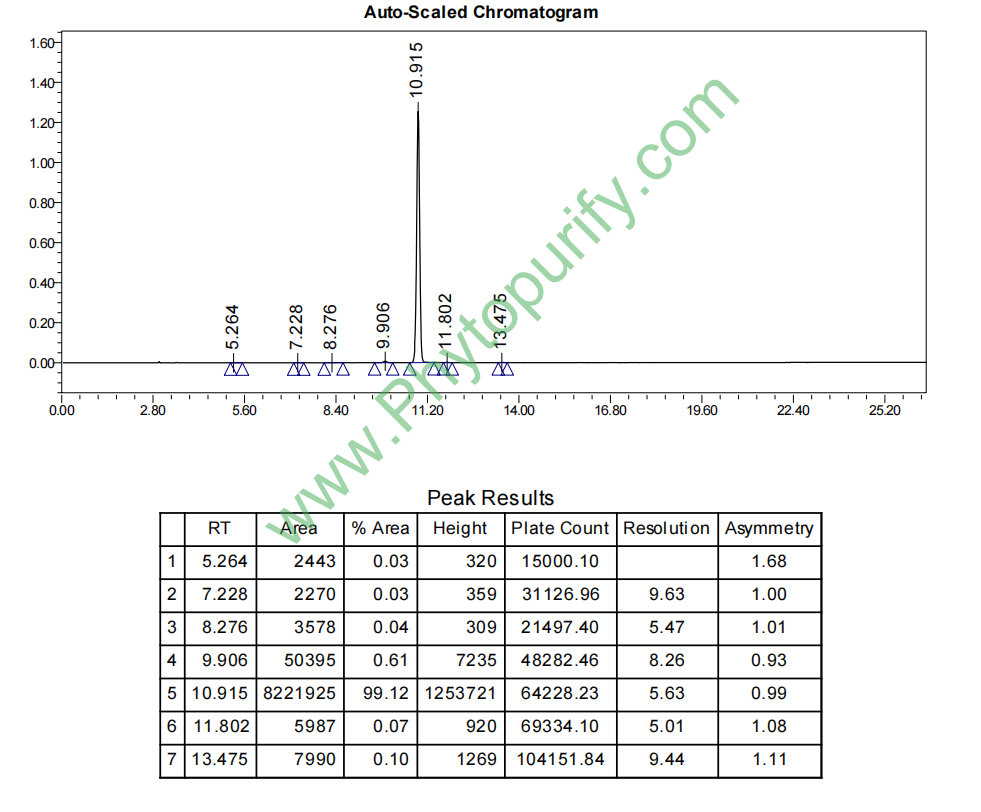
Purity: 95%~99%
Analysis Method: HPLC-DAD or/and HPLC-ELSD
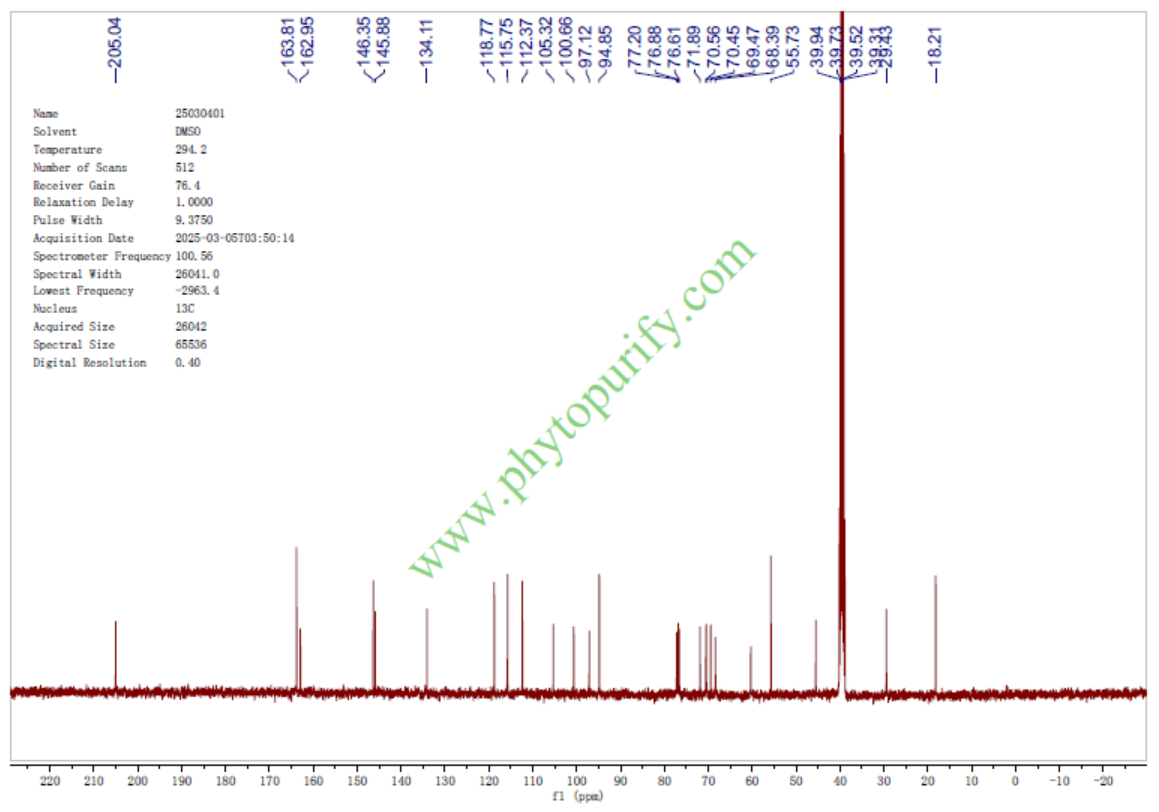
Identification Method: Mass, NMR
Packing: Brown vial or HDPE plastic bottle
Can be supplied from milligrams to grams.
For Reference Standard and R&D, Not for Human Use Directly.
Inquire for bulk scale.
HPLC of Neohesperidin Dihydrochalcone
NMR of Neohesperidin Dihydrochalcone
Storage conditions:Short-term storage at 2~8℃, long-term storage at -20 ~ -80℃
245.2900
-.0211
-.1617
8.2578
.6286
.0989
Low
74.3967
4.6605
Yes
No
Yes
No
No
No
0.0
Yes
No
Yes
No
Natural products have always been an important source of drug discovery and functional food development. Among the numerous bioactive plant secondary metabolites, dihydrochalcone compounds have attracted much attention due to their unique sweet taste characteristics and diverse pharmacological activities. Neohesperidin Dihydrochalcone (NHDC) is an outstanding representative among them. As a glycoside chalcone that is chemically transformed or naturally present in specific citrus plants, NHDC has been widely approved as a food sweetener and flavor enhancer worldwide since its discovery in the mid-20th century due to its high sweetness, low calorie content, and non cariogenic properties.
The discovery of NHDC originated from the study of bitter components in citrus fruits. People have observed that certain citrus glycosides such as Neohesperidin and Naringin can be converted into dihydrochalcone derivatives with strong sweetness under specific conditions. This discovery not only opens up new directions for the field of low calorie sweeteners, but also prompts scientists to delve deeper into their broader biological effects. In recent years, with the global prevalence of metabolic diseases such as obesity, diabetes and its complications, the research focus of NHDC has expanded from the simple attribute of food additives to its potential medicinal value in regulating glucose and lipid metabolism, anti-inflammatory, antioxidant and anti obesity. In particular, studies based on systems pharmacology and network pharmacology have revealed that NHDC may have the potential to intervene in obesity and related metabolic syndrome by acting on multiple key targets related to energy metabolism and fat production.
This review aims to comprehensively review the research progress of neohesperidin dihydrochalcone, starting from its chemical structure, physicochemical properties, plant sources, and extraction processes, systematically elaborating its pharmacological activity and molecular mechanism of action in the field of anti obesity, and evaluating its clinical translation prospects as a lead compound or functional ingredient based on its pharmacological parameters and pharmacokinetic characteristics, in order to provide scientific basis for the in-depth development and utilization of this natural product.
The chemical structure of neohesperidin dihydrochalcone is the basis of its functional properties. From a chemical classification perspective, NHDC belongs to dihydrochalcone, which is a hydrogenated derivative of chalcone. Its core skeleton is 3,2 ', 4', 6 '- tetrahydroxy-4-methoxydihydrochalcone, which is a dihydrochalcone glycoside. This glycoside is linked to a neohesperidose residue at the 4 'position through a glycosidic bond. New orange peel sugar is a disaccharide composed of rhamnose and glucose linked by alpha-1,2 glycosidic bonds. Therefore, the complete chemical name of NHDC can be expressed as: 1- [4- [[2-O - (6-deoxy - α - L-mannopyranosyl) - β - D-glucopyranosyl] oxy] -2,6-dihydroxyphenyl] -3- (3-hydroxy-4-methoxyphenyl) -1-propanone. Its molecular formula is C ₂₈ H ∝₆ O ₁₅, and its CAS number is 20702-77-6.
The physicochemical properties of NHDC determine its application scope and bioavailability. Its molecular weight is 612.58 g/mol, which is a medium-sized molecule. The calculated LogP value is -0.0211, indicating that it has extremely low lipophilicity and is almost insoluble in lipids, but has extremely high hydrophilicity. This characteristic is closely related to the presence of multiple phenolic hydroxyl and sugar moieties in its molecular structure. The extremely high polarity is also reflected in its topologically polar surface area (TPSA) of 245.29 Å ², which is much higher than the typical threshold for oral drugs (about 140 Å ²), indicating poor transmembrane permeability, especially difficulty in penetrating the blood-brain barrier. The water solubility parameter is 8.2578, which confirms its good solubility in water, providing convenience for its application as a food additive in water-based systems such as beverages.
In terms of sensory characteristics, the most prominent feature of NHDC is its strong sweetness. Its sweetness is about 1500-2000 times that of sucrose, and the sweetness is long-lasting, but accompanied by a slight licorice or menthol like aftertaste. Unlike many high magnification sweeteners, NHDC has significant aroma enhancing and bitterness masking effects, which can improve the overall flavor profile of food. In terms of stability, NHDC has good tolerance to heat and acid, but may undergo hydrolysis under the action of strong bases or specific enzymes. Its role as a xenobiotic and environmental pollutant suggests that it may undergo metabolic transformation in vitro and in vivo, which is crucial for its pharmacological activity and safety evaluation.
Although NHDC has extremely low levels in nature, its precursor compound neohesperidin is widely present in citrus plants of the Rutaceae family. New hesperidin mainly exists in sour oranges(Citrus aurantium)Grapefruit(Citrus paradisi)And in the skin and fruit of certain bitter oranges. NHDC itself is not a final product directly synthesized by plants in large quantities, but is obtained through chemical or enzymatic conversion of neohesperidin or naringin. Therefore, the production of NHDC usually relies on extracting precursors from citrus processing by-products (such as peel and pomace), followed by subsequent hydrogenation conversion.
The traditional extraction method mainly targets neohesperidin. Firstly, the dried citrus peel is crushed and subjected to solvent extraction using commonly used solvents such as water, methanol, ethanol, or their mixed solutions. To improve extraction efficiency and selectivity, techniques such as ultrasound assisted extraction, microwave-assisted extraction, or enzyme assisted extraction can be combined. For example, cellulase and pectinase can disrupt cell wall structure and promote the dissolution of neohesperidin. After filtration and concentration, the extract is purified by macroporous adsorption resin (such as D101, AB-8 type) to remove impurities such as sugars and pigments. Then, gradient elution was carried out with ethanol solution of different concentrations to collect the stream rich in neohesperidin, which was then crystallized or spray dried to obtain high-purity neohesperidin.
After obtaining new hesperidin, the key conversion step is to convert it into NHDC. The classic chemical synthesis method is to use catalysts such as palladium carbon (Pd/C) or Raney nickel (Raney Ni) to catalyze the hydrogenation of neohesperidin under alkaline conditions. This reaction selectively reduces the α, β - unsaturated double bonds in the chalcone structure to generate dihydrochalcone. The reaction conditions (such as temperature, pressure, pH) need to be strictly controlled to avoid excessive hydrogenation or side reactions. In recent years, biotransformation methods have received attention due to their green and mild characteristics. Specific microorganisms or enzymes (such as those originating from)Aspergillus niger Naringinase can hydrolyze the glycosidic bonds of neohesperidin to produce naringin, which can then be chemically or enzymatically reduced to obtain NHDC. In addition, there are also studies that directly utilize the endogenous enzyme system in citrus fruits for in situ transformation. These methods each have advantages in improving yield, reducing costs, and being environmentally friendly.
In recent years, the pharmacological activity research of neohesperidin dihydrochalcone has far exceeded its scope as a sweetener, especially showing significant potential in anti obesity, regulating glucose and lipid metabolism, anti-inflammatory and antioxidant effects.
1. Anti obesity and regulation of lipid metabolism
Obesity is a global health challenge, which is essentially the excessive accumulation of fat caused by an imbalance between energy intake and expenditure. Multiple in vitro and in vivo studies have shown that NHDC has a clear anti obesity effect. In the 3T3-L1 preadipocyte differentiation model, NHDC can significantly inhibit adipocyte differentiation and maturation, and reduce intracellular triglyceride accumulation. The mechanism is closely related to the downregulation of key adipogenic transcription factors such as peroxisome proliferator activated receptor gamma (PPARG) and steroid regulatory element binding protein 1 (SREBF1) expression. PPARG is the main regulator of adipocyte differentiation, while SREBF1 regulates the expression of a series of fat synthesis genes such as fatty acid synthase (FASN). NHDC blocks fat production at the source by inhibiting the activity of these core factors.
In animal models, after intervention with high-fat diet induced NHDC in obese mice, significant reductions were observed in body weight, epididymal fat pad weight, and serum triglyceride and total cholesterol levels. In addition, NHDC can regulate hormones and factors related to energy homeostasis. For example, it can upregulate the expression of leptin receptor (LEPR) and improve leptin resistance; Meanwhile, by activating the β 3-adrenergic receptor (ADRB3) and uncoupling protein 1 (UCP1), it promotes browning of white adipose tissue and increases energy expenditure. The secretion of adipocyte type fatty acid binding protein 4 (FABP4) and leptin (LEP) is also inhibited by NHDC, further reducing inflammation and hypertrophy of adipose tissue.
2. Regulating glucose metabolism and improving insulin resistance
Complementing its anti obesity effect, NHDC also exhibits activity in improving glucose metabolism disorders. Studies have shown that NHDC can reduce fasting blood glucose and glycosylated hemoglobin levels in diabetes model animals, and improve oral glucose tolerance. The mechanism may involve multiple aspects: firstly, by activating the AMP activated protein kinase (AMPK) signaling pathway, it promotes the uptake and utilization of glucose by skeletal muscle and liver; Secondly, inhibiting the expression of key enzymes involved in hepatic gluconeogenesis, such as phosphoenolpyruvate carboxykinase (PEPCK), reduces endogenous glucose production; Finally, by upregulating the expression of adiponectin (ADIPOQ), insulin sensitivity is enhanced. Adiponectin is an insulin sensitizing hormone secreted by adipose tissue, and its level is negatively correlated with insulin resistance. The upregulation of ADIPOQ by NHDC is an important link in improving overall metabolic health.
3. Anti inflammatory and antioxidant activity
Chronic low-grade inflammation is an important characteristic of obesity and metabolic syndrome. NHDC, as a polyphenolic compound, has significant antioxidant and anti-inflammatory abilities. In cell models, NHDCs can clear reactive oxygen species (ROS), inhibit lipid peroxidation, and upregulate the activity of antioxidant enzymes such as superoxide dismutase (SOD) and glutathione peroxidase (GPx). In terms of inflammation, NHDC can inhibit the expression of pro-inflammatory cytokines such as tumor necrosis factor - α (TNF - α), interleukin-6 (IL-6), and inducible nitric oxide synthase (iNOS) in macrophages induced by lipopolysaccharide (LPS). Its anti-inflammatory mechanism is partially achieved by inhibiting the activation of the nuclear factor kappa B (NF - κ B) signaling pathway. These anti-inflammatory and antioxidant properties not only help alleviate obesity related adipose tissue inflammation, but may also provide protective effects on other organs such as the cardiovascular system and liver.
4. Other pharmacological activities
In addition to the main activities mentioned above, NHDC has also been reported to have other beneficial effects. For example, it can inhibit the activity of alpha glucosidase, thereby delaying the absorption of carbohydrates and helping to control postprandial blood sugar. In addition, some preliminary studies suggest that NHDCs may have neuroprotective effects, although their ability to penetrate the blood-brain barrier is low, they may indirectly affect the central nervous system by regulating gut microbiota or affecting peripheral signals. In terms of cardiovascular protection, NHDC shows the potential of relaxing blood vessels, inhibiting platelet aggregation and anti atherosclerosis.
The pharmacological activity of NHDC is the result of its interaction with multiple molecular targets, exhibiting the characteristics of multi-target and multi pathway synergistic regulation. Based on existing research, especially the anti obesity effect, the core molecular mechanisms can be summarized as follows:
1. The transcriptional network that regulates fat production and differentiation
As mentioned earlier, PPARG and SREBF1 are key nuclear targets of NHDC action. NHDC downregulates the expression of downstream target genes such as FASN, FABP4, and lipoprotein lipase (LPL) by inhibiting the transcriptional activity of PPARG and the mature cleavage of SREBF1. FASN is the rate limiting enzyme for de novo synthesis of fatty acids, and its decreased expression directly reduces the supply of fatty acids. FABP4 is responsible for the transport and storage of intracellular fatty acids, and its downregulation inhibits the formation of lipid droplets. In addition, NHDCs may also inhibit adipocyte differentiation by activating the Wnt/β - catenin signaling pathway, as activation of this pathway can antagonize the function of PPARG.
2. Regulating energy metabolism and heat production
NHDC fights obesity by affecting energy expenditure. It can upregulate the expression of ADRB3, which is mainly distributed in adipose tissue. Its activation can stimulate fat breakdown and thermogenesis. At the same time, NHDC promotes the expression of UCP1, a key protein on the inner membrane of mitochondria in brown adipose tissue and beige adipocytes. UCP1 converts chemical energy into thermal energy through uncoupling oxidative phosphorylation, thereby increasing energy consumption. This process is known as "white fat browning" and has been a hot topic in the development of anti obesity drugs in recent years. The induction effect of NHDC on UCP1 makes it a potential "thermogenic" activator.
3. Central and peripheral signals that intervene in appetite and energy homeostasis
The regulation of leptin (LEP) and adiponectin (ADIPOQ) by NHDC is another important pathway for its anti obesity effects. Leptin is secreted by adipocytes and acts on the leptin receptor (LEPR) in the hypothalamus, inhibiting appetite and promoting energy expenditure. Obese individuals often have leptin resistance, which refers to high levels of leptin that cannot exert normal physiological effects. NHDC can upregulate the expression of LEPR, which may help restore leptin sensitivity. At the same time, NHDC upregulates the expression of ADIPOQ. Adiponectin has the effects of enhancing insulin sensitivity, anti inflammation and anti atherosclerosis. In addition, NHDC may also affect the activity of POMC neurons. POMC is an important precursor protein in the hypothalamus, and its cleavage products such as alpha melanocyte stimulating hormone (α - MSH) can act on melanocortin receptors, producing appetite suppressing signals. The regulatory effect of NHDC on POMC suggests that it may affect feeding behavior through central mechanisms.
4. Integration of signaling pathways
The above-mentioned multiple targets do not act in isolation, but are interconnected through a complex signal network. The AMPK signaling pathway is considered one of the core hubs for NHDC to exert metabolic regulation. NHDC can activate AMPK, which on one hand inhibits the activity of SREBF1 and reduces fat synthesis; On the other hand, it promotes fatty acid oxidation and mitochondrial biosynthesis. In addition, activation of AMPK can upregulate the expression of ADIPOQ and enhance insulin signaling transduction. The inhibition of NF - κ B pathway by NHDC is directly related to its anti-inflammatory activity, and inflammation itself is an important factor leading to insulin resistance and leptin resistance. Therefore, NHDC forms a network that synergistically regulates glucose and lipid metabolism, energy balance, and inflammatory response by acting on multiple nodes such as PPARG, SREBF1, AMPK, NF - κ B.
Developing NHDC from a food additive to a therapeutic drug requires a rigorous evaluation of its pharmacological properties. Based on the provided parameters, NHDC exhibits significant advantages and challenges in terms of its pharmacological properties.
Advantage:
* High water solubility: The solubility parameter of 8.2578 indicates good solubility in aqueous solution, which is beneficial for the development of oral formulations without the need for complex solubilization techniques.
* Good safety: The Ames test result is 0.0, indicating that it has no mutagenicity in the bacterial recovery mutation test and low genetic toxicity risk. HERG inhibition is' no ', indicating a low risk of causing QT interval prolongation and fatal arrhythmias in the heart. These are key indicators in drug safety evaluation.
* Clear pharmacological activity and targets: As mentioned earlier, NHDC has clear activity and multiple known targets in anti obesity and metabolic regulation, which provides a solid biological basis for it as a candidate drug.
Challenge:
* Low oral bioavailability: This is the biggest challenge facing NHDC. Its extremely high polarity (LogP=-0.0211) and huge TPSA (245.29 Å ²) severely limit its passive diffusion ability through intestinal epithelial cells. In addition, as a glycoside compound, NHDC may be hydrolyzed by gut microbiota or brush edge enzymes in the gastrointestinal tract, further reducing the bioavailability of its prototype drug. Research has shown that after oral administration of NHDC, the concentration of the prototype drug in the plasma is extremely low and mainly exists in the form of metabolites.
* Low blood-brain barrier penetration: Although low BBB penetration may reduce central nervous system side effects, it also limits its potential application in central obesity or neurodegenerative diseases. Its anti obesity effect may mainly be achieved through peripheral mechanisms such as regulating adipose tissue, liver, and intestines.
* Metabolic instability: NHDC undergoes extensive metabolism in the body. The main metabolic pathways include: hydrolysis of glycosidic bonds to generate aglycones (neohesperidin dihydrochalcone aglycones), as well as methylation, sulfation, and glucuronidation of hydroxyl groups on aglycones. These metabolites may have different biological activities, increasing the complexity of pharmacological and pharmacokinetic studies.
Pharmacokinetic characteristics:
Animal experiments have shown that NHDC is slowly absorbed after oral administration, with a longer peak time (Tmax) and lower peak concentration (Cmax). Its half-life (t ²) is relatively short, indicating faster clearance. Due to extensive intestinal metabolism, its absolute oral bioavailability is typically less than 5%. However, it is worth noting that the metabolites of NHDC, especially their glycosides, may still retain some biological activity and even be more active in certain aspects. Therefore, NHDC may serve as a prodrug that can be converted into active metabolites in the body to exert long-lasting effects. In addition, the regulatory effect of NHDC on gut microbiota may indirectly affect the metabolic health of the host.
Optimization strategy for drug properties:
In response to the above challenges, the following strategies can be considered for future drug development:
1. Structural modification: By designing prodrugs, such as esterifying or phosphorylating phenolic hydroxyl groups, lipid solubility can be improved and intestinal absorption can be enhanced. Alternatively, it can be designed as nano formulations, liposomes, or phospholipid complexes to enhance their bioavailability.
2. Formulation optimization: Develop enteric coated or sustained-release formulations to protect NHDCs from degradation by gastric acid and enzymes, and release them in specific areas of the intestine to increase local concentration and absorption.
3. Combination therapy: Combined with absorption enhancers (such as piperine) or other metabolic regulators (such as metformin), it exerts a synergistic effect and reduces the effective dose.
As a natural product with both sweetener and biological activity, neohesperidin dihydrochalcone has broad clinical application prospects, but also faces many challenges.
1. Functional foods and dietary supplements
This is the most direct and mature conversion pathway for NHDC. Given that it has been approved as a food additive, developing functional foods or dietary supplements targeting overweight, obese, and metabolic syndrome populations with its anti obesity and glucose and lipid metabolism regulating effects has natural advantages. For example, it can be developed into meal replacement milkshakes, energy bars, functional drinks, or post meal desserts. Its high sweetness allows it to improve the taste of the product without increasing calories, while providing additional health benefits. The key is to validate its effectiveness and optimal dosage in specific populations through clinical trials.
2. Anti obesity and metabolic disease drugs
Although low oral bioavailability is the main obstacle, the multi-target mechanism of action and good safety of NHDC still make it a potential candidate drug for anti obesity. Future drug development should focus on:
* Targeting the intestine: Given the high concentration of NHDC in the intestine and its interaction with gut microbiota, it can be developed as a local drug for regulating gut microbiota composition, improving intestinal barrier function, and inhibiting lipid absorption in the intestine.
* Precursors and Nanotechnology: Overcome its absorption barriers through modern medicinal chemistry and pharmaceutical methods. For example, designing nanoparticles targeting adipose tissue to achieve precise drug delivery.
* Combination therapy: Combined with existing GLP-1 receptor agonists (such as semaglutide) or SGLT2 inhibitors (such as dapagliflozin), it may produce stronger weight loss and metabolic improvement effects through complementary mechanisms.
3. Other potential applications
Based on its anti-inflammatory and antioxidant activities, NHDC also has exploratory value in the adjuvant treatment of chronic inflammatory diseases such as non-alcoholic fatty liver disease (NAFLD), cardiovascular disease, diabetes nephropathy, etc. In addition, its inhibitory effect on alpha glucosidase makes it an auxiliary tool for postprandial blood glucose management.
Outlook:
Future research should focus on the following aspects:
* In depth pharmacokinetic studies: Clarify the dynamic processes, tissue distribution, and activity contributions of NHDC and its major metabolites in vivo.
* Mechanism research based on gut microbiota: Elucidate how NHDC exerts systemic metabolic regulation by regulating gut microbiota, such as increasing short chain fatty acid producing bacteria and reducing endotoxin producing bacteria.
* Long term toxicity and safety assessment: Although the Ames test is negative, more comprehensive long-term toxicity, reproductive toxicity, and carcinogenicity studies are still needed to support its safety as a drug or functional ingredient for long-term use.
* Clinical translational studies: Design rigorous randomized controlled clinical trials to validate the effectiveness and safety of NHDC or its derivatives in the target population, and determine the optimal dosage and administration regimen.
New hesperidin dihydrochalcone, a natural sweetener derived from citrus, is undergoing a transformation from a "seasoning" to a "multifunctional bioactive molecule". Its unique chemical structure endows it with sensory characteristics of high sweetness and low calorie content, as well as pharmacological activities that intervene in glucose and lipid metabolism, anti-inflammatory and antioxidant effects by regulating multiple targets such as PPARG, SREBF1, UCP1, ADIPOQ, etc. In today's increasingly severe obesity and metabolic diseases, NHDC has demonstrated tremendous value as a functional food ingredient and potential drug lead.
However, its extremely low bioavailability and complex metabolic processes in the body are the gaps that must be overcome to push it towards clinical applications. Future research requires the comprehensive use of multidisciplinary approaches such as medicinal chemistry, pharmacy, pharmacology, and microbiology to deeply reveal their mechanisms of action and optimize their drug properties. We have reason to believe that with the continuous deepening of research, neohesperidin dihydrochalcone and its derivatives are expected to play a more important and unique role in the field of human health, especially in the prevention and treatment of metabolic diseases.
