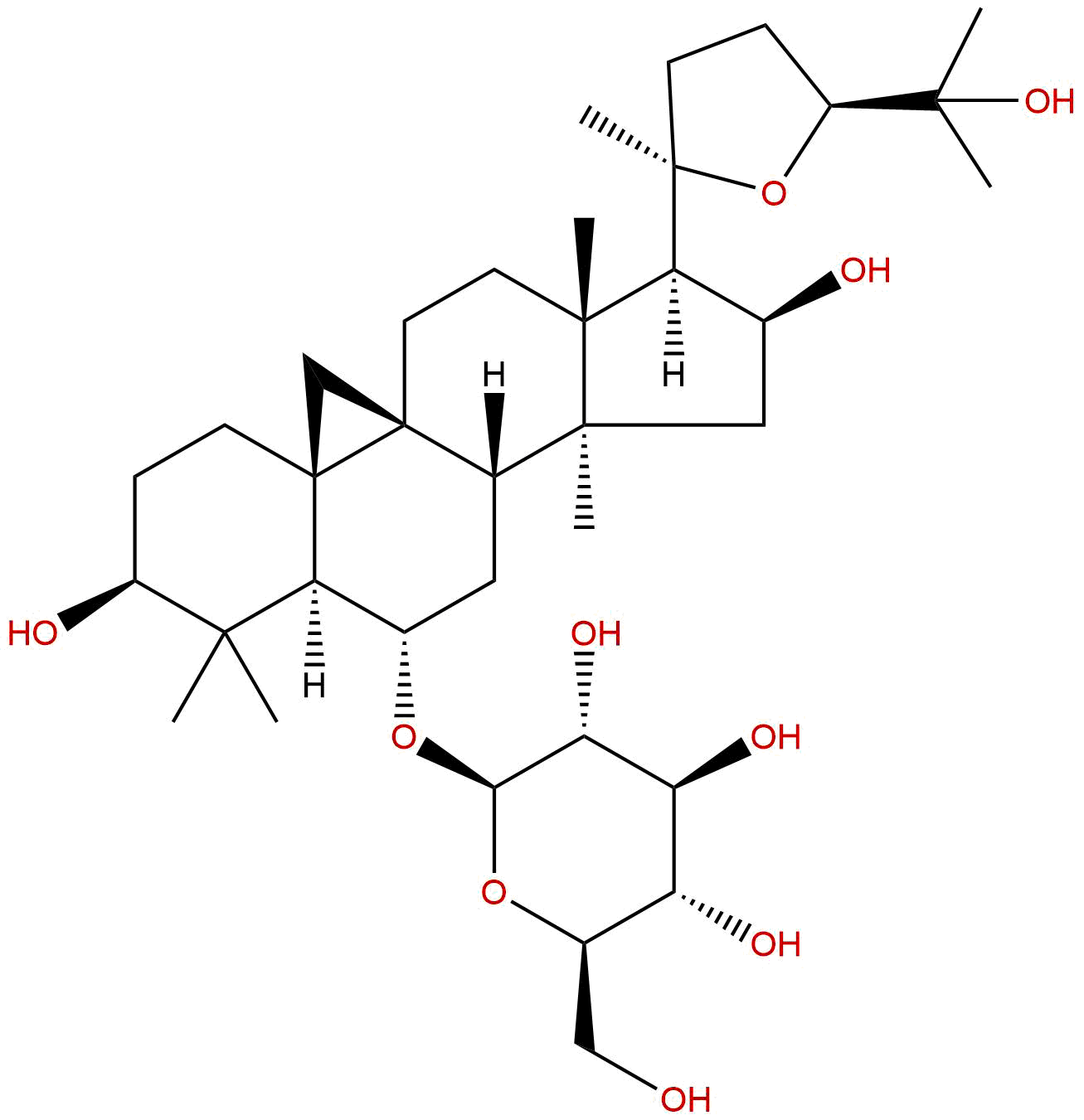


Product name: Cycloastragenol-6-O-β-D-glucoside
Synonym name: Brachyoside B
Catalogue No.: BP2179
Cas No.: 86764-12-7
Formula: C36H60O10
Mol Weight: 652.866
Botanical Source:
Type of Compound:
Purity: 95%~99%
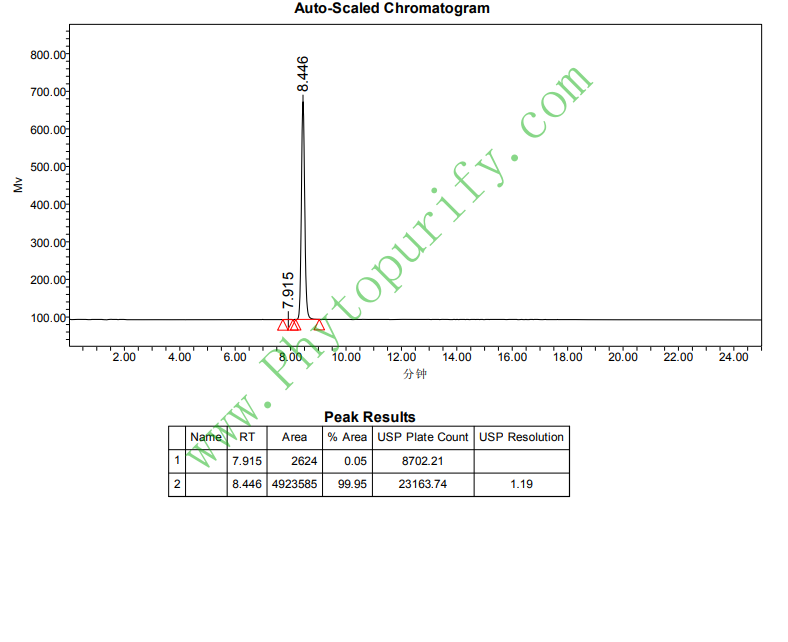
Analysis Method: HPLC-DAD or/and HPLC-ELSD
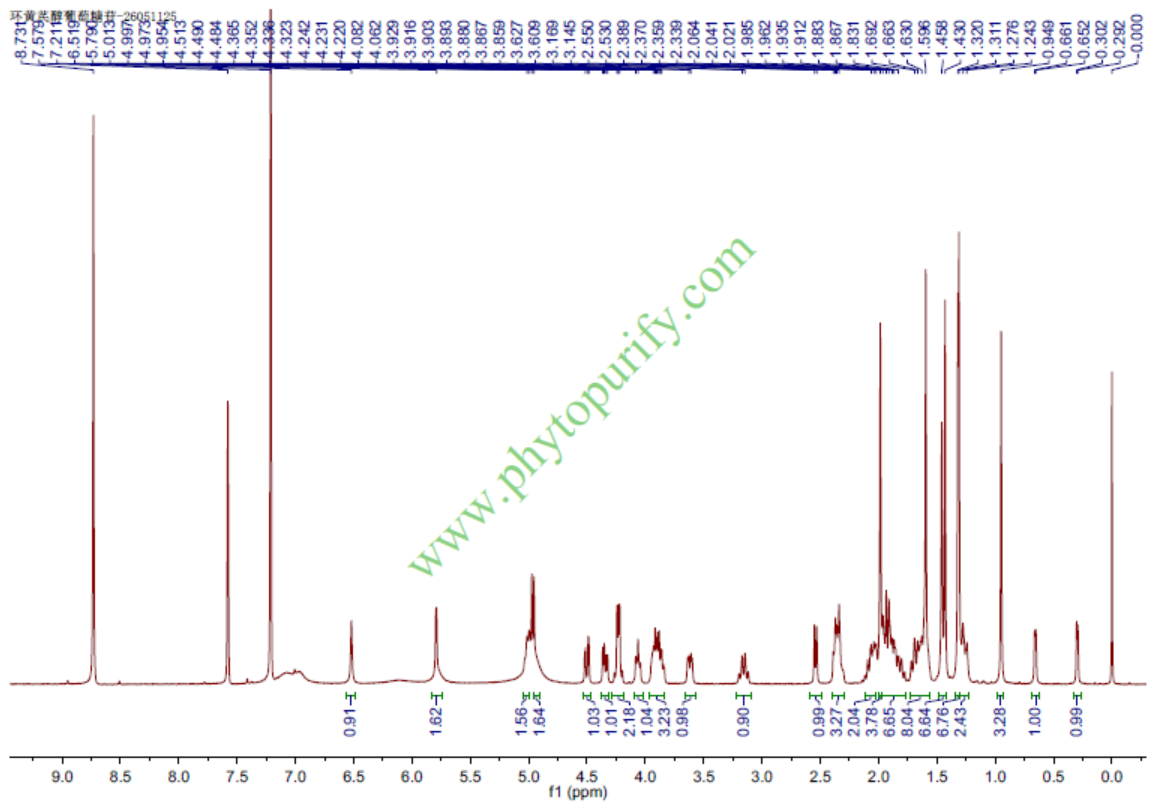
Identification Method: Mass, NMR
Packing: Brown vial or HDPE plastic bottle
Storage: Store in a well closed container, protected from air and light. Put into refrigerate or freeze for long term storage.
Whenever possible, you should prepare and use solutions on the same day. However, if you need to make up stock solutions in advance, we recommend that you store the solution as aliquots in tightly sealed vials at -20℃. Generally, these will be useable for up to two weeks.
The product could be supplied from milligrams to grams
Inquire for bulk scale.
For Reference Standard and R&D, Not for Human Use Directly.
HPLC of Cycloastragenol-6-O-β-D-glucoside
HNMR of Cycloastragenol-6-O-β-D-glucoside
Storage conditions:Short-term storage at 2~8℃, long-term storage at -20 ~ -80℃
169.3000
2.8887
2.8888
.0156
.6375
.9147
Low
73.5370
6.4103
No
No
No
No
No
No
0.0
Yes
No
No
No
Chronic Fatigue Syndrome (CFS) is a complex disease characterized by persistent or recurrent severe fatigue that cannot be relieved by rest, often accompanied by cognitive impairment, pain, and immune system disorders. Its etiology is unknown, and its pathological and physiological mechanisms are complex, involving multiple aspects such as immune dysfunction, neuroendocrine abnormalities, mitochondrial dysfunction, and chronic inflammation. Currently, there is a lack of safe and effective curative drugs. Therefore, searching for lead compounds from natural products that can intervene in the pathological process of CFS through multiple targets and pathways has become one of the important directions in current drug development.
Cycloastragalonol-6-O - β - D-glucoside (CAG), CAS number 86764-12-7, is a traditional Chinese medicinal herb called Astragalus membranaceus(Astragalus membranaceus)A key active saponin component isolated from the middle. In recent years, with the in-depth exploration of the modern scientific connotation of the traditional efficacy of Huangqi in tonifying qi and strengthening the surface, CAG has attracted much attention due to its significant activities in regulating immunity, anti-inflammatory, anti-aging, and other aspects. Especially its potential in regulating innate immune receptors, inflammatory cytokines, and signaling pathways closely related to chronic fatigue makes it a potential candidate molecule for treating immune inflammatory related diseases such as CFS. This article aims to systematically review the chemical properties and pharmacological activities of CAG, especially the mechanism of action and pharmacological characteristics of chronic fatigue related targets, and to explore its clinical application prospects.
Huangqi alcohol glucoside belongs to the tetracyclic triterpenoid saponin class of compounds. Its parent nucleus structure is Cycloastragenol, a lanolane type triterpenoid with a unique 9,19-cyclopropane structure. In CAG, a β - D-glucosyl group is connected to the C-6 hydroxyl group of the parent nucleus of Astragalus membranaceus through a glycosidic bond. This glycosylation modification significantly alters the polarity, solubility, and biological activity of the parent nucleus.
The basic physicochemical and pharmacological parameters are as follows:
- Molecular formula and molecular weight According to its structure, the molecular weight is approximately 652.8660 g/mol.
- Fat water partition coefficient The calculated LogP value is about 2.89, indicating that the compound has a certain lipophilicity, but due to its multiple hydroxyl groups and one hydrophilic sugar group, it exhibits overall amphiphilicity, which is beneficial for its interaction with biofilms.
- Polar Surface Area The topologically polar surface area (TPSA) is as high as 169.30 Å ², mainly attributed to the multiple oxygen atoms in the molecule (hydroxyl and ether bonds in the sugar ring, hydroxyl), indicating that it has more hydrogen bond donor and acceptor sites.
- solubility The water solubility value is relatively low (about 0.0156 mg/mL), making it a poorly soluble compound. This is related to the intramolecular hydrogen bonding and crystal stacking formed by its larger TPSA and partially lipophilic structure, and is a key issue that needs to be addressed in its formulation development.
- Permeability Preliminary predictions indicate that its blood-brain barrier permeability is low, suggesting that it mainly acts on the peripheral system. This is consistent with the positioning of treating diseases such as CFS that involve peripheral immune inflammation.
- Early safety According to the prediction model, the hERG channel inhibition risk and Ames mutagenicity were both negative (Ames test predicted value of 0.0), indicating that it has good early cardiac safety and genetic toxicity risk profile, laying a good foundation for subsequent development.
CAG mainly comes from the leguminous plant Astragalus membranaceus membranaceus(Astragalus membranaceus (Fisch.) Bge.) or Mongolian Astragalus membranaceus(Astragalus membranaceus var. mongholicus The dried root of (Bge.) Hsiao, commonly known as the traditional Chinese medicine Huangqi. Huangqi, as a vital tonic for qi, has a complex chemical composition, mainly including saponins, flavonoids, polysaccharides, and amino acids. CAG is an important component of astragalus saponins, often coexisting with astragaloside IV and other compounds.
The efficient and high-purity extraction of CAG from Astragalus membranaceus medicinal materials usually involves a multi-step separation and purification process:
1. Extract Usually, alcohol extraction (such as methanol, ethanol, or dilute alcohol) or water extraction and alcohol precipitation methods are used to preliminarily enrich the saponin components in Huangqi.
2. enrichment After the extraction solution is concentrated under reduced pressure, it is preliminarily separated using macroporous adsorption resins (such as D101, AB-8, etc.) and eluted with a gradient of water and different concentrations of ethanol. Saponins are usually enriched in the elution sites of medium to high concentrations of ethanol.
3. Separation and purification The enriched saponin fractions are further finely separated by methods such as normal phase silica gel column chromatography, reverse phase silica gel column chromatography (such as ODS), high performance liquid chromatography (HPLC), or high-speed countercurrent chromatography (HSCCC). Due to the similarity in polarity between CAG and structurally similar saponins (such as astragaloside IV), separation is difficult and often requires the combination of multiple chromatographic techniques or the use of preparative high-performance liquid chromatography (Prep HPLC) to obtain high-purity monomers.
4. appraisal The separated monomers were structurally confirmed by techniques such as mass spectrometry (MS) and nuclear magnetic resonance (NMR, including 1H-NMR, 13C-NMR, 2D-NMR).
In recent years, biotransformation has also been explored for the preparation of CAG, such as using specific enzymes or microorganisms to selectively hydrolyze precursor saponins such as astragaloside IV with higher content to generate CAG, which provides a new idea for improving yield.
The pharmacological activity research of CAG reveals its therapeutic potential in multiple aspects, especially in the field related to chronic fatigue pathophysiology:
The mechanism by which CAG combats chronic fatigue does not act on a single target, but rather through a network of multiple targets and pathways, with the core being the regulation of the immune inflammatory axis. The following are key targets and pathways closely related to CFS:
Inhibition of TLR4/NF - κ B inflammatory signaling pathway Toll like receptor 4 (TLR4) is a key molecule that connects innate immunity with chronic inflammation. CFS patients often exhibit abnormal activation of the TLR4 pathway. Research has shown that CAG can directly or indirectly inhibit the activation of TLR4, thereby blocking downstream myeloid differentiation factor 88 (MyD88) - dependent signaling and inhibiting nuclear factor kappa B (NF - κ B) nuclear translocation. The decrease in NF - κ B activity leads to reduced transcription of various pro-inflammatory cytokines (such as TNF - α, IL-1 β, IL-6) and chemokines, thereby alleviating systemic low-grade inflammation from the source, which is one of the core mechanisms for relieving fatigue.
Regulating Th1/Th2 cytokine balance CFS patients often have a Th1 immune response advantage in their bodies. CAG can significantly reduce the excessive production of Th1 cytokines, such as interferon - γ (IFN - γ) and interleukin-2 (IL2). IFN γ and IL2 are key factors that activate cellular immunity and induce inflammation. By inhibiting its production, CAG helps to reverse the imbalanced Th1/Th2 balance towards the Th2 direction, reducing the immune system's sustained attack and energy consumption on itself. Signal transducer and activator of transcription 1 (STAT1) is a key mediator of the IFN γ signaling pathway, and CAG may inhibit the effect of IFN γ by affecting the phosphorylation or nuclear translocation of STAT1.
Affects T lymphocyte subsets CD4+T helper cells are the center of immune regulation. CD4+T cell dysfunction is often observed in CFS. CAG can regulate the differentiation and function of CD4+T cells, which may increase the proportion of regulatory T cells (Tregs) with immunosuppressive and anti-inflammatory functions, while inhibiting overactivated effector T cells, thereby restoring immune homeostasis. This regulatory effect on the CD4+T cell population is an important cellular basis for achieving immune balance.
Regulating oxidative stress and mitochondrial function Chronic inflammation and oxidative stress are mutually causal. CAG, through its antioxidant activity, clears free radicals, enhances endogenous antioxidant system levels such as glutathione, and protects mitochondria from oxidative damage. Mitochondria are the energy factories of cells, and their functional improvement is directly related to the efficiency of ATP synthesis, which is crucial for alleviating the energy crisis in CFS patients.
In summary, CAG may target TLR4 as an upstream key target, by inhibiting NF - κ B and regulating signaling pathways such as STAT1, downregulating pro-inflammatory factors such as IL2 and IFN γ, and affecting CD4+T cell function, forming a synergistic network from innate immunity to adaptive immunity, from inflammatory signals to energy metabolism, thus intervening in the pathological process of CFS from multiple dimensions.
Despite the excellent pharmacological activity of CAG, its druggability still faces challenges, which is also the gap that must be bridged in its transition from lead compounds to drugs.
Absorption, distribution, metabolism, excretion (ADME):
Optimization direction of drug properties:
Preliminary evaluation of safety Based on computational toxicology predictions, CAG showed no significant hERG inhibition or genotoxicity warning, which is a positive signal. However, its safety still needs to be comprehensively evaluated through systematic preclinical toxicology studies (acute toxicity, long-term toxicity, reproductive toxicity, etc.).
CAG has shown unique application prospects in the treatment of chronic fatigue syndrome, but its development path is long and requires interdisciplinary collaboration.
As a representative active saponin in Astragalus membranaceus, cycloastragaloside has shown great potential in intervening in the immune inflammatory core mechanism of chronic fatigue syndrome by regulating the TLR4/NF - κ B signaling pathway, balancing Th1/Th2 cytokines, and affecting CD4+T cell function through multiple pharmacological effects. Although it faces challenges in terms of solubility and bioavailability in terms of drug properties, these obstacles are expected to be overcome through the optimization of modern pharmaceutical technology and medicinal chemistry methods. Drawing inspiration from the wisdom of traditional Chinese medicine and utilizing modern scientific technology for in-depth interpretation and modification, CAG is expected to develop from an excellent natural lead compound into an innovative drug for treating complex diseases such as CFS, bringing new hope to patients worldwide who suffer from chronic fatigue. The research and development process will also provide valuable paradigms for the modernization and internationalization of other active ingredients derived from traditional Chinese medicine.
