


Product name: Hesperetin
Synonym name: Eriodictyol 4'-monomethyl ether; Hesperitin
Catalogue No.: BP0724
Cas No.: 520-33-2
Formula: C16H14O6
Mol Weight: 302.282
Botanical Source: Brickellia vernicosa, Persica vulgaris (preferred genus name Prunus), Citrus and Mentha spp.
Physical Description: Powder
Type of Compound: Flavonoids
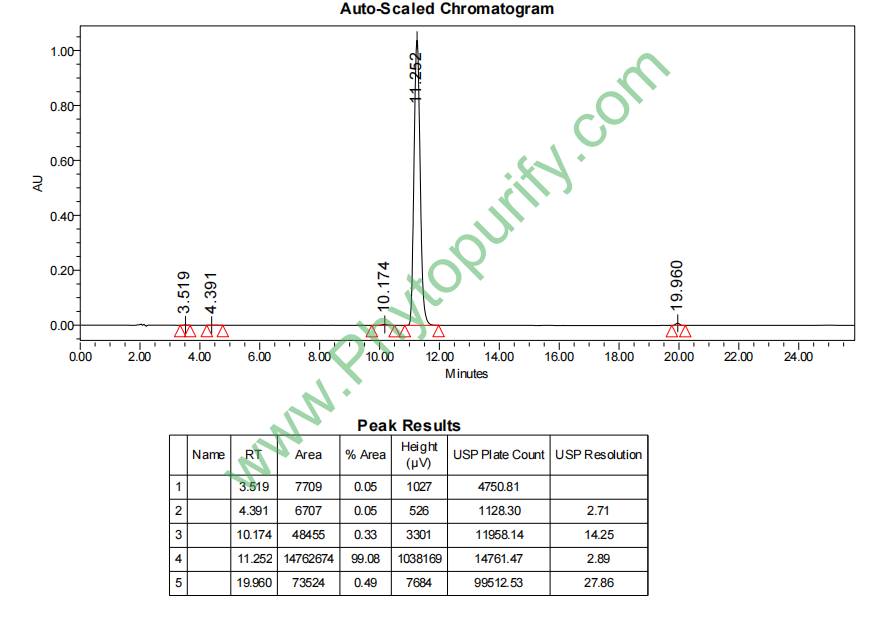
Purity: 95%~99%
Analysis Method: HPLC-DAD or/and HPLC-ELSD
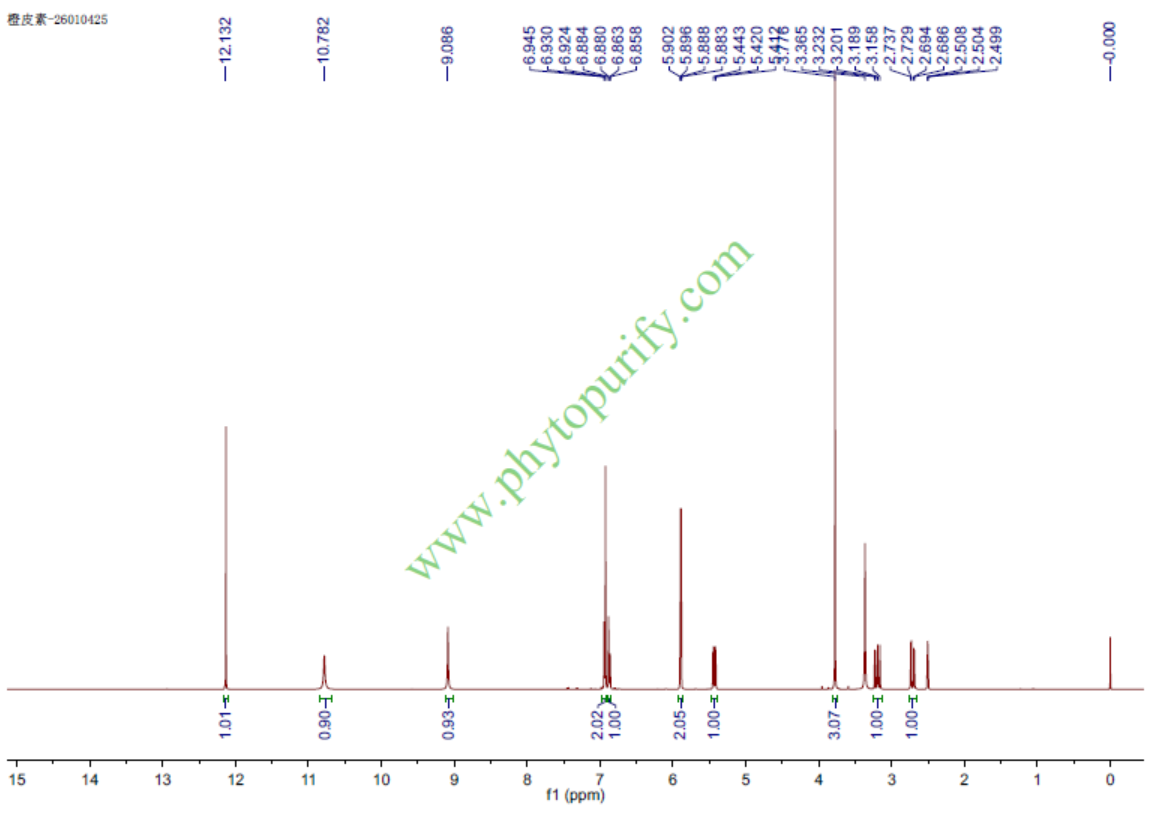
Identification Method: Mass, NMR
Packing: Brown vial or HDPE plastic bottle
Storage: Store in a well closed container, protected from air and light. Put into refrigerate or freeze for long term storage.
Whenever possible, you should prepare and use solutions on the same day. However, if you need to make up stock solutions in advance, we recommend that you store the solution as aliquots in tightly sealed vials at -20℃. Generally, these will be useable for up to two weeks.
The product could be supplied from milligrams to grams, up to kilograms
Inquire for bulk scale.
Descriptions:
Hesperetin exerts dose dependent chemopreventive effect against 1,2-dimethyl hydrazine induced rat colon carcinogenesis.[1]
Hesperetin has antioxidant activity, plays a protective role against 7,12-dimethylbenz(a)anthracene (DMBA)-induced oxidative stress; suppresses COX-2 gene expression may be a consequence of their antioxidant activity;is a powerful peroxynitrite (ONOO-)- scavenger and promotes cellular defense activity in the protection against ONOO- involved diseases.[2-4]
Hesperetin has inhibitory effects on Kv1.5 potassium channels stably expressed in HEK 293 cells and ultra-rapid delayed rectifier K + current in human atrial myocytes.[5]
Hesperetin,has antiplatelet activity, is mainly mediated by inhibition of PLC-gamma2 phosphorylation and cyclooxygenase-1 activity.[6]
Hesperetin mediates protection against doxorubicin-induced cardiotoxicity through nuclear factor-kappa B, p38, and caspase-3, indicates the protective effect of hesperetin against doxorubicin-induced cardiotoxicity.[7]
References:
[1] Aranganathan S, Selvam J P, Nalini N. Invest New Drugs, 2009, 27(3):203-13.
[2] Choi E J. Life Sci, 2008, 82(21–22):1059-64.
[3] Kim J Y, Jung K J, Choi J S, et al. Free Radical Res, 2004, 38(7):761-9.
[4] Hirata A, Murakami Y, Shoji M, et al. Anticancer Res, 2005, 25(5):3367-74.
[5] Wang H, Wang H F, Chen W, et al. Eur J Pharmacol, 2016 ,789 :98-108.
[6] Jin Y R, Han X H, Zhang Y H, et al. Atherosclerosis, 2007, 194(1):144-52.
[7] Trivedi P P, Kushwaha S, Tripathi D N, et al. Cardiovasc Toxicol, 2011, 11(3):215-25.
[8] Wan L, Sun X, Xu Z, et al. China Pharmacist, 2010, 13(08):1082-4.
HPLC of Hesperetin
HNMR of Hesperetin
Storage conditions:Short-term storage at 2~8℃, long-term storage at -20 ~ -80℃
Hesperetin (CAS number: 520-33-2) is a natural flavonoid compound mainly found in the peel and flesh of citrus fruits. As one of the main active ingredients of citrus flavonoids, hesperetin has received widespread attention due to its diverse biological activities. In recent years, with the deepening development of natural product pharmacology, hesperetin has shown significant pharmacological potential in multiple fields such as antioxidant, anti-inflammatory, and anticancer, and has become an important candidate molecule for the development of natural medicines.
Hesperetin not only has good oral biological activity, but has also been proven to be a broad-spectrum inhibitor of human uridine diphosphate glucuronosyltransferase (UGT) activity, which can regulate the function of drug metabolizing enzymes in the body and affect drug metabolism kinetics. In addition, hesperetin induces cell apoptosis by activating the p38 MAPK signaling pathway, regulates cell cycle arrest in the G2/M phase, regulates Bcl-2 family protein expression, inhibits the NF - κ B signaling pathway, and exerts its anti-tumor effect. This article provides a systematic review of the chemical structure and physicochemical properties, plant sources and extraction methods, pharmacological activity, mechanism of action, pharmacological evaluation, and clinical application prospects of hesperetin, providing a theoretical basis for its further research in natural product drug development.
The chemical name of hesperetin is 3 ', 5,7-trihydroxyflavanone, with a molecular formula of C16H14O6 and a molecular weight of 302.2820. Its chemical structure belongs to flavanones and has a typical tricyclic structure, consisting of two benzene rings (A ring and B ring) and one oxygen heterocyclic ring (C ring). The molecule contains three hydroxyl functional groups (located at positions 5, 7, and 3 '), which endow it with excellent antioxidant activity.
In terms of physical and chemical properties, the LogP value of hesperetin is 2.1968, indicating that it has moderate lipid solubility and is beneficial for membrane penetration. The polar surface area (TPSA) is 96.22 Å ², indicating that it has a certain polarity that affects its water solubility and bioavailability. Low water solubility (0.3009 mg/mL) limits its solubility in aqueous phase, but moderate lipid solubility facilitates oral absorption. The low permeability of the blood-brain barrier suggests its limited distribution in the central nervous system. The negative result of hERG channel inhibition experiment indicates that hesperetin has good cardiac safety. The Ames mutagenicity test result is 0.6, indicating a low risk of genotoxicity.
In summary, the chemical structure of hesperetin endows it with various biological activities, moderate physicochemical properties, and good potential for drug development.
Hesperidin is mainly found in citrus plants, especially in the peel and flesh of oranges (Citrus sinensis), pomelos (Citrus paradisi), lemons (Citrus limon) and their related varieties. The content of hesperetin varies with variety, maturity, and cultivation conditions, and the content of hesperetin in the peel is usually higher than that in the flesh.
The traditional methods for extracting hesperetin include solvent extraction, ultrasound assisted extraction, microwave-assisted extraction, and supercritical fluid extraction. Common solvents include ethanol, methanol, ethyl acetate, and their aqueous solutions due to their excellent solubility and safety. In recent years, green extraction technologies such as ultrasound assisted extraction (UAE) and microwave-assisted extraction (MAE) have been widely used, significantly improving extraction efficiency and purity while reducing solvent usage and environmental pollution.
The extraction process generally includes: raw material pretreatment (cleaning, drying, crushing), solvent extraction (temperature, time, solvent concentration optimization), extraction solution filtration and concentration, purification (column chromatography, recrystallization), and drying. High purity hesperetin products are commonly used in pharmacological research and formulation development.
Hesperidin exhibits various significant pharmacological activities, covering antioxidant, anti-inflammatory, anticancer, cardiovascular protection, neuroprotection, and other aspects.
Hesperetin, as a natural flavonoid antioxidant, can effectively eliminate free radicals and alleviate oxidative stress damage. It activates the NFE2L2 (NRF2) signaling pathway, induces the expression of downstream antioxidant enzymes such as superoxide dismutase (SOD1, SOD2), catalase (CAT), glutathione peroxidase (GPX1), and heme oxygenase-1 (HMOX1), enhances the antioxidant defense ability of cells, and reduces the pathological progression of oxidative damage related diseases.
Hesperetin can inhibit the expression of pro-inflammatory factors such as tumor necrosis factor - α (TNF - α), interleukin-6 (IL-6), and cyclooxygenase-2 (COX-2), reducing inflammatory response. The mechanism mainly involves inhibiting the activation of the NF - κ B signaling pathway, blocking the transcription and release of inflammatory mediators, and demonstrating potential anti-inflammatory therapeutic value.
Hesperetin exhibits the ability to inhibit cell proliferation and induce apoptosis in various tumor cell lines. It activates the p38 MAPK signaling pathway, induces cell cycle arrest in the G2/M phase, regulates the expression of apoptosis related proteins (reduces anti apoptotic protein Bcl-2, enhances pro apoptotic protein Bax), and promotes mitochondrial pathway apoptosis. In addition, hesperetin inhibits the NF - κ B signaling pathway, blocks the survival signal of tumor cells, and enhances its anti-cancer effect. Many in vitro and in vivo studies have confirmed that it has a significant inhibitory effect on breast cancer, colorectal cancer, lung cancer, etc.
Hesperidin also shows cardiovascular protection, can improve vascular endothelial function, reduce blood lipids, and inhibit the progression of atherosclerosis. Its neuroprotective effect is mainly achieved through antioxidant and anti-inflammatory mechanisms, reducing nerve cell damage and having potential therapeutic value for neurodegenerative diseases.
The pharmacological effects of hesperetin involve multiple signaling pathways and molecular targets, mainly including:
NFE2L2/NRF2 signaling pathway
Hesperetin activates NRF2 transcription factor, promotes its transfer from cytoplasm to nucleus, enhances the expression of antioxidant enzyme genes, improves cellular antioxidant capacity, and alleviates oxidative stress-related damage.
P38 MAPK signaling pathway
Hesperetin induces cell cycle arrest and apoptosis by activating p38 MAPK. P38 MAPK, as a key regulatory molecule in stress response, regulates cell proliferation, differentiation, and apoptosis. Hesperetin mediates anti-tumor effects through this pathway.
Regulation of Bcl-2 family proteins
Hesperetin downregulates the expression of anti apoptotic protein Bcl-2 and upregulates pro apoptotic protein Bax, disrupting mitochondrial membrane potential, releasing cytochrome C, activating caspase, and initiating mitochondrial mediated cell apoptosis process.
Inhibition of NF - κ B signaling pathway
NF - κ B is an important regulatory factor for inflammation and tumor cell survival. Hesperetin exerts anti-inflammatory and anticancer effects by inhibiting the phosphorylation and degradation of I κ B α, blocking NF - κ B nuclear translocation, reducing the expression of pro-inflammatory factors and anti apoptotic genes.
UGT enzyme activity inhibition
Hesperetin, as a broad-spectrum UGT inhibitor, affects the activity of drug metabolizing enzymes, may regulate the rate of drug metabolism in the body, affect drug interactions, and has important pharmacokinetic significance.
The pharmacological parameters of hesperetin indicate that it has good potential for drug development. The molecular weight of 302.2820 conforms to Lipinski's rule, with a LogP of 2.1968, indicating that moderate lipid solubility is beneficial for oral absorption. The TPSA is 96.22 Å ², indicating that its polarity is moderate and conducive to cell membrane permeation. Low water solubility suggests the need to improve its bioavailability through formulation technology.
The low permeability of the blood-brain barrier limits its application in the central nervous system, but it helps to reduce central nervous system side effects. HERG channel inhibition is negative, indicating a low risk of cardiac toxicity. The Ames test results show that its genotoxicity risk is relatively low and its safety is good.
Pharmacokinetic studies have shown that hesperetin is well absorbed after oral administration, but its first pass metabolism is significant, mainly through hepatic UGT enzyme for glucuronic acid binding metabolism, generating water-soluble metabolites that are excreted by the kidneys. Its half-life is moderate, it is widely distributed in the body, but the concentration in brain tissue is low. The inhibitory effect of hesperetin on UGT enzyme may lead to metabolic interactions with other drugs, which requires attention in clinical applications.
Hesperetin has shown broad application prospects in the prevention and treatment of various diseases due to its multi-target and multi mechanism pharmacological activities. The antioxidant and anti-inflammatory effects make it potentially valuable in chronic inflammatory diseases, cardiovascular diseases, and neurodegenerative diseases. Its anti-cancer activity provides new ideas for adjuvant therapy of tumors, especially in combination chemotherapy and targeted therapy, which may exert synergistic effects.
However, the clinical application of hesperetin still faces some challenges. Its low water solubility and first pass effect limit its bioavailability, which needs to be improved through nano formulations, liposomes, or other drug delivery systems. The pharmacokinetic and safety data still need further improvement, especially in the toxicological evaluation under long-term use and high-dose conditions.
Future research directions should focus on the structural modification of hesperetin to enhance drug properties, deeply analyze its molecular mechanism, conduct systematic preclinical and clinical studies, and explore its potential for combined application with existing drugs. In addition, drug design and development based on hesperetin will promote the transformation and application of natural products in modern medicine.
As a widely sourced and biologically active natural flavanone, hesperetin has become a hot topic in natural product pharmacology research due to its multiple pharmacological effects such as antioxidant, anti-inflammatory, and anticancer. Its unique mechanism of action and good safety provide a solid foundation for the development of new natural medicines. Despite challenges in terms of bioavailability and metabolic stability, with advances in formulation technology and drug design, hesperetin is expected to play an important role in future clinical treatments. The in-depth pharmacological mechanism research and clinical verification of the system will be the key to promoting the conversion and application of hesperetin, and we look forward to its greater potential in the field of natural medicine.
