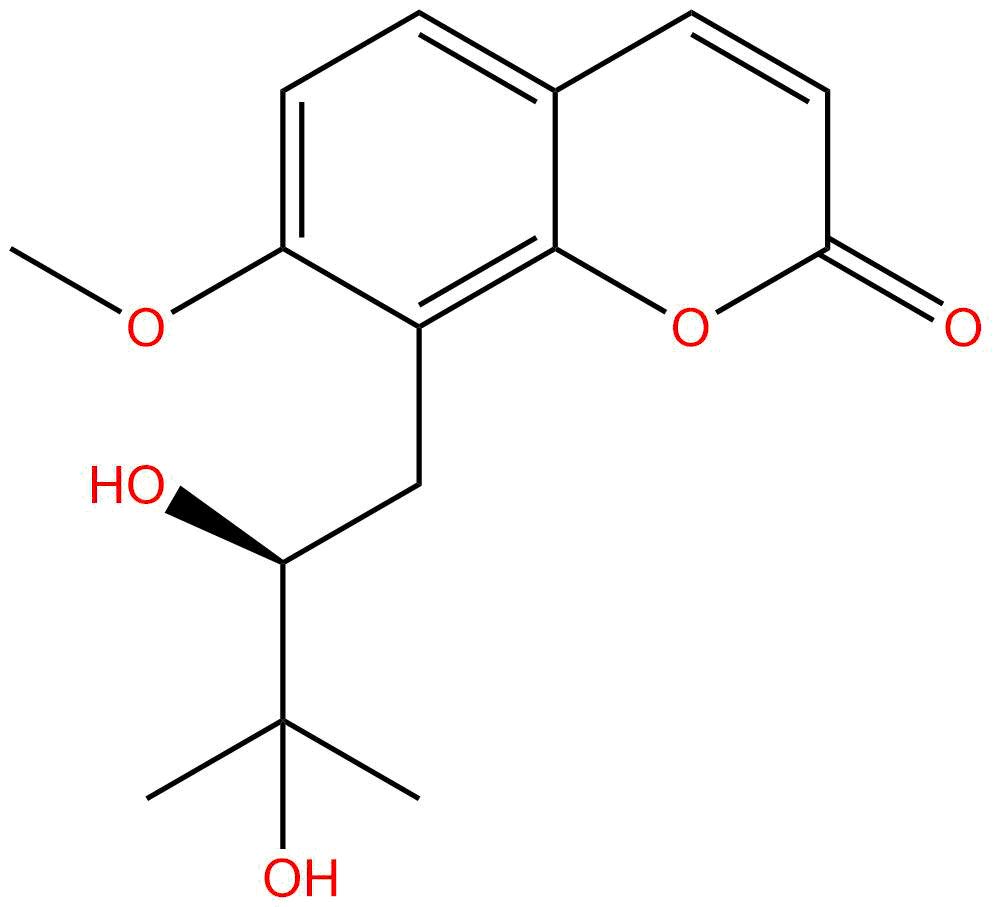


Product name: Meranzin hydrate
Synonym name:
Catalogue No.: SBP00486
Cas No.: 5875-49-0
Formula: C15H18O5
Mol Weight: 278.304
Botanical Source: Citrus reticulata Blanco
Physical Description:
Type of Compound: Coumarins
Purity: 95%~99%
Analysis Method: HPLC-DAD or/and HPLC-ELSD
Identification Method: Mass, NMR
Packing: Brown vial or HDPE plastic bottle
Storage: Store in a well closed container, protected from air and light. Put into refrigerate or freeze for long term storage.
Whenever possible, you should prepare and use solutions on the same day. However, if you need to make up stock solutions in advance, we recommend that you store the solution as aliquots in tightly sealed vials at -20℃. Generally, these will be useable for up to two weeks.
The product could be supplied from milligrams to grams
Inquire for bulk scale.
For Reference Standard and R&D, Not for Human Use Directly.
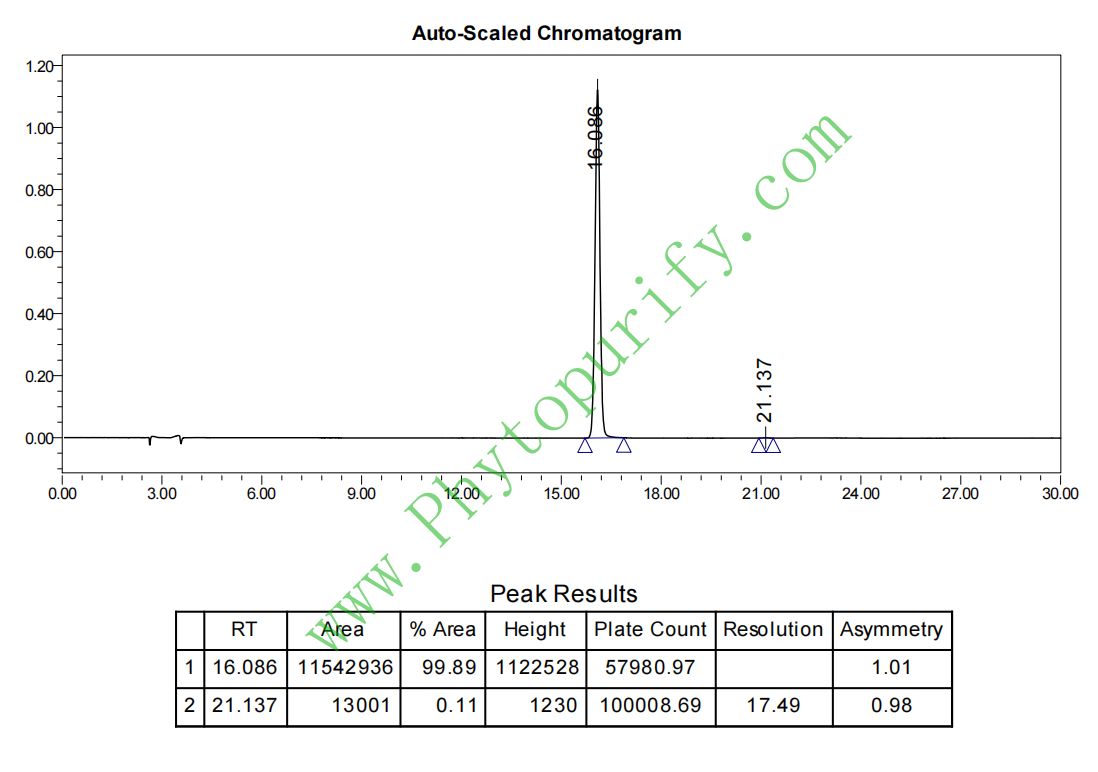
HPLC of Meranzin hydrate
Storage conditions:Short-term storage at 2~8℃, long-term storage at -20 ~ -80℃
79.9000
1.4420
1.4420
.4810
1.5718
4.6818
High
73.0780
3.0119
No
No
No
No
No
Yes
0.9
Yes
No
Yes
Yes
Meranzin hydrate (CAS number: 5875-49-0) is a natural coumarin compound with significant biological activity, with a molecular formula of C15H18O5 and a molecular weight of 278.3040 g/mol. This compound is mainly derived from the traditional Chinese medicine Citrus reticulata and is one of the key absorbing components in the Chinese herbal formula Chaihu Shugan San. In recent years, with the in-depth study of natural product pharmacology, hydrated hesperidone has attracted extensive attention due to its significant antidepressant, gastrointestinal motility promoting, and potential antioxidant and anti atherosclerosis effects.
The research background shows that the pharmacological mechanism of action of hydrated hesperidin involves multi-target regulation. It can exert antidepressant and prokinetic effects by regulating α 2-adrenergic receptors and α - amino-3-hydroxy-5-methyl-4-isoxazolepropionic acid receptors. Its rapid onset is closely related to the mediation of AMPA receptors and the regulation of brain-derived neurotrophic factor through the ERK1/2 pathway. In addition, the compound can also simulate the promoting effect of Fructus Aurantii on intestinal motility, which is at least partially achieved by stimulating H1 histamine receptors. These findings not only reveal the multiple pharmacological activities of hydrated hesperidin, but also provide scientific basis for its application in mood disorders, gastrointestinal dysfunction, and oxidative stress-related diseases.
The chemical structure of hydrated hesperidone belongs to coumarin derivatives, and its SMILES is expressed as: COc1ccc2ccc (=O) oc2c1C C@H C(C)(C)O。 This structure contains a coumarin core (benzo [a] - pyranone) and is connected to methoxy, hydroxyl, and tert butanol structural fragments. The chiral center ([C @ H]) in the molecule suggests the possibility of stereoisomers, which may have important implications for its biological activity and pharmacokinetic properties.
From the perspective of physical and chemical parameters, the molecular weight of hydrated hesperidone is 278.3040 g/mol, and the topological polar surface area (TPSA) is 79.9000 Å ², indicating that the molecule has moderate polarity. Its lipid water partition coefficients (LogP and LogD) are both 1.4420, indicating that the compound has moderate lipophilicity, which is conducive to transmembrane absorption and distribution. The water solubility parameter is 0.4810 (unit may be mg/mL or log mol/L, depending on the context, usually indicating moderate to low water solubility), but the permeability of Caco-2 cells is 4.6818 (usually measured in 10 ⁻⁶ cm/s, with higher values indicating better permeability), indicating its good intestinal absorption potential. The blood-brain barrier (BBB) penetration is labeled as "high", which is consistent with its central mechanism of antidepressant action, as drugs need to enter brain tissue to regulate related neural receptors.
These physicochemical properties collectively determine the absorption, distribution, metabolism, and excretion behavior of hydrated hesperetin in organisms, providing a basis for its pharmacological evaluation.
The main plant source of hydrated hesperidin is the dried and mature peel of citrus fruits in the Rutaceae family, namely the traditional Chinese medicine Citrus reticulata. Chenpi has a long history of medicinal use in China, first recorded in the "Shennong Bencao Jing" and classified as a top-grade product. It has a warm nature, a pungent and bitter taste, and can regulate the spleen and lung meridians. It has the effects of regulating qi, strengthening the spleen, drying dampness, and resolving phlegm. In clinical practice, dried tangerine peel is commonly used to treat symptoms such as abdominal distension, overeating, vomiting, diarrhea, cough, and excessive phlegm.
In traditional compound medicine, tangerine peel is often used in combination with other medicinal herbs to enhance its therapeutic effect. For example, the famous Chaihu Shugan San (composed of Chaihu, Chenpi, Chuanxiong, Xiangfu, Fructus Aurantii, Paeonia lactiflora, and Licorice) is a representative formula for soothing the liver and regulating qi. It is used to treat rib pain, chest tightness, and emotional depression caused by liver qi stagnation. Modern pharmacological research has confirmed that Chaihu Shugan San has multiple effects such as anti depression, regulating gastrointestinal function, and protecting the cardiovascular system. Hydrated hesperidone, as one of the important bioactive components of this compound after absorption in the body, is considered as one of the material bases for its antidepressant and gastrointestinal motility regulation.
The discovery of hesperidin from tangerine peel reflects the research path from traditional experience to modern scientific interpretation. Through the separation, identification, and activity screening of the chemical components of Chenpi and its compound, researchers have identified the key active molecule, Hesperidin hydrate, which partially reveals the traditional effects of Chenpi and Chaihu Shugan San on "soothing the liver and relieving depression" and "regulating qi and strengthening the spleen" at the molecular level.
Hydrated hesperidin has a wide range of pharmacological activities, mainly focused on antidepressant, gastrointestinal motility regulation, and antioxidant effects. Its mechanism of action involves multiple signaling pathways and molecular targets.
Mechanism of antidepressant and prokinetic effects:
Research has shown that the antidepressant and gastrointestinal motility like effects of hydrated hesperetin are closely related to its regulation of neurotransmitter receptors. It can regulateα 2-adrenergic receptor This receptor is an important self receptor in the noradrenergic system, and its antagonism or partial regulation can increase the level of noradrenaline in synaptic cleft, thereby producing antidepressant effects. Meanwhile, hydrated hesperidin can also act on the central nervous systemα - Amino-3-hydroxy-5-methyl-4-isoxazolepropionic acid receptor AMPA receptors are key ionotropic glutamate receptors that mediate rapid excitatory synaptic transmission. Hydrated hesperidone activates AMPA receptors, triggering downstream reactions ERK1/2 signaling pathway, and further increase Brain-derived neurotrophic factor The expression. BDNF is an important member of the neurotrophic factor family, closely related to the survival, differentiation, and synaptic plasticity of neurons. Its low level is one of the important pathological mechanisms of depression. Therefore, the rapid action pathway of hydrated hesperetin through AMPA receptor-ERK1/2-BDNF may explain its relatively fast onset of action. In terms of intestinal function, its prokinetic effect has been confirmed to be partially achieved through stimulation H1 histamine receptor Mediated and simulated the pharmacological effects of Fructus Aurantii.
Mechanism of antioxidant action:
According to the provided target information, the action of hydrated hesperidin is also closely related to the antioxidant defense system. The targets of its action include:
- NFE2L2 Nuclear factor E2 related factor 2 is a key transcription factor in cellular antioxidant response. It regulates the expression of a series of antioxidant enzymes and phase II detoxifying enzymes, including SOD1, CAT, GPX1, and HMOX1. Activation of the Nrf2 pathway is the core mechanism by which the body resists oxidative stress.
- SOD1 Superoxide dismutase 1 catalyzes the dismutation of superoxide anion radicals into hydrogen peroxide and oxygen, serving as the first line of defense in the antioxidant system.
- CAT Catalase is responsible for catalyzing the decomposition of hydrogen peroxide into water and oxygen, preventing the accumulation of more toxic reactive oxygen species such as hydroxyl radicals.
- GPX1 Glutathione peroxidase 1 uses reduced glutathione to reduce hydrogen peroxide and lipid peroxides to harmless alcohols and water.
- HMOX1 Heme oxygenase 1 catalyzes the degradation of heme into biliverdin, carbon monoxide, and iron ions. Bilibilin and its reduced product bilirubin are effective endogenous antioxidants.
By acting on these targets, hydrated hesperetin may activate the Nrf2 signaling pathway and upregulate the expression of antioxidant enzymes such as SOD1, CAT, GPX1, HMOX1, thereby enhancing the cell's ability to clear reactive oxygen species and maintain redox balance.antioxidant Its effect is not only its direct pharmacological activity, but also may indirectly contribute to its anti atherosclerosis effect (by reducing the oxidative damage of vascular endothelium) and neuroprotective effect (by reducing the oxidative stress damage of neurons).
In summary, hydrated hesperetin exerts comprehensive pharmacological effects through multiple targets and pathways: it exerts antidepressant effects in the central nervous system by regulating the monoaminergic and glutamatergic systems (α 2-AR, AMPA receptors) and downstream BDNF signaling; Regulating motility in the intestine through the histaminergic system (H1 receptor); Enhance overall antioxidant defense capability at the cellular level by activating the Nrf2 pathway. This multidimensional mode of action gives it unique potential in treating complex diseases such as comorbid depression and gastrointestinal disorders, or chronic diseases related to oxidative stress.
Based on the provided pharmacological parameters, we can conduct a preliminary evaluation of the potential development potential of hydrated hesperidone as a potential drug lead compound. The evaluation will be combined with renowned Lipinski's Five Rules(Rule of Five, Ro5) and other key pharmacokinetic and safety parameters.
Lipinski's Five Rules Compliance Analysis:
The Lipinski rule is an empirical rule for evaluating the oral bioavailability potential of compounds. The parameters of hydrated hesperidin are as follows:
1. Molecular weight (MW):278.3040 g/mol, Less than 500 Da,Comply with。
2. Lipid water partition coefficient (calculated LogP)1.4420, less than 5,Comply with。
3. Number of hydrogen bond donors (HBD)Based on the molecular formula C15H18O5 and its structure, it is inferred that it contains a hydroxyl group (- OH) and may also have a hydrated structure, but the donor is usually the hydrogen on the hydroxyl group. The quantity is about 1-2, less than 5,Comply with。
4. Number of hydrogen bond acceptors (HBA)The molecule contains 5 oxygen atoms (from methoxy, lactone carbonyl, hydroxyl, etc.), all of which can act as hydrogen bond acceptors. The number is 5, equal to but not exceeding 10,Comply with。
Therefore, hydrated hesperidol fully meets all four criteria of Lipinski's five rules, indicating its good oral absorption potential.
Analysis of other key pharmacological parameters:
- Topological Polarity Surface Area (TPSA): 79.9000 Å ². It is generally believed that TPSA<140 Å ² is beneficial for good cell membrane permeability. This value is moderate, with its good Caco-2 permeability (4.6818) and High BBB penetration The consistent predictions support its ability to effectively penetrate the intestinal barrier and be absorbed into the bloodstream, even penetrating the blood-brain barrier to act on central targets, which is crucial for its antidepressant activity.
- Plasma protein binding rate (PPB)73.0780%. Belongs to a moderately high protein binding rate. High protein binding can affect the free concentration, distribution volume, and clearance rate of drugs, but 73% is still within the range of many successful drugs, and attention needs to be paid to its impact on drug efficacy and drug interactions in subsequent development.
- Water solubility The parameter value is 0.4810 (unit to be specified, assuming mg/mL). If so, it belongs to the category of slightly soluble or poorly soluble. This is a potential challenge in its physicochemical properties, which may affect the development of formulations and their in vivo dissolution and absorption. Optimization needs to be carried out through salt form, crystal form screening, or formulation techniques (such as solid dispersions, nanocrystals, etc.).
- Toxicity risk:
- Genotoxicity The Ames test result is 0.9 (usually<1.5 or 2.0 is considered negative),chromosome aberration For 'none', it indicates that there is no significant risk of mutagenicity.
- cardiotoxicity:HERG inhibition For 'no', it reduces the cardiac risk of causing QT interval prolongation and apical torsion type ventricular tachycardia.
- Phototoxicity Marked as' yes', this is a safety signal that requires caution. Coumarin compounds, due to their conjugated structure, may absorb ultraviolet light and produce excited states, leading to photosensitive reactions. A detailed optical security assessment must be conducted in subsequent development.
- Hepatotoxicity indicators:Serum alkaline phosphatase (Ser_LK), aspartate aminotransferase (Ser_ST), alanine aminotransferase (Ser_LT) All are marked as "Yes", indicating that under experimental conditions, an increase in enzymatic indicators related to liver cell damage or bile stasis may be observed, and further in vivo liver toxicity evaluation is needed.
- Other Skin sensitization and respiratory sensitization are both "no", and the maximum recommended therapeutic dose (MRTD) is not indicated with specific information.
Comprehensive evaluation:
Hydrated Hesperidin Has shown excellent potential in oral absorption and brain permeability And it conforms to the basic rules of drug properties, without serious risks of cardiac toxicity and genetic toxicity. The main challenge lies in Potential phototoxicity and hepatotoxicity signals, and possibly lower Water solubility When developing it into a drug, it is important to focus on:
1. In depth preclinical safety evaluation Especially for phototoxicity experiments and repeated administration toxicity experiments (with a focus on the liver).
2. Pharmacokinetic optimization Although it has good absorption and BBB penetration, it is necessary to comprehensively study its ADME characteristics (absorption, distribution, metabolism, excretion).
3. Formulation development Improve the formulation based on its solubility.
Research Status:
At present, research on hydrated hesperidin has progressed from early chemical composition identification to pharmacological activity screening and mechanism of action exploration. A large number of in vitro and in vivo experiments (mainly animal models) have confirmed its clear effects in anti depression, promoting gastrointestinal peristalsis, and antioxidation, and preliminarily revealed its multi-target mechanism on α 2-AR, AMPA receptors, H1 receptors, and Nrf2/antioxidant enzyme pathways. These studies are mostly based on the material basis research background of traditional Chinese medicine formulas (such as Chaihu Shugan San), aiming to clarify their pharmacological components. However, there are also some limitations to the research: most studies are still in the preclinical stage; Very little is known about its pharmacokinetic behavior, exact effective dosage, and safety profile in the human body; The research on the effects of its stereochemistry on activity and its interactions with other drugs or substances in the body is not yet sufficient.
Application prospects:
1. As a lead compound for antidepressant drugs Given its multi-target mechanism of action (regulating the monoaminergic and glutamatergic systems) and good BBB penetration, hydrated hesperidone has the potential to be developed as a novel antidepressant, particularly for patients with poor efficacy of traditional SSRIs, or with the advantage of faster onset.
2. Treating functional gastrointestinal diseases Its promoting gastrointestinal motility suggests that it has application value in the treatment of functional dyspepsia, irritable bowel syndrome (constipation type) and other diseases, and may become a gastrointestinal motility regulator derived from traditional Chinese medicine.
3. Develop as a health product or adjuvant therapy for antioxidant stress: By activating Nrf2 pathway, it may be used to prevent or assist in the treatment of diseases closely related to oxidative stress, such as neurodegenerative diseases (Alzheimer's disease, Parkinson's disease), cardiovascular diseases (atherosclerosis), metabolic diseases, etc.
4. Modernization of Traditional Chinese Medicine and Quality Markers As one of the key active ingredients of Chenpi and Chaihu Shugan San, hydrated hesperidin can be used as a quality control marker for these medicinal herbs and compound preparations to evaluate their intrinsic quality and consistency, promote the standardization and internationalization of traditional Chinese medicine.
Future research directions:
- In depth study on the mechanism of action Validate its multi effect synergistic effect in more complex disease models, such as the depression comorbidity gastrointestinal disease model; Using techniques such as molecular docking and gene knockout to more accurately elucidate the details of its interactions with various targets.
- Comprehensive preclinical development Conduct systematic pharmacodynamic, pharmacokinetic, and toxicological studies that meet drug registration requirements, with a focus on addressing identified potential risks of phototoxicity and hepatotoxicity.
- Structural optimization and derivative development Using it as the parent nucleus, structural modifications are carried out with the aim of enhancing activity, improving water solubility, and reducing toxicity (especially phototoxicity), in order to obtain candidate drugs with greater development value.
- Clinical translational research After completing sufficient preclinical research, gradually advance human clinical trials to evaluate their safety, tolerability, and efficacy for relevant indications.
In summary, hydrated hesperidin is a natural compound derived from traditional Chinese medicine with clear multi-target pharmacological activity. Despite facing challenges such as safety optimization and clinical validation on the road to drug development, its unique chemical structure and diverse biological activities have shown broad application prospects in innovative drug research and development, elucidation of the mechanism of action of traditional Chinese medicine, and development of large-scale health products.
