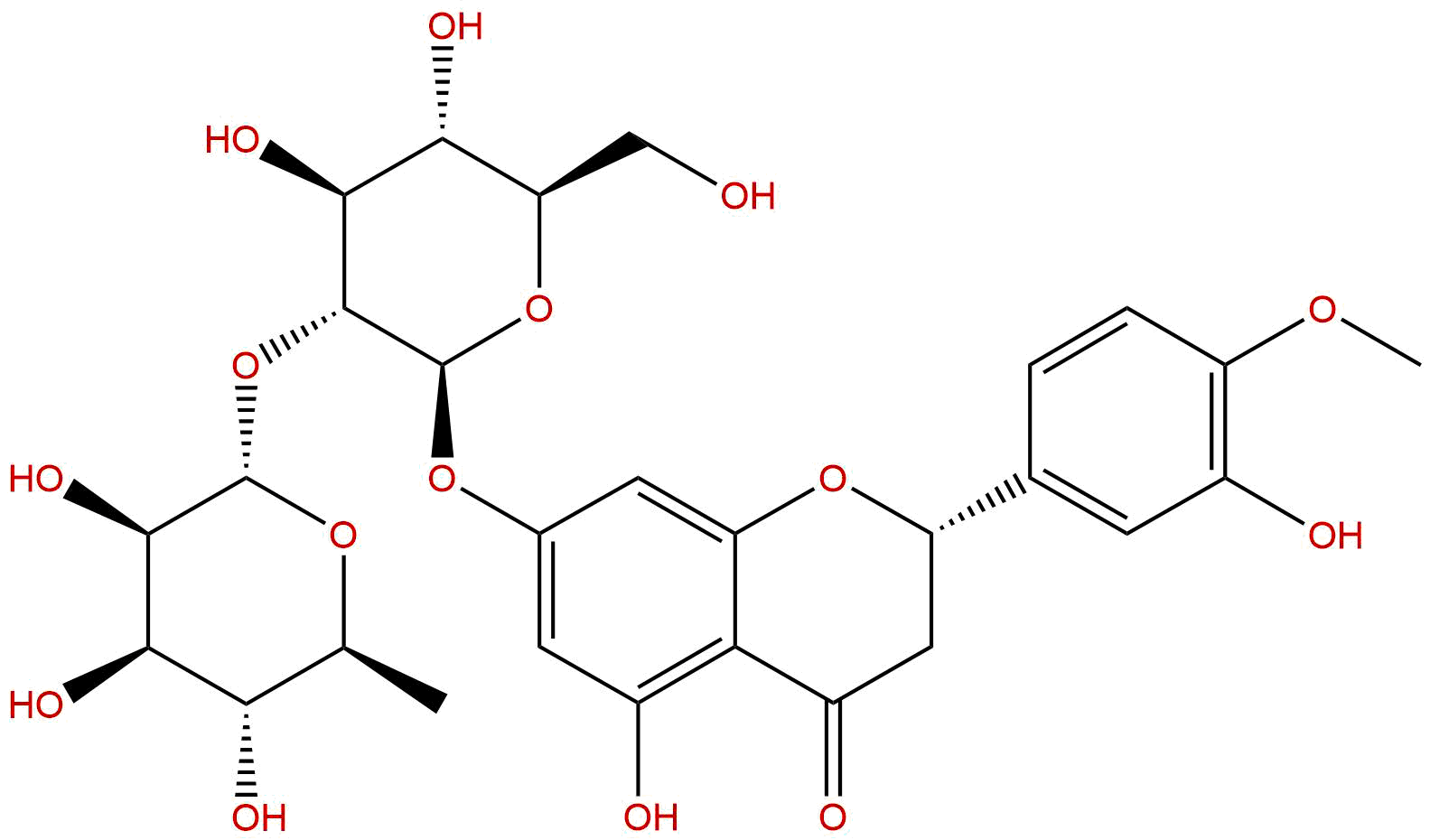


Product name: Neohesperidin
Synonym name: Hesperetin 7-neohesperidoside
Catalogue No.: BP0991
Cas No.: 13241-33-3
Formula: C28H34O15
Mol Weight: 610.565
Botanical Source: Citrus aurantium and other Citrus spp
Physical Description: Powder
Type of Compound: Flavonoids
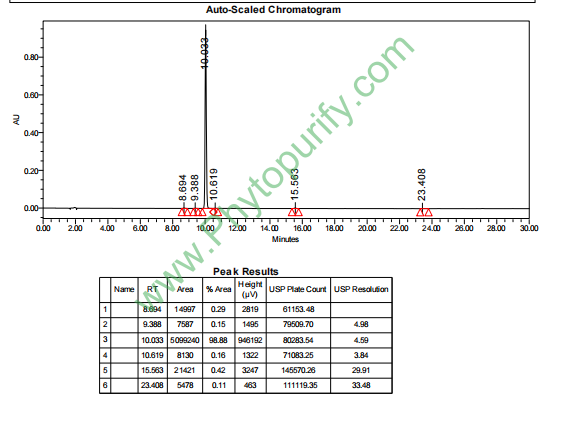
Purity: 95%~99%
Analysis Method: HPLC-DAD or/and HPLC-ELSD
Identification Method: Mass, NMR
Packing: Brown vial or HDPE plastic bottle
Storage: Store in a well closed container, protected from air and light. Put into refrigerate or freeze for long term storage.
Whenever possible, you should prepare and use solutions on the same day. However, if you need to make up stock solutions in advance, we recommend that you store the solution as aliquots in tightly sealed vials at -20℃. Generally, these will be useable for up to two weeks.
The product could be supplied from milligrams to grams, up to kilograms
Inquire for bulk scale.
Descriptions:
Neohesperidin is a natural new nutrition sweetener, widely existing in plants of dry citrus peel, which can be derived from extraction; since the sweetness is 1,300-1,500 times greater than that of sugar, neohesperidin are widely used in fruit juices, wines, beverages, bakeries and pharmaceutical formulations, and are particularly suitable for consumption by diabetic patients.[1]
Neohesperidin exhibits antioxidant activity (IC50=22.31ug/mL) in the 1,1-diphenyl
-2-picryldydrazyl (DPPH) radical-scavenging assay; neohesperidin (50mg/kg) significantly inhibits 55.0% of HCl/ethanol-induced gastric lesions, and increases the mucus content; In pylorus ligated rats, neohesperidin (50 mg/kg) significantly decreases the volume of gastric secretion and gastric acid output, and increases the pH; suggests that neohesperidin isolated from PF may be useful for the treatment and/or protection of gastritis. [2]
Neohesperidin has free radical scavenging activity, can induce cellular apoptosis in human breast adenocarcinoma MDA-MB-231 cells via activating the Bcl-2/Bax-mediated signaling pathway.[3]
Neohesperidin can attenuate cerebral ischemia-reperfusion injury via the inhibition of neuronal and oxidative stress through the regulation of the apoptotic pathway and activating the Akt/Nrf2/HO-1 pathway.[4]
Neohesperidin and hesperidin are the major flavanones isolated from bittersweet orange, they have potent anti-inflammatory effects in various inflammatory models, they significantly aggravate gastric damage caused by indomethacin administration as evidenced by increased ulcer index and histopathological changes of stomach.[5]
Neohesperidin, Albiflorin, and Aloeemodin have a potent inhibitory effect on Aβ1-40 and Aβ1-42 aggregation, and have neuroprotective effect on primary hippocampal cells against β-Amyloid induced toxicity.[6]
References:
[1] Yang H J, Jeong S Y, Choi N S, et al. ??????, 2010,11, 1691-6.
[2] Lee J H, Lee S H, Kim Y S, et al. Phytother Res, 2009, 23(12):1748–53.
[3] Xu F, Zang J, Chen D, et al. Nat Prod Commun, 2012, 7(11):1475-8.
[4] Wang J J, Cui P. J Asian Nat Prod Res, 2013, 15(9):1023-37.
[5] Hamdan D I, Mahmoud M F, Wink M, et al. Environ Toxicol Phar, 2014, 37(3):907-15.
[6] Ho S L, Poon C Y, Lin C, et al. Curr Alzheimer Res, 2015, 12(5):424-33.
[7] Wang Q H, Gao S H, Xiong X J, et al. Academic Journal of Second Military Medical University, 2015, 36(8):917-21.
HPLC of Neohesperidin
Storage conditions:Short-term storage at 2~8℃, long-term storage at -20 ~ -80℃
234.2900
-.0247
-.0574
5.9774
.5235
.1069
Low
73.5445
4.8121
Yes
No
No
No
No
No
0.0
Yes
No
Yes
No
Natural products, as an important source of drug discovery, play an irreplaceable role in the history of human health maintenance and disease treatment. Flavonoids, as the largest class of polyphenolic compounds in plant secondary metabolites, have attracted much attention due to their extensive biological activities. Among them, Neohesperidin, as a typical dihydroflavonoid glycoside compound, is abundant in citrus plants of the Rutaceae family and is one of the important sources of bitterness in citrus fruits. Its chemical name is 4 '- methoxy-3,5,7-trihydroxyflavanone-7-rhamnoside, molecular formula is C ₂₈ H ∝₄ O ₁₅, and CAS number is 13241-33-3.
The research history of neohesperidin can be traced back to the early 20th century, when scientists isolated various flavonoids from citrus fruits and preliminarily identified their structures. However, for a long time, neohesperidin has been mainly regarded as a bitter substance that affects the flavor of citrus fruits, and its biological function has not been fully valued. With the rapid development of modern pharmacology and molecular biology technologies, especially the in-depth exploration of active ingredients in natural products, the various pharmacological activities of neohesperidin have gradually been revealed. Research has shown that neohesperidin has significant antioxidant, anti-inflammatory, anti-tumor, neuroprotective, and cardiovascular protective effects. More importantly, recent studies have found that neohesperidin can enhance the nuclear transport of β - catenin by upregulating the Wnt/β - catenin signaling pathway, thereby promoting the differentiation of bone marrow stromal cells. This discovery opens up new prospects for its application in bone metabolism diseases and regenerative medicine.
In view of the potential therapeutic value of neohesperidin in many disease models, especially in metabolic diseases (such as diabetes) and skeletal diseases, a systematic review of neohesperidin has important academic significance and application value. This article will comprehensively and deeply elaborate on the chemical structure, plant origin, pharmacological activity, mechanism of action, pharmacological evaluation, and clinical application prospects of neohesperidin, aiming to provide theoretical basis and reference for further research and development of this natural product.
New hesperidin belongs to the class of dihydroflavonoid glycosides, and its basic parent nucleus is flavanone, which means the C-ring of the C6-C3-C6 skeleton is in a saturated state. Its structural feature is that the C-7 hydroxyl group of the A ring is connected to a disaccharide group (neohesperidose, i.e. α - L-rhamnose - (1 → 2) - β - D-glucose) through a glycosidic bond, forming 7-O-neohesperidoside; The C-4 'position of the B ring is substituted with a methoxy group (- OCH ∝); The C-5 and C-7 positions of the A ring each have a hydroxyl group (- OH), and the C-3 position has a hydroxyl group. This specific glycosylation pattern and substituent position determine the unique physicochemical properties and biological activity of neohesperidin.
From the perspective of physical and chemical properties, the molecular weight of neohesperidin is 610.5650 Da, which is a medium-sized molecule. Its lipid water partition coefficient (LogP) is -0.0247, indicating that its hydrophilicity is slightly stronger than its lipophilicity, which is closely related to the presence of multiple hydroxyl and sugar groups in its molecule. The polar surface area (TPSA) is as high as 234.2900 Å ², which is much higher than the usual requirement of 140 Å ² for oral drugs, indicating that its polarity is high and its membrane permeability may be limited. In terms of water solubility, the solubility of neohesperidin in water is about 5.9774 mg/mL, which belongs to the category of slight solubility. This will to some extent affect its oral bioavailability. It is worth noting that the blood-brain barrier (BBB) penetration ability of neohesperidin has been evaluated as "low", which limits its direct application in central nervous system diseases, but may also mean that its peripheral effects are more prominent. In addition, the risk assessment of hERG inhibition is "no", and the Ames test result is 0.0, indicating that its cardiac toxicity and mutagenicity risk are low, and it has good preliminary safety characteristics.
In terms of physical form, neohesperidin is usually a white to pale yellow crystalline powder with certain hygroscopicity. Under ultraviolet light, its methanol solution exhibits characteristic absorption peaks at approximately 283 nm and 328 nm, which can be used for qualitative and quantitative analysis. Under acidic conditions, neohesperidin can undergo hydrolysis, removing glycosides to produce hesperetin, a glycoside. In addition, neohesperidin is unstable in alkaline solutions and is prone to ring opening to form chalcone compounds, leading to darkening of color.
New hesperidin mainly exists in the Rutaceae citrus genus(Citrus)One of the most abundant flavonoids in citrus fruits is found in the fruits, peels, flowers, and leaves of plants. Common plants rich in neohesperidin include lime(Citrus aurantium)Grapefruit(Citrus paradisi)Yuzu(Citrus maxima)Lemon(Citrus limon)And some citrus hybrid varieties. It is worth noting that the distribution of neohesperidin in citrus fruits is not uniform, and the content in the peel (especially the white skin layer) and flesh is usually higher than that in the juice. In addition, there are significant differences in the content of neohesperidin among citrus fruits of different varieties, maturity levels, and growth environments. For example, in immature lime fruits, the content of neohesperidin is often higher, which is also one of the reasons for its strong bitterness.
In addition to citrus plants, neohesperidin has also been found in small amounts in other families and genera, such as some Rhamnaceae plants, but its content is much lower than that of citrus plants. Therefore, the processing by-products of citrus fruits, such as peel, pomace, seeds, etc., become ideal raw materials for extracting new hesperidin, which not only realizes the resource utilization of waste, but also reduces production costs.
The extraction method of neohesperidin has undergone an evolution from traditional to modern. The traditional extraction methods mainly include solvent extraction and water extraction. The solvent extraction method often uses methanol, ethanol, acetone, or their aqueous solutions as extraction solvents, and is carried out through soaking, reflux, or percolation. Among them, ethanol water mixed solvents are widely used due to their high safety, low cost, and good extraction efficiency. The water extraction method utilizes the slight solubility of neohesperidin in water for extraction, but the efficiency is relatively low and usually requires a combination of heating or ultrasound assistance.
With the development of green chemistry and efficient extraction technology, a series of modern extraction techniques have been applied to the extraction of neohesperidin, significantly improving the extraction efficiency and purity. These technologies include:
1. Ultrasound assisted extraction (UAE)By utilizing the cavitation effect and mechanical vibration of ultrasound, plant cell walls can be destroyed, solvent permeation and solute diffusion can be accelerated, resulting in higher extraction rates in a shorter period of time.
2. Microwave assisted extraction (MAE)By utilizing the penetrability and selective heating of microwaves, the internal temperature of plant cells rapidly increases, leading to cell rupture and rapid dissolution of target components. This method has the advantages of short extraction time, low solvent consumption, and low energy consumption.
3. Enzyme Assisted Extraction (EAE)By adding cellulases, pectinases, etc., cellulose and pectin in plant cell walls are degraded, mass transfer resistance is reduced, and the dissolution rate of neohesperidin is improved. This method has mild conditions and is beneficial for maintaining the stability of the active ingredients.
4. Supercritical fluid extraction (SFE)Using supercritical CO ₂ as the extraction solvent, selectively extract the target component by adjusting pressure and temperature. This method has no solvent residue and is environmentally friendly, but the equipment cost is high and the extraction efficiency of new hesperidin with high polarity is limited. It usually requires the addition of entrainers (such as ethanol) to improve.
The crude extract after extraction usually needs to undergo further separation and purification steps to obtain high-purity neohesperidin. Common purification methods include macroporous adsorption resin column chromatography (such as HPD-100, AB-8, etc.), polyamide column chromatography, silica gel column chromatography, and preparative high-performance liquid chromatography (Prep-HPLC). Among them, the macroporous adsorption resin method has become the mainstream purification method for industrial production of neohesperidin due to its advantages such as large adsorption capacity, easy desorption, reusability, and low cost.
The pharmacological activity research of neohesperidin is one of the hot spots in the field of natural products in recent years. Its scope of action is broad, covering antioxidant, anti-inflammatory, anti diabetes, bone protection, cardiovascular protection, neuroprotective and anti-tumor aspects.
1. Antioxidant activity
The antioxidant activity of neohesperidin is one of its most fundamental and core pharmacological effects. The multiple phenolic hydroxyl groups (C-5, C-7, C-3 ') in its molecular structure are excellent hydrogen atom donors, capable of effectively scavenging various free radicals such as hydroxyl radicals (· OH), superoxide anion radicals (O ₂⁻ ·), peroxynitrite anions (ONOO ⁻), etc. In vitro experiments have shown that neohesperidin can significantly reduce the levels of oxidative stress markers such as malondialdehyde (MDA), while increasing the activity of endogenous antioxidant enzymes such as superoxide dismutase (SOD), glutathione peroxidase (GSH Px), and catalase (CAT). In cell models, neohesperidin can inhibit the generation of reactive oxygen species (ROS) induced by hydrogen peroxide (H ₂ O ₂) or lipopolysaccharide (LPS), protecting cells from oxidative damage.
2. Anti inflammatory activity
New hesperidin has shown significant anti-inflammatory effects in various acute and chronic inflammation models. The mechanism mainly involves inhibiting the production and release of inflammatory mediators. Research has shown that neohesperidin can reduce the production of prostaglandin E ₂ (PGE ₂) and nitric oxide (NO) by inhibiting the activation of the nuclear factor kappa B (NF - κ B) signaling pathway, downregulating the expression of cyclooxygenase-2 (COX-2) and inducible nitric oxide synthase (iNOS). At the same time, it can also reduce the levels of pro-inflammatory cytokines such as tumor necrosis factor - α (TNF - α), interleukin-1 β (IL-1 β), and interleukin-6 (IL-6). In animal models, neohesperidin has improved colitis induced by dextran sulfate sodium (DSS), toe swelling induced by carrageenan, and arthritis induced by collagen.
3. Anti diabetes activity
Neohesperidin shows great potential in the treatment of diabetes and its complications. Its mechanism of action is multi-target and multi pathway. Firstly, neohesperidin can activate AMP activated protein kinase (AMPK), which is a key regulatory factor in cellular energy metabolism. Its activation can promote glucose uptake and fatty acid oxidation, inhibit hepatic gluconeogenesis, and thus lower blood glucose levels. Secondly, neohesperidin can inhibit the activity of sodium glucose cotransporter 2 (SGLT2), reduce renal reabsorption of glucose, and increase urinary glucose excretion, providing ideas for the development of new hypoglycemic drugs. In addition, neohesperidin can regulate the activity of glucokinase (GCK), improve pancreatic beta cell function, and promote insulin secretion. In terms of complications of diabetes, neohesperidin can alleviate the pathological damage of diabetes nephropathy, retinopathy and peripheral neuropathy through antioxidant and anti-inflammatory effects.
4. Bone protective activity
The effect of neohesperidin on the skeletal system is an important breakthrough in recent years. Research has confirmed that neohesperidin can promote the differentiation of bone marrow stromal cells (BMSCs) into osteoblasts and inhibit the formation and activity of osteoclasts. The core mechanism is to upregulate the Wnt/β - catenin signaling pathway. After binding to receptors on the cell membrane, Wnt protein inhibits the degradation complex of β - catenin, causing β - catenin to accumulate in the cytoplasm and be transported to the nucleus, where it binds to T cell factor/lymphoenhancer factor (TCF/LEF) transcription factors and initiates the expression of downstream osteogenic related genes such as Runx2, Osterix, ALP, OCN, etc. New hesperidin can enhance the nuclear transport of β - catenin, effectively promoting the osteogenic differentiation of BMSCs. In a rat model of ovariectomy induced osteoporosis, neohesperidin can significantly increase bone density, improve bone microstructure, and demonstrate potential for anti osteoporosis.
5. Other activities
In addition to the above main activities, neohesperidin also has cardiovascular protective effects (such as lowering blood lipid, anti atherosclerosis, and protecting myocardial ischemia reperfusion injury), neuroprotective effects (such as improving the cognitive function of Alzheimer's disease model mice, inhibiting the aggregation of β - amyloid protein (APP)), anti-tumor effects (such as inhibiting the proliferation of various cancer cells, inducing apoptosis), and antidepressant and anti anxiety effects.
The pharmacological activity of neohesperidin is the result of its interaction with multiple molecular targets, exhibiting typical "multi-target, multi pathway" action characteristics. A deep understanding of its molecular mechanism is crucial for guiding its clinical application and structural optimization.
1. Core signaling pathway: Wnt/β - catenin pathway
As mentioned earlier, the Wnt/β - catenin pathway is the core mechanism by which neohesperidin exerts bone protective effects. New hesperidin may act directly or indirectly on upstream or downstream nodes of this pathway. Specifically, it may increase the stable intracellular level of β - catenin and promote its translocation into the nucleus by inhibiting the activity of glycogen synthase kinase-3 β (GSK-3 β) and reducing the phosphorylation degradation of β - catenin. In addition, neohesperidin may upregulate the expression of Wnt ligands (such as Wnt3a) or enhance the interaction between Frizzled receptors and LRP5/6 co receptors, thereby initiating a cascade reaction. The activation of this pathway not only promotes osteogenic differentiation, but may also play a role in other pharmacological effects such as anti-inflammatory and anti-tumor effects.
2. Energy metabolism regulation: AMPK pathway
AMPK (PRKAA1) is a cellular energy receptor that plays a central role in regulating glucose and lipid metabolism. New hesperidin can activate AMPK mainly through two ways: one is to increase the intracellular AMP/ATP ratio, indirectly activating AMPK; The second possibility is that it may directly bind to the gamma subunit of AMPK and conformationally activate AMPK. Activated AMPK promotes fatty acid oxidation and glucose uptake by phosphorylating downstream target proteins such as acetyl CoA carboxylase (ACC) and mammalian rapamycin target protein (mTOR), while inhibiting liver gluconeogenesis and fat synthesis. This explains the role of neohesperidin in improving insulin resistance, lowering blood sugar and blood lipids.
3. Inflammation and oxidative stress regulation: NF - κ B and Nrf2 pathways
The anti-inflammatory effect of neohesperidin is mainly attributed to its inhibition of the NF - κ B pathway. It may inhibit the activity of I κ B kinase (IKK), prevent the phosphorylation and degradation of I κ B α, thereby causing NF - κ B (p65/p50) dimers to remain in the cytoplasm and unable to enter the nucleus to initiate the transcription of pro-inflammatory genes. Meanwhile, neohesperidin is also an effective antioxidant that can activate the nuclear factor E2 related factor 2 (Nrf2) pathway. Nrf2 is the main regulator of the cellular antioxidant defense system, and neohesperidin can promote the dissociation of Nrf2 from Keap1, causing it to translocate into the nucleus and bind to antioxidant response elements (ARE), upregulating the expression of a series of antioxidant enzymes (such as SOD, CAT, HO-1, NQO1), thereby enhancing cellular antioxidant capacity.
4. Other key targets
- SGLT2 New hesperidin can inhibit the activity of SGLT2 in renal proximal tubules, reduce glucose reabsorption, and exert hypoglycemic effects. The mechanism may be related to the competitive binding of SGLT2 to glucose binding sites.
- GCK New hesperidin may regulate or affect its expression through conformational changes, enhance GCK activity, promote glucose phosphorylation in liver cells and pancreatic beta cells, and thereby regulate blood glucose homeostasis.
- PTPN1 Protein tyrosine phosphatase 1B (PTPN1) is a negative regulator of the insulin signaling pathway. New hesperidin may improve insulin resistance by inhibiting the activity of PTPN1, prolonging the phosphorylation state of insulin receptors, enhancing insulin signaling, and improving insulin resistance.
- MAOA Monoamine oxidase A (MAOA) is a key enzyme that degrades monoamine neurotransmitters such as serotonin and norepinephrine. The inhibitory effect of neohesperidin on MAOA may be related to its antidepressant and anti anxiety activities.
- ESR2 Estrogen receptor beta (ESR2) plays an important role in bone metabolism, cardiovascular system, and central nervous system. New hesperidin may serve as a selective regulator of ESR2, exerting a protective effect similar to estrogen, especially in the prevention and treatment of postmenopausal osteoporosis.
In summary, neohesperidin exerts its broad pharmacological activity by acting on multiple signaling pathways such as Wnt/β - catenin, AMPK, NF - κ B, Nrf2, as well as key targets such as SGLT2, PTPN1, MAOA, ESR2, etc. This multi-target mode of action is its advantage, but it also increases the complexity of studying its mechanism of action.
To transform neohesperidin from a natural active ingredient into a clinical drug, a systematic evaluation of its pharmacological properties is necessary, with pharmacokinetic characteristics being a key step.
1. Analysis of pharmacological parameters
Based on the provided pharmacological parameters, neohesperidin exhibits some typical natural product characteristics. Its molecular weight (610.57 Da) and TPSA (234.29 Å ²) both significantly exceed the range of Lipinski's "Five Rules" (MW<500, TPSA<140), indicating that its oral absorption may be poor. LogP is negative (-0.0247), indicating strong hydrophilicity and unfavorable passive diffusion through biofilms. Water solubility (5.98 mg/mL) is acceptable, but considering its high polarity, dissolution and permeation in the gastrointestinal tract may still face challenges. Fortunately, the low risk of hERG inhibition and negative Ames test provide initial assurance of its safety. Overall, the main challenge facing the pharmacological properties of neohesperidin is its low oral bioavailability.
2. Absorption and bioavailability
The oral bioavailability of neohesperidin is usually low, mainly due to its high polarity and large molecular weight, resulting in poor permeability in the intestine. In addition, neohesperidin may be metabolized by gut microbiota in the intestine. Research has shown that after oral administration of neohesperidin, it can be hydrolyzed by bacterial β - glucosidase and α - rhamnosidase in the intestine, removing glycosides to produce neohesperidin. The molecular weight of neohesperetin is relatively small (302.28 Da), with enhanced lipid solubility, making it more easily absorbed by intestinal epithelial cells. Therefore, neohesperidin may exist in its prodrug form, and its in vivo active portion is attributed to its metabolite neohesperidin. However, neohesperetin also undergoes rapid phase II metabolism (such as glucuronidation and sulfation) in the body, further affecting its bioavailability.
3. Distribution, metabolism, and excretion
After absorption into the bloodstream, neohesperidin and its metabolites mainly bind to plasma proteins. Due to its high polarity, its distribution volume may be small and mainly distributed in the extracellular fluid. As mentioned earlier, its ability to penetrate the blood-brain barrier is low, which limits its application in the central nervous system. In terms of metabolism, neohesperidin is mainly metabolized in the liver and intestines. Cytochrome P450 enzymes (such as CYP3A4) in the liver may be involved in the hydroxylation of their glycosides and other phase I metabolism, while phase II metabolism (glucuronic acid binding, sulfate binding) is their main metabolic pathway. The main excretion pathway is renal excretion, and some may enter the intestine through bile excretion, forming the enterohepatic circulation.
4. Strategies for improving bioavailability
Given the low bioavailability of neohesperidin, researchers have explored various strategies to improve its pharmacokinetic properties. These strategies include:
- Structural modification By chemical synthesis or biotransformation, the sugar or hydroxyl groups of neohesperidin are modified, such as introducing methyl, ethyl, acetyl groups, etc., to reduce polarity and improve lipid solubility. For example, preparing ester prodrugs of neohesperidin can improve its intestinal permeability.
- Formulation design Using nanotechnology (such as liposomes, nanoemulsions, solid lipid nanoparticles, polymer nanoparticles) to encapsulate neohesperidin can significantly improve its solubility, stability, and oral bioavailability. Phospholipid complexes are also an effective means of solubilization and absorption promotion.
- route of administration Changing the route of administration, such as transdermal, nasal, or injection administration, can bypass first pass effects and absorption disorders in the gastrointestinal tract. For example, the development of freeze-dried powder injections for injection of new hesperidin can be used for the treatment of acute diseases.
- combination therapy Combined with P-glycoprotein (P-gp) inhibitors or intestinal metabolic enzyme inhibitors, it can reduce the efflux and metabolism of neohesperidin and its metabolites, thereby improving its bioavailability.
New hesperidin, with its multi-target and multi pathway pharmacological activities, has shown broad application prospects in the prevention and treatment of various diseases, especially in the fields of metabolic diseases and skeletal system diseases.
1. diabetes and its complications
Since neohesperidin can reduce blood glucose and improve insulin resistance by activating AMPK, inhibiting SGLT2, regulating GCK and PTPN1 and other targets, it is expected to be developed as a new, multi mechanism anti diabetes drug or dietary supplement. Compared with existing single target hypoglycemic drugs such as metformin and SGLT2 inhibitors, the multi-target effect of neohesperidin may bring more comprehensive blood glucose control effects and may reduce the side effects caused by excessive inhibition of a single target. In addition, its strong antioxidant and anti-inflammatory activities give it unique advantages in preventing and treating complications such as diabetes nephropathy, retinopathy and neuropathy.
2. Osteoporosis and bone repair
The discovery that neohesperidin promotes osteogenic differentiation of BMSCs by upregulating the Wnt/β - catenin pathway lays a solid foundation for its application in osteoporosis and bone defect repair. At present, the drugs used to treat osteoporosis in clinical practice, such as bisphosphonates, calcitonin, and estrogen receptor modulators, mainly focus on inhibiting bone resorption, while the selection of drugs that promote bone formation is limited, such as parathyroid hormone analogues. As a natural osteogenic enhancer, neohesperidin has the potential to fill this gap. In addition, combining it with biomaterials such as hydroxyapatite and β - tricalcium phosphate to prepare bone tissue engineering scaffolds for repairing bone defects is also a highly promising research direction.
3. Cardiovascular diseases
Neohesperidin has the activities of lowering blood lipid, anti atherosclerosis, and anti myocardial ischemia reperfusion injury, which makes it have application value in the prevention and treatment of cardiovascular diseases. It may delay the process of atherosclerosis by improving vascular endothelial function, inhibiting the proliferation of vascular smooth muscle cells, reducing the formation of foam cells and other mechanisms. As a daily dietary supplement, the correlation between the intake of citrus fruits and the reduced risk of cardiovascular disease can be partially attributed to the effects of flavonoids such as neohesperidin.
4. Neurodegenerative diseases
Although the ability of neohesperidin to penetrate the blood-brain barrier is limited, its neuroprotective effect in Alzheimer's disease (AD) models remains a concern. The mechanism may involve inhibiting abnormal processing of APP, reducing the aggregation of β - amyloid protein (A β), antioxidant stress, and anti neuroinflammation. In the future, by increasing its concentration in the brain through nanocarriers or nasal administration, it is expected to be developed as a candidate drug for treating AD.
5. Future research directions
Despite its broad prospects, the clinical translation of neohesperidin still faces many challenges. Future research should focus on the following aspects:
- In depth mechanism research Using systems biology and network pharmacology methods, comprehensively analyze the "multi-target multi pathway" action network of neohesperidin, and clarify its key targets and signaling pathways in different diseases.
- Optimize pharmacokinetics Systematically improve the oral bioavailability and targeting of neohesperidin through structural modification, dosage form innovation, and other means. Develop new hesperidin derivatives or formulations with independent intellectual property rights.
- safety evaluation Conduct preclinical safety evaluations on long-term toxicity, reproductive toxicity, carcinogenicity, and other aspects of the system to ensure its clinical safety.
- clinical trial: Design and carry out high-quality randomized, double-blind, placebo-controlled clinical trials to verify the effectiveness and safety of neohesperidin in diabetes, osteoporosis and other diseases on the premise of strict compliance with GCP specifications.
- Resource sustainability Establish an efficient, green, and low-cost extraction and purification process for citrus peel and other waste materials to ensure the supply of new hesperidin raw materials and achieve resource recycling.
Neohesperidin, a natural dihydroflavonoid glycoside derived from citrus plants, is gradually transforming from a bitter substance that affects flavor to a "star molecule" with multiple pharmacological activities. Its antioxidant, anti-inflammatory, anti diabetes, bone protection, cardiovascular protection and other activities, as well as its unique mechanism of acting on multiple molecular targets such as SGLT2, PTPN1, MAOA, ESR2 and other molecular targets through regulating Wnt/β - catenin, AMPK, NF - κ B, Nrf2 and other signal pathways, fully demonstrated the great potential of natural products in the treatment of complex diseases.
However, the clinical translation of neohesperidin is not a smooth road. Its inherent physical and chemical properties, especially the low oral bioavailability caused by high polarity and high molecular weight, are the key bottlenecks restricting its drug development. Future research must focus on overcoming this bottleneck and optimizing its pharmacokinetic properties through structural modifications, novel drug delivery systems, and other means. Meanwhile, in-depth basic research and rigorous clinical trials are the necessary steps to verify its effectiveness and safety.
We have reason to believe that with the coordinated development of modern pharmaceutical chemistry, pharmacy, pharmacology and clinical medicine, neohesperidin and its derivatives are expected to become new drugs or functional food ingredients for the treatment of chronic diseases such as diabetes and osteoporosis in the future, making contributions to human health. The journey of transforming neohesperidin from a bitter taste in the citrus orchard, to a glimmer of hope in the laboratory, to a therapeutic tool in clinical practice, is a vivid epitome of the discovery and development of natural product drugs.
