Introduction/Overview
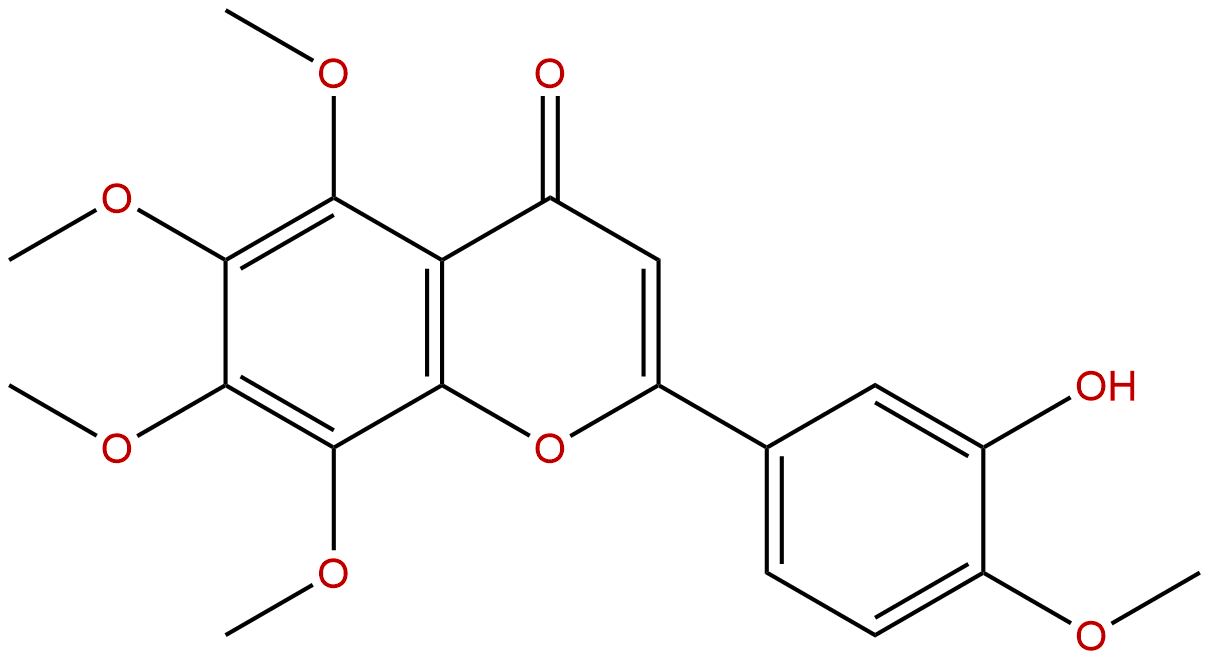
Flavonoids, as a widely present class of secondary metabolites in nature, have long been an important source of drug development and functional food development due to their diverse chemical structures and extensive biological activities. Among them, multi methoxy flavonoids have attracted much attention due to their unique physicochemical properties and significant pharmacological effects. Chenpi extract, as a typical multi methoxy flavonoid in citrus fruits, has been widely studied for its anti-inflammatory, neuroprotective, and anticancer activities. 3 '- demethylated tangerine peel extract, as a natural demethylated derivative of tangerine peel extract, its chemical name is 3' - hydroxy-4 ', 5,6,7,8-pentamethoxyflavone, CAS number 112448-39-2. Compared to its parent compound, 3 '- demethylated tangerine peel extract introduces a free phenolic hydroxyl group at the 3' position of the B ring. This key structural modification not only changes its physicochemical properties, but may also significantly affect its biological activity, target of action, and metabolic fate. In recent years, with the advancement of separation and identification techniques and the deepening of pharmacological research models, 3 '- demethylated tangerine peel extract has gradually emerged from numerous flavonoids, demonstrating potential therapeutic value in fields such as neurodegenerative diseases, metabolic syndrome, cancer, and inflammation related diseases. This article aims to systematically review the chemical properties, natural sources, pharmacological activities, mechanisms of action, and medicinal properties of 3 '- demethylated tangerine peel extract, in order to provide comprehensive scientific references for the in-depth research and future development of this compound.
Chemical structure and physicochemical properties
3 '- demethylated tangerine peel extract is a multi methoxy flavonoid with a molecular formula of C20H20O8 and a molecular weight of 388.3720. Its core structure is the flavonoid mother nucleus (2-phenylchromenone), with specific substitution patterns: the 5th, 6th, 7th, and 8th positions of the A ring are replaced by methoxy groups; The 3 'position of the B ring is a hydroxyl group and the 4' position is a methoxy group. The presence of free phenolic hydroxyl groups at the 3 'position of the B ring is the most significant feature that distinguishes it from naringin (both 3' and 4 'are methoxy groups).
This structural feature profoundly affects its physical and chemical properties. Firstly, the introduction of phenolic hydroxyl groups increases the polarity of the molecule. The calculated topological polar surface area (TPSA) is 96.5900 Å ², which is higher than that of similar compounds with complete methoxylation. This suggests that it may have different solvation behaviors and interaction modes with biomolecules. Secondly, the calculated value of its lipid water partition coefficient (LogP) is 2.3283, indicating that the compound has moderate lipophilicity, which can penetrate cell membranes while retaining some water solubility. However, its predicted water solubility value is relatively low (about 0.0092 mg/mL), indicating that solubilization strategies may need to be considered in formulation development. In addition, this structure is predicted to have high blood-brain barrier permeability, which lays an important material foundation for its application in central nervous system diseases. In terms of preliminary safety prediction, its Ames test value is 0.6, indicating a low risk of mutagenicity; Simultaneously predicting no significant inhibitory effect on hERG potassium channels suggests a lower potential risk of cardiac toxicity. These physicochemical and preliminary safety parameters together depict a molecular profile with good potential for drug like properties.
Plant sources and extraction methods
3 '- demethylated tangerine peel extract is mainly present in the peel, leaves, and seeds of citrus plants in the Rutaceae family, and is an important bioactive component in citrus fruits. Common sources include tangerine peel (Citrus Reticulata Pericarpium), green peel, citrus fruit, as well as the peels of various wide skinned citrus (Citrus reticulata) and their hybrid varieties. Its content is usually lower than that of Chenpi extract, but it may be relatively enriched in specific varieties or maturity stages.
The extraction of 3 '- demethylated tangerine peel extract from plant materials is often carried out using organic solvent extraction method. Methanol, ethanol, acetone, or their aqueous solutions are commonly used extraction solvents due to their good solubility in methoxyflavonoids. In order to improve extraction efficiency, modern extraction techniques such as ultrasound assisted extraction, microwave-assisted extraction, and pressurized liquid extraction have been widely used. These methods destroy plant cell walls through physical means, accelerate solvent permeation and solute diffusion, and can achieve higher yields in a shorter time and with less solvent.
The crude extract contains a large amount of coexisting complex components such as flavonoids, limonoids, volatile oils, and pigments, which require further separation and purification. The conventional separation process includes: first, using macroporous adsorption resins (such as AB-8, D101) for preliminary enrichment to remove water-soluble impurities such as sugars and proteins; Subsequently, silica gel column chromatography, polyamide column chromatography or dextran gel column chromatography were used for subdivision; The final high-purity preparation usually relies on high-performance liquid chromatography, especially preparative high-performance liquid chromatography. The combination of reverse phase C18 chromatography column and methanol water or acetonitrile water gradient elution is an effective method for separating isomers of multi methoxyflavonoids. In recent years, high-speed countercurrent chromatography technology has been successfully applied to the preparation and separation of citrus flavonoid monomers, including 3 '- demethylated tangerine peel extract, due to its advantages of irreversible adsorption and high recovery rate. The optimization of extraction and separation processes is the key to ensuring stable and high-purity material foundations for subsequent pharmacological research and development.
Pharmacological activity research
A large number of in vitro and in vivo studies have shown that 3 '- demethylated tangerine peel extract has various pharmacological activities, and its activity spectrum is closely related to its unique chemical structure.
1. Neuroprotective and cognitive improvement activity: This is one of the most highly anticipated activities of 3 '- demethylated tangerine peel extract. In Alzheimer's disease cell models, this compound can significantly reduce beta amyloid induced neuronal toxicity and inhibit tau protein hyperphosphorylation. In animal experiments, it can improve memory impairment in mice induced by scopolamine or A β injection, and its mechanism is related to enhancing cholinergic system function, inhibiting neuroinflammation, reducing oxidative stress, and promoting the expression of neurotrophic factors. Its excellent ability to penetrate the blood-brain barrier makes it possible for it to function directly in the central nervous system.
2. Anti inflammatory and immune regulatory activity: 3 '- demethylated tangerine peel extract exhibits inhibitory effects on both acute and chronic inflammation models. It can effectively inhibit the excessive production of pro-inflammatory cytokines such as nitric oxide, prostaglandin E2, tumor necrosis factor alpha, and interleukin-6 in macrophages stimulated by lipopolysaccharide. In animal models of arthritis, colitis, etc., this compound can alleviate tissue edema, inflammatory cell infiltration, and tissue damage. Its anti-inflammatory effect is closely related to its regulation of key inflammatory signaling pathways such as nuclear factor kappa B and mitogen activated protein kinase.
3. Antitumor activity: Studies have shown that 3 '- nortangerine can inhibit the proliferation and promote apoptosis of many cancer cell lines (such as colon cancer, breast cancer, lung cancer, liver cancer). Its anti-cancer mechanisms are diverse, including blocking the cell cycle (usually blocking cells in the G0/G1 or G2/M phase), inducing mitochondrial pathway apoptosis, inhibiting cell invasion and migration, and anti angiogenesis. It is worth noting that its cytotoxicity is relatively weak towards certain normal cells, indicating a certain degree of selectivity.
4. Improve metabolic syndrome activity: In terms of metabolic diseases, 3 '- demethylated tangerine peel extract has shown potential to improve insulin resistance, lower blood sugar, and regulate lipid metabolism. It can enhance the uptake of glucose by adipocytes and muscle cells, activate the AMP activated protein kinase signaling pathway. In obese mouse models, this compound can reduce weight gain, lower serum triglyceride and cholesterol levels, and improve liver steatosis.
5. Antioxidant and cardiovascular protective activity: As a compound containing phenolic hydroxyl groups, 3 '- demethylated tangerine peel extract has direct free radical scavenging ability. It can protect vascular endothelial cells from the damage of oxidized low density lipoprotein and inhibit the abnormal proliferation of vascular smooth muscle cells, which contribute to anti atherosclerosis. In addition, it may also have antiplatelet aggregation and vasodilatory effects.
Mechanism of action and molecular targets
The multiple pharmacological activities of 3 '- demethylated tangerine peel extract stem from its precise regulation of multiple intracellular signaling pathways, and its targets have the characteristics of pleiotropy and networking.
1. Regulation of key signaling pathways:
* NF - κ B pathway: This is the core pathway through which it exerts anti-inflammatory and partially anticancer effects. 3 '- demethylated tangerine peel extract can inhibit the activation of I κ B kinase, prevent the degradation of I κ B α and the nuclear translocation of p65/p50 dimer, thereby downregulating the gene transcription of downstream pro-inflammatory and survival factors.
* MAPK pathway: It can inhibit the excessive phosphorylation of extracellular signal regulated kinases, c-Jun N-terminal kinase, and p38 MAPK under inflammatory and stress conditions, thereby affecting cell proliferation, differentiation, and apoptosis decisions.
* PI3K/Akt pathway: This compound can regulate this pathway and may promote its survival signal in nerve cells, while in cancer cells it may inhibit the abnormal activation of this pathway, thereby inducing apoptosis.
* AMPK pathway: In metabolic regulation, 3 '- demethylated tangerine peel extract is an activator of AMPK. Activated AMPK promotes glucose uptake, fatty acid oxidation, and inhibits the synthesis of cholesterol and fatty acids, which is an important mechanism for improving energy metabolism and insulin sensitivity.
* Nrf2/ARE pathway: By activating nuclear factor E2 related factor 2, promoting its binding with antioxidant response elements, and upregulating the expression of phase II detoxifying enzymes and antioxidant enzymes such as heme oxygenase-1 and quinone oxidoreductase-1, it is the core molecular event of its antioxidant stress.
2. Important enzyme and receptor targets:
* Cyclooxygenase-2 and inducible nitric oxide synthase: By inhibiting the transcription and expression of these two key inflammatory enzymes, the production of prostaglandins and excessive nitric oxide is reduced.
* Acetylcholinesterase: It has certain inhibitory activity and helps to increase the level of acetylcholine in synaptic cleft, which is related to its improvement of cognitive function.
* Cyclins and apoptosis related proteins: It can downregulate cyclin D1, CDK4, and upregulate cyclin dependent kinase inhibitors such as p21 and p27; Regulating the proportion of Bcl-2 family proteins (such as reducing the Bcl-2/Bax ratio), activating the caspase cascade reaction, and inducing apoptosis.
* Nuclear receptors: There are studies suggesting that it may act as a regulator of certain nuclear receptors, such as peroxisome proliferator activated receptor gamma, and participate in metabolic and inflammatory regulation.
3. Epigenetic regulation: In recent years, studies have found that multi methoxyflavonoids may exert epigenetic regulation by inhibiting histone deacetylase or DNA methyltransferase. Whether 3 '- demethylated tangerine peel extract has similar activity is a new direction worth exploring, which may provide an explanation for its long-term regulation in cancer and neurological diseases.
Evaluation of drug properties and pharmacokinetics
Although 3 '- demethylated tangerine peel extract exhibits excellent biological activity, its successful development as a drug highly depends on systematic pharmacological evaluation, including its absorption, distribution, metabolism, excretion, and toxicity characteristics.
1. Absorption and bioavailability: As flavonoids, their oral absorption may be influenced by solubility, intestinal metabolism, and first pass effects. A moderate LogP value is beneficial for its passive transmembrane absorption. However, glycosidases, esterases, and cytochrome P450 enzymes in the intestine may modify its structure. Preliminary pharmacokinetic studies (mostly conducted in rodents) suggest that its oral bioavailability may be at a moderate or low level. Formulation strategies, such as making nanocrystals, liposomes, cyclodextrin inclusion complexes, or self microemulsion systems, are effective ways to improve their solubility and bioavailability.
2. Distribution: Both calculations and limited animal experiments support its good tissue distribution characteristics, especially its ability to penetrate the blood-brain barrier, which is crucial for its neuroprotective applications. It may be enriched in the liver, adipose tissue, and inflammatory or tumor sites.
3. Metabolism and excretion: The metabolism of flavonoids is usually very complex. The main metabolic pathways of 3 '- demethylated tangerine peel extract in the body may include O-demethylation (especially demethylation of methoxy groups to generate more polyphenolic hydroxyl groups), glucuronidation, and sulfation binding reactions. The liver is its main metabolic organ. The free hydroxyl group at position 3 'is the preferred site for II phase binding reactions, and the resulting water-soluble complexes are mainly excreted through urine and bile. Identifying its main metabolites and key enzyme subtypes involved in metabolism (such as CYP1A2, CYP3A4, UGTs, etc.) is crucial for predicting drug interactions and individual differences.
4. Toxicology and Safety: The existing in vitro data shows that its Ames test is negative and there is no significant risk of hERG channel inhibition, which are two important early safety signals. However, a comprehensive preclinical safety evaluation is still needed, including a complete set of tests for acute toxicity, subchronic and chronic toxicity, reproductive toxicity, and genetic toxicity. Special attention should be paid to the unexpected effects that may arise from multi-target effects at high doses. It originates from citrus fruits and its long-term consumption history to some extent suggests its good safety and tolerability basis, but when used as a high-purity therapeutic drug, it still needs to be strictly evaluated.
Clinical application prospects and prospects
Based on its extensive pharmacological activity and unique structural advantages, 3 '- demethylated tangerine peel extract has broad development prospects in multiple disease fields, but also faces many challenges.
Potential application directions:
1. Adjuvant therapy for neurodegenerative diseases: For diseases such as Alzheimer's and Parkinson's, natural medicines or dietary supplements can be developed to improve cognitive function and delay disease progression. Its multi-target mechanism of action is particularly suitable for such complex diseases.
2. Management of metabolic diseases: As a potential adjuvant treatment option for type 2 diabetes, non-alcoholic fatty liver disease and obesity, it can improve systemic metabolic stability by regulating AMPK and other pathways.
3. Anti inflammatory adjuvant drugs: Used as an adjuvant therapy for chronic inflammatory diseases such as rheumatoid arthritis and inflammatory bowel disease, to alleviate symptoms, reduce the dosage and side effects of traditional anti-inflammatory drugs.
4. Cancer chemoprevention and adjuvant therapy: By utilizing its anticancer activity, it can be developed as a chemopreventive agent for specific cancers such as colon cancer, or combined with existing chemotherapy drugs to enhance sensitivity and reduce toxicity.
Challenges and future research directions:
1. Lack of systematic pharmacokinetic research: At present, systematic research on its in vivo processes is still insufficient, and it is urgent to use modern analytical techniques (such as LC-MS/MS) to conduct comprehensive ADME studies, clarify its absolute bioavailability, major metabolites, and pharmacokinetic parameters.
2. Deep exploration of the mechanism of action: It is necessary to use chemical biology methods such as affinity fishing, molecular docking, and kinetic simulation to find its direct target and elucidate the network biology basis of its multi-target synergistic effect.
3. Efficient and green large-scale preparation technology: It is necessary to develop an industrial process for efficient and low-cost extraction and separation of this compound from citrus processing by-products, or explore biosynthetic pathways such as microbial synthesis and plant cell culture.
4. Formulation innovation: Design new drug delivery systems (such as targeted nanomaterials and prodrug strategies) to address the issues of poor water solubility and potential rapid metabolism, in order to improve their efficacy and patient compliance.
5. High quality preclinical and clinical research: Ultimately, it is necessary to design rigorous randomized controlled clinical trials to confirm its effectiveness and safety in the human body, which is the necessary path for it to move from "active compounds" to "drugs".
Conclusion
As a characteristic multi methoxy flavonoid derived from citrus, 3 '- demethylated tangerine peel extract exhibits more advantageous or distinctive biological activities than its parent compound tangerine peel extract in terms of neuroprotection, anti-inflammatory, anticancer, and metabolic regulation due to its key structural modification of the phenolic hydroxyl group at the 3' position of the B ring. Its mechanism of action involves the regulation of multiple core signaling pathways such as NF - κ B, MAPK, AMPK, Nrf2, etc., reflecting the typical characteristics of multi-target and multi pathway synergistic effects of natural products. Although there may be challenges in terms of solubility and metabolic stability in drug development, it is expected to be improved through formulation and structural modification strategies. The current research has drawn a hopeful blueprint for its application potential, but further exploration is still needed in areas such as systematic pharmacokinetics, precise target identification, large-scale preparation, and clinical translation in the future. With the continuous advancement of research, 3 '- demethylated tangerine peel extract is expected to develop from an important phytochemical into a candidate drug or functional factor with practical application value in fields such as neurology, metabolism, and oncology, contributing its unique value to human health.