


Product name: Rosavin
Synonym name: Rosavidin
Catalogue No.: BP1221
Cas No.: 84954-92-7
Formula: C20H28O10
Mol Weight: 428.434
Botanical Source: the rhizomes of Rhodiola rosea
Physical Description: Powder
Type of Compound: Phenylpropanoids
Purity: 95%~99%
Analysis Method: HPLC-DAD or/and HPLC-ELSD
Identification Method: Mass, NMR
Packing: Brown vial or HDPE plastic bottle
Storage: Store in a well closed container, protected from air and light. Put into refrigerate or freeze for long term storage.
Whenever possible, you should prepare and use solutions on the same day. However, if you need to make up stock solutions in advance, we recommend that you store the solution as aliquots in tightly sealed vials at -20℃. Generally, these will be useable for up to two weeks.
The product could be supplied from milligrams to grams, up to kilograms
Inquire for bulk scale.
Descriptions:
Rosavin and rhodiola rosea extracts decrease neovascular reaction on cutaneous angiogenesis induced in mice after grafting of syngeneic tumor cells.[1]
Rosavin, extracted from Rhodiola rosea L, has anti-fatigue effects.[2]
References:
[1] E. Skopińska-Rózewska, M. Hartwich, A.K. Siwicki, et al. Central-European Journal of Immunology, 2008, 33(3):102-7.
[2] Zhang H Y, Chao-Yang M A, Wang H X. Science & Technology of Food Industry, 2013, 34(6):357-9.
[3] Wang Y. China Pharmaceuticals, 2009, 18(22):35-6.
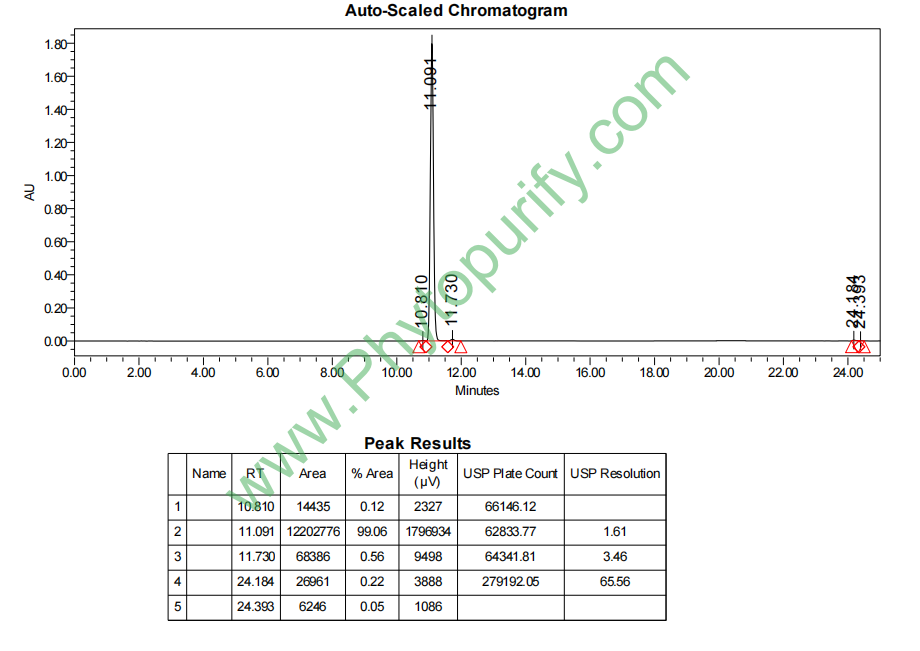
HPLC of Rosavin
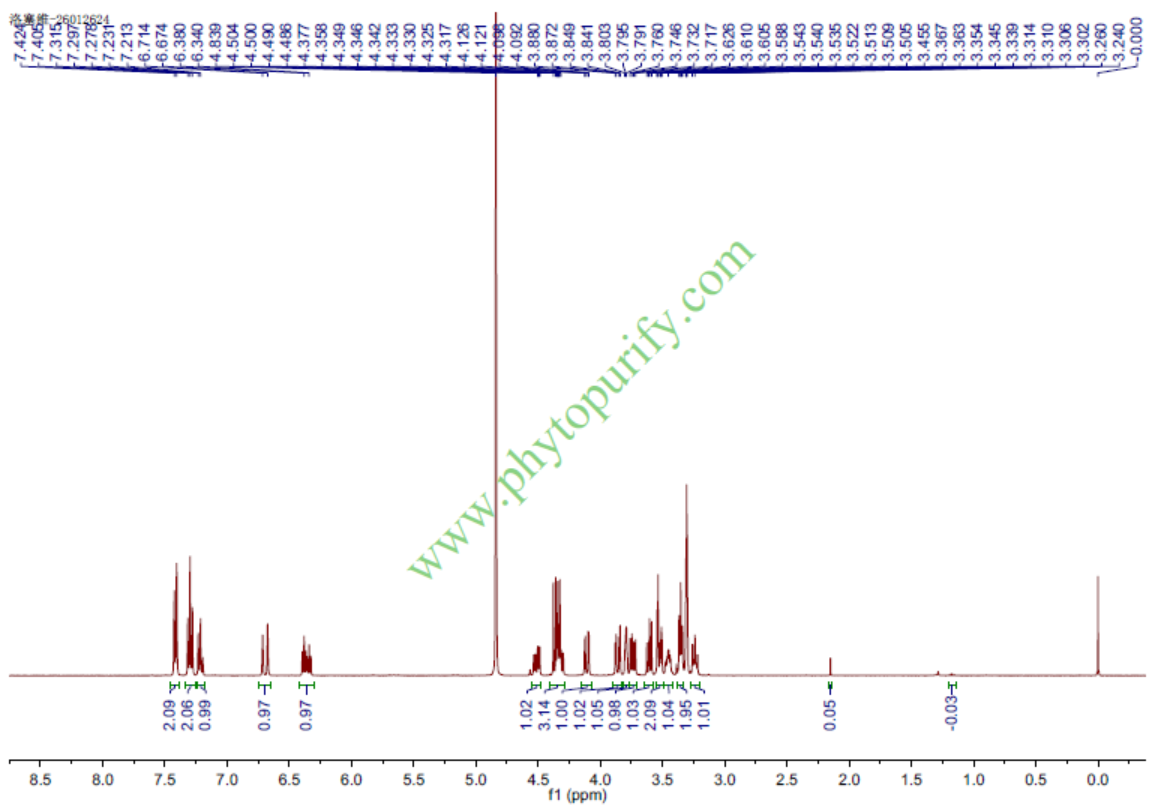
HNMR of Rosavin
Storage conditions:Short-term storage at 2~8℃, long-term storage at -20 ~ -80℃
158.3000
-.4987
-.4984
12.5849
.4799
.2280
Low
40.3881
4.2913
Yes
No
No
No
No
No
0.6
Yes
Yes
Yes
Yes
In the vast field of natural product chemistry and pharmacology research, active ingredients derived from traditional medicinal plants continue to provide valuable lead compounds for modern drug development. Rosavin, also known as cinnamyl alcohol - β - D-glucosyl - (1 → 6) - β - D-glucoside, is a core member of a class of characteristic phenylpropanoid compounds in Rhodiola rosea L. Rhodiola rosea, as a famous "adaptogen" herb, is used in traditional medicine to enhance the body's resistance, fatigue resistance, and stress resistance. The material basis of its pharmacological effects has attracted much attention. Loseville and components such as salidroside together form a key group of substances that contribute to the biological activity of Rhodiola rosea.
In recent years, with the advancement of separation and identification techniques and the deepening of molecular pharmacology research, the biological effects of Loseville have far surpassed the traditional concept of "adaptogen". Research has shown that Losevi not only has significant neuropsychiatric activity in anti depression, anti anxiety, and enhancing adaptability, but also exhibits multifaceted potential in bone metabolism regulation, anti-inflammatory, antioxidant, anti radiation damage, and anti-tumor effects. Especially in regulating the balance between osteoclasts and osteoblasts, reducing ischemia-reperfusion injury, and intervening in major diseases such as colon cancer through multi-target approaches, its mechanism of action is gradually being elucidated. This article aims to systematically review the chemical properties, plant sources, pharmacological activities, molecular mechanisms of action, pharmacological evaluation, and clinical application prospects of Loseville, in order to provide comprehensive scientific references for the in-depth research and potential drug development of this natural product.
Losevil (CAS number: 84954-92-7) is a phenylpropanoid glycoside compound. Its chemical structure consists of a cinnamyl alcohol group connected by a glycosidic bond to a disaccharide chain composed of two glucose units, specifically cinnamyl - β - D-glucosyl - (1 → 6) - β - D-glucoside. This structure combines a hydrophilic sugar moiety with a hydrophobic aromatic alcohol moiety, determining its unique physicochemical properties.
Its molecular formula is C20H28O10 and its molecular weight is 428.4340. The calculated lipid water partition coefficient (LogP) is approximately -0.4987, indicating that the compound exhibits overall hydrophilicity, which is consistent with its glycoside structure. The topologically polar surface area (TPSA) is as high as 158.30 Å ², reflecting the presence of multiple hydrogen bond acceptors (mainly oxygen atoms on the sugar ring) in the molecule, which further explains its good water solubility, with a calculated value of approximately 12.5849 mg/L. Higher hydrophilicity and TPSA often affect its transmembrane permeability. According to the predictive model, the ability of Losevi to pass through the blood-brain barrier (BBB) is relatively low, indicating that the central nervous system effects may not solely rely on direct entry into the brain, but may also exert their effects through peripheral or indirect mechanisms.
In the preliminary safety evaluation related to drug development, Losevil showed a lower risk of hERG potassium channel inhibition (predicted as' no '), indicating a lower potential risk of arrhythmia. In the Ames test (a preliminary screening test for mutagenicity), its mutagenicity ratio was 0.6 (usually considered negative if the ratio is less than 2), indicating that it has no significant genetic toxicity. These basic physicochemical and safety parameters lay the foundation for subsequent pharmacological research and development.
Loseville is one of the characteristic active ingredients found exclusively in the roots and rhizomes of Rhodiola rosea L., a plant in the Rosaceae family. Rhodiola is mainly grown in alpine regions, such as Northern Europe, Siberia, Central Asia, Xizang, Qinghai and other places in China. Its medicinal parts are traditionally used to cope with cold, fatigue, altitude response and other stress states. Plant chemistry studies have shown that the phenylpropanoid components in Rhodiola rosea mainly include lovastatin, Rosalin, and Rosin, which together with the tyrosol glycoside salidroside form the pharmacological substance basis. The content of Loseville is one of the important indicators for evaluating the quality of Rhodiola rosea medicinal materials and their extracts.
Efficient extraction and purification of lovastatin from Rhodiola raw materials is a prerequisite for studying its activity and developing related products. Common extraction methods include:
1. Solvent extraction method The most traditional method usually uses methanol, ethanol, or ethanol water mixed solutions for reflux or ultrasound assisted extraction. The ethanol water system (such as 50-70% ethanol) is a commonly used method in industry due to its good selectivity for Loseville, low cost, and safety.
2. Modern assisted extraction technology In order to improve extraction efficiency and reduce solvent consumption, technologies such as supercritical CO2 extraction (often combined with entrainers), microwave-assisted extraction, and pressurized liquid extraction have been applied. These methods can obtain the target components more quickly and efficiently.
3. Separation and Purification After filtration and concentration, the crude extract is usually preliminarily enriched using macroporous adsorption resin column chromatography. Commonly used resins such as AB-8 and D101 are used to separate glycoside components based on their adsorption desorption characteristics. Further purification relies on techniques such as silica gel column chromatography, reverse phase silica gel column chromatography (such as ODS-C18), and high-performance liquid chromatography (HPLC) preparation chromatography to obtain high-purity Losevil monomers for further research.
The establishment of standardized extraction processes ensures the consistency of substances and comparability of results in the Losevi study.
A large number of pharmacological experiments in vitro and in vivo have confirmed that Losevil has a wide and diverse range of biological activities, mainly covering the following fields:
Neuropsychiatric activity (antidepressant, anti anxiety, and adaptogen effects)Loseville is a key component of Rhodiola rosea that plays an "adaptogen" role. In classic depression models such as forced swimming and tail suspension experiments in mice, Losevil can significantly shorten immobility time and exhibit antidepressant like effects. In anxiety models such as elevated cross maze, it also exhibits anti anxiety activity. Its function may be related to regulating the hypothalamic pituitary adrenal (HPA) axis, affecting the monoamine neurotransmitter (such as serotonin, dopamine, norepinephrine) system, and enhancing the body's non-specific resistance to various physical, chemical, and psychological stresses.
Bone metabolism regulation and anti osteoporosis activity Loseville has a bidirectional regulatory effect on bone tissue metabolism. In vitro, it can effectively inhibit osteoclast differentiation and bone resorption induced by receptor activator of nuclear factor kappa B ligand (RANKL), while promoting osteoblast differentiation and mineralization. In animal models of ovariectomy (simulating postmenopausal osteoporosis) or glucocorticoid induced osteoporosis, administration of Losevil significantly increases bone density, improves bone microstructure, and enhances bone biomechanical strength. This indicates that it has great potential in preventing and treating osteoporosis.
Organ protection function:
Antitumor activity Research suggests that Losevil has inhibitory effects on certain tumor cells. Especially in the field of colon cancer, research has found that Losevil can inhibit the proliferation, migration, and induce apoptosis of human colon cancer cells. Its anti-tumor activity is not achieved through a single cytotoxic effect, but involves the regulation of multiple tumor related signaling pathways.
Anti inflammatory and antioxidant activity As a common basis for its various protective effects, Loseville has strong antioxidant capacity, which can clear free radicals and enhance the activity of intracellular antioxidant enzymes such as superoxide dismutase (SOD) and glutathione peroxidase (GSH Px). Meanwhile, it can inhibit the production of pro-inflammatory cytokines (such as TNF - α, IL-1 β, IL-6) stimulated by lipopolysaccharides (LPS) and exert anti-inflammatory effects.
The multiple pharmacological effects of Losevil stem from its extensive regulation of cellular signaling networks. Its mechanism of action is complex, involving multiple molecular targets and pathways. Taking colon cancer related research as an example and combining with other activities, the key nodes of its action are explained
Regulating energy metabolism and cell survival (AMPK pathway)AMP activated protein kinase (AMPK) is a core sensor of cellular energy metabolism. Losevil can activate AMPK (composed of subunits such as PRKAA1), thereby inhibiting mammalian rapamycin target protein (mTOR) signaling, which may lead to inhibition of tumor cell proliferation and regulation of autophagy. AMPK activation may also be involved in osteogenic differentiation in bone metabolism.
Intervention in apoptosis balance (Bcl-2 family)Losevil can downregulate the expression of anti apoptotic proteins Bcl-2 and Mcl-1, and may also affect pro apoptotic proteins, tilting the balance of mitochondrial apoptosis pathway towards pro apoptotic direction, thereby inducing apoptosis in tumor cells or damaged cells. This is reflected in both anti-tumor and I/R injury reduction.
Inhibition of inflammation and survival signaling (STAT3/NF - κ B pathway)Signal transduction and transcription activator 3 (STAT3) and nuclear factor kappa B (NF - κ B, key subunit RelA/p65) are important pro-inflammatory and pro survival transcription factors. Losevil can inhibit its phosphorylation activation, prevent its nuclear translocation, and downregulate the expression of downstream genes involved in cell proliferation, survival, invasion, and inflammatory response, such as Cyclin D1, Survivor, COX-2, iNOS, etc. This is one of its core mechanisms for anti-inflammatory, anti radiation damage, and anti-tumor effects.
Affects other key targets:
In summary, Losevi acts on key targets such as AMPK, STAT3, NF - κ B, and Bcl-2 family, forming a multi-target, multi pathway networked mode of action, which explains its broad therapeutic effects in various disease models.
Although Losevil exhibits excellent pharmacological activity, its drug like and pharmacokinetic (PK) properties are the key factors determining its successful development as a drug.
Absorption, distribution, metabolism, excretion (ADME):
Challenges and Strategies in Drug Development:
Systematic pharmacokinetic studies (including ADME parameter measurements in different animal models) and formulation improvements based on the above strategies are essential for promoting the clinical application of Losevil.
Based on solid preclinical research evidence, Losevil has shown promising application prospects in multiple therapeutic fields:
Prevention and treatment of osteoporosis As a natural compound that can both inhibit bone resorption and promote bone formation, Losevil is expected to be developed as a novel bone metabolism regulator for the prevention and treatment of postmenopausal osteoporosis, senile osteoporosis, and glucocorticoid induced osteoporosis. Compared with existing anti bone resorption drugs or bone formation promoting drugs, its bidirectional regulatory effect may have more advantages, and natural sources may bring better safety.
Diseases related to the nervous system:
Tumor adjuvant therapy and chemoprevention Especially in the field of colon cancer, the multi-target anti-tumor mechanism of Losevi may make it a sensitizer for chemotherapy or targeted therapy, or for chemoprevention of colon cancer. Its anti-inflammatory and antioxidant properties also help alleviate the side effects of radiotherapy and chemotherapy.
Radiation protection agent For personnel engaged in radiation work, patients receiving radiation therapy, or emergency response to nuclear accidents, Losevi or its derivatives have the potential to be developed as oral radiation protection agents to protect radiation sensitive tissues such as the intestine.
Future research directions should focus on:
* In depth mechanism exploration Using omics technologies (proteomics, metabolomics) and gene editing tools to more accurately depict its functional network and discover new key targets.
* Pharmacokinetic and Metabolic Studies Clarify its internal fate, identify key active metabolites, and provide a basis for structural optimization.
* Preclinical development and formulation research Conduct GLP toxicology evaluations that comply with regulations and actively develop new drug delivery systems to improve their bioavailability.
* clinical research After obtaining sufficient non clinical safety and efficacy data support, gradually promote phase I to III clinical trials to verify its efficacy and safety in humans.
As a characteristic active ingredient of Rhodiola rosea, Loseville is a successful example in modern natural product pharmacology research. Starting from the efficacy of traditional herbs, modern scientific and technological means have gradually revealed their extensive pharmacological activities and complex mechanism of action network. It demonstrates the potential in various aspects such as anti osteoporosis, neuroprotection, anti radiation, anti-tumor, etc., demonstrating the enduring vitality of natural products as innovative drug sources. Despite facing challenges in drug development such as oral bioavailability, it is expected to be overcome through strategies in medicinal chemistry and pharmacy. With the continuous deepening of research and the promotion of translational medicine, Losevil is expected to develop from a promising natural compound into an innovative drug or functional health product for treating various major diseases, contributing its unique value to the cause of human health. Continuous and systematic research on it will not only contribute to the development of new drugs, but also further enrich our understanding of the complex relationship between plant chemistry and human physiology and pathology.
