


Synonym name:
Catalogue No.: BP0247
Cas No.: NA10
Formula: C30H32O13
Mol Weight: 600.573
Botanical Source:
Purity: 95%~99%
Analysis Method: HPLC-DAD or/and HPLC-ELSD
Identification Method: Mass, NMR
Packing: Brown vial or HDPE plastic bottle
Can be supplied from milligrams to grams.
For Reference Standard and R&D, Not for Human Use Directly.
Inquire for bulk scale.
HPLC of Benzoyloxypaeoniflorin
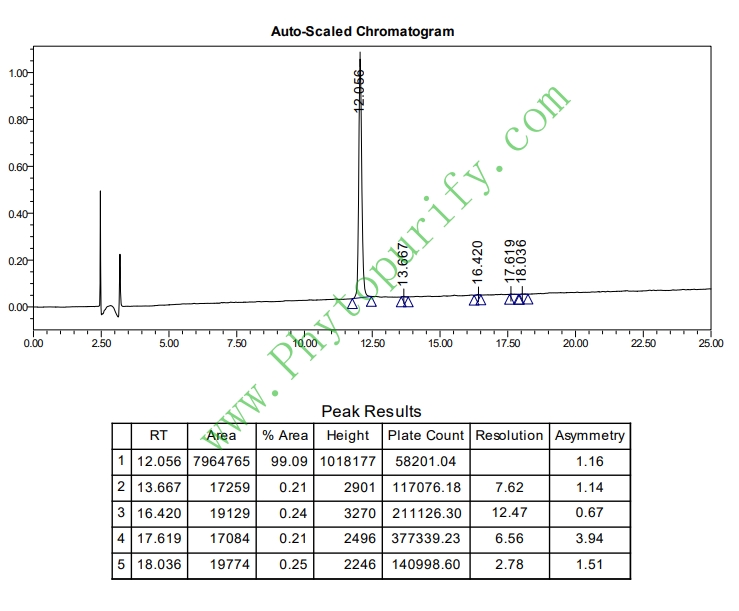
Storage conditions:Short-term storage at 2~8℃, long-term storage at -20 ~ -80℃
190.6700
1.2664
1.2597
.1598
.4508
.1566
Low
81.9275
6.1644
Yes
No
No
No
No
No
0.0
Yes
No
Yes
Yes
Natural products, as an important source of drug discovery, play an irreplaceable role in the history of human disease prevention and treatment. Paeonia plants, especially Paeonia suffrutiosa and Paeonia lactiflora, have a long history of application in traditional medicine. Their root bark (peony bark, red peony) is known for its ability to clear heat, cool blood, promote blood circulation, and remove blood stasis. Modern pharmacological research reveals that its core pharmacological substance is a series of structurally unique monoterpenoid glycosides, among which Paeoniflorin is the most widely studied representative component. BenzoyloxyPaeoniflorin (CAS: 72896-40-3), as a benzoylated derivative of paeoniflorin, has attracted increasing attention due to its significant and diverse biological activities, despite its relatively low content in plants. Early research found that it has tyrosinase inhibitory activity, suggesting its potential application value in skin pigmentation diseases. Further research has revealed its important pharmacological effects in neuroprotection, anti-inflammatory, and improving blood circulation, especially demonstrating promising therapeutic potential in models of cardiovascular and cerebrovascular diseases such as cerebral ischemia. This article aims to systematically review the chemical structure, plant origin, pharmacological activity, mechanism of action, medicinal properties, and clinical application prospects of benzoyl oxidized paeoniflorin, in order to provide comprehensive scientific references for the in-depth research and development of this compound.
Benzoyl oxidized paeoniflorin is a monoterpenoid glycoside compound, and its chemical structure can be regarded as a modified product of paeoniflorin. Its molecular formula is C30H32O13 and its molecular weight is 600.5730. Its core structure is a pine type monoterpene skeleton, which is connected to a molecule of glucose through glycosidic bonds, forming the basic mother nucleus of paeoniflorin. The key difference from paeoniflorin is that a specific hydroxyl group on its glucose group (usually considered 6 '- OH) is esterified by a benzoyl group. This structural modification significantly altered its physicochemical properties and biological activity.
From the analysis of physical and chemical properties, the lipophilic water partition coefficient (LogP) of the compound is 1.2664, indicating that it has a certain degree of lipophilicity, but overall it still leans towards hydrophilicity. Its topological polar surface area (TPSA) is as high as 190.67 Å ², mainly attributed to the numerous oxygen atoms in the molecule (from sugar, ester, and ether bonds), indicating its strong ability to form hydrogen bonds. The water solubility value is 0.1598 mg/mL, which belongs to the category of slight solubility, which poses certain challenges for its formulation development. These calculated or measured physicochemical parameters are the basis for its in vivo absorption, distribution, metabolism, and excretion (ADME) behavior.
Benzoyl oxidized paeoniflorin is mainly isolated from plants of the Paeoniaceae family, and its main source is the root bark of Paeonia suffrutiosa Andrews, also known as the traditional Chinese medicine "Paeonia bark". In addition, trace amounts were also detected in the roots (Paeonia lactiflora Pall.) of other plants belonging to the same genus, such as Paeonia lactiflora Pall. In plants, it belongs to secondary metabolites and is a downstream modification product of the biosynthesis pathway of paeoniflorin. The introduction of benzoyl groups may enhance its function or stability in specific ecological environments.
Its extraction and separation usually follow the conventional process of natural product chemistry. Firstly, the dried peony bark or roots are crushed and subjected to reflux extraction or ultrasound assisted extraction using polar solvents such as methanol, ethanol, or aqueous ethanol to fully extract monoterpenoid glycosides. After vacuum concentration, the crude extract obtained was subjected to liquid-liquid extraction using solvents such as petroleum ether, ethyl acetate, and n-butanol. Benzoyl oxidized paeoniflorin was mainly enriched in the n-butanol fraction due to its polarity and structural characteristics. Further purification relies on various chromatographic techniques, including silica gel column chromatography (using gradient elution systems such as chloroform methanol water), reverse phase silica gel (such as ODS) column chromatography, and high-performance liquid chromatography (HPLC) preparative chromatography. In modern separation analysis, liquid chromatography-mass spectrometry (LC-MS) technology is often combined for online monitoring and directed separation to improve the separation efficiency and purity of target compounds. The optimization of extraction processes, such as solvent selection, temperature, time, and the application of new technologies (such as supercritical fluid extraction), is key to ensuring their yield and sustainable development.
A large number of in vitro and in vivo pharmacological studies have confirmed that benzoyl oxidized paeoniflorin has multiple biological activities, providing scientific basis for its therapeutic application.
Neuroprotection and anti cerebral ischemia activity This is the most promising research direction for this compound. In various animal models of cerebral ischemia/reperfusion injury, benzoyl oxidized paeoniflorin exhibits significant neuroprotective effects. It can reduce the volume of cerebral infarction, improve neurological deficit scores, alleviate brain edema and blood-brain barrier damage. Its function is closely related to inhibiting oxidative stress, reducing inflammatory response, and resisting neuronal apoptosis.
Tyrosinase inhibitory activity Early studies have found that benzoyl oxidized paeoniflorin has inhibitory activity against mushroom tyrosinase, with an IC50 value of 0.453 mM. Tyrosinase is a key enzyme in melanin biosynthesis, and this activity suggests that the compound or its extract in plants may be used in the cosmetics industry for skin whitening or the treatment of hyperpigmentation disorders such as melasma.
Antiplatelet aggregation and improvement of blood circulation Research has shown that benzoyl oxidized paeoniflorin can inhibit platelet aggregation induced by inducers such as adenosine diphosphate (ADP) and arachidonic acid (AA), and exhibits certain anticoagulant effects. The pharmacological effect of "promoting blood circulation and removing blood stasis" is consistent with the efficacy of traditional Chinese medicine peony bark and red peony, providing a modern pharmacological explanation for its use in improving microcirculation disorders and preventing thrombotic diseases.
Anti inflammatory and immune regulatory activity The compound has been identified as an inhibitor of the nuclear factor kappa B (NF - κ B) signaling pathway. NF - κ B is a core transcription factor that regulates the expression of inflammatory factors (such as TNF - α, IL-1 β, IL-6), chemokines, and adhesion molecules. By inhibiting the abnormal activation of NF - κ B, benzoyl oxidized paeoniflorin can downregulate the production of various pro-inflammatory mediators, thereby exerting anti-inflammatory effects in inflammation related disease models.
Other potential activities Based on its structural similarity and preliminary research, benzoyl oxidized paeoniflorin may also have pharmacological activities shared by paeoniflorin compounds such as analgesia, sedation, and liver protection, but more specific studies are needed to confirm them.
The multiple pharmacological activities of benzoyl oxidized paeoniflorin stem from its regulation of multiple cellular signaling pathways and molecular targets. Based on the provided target information, the mechanism of action network can be summarized as follows:
Core anti-inflammatory and neuroprotective mechanisms - inhibition of NF - κ B pathway This is one of its key mechanisms of action. The activation of NF - κ B is precisely regulated by upstream kinases (such as IKK) and phosphatases (such as PTPN1). Benzoyl oxidized paeoniflorin may inhibit the degradation of I κ B protein and NF - κ B nuclear translocation by affecting these regulatory nodes, thereby suppressing gene transcription of downstream inflammatory mediators and reducing neuroinflammation and systemic inflammation.
Energy metabolism and autophagy regulation - activation of AMPK (PRKAA1)AMP activated protein kinase (AMPK) is the "main switch" of cellular energy metabolism. Under stress conditions such as cerebral ischemia, activation of AMPK can promote glucose uptake, fatty acid oxidation, and initiate protective autophagy processes, while inhibiting synthetic pathways such as mTOR. Benzoyl oxidized paeoniflorin may act as an activator of AMPK, helping neurons cope with energy crises and maintain cellular homeostasis.
Alzheimer's disease-related target interventions This compound may have a regulatory effect on the metabolism of β - secretase 1 (BACE1) and amyloid precursor protein (APP), which are key enzymes involved in the generation of β - amyloid protein (A β). Meanwhile, it may also have an impact on the abnormal phosphorylation of microtubule associated protein tau (MAPT). These targets suggest potential therapeutic value in neurodegenerative diseases such as Alzheimer's disease, possibly exerting a protective effect by reducing A β production and tau pathology.
Oxidative stress and DNA repair - acting on APEX1 Purine/pyrimidine endonuclease 1 (APEX1) is a key enzyme in the base excision repair pathway and also participates in the regulation of oxidative stress response. Intervention with APEX1 may help repair DNA damage caused by ischemia and hypoxia, and enhance cell survival ability.
Protein kinase C and signal transduction - regulating PRKCA Protein kinase C alpha (PKC alpha) is involved in regulating cell proliferation, differentiation, apoptosis, and vascular function. In cerebral ischemia, PKC signaling is abnormally complex, and the regulation of specific subtypes may be related to the integrity of neurovascular units.
Cyclooxygenase and Inflammation - Inhibition of PTGS1 Cyclooxygenase-1 (COX-1) is a constitutive enzyme involved in maintaining physiological prostaglandin balance and also plays a role in platelet activation and certain pathological inflammations. Inhibition of COX-1 may be partially related to its antiplatelet aggregation and anti-inflammatory effects.
Pattern recognition receptors - affecting CLEC4E The C-type lectin domain family 4 member E (CLEC4E, also known as Mincle) is a pattern recognition receptor that can recognize damage associated molecular patterns (DAMPs) and, upon activation, drive pro-inflammatory responses. Inhibition of CLEC4E may help alleviate neuroinflammation triggered by endogenous danger signals after ischemia.
External pump and drug distribution - involving ABCB1 P-glycoprotein (ABCB1/MDR1) is an important efflux transporter on the blood-brain barrier. The interaction between compounds and ABCB1 can affect their own and other drugs' distribution and accumulation in the central nervous system, which is an important consideration in pharmacokinetic research.
Based on calculations and preliminary experimental data, a preliminary evaluation of the pharmacological properties of benzoyl oxidized paeoniflorin is conducted
The multi-target and multi pathway characteristics of benzoyl oxidized paeoniflorin provide broad prospects for its application in various disease fields, but also face challenges.
Main application directions:
Challenges and Prospects:
Benzoyl oxidized paeoniflorin, as an active monoterpene glycoside discovered from traditional Chinese medicine peony bark, has become a highlight in natural product pharmacology research due to its unique chemical structure and extensive pharmacological activity. From the initial tyrosinase inhibitors to multi-target candidate molecules that have shown clear potential in neuroprotection, anti-inflammatory, and improving blood circulation, their research value continues to be highlighted. Despite facing challenges such as blood-brain barrier permeability in drug development, with the rapid development of modern medicinal chemistry, pharmacy, and molecular biology technologies, these obstacles are expected to be gradually overcome through structural optimization, innovative delivery, and in-depth mechanism research. In the future, continuous exploration of benzoyl oxidized paeoniflorin is expected to not only generate innovative drugs derived from traditional Chinese medicine, but also provide key molecular basis for further elucidating the scientific connotation of "clearing heat and cooling blood, promoting blood circulation and removing stasis" in traditional Chinese medicine such as peony bark, and promoting the modernization and internationalization of traditional Chinese medicine.
