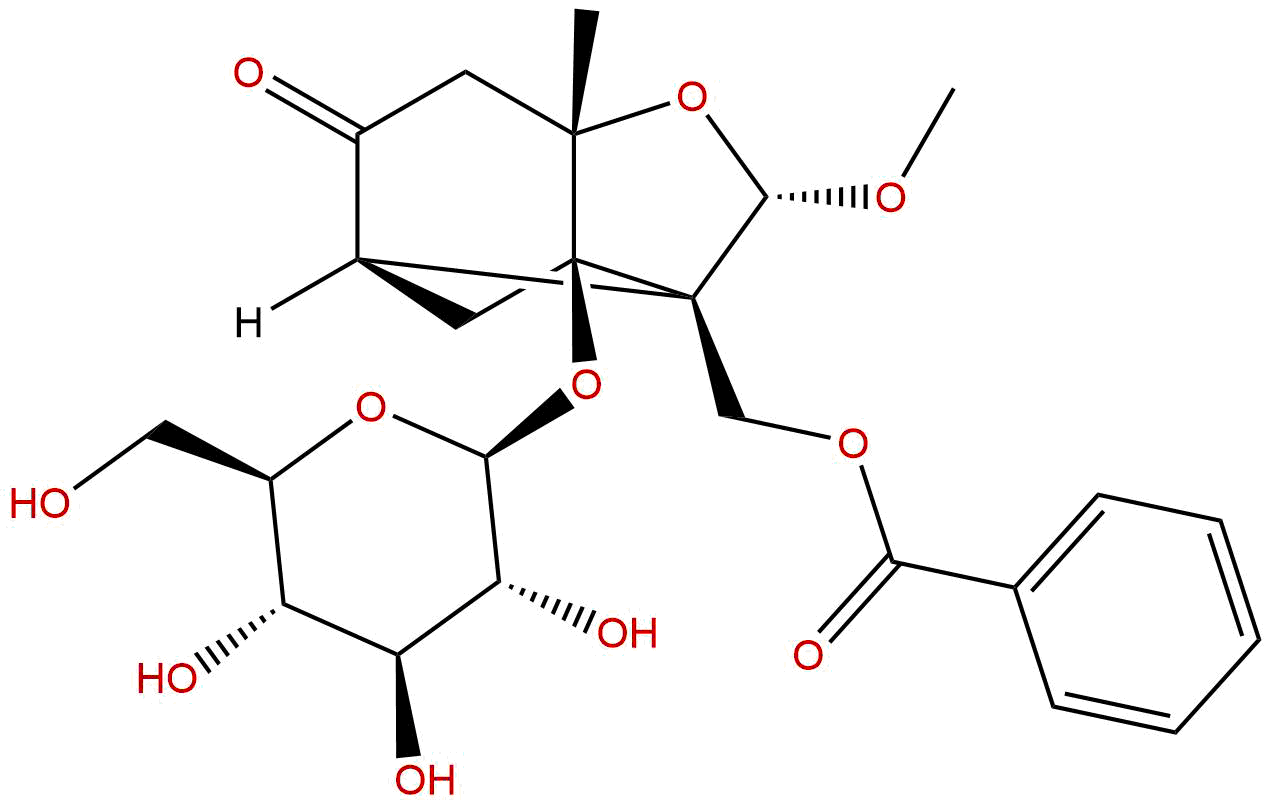


Product name: Paeonidanin
Synonym name: 4-Oxo-9-O-methylpaeoniflorin
Catalogue No.: BP2320
Cas No.: 209969-75-5
Formula: C24H30O11
Mol Weight: 494.493
Botanical Source: Paeonia lactiflora Pall.
Type of Compound: Monoterpenoids
Purity: 95%~99%
Analysis Method: HPLC-DAD or/and HPLC-ELSD
Identification Method: Mass, NMR
Packing: Brown vial or HDPE plastic bottle
Storage: Store in a well closed container, protected from air and light. Put into refrigerate or freeze for long term storage.
Whenever possible, you should prepare and use solutions on the same day. However, if you need to make up stock solutions in advance, we recommend that you store the solution as aliquots in tightly sealed vials at -20℃. Generally, these will be useable for up to two weeks.
The product could be supplied from milligrams to grams
Inquire for bulk scale.
For Reference Standard and R&D, Not for Human Use Directly.
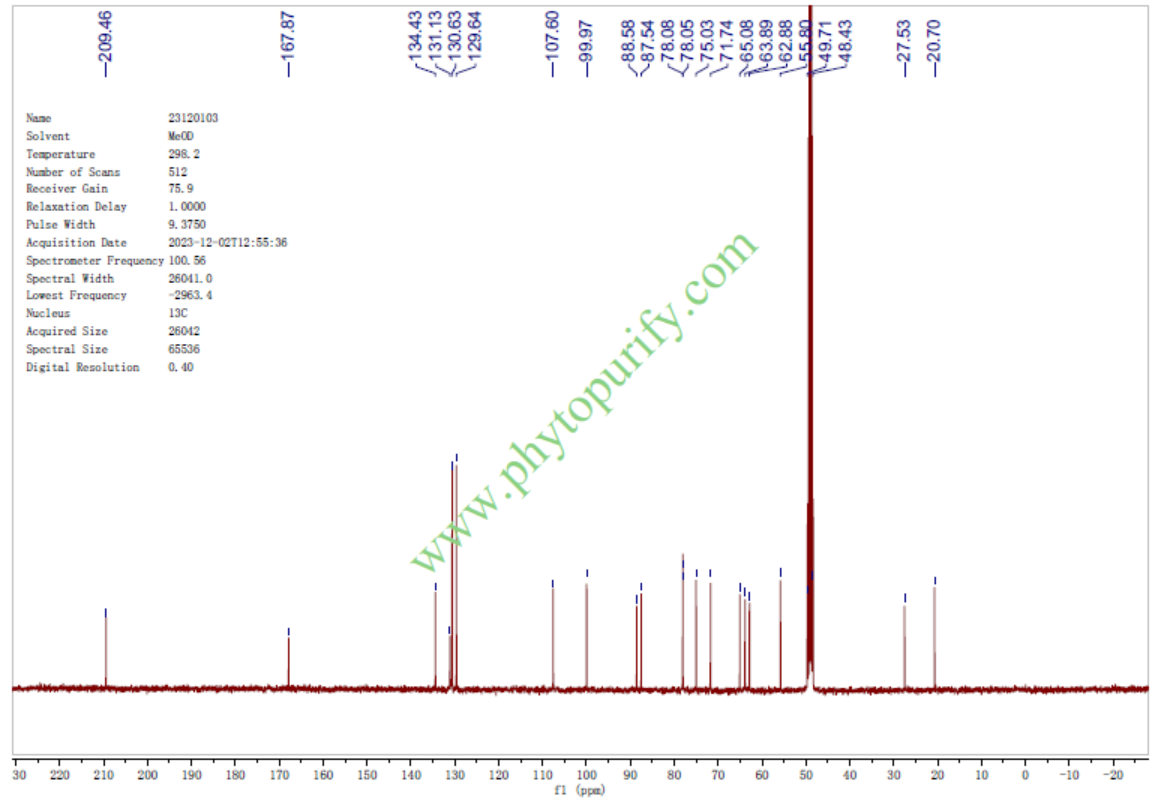
NMR of Paeonidanin
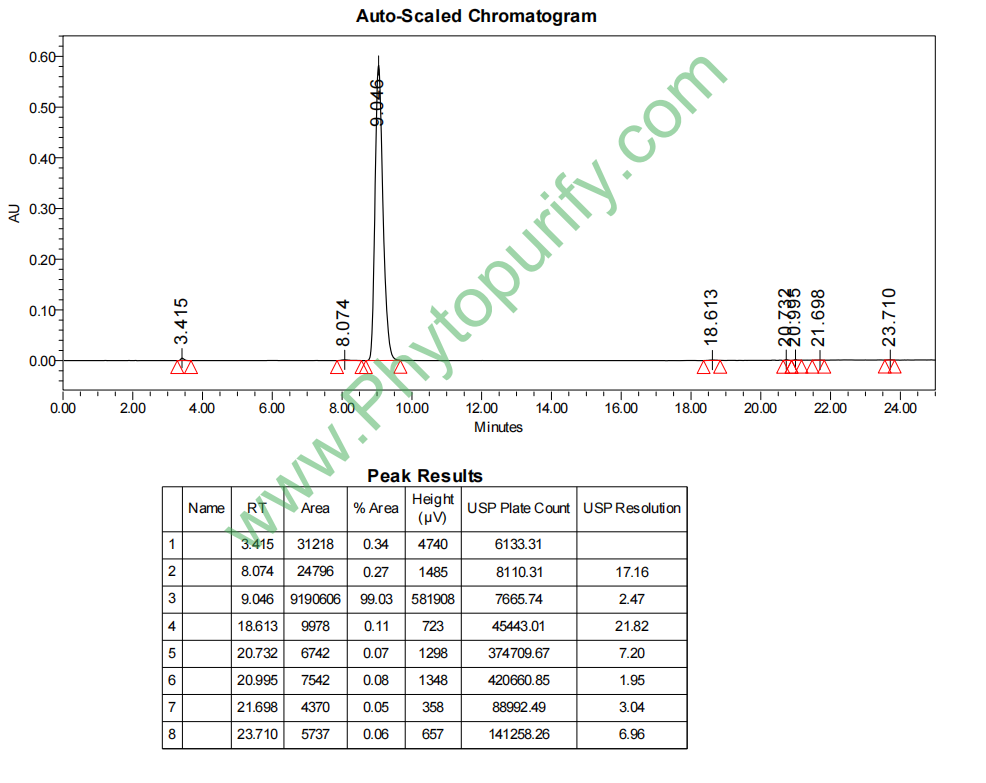
HPLC of Paeonidanin
Storage conditions:Short-term storage at 2~8℃, long-term storage at -20 ~ -80℃
161.2100
.2061
.2061
1.3306
.5009
.4223
Low
57.6223
5.9337
Yes
No
No
No
No
No
0.0
Yes
No
Yes
Yes
Rheumatoid Arthritis (RA) is an autoimmune disease characterized by chronic, progressive, and symmetrical multi joint synovitis. Its pathological core involves abnormal activation of immune cells, imbalance of inflammatory cytokine networks, synovial tissue proliferation, and progressive destruction of bone and cartilage. About 0.5% -1% of the world's population is affected by it, and the incidence rate of women is significantly higher than that of men. Although targeted therapies such as methotrexate, biologics (such as TNF - α inhibitors), and JAK inhibitors have significantly improved the prognosis of RA patients, a considerable proportion of patients still have poor response or develop resistance to existing therapies, and the problems of infection risk, liver and kidney function damage, and high costs caused by long-term medication urgently need to be addressed. Therefore, searching for novel structures, unique mechanisms of action, and safe anti RA lead compounds from natural products has always been an important direction in the field of new drug development.
Paeoniflorin (CAS number: 209969-75-5) is a traditional medicinal plant derived from the peony genus(Paeonia Single terpenoid glycosides of spp. As a derivative of Paeoniflorin, Paeoniflorin has a unique cage like pinane skeleton and glucose group in its structure, endowing it with biological activity different from other monoterpenoid glycosides. In recent years, with the in-depth exploration of the pharmacological activity of paeoniflorin, its potential in anti-inflammatory, immune regulation, antioxidant, and anti-tumor aspects has gradually emerged, especially in the treatment of rheumatoid arthritis, demonstrating the advantages of multi-target and multi pathway synergistic regulation. This article aims to systematically review the chemical structure, plant origin, pharmacological activity, mechanism of action, and pharmacological characteristics of paeoniflorin, in order to provide theoretical basis for the further development and clinical translation of this natural product.
The chemical name of paeoniflorin is (1R, 2S, 3R, 5R, 6R, 7S, 8S) -2- [(β - D-glucopyranosyl) oxy] -8-hydroxy-3- [(4-hydroxybenzoyl) oxy] -1-methyl-9-oxatetracyclo [3.3.1.0 ², ⁷. 0 ⁶, ⁸] nonan-4-one, with a molecular formula of C ₂ ∝ H ₂ ₆ O ₁ ₂ and a molecular weight of 494.4930. Its core structure belongs to the cage like pinane monoterpene, consisting of a cyclopentane tetrahydrofuran ring system. The C-1 position is connected to a methyl group, the C-2 position is connected to D-glucose through a β - glycosidic bond, and the C-3 position is esterified with p-hydroxybenzoyl. This structural feature is highly similar to paeoniflorin, but paeoniflorin has an additional hydroxyl group at the C-8 position, which may significantly affect its intermolecular hydrogen bonding network and binding mode with target proteins.
From the perspective of physical and chemical properties, paeoniflorin exhibits typical natural glycoside compound characteristics. Its oil-water partition coefficient (LogP) is 0.2061, indicating strong hydrophilicity, which is mainly attributed to the presence of glucose groups and multiple hydroxyl groups in the molecule. The topologically polar surface area (TPSA) is as high as 161.2100 Å ², far exceeding the recommended upper limit of 140 Å ² for oral drugs, indicating limited transmembrane passive diffusion ability and possibly low oral bioavailability. The water solubility parameter (1.3306 mg/mL) shows that it has a certain solubility in water, which provides convenience for its in vitro pharmacological experiments. It is worth noting that the blood-brain barrier (BBB) penetration assessment is "low", indicating that the compound is not easily able to enter the central nervous system, which to some extent reduces the risk of central toxicity. In addition, the hERG inhibition prediction result was negative, and the Ames test mutagenicity score was 0.0, indicating a low risk of cardiac and genetic toxicity and a good safety basis.
Paeoniflorin is mainly found in plants of the Paeoniaceae family, including Paeonia lactiflora(Paeonia lactiflora Pall.)、 Chuan Chishao(Paeonia veitchii Lynch and Peony(Paeonia suffruticosa Android, etc. Among them, the dried root of Paeonia lactiflora (also known as the traditional Chinese medicine "white peony") is an essential medicine in traditional medicine for nourishing blood, regulating meridians, softening the liver, and relieving pain(Paeonia lactiflora or Paeonia veitchii Dry roots are longer for clearing heat, cooling blood, dispersing blood stasis, and relieving pain. The content of paeoniflorin in red peony is usually higher than that in white peony, and its content fluctuates depending on the place of origin, harvest season, and processing method. Research has shown that the content of paeoniflorin in the roots of red peony harvested in autumn is relatively high, and processing methods such as sulfur fumigation or high-temperature drying may lead to its degradation.
In terms of extraction methods, traditional water decoction or ethanol reflux extraction methods can obtain paeoniflorin, but their efficiency is low and there are many impurities. Modern extraction techniques have significantly improved its extraction efficiency and purity. For example, using 70% ethanol ultrasound assisted extraction (UAE), under the conditions of a solid-liquid ratio of 1:15, temperature of 50 ℃, and extraction for 30 minutes, the extraction rate of paeoniflorin can be increased by about 30% compared to traditional reflux method. In addition, microwave-assisted extraction (MAE) and enzyme assisted extraction (EAE) have also been attempted for the extraction of paeoniflorin, where cellulase pretreatment can disrupt the cell wall structure, making the target compound more soluble.
In terms of separation and purification, macroporous adsorption resins (such as HPD-100 and D101) combined with silica gel column chromatography are commonly used as preliminary separation methods. In recent years, the application of high-speed countercurrent chromatography (HSCCC) and preparative high-performance liquid chromatography (Prep HPLC) has made it possible to obtain high-purity paeoniflorin (>98%). It is worth noting that due to the coexistence of paeoniflorin with structural analogues such as paeoniflorin and oxidized paeoniflorin in plant extracts, their separation is difficult. Typically, a two-phase solvent system (such as n-butanol ethyl acetate water) is required for gradient elution to achieve effective separation.
The anti-inflammatory activity of paeoniflorin is one of its most concerned pharmacological properties. In the RAW264.7 macrophage model stimulated by lipopolysaccharide (LPS), paeoniflorin (10-100 μ M) can dose dependently inhibit the release of nitric oxide (NO), prostaglandin E ₂ (PGE ₂), and tumor necrosis factor - α (TNF - α), while downregulating the protein expression of inducible nitric oxide synthase (iNOS) and cyclooxygenase-2 (COX-2). In a collagen induced arthritis (CIA) mouse model, continuous gavage of paeoniflorin (20-80 mg/kg/d) significantly reduced joint swelling, lowered serum levels of TNF - α, IL-1 β, and IL-6, and inhibited the activation of nuclear factor kappa B (NF - κ B) in synovial tissue. In addition, paeoniflorin can regulate the balance of helper T cells (Th17)/regulatory T cells (Treg), promote Treg cell differentiation, and inhibit Th17 cell-mediated autoimmune responses.
Oxidative stress plays an important role in the pathogenesis of RA, and reactive oxygen species (ROS) can activate osteoclasts and promote cartilage degradation. Paeoniflorin exhibits significant antioxidant activity in a model of chondrocyte injury induced by hydrogen peroxide (H ₂ O ₂). The mechanism involves activating the nuclear factor E2 related factor 2 (Nrf2)/antioxidant response element (ARE) signaling pathway, upregulating the expression of antioxidant enzymes such as heme oxygenase-1 (HO-1) and quinone oxidoreductase 1 (NQO1). Meanwhile, paeoniflorin can directly scavenge DPPH radicals and ABTS ⁺ radicals, with half maximal scavenging concentrations (IC ₅₀) of 32.5 μ M and 18.7 μ M, respectively, demonstrating moderate free radical scavenging ability.
In recent years, studies have also found that paeoniflorin has a proliferative inhibitory effect on various tumor cell lines. In human liver cancer HepG2 cells, paeoniflorin (50-200 μ M) can induce apoptosis through the mitochondrial pathway, manifested by an increase in Bax/Bcl-2 ratio, release of cytochrome c, and activation of caspase-3/9. In breast cancer MCF-7 cells, paeoniflorin can inhibit STAT3 phosphorylation and down regulate the expression of Cyclin D1 and Survivin, thus blocking cell cycle in G0/G1 phase. However, its anti-tumor activity is still relatively weak compared to classical chemotherapy drugs, and the selectivity index needs to be improved. Currently, it is still in the preliminary exploration stage.
The pharmacological activity of paeoniflorin exhibits typical multi-target and multi pathway regulatory characteristics, which are highly consistent with the pathological mechanisms of complex diseases such as RA. Based on existing research, its core mechanism of action can be summarized as follows:
AMPK (AMP activated protein kinase) is a key sensor for cellular energy metabolism, and its activation can inhibit inflammatory responses and promote autophagy. Paeoniflorin can directly or indirectly activate AMPK (target: PRKAA1), enhancing its activity by phosphorylating its Thr172 site. Activated AMPK can inhibit mTORC1 signaling and promote autophagic flow to clear damaged mitochondria and inflammasomes; On the other hand, it can phosphorylate acetyl CoA carboxylase (ACC), regulate lipid metabolism, and alleviate endoplasmic reticulum stress. In RA synovial fibroblasts (RA-FLS), paeoniflorin inhibits the expression of matrix metalloproteinases (MMP1, MMP3) induced by IL-1 β in an AMPK dependent manner, thereby slowing down cartilage matrix degradation.
Toll like receptor 4 (TLR4) is a key pattern recognition receptor that recognizes endogenous danger signals such as HMGB1 and heat shock proteins, and is highly expressed in RA synovial tissue. Paeoniflorin can directly bind to the extracellular domain of TLR4, competitively inhibiting the binding of LPS or HMGB1 to TLR4/MD2 complex, thereby blocking downstream MyD88 dependent signal transduction. This leads to a decrease in I κ B α phosphorylation, obstruction of NF - κ B (p65) nuclear translocation, and subsequently inhibition of transcription of pro-inflammatory genes such as TNF - α, IL-6, and COX-2. At the same time, paeoniflorin can also inhibit the Tyr705 phosphorylation of STAT3 and reduce the sustained activation of the IL-6/STAT3 positive feedback loop. It is worth noting that IDO1 (indoleamine 2,3-dioxygenase 1) is a key enzyme in tryptophan metabolism, and its excessive activation can lead to abnormal T cell tolerance. Paeoniflorin can downregulate IDO1 expression, restore tryptophan metabolism balance, and improve the immunosuppressive microenvironment in RA.
The apoptosis resistance of RA-FLS is a key cause of abnormal proliferation of synovial tissue. Paeoniflorin can activate the mitochondrial apoptosis pathway by upregulating the pro apoptotic protein Bax and downregulating the anti apoptotic protein Bcl-2 (target: BCL2). Meanwhile, it can enhance the sensitivity of RA-FLS to TNF - α - related apoptosis inducing ligand (TRAIL) by inhibiting the PI3K/AKT signaling. In addition, paeoniflorin can induce protective autophagy, while inhibiting autophagy (such as using 3-MA) can enhance its pro apoptotic effect, suggesting that autophagy plays a "double-edged sword" role in the action of paeoniflorin.
ALOX5 (5-lipoxygenase) is a key enzyme involved in the metabolism of arachidonic acid into leukotrienes (such as LTB ₄), which is a potent neutrophil chemokine. Paeoniflorin can inhibit ALOX5 activity, reduce LTB ₄ production, and thus alleviate neutrophil infiltration in RA joints. In addition, PRKCA (protein kinase C alpha) serves as a downstream effector of phospholipase C signaling, involved in regulating cytoskeleton rearrangement and inflammatory mediator release. Paeoniflorin glycoside can inhibit the membrane translocation and activation of PRKCA, further weakening the amplification effect of inflammatory signals.
Based on the Lipinski Rule of Five, the molecular weight of paeoniflorin (494.49) is slightly higher than 500, the LogP (0.206) is less than 5, the number of hydrogen bond donors (- OH, - COOH, etc.) is about 8, and the number of hydrogen bond acceptors (O atoms) is about 12. If the number of hydrogen bond donors exceeds 5, it may indicate oral absorption disorders. The TPSA (161.21 Å ²) exceeds 140 Å ², further supporting the conclusion that its passive permeability is poor. However, there are many successful drugs with similar structures in natural products, such as digoxin and paclitaxel, indicating that these deficiencies can be overcome through prodrug design, nano formulations, or changing the delivery route (such as transdermal administration).
At present, there is insufficient research on the pharmacokinetics of paeoniflorin in vivo, but reasonable inference can be made based on the data of its structurally similar compound paeoniflorin. The oral bioavailability of paeoniflorin in rats is approximately 3% -5%, and its main metabolic pathways include glycoside bond hydrolysis mediated by gut microbiota (producing paeoniflorin) and glucuronidation in the liver. Paeoniflorin, due to its additional hydroxyl group, has slightly higher water solubility than paeoniflorin, but may be more easily bound by phase II metabolic enzymes (such as UGT) for rapid clearance. After intravenous administration, the half-life (t ₁/₂) of paeoniflorin in plasma is expected to be 1-2 hours, and its distribution volume (Vd) is relatively small, indicating that it is mainly distributed in extracellular fluid. Organizational distribution studies have shown that the concentration of paeoniflorin in synovial fluid may be higher than in plasma, which is consistent with its targeted therapeutic potential for RA.
As mentioned earlier, hERG inhibition negative and Ames test negative provide preliminary guarantees for the safety of paeoniflorin. In acute toxicity experiments, no death or significant toxic reactions were observed in mice administered paeoniflorin (2000 mg/kg) by gavage. The subchronic toxicity study (28 days, 100 mg/kg/d) showed no significant abnormalities in liver and kidney function indicators (ALT, AST, BUN, Cr) and blood routine parameters. Pathological sections of major organs (heart, liver, spleen, lungs, kidneys) showed no pathological changes. However, the impact of long-term medication on gut microbiota and potential immunosuppressive risks still need further evaluation.
Paeoniflorin has unique advantages in the treatment of RA by synergistically regulating multiple targets such as AMPK, TLR4/NF - κ B, STAT3, ALOX5, and intervening in multiple pathological processes such as inflammation, immunity, oxidative stress, and cell apoptosis. Compared with traditional anti rheumatic drugs such as methotrexate, paeoniflorin may have lower liver and kidney toxicity; Compared with biologics, its oral administration convenience and lower production cost are more attractive. In addition, the regulatory effect of paeoniflorin on IDO1 suggests that it may improve tryptophan metabolism abnormalities in RA patients, a mechanism that has not been addressed by existing RA drugs.
Given the complexity of RA, monotherapy often makes it difficult to fully control the condition. The combination of paeoniflorin and methotrexate showed a synergistic effect in the CIA model, significantly reducing the dosage and gastrointestinal side effects of methotrexate. In addition, the combination of paeoniflorin and low-dose glucocorticoids may enhance the anti-inflammatory effect of hormones by inhibiting the NF - κ B pathway, while reducing hormone dependence. In the future, based on the multi-target properties of paeoniflorin, the development of its combination with JAK inhibitors or TNF - α inhibitors is worth exploring.
To overcome the bottleneck of low oral bioavailability of paeoniflorin, new formulation technologies such as nanoliposomes, phospholipid complexes, and self microemulsion delivery systems (SMEDS) are currently being studied. Preliminary results show that the paeoniflorin phospholipid complex can increase its oral bioavailability by 3-5 times. In addition, transdermal drug delivery systems (such as microneedle patches) can bypass the first pass effect of the liver and directly deliver drugs to the joint area, which is expected to become a new choice for local treatment of RA. In terms of structural optimization, membrane permeability may be improved by modifying the C-8 hydroxyl group with prodrugs (such as acetylation, phosphorylation) or introducing methyl groups to increase lipid solubility. Meanwhile, based on the molecular docking results, structural modification of the C-3 para hydroxybenzoyl group is expected to enhance its binding affinity to TLR4 or STAT3.
In addition to RA, the anti-inflammatory and immunomodulatory activities of paeoniflorin also suggest its potential applications in other autoimmune diseases such as ulcerative colitis and psoriasis, as well as neuroinflammation such as Alzheimer's disease. Its antioxidant activity also makes it a candidate molecule for the prevention and treatment of osteoarthritis (OA). In addition, the inhibitory effect of paeoniflorin on IDO1 may be used in tumor immunotherapy, by reversing T cell dysfunction caused by tryptophan depletion and enhancing anti-tumor immune response.
Paeoniflorin, as a structurally unique monoterpenoid glycoside in Paeonia plants, has shown remarkable potential in the treatment of chronic inflammatory diseases such as rheumatoid arthritis due to its multi-target and multi pathway regulatory characteristics. From a chemical structure perspective, the combination of its cage like pinane skeleton and glucose groups endows it with a unique pharmacological profile distinct from traditional nonsteroidal anti-inflammatory drugs or biologics. The current research has preliminarily revealed the molecular mechanism of its anti-inflammatory, immune regulatory, and antioxidant effects through targets such as AMPK, TLR4/NF - κ B, STAT3, and ALOX5, and confirmed its effectiveness and good safety in the CIA model.
However, there are still many challenges in transitioning from laboratory research to clinical translation. Firstly, the pharmacokinetic defects of paeoniflorin, such as low oral bioavailability and unstable metabolism, need to be improved through pharmaceutical methods or structural modifications. Secondly, its interaction with other signaling pathways in the body, such as Wnt/β - catenin and Hedgehog, is not yet clear, and systemic pharmacology research needs to be further deepened. In addition, the establishment of large-scale and standardized extraction and purification processes and quality control standards is a prerequisite for its industrial development. In the future, with advances in structural biology, computational chemistry, and nanomedicine, paeoniflorin is expected to become a new natural drug candidate molecule for the treatment of RA through rational structural optimization and formulation design, bringing new treatment options to millions of RA patients worldwide.
