


Product name: Oxypaeoniflorin
Synonym name:
Catalogue No.: BP1050
Cas No.: 39011-91-1
Formula: C23H28O12
Mol Weight: 496.465
Botanical Source: Paeonia lactiflora Pall.
Physical Description:
Type of Compound: Monoterpenoids
Purity: 95%~99%
Analysis Method: HPLC-DAD or/and HPLC-ELSD
Identification Method: Mass, NMR
Packing: Brown vial or HDPE plastic bottle
Storage: Store in a well closed container, protected from air and light. Put into refrigerate or freeze for long term storage.
The product could be supplied from milligrams to grams
Inquire for bulk scale.
Description:
Oxypaeoniflorin in rat plasma and was successfully applied to pharmacokinetic study.
References:
J Ethnopharmacol. 2010 Jul 20;130(2):407-13.
Pharmacokinetic properties of paeoniflorin, albiflorin and oxypaeoniflorin after oral gavage of extracts of Radix Paeoniae Rubra and Radix Paeoniae Alba in rats.
To establish a HPLC-MS method and investigate the pharmacokinetic properties of paeoniflorin, albiflorin and Oxypaeoniflorin and the pharmacokinetics difference of Radix Paeoniae Rubra and Radix Paeoniae Alba.
METHODS AND RESULTS:
The extracts of Radix Paeoniae Rubra and Radix Paeoniae Alba were separately administrated to rats. The concentrations of paeoniflorin, albiflorin and Oxypaeoniflorin in rat plasma were determined by HPLC-ESI-MS method. The plasma samples were pretreated by protein precipitation with methanol and chromatographic separation was performed on a C(18) column with a mobile phase consisted of 0.1% formic acid and methanol (67:33, v/v). The detection was accomplished by multiple-reaction monitoring (MRM) scanning via electrospray ionization (ESI) source operating in the negative ionization mode. Main pharmacokinetic parameters were estimated and the total AUC of the three components were compared. The pharmacokinetic parameters of paeoniflorin, albiflorin and Oxypaeoniflorin were significantly different. There was significant difference between the pharmacokinetic characteristics of Radix Paeoniae Rubra and Radix Paeoniae Alba.
CONCLUSIONS:
A specific and sensitive HPLC-ESI-MS method was developed for simultaneous determination of paeoniflorin, albiflorin and Oxypaeoniflorin in rat plasma and was successfully applied to pharmacokinetic study. The results might be helpful for the investigation of different effects of Radix Paeoniae Rubra and Radix Paeoniae Alba.or the investigation of different effects of Radix Paeoniae Rubra and Radix Paeoniae Alba.
Chem Pharm Bull (Tokyo). 2001 Jan;49(1):69-72.
Bioactive constituents of chinese natural medicines. VI. Moutan cortex. (2): structures and radical scavenging effects of suffruticosides A, B, C, D, and E and galloyl-oxypaeoniflorin.
METHODS AND RESULTS:
Five paeonol glycosides, suffruticosides A, B, C, D, and E, and a monoterpene glucoside, galloyl-Oxypaeoniflorin, were isolated from the glycosidic fraction of Chinese Moutan Cortex, the root cortex of Paeonia suffruticosa Andrews, together with paeonolide, apiopaeonoside, galloyl-paeoniflorin, Oxypaeoniflorin, and paeoniflorin. The structures of five suffruticosides and galloyl-Oxypaeoniflorin were elucidated on the basis of chemical and physicochemical evidence.
CONCLUSIONS:
Suffruticosides A, B, C, and D, galloyl-Oxypaeoniflorin, and galloyl-paeoniflorin exhibited more potent radical scavenging effects than alpha-tocopherol.
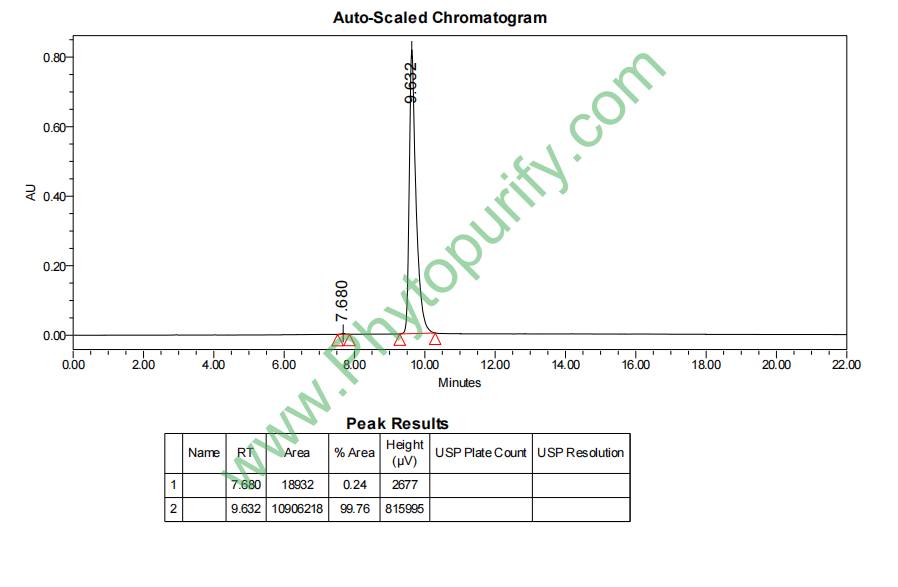
HPLC of Oxypaeoniflorin
Storage conditions:Short-term storage at 2~8℃, long-term storage at -20 ~ -80℃
184.6000
-.4086
-.4140
2.0593
.4362
.2163
Low
51.3844
6.2406
Yes
No
No
No
No
No
0.6
Yes
No
Yes
Yes
Natural products, as an important treasure trove for drug discovery, play an irreplaceable role in the history of human disease prevention and treatment. Among them, the active ingredients derived from traditional Chinese medicine Paeonia spp. have attracted much attention due to their extensive pharmacological activities. Oxypeonidin (CAS number: 39011-91-1) is an important oxidative metabolite of paeoniflorin and belongs to the monoterpene glycoside class. Compared to its precursor paeoniflorin, oxidized paeoniflorin introduces additional oxygen-containing functional groups in its structure, which significantly affects its physicochemical properties and biological activity. Modern pharmacological research has shown that oxidized paeoniflorin not only exhibits significant antioxidant capacity, but also shows great potential in neuroprotection and anti-inflammatory fields. With the acceleration of global aging process, the incidence rate of neurodegenerative diseases (such as Alzheimer's disease, Parkinson's disease) and chronic inflammation related diseases continues to rise, so it is urgent to develop safe and effective neuroprotective and anti-inflammatory drugs. Oxidized paeoniflorin regulates core pathological processes such as cell apoptosis, oxidative stress, inflammatory response, and protein homeostasis by acting on multiple key targets such as BCL2, APP, BACE1, NFE2L2, SIRT1, providing new candidate molecules for the prevention and treatment of related diseases. This article aims to systematically review the chemical properties, plant sources, pharmacological activities, molecular mechanisms, and medicinal properties of oxidized paeoniflorin, in order to provide comprehensive scientific references for the in-depth research and future development of this compound.
The molecular formula of oxidized paeoniflorin is C23H28O12, with a molecular weight of 496.4650. Its chemical structure can be regarded as a derivative of paeoniflorin, with the core skeleton being a monoterpenoid glycoside with a "cage like" structure, connected to a molecule of glucose through glycosidic bonds. The key difference between oxidized paeoniflorin and paeoniflorin is that oxidized paeoniflorin undergoes hydroxylation or oxidation modification at specific positions of the aglycone (usually considered as C-9 or C-10 positions), thereby introducing additional oxygen atoms. This structural modification enhances its polarity and causes corresponding changes in its physicochemical properties.
According to calculations and experimental data, the lipid water partition coefficient (LogP) of oxidized paeoniflorin is -0.4086, indicating its hydrophilicity. Its topological polar surface area (TPSA) is as high as 184.6000 Å ², which is mainly attributed to the abundant hydroxyl and sugar structures in the molecule, further confirming its strong polarity. The water solubility value is 2.0593 (usually expressed in log mol/L or similar units), indicating good solubility in water. These physicochemical parameters collectively determine the distribution and behavior of oxidized paeoniflorin in organisms. For example, higher polarity may limit its transmembrane transport ability, especially with lower efficiency in crossing the blood-brain barrier (BBB). This is consistent with its predicted "low" blood-brain barrier permeability and is one of the key challenges it needs to overcome in the development of central nervous system drugs.
Oxidized paeoniflorin mainly comes from Paeonia plants in the Ranunculaceae family, especially the dried roots of traditional Chinese medicines Paeonia lactiflora Pall. and Paeonia veilchii Lynch or P. lactiflora. In these plants, oxidized paeoniflorin usually coexists with various monoterpene glycosides such as paeoniflorin, paeoniflorin lactone glycoside, and benzoyl paeoniflorin, and is one of its important secondary metabolites.
The solvent extraction method is commonly used to extract oxidized paeoniflorin from plant materials. Methanol, ethanol, or ethanol water mixed solvents with different ratios are commonly used extraction media because they can effectively dissolve polar glycosides. The extraction process is usually assisted by techniques such as heating reflux, ultrasound assistance, or microwave assistance to improve extraction efficiency. After filtration and concentration, the crude extract needs to be further separated and purified using various chromatographic techniques to obtain high-purity oxidized paeoniflorin. The commonly used purification methods include initial enrichment using macroporous adsorption resin column chromatography (such as D101, AB-8 resin), followed by fine separation using silica gel column chromatography, reverse phase silica gel column chromatography (such as ODS-C18), preparative high-performance liquid chromatography (HPLC), etc. Modern analytical techniques such as liquid chromatography-mass spectrometry (LC-MS) and nuclear magnetic resonance (NMR) are key means for identifying its chemical structure. It is worth noting that the content of oxidized paeoniflorin in plants is usually lower than that of paeoniflorin, and the extraction and separation process needs to be carefully controlled to prevent its structure from degrading under high temperature or extreme pH.
A large number of in vitro and in vivo studies have confirmed that oxidized paeoniflorin has various pharmacological activities, among which neuroprotective and anti-inflammatory effects are the most prominent.
1. Neuroprotective effect
Oxidized paeoniflorin has a clear protective effect on neuronal damage induced by multiple factors. In cell models, it can significantly improve the survival rate of neurons induced by β - amyloid protein (A β), glutamate, hydrogen peroxide (H ₂ O ₂), or glucose deficiency/hypoxia/reperfusion (such as PC12 cells, primary cortical neurons, SH-SY5Y cells), and reduce lactate dehydrogenase (LDH) leakage. In animal models, administration of oxidized paeoniflorin can improve learning and memory impairment in Alzheimer's disease (AD) model mice (such as APP/PS1 mice) and reduce the deposition of A β plaques in the brain; Reduce dopaminergic neuron loss and motor deficits in Parkinson's disease (PD) model mice; Relieve cerebral infarction volume and neurological deficits in rats with cerebral ischemia/reperfusion injury. Its neuroprotective effect is closely related to inhibiting neuronal apoptosis, reducing oxidative stress, and mitochondrial dysfunction.
2. Anti inflammatory effect
Oxidized paeoniflorin exhibits extensive anti-inflammatory activity. In microglia (such as BV2 cells) or macrophages (such as RAW264.7 cells) stimulated by lipopolysaccharide (LPS), it can dose dependently inhibit the production of nitric oxide (NO), prostaglandin E2 (PGE2), and pro-inflammatory cytokines (such as tumor necrosis factor - α (TNF - α), interleukin-1 β (IL-1 β), IL-6). In animal inflammation models, such as LPS induced acute lung injury, mouse ear swelling, or arthritis models, administration of oxidized paeoniflorin can significantly reduce tissue inflammatory cell infiltration, edema, and levels of inflammatory mediators. Its anti-inflammatory effect is not limited to the peripheral nervous system, but is also crucial in the regulation of neuroinflammation in the central nervous system. By inhibiting overactivated microglia, it provides a favorable microenvironment for neuroprotection.
3. Antioxidant effect
As a natural antioxidant, oxidized paeoniflorin can directly scavenge free radicals (such as DPPH free radicals and ABTS free radicals) and enhance the intracellular antioxidant defense system. It can upregulate the activity of superoxide dismutase (SOD) and glutathione peroxidase (GSH Px), increase the level of reduced glutathione (GSH), and reduce the content of lipid peroxidation products such as malondialdehyde (MDA). This antioxidant capacity is one of the fundamental mechanisms by which it exerts neuroprotective and anti-inflammatory effects.
The multiple pharmacological activities of oxidized paeoniflorin stem from its precise regulation of multiple signaling pathways within cells, involving multiple key molecular targets:
1. Regulating the apoptotic pathway:
* Targeting BCL2 and CASP9: Oxidative paeoniflorin can upregulate the expression of anti apoptotic protein BCL2 and inhibit the activation of key executor of mitochondrial apoptosis pathway, caspase-9 (CASP9), thereby stabilizing mitochondrial membrane potential, reducing cytochrome C release, and ultimately inhibiting neuronal apoptosis.
* Affects MAPK signaling: It can inhibit the phosphorylation of c-Jun N-terminal kinase (JNK) and p38 mitogen activated protein kinase (MAPK) that promote apoptosis, and sometimes promote the activation of extracellular signal regulated kinase (ERK, MAPK1) (ERK is usually associated with cell survival), promoting cell survival by balancing MAPK family signals.
2. Intervention in the pathological core of Alzheimer's disease:
* Targeted APP and BACE1: Oxidative paeoniflorin can reduce the production of neurotoxic A β by affecting the processing of amyloid precursor protein (APP), inhibiting the activity or expression of β - site APP lyase 1 (BACE1).
* Adjusting MAPT and GSK3B: This compound can also inhibit the excessive activity of glycogen synthase kinase-3 β (GSK3B). GSK3B is a key kinase involved in the excessive phosphorylation of tau protein (encoded by the MAPT gene). Inhibiting GSK3B can reduce the accumulation of abnormally phosphorylated tau protein, which helps maintain the stability of neuronal cytoskeleton.
3. Activate the endogenous defense system:
* Activate NFE2L2/Nrf2 pathway: Oxidized paeoniflorin is an effective activator of the nuclear factor E2 related factor 2 (NFE2L2/Nrf2) pathway. It can promote Nrf2 nuclear translocation, thereby upregulating the expression of phase II detoxifying enzymes and antioxidant proteins such as heme oxygenase-1 (HO-1) and quinone oxidoreductase 1 (NQO1), which is the core mechanism of its antioxidant stress response.
* Activate SIRT1: Oxidative paeoniflorin can upregulate the expression or activity of deacetylase SIRT1. SIRT1 regulates various transcription factors (such as p53, FOXOs, PGC-1 α) through deacetylation, participates in energy metabolism, oxidative stress response, autophagy, and inflammation inhibition, and plays a key role in neuroprotection and prolonging cell lifespan.
4. Inhibit neuroinflammation:
Its anti-inflammatory effect is mainly achieved by inhibiting the activation of nuclear factor kappa B (NF - κ B) and NOD like receptor protein 3 (NLRP3) inflammasomes. Oxidative paeoniflorin can prevent the degradation of I κ B α and nuclear translocation of NF - κ B p65 subunit, thereby downregulating the expression of downstream inflammatory genes. At the same time, it can also inhibit the assembly and activation of NLRP3 inflammasomes, reduce the maturation and release of IL-1 β and IL-18.
In summary, oxidized paeoniflorin forms a synergistic network of multiple targets and pathways by acting on BCL2, CASP9, MAPK1, APP, BACE1, GSK3B, NFE2L2, SIRT1, and other targets, jointly exerting neuroprotective, anti-inflammatory, and antioxidant effects.
Although the pharmacological activity of oxidized paeoniflorin is clear, its drug like and pharmacokinetic (PK) properties are key aspects that must be evaluated during its drug conversion process.
Analysis based on its physical and chemical properties shows that challenges and opportunities coexist. Its low LogP value and high TPSA value indicate good water solubility, but at the same time, it also suggests that oral bioavailability may be low due to difficulties in passive absorption across intestinal epithelial cells. The predicted "low" blood-brain barrier permeability contradicts the expectations for treating central nervous system diseases, which may be the main limiting factor for the central role of its prototype drug. However, its molecular weight is moderate (<500) and meets the basic requirements of the Rule of Five, indicating its potential for development.
The preliminary safety evaluation parameters are relatively optimistic. The hERG channel inhibition experiment is' no ', indicating a low potential for triggering QT interval prolongation in the heart (a serious risk of arrhythmia). The Ames test result is 0.6 (usually referring to the recovery mutation rate, which needs to be judged according to experimental standards. Values close to or below the critical value usually indicate no mutagenicity), indicating that there is no significant genetic toxicity risk. But this is only early screening data, comprehensive preclinical safety evaluation (including long-term toxicity, reproductive toxicity, etc.) still needs to be carried out.
The pharmacokinetic studies on oxidized paeoniflorin are relatively limited. Existing research indicates that its oral absorption is poor and may be partially metabolized by the gut microbiota. After entering the bloodstream, it may be widely distributed in various tissues, but the amount of prototype drugs entering the brain is limited. It mainly undergoes phase II metabolic reactions in the body, such as glucuronidation and sulfation, forming complexes, which are then excreted through the kidneys or bile. Its half-life may be relatively short. These PK characteristics suggest that in order to develop it into an oral central nervous system drug in the future, it may be necessary to use formulation strategies (such as nanomedicine, prodrug design, co administration of P-glycoprotein inhibitors to increase BBB permeability) or search for its active metabolites to optimize its pharmacokinetic behavior.
Oxidized paeoniflorin has shown broad application prospects in the treatment of neurodegenerative diseases and inflammation related diseases.
1. Potential therapeutic areas:
* Alzheimer's disease (AD) and Parkinson's disease (PD): As a multi-target neuroprotective agent, it can simultaneously intervene in multiple AD core pathological processes such as A β production, tau pathology, oxidative stress, mitochondrial dysfunction, and neuroinflammation. For PD, its protective effects on dopaminergic neurons and anti neuroinflammatory effects also have therapeutic value.
* Stroke: Its anti ischemic/reperfusion injury activity makes it a promising adjuvant therapy for neurological repair after stroke.
* Neuropathic pain and chronic inflammatory diseases: Its powerful anti-inflammatory effect can be used to treat rheumatoid arthritis, inflammatory bowel disease, and chronic pain mediated by neuroinflammation.
2. Future research directions and challenges:
* In depth mechanism research: Further utilization of gene knockout/knockdown, chemical probes, and other technologies is needed to validate its key targets in more complex in vivo models and elucidate the network regulatory relationships among multiple targets.
* Pharmacokinetic optimization: This is the main bottleneck facing its development. We need to conduct systematic research on ADME (absorption, distribution, metabolism, excretion) and actively develop new drug delivery systems (such as brain targeted liposomes and polymer nanoparticles), as well as design prodrugs or structural analogues with higher bioavailability.
* Preclinical and clinical studies: Completing standardized preclinical pharmacodynamics (in animal models closer to human diseases) and safety evaluations is a necessary step towards advancing it into clinical trials. Exploring its synergistic effects as an adjuvant medication or in combination with other drugs is also worth paying attention to.
* The role in traditional Chinese medicine formulas: As one of the effective ingredients of peony, studying the interaction between oxidized paeoniflorin and other components in classic formulas such as Shaoyao Gancao Tang and Guizhi Fuling Wan is of great significance for interpreting the modern scientific connotation of the overall therapeutic effect of traditional Chinese medicine.
Oxidized paeoniflorin, as a natural monoterpene glycoside derived from traditional Chinese medicine peony, has become a highly anticipated candidate molecule in modern drug development, especially in the fields of neurological and inflammatory diseases, due to its significant antioxidant, anti-inflammatory, and multi-target neuroprotective activities. It effectively combats the core pathological processes of neurodegeneration and inflammation in cell and animal models by regulating key targets such as NFE2L2, SIRT1, BCL2, GSK3B, and BACE1. Although it faces challenges such as low oral bioavailability and poor blood-brain barrier permeability in terms of drug efficacy, these challenges provide clear directions for innovation in formulation technology and structural optimization. With the continuous deepening of understanding of its molecular mechanism and the rapid development of drug delivery technology, oxidized paeoniflorin is expected to gradually move from a promising lead compound to clinical practice, bringing new therapeutic hope to patients with related diseases. Continued in-depth research on it will not only contribute to the development of innovative drugs, but also further promote the modernization and internationalization of traditional Chinese medicine.
