


Product name: Paeoniflorin
Synonym name: Peoniflorin
Catalogue No.: BP1056
Cas No.: 23180-57-6
Formula: C23H28O11
Mol Weight: 480.466
Botanical Source: Paeonia lactiflora Pall.
Physical Description:
Type of Compound: Monoterpenoids
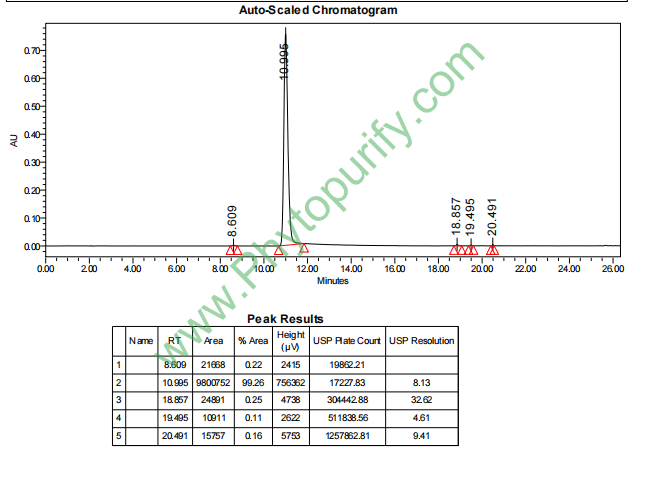
Purity: 95%~99%
Analysis Method: HPLC-DAD or/and HPLC-ELSD
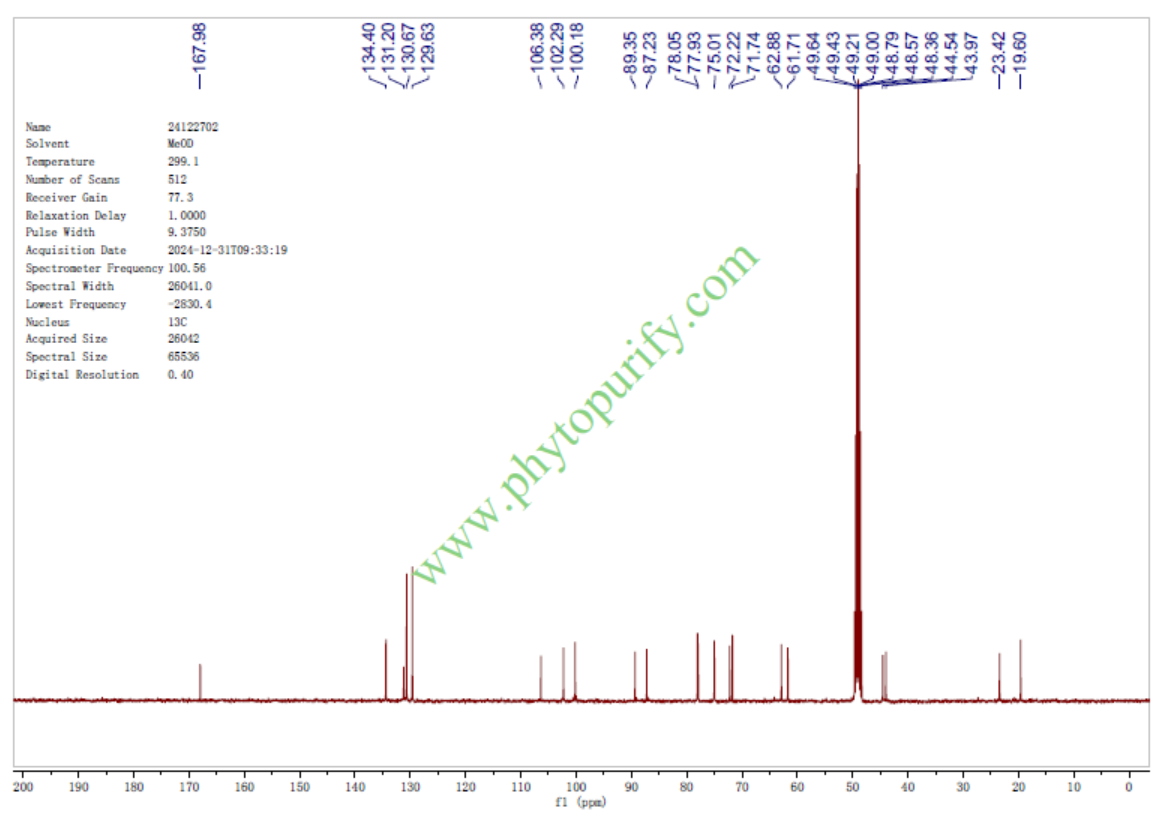
Identification Method: Mass, NMR
Packing: Brown vial or HDPE plastic bottle
Storage: Store in a well closed container, protected from air and light. Put into refrigerate or freeze for long term storage.
Whenever possible, you should prepare and use solutions on the same day. However, if you need to make up stock solutions in advance, we recommend that you store the solution as aliquots in tightly sealed vials at -20℃. Generally, these will be useable for up to two weeks.
The product could be supplied from milligrams to grams
Inquire for bulk scale.
Description:
Paeoniflorin, a novel heat shock protein-inducing compound, is mediated by the activation of heat shock transcription factor 1 (HSF1), which has antiallergic, anti-obesity, anti-inflammatory and immunoregulatory effects. Paeoniflorin can activate PI3K/Akt signaling pathway to protect the PC12 cell injury induced by Aβ25-35, it protects thymocytes against irradiation-induced cell damage by scavenging ROS and attenuating the activation of the mitogen-activated protein kinases.
References:
Phytomedicine. 2014 Sep 15;21(10):1170-7.
Inhibitory effect of paeoniflorin on methylglyoxal-mediated oxidative stress in osteoblastic MC3T3-E1 cells.
Methylglyoxal (MG) has been suggested to be one major source of intracellular reactive carbonyl compounds. In the present study, the effect of Paeoniflorin on MG-induced cytotoxicity was investigated using osteoblastic MC3T3-E1 cells.
METHODS AND RESULTS:
Osteoblastic MC3T3-E1 cells were pre-incubated with Paeoniflorin before treatment with MG, and markers of oxidative damage and mitochondrial function were examined. Pretreatment of MC3T3-E1 cells with Paeoniflorin prevented the MG-induced cell death and formation of intracellular reactive oxygen species, cardiolipin peroxidation, and protein adduct in osteoblastic MC3T3-E1 cells. In addition, Paeoniflorin increased glutathione level and restored the activity of glyoxalase I to almost the control level. These findings suggest that Paeoniflorin provide a protective action against MG-induced cell damage by reducing oxidative stress and by increasing MG detoxification system. Pretreatment with Paeoniflorin prior to MG exposure reduced MG-induced mitochondrial dysfunction by preventing mitochondrial membrane potential dissipation and adenosine triphosphate loss. Additionally, the nitric oxide and nuclear respiratory factor 1 levels were significantly increased by Paeoniflorin, suggesting that Paeoniflorin may induce mitochondrial biogenesis. Paeoniflorin treatment decreased the levels of proinflammatory cytokines such as TNF-α and IL-6.
CONCLUSIONS:
These findings indicate that Paeoniflorin might exert its therapeutic effects via upregulation of glyoxalase system and mitochondrial function. Taken together, Paeoniflorin may prove to be an
Int Immunopharmacol. 2007 May;7(5):662-73.
Paeoniflorin induced immune tolerance of mesenteric lymph node lymphocytes via enhancing beta 2-adrenergic receptor desensitization in rats with adjuvant arthritis.
Paeoniflorin (Pae), a monoterpene glucoside, is one of the main bioactive components of total glucosides of paeony (TGP) extracted from the root of Paeonia lactiflora. TGP has anti-inflammatory and immunoregulatory effects.
METHODS AND RESULTS:
In this study, we investigated the effects of Pae on inflammatory and immune responses to the mesenteric lymph node (MLN) lymphocytes and the mechanisms by which Pae regulates beta 2-adrenergic receptor (beta 2-AR) signal transduction in adjuvant arthritis (AA) rats. The onset of secondary arthritis in rats appeared around day 14 after injection of Freund's complete adjuvant (FCA). Remarkable secondary inflammatory response and lymphocytes proliferation were observed in AA rats, along with the decrease of anti-inflammatory cytokines interleukin (IL)-4 and transforming growth factor-beta 1 (TGF-beta 1) of MLN lymphocytes, and the increase of pro-inflammatory cytokine IL-2. The administration of Pae (50, 100 mg kg(-1), days 17-24) significantly diminished the secondary hind paw swelling and arthritis scores, reversed the changes of cytokines as discussed above, and further decreased the lowered proliferation of MLN lymphocytes in AA rats. In vitro, Pae restored the previously increased level of cAMP of MLN lymphocytes at the concentrations of 12.5, 62.5 and 312.5 mg l(-1). Meanwhile, Pae increased protein expressions of beta 2-AR and GRK2, and decreased that of beta-arrestin 1, 2 of MLN lymphocytes in AA rats.
CONCLUSIONS:
These results suggested that Pae might induce the Th1 cells immune tolerance, which then shift to Th2, Th3 cells mediated activities to take effect the anti-inflammatory and immunoregulatory effects. The mechanisms of Pae on beta 2-AR desensitization and beta 2-AR-AC-cAMP transmembrane signal transduction of MLN lymphocytes play crucial roles in pathogenesis of this disease.
Planta Med. 1997 Aug;63(4):323-5.
Antihyperglycemic effects of paeoniflorin and 8-debenzoylpaeoniflorin, glucosides from the root of Paeonia lactiflora.
METHODS AND RESULTS:
Paeoniflorin and 8-debenzoylPaeoniflorin were isolated from the dried root of Paeonia lactiflora Pall. (Ranunculaceae). They produced a significant blood sugar lowering effect in streptozotocin-treated rats and had a maximum effect at 25 min after treatment. This hypoglycemic action was also observed in normoglycemic rats only at 1 mg/kg. The antihyperglycemic activity of 8-debenzoylPaeoniflorin seems lower than that of Paeoniflorin. Plasma insulin was not changed in Paeoniflorin-treated normoglycemic rats indicating an insulin-independent action. Also, this glucoside reduced the elevation of blood sugar in glucose challenged rats.
CONCLUSIONS:
Increase of glucose utilization by Paeoniflorin can thus be considered. There are no previous data showing the hypoglycemic activity of Paeoniflorin and/or 8-debenzoylPaeoniflorin in rats.
treatment for diabeteic osteopathy.
HPLC of Paeoniflorin
NMR of Paeoniflorin
Storage conditions:Short-term storage at 2~8℃, long-term storage at -20 ~ -80℃
164.3700
-.0164
-.0164
1.4876
.4330
.3162
Low
55.1432
6.1604
Yes
No
No
No
No
No
0.6
Yes
No
Yes
Yes
Paeoniflorin (CAS number: 23180-57-6) is a characteristic monoterpenoid glycoside compound in the Paeoniaceae family. Since its structure was elucidated, it has been a hot topic in natural product pharmacology research. As the main active ingredient of traditional Chinese medicines such as Paeonia lactiflora and Paeonia lactiflora, paeoniflorin has been used in clinical practice for thousands of years. It is mainly used for nourishing blood and regulating menstruation, softening the liver and relieving pain, and tonifying yin and stopping sweating. Modern pharmacological research has gradually revealed that the pharmacological effects of paeoniflorin go far beyond this, exhibiting a wide range of biological activities including anti-inflammatory, neuroprotective, cardiovascular protection, anti-tumor, and antioxidant stress resistance. Of particular note, paeoniflorin has been identified as a heat shock protein (HSP) inducer, providing a new perspective for its multi-target therapeutic effects by regulating cellular stress response and protein homeostasis. This article aims to systematically review the chemical properties, plant sources, pharmacological activities, molecular mechanisms of action, pharmacological characteristics, and clinical application prospects of paeoniflorin, in order to provide comprehensive scientific references for the deep development and transformation of this natural product.
The chemical name of paeoniflorin is β - D-glucopyranosyl - (1 → 2) - (benzoyloxy) - (1S, 2S, 3R, 4R, 5S, 6R) -3- (hydroxymethyl) -4,5-epoxy-6-methylcyclohex-1-ene-1-carboxylate, with a molecular formula of C23H28O11 and a molecular weight of 480.4660. The core of its structure is a unique "cage like" pinene type monoterpene skeleton, which contains an epoxy ring and a glucose group, and is connected to a benzoyloxy group at the C-9 position. This complex multi ring, multi chiral central structure is a hallmark of the paeoniflorin series compounds.
From the analysis of parameters related to drug properties, the lipid water partition coefficient (LogP) of paeoniflorin is -0.0164, indicating its high hydrophilicity. Its topological polar surface area (TPSA) is as high as 164.37 Å ², mainly attributed to the abundant polar groups such as hydroxyl, epoxy, and ester groups in the molecule. The theoretical water solubility value is 1.4876, confirming its good water solubility. These physicochemical properties determine the distribution characteristics of paeoniflorin in organisms: its ability to cross the blood-brain barrier (BBB) is predicted to be "low", which to some extent limits its direct effect on central nervous system diseases, but also suggests that its neuroprotective effect may be achieved through indirect pathways such as peripheral central immune regulation. In early safety evaluations, paeoniflorin showed no significant inhibitory effect on hERG potassium channels, indicating a low risk of cardiac toxicity; The Ames test result is 0.6, indicating that it has no significant mutagenicity, providing a safety basis for its further development.
Paeoniflorin is widely present in plants of the Paeoniaceae family, and is a characteristic component and main active substance of various plants in the Paeoniaceae family. Its main medicinal sources include:
1. peony The roots of cultivated varieties, after being peeled, are called "white peony" and are commonly used as a blood supplement medicine in traditional Chinese medicine.
2. Chuan Chishao The roots of wild varieties are usually not peeled, called "red peony", which is good for clearing heat, cooling blood, dispersing blood stasis, and relieving pain.
In addition, the root bark of peony also contains a certain amount of paeoniflorin, but the content is usually lower than that of peony roots.
The method of extracting paeoniflorin has been continuously optimized with technological advancements. The traditional methods mainly use water extraction or alcohol extraction (such as methanol, ethanol), and then enrich and purify through techniques such as macroporous adsorption resin (such as AB-8, D101), silica gel column chromatography, and preparative high-performance liquid chromatography. In recent years, some green and efficient extraction techniques have been applied, such as ultrasound assisted extraction, microwave-assisted extraction, and supercritical fluid extraction. These methods can effectively shorten extraction time, improve extraction efficiency, and reduce organic solvent consumption. The optimization of extraction process usually focuses on the yield and purity of paeoniflorin as key indicators, and requires comprehensive consideration of factors such as solvent concentration, solid-liquid ratio, extraction temperature, and time.
A large number of in vitro and in vivo studies have confirmed that paeoniflorin has various pharmacological activities, which constitute the potential basis for its multi disease treatment.
anti-inflammatory activity This is one of the most extensively studied and well supported activities of paeoniflorin. It has shown significant effects in various acute and chronic inflammation models, such as carrageenan induced paw swelling in rats, acetic acid induced increased intra-abdominal capillary permeability in mice, and collagen induced arthritis models. Its anti-inflammatory effect is comparable in strength to some nonsteroidal anti-inflammatory drugs, but with fewer side effects.
Neuroprotection and cognitive improvement Paeoniflorin has a clear protective effect on the central nervous system. In animal models such as Alzheimer's disease, Parkinson's disease, cerebral ischemia-reperfusion injury, and vascular dementia, paeoniflorin can significantly improve learning and memory impairment, reduce neuronal apoptosis, and alleviate neuroinflammation. Its role in enhancing cognitive ability and reducing learning disabilities is closely related to its antioxidant, anti-inflammatory, neurotransmitter regulation, and induction of neuroprotective proteins (such as HSP).
Cardiovascular system protection Paeoniflorin can dilate blood vessels, reduce blood viscosity, and inhibit platelet aggregation. Its vasodilatory effect may be related to regulating endothelial function and nitric oxide pathway. Antiplatelet aggregation activity helps prevent thrombosis. Together, these effects have potential therapeutic value for cardiovascular diseases such as hypertension and atherosclerosis.
Antitumor activity: Studies have shown that paeoniflorin can inhibit the proliferation of many tumor cells (such as liver cancer, breast cancer, colon cancer, lung cancer), and can induce apoptosis, inhibit invasion and metastasis. Its anti-cancer mechanism involves multiple signaling pathways, and due to its natural origin, its toxicity to normal cells is relatively low, making it promising for development as an adjuvant anti-tumor drug.
anti-oxidative stress Paeoniflorin can effectively eliminate free radicals such as DPPH and ABTS, increase the activity of endogenous antioxidant enzymes such as superoxide dismutase (SOD) and glutathione peroxidase (GSH Px), reduce malondialdehyde (MDA) levels, and alleviate oxidative stress damage to cells and tissues.
The multiple pharmacological activities of paeoniflorin stem from its diverse regulation of complex cellular signaling networks, and its mechanism of action has been extensively studied at the molecular and pathway levels.
In anti-inflammatory effect In terms of action, the target network of paeoniflorin is particularly clear. It does not act on a single target, but rather inhibits the inflammatory cascade through multiple pathways:
* Regulating key inflammatory factors Paeoniflorin can significantly inhibit the overexpression of pro-inflammatory mediators such as tumor necrosis factor - α (TNF - α), interleukin-6 (IL-6), and nitric oxide synthase 2 (NOS2) in macrophages stimulated by lipopolysaccharide (LPS) and other factors.
* Intervene in key inflammatory signaling pathways:
* NF - κ B pathway Paeoniflorin can inhibit the activation of nuclear factor kappa B inhibitory protein kinase (IKBKB), prevent the nuclear translocation of nuclear factor kappa B (NF - κ B) subunit RELA (p65), and thus downregulate the expression of many downstream inflammatory genes.
* JAK/STAT pathway Paeoniflorin can inhibit the phosphorylation and activation of STAT3, a key transcription factor in inflammatory signaling.
* NLRP3 inflammasome pathway Research has shown that paeoniflorin can inhibit the assembly and activation of NLRP3 inflammasomes, reduce the activation of caspase-1 (CASP1), and mature release of IL-1 β and IL-18.
* Affects pain and neurogenic inflammation Paeoniflorin has been found to be a regulator of transient receptor potential vanillic acid subtype 1 (TRPV1) and transient receptor potential anchor protein subtype 1 (TRPA1) channels, which may be one of the molecular basis for its relief of inflammatory and neuropathic pain.
* Regulating cyclooxygenase Paeoniflorin has a certain regulatory effect on cyclooxygenase-1 (PTGS1/COX-1), but its mode of action may be different from that of traditional nonsteroidal anti-inflammatory drugs.
Heat shock protein induced activity It is a characteristic of the mechanism of action of paeoniflorin. As an HSP inducer, paeoniflorin can upregulate the expression of proteins such as HSP70. HSP, as a molecular partner, not only helps misfolded proteins to refold and maintain cellular homeostasis, but also exerts strong anti-inflammatory and anti apoptotic effects by inhibiting the activity of transcription factors such as NF - κ B and AP-1. This provides a key mechanism for explaining the protective effects of paeoniflorin in neurodegenerative diseases and ischemia-reperfusion injury.
In neuroprotection In addition to the anti-inflammatory and HSP inducing effects mentioned above, paeoniflorin can also regulate the cholinergic system, inhibit glutamate excitotoxicity, alleviate mitochondrial dysfunction, activate brain-derived neurotrophic factor (BDNF) and its downstream pathways (such as PI3K/Akt, CREB).
In antitumor In terms of mechanism, it involves inducing cell cycle arrest (such as G0/G1 phase), activating mitochondrial apoptosis pathway, inhibiting epithelial mesenchymal transition (EMT), and regulating autophagy.
Although paeoniflorin has a wide range of pharmacological activities, its pharmacological properties, especially pharmacokinetic properties, are the main challenges facing its conversion into drugs.
absorb The oral bioavailability of paeoniflorin is generally low (usually below 5%). This is mainly attributed to its strong hydrophilicity, high molecular weight, poor intestinal permeability, and possible hydrolysis and metabolism by intestinal microbiota. The use of novel drug delivery systems such as phospholipid complexes, nanoparticles, microemulsions, and cyclodextrin inclusion complexes is an effective strategy for improving oral absorption.
distribution Paeoniflorin is widely distributed in the body, but as mentioned earlier, its ability to penetrate the blood-brain barrier is limited. Research has shown that it can be distributed to some extent in tissues such as the heart, liver, and kidneys.
Metabolism Paeoniflorin has a complex metabolism in the body. It can be hydrolyzed by β - glucosidase in the intestine and liver to produce the deglycosylated metabolite Paeoniflorin, which has increased lipid solubility and may be easier to enter tissues to exert activity, or it may be the actual executor of some of its pharmacological effects. In addition, there are also phase II metabolic reactions such as oxidation and reduction.
excretion Paeoniflorin and its metabolites are mainly excreted through the kidneys in urine, and partially excreted through bile and feces.
Overall, optimizing the pharmacological properties of paeoniflorin is a key aspect of current research. In response to its low bioavailability, in addition to developing new formulations, structural modifications to improve its lipid solubility and metabolic stability are also important research directions.
The clinical application prospects of paeoniflorin are broad, but currently it mainly remains at the level of traditional Chinese medicine formulas and a few health products, and the development of modern drugs with single components is still being explored.
Neurological disorders Based on its significant neuroprotective and cognitive improvement effects, paeoniflorin has great potential in the treatment of Alzheimer's disease, vascular dementia, Parkinson's disease, post-stroke sequelae, as well as mental illnesses such as depression and anxiety. Developing delivery systems that can effectively cross the blood-brain barrier is key.
Autoimmune and inflammatory diseases For diseases such as rheumatoid arthritis, systemic lupus erythematosus, inflammatory bowel disease, and allergic dermatitis, the multi-target anti-inflammatory properties of paeoniflorin have unique advantages and may become a new type of anti-inflammatory agent with fewer side effects.
cardiovascular disease: In the auxiliary treatment of hypertension, atherosclerosis and myocardial ischemia/reperfusion injury, paeoniflorin's vascular protection and antiplatelet effect can provide comprehensive benefits.
neoadjuvant therapy The combination of paeoniflorin and conventional chemotherapy/radiotherapy may have a detoxifying and enhancing effect, reducing the side effects of radiotherapy and chemotherapy (such as neurotoxicity and cardiotoxicity), while enhancing anti-tumor efficacy.
Future research prospects should focus on:
* In depth mechanism exploration By utilizing omics techniques, molecular docking, gene editing, and other methods, a more accurate target map and signal network of paeoniflorin can be drawn, and its direct targets can be discovered.
* Overcoming the bottleneck of traditional Chinese medicine Continuously invest in research on new drug delivery systems (such as targeted nano formulations, prodrug design) and structural modifications.
* Advance clinical research Design and conduct high-quality, multicenter randomized controlled clinical trials to obtain high-level evidence of the effectiveness and safety of paeoniflorin monotherapy or optimized formulations in specific indications.
* Explore combination therapy Conduct in-depth research on the synergistic effects of paeoniflorin with traditional chemical drugs or other natural products, and develop more effective compound treatment plans.
Paeoniflorin, as a natural monoterpenoid glycoside derived from traditional Chinese medicine, has become a star molecule in modern natural product pharmacology research due to its extensive and precise anti-inflammatory, neuroprotective, cardiovascular protective and other multiple pharmacological activities, as well as its unique ability to induce heat shock proteins. Although it faces challenges in developing drug properties such as oral absorption and targeted delivery, these bottlenecks are gradually being overcome with the deepening understanding of molecular mechanisms of action and the rapid development of drug delivery technology. The development process of paeoniflorin from traditional wisdom to modern scientific interpretation is a microcosm of the modernization and internationalization of traditional Chinese medicine. In the future, through interdisciplinary integration and continuous innovation, paeoniflorin is expected to be successfully transformed from an important active lead compound into a modern drug for treating various major chronic diseases, especially neurodegenerative and chronic inflammatory diseases, contributing unique value to human health.
