Introduction/Overview
Natural products, as an important source of drug discovery, play an irreplaceable role in the long struggle between humans and diseases. In the treasure trove of traditional Chinese medicine, Rehmannia glutinosa(Rehmannia glutinosa Libosch. is an important medicinal herb with a long history and wide application. Dihuang was first recorded in the "Shennong Bencao Jing" and is classified as a top-grade herb. It has the effects of clearing heat and cooling blood, nourishing yin and generating fluids, and nourishing blood and regulating meridians. Modern pharmacological studies have confirmed that Rehmannia glutinosa and its active ingredients show significant biological activities in many fields, such as neuroprotection, anti-inflammatory, antioxidant, anti diabetes, immune regulation, etc. The chemical composition of Rehmannia glutinosa is complex, mainly including cyclohexene ether terpenoid glycosides (such as catalpol), phenylethanoid glycosides (such as verbascoside), syringones, and sugars. Among them, purple ketone compounds are increasingly receiving attention due to their unique structures and diverse pharmacological activities.
Rehmapicroside, as a type of purple ketone glycoside isolated from the rhizome of Rehmannia glutinosa, is an important active ingredient in Rehmannia glutinosa. Its chemical structure belongs to monocyclic sesquiterpene glycosides and has a typical ketone skeleton. In recent years, with the deepening of research on the pharmacological substance basis of Rehmannia glutinosa, the neuroprotective effect of Rehmannia glutinosa glycoside has gradually been revealed, and it has shown great potential in the treatment of neurodegenerative diseases such as Alzheimer's disease (AD) and Parkinson's disease (PD). This article aims to provide a comprehensive and systematic review of the chemical structure, physicochemical properties, plant sources, extraction methods, pharmacological activities, mechanisms of action, medicinal properties, and clinical application prospects of Dihuang bitter glycoside, in order to provide reference for the in-depth research and development of this natural product.
Chemical structure and physicochemical properties
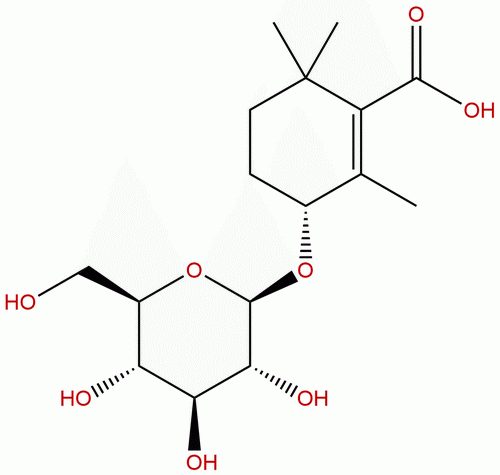
The chemical structure of Rehmannia glutinosa glycoside belongs to the purple ketone glycoside. Zironone compounds are a class of monocyclic sesquiterpenes composed of isoprene units, with a core skeleton of 1,1,5-trimethyl-4-methylcyclohexane, typically linked to one or more sugar groups via glycosidic bonds. The glycoside part of Dihuang bitter glycoside is a derivative of purple ketone, and its glycosyl part is usually glucose. Accurate chemical structure analysis shows that the molecular formula of Dihuang bitter glycoside is C ₁₆ H ₂₆ O ₈, and the system name is (4S, 5R, 6S) -4- [(1E) -3-hydroxy-1-buten-1-yl] -4-hydroxy-3,5,5-trimethyl-2-cyclohexene-1-yl - β - D-glucopyranose glycoside. This structure contains a six membered ring with multiple methyl, hydroxyl, and unsaturated side chains attached to it. These functional groups endow the molecule with a certain degree of polarity and reactivity.
From the perspective of physical and chemical properties, the molecular weight of Dihuang bitter glycoside is 346.3760 g/mol. Its lipid water partition coefficient (LogP) is -0.0755, indicating that the compound has a slight preference for water solubility and belongs to a molecule with strong hydrophilicity. The Topological Polar Surface Area (TPSA) is 136.6800 Å ², which is a relatively high value mainly attributed to the presence of multiple hydroxyl and glycosidic bonds in the molecule. A higher TPSA typically indicates a weaker ability for molecules to passively diffuse through the cell membrane, especially making it difficult to cross the blood-brain barrier (BBB). The water solubility parameter is 44.3649 mg/mL, further confirming its good water solubility. These physicochemical properties collectively determine the absorption, distribution, metabolism, and excretion (ADME) characteristics of Dihuang bitter glycoside in the body, such as its oral bioavailability may be low and difficult to enter the central nervous system. However, its good water solubility also provides convenience for its development in dosage forms such as injection administration. In addition, the hERG inhibition prediction result was "no", and the Ames test result was 0.0, indicating a low risk of cardiac and genetic toxicity and good preliminary safety.
Plant sources and extraction methods
Dihuang bitter glycoside is mainly derived from the plant Dihuang in the family Scrophulariaceae(Rehmannia glutinosa The root and stem of Libosch. Rehmannia glutinosa is widely distributed in China, mainly produced in Henan, Shandong, Shanxi, Shaanxi and other places. Among them, "Huai Rehmannia glutinosa" produced in Huaiqing Prefecture (now Jiaozuo area) of Henan Province is the most authentic and of high quality. In addition to the authentic Rehmannia root, other plants belonging to the same genus include Rehmannia elata、Rehmannia chingii It may also contain similar ingredients, but there may be differences in content and types. The harvesting time and processing method of Rehmannia glutinosa (such as fresh, raw, or steamed mature Rehmannia glutinosa) have a significant impact on the content of active ingredients in it. Research has shown that fresh and raw Rehmannia glutinosa contain higher levels of cyclohexene ether terpenes such as catalpol and digroside, as well as purple ketone components. However, in the processed Rehmannia glutinosa after nine steaming and nine sun drying, the content of these components changes and some are converted into other substances.
The extraction method of Dihuang bitter glycoside usually follows the classic process of natural product chemistry. Due to the high polarity of Dihuang bitter glycoside, it is easily soluble in polar solvents such as water, methanol, and ethanol. Therefore, the commonly used extraction solvents are water or ethanol of different concentrations. The extraction methods include:
1. Solvent extraction method After drying and crushing the rhizome of Rehmannia glutinosa, reflux extraction or percolation extraction is used. Usually, a 50% -70% ethanol aqueous solution is used as the extraction solvent, and multiple extractions are carried out under heating conditions to improve the extraction efficiency. The extract is concentrated under reduced pressure to obtain a paste.
2. Ultrasound assisted extraction By utilizing the cavitation effect of ultrasound to destroy plant cell walls, accelerate solvent penetration and component dissolution, efficient extraction can be achieved at lower temperatures, which is beneficial for protecting thermosensitive components.
3. Microwave assisted extraction By utilizing the penetrability and selective heating of microwaves, the internal temperature and pressure of cells rapidly increase, leading to cell rupture and rapid release of target components.
The crude extract after extraction has complex components and requires further separation and purification to obtain high-purity digoxin. Common separation and purification methods include:
1. Liquid-liquid extraction Preliminary separation of the solubility differences of Rehmannia glutinosa glycoside using different solvents, such as using low polarity solvents such as petroleum ether and ethyl acetate to remove lipophilic impurities and retain glycoside components in the aqueous layer.
2. Macroporous adsorption resin column chromatography This is a common method for separating and purifying water-soluble glycosides. The crude extract is loaded onto a macroporous resin column (such as D101, HPD100, etc.), and then washed with pure water or low concentration ethanol to remove strong polar impurities such as sugars and inorganic salts. Then, different concentrations of ethanol (such as 30% -50%) are used for gradient elution to enrich digoxin.
3. Silica gel column chromatography For samples that have been preliminarily purified, further separation can be performed using silica gel column chromatography. Use a mixed solvent system of chloroform methanol water for gradient elution.
4. Preparation type high-performance liquid chromatography As the final purification method, preparative HPLC can obtain Dihuang bitter glycoside monomers with a purity of over 98%, which can be used for subsequent pharmacological experiments and structural confirmation.
Pharmacological activity research
The pharmacological activity research of Dihuang bitter glycoside mainly focuses on its protective effect on the central nervous system, especially in neurodegenerative disease models. In addition, its role in anti-inflammatory, antioxidant and other aspects is gradually being recognized.
1. Neuroprotective effect
This is the core pharmacological activity of Dihuang bitter glycoside that has received the most attention. Multiple in vitro and in vivo experiments have confirmed that digoxin can effectively protect neurons from various damaging factors.
* Combat the toxicity of β - amyloid protein (A β)The aggregation and deposition of A β are key pathogenic factors in the pathological process of Alzheimer's disease. Research has shown that digoxin can significantly alleviate the toxicity of neuronal cells (such as PC12 cells and primary cortical neurons) induced by A β ₂₅₋③₅ or A β ₁₋₄₂ fragments. It can inhibit A β - induced apoptosis, maintain cell viability, and improve mitochondrial dysfunction.
* Reduce oxidative stress damage Dihuang bitter glycoside has strong antioxidant activity. It can eliminate free radicals, increase the activity of endogenous antioxidant enzymes (such as superoxide dismutase (SOD) and glutathione peroxidase (GSH Px)) in cells, reduce the levels of reactive oxygen species (ROS) and malondialdehyde (MDA), thereby alleviating oxidative stress damage to neurons.
* Inhibit excessive phosphorylation of tau protein Abnormal hyperphosphorylation of tau protein is another important pathological feature of Alzheimer's disease. Research has found that digoxin can inhibit the excessive phosphorylation of tau protein at Ser199/202, Thr231 and other sites induced by A β or okadaic acid by regulating the activity of related kinases and phosphatases, thereby maintaining microtubule stability and protecting the neuronal skeleton.
* Protecting dopaminergic neurons In Parkinson's disease models, Dihuang Ku glycoside has a protective effect on dopaminergic neuron damage induced by 1-methyl-4-phenylpyridine ion (MPP ⁺) or 6-hydroxydopamine (6-OHDA), suggesting its potential for treating Parkinson's disease.
2. Anti inflammatory effect
Neuroinflammation is an important pathological process in neurodegenerative diseases. Dihuang bitter glycoside can inhibit the excessive activation of microglia and astrocytes. In the BV-2 microglial cell model stimulated by lipopolysaccharide (LPS), digoxin can significantly reduce the production of pro-inflammatory factors such as tumor necrosis factor - α (TNF - α), interleukin-1 β (IL-1 β), interleukin-6 (IL-6), as well as nitric oxide (NO) and prostaglandin E2 (PGE2). The mechanism may be related to the inhibition of the activation of nuclear factor kappa B (NF - κ B) and mitogen activated protein kinase (MAPK) signaling pathways.
3. Other pharmacological activities
In addition to neuroprotective and anti-inflammatory effects, preliminary studies also suggest that rehmannia picroside may have other biological activities, such as anti diabetes nephropathy, improving insulin resistance, etc. For example, in the model of diabetes nephropathy, rehmannin may play a protective role by inhibiting apoptosis and fibrosis of renal tubular epithelial cells. These findings have expanded the application prospects of Dihuang bitter glycosides, but their specific mechanisms and effects still need further verification.
Mechanism of action and molecular targets
The molecular mechanism by which digoxin exerts neuroprotective effects is multi-target, multi pathway, and multi-level, mainly involving the regulation of cell apoptosis, oxidative stress, neuroinflammation, and protein homeostasis. According to existing research, its key molecular targets and signaling pathways include:
1. Regulating apoptosis related proteins (BCL2 family and CASP9)
Apoptosis is one of the main forms of neuronal death. Dihuang bitter glycoside can significantly upregulate the expression of anti apoptotic protein BCL2 and downregulate the expression of pro apoptotic protein BAX, thereby increasing the BCL2/BAX ratio. This change can stabilize the mitochondrial membrane potential, inhibit the release of cytochrome c from mitochondria, and thereby reduce the activation of Caspase-9 (CASP9). CASP9 is a key initiator of the mitochondrial apoptosis pathway, Caspase. When its activity is inhibited, the activation of downstream effector Caspases (such as Caspase-3) is blocked, ultimately blocking the cascade of apoptosis and protecting neuronal survival.
2. Regulating the MAPK signaling pathway
The mitogen activated protein kinase (MAPK) family, including extracellular signal regulated kinase (ERK), c-Jun N-terminal kinase (JNK), and p38 MAPK, plays a central role in cell proliferation, differentiation, stress response, and apoptosis. Under neurotoxic stimulation, excessive phosphorylation of JNK and p38 MAPK promotes cell apoptosis. Dihuang bitter glycoside can inhibit the abnormal phosphorylation of JNK and p38 MAPK induced by A β or oxidative stress, thereby blocking their pro apoptotic signaling pathway. Meanwhile, the impact on the ERK pathway may be bidirectional, depending on the specific cellular environment and stimuli.
3. Activate the SIRT1/NFE2L2 antioxidant pathway
Silencing information regulatory factor 1 (SIRT1) is an NAD ⁺ - dependent deacetylase that plays a critical role in energy metabolism, stress resistance, and aging. Nuclear factor E2 related factor 2 (NFE2L2, also known as NRF2) is a major transcription factor in the cellular antioxidant defense system. Dihuang bitter glycoside can upregulate the expression and activity of SIRT1. Activated SIRT1 can activate downstream NFE2L2, promoting its dissociation from cytoplasmic chaperone protein KEAP1 and translocation into the nucleus. In the nucleus, NFE2L2 binds to antioxidant response elements (ARE), initiating the transcription of a series of antioxidant enzyme genes (such as HO-1, NQO1, SOD, GCL), thereby enhancing the cell's ability to clear ROS and resist oxidative stress.
4. Intervention in APP processing and BACE1 activity
The abnormal processing of β - amyloid precursor protein (APP) is the source of A β production. β - secretase 1 (BACE1) is a key enzyme that catalyzes the β - cleavage of APP, and its abnormally high activity is the main reason for the excessive production of A β. Research has shown that Dihuang bitter glycoside can downregulate the expression and activity of BACE1, thereby reducing the β - cleavage products (sAPP β and C99 fragments) of APP, and thus reducing the generation of A β. At the same time, it may promote the non amyloid protein generation pathway (alpha cleavage) of APP, increase the release of soluble sAPP alpha, which has neurotrophic and protective effects.
5. Inhibit GSK3B activity and tau protein phosphorylation
Glycogen synthase kinase 3 β (GSK3B) is one of the key kinases involved in tau protein phosphorylation, and its abnormally elevated activity is closely related to tau protein hyperphosphorylation. Dihuang bitter glycoside can activate the protein kinase B (Akt) signaling pathway, causing inhibitory phosphorylation of the Ser9 site of GSK3B, thereby reducing its kinase activity. After the inhibition of GSK3B activity, the phosphorylation levels of tau protein at multiple AD related sites significantly decreased, thereby maintaining the normal function of microtubule associated proteins and protecting the stability of the cytoskeleton.
In summary, Dihuang Ku glycoside forms a synergistic, multi-target neuroprotective network by simultaneously acting on the BCL2/CASP9 apoptosis pathway, MAPK stress pathway, SIRT1/NFE2L2 antioxidant pathway, APP/ACE1 metabolic pathway, and GSK3B/tau pathway. This multi-target mode of action gives it unique advantages in dealing with complex pathological mechanisms of neurodegenerative diseases.
Evaluation of drug properties and pharmacokinetics
To develop natural products into clinical drugs, a comprehensive pharmacological evaluation must be conducted, including pharmacokinetic properties and safety assessment. Based on the existing physicochemical properties and preliminary research, the pharmacological analysis of Dihuang bitter glycoside is as follows:
1. Physical and chemical properties and drug like properties
As mentioned earlier, the molecular weight of Dihuang bitter glycoside (346.38 Da) meets the requirement of Lipinski's Rule of Five that the molecular weight should be less than 500. But its LogP is -0.0755, far less than 5, and its TPSA is as high as 136.68 Å ², far exceeding the warning line of 140 Å ². This indicates that its hydrophilicity is too strong and its lipophilicity is insufficient. According to the "Five Rules for Generic Drugs", a LogP between -0.4 and 5.6 is acceptable, but a low LogP usually indicates poor membrane permeability and oral absorption. Therefore, there are obvious shortcomings in the pharmacological properties of Dihuang bitter glycoside, and its oral bioavailability may be very low, which is the main challenge facing its pharmacological development.
2. Pharmacokinetic characteristics
* absorb Due to its high polarity and low LogP, digoxin has poor ability to passively diffuse through intestinal epithelial cells. Its oral absorption may mainly rely on carrier mediated active transport or cellular bypass pathways, but the efficiency is usually not high. Therefore, oral administration may not be the ideal mode of administration.
* distribution The plasma protein binding rate of Dihuang bitter glycoside is not yet clear. Its high water solubility makes it mainly distributed in extracellular fluid. Most importantly, its blood-brain barrier (BBB) permeability is predicted to be 'low'. This is a huge obstacle for drugs aimed at treating central nervous system diseases. There are multiple efflux transporters (such as P-glycoprotein) on the BBB, which may further limit their entry into the brain. Therefore, how to improve its brain distribution is the key to developing its neuroprotective effect.
* Metabolism Dihuang bitter glycoside, as a glycoside, may be hydrolyzed by intestinal microbiota or glycosidase in the liver in the body, releasing aglycones. Glycosides have smaller molecular weights, may have higher lipid solubility, and may have different activities. Therefore, the activity of its metabolites and the metabolic pathways involved are important directions for pharmacokinetic research.
* excretion It is speculated that it is mainly excreted through the kidneys in the form of its original form or metabolic products.
3. Safety evaluation
The preliminary toxicological predictions are encouraging. HERG inhibition is predicted as' no ', indicating a lower risk of causing prolonged QT interval and fatal arrhythmias in the heart. The Ames test result is 0.0, indicating that it does not have significant genetic toxicity. These preliminary data indicate that the safety basis of Dihuang bitter glycoside is good, but comprehensive toxicological evaluation (such as acute toxicity, long-term toxicity, reproductive toxicity, etc.) is still an essential step in its preclinical research.
4. Pharmaceutical strategy
Given the low oral bioavailability and poor BBB permeability of Rehmannia glutinosa glycoside, corresponding strategies need to be adopted for future drug development:
* Optimization of administration route Develop non oral routes of administration, such as nasal administration (direct sniffer brain access into the brain), injection administration (intravenous or intraperitoneal injection), or transdermal administration.
* Structural modification Through prodrug design, lipid soluble groups (such as acetylation and methylation) are introduced into the molecule to enhance its LogP and membrane permeability. In the body, these functional groups can be released by enzymatic hydrolysis, restoring the activity of the original drug.
* nano-formulation Using nanocarrier technologies such as liposomes, nanoparticles, and polymer micelles, Dihuang bitter glycoside is encapsulated to improve its stability, prolong circulation time, and achieve brain targeted delivery across the BBB through ligand modification.
* combination therapy Combining with drugs that can inhibit BBB efflux transporters (such as P-glycoprotein inhibitors) may increase their brain concentration.
Clinical application prospects and prospects
Dihuang bitter glycoside, as a natural product derived from the traditional Chinese medicine Dihuang, has opened up broad prospects for its clinical application due to its significant neuroprotective activity, especially for neurodegenerative diseases such as Alzheimer's disease and Parkinson's disease for which there are no specific therapeutic drugs.
1. Treatment of Alzheimer's disease
Dihuang bitter glycoside comprehensively combats the pathological process of AD through a multi-target mechanism (inhibition of A β production and aggregation, inhibition of tau protein phosphorylation, antioxidant, anti apoptotic, anti-inflammatory), demonstrating its potential as a candidate drug for Disease Modifying Therapy (DMT) for AD. Compared with cholinesterase inhibitors (such as donepezil) and NMDA receptor antagonists (such as memantine) that can only improve symptoms in clinical practice, digoxin may fundamentally delay or prevent disease progression.
2. Adjuvant therapy for Parkinson's disease
Its protective effect on dopaminergic neurons, as well as its inhibition of oxidative stress and neuroinflammation, make it a promising adjuvant therapy for Parkinson's disease. When combined with classic drugs such as levodopa, it may have a synergistic effect and reduce side effects.
3. Other neurological disorders
The anti-inflammatory and antioxidant properties of Rehmannia glutinosa glycoside may also enable it to play a role in the treatment of other neurological diseases such as cerebral ischemia-reperfusion injury, spinal cord injury, and amyotrophic lateral sclerosis (ALS).
4. Future research directions
Despite the bright prospects, the clinical translation of Dihuang bitter glycoside still faces many challenges, and future research should focus on the following aspects:
* Thoroughly elucidate the mechanism of action By utilizing advanced technologies such as gene knockout animal models, proteomics, metabolomics, etc., we can more comprehensively reveal the direct target proteins and fine signaling networks of their effects.
* Addressing pharmacokinetic bottlenecks Applying strategies such as nano drug delivery systems and prodrug design to Dihuang bitter glycoside, with a focus on overcoming its low oral bioavailability and poor BBB permeability, and conducting in vivo pharmacokinetic and brain distribution studies.
* Conduct systematic pharmacological and toxicological evaluations Validate its long-term efficacy and safety in various animal models, such as transgenic AD mice and PD model monkeys, and determine the optimal dosage and regimen for administration.
* Exploring structure-activity relationships Synthesize a series of derivatives of Dihuang bitter glycoside, study their structure-activity relationship, and search for candidate compounds with stronger activity and better pharmacokinetic properties.
* Develop standardized extracts Establish a large-scale extraction, purification process, and quality control standards for Dihuang bitter glycoside to ensure the stability and consistency of the raw materials.
Conclusion
Dihuang bitter glycoside, as a purple ketone glycoside isolated from traditional Chinese medicine Dihuang, has become a new star in the field of natural product pharmacology research due to its unique chemical structure and multi-target pharmacological effects, especially its significant neuroprotective activity. It forms a synergistic neuroprotective network by regulating the BCL2/CASP9 apoptotic pathway, MAPK signaling pathway, SIRT1/NFE2L2 antioxidant pathway, APP/ACE1 metabolic pathway, and GSK3B/tau pathway, demonstrating great potential in combating neurodegenerative diseases such as Alzheimer's disease. However, as a candidate drug, it also faces challenges in drug development such as low oral bioavailability and poor blood-brain barrier permeability. Future research needs to not only clarify its mechanism of action, but also focus on overcoming its pharmacokinetic deficiencies, and use modern medicinal chemistry and nanotechnology to promote its transition from laboratory research to clinical application. The research on Dihuang bitter glycoside not only provides lead compounds for the development of new neuroprotective drugs, but also once again proves that excavating active natural products from the treasure trove of traditional Chinese medicine is an important way for modern innovative drug discovery. With the continuous deepening of research, Dihuang bitter glycoside is expected to bring new hope to billions of patients with neurodegenerative diseases worldwide.