


Product name: Genistein
Synonym name: 4',5,7-Trihydroxyisoflavone
Catalogue No.: BP0634
Cas No.: 446-72-0
Formula: C15H10O5
Mol Weight: 270.24
Botanical Source: V. widely distributed in the Leguminosae subf. Papilionoideae but also in Podocarpus spicatus (Podocarpaceae) and wood of Prunus spp. (Rosaceae). The major isoflavone in soy beans and isolated soy protein. Claimed to be prod. by microorganisms Streptomyc
Physical Description: Yellow powder
Type of Compound: Flavonoids
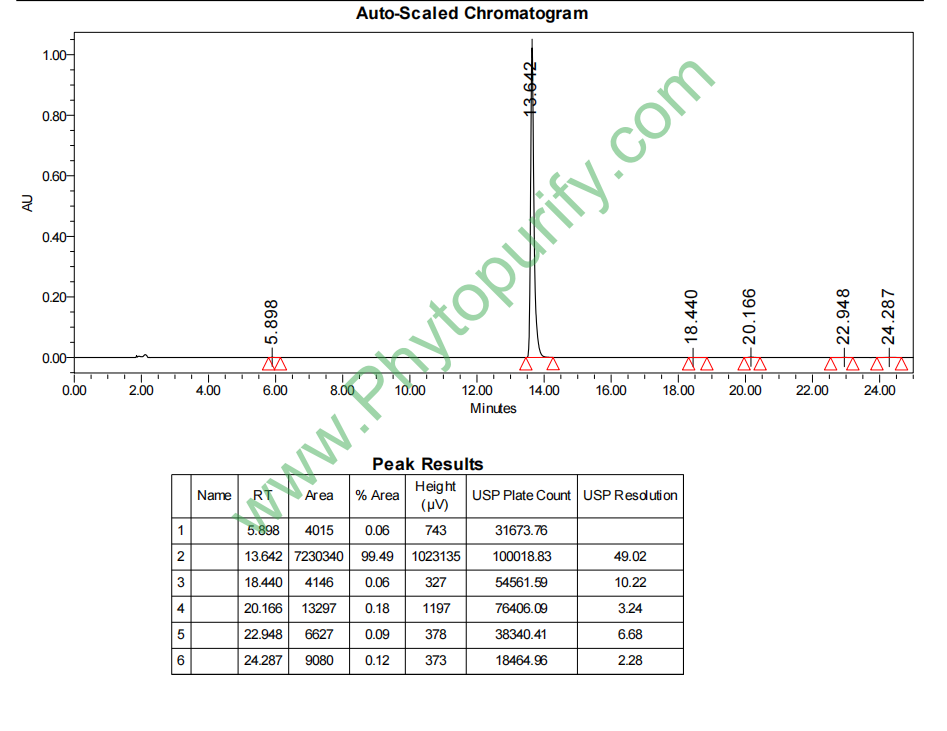
Purity: 95%~99%
Analysis Method: HPLC-DAD or/and HPLC-ELSD
Identification Method: Mass, NMR
Packing: Brown vial or HDPE plastic bottle
Storage: Store in a well closed container, protected from air and light. Put into refrigerate or freeze for long term storage.
Whenever possible, you should prepare and use solutions on the same day. However, if you need to make up stock solutions in advance, we recommend that you store the solution as aliquots in tightly sealed vials at -20℃. Generally, these will be useable for up to two weeks.
The product could be supplied from milligrams to grams, up to kilograms
Inquire for bulk scale.
Descriptions:
Genistein, the major phytoestrogen in soy, is linked to diminished female reproductive performance and to cancer chemoprevention and decreased adipose deposition; genistein-induces hypermethylation persisted into adulthood, decreases ectopic Agouti expression and protecting offspring from obesity, suggests that in utero dietary genistein affects gene expression and alters susceptibility to obesity in adulthood by permanently altering the epigenome.[1]
Genistein is a specific inhibitor of tyrosine-specific protein kinases, can inhibit the EGF-stimulated increase in phosphotyrosine level in A431 cells.[2]
Genistein down-regulates NF-kappaB and phospho-in , leading to the suppression of proliferation and induction of apoptosis, thus providing the molecular basis for the treatment of patients with this pharmacologically safe agent.[3]
Genistein exerts multiple suppressive effects on human breast carcinoma cells, suggests that its mechanism of chemoprevention is pleiotropic.[4]
Genistein stimulates estrogen-responsive pS2 mRNA expression at concentrations as low as 10(-8) M and these effects can be inhibited by tamoxifen; genistein competed with [3H]estradiol binding to the estrogen receptor with 50% inhibition at 5 x 10(-7) M, thus, the estrogenic effect of genistein would appear to be a result of an interaction with the estrogen receptor.[5]
Genistein inhibits TPA-induced COX-2 expression in MCF10A cells by blocking ERK-mediated phosphorylation of p65 and its subsequent interaction with CBP and TBP.[6]
Genistein has neuroprotective effect against beta amyloid-induced neurotoxicity.[7]
References:
[1] Dolinoy D C, Weidman J R, Waterland R A, et al. Environ Heal Persp, 2006, 114(4):567-72.
[2] Akiyama T, Ishida J, Nakagawa S, et al. J Biol Chem, 1987, 262(12):5592-5.
[3] He H, Chen L, Zhai M, et al. Phytother Res, 2009, 23(6):868–73.
[4] Shao Z, Jiong W U. Int J Cancer, 1998, 22(5):362-5.
[5] Wang T T, Sathyamoorthy N, Phang J M. Carcinogenesis, 1996, 17(2):271-5.
[6] Chung M H, Kim D H, Na H K, et al. Mutat Res Fund Mol M, 2014, 768:74-83.
[7] Bang O Y, Hong H S, Dong H K, et al. Neurobiol Dis, 2004, 16(1):21-8.
[8] Zhang H, Suo Z, Zhang Z, et al. Chinese Journal of Pharmaceutical Analysis. 2003,23(1):18-9.
HPLC of Genistein
Storage conditions:Short-term storage at 2~8℃, long-term storage at -20 ~ -80℃
90.9000
2.0065
1.6966
.0907
2.3918
53.5303
Low
91.1444
2.2966
Yes
No
No
No
Yes
Yes
1.8
Yes
Yes
Yes
No
Genistein, also known as 5,7-dihydroxy-3- (4-hydroxyphenyl) -4H-1-benzopyran-4-one, is a type of isoflavone compound widely present in leguminous plants, with a CAS number of 446-72-0. Since its properties as a specific tyrosine kinase inhibitor were revealed in the 1980s, genistein has risen from a common plant component to a hot molecule in pharmacological research. Early research mainly focused on its phytoestrogen activity as soybean isoflavones, which was associated with the lower incidence rate of breast cancer cancer and prostate cancer in the Asian population, leading to extensive exploration of its cancer prevention potential. Subsequent research has continuously expanded the cognitive boundaries of its biological functions, confirming that genistein is a natural small molecule with multi-target and multi pathway regulatory abilities. It not only inhibits various tyrosine kinases (such as EGFR) to affect cell proliferation, apoptosis, cell cycle, and angiogenesis, thereby demonstrating chemotherapy potential for various cancers, but also plays an important regulatory role in metabolic diseases, cardiovascular diseases, and bone health. Especially in the field of anti osteoporosis, genistein has shown great potential as a plant-based bone protectant by acting on estrogen receptors and regulating the balance of osteogenic and osteoclast related targets. This article aims to systematically review the chemical properties, sources, pharmacological activities, molecular mechanisms of action, pharmacological evaluation, and clinical application prospects of genistein, in order to provide comprehensive scientific references for the in-depth research and development of this natural product.
The molecular formula of lignin is C15H10O5, with a molecular weight of 270.24 g/mol. Its core structure is the isoflavone mother nucleus, which is a benzopyranone (chromone) structure, connected to a benzene ring at position 3. The 4 'position on its benzene ring and the 5 and 7 positions on its parent nucleus are respectively replaced by hydroxyl groups, forming its key pharmacophore groups. This specific hydroxylation pattern is the structural basis for its antioxidant activity and interaction with various biomolecules such as enzymes and receptors.
In terms of physical and chemical properties, dye lignin appears as a pale yellow crystalline powder. Its lipid water partition coefficient (LogP) is about 2.01, indicating that it has a certain degree of lipophilicity, but not high lipid solubility. The topological polar surface area (TPSA) is 90.9 Å ², reflecting the surface area occupied by polar groups (hydroxyl groups) in its molecule. Its water solubility is poor, about 0.0907 mg/mL, which to some extent limits its bioavailability. Dye lignin is relatively stable at room temperature, but its phenolic hydroxyl structure makes it sensitive to light, oxygen, and alkaline conditions. Therefore, attention should be paid to protection during extraction, storage, and formulation processes. The phenolic hydroxyl groups in its structure also endow it with significant antioxidant capacity, capable of clearing free radicals, which is closely related to its pharmacological effects such as anti-inflammatory and anti-aging.
Genistein is mainly found in legumes, especially in soybean (Glycine max) and its products (such as soybean meal, tofu, soybean milk), which is one of the main active ingredients of soybean isoflavones. In addition, it is also distributed in plants such as chickpeas, alfalfa sprouts, and red clover. In plants, genistein often exists in the form of glycosides (such as genistein), which can be hydrolyzed into biologically active aglycone forms by gut microbiota or specific glycosidases.
Solvent extraction is commonly used to extract lignin from plant raw materials. Common solvents include methanol, ethanol, acetone, and their aqueous solutions. In order to improve extraction efficiency, techniques such as ultrasound, microwave, or heating reflux are often used. For example, using a 70% -80% ethanol aqueous solution for hot reflux extraction is a commonly used method in both laboratory and industrial settings. After concentration, the extraction solution is enriched and preliminarily purified using macroporous adsorption resins (such as AB-8, D101), and impurities are separated using the adsorption desorption characteristics of dye lignin and resin. Further purification requires the use of chromatographic techniques such as silica gel column chromatography and preparative high-performance liquid chromatography (HPLC) to obtain high-purity monomer compounds. In recent years, green extraction techniques such as supercritical CO2 extraction have also been explored and applied to the extraction of isoflavones due to their advantages of good selectivity and no solvent residue.
Dye lignin has a wide and complex pharmacological activity, and its research has expanded from the initial anti-cancer field to the skeletal, metabolic, neurological, and cardiovascular systems.
Antitumor activity This is the earliest field in which dye lignin was extensively studied. It has been proved to have growth inhibition and apoptosis inducing effects on breast cancer, prostate cancer, colon cancer, lung cancer, ovarian cancer and other cancer cell lines. Its anti-cancer mechanisms are diverse, including inhibiting tyrosine kinase activity, blocking cell cycle in G2/M phase, inducing mitochondrial pathway apoptosis, inhibiting telomerase activity, and anti angiogenesis. It is worth noting that genistein has a two-way regulatory effect on hormone dependent tumors (such as breast cancer). At low concentrations, genistein may show a weak estrogen like effect, while at high concentrations, genistein mainly plays an anti estrogen and pro apoptosis effect.
Anti osteoporosis activity Postmenopausal osteoporosis is closely related to a sudden drop in estrogen levels. As a selective estrogen receptor modulator (SERM), genistein can bind to estrogen receptors (especially ER β) in bones, simulating the protective effect of estrogen on bones without causing excessive proliferation of the uterus or breast. Numerous preclinical studies have shown that genistein can effectively inhibit bone resorption, promote bone formation, increase bone density and strength, and improve bone microstructure.
Cardiovascular protective effect: Genistein plays an anti atherosclerotic and cardiovascular protective role by improving blood lipid profile (reducing total cholesterol and low-density lipoprotein cholesterol), inhibiting low-density lipoprotein oxidation, anti platelet aggregation, promoting the production of nitric oxide in vascular endothelial cells to relax blood vessels, and anti-inflammatory and other multiple ways.
Antioxidant and anti-inflammatory effects Its phenolic hydroxyl structure can directly scavenge reactive oxygen species and nitrogen free radicals, and upregulate the expression of intracellular antioxidant enzymes such as superoxide dismutase and glutathione peroxidase. At the same time, it can inhibit key inflammatory signaling pathways such as nuclear factor kappa B (NF - κ B) and cyclooxygenase-2 (COX-2), and alleviate chronic inflammatory reactions.
Other activities The study also suggests that genistein has certain potential in improving insulin resistance, protecting nerves, and alleviating hot flashes in menopausal syndrome.
The mechanism of action of genistein is complex, involving the regulation of multiple signaling pathways and molecular targets, reflecting the multi-target nature of natural products.
1. Mechanisms related to anti-tumor effects:
* Tyrosine kinase inhibition As a classic ATP competitive inhibitor, genistein can inhibit the activity of various tyrosine kinases such as EGFR, Src, FAK, and block downstream survival and proliferation signaling pathways such as MAPK/ERK and PI3K/Akt.
* cell cycle regulation By upregulating cyclin dependent kinase inhibitors (CDKI) such as p21 and p27 and downregulating cyclin B1, the cell cycle is arrested in the G2/M phase.
* Inducing cell apoptosis Activate mitochondrial apoptosis pathway (reduce Bcl-2/Bax ratio, release cytochrome c, activate caspase-3/9), as well as death receptor pathway.
* Inhibit angiogenesis and metastasis Downregulate the expression of vascular endothelial growth factor (VEGF) and matrix metalloproteinases (such as MMP-2, MMP-9), and inhibit endothelial cell proliferation and migration.
2. Core targets and pathways for anti osteoporosis:
The core of the anti osteoporosis effect of genistein is to regulate the balance of bone remodeling, that is, to inhibit bone resorption and promote bone formation.
* Estrogen receptor 1/ER alpha Mediate its estrogen like effect, promote osteoblast proliferation and differentiation.
* Nuclear receptor (VDR)Vitamin D receptors are involved in regulating calcium and phosphorus metabolism and bone formation.
* Key transcription factors for osteogenesis:RUNX2 and SP7(Osterix) It is the main controlling factor for osteoblast differentiation. Dye lignin can upregulate its expression, thereby promoting downstream osteogenic marker genes such as COL1A1(Type I collagen alpha 1 chain)BGLAP The expression of osteocalcin accelerates bone matrix synthesis and mineralization.
* Osteoclast differentiation and functional inhibition:
-By raising TNFRSF11B The expression of osteoprotegerin (OPG) competitively binds to RANKL, blocking the RANKL/RANK signaling pathway and inhibiting osteoclast precursor differentiation.
-Inhibit mature osteoclast function related genes, such as protease K(CTSK)The expression reduces bone resorption activity.
-Impact SOST Expression of sclerosing protein. Hardened protein is a negative regulator of bone formation secreted by osteoblasts, and genistein may indirectly promote bone formation by regulating its levels.
* Anti inflammatory and antioxidant properties Inhibiting pro-inflammatory factors (such as TNF - α, IL-6) and MMP-9, reducing the damage of inflammation to bone tissue; Its antioxidant effect helps to reduce osteoblast apoptosis and osteoclast activation caused by oxidative stress.
Although lignin has a wide range of pharmacological activities, its medicinal properties still face some challenges.
Pharmacokinetic properties Dye lignin is rapidly absorbed after oral administration, but its absolute bioavailability is relatively low (usually<10%), mainly due to its poor water solubility, first pass effect (extensive II binding metabolism occurs in the intestinal wall and liver, mainly producing sulfate and glucuronic acid complexes), and intestinal microbiota metabolism. Its plasma protein binding rate is high. Lignin and its metabolites are widely distributed, but due to their low LogP value and high polarity, they have the ability to penetrate the blood-brain barrier low This limits its application in central nervous system diseases. The elimination is mainly through renal and biliary excretion, with a relatively short half-life.
Analysis of drug properties parameters:
* Molecular weight (270.24)Compliant with the rules for small molecule drugs (<500 Da).
* LogP(2.01)Being within the ideal range (1-3) indicates good membrane permeability.
* TPSA(90.9 Ų)Slightly higher than the ideal threshold for penetrating the cell membrane (about 60-70 Å ²), this may partially explain why its permeability is not optimal.
* Water solubility (0.0907 mg/mL)Poor quality is the main limiting factor affecting its oral absorption.
* Preliminary evaluation of safety According to the provided data, it Ames test The result is 1.8 (usually considered negative if the ratio is less than 2), indicating no significant mutagenicity under the conditions of this experiment.HERG inhibition No, it indicates that the risk of causing QT interval prolongation in the heart is low and the cardiovascular safety is good. Overall, the safety data of long-term consumption of soy products support that genistein has good tolerance, but the safety of long-term use of high-dose pure products still needs to be rigorously evaluated.
Formulation strategy To improve its bioavailability, researchers have developed various strategies, including preparing phospholipid complexes, cyclodextrin inclusion complexes, solid dispersions, nanocrystals, liposomes, and prodrug modifications (such as preparing its phosphate prodrug to enhance water solubility).
The clinical application prospects of genistein are broad, but there are also clear development directions and challenges.
Current applications and clinical trials At present, genistein is mainly used as a dietary supplement to alleviate menopausal symptoms, support bone health, and antioxidant. In terms of drug development, there have been clinical studies on the prevention of postmenopausal osteoporosis and breast cancer. Some products containing standardized dye lignin extracts have been used as prescription or over-the-counter drugs for bone health management in some countries.
Future Prospects:
1. As a plant-based SERM for anti osteoporosis Compared to traditional hormone replacement therapy (HRT) and certain synthetic SERMs (such as raloxifene), genistein may have better tissue selectivity and safety profile (especially lower risk of irritation to the breast and uterus). Developing efficient and safe dye lignin preparations or derivatives is an important direction for treating postmenopausal osteoporosis.
2. Tumor chemoprevention and adjuvant therapy By utilizing its multi-target and low toxicity characteristics, genistein can be used for tumor chemoprevention in specific high-risk populations, or combined with conventional chemotherapy/radiotherapy to enhance sensitivity and reduce toxicity.
3. Joint strategy for multi disease management Given its multiple benefits such as improving bone metabolism, protecting cardiovascular health, regulating blood sugar, and anti-inflammatory effects, genistein is particularly suitable for managing common comorbidities in postmenopausal women, such as osteoporosis with cardiovascular risk or metabolic syndrome.
4. Structural modification and development of new dosage forms The structural modification of dye lignin aims to improve its solubility, metabolic stability, targeting, and efficacy, which is the core of future drug development. Meanwhile, advanced drug delivery systems, such as targeted nanomaterials, are expected to deliver them specifically to bone tissue or tumor sites, maximizing chemotherapy efficacy and minimizing systemic side effects.
5. In depth mechanism research and biomarker exploration It is necessary to more accurately clarify its role nodes in complex biological networks and search for biomarkers that can predict its efficacy and adverse reactions, in order to achieve personalized and precise application.
Main challenges This includes low oral bioavailability, relatively mild efficacy, potential non-specific effects at high concentrations, and susceptibility to dietary background and individual differences in gut microbiota as a dietary component.
As a natural isoflavone derived from soybeans, genistein has evolved from a traditional dietary component to a highly valuable pharmacological lead compound. Its chemical structure is simple, but it has extraordinary ability to regulate tyrosine kinases, estrogen receptors, and numerous osteogenic/osteoclast related targets, thus demonstrating extensive activity in multiple important disease fields such as anti-tumor, anti osteoporosis, and cardiovascular protection. Despite facing challenges such as low bioavailability in drug development, these obstacles are gradually being overcome through modern drug chemical modifications and the development of novel drug delivery systems. In the future, with a deeper understanding of its multidimensional mechanisms of action and clinical trial design based on precision medicine concepts, genistein and its optimized derivatives are expected to successfully transform from nutritional supplements into innovative drugs for the treatment of osteoporosis, adjuvant anti-cancer and other diseases, providing an efficient and safe natural solution for human health, especially women's health. The research process also fully reflects the translational medical value from traditional medicine to modern drug development.
