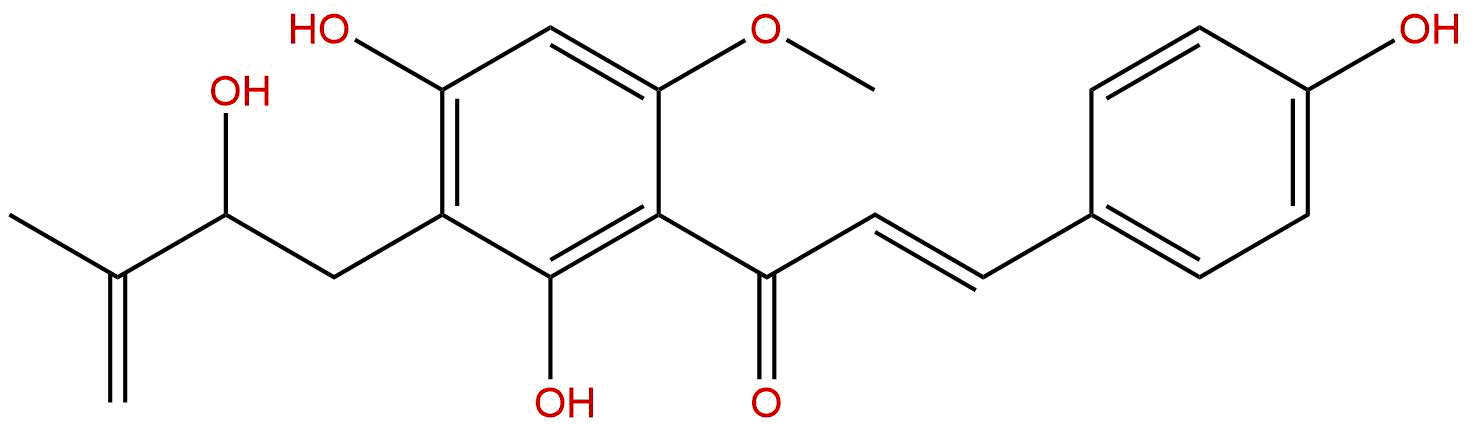


Product name: Xanthohumol D
Synonym name: 2-Propen-1-one, 1-[2,4-dihydroxy-3-(2-hydroxy-3-methyl-3-butenyl)-6-methoxyphenyl]-3-(4-hydroxyphenyl)-, (2E)- (9CI); 1-[2,4-Dihydroxy-3-(2-hydroxy-3-methyl-3-buten-1-yl)-6-methoxyphenyl]-3-(4 hydroxyphenyl)-2-propen-1-one
Catalogue No.: BP4025
Cas No.: 274675-25-1
Formula: C21H22O6
Mol Weight: 370.401
Botanical Source: Humulus lupulus
Physical Description:
Type of Compound: Phenols
Purity: 95%~99%
Analysis Method: HPLC-DAD or/and HPLC-ELSD
Identification Method: Mass, NMR
Packing: Brown vial or HDPE plastic bottle
Storage: Store in a well closed container, protected from air and light. Put into refrigerate or freeze for long term storage.
Whenever possible, you should prepare and use solutions on the same day. However, if you need to make up stock solutions in advance, we recommend that you store the solution as aliquots in tightly sealed vials at -20℃. Generally, these will be useable for up to two weeks.
The product could be supplied from milligrams to grams
Inquire for bulk scale.
For Reference Standard and R&D, Not for Human Use Directly.
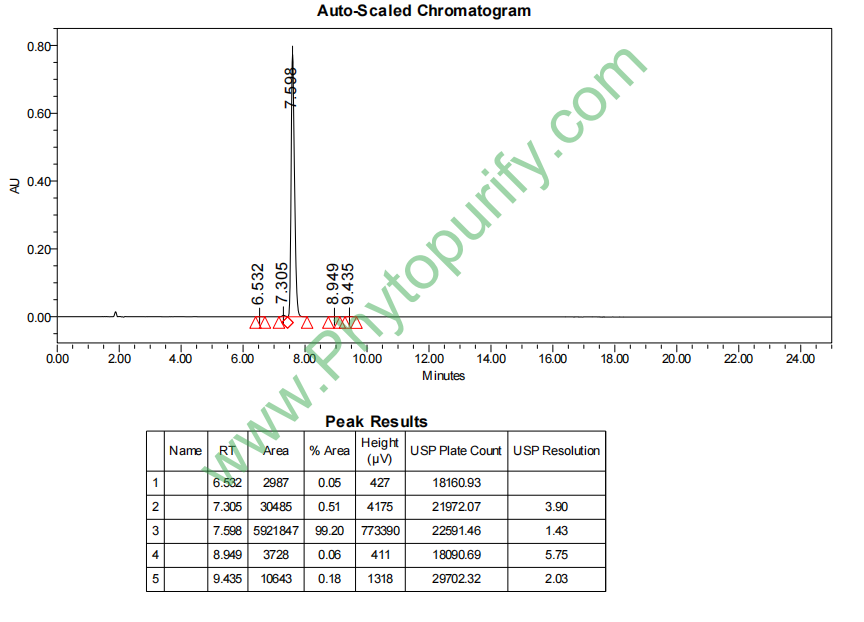
HPLC of Xanthohumol D
Storage conditions:Short-term storage at 2~8℃, long-term storage at -20 ~ -80℃
107.2200
2.8500
2.7752
.1759
2.5651
10.0524
Low
88.7186
3.1948
No
No
Yes
No
Yes
No
0.6
Yes
Yes
Yes
Yes
Xanthohumol D (CAS number: 274675-25-1) is a type of hops derived from the mulberry family plant(Humulus lupulus)Natural chalcone compounds isolated from the middle. As a member of the numerous isopentenyl flavonoids in hops, humic acid D is increasingly receiving attention in the field of natural product pharmacy research due to its unique chemical structure and potential biological activity. Its research background is rooted in the long medicinal history of hops, while modern pharmacological studies have revealed its value in anti-inflammatory, antioxidant, and potential chemical prevention. Existing studies have shown that humic acid D is an inhibitor of quinone reductase 2 (QR-2) with an IC50 of 110 μ M and can bind to the active site of QR-2. In addition, in vitro experiments have confirmed its anti proliferative effect on various human cancer cell lines, suggesting that it may have anti-tumor potential. Further research has found that humic acid D can inhibit the activity of nitric oxide synthase (NOS) and affect multiple key inflammatory factors, including TNF and IL-6, thereby exhibiting clear anti-inflammatory activity at the molecular level. This article will provide a systematic professional popularization of this promising natural product from the aspects of its chemical structure, plant origin, pharmacological mechanism, medicinal evaluation, and research prospects.
The molecular formula of humic acid D is C21H22O6, with a molecular weight of 370.4010 g/mol. Its chemical structure belongs to chalcones, specifically the trans chalcone skeleton, which is replaced by hydroxyl groups at positions 4, 2, and 4, methoxy groups at position 6, and a 2-hydroxy-3-methylbut-3-en-1-group at position 3. This structural feature combines the conjugated system of chalcone parent nucleus with the hydrophobicity and reactivity of isopentenyl side chains, which is crucial for its biological activity.
From the analysis of its pharmacological parameters, its physicochemical properties show that its lipid water partition coefficient LogP is 2.85 and LogD is 2.78, indicating that the compound has moderate lipophilicity, which is beneficial for penetrating cell membranes. However, excessive lipid solubility may also affect its water solubility. The predicted value of its water solubility is 0.1759 mg/mL, which belongs to the category of slight solubility. The topological polar surface area (TPSA) is 107.22 Å ², which is relatively moderate and usually associated with good membrane permeability. Preliminary evaluation based on the famous Lipinski Five Rules ("Five Principles of Similar Drugs"): molecular weight (370.40) less than 500; Calculate LogP value (2.85) to be less than 5; The number of hydrogen bond donors (hydrogen in 4 hydroxyl groups) is 4, equal to the upper limit of 5; The number of hydrogen bond acceptors (6 oxygen atoms) is 6, which is less than the upper limit of 10. Therefore, Huangfufen D basically conforms to Lipinski's rule, indicating that it has good oral absorption potential. However, drug efficacy is a multidimensional assessment that requires comprehensive judgment based on other parameters.
The only natural source of humic acid D is hops(Humulus lupulus L.)Belonging to the mulberry family. The female inflorescence of hops (commonly known as "hops") is an indispensable raw material for brewing beer, providing it with unique bitterness, aroma, and preservative stability. In addition to its core position in the brewing industry, hops also have a long history in traditional medicine. In folk medicine in Europe, Asia, and North America, hops are used to treat anxiety, insomnia, restlessness, indigestion, and various inflammatory diseases. Its function of calming and calming the nerves is particularly famous, often used in making tea or extracts.
Modern plant chemistry research has revealed that hops are rich in a range of bioactive secondary metabolites, including alpha and beta acids (hops picric acid), essential oils, and a wide variety of flavonoid compounds, including humic acid and its derivatives (such as humic acid D). These isopentenyl flavonoids are considered the material basis for many medicinal properties of hops. The relief of inflammation related diseases in traditional applications coincides with the anti-inflammatory activity of components such as humic acid D found in modern research, reflecting the inheritance and verification between traditional experience and modern science. The systematic isolation and identification of active ingredients in hops laid the foundation for precise pharmacological research and drug development of single compounds such as humic acid D.
The pharmacological activity research of humic acid D mainly focuses on its anti-inflammatory and potential chemopreventive/anti-tumor effects, and its mechanism of action involves the regulation of multiple key targets.
Core anti-inflammatory mechanism and target analysis:
The anti-inflammatory activity of humic acid D is one of its most noteworthy characteristics. According to database information, its effects involve multiple key inflammation related targets such as TNF, PTGS2 (COX-2), IL6, IL1B, and NFKBIA. These targets do not exist in isolation, but are located within a closely interconnected inflammatory signaling network.
1. Inhibit pro-inflammatory cytokines Tumor necrosis factor - α (TNF - α), interleukin-6 (IL-6), and interleukin-1 β (IL-1 β) are the most potent pro-inflammatory cytokines in the body, playing a central role in acute and chronic inflammatory responses. Huangfufen D can inhibit the production or release of these cytokines, thereby reducing the inflammatory cascade reaction from the source.
2. Regulating the nuclear factor kappa B (NF - κ B) signaling pathway NF - κ B is a core transcription factor that regulates inflammation, immunity, and cell survival. In the resting state, NF - κ B binds to its inhibitory protein I κ B (such as NFKBIA, i.e. I κ B α) and exists in the cytoplasm. When cells are stimulated by TNF - α and other factors, I κ B is phosphorylated and degraded, allowing NF - κ B to enter the nucleus and initiate the transcription of downstream genes (such as TNF, IL6, IL1B, PTGS2). The regulation of NFKBIA (I κ B α) by humic acid D suggests that it may inhibit the activation of NF - κ B by stabilizing I κ B α or interfering with its degradation pathway, thereby downregulating the expression of a series of pro-inflammatory mediators.
3. Inhibition of inducible nitric oxide synthase (iNOS) and cyclooxygenase-2 (COX-2)Huangfufen D is defined as a nitric oxide synthase (NOS) inhibitor, particularly targeting inducible NOS (iNOS). INOS is induced to produce a large amount of nitric oxide (NO) under inflammatory conditions, which is involved in inflammation and tissue damage. Meanwhile, its inhibitory effect on PTGS2 (i.e. COX-2) is also crucial. COX-2 is the rate limiting enzyme for prostaglandin synthesis in inflammatory sites and is a classic target of nonsteroidal anti-inflammatory drugs (NSAIDs). Huangfufen D can reduce the excessive production of inflammatory mediators such as NO and prostaglandins by inhibiting iNOS and COX-2.
Quinone reductase 2 (QR-2) inhibition and chemoprevention:
Xanthohumol D is an inhibitor of quinone reductase 2 (QR-2). QR-2 is an enzyme related to detoxification metabolism, but its excessive activity may activate pre carcinogens under certain conditions, producing toxic quinones. Therefore, inhibiting QR-2 activity is considered a chemopreventive strategy that can protect cells from environmental toxins and carcinogens. Huangfufen D and its analogues have been reported to be potent inducers of quinone reductase (possibly QR-1, a detoxifying enzyme), while also inhibiting QR-2. This "bidirectional regulatory" effect makes it highly promising in cancer prevention. Inducing QR-1 can enhance cellular detoxification ability, while inhibiting QR-2 blocks potential harmful activation pathways.
Anti proliferative effect:
In vitro experiments have shown that humic acid D has anti proliferative effects on various human cancer cell lines. This activity may be related to its induction of cell cycle arrest, promotion of apoptosis, or the aforementioned anti-inflammatory and antioxidant mechanisms. Chronic inflammation is an important driving factor for the occurrence and development of tumors, so its anti-inflammatory effect itself may also contribute to its anti-tumor effect.
In summary, Huangfufen D exerts anti-inflammatory effects through multiple targets and pathways, and its mechanism covers from inhibiting upstream key signaling molecules (NF - κ B) to reducing the production of core pro-inflammatory mediators (TNF, IL-6, NO, PGs), forming a relatively complete anti-inflammatory network. At the same time, its inhibition of QR-2 and anti proliferative activity provide scientific basis for its application in the field of chemoprevention of inflammation related diseases (such as arthritis, colitis) and even cancer.
Based on the provided pharmacological parameters, we can conduct a preliminary evaluation of the potential of humic acid D as a candidate drug:
Absorption and distribution:
- Oral absorption potential As mentioned earlier, its molecular properties basically comply with Lipinski's five rules, indicating a good possibility of oral absorption. The permeability value of Caco-2 cells is 10.0524 × 10 ⁻⁶ cm/s, which is relatively high and usually indicates good passive diffusion ability of small intestinal epithelial cells. Oral bioavailability may be better. The effective permeability coefficient (Peff) is 2.5651 cm/s × 10 ⁻⁴, further supporting its good intestinal absorption characteristics.
- Distribution and protein binding The predicted plasma protein binding rate (PPB) is 88.72%, which is a relatively high level. High protein binding rate can affect the free concentration of drugs, which may affect their efficacy and metabolic clearance rate, and should be considered in dose design. The blood-brain barrier (BBB) penetration prediction is "low", indicating that it is not easily accessible to the central nervous system, which may actually reduce the risk of central nervous system side effects for drugs primarily targeting peripheral inflammatory diseases.
Metabolism and toxicity:
- Toxicity warning The database has indicated several toxicity signals that require caution.chromosome aberration A positive test result ("yes") is an important genetic toxicity warning signal, indicating that the compound may cause DNA damage under testing conditions. This is a critical safety issue that must be further validated and evaluated in subsequent development.Respiratory sensitization(Resp_Sens) is "Yes", indicating a possible risk of inducing respiratory allergic reactions. In addition, multiple serum biochemical indicators (Ser_LK, Ser_GGT, Ser_ST, Ser_LT) were predicted to be positive, which are markers of liver function. Their elevation may suggest potential risk of liver cell damage or bile stasis, requiring strict in vivo liver toxicity assessment.
- Other security measures The Ames test (mutagenicity) predicts a value of 0.6 (usually>0.8 or 1.0 is considered risky, which needs to be confirmed through experiments), hERG channel inhibition is "no" (indicating a low risk of QT interval prolongation in the heart), there is no phototoxicity, no skin sensitization, and no maximum recommended therapeutic dose (MRTD) data.
Comprehensive evaluation:
Xanthohumol D is present in Exhibiting excellent drug like properties in terms of absorption and permeability This provides a theoretical basis for its oral administration. its Multi target anti-inflammatory mechanism It is also quite attractive. However, it The main challenge facing the path of traditional Chinese medicine lies in the potential toxicity risk Especially chromosome aberration and liver toxicity warning. These signals must be confirmed and quantified through more comprehensive and reliable in vitro and in vivo toxicology studies. If toxicity issues are resolved or controlled through subsequent optimization (such as structural modification) or strict safety dose windows, humic acid D is expected to be developed as a natural source drug or lead compound for the treatment of chronic inflammatory diseases (such as rheumatoid arthritis and inflammatory bowel disease). The current data supports it more as lead compound Provide valuable templates for pharmaceutical chemists to optimize structures to enhance activity and reduce toxicity.
At present, research on humic acid D is still in the preclinical stage, and most of the data comes from in vitro cell experiments and limited biochemical tests. The current research status can be summarized as follows:The mechanism of action has been preliminarily elucidated, and evidence of biological activity has accumulated, but systematic pharmacological, pharmacokinetic, and toxicological studies are still insufficient.
Research Status:
1. Activity verification Its core activities such as anti-inflammatory (inhibition of NO and cytokines), QR-2 inhibition, and anti proliferation have been preliminarily validated in various experimental models.
2. Mechanism Exploration Research has begun to delve deeper into signaling pathways, such as the NF - κ B pathway, but more precise direct targets (such as whether they directly bind to I κ B or COX-2 enzymes) and detailed structure-activity relationships still need to be further analyzed.
3. Lack of in vivo research There are very limited public reports on the pharmacokinetic characteristics (absorption, distribution, metabolism, excretion) of humic acid D in animals, in vivo efficacy evaluation for specific disease models, and subacute or chronic toxicity studies. This is the key bottleneck in pushing it towards application.
Application prospects and future directions:
1. As a lead compound for structural optimization This is the most direct application prospect. Pharmaceutical chemists can use it as a parent nucleus to synthesize derivatives or analogues aimed at enhancing anti-inflammatory activity, improving water solubility, and reducing predicted genotoxicity and hepatotoxicity. For example, modifying its isopentenyl side chain or hydroxyl group may alter its metabolic pathways and toxicity characteristics.
2. In depth study on the mechanism of action Using chemical biology methods such as affinity fishing, molecular docking, and kinetic simulations to identify protein targets that directly interact with each other, and drawing more accurate molecular interaction network diagrams.
3. Preclinical development of the system Conduct standardized animal pharmacokinetic studies and evaluate their in vivo efficacy and preliminary safety in appropriate animal models of inflammation or cancer, such as mouse colitis models and arthritis models.
4. Exploring the potential of combination therapy Given its multi-target nature, studying the synergistic effects of Huangfufen D in combination with existing anti-inflammatory or chemotherapy drugs may help reduce their respective doses and minimize side effects.
5. Functional food or health product raw materials If subsequent safety evaluations confirm its safety at lower doses, humic acid D or its rich hop extract has the potential to be developed as a functional food or dietary supplement for assisting in the regulation of inflammation and antioxidant activity.
In summary, humic acid D is a natural compound discovered from traditional medicinal plants with clear anti-inflammatory activity and unique mechanism of action. Although it faces challenges in terms of drug development, especially toxicity risks, its value as a lead compound for novel anti-inflammatory drugs cannot be ignored. Future research needs to deepen the understanding of the mechanism while vigorously strengthening the systematic evaluation of its preclinical efficacy and safety, and overcoming its shortcomings through rational drug design, in order to truly transform this ancient plant gift into modern drugs that benefit human health.
