


Product name: Yangonin
Synonym name:
Catalogue No.: BP1460
Cas No.: 500-62-9
Formula: C15H14O4
Mol Weight: 258.273
Botanical Source: Piper methysticum Forst
Physical Description:
Type of Compound: Phenols
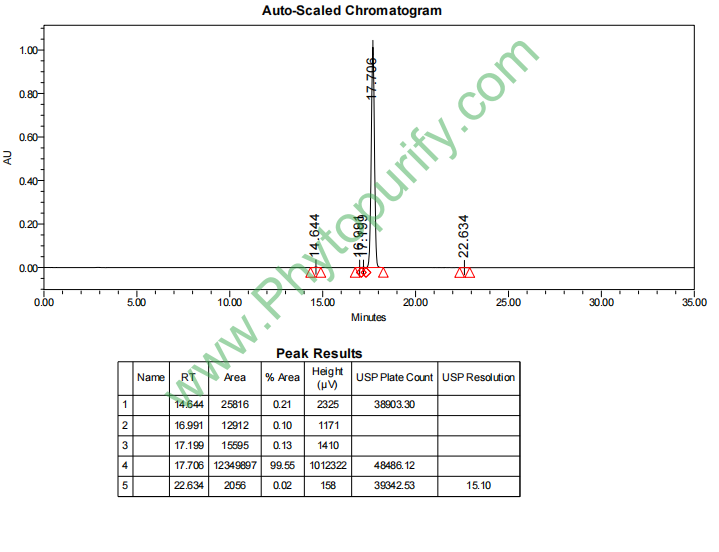
Purity: 95%~99%
Analysis Method: HPLC-DAD or/and HPLC-ELSD
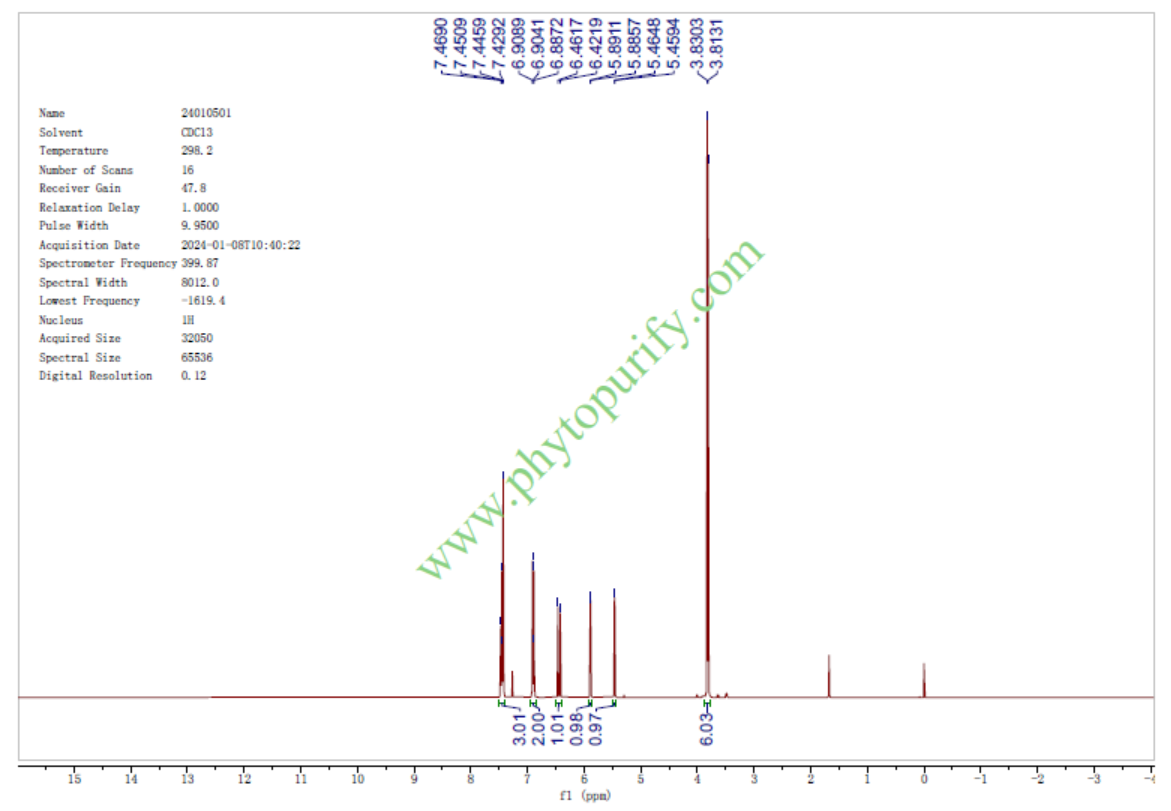
Identification Method: Mass, NMR
Packing: Brown vial or HDPE plastic bottle
Storage: Store in a well closed container, protected from air and light. Put into refrigerate or freeze for long term storage.
Whenever possible, you should prepare and use solutions on the same day. However, if you need to make up stock solutions in advance, we recommend that you store the solution as aliquots in tightly sealed vials at -20℃. Generally, these will be useable for up to two weeks.
The product could be supplied from milligrams to grams
Inquire for bulk scale.
Description:
Yangonin is a novel CB₁ receptor ligand, it exhibits affinity for the human recombinant CB₁ receptor, it is also an effective inhibitor of EV-A71 infection in the low-micromolar. Yangonin could be a valuable candidate for the intervention of NF-κB-dependent pathological conditions such as inflammation.Yangonin induces autophagy and sensitizes bladder cancer cells to flavokawain A and docetaxel via inhibition of the mTOR pathway.
References:
J Pharmacol Sci. 2012;118(4):447-54.
Yangonin blocks tumor necrosis factor-α-induced nuclear factor-κB-dependent transcription by inhibiting the transactivation potential of the RelA/p65 subunit.
The nuclear factor-κB (NF-κB) transcription factors control many physiological processes including inflammation, immunity, and apoptosis. In our search for NF-κB inhibitors from natural resources, we identified Yangonin from Piper methysticum as an inhibitor of NF-κB activation.
METHODS AND RESULTS:
In the present study, we demonstrate that Yangonin potently inhibits NF-κB activation through suppression of the transcriptional activity of the RelA/p65 subunit of NF-κB. This compound significantly inhibited the induced expression of the NF-κB-reporter gene. However, this compound did not interfere with tumor necrosis factor-α (TNF-α)-induced inhibitor of κBα (IκBα) degradation, p65 nuclear translocation, and DNA-binding activity of NF-κB. Further analysis revealed that Yangonin inhibited not only the induced NF-κB activation by overexpression of RelA/p65, but also transactivation activity of RelA/p65. Moreover, Yangonin did not inhibit TNF-α-induced activation of p38, but it significantly impaired activation of extracellular signal-regulated kinase 1/2 and stress-activated protein kinase/c-Jun NH(2)-terminal kinase. We also demonstrated that pretreatment of cells with this compound prevented TNF-α-induced expression of NF-κB target genes, such as interleukin 6, interleukin 8, monocyte chemotactic protein 1, cyclooxygenase-2 and inducible nitric oxide.
CONCLUSIONS:
Taken together, Yangonin could be a valuable candidate for the intervention of NF-κB-dependent pathological conditions such as inflammation.
Antiviral Res. 2017 Jul;143:85-96.
Characterization of three small molecule inhibitors of enterovirus 71 identified from screening of a library of natural products.
Enterovirus 71 (EV-A71) is a major cause of hand, foot, and mouth disease (HFMD). Infection with EV-A71 is more often associated with neurological complications in children and is responsible for the majority of fatalities, but currently there is no approved antiviral therapy for treatment.
METHODS AND RESULTS:
Here, we identified auraptene, formononetin, and Yangonin as effective inhibitors of EV-A71 infection in the low-micromolar range from screening of a natural product library. Among them, formononetin and Yangonin selectively inhibited EV-A71 while auraptene could inhibit viruses within the enterovirus species A. Time of addition studies showed that all the three inhibitors inhibit both attachment and postattachment step of entry. We found mutations conferring the resistance to these inhibitors in the VP1 and VP4 capsid proteins and confirmed the target residues using a reverse genetic approach. Interestingly, auraptene- and formononetin-resistant viruses exhibit cross-resistance to other inhibitors while Yangonin-resistant virus still remains susceptible to auraptene and formononetin. Moreover, auraptene and formononetin, but not Yangonin protected EV-A71 against thermal inactivation, indicating a direct stabilizing effect of both compounds on virion capsid conformation. Finally, neither biochanin A (an analog of formononetin) nor DL-Kavain (an analog of Yangonin) exhibited anti-EV-A71 activity, suggesting the structural elements required for anti-EV-A71 activity.
CONCLUSIONS:
Taken together, these compounds could become potential lead compounds for anti-EV-A71 drug development and also serve as tool compounds for studying virus entry.
HPLC of Yangonin
HNMR of Yangonin
Storage conditions:Short-term storage at 2~8℃, long-term storage at -20 ~ -80℃
48.6700
2.8537
2.8538
.0185
3.9796
12.4434
High
90.2247
2.1462
Yes
Yes
No
No
Yes
Yes
0.9
No
Yes
Yes
Yes
As an important treasure trove for drug discovery, natural products continue to provide modern medicine with structurally novel and uniquely active lead compounds. Among them, kava lactone compounds have attracted much attention due to their significant neuropsychiatric activity. Yangonin, also known as 5,6-trans-dihydro-4-methoxy-6- (4-methoxyphenyl) -2-pyranone, is a major active ingredient isolated from the traditional medicinal plant Piper methicum. Its CAS number is 500-62-9. Early research mainly focused on its traditional application as a part of kava extract in relieving anxiety, sedation, and muscle relaxation. However, with the development of molecular pharmacology, studies have found that anesthetics exhibit high affinity (Ki=0.72 μ M) for the human recombinant cannabinoid CB1 receptor, which has pushed its research to new heights and made it an important tool molecule for studying the endogenous cannabinoid system and its therapeutic potential for related diseases.
Pain, especially chronic pain, is a major global health issue, and existing analgesics such as opioids and nonsteroidal anti-inflammatory drugs have limitations in addiction, tolerance, and gastrointestinal side effects. Therefore, it is crucial to search for alternative analgesic strategies that target new targets and have higher safety. The effect of anesthetic pepper extract on CB1 receptors, as well as its potential to regulate multiple targets such as transient receptor potential vanillic acid subtype 1 (TRPV1) and opioid receptors revealed in subsequent studies, have demonstrated unique research value in the field of analgesia. This article aims to systematically review the chemical properties, plant sources, pharmacological activities, multi-target mechanisms of action, pharmacological characteristics, and clinical application prospects of anesthetics in the field of analgesia, in order to provide comprehensive academic references for the in-depth research and development of this compound.
Anesthetic pepper extract is an alpha pyranone compound belonging to the kava lactone family. Its molecular formula is C15H14O4 and its molecular weight is 258.27 g/mol. Its core structure is an unsaturated hexagonal lactone ring (α - pyranone), with a trans dihydro configuration at positions 5 and 6. The benzene ring is connected to the 6th position of the pyranone ring through an alkene bond and is substituted by a methoxy group in the para position; Meanwhile, the 4th position of the pyranone ring is also replaced by a methoxy group. This unique structure is the material basis for its biological activity.
From the analysis of physical and chemical properties, the calculated value of the lipid water partition coefficient (LogP) of anesthetic pepper extract is about 2.85, indicating its moderate lipophilicity, which is consistent with its ability to penetrate the blood-brain barrier. Its topological polar surface area (TPSA) is 48.67 Å ², which is relatively small and further supports its good membrane permeability. However, its water solubility is poor, about 0.0185 mg/mL, which to some extent limits its oral bioavailability and formulation development, and is a challenge that future structural optimization or delivery systems need to overcome. In the preliminary safety screening, the Ames test result was 0.9 (usually considered negative if less than 2), indicating a low risk of mutagenicity; Meanwhile, existing data shows that it does not inhibit hERG potassium channels, indicating a lower potential risk of arrhythmia and providing preliminary positive signals for its safety evaluation.
Anesthetic pepper extract mainly comes from the roots and stems of Piper methylsticum Forst, a plant in the pepper family. Kava pepper is native to the South Pacific Islands, and its extract (Kava wine) is used in religious ceremonies and social activities in the local culture, with calming, rejuvenating, and social promoting effects. Kavalactone is its main active ingredient group, among which anesthetics such as kaempferol, kavin, and methoxy kaempferol are the most abundant and extensively studied.
Organic solvent extraction is commonly used to extract capsaicin from plant materials. Traditional methods use solvents such as water, ethanol, or acetone for leaching or reflux extraction. In order to obtain higher purity monomer compounds, modern separation processes often use multi-step chromatography techniques. The common process includes: first, dry kava root powder is subjected to Soxhlet extraction or ultrasound assisted extraction with organic solvents such as ethanol or dichloromethane to obtain crude extract; Subsequently, preliminary separation was performed using silica gel column chromatography with solvent systems of different polarities (such as petroleum ether ethyl acetate gradient elution) for elution; After collecting the fraction containing the target ingredient, further purification is carried out by preparative high-performance liquid chromatography (HPLC) or repeated silica gel column chromatography to obtain high-purity anesthesia pepper extract crystals. Supercritical CO2 extraction technology, as a green and efficient method, has also been applied to the extraction of kava lactone, which can avoid residual organic solvents and better preserve thermosensitive components.
A large number of preclinical studies have shown that anesthetics have a wide range of pharmacological activities, and their effects are not limited to the traditional cognitive sedative and anti anxiety effects, but also show potential in areas such as analgesia and neuroprotection.
Analgesic activity This is one of the most highly anticipated activities of anesthetics in recent years. Anesthetic pepper extract has shown significant analgesic effects in various animal pain models. For example, in formalin induced second phase inflammatory pain in mice, acetic acid-induced writhing response, and chronic sciatic nerve compression injury models, anesthetics can dose dependently alleviate pain behavior. Its analgesic effect is comparable in strength to some classic analgesics, but its mechanism of action may be more diverse.
Anti anxiety and sedative effects As a key component of kava extract, anesthetics themselves also exhibit central inhibitory effects. In the elevated cross maze and open box experiments in mice, it can increase the animals' open arm exploration time and open box dwell time, demonstrating anti anxiety effects. In addition, it can synergize with the sedative and hypnotic effects of pentobarbital sodium, prolong sleep time, and demonstrate its sedative properties.
Neuroprotective effect Some studies suggest that capsaicin may have neuroprotective potential. In vitro cell models, it can alleviate neuronal toxicity induced by glutamate or β - amyloid protein, and its mechanism may be related to antioxidant activity, inhibition of inflammatory cytokine release, and regulation of intracellular calcium homeostasis. This provides preliminary clues for its application in neurodegenerative diseases.
Other activities The study also found that anesthetic pepper extract may have anti-inflammatory and muscle relaxation effects. Its anti-inflammatory effect is related to the inhibition of pro-inflammatory factors such as tumor necrosis factor - α (TNF - α) and interleukin-6 (IL-6) production.
It is worth noting that many of the activities of anesthetic pepper extract may differ when used alone compared to when used as part of a mixture of kava extracts, suggesting that other kava lactone components may have synergistic or antagonistic effects, which is known as the "kava effect" and is an interesting phenomenon in natural product research.
The pharmacological effects of anesthetic pepper extract, especially its analgesic activity, stem from its complex regulation of multiple pain related molecular targets, reflecting the characteristics of multi-target action.
Cannabinoid CB1 receptor (CNR1)This is the earliest identified high affinity target of anesthetic pepper extract. Its Ki value for recombinant human CB1 receptor is 0.72 μ M, indicating that it is an effective CB1 receptor ligand. CB1 receptors are mainly distributed in the central and peripheral nervous systems. After activation, they can inhibit neurotransmitter release through pathways such as inhibiting adenylate cyclase and regulating ion channels, thereby producing analgesic and anti anxiety effects. Anesthetic pepper extract directly participates in the regulation of the endogenous cannabinoid system by acting on CB1 receptors, which is one of its core mechanisms of action.
Transient receptor potential channel:
Opioid receptor system Opioid receptors (μ, δ, κ, encoded by OPRM1, OPRD1, OPRK1 genes, respectively) are the core of the classical analgesic pathway. Research has shown that the analgesic effect of anesthetics can be partially blocked by the non selective opioid receptor antagonist naloxone, suggesting that its effect may be partially dependent on the activation of the endogenous opioid system. It may indirectly promote the release of endogenous opioid peptides or enhance the signal transduction of opioid receptors.
Cyclooxygenase (COX)COX-1 (PTGS1) and COX-2 (PTGS2) are key enzymes involved in prostaglandin synthesis and are targets of nonsteroidal anti-inflammatory drugs. Anesthetic pepper extract has been proven to inhibit the activity of COX-2 and reduce the production of pain and inflammatory mediators such as prostaglandin E2, providing another important pathway for its anti-inflammatory and analgesic effects.
Other targets Anesthetic pepper extract may also affect the monoamine neurotransmitter system, such as affecting 5-hydroxytryptamine neurotransmission by acting on the 5-hydroxytryptamine transporter (SLC6A4), and regulating the activity of dopamine D2 receptor (DRD2), which may be related to its anti anxiety and emotion regulation effects.
In summary, anesthetic capsaicin forms a multi-target analgesic network by simultaneously acting on key nodes in multiple pain signaling pathways such as CB1 receptors, TRP channels, opioid system, and COX enzymes. This multi-target characteristic may give it an advantage in treating complex chronic pain (especially pain involving both inflammation and neuropathy), potentially producing synergistic effects and reducing side effects caused by excessive inhibition of a single target.
Despite its attractive pharmacological activity and multi-target mechanism, the development of anesthetic pepper extract still faces some challenges, and pharmacokinetic studies are key to evaluating its development prospects.
Absorption, distribution, metabolism, excretion (ADME):
Pharmacokinetic Challenge The existing animal pharmacokinetic data shows that the oral bioavailability of anesthetics is not high and the half-life is short. This is mainly attributed to the significant first pass effect, fast metabolic rate, and poor water solubility. To enhance its medicinal properties, strategies include: ① Structural modification By synthesizing derivatives, solubility and metabolic stability can be improved while retaining pharmacophores, such as introducing polar groups or blocking easily metabolized sites. ② Formulation technology Using solid dispersion, cyclodextrin inclusion, nanocrystals, liposomes and other delivery systems to improve their solubility and dissolution rate, thereby enhancing absorption. ③ Prodrug strategy Design prodrug molecules that release the original drug only in specific parts or environments of the body.
Preliminary evaluation of safety Based on existing data, anesthetic pepper extract does not inhibit hERG channels and the Ames test is negative, providing preliminary guarantees for its cardiovascular and genetic toxicity safety. However, reports of liver toxicity related to kava extract in history need to be cautious. Although liver toxicity may be related to other components in the extract, preparation methods, or individual differences, and there is limited research data on the liver toxicity of pure anesthetic pepper extract, systematic liver toxicity assessment (such as monitoring liver enzymes, conducting in vitro liver cell toxicity experiments, etc.) is essential in its development process.
As a natural product with multi-target effects, the clinical application prospects of anesthetic pepper extract mainly focus on the following aspects:
Chronic pain management This is the most promising direction. The multi-target mechanism of anesthetics may provide a new treatment option for intractable chronic pain such as neuropathic pain and inflammatory pain. Compared to single target opioid drugs, it may have a lower risk of addiction; Compared to traditional NSAIDs, it may reduce gastrointestinal and cardiovascular side effects. In the future, we can explore its application in postoperative pain, cancer pain, diabetes peripheral neuralgia and other fields.
Anxiety and related emotional disorders Based on its anti anxiety activity, anesthetics such as capsaicin or its optimized derivatives may be developed as novel anti anxiety drugs. Especially for patients who are intolerant or concerned about dependence on existing benzodiazepines, an alternative solution may be provided. Strict clinical trials are needed to verify its efficacy and long-term safety.
Neuroprotective adjuvant therapy Its potential neuroprotective and anti-inflammatory effects provide research ideas for adjuvant therapy of neurodegenerative diseases such as Alzheimer's disease and Parkinson's disease, which may be used to slow down disease progression or improve some symptoms.
Prospects for Drug Development Strategies:
The challenges faced mainly include: the need to address its pharmacokinetic shortcomings through chemical optimization or advanced delivery technologies; Comprehensive and standardized preclinical safety evaluations and clinical trials must be completed to clarify their efficacy and risks; And it is necessary to clarify the exact cause of its hepatotoxicity and its relationship with the pure product.
Anesthetic pepper extract, as a natural active molecule derived from traditional medicinal plants, has evolved from an ethnic pharmaceutical ingredient to an important tool compound and lead molecule in modern pharmacological research due to its high affinity for cannabinoid CB1 receptors and its ability to regulate multiple pain related targets such as TRPV1, opioid receptors, COX-2, etc. The multi-target analgesic properties exhibited by it provide attractive new ideas for addressing the current challenges in the field of chronic pain treatment. Despite facing challenges such as low bioavailability and fast metabolism in drug development, these obstacles are expected to be overcome through the intervention of modern medicinal chemistry, pharmacy, and pharmacology methods. Future research should focus on delving into the intricate details of its action network, developing derivatives or formulations with better pharmacokinetic properties, and advancing rigorous clinical translational studies. The research process of anesthetic pepper extract once again confirms the feasibility and enormous potential of exploring the value of modern drugs from traditional wisdom, and its subsequent development deserves continuous attention.
