


Synonym name: Epimediside A; Des-O-methylicariin
Catalogue No.: BP0548
Cas No.: 39012-04-9
Formula: C32H38O15
Mol Weight: 662.641
Botanical Source: Epimedium grandiflorum, Epimedium macranthum and Epimedium koreanum
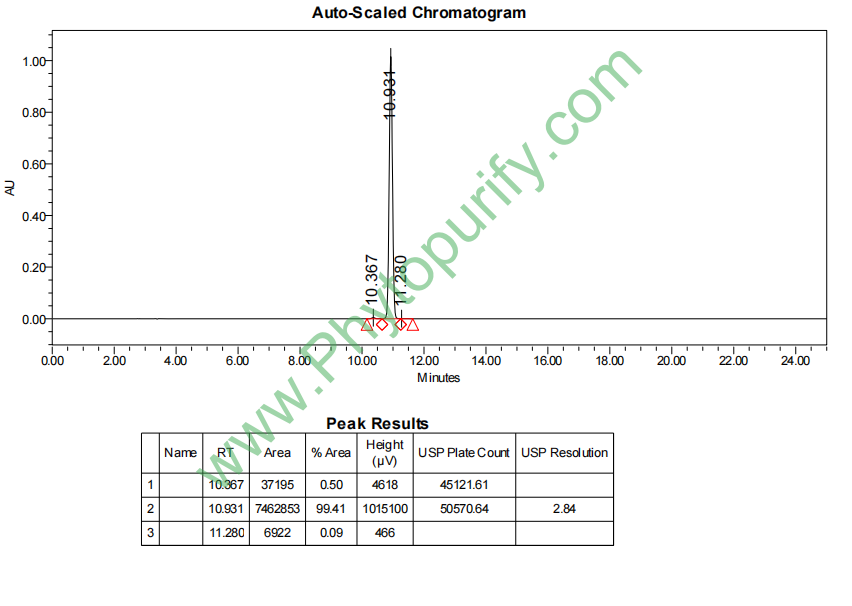
Purity: 95%~99%
Analysis Method: HPLC-DAD or/and HPLC-ELSD
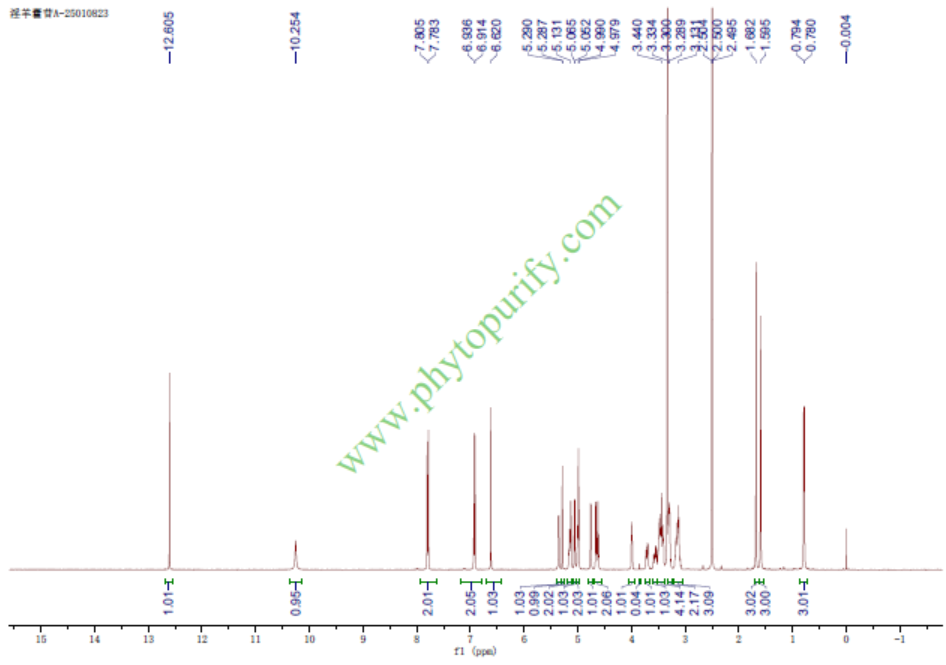
Identification Method: Mass, NMR
Packing: Brown vial or HDPE plastic bottle
Can be supplied from milligrams to grams.
For Reference Standard and R&D, Not for Human Use Directly.
Inquire for bulk scale.
HPLC of Epimedoside A
HNMR of Epimedoside A
Storage conditions:Short-term storage at 2~8℃, long-term storage at -20 ~ -80℃
249.2000
.6799
.6717
1.8743
.4217
.2957
Low
81.0411
4.9551
Yes
No
No
No
No
No
0.0
Yes
Yes
Yes
Yes
Flavonoids, as an important class of secondary metabolites in natural products, have long been a hot topic in drug discovery and pharmacological research due to their widespread distribution in the plant kingdom and diverse biological activities. Epimedium L. plants, as the main source of traditional Chinese medicine "Epimedium", are often used in clinical practice to tonify the kidneys, strengthen yang, strengthen tendons and bones, and dispel wind and dampness. Modern pharmacological research reveals that the core pharmacological substance basis is a series of flavonol glycosides represented by icariin. Epimedium A, a characteristic flavonoid glycoside isolated and identified from Epimedium wushanense, has attracted the attention of researchers in recent years due to its significant in vitro antioxidant activity. Although its popularity may not be as high as icariin, as an important member of the chemical and pharmacological research system of Epimedium plants, the potential intervention value of icariin A in oxidative stress-related diseases deserves further exploration. This article aims to systematically review the chemical structure, plant origin, pharmacological activity, potential mechanism of action, pharmacological characteristics, and application prospects of icariin A, in order to provide comprehensive scientific references for the in-depth research and development of this compound.
The chemical system name of icariin A is relatively complex, and its CAS registration number is 39012-04-9. Structurally, it is a typical flavonol glycoside compound. Its mother nucleus is composed of flavonols (3-hydroxyflavones), which have multiple sugar and methylation groups attached to specific positions in the mother nucleus, forming its unique structural features.
Specifically, the glycoside portion of icariin A is a derivative of demethylariin. Its glycosylation mode is its key feature: one rhamnosyl and one glucosyl are connected to the hydroxyl group of the aglycone through specific glycosidic bonds. The structure of this disaccharide chain, especially the type, connection position, and order of sugar groups, directly affects its polarity, solubility, bioavailability, and interaction mode with biological targets.
According to the provided pharmacological parameters, the molecular weight of icariin A is 662.6410 g/mol, which is a medium-sized organic molecule. The calculated lipid water partition coefficient (LogP) value is 0.6799, indicating that the compound has a certain degree of lipophilicity, but overall it still leans towards hydrophilicity. This is closely related to the presence of multiple hydroxyl and sugar groups (strong hydrophilic groups) in its molecular structure. The topologically polar surface area (TPSA) is as high as 249.2000 Å ², which further confirms its characteristics of high molecular polarity and multiple hydrogen bond donor/acceptor sites. High TPSA is usually associated with poor transmembrane permeability. The calculated water solubility value is 1.8743 (usually measured in mg/mL or log mol/L, indicating moderate or good water solubility), which is consistent with its glycoside structure and beneficial for dissolution in aqueous media such as cell culture medium and intestinal fluid.
Based on its physicochemical parameters (high TPSA, moderate LogP, good water solubility), it can be preliminarily inferred that the cell membrane permeability of icariin A may be limited, and its oral bioavailability may face challenges, which is consistent with its prediction of "low blood-brain barrier penetration". In addition, preliminary computer predictions indicate that there is no risk of hERG potassium channel inhibition (suggesting low potential cardiac toxicity) and the Ames test prediction result is negative (suggesting low potential mutagenicity risk), providing preliminary favorable clues for its safety assessment.
Epimedium glycoside A is mainly derived from plants of the Epimedium genus in the Berberidaceae family. Existing literature clearly reports that it Epimedium wushanense T.S. Ying Separated from dried roots, stems, and leaves. Wushan Epimedium is one of the mainstream original plants of Epimedium herb recorded in the Chinese Pharmacopoeia, mainly distributed in Hubei, Sichuan, Guizhou and other places in China. Its chemical composition spectrum is characterized by the presence of various 8-isoprenyl flavonoid glycosides, and icariin A is one of its characteristic components. It is worth noting that there may be significant differences in the content of icariin A among different species, regions, harvesting seasons, and medicinal parts (leaves, rhizomes) of Epimedium plants.
Extracting icariin A from plant materials follows the conventional process of natural product chemistry. Firstly, solvent extraction method is used. Due to the fact that the target compound is a highly polar flavonoid glycoside, it is commonly used Methanol, ethanol, or ethanol water mixed solution As an extraction solvent, chemical components in plants are transferred to the solvent through methods such as reflux extraction, ultrasound assisted extraction, or room temperature immersion. In recent years, some modern extraction techniques such as microwave-assisted extraction and pressurized solvent extraction have also been attempted to be applied to the extraction of total flavonoids from Epimedium in order to improve efficiency and reduce solvent consumption. These methods are also applicable to the enrichment of icariin A.
After obtaining the crude extract, it needs to undergo systematic separation and purification to obtain high-purity icariin A monomer. The standard process includes:
1. solvent partitioning Preliminary separation is carried out by utilizing the differences in solubility of each component in different polar solvents in the crude extract. Gradient extraction is commonly performed using petroleum ether, ethyl acetate, n-butanol, and water. Flavonoid glycosides are mostly enriched in n-butanol and water layers.
2. column chromatography This is the most crucial purification step. Silica gel column chromatography, reverse phase silica gel (such as ODS-C18) column chromatography, macroporous adsorption resin (such as D101, AB-8) column chromatography, and polyamide column chromatography are commonly used. By optimizing the eluent system (such as different gradient ratios of chloroform methanol water and methanol water), impurities are gradually separated.
3. High performance liquid chromatography For the final stage of fine purification, preparative high-performance liquid chromatography (Prep HPLC) is a key means of obtaining chromatographically pure monomers. Usually, a reverse phase C18 chromatography column is used, with methanol water or acetonitrile water (often containing a small amount of formic acid or acetic acid to adjust pH) as the mobile phase for isocratic or gradient elution. The target peak is monitored and collected by a UV detector (flavonoids typically have strong absorption at 260-280 nm).
The isolated compounds need to be structurally confirmed by nuclear magnetic resonance (NMR, including 1H-NMR, 13C-NMR, 2D-NMR), mass spectrometry (MS), ultraviolet spectroscopy (UV), and comparison with literature data or reference standards.
At present, the pharmacological activity research of icariin A is still in its early stages, mainly focused on in vitro experiments, among which the most prominent and recognized is its antioxidant activity。
1. Antioxidant activity
Multiple in vitro chemical model evaluations have confirmed that icariin A has significant antioxidant capacity. Its antioxidant mechanism may include:
* Directly eliminate free radicals In the 1,1-diphenyl-2-trinitrophenylhydrazine (DPPH) radical scavenging assay, 2,2 '- diazobis (3-ethylbenzothiazoline-6-sulfonic acid (ABTS) cation radical scavenging assay, and superoxide anion radical (O2 •−) scavenging assay, icariin A exhibited clear dose-dependent scavenging effects. Its scavenging ability is closely related to the phenolic hydroxyl groups in its molecular structure, which can neutralize free radicals and interrupt free radical chain reactions by providing hydrogen atoms or electrons.
* Metal ion chelation Flavonoids typically have the ability to chelate transition metal ions (such as Fe2+, Cu2+), which act as catalysts for the Fenton reaction and generate highly active hydroxyl radicals (• OH). Epimedium glycoside A may indirectly inhibit the generation of • OH by chelating these metal ions.
* Enhance endogenous antioxidant defense system Although there is limited direct evidence, studies on similar compounds suggest that icariin may upregulate the expression of intracellular antioxidant enzymes such as superoxide dismutase (SOD), glutathione peroxidase (GPx), and heme oxygenase-1 (HO-1) by activating the nuclear factor E2 related factor 2 (Nrf2) signaling pathway. It is worth further studying whether icariin A has similar effects.
Strong antioxidant activity is its intervention oxidative stress Pharmacological basis of related diseases. Oxidative stress is a state caused by the imbalance between the production and elimination of reactive oxygen species (ROS), and is closely related to aging, neurodegenerative diseases (such as Alzheimer's disease, Parkinson's disease), cardiovascular diseases (atherosclerosis, myocardial ischemia reperfusion injury), diabetes and its complications, inflammatory diseases and even cancer.
2. Other potential activities
Based on the extensive activity of total flavonoids and analogues in Epimedium, icariin A may also have the following potential pharmacological effects, but more direct research is needed to confirm them:
* anti-inflammatory effect Oxidative stress and inflammatory response are closely intertwined. Many flavonoid glycosides can reduce the production of pro-inflammatory factors such as tumor necrosis factor alpha (TNF - α) and interleukin-6 (IL-6) by inhibiting inflammatory signaling pathways such as nuclear factor kappa B (NF - κ B) and mitogen activated protein kinase (MAPK).
* Bone protective effect Epimedium glycoside has been proven to promote osteoblast differentiation and inhibit osteoclastogenesis. As a structurally similar compound, icariin A may have potential preventive and therapeutic effects on osteoporosis.
* Neuroprotective effect Its antioxidant properties suggest that it may protect neurons from oxidative damage and may exhibit protective effects in neurodegenerative disease models.
* Cardiovascular protective effect: It may have beneficial effects on cardiovascular diseases such as atherosclerosis through antioxidant, anti-inflammatory and improving endothelial function.
The exact mechanism of action and direct molecular targets of icariin A are not fully understood, and existing research mainly speculates on its antioxidant activity and regulation of related signaling pathways.
1. Core mechanism: Relieve oxidative stress
Oxidative stress is a common pathway in various pathological processes. As an exogenous antioxidant, icariin A may directly neutralize excess ROS (such as O2 •−, • OH, H2O2) and maintain intracellular redox homeostasis. More importantly, it may exert a long-lasting protective effect by regulating key transcription factors in the endogenous antioxidant defense system of cells.
* Nrf2/ARE pathway This is the most important defense pathway for cells to respond to oxidative stress. In the resting state, Nrf2 binds to its inhibitory protein Keap1 and is degraded by ubiquitination. Oxidative stress or certain compounds can cause conformational changes in Keap1, releasing Nrf2. Nrf2 translocates to the nucleus and binds to antioxidant response elements (ARE), initiating the transcription of a series of phase II detoxifying enzymes and antioxidant proteins (such as HO-1, NQO1, GCLC). Epimedium glycoside A is likely to act as an Nrf2 activator, upregulating the expression of these protective genes and enhancing the cell's resistance to subsequent oxidative damage.
2. Relevant signaling pathways
Oxidative stress and processes such as inflammation and apoptosis promote each other. Epimedium glycoside A may indirectly affect the following pathways through its antioxidant effects:
* NF - κ B pathway ROS is an effective activator of NF - κ B. By clearing ROS, icariin A may inhibit the activation of I κ B kinase (IKK), prevent I κ B degradation and nuclear translocation of NF - κ B p65 subunit, thereby downregulating the expression of downstream pro-inflammatory cytokines (TNF - α, IL-1 β, IL-6) and inflammatory mediators.
* MAPK pathway ROS can activate stress sensitive kinases such as JNK and p38 MAPK, and participate in cell apoptosis and inflammatory responses. Epimedium glycoside A may inhibit the overactivation of these kinases by reducing ROS levels.
* PI3K/Akt pathway This pathway plays a critical role in cell survival, proliferation, and metabolism, and has a cross dialogue with Nrf2 activation. Epimedium glycoside A may activate Akt, thereby promoting nuclear translocation or stability of Nrf2 and synergistically exerting cell protective effects.
* Mitochondrial function regulation Mitochondria are the main site of ROS production. Epimedium icariin A may reduce the burst of mitochondrial ROS by protecting mitochondrial membrane potential, improving electron transport chain function, inhibiting the opening of mitochondrial permeability transition pore (mPTP), and inhibiting the apoptotic pathway mediated by cytochrome c release.
3. Potential molecular targets
In addition to directly reacting with ROS as an antioxidant, icariin A may directly bind to certain protein targets. For example, it may serve as Kinase inhibitor(affecting key kinases in the above signaling pathways), or as Transcription factor regulator(Directly or indirectly interacts with Nrf2, NF - κ B, etc.). However, these need to be validated and discovered through techniques such as molecular docking, surface plasmon resonance (SPR), isothermal titration calorimetry (ITC), or activity-based protein analysis (ABPP).
Based on computational chemistry parameters and limited existing research, a preliminary evaluation of the pharmacological properties of icariin A is conducted
1. Prediction of drug properties and absorption, distribution, metabolism, and excretion (ADME)
* absorb As mentioned earlier, high TPSA (249.2) and moderate LogP (0.68) indicate weaker passive transmembrane diffusion ability. As a flavonoid glycoside, its oral absorption may depend on transport proteins in the intestine (such as sodium dependent glucose transporter SGLT1), but the efficiency is usually not high. The prototype drug is highly susceptible to infection when passing through the intestine and liver First pass effect Metabolism. Glycoside bonds may be cleaved by hydrolytic enzymes in the gut microbiota, producing aglycones (such as icariin) and glycosides. Glycosides have higher lipid solubility and may be absorbed, but their biological activity may differ from that of the original glycoside.
* distribution Predict low blood-brain barrier penetration, which is consistent with high polarity. This means that it may not easily enter the central nervous system, which is a challenge for treating central nervous system diseases, but it may also reduce the risk of central side effects. The organizational distribution characteristics are not yet clear.
* Metabolism The metabolism of flavonoid glycosides is very complex. In addition to hydrolysis by gut microbiota, it mainly undergoes phase II metabolic reactions in the liver, such as Glucuronidation, sulfation, methylation Wait, generate metabolites with higher polarity, and excrete them through bile or urine. Cytochrome P450 enzymes (CYP450) may also be involved in the I-phase metabolism of their aglycones.
* excretion It is expected that its prototype and metabolites will mainly be excreted from the body through the kidneys (urine) and/or bile (feces).
2. Preliminary safety prediction
The provided calculation data gives a positive signal:No risk of hERG inhibition(Important cardiac safety indicators) and Ames test negative(Preliminary genetic toxicity safety indicators). But this cannot completely replace actual in vitro and in vivo toxicology experiments. It is necessary to conduct systematic studies on acute toxicity, subchronic toxicity, reproductive toxicity, etc. to comprehensively evaluate their safety.
3. Current status of pharmacokinetic research
At present, there is a severe lack of public reports on the pharmacokinetic studies of icariin A system. This is a key weakness in its research and development chain. Future research requires the establishment of sensitive and specific biological analysis methods (such as LC-MS/MS) to be used in animal models (rats, mice, etc.) for their analysis Drug time curve, absolute bioavailability, tissue distribution, identification of major metabolites, and excretion pathways Conduct quantitative research. These data are the cornerstone for evaluating whether it can be used as a drug and designing a reasonable administration plan.
The clinical application prospects of icariin A are closely related to its core pharmacological activity - antioxidant activity, but its development path faces both opportunities and challenges.
Potential application directions:
1. Adjuvant treatment or prevention of chronic diseases related to oxidative stress As a natural antioxidant, it is cardiovascular disease(such as atherosclerosis, hypertension)Metabolic diseases(such as diabetes, its nephropathy, retinopathy and other complications)Neurodegenerative diseases(such as Alzheimer's disease and Parkinson's disease, although BBB penetration is poor, it can be explored through dosage form modification or studying the activity of its metabolites) and Chronic inflammatory diseases It has potential application value in conditions such as arthritis.
2. Anti aging and health food Oxidative damage is an important driving factor for aging. Epimedium glycoside A or Epimedium extract rich in this ingredient can be used as a raw material for functional foods or dietary supplements to delay aging and enhance the body's antioxidant capacity.
3. bone health If subsequent studies confirm that it has bone promoting activity similar to icariin, it may osteoporosis It occupies a place in the prevention and control.
Challenges and future research directions:
1. Bioavailability bottleneck This is the biggest obstacle to its path towards becoming a drug. Strategies must be taken to improve its oral absorption, such as:Formulation improvement(Nanocrystals, liposomes, solid dispersions, self microemulsions, etc.);Structural modification(Preparation of prodrugs, such as making them into ester prodrugs with higher lipid solubility, which can be hydrolyzed into the original drug in the body); or Combined administration(Used in combination with absorption enhancers).
2. Deep analysis of the mechanism of action The current mechanism research mostly stays at the level of phenotype and pathway. It is necessary to use chemical biology, proteomics and other methods to explore the molecular targets of its direct action and elucidate the molecular basis of its specific action.
3. Systematic pharmacodynamic and pharmacokinetic evaluation Urgent need for standardization In vivo pharmacological experiments Validate its therapeutic effect in animal models of diseases. Meanwhile, it is necessary to provide a complete supplement Pharmacokinetic and toxicological studies Provide data support for preclinical research.
4. Lack of clinical research All potential ultimately needs to be validated through human clinical trials. There is currently no clinical research data available, and there is still a long way to go from laboratory to clinical trials.
5. Resources and Sustainability Relying on plant extraction, attention should be paid to the sustainable supply of raw materials, quality control (standardization of content), and the possibility of achieving green scale production through synthetic biology (such as microbial heterologous synthesis).
Epimedium glycoside A, as a characteristic flavonoid glycoside compound in Epimedium wushan, has attracted the attention of researchers for its clear in vitro antioxidant activity. Its chemical structure is clear, its plant origin is clear, and preliminary computerized drug prediction shows good safety potential. It demonstrates theoretical value in combating oxidative stress, a common pathological link in various diseases, by directly clearing free radicals and potentially activating endogenous defense pathways such as Nrf2. However, its inherent high polarity leads to low bioavailability, limited in vitro and in vivo pharmacological and pharmacokinetic data, which constitute the main barriers to its drug conversion. Future research should focus on using modern pharmaceutical technology to break through its delivery bottleneck, comprehensively utilizing multi omics techniques and molecular biology methods to deeply reveal its targets and mechanisms, and verifying its safety and effectiveness through standardized preclinical and clinical studies. Only through continuous interdisciplinary efforts can the true application potential of icariin A be accurately evaluated, thus determining whether it should be developed as a promising drug lead compound or serve as a high-quality natural antioxidant material for the big health industry.
