


Product name: Ginsenoside Rb1
Synonym name: Sanchinoside E1; Gypenoside III; Gynosaponin C
Catalogue No.: BP0657
Cas No.: 41753-43-9
Formula: C54H92O23
Mol Weight: 1109.31
Botanical Source: Panax ginseng (ginseng), Panax uinquefolia and Panax notoginseng
Physical Description: White powder
Type of Compound: Triterpenoids
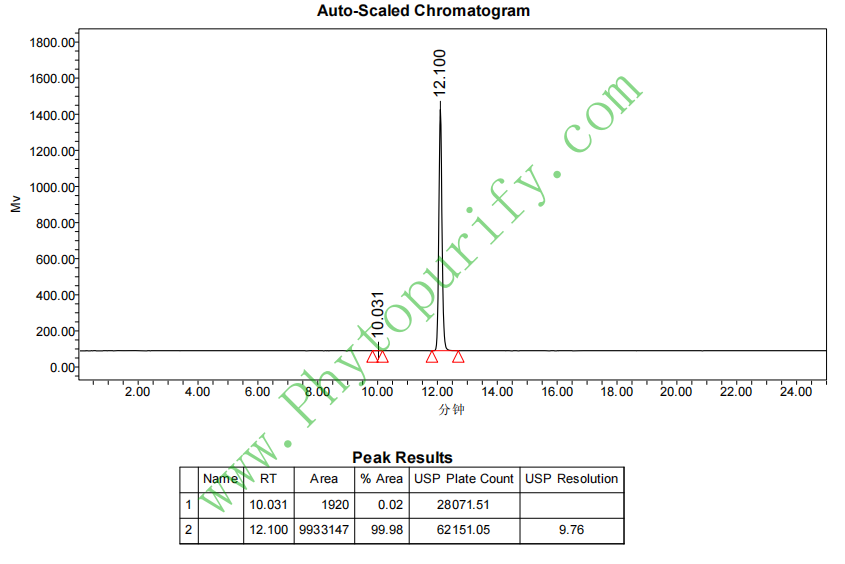
Purity: 95%~99%
Analysis Method: HPLC-DAD or/and HPLC-ELSD
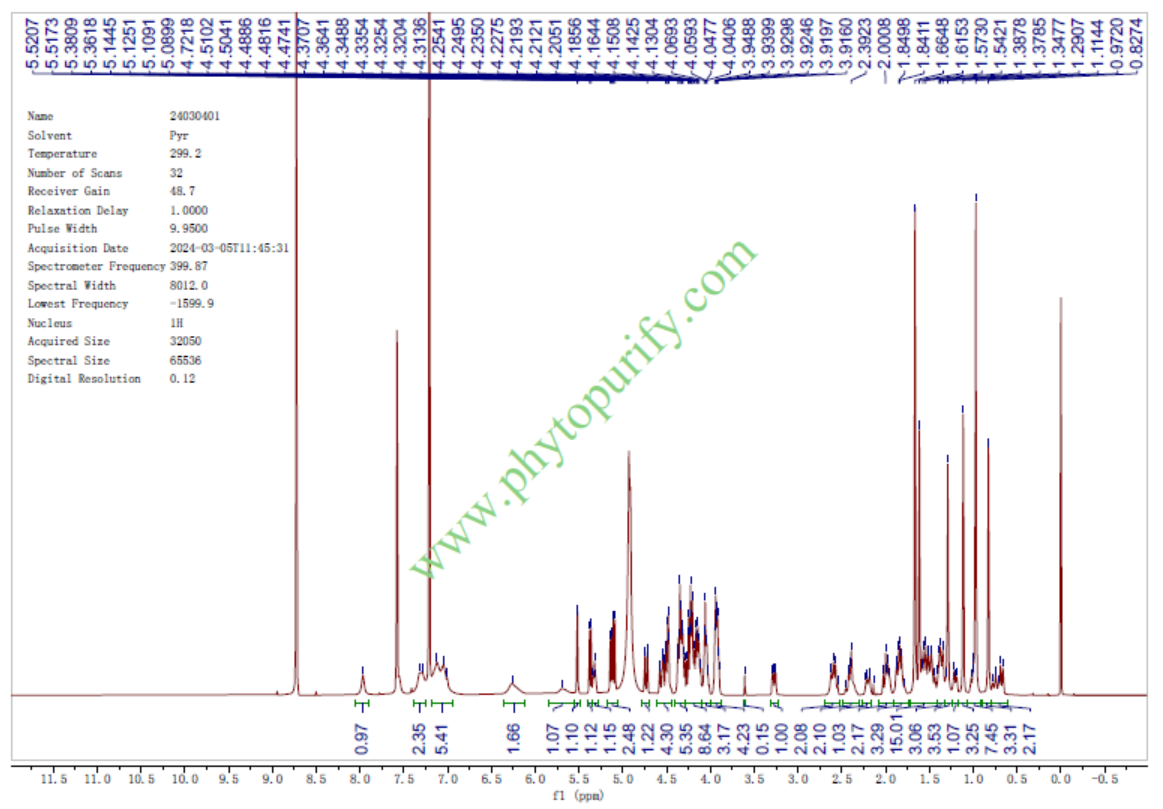
Identification Method: Mass, NMR
Packing: Brown vial or HDPE plastic bottle
Storage: Store in a well closed container, protected from air and light. Put into refrigerate or freeze for long term storage.
Whenever possible, you should prepare and use solutions on the same day. However, if you need to make up stock solutions in advance, we recommend that you store the solution as aliquots in tightly sealed vials at -20℃. Generally, these will be useable for up to two weeks.
The product could be supplied from milligrams to grams, up to kilograms
Inquire for bulk scale.
Descriptions:
Ginsenosides, a class of ginseng compounds of herbal medicine, have therapeutic potential for the neuroprotection of brain damage after cerebral ischemia because of their anti-oxidant and anti-inflammation activities, ginsenoside Rb1 could represent promising applications as anti-oxidants for the anti-aging treatment of neurological disorders, such as stroke, in elderly patients.[1]
Ginsenoside Rb1 presents cardioprotective effect against I/R or H/R injury which involves in activating Akt, phosphorylating GSK-3β and inhibiting mPTP opening.[2]
Ginsenoside Rb1 has anti-oxidative effects on NPCs, may offer potential as a potent antioxidant for the treatment of neurological disorders.[3]
Ginsenoside Rb1 possesses protective effects on swimming exercise-induced oxidative stress in mice.[4]
Ginsenosides Rb1 and Rg1 have many molecular targets including the (CREB), which is involved in melanogenesis, they increase melanogenesis and activity in melanocytes by the activation of PKA/CREB/MITF Signaling.[5]
Ginsenoside Rb1, ginsenoside Rg1,and estrogen can significantly enhance OVA-specific IgG responses, lymphocyte proliferation and cytokines mRNA expression and the enhancement could be blocked by pre-injection of an estrogen receptor antagonist ICI 182780, indicating that ginsenoside Rb1, ginsenoside Rg1, and estrogen may exhibit the adjuvant activities through estrogen receptors.[6]
References:
[1] Xiao D, Lei Z, Lu S, et al. Geriatr Gerontol In, 2015,12(1).
[2] Yu-hong Li , Yan-yan Li , Guan-wei Fan, et al. Chin J Integr Med, 2016:1-10.
[3] Ye J, Yao J P, Wang X, et al. Mol Med Rep, 2016, 13(4):3083-91.
[4] Qi B, Zhang L, Zhang Z, et al. Pharmacogn Mag , 2014, 10(40):458-63.
[5] Lin M, Zhang B X, Zhang C, et al. Evid-Based Compl Al, 2014, 2014(14):892073.
[6] Li Y, Wu L, Yuan L, et al. American Journal of Traditional Chinese Veterinary Medicine, 2012,2(7):1-17.
[7] Li-Na J I, Feng W H, Wang Z M, et al. China journal of Chinese materia medica, 2013, 38(17):2798-802.
HPLC of Ginsenoside Rb1
HNMR of Ginsenoside Rb1
Storage conditions:Short-term storage at 2~8℃, long-term storage at -20 ~ -80℃
377.2900
1.9181
1.9180
.2124
.4524
.1129
Low
67.9589
6.8722
Yes
No
No
No
No
No
0.0
Yes
No
No
No
Ginseng (Panax ginseng C.A. Mey.), as the "king of all herbs", has been used in traditional medicine for thousands of years. Its effects of tonifying qi, promoting diuresis, and calming the mind are widely known. Modern pharmacological research has revealed that the many biological activities of ginseng are mainly attributed to a class of triterpenoid saponins it is rich in - ginsenosides. Ginsenoside Rb1 (CAS number: 41753-43-9) is one of the main representative components of protopanaxadiol type saponins, and is abundant in ginseng roots and stems. Early studies have found that it can inhibit Na+, K+- ATPase activity, suggesting its potential regulatory role in energy metabolism and ion balance. With the deepening of research, especially its outstanding performance in the field of neuroprotection, ginsenoside Rb1 has become a hot topic in the pharmacological study of natural products. A large amount of in vitro and in vivo experimental evidence shows that ginsenoside Rb1 has great potential in combating neurodegenerative diseases, cerebral ischemic injury, cognitive dysfunction, and other aspects through multi-target and multi pathway mechanisms. This article aims to systematically review the chemical properties, pharmacological activities, molecular mechanisms of action, pharmacological evaluation, and clinical application prospects of ginsenoside Rb1, in order to provide comprehensive academic references for the in-depth research and development of this active ingredient.
The molecular formula of ginsenoside Rb1 is C54H92O23, with a molecular weight of 1109.3070. Its chemical structure belongs to the dammarane type tetracyclic triterpenoid saponin, with a aglycone of 20 (S) - protopanaxadiol. There are two sugar chains connected to each of the C-3 and C-20 positions of the aglycone: the C-3 position is connected to a glucose group (β - D-Glcp), and the C-6 position of the glucose is further connected to a glucose group (β - D-Glcp); The C-20 position is connected to a glucose group (β - D-Glcp), and the C-6 position of the glucose is further connected to a pyranose arabinose group (α - L-Arap). This complex glycosylation structure is an important basis for its biological activity and significantly affects its physicochemical properties.
From the perspective of pharmacological parameters, its lipid water partition coefficient (LogP) is 1.9181, indicating a certain degree of lipophilicity, but not high lipid solubility. Its topological polar surface area (TPSA) is as high as 377.2900 Å ², mainly due to the numerous hydroxyl and glycosidic oxygen atoms in the molecule, indicating its strong molecular polarity. The water solubility value is 0.2124 mg/mL, which belongs to slightly soluble or poorly soluble in water, which poses challenges for the development of its formulations. The ability of high TPSA and larger molecular weight (>500) to cross the blood-brain barrier (BBB) is predicted to be "low", which is a major bottleneck in its development as a central nervous system drug. In the preliminary safety evaluation, the risk of hERG inhibition was "no", and the Ames test result was 0.0 (indicating no mutagenicity), providing preliminary support for its relatively good safety.
Ginsenoside Rb1 mainly comes from plants of the Panax genus in the Araliaceae family, including Asian ginseng, American ginseng, and Panax notoginseng, among which the content is higher in the roots and rhizomes of Asian ginseng. Its content is significantly affected by the place of origin, cultivation years, harvest season, and processing methods (such as sun dried ginseng and red ginseng). Generally, the content of some rare ginsenosides in red ginseng increases, but Rb1, as a prototype saponin, is stably present in various products.
The extraction of ginsenoside Rb1 from plant materials is usually carried out using solvent extraction method. The most commonly used solvents for hot reflux extraction or ultrasound assisted extraction are methanol, ethanol, or aqueous ethanol (such as 70% ethanol), which can effectively dissolve saponin components. Subsequently, the extract was concentrated under reduced pressure to remove the solvent and obtain crude total saponins. To further purify and obtain high-purity ginsenoside Rb1, it is necessary to combine multiple chromatographic separation techniques. Macroporous adsorption resins (such as D101, AB-8) are often used for initial enrichment to remove water-soluble impurities such as polysaccharides and proteins. Subsequently, fine separation was performed using silica gel column chromatography, reverse phase silica gel column chromatography (such as ODS-C18), high performance liquid chromatography (HPLC), and even preparative liquid chromatography. In recent years, new separation technologies such as high-speed countercurrent chromatography have also been applied to the monomer separation of ginsenosides due to their high efficiency and avoidance of adsorption losses. The optimization goal of the extraction and purification process is to improve the yield and purity of Rb1 while maintaining its chemical stability.
Ginsenoside Rb1 has a wide range of pharmacological activities, among which its neuroprotective effect is the most profound and remarkable. In addition, it also has regulatory effects on the cardiovascular system, metabolism, and immune system.
1. Neuroprotective effect
This is the core area of research on ginsenoside Rb1. In various Alzheimer's disease (AD) cell and animal models, Rb1 can significantly improve learning and memory abilities, reduce beta amyloid (A β) deposition and tau protein hyperphosphorylation. In the model of cerebral ischemia/reperfusion injury, Rb1 can reduce the volume of cerebral infarction, alleviate brain edema, and improve neurological deficits. In the Parkinson's disease model, it can protect dopaminergic neurons and reduce behavioral defects. Its neuroprotective mechanism involves multiple aspects such as inhibiting neuronal apoptosis, reducing oxidative stress, inhibiting neuroinflammation, and promoting the expression of neurotrophic factors.
2. Improvement effect on learning and memory
Whether in normal aging models or various cognitive impairment models (such as scopolamine induction and A β induction), ginsenoside Rb1 exhibits the ability to enhance synaptic plasticity (such as long-term potentiation, LTP), promote hippocampal neurogenesis, improve spatial learning and memory consolidation.
3. Cardiovascular protective effect
Research has shown that ginsenoside Rb1 has the effects of dilating blood vessels, improving endothelial function, anti myocardial ischemia/reperfusion injury, anti arrhythmia, and inhibiting myocardial hypertrophy. Its inhibition of Na+, K+- ATPase activity may be related to its cardiotonic like effect, but the effect is milder.
4. Other activities
It also includes anti fatigue, immune regulation (two-way regulation), anti-tumor (adjuvant enhancement, reduction of side effects of chemotherapy), anti diabetes (improvement of insulin resistance) and anti-inflammatory effects. Its anti-inflammatory effect is closely related to the inhibition of classic inflammatory pathways such as IRAK-1/NF - κ B.
The neuroprotective effect of ginsenoside Rb1 is not achieved through a single target, but through a complex network, with key molecular targets and pathways including:
1. Anti apoptotic pathway:
* BCL2 family: Rb1 can upregulate the expression of anti apoptotic protein Bcl-2 and downregulate the expression of pro apoptotic protein Bax, thereby inhibiting cell apoptosis through the mitochondrial pathway.
* CASP9 (cysteine protease-9): By stabilizing mitochondrial membrane potential and reducing cytochrome C release, the activation of caspase-9 and its downstream apoptotic execution are inhibited.
2. Antioxidant stress and neuroinflammation:
* NFE2L2(Nrf2): Rb1 can activate the Nrf2/ARE signaling pathway, promote the expression of downstream II phase detoxifying enzymes such as heme oxygenase-1 and quinone oxidoreductase-1, as well as antioxidant proteins, and enhance the cell's ability to resist oxidative damage.
* NF - κ B pathway: As shown in the compound description, Rb1 can inhibit the activation of interleukin-1 receptor associated kinase 1 (IRAK-1), thereby blocking the activation of I κ B kinase complex, inhibiting the degradation of I κ B α and the nuclear translocation and phosphorylation of NF - κ B p65 subunit, and ultimately reducing the production of pro-inflammatory factors such as tumor necrosis factor - α and interleukin-1 β.
3. Regulating tau protein and A β metabolism:
* GSK3B (glycogen synthase kinase-3 β): GSK3 β is a key kinase involved in tau protein hyperphosphorylation. Rb1 can activate upstream kinases such as Akt to phosphorylate GSK3 β at the Ser9 site and inactivate it, thereby reducing abnormal phosphorylation of tau protein.
* BACE1 (β - secretase): Rb1 can downregulate the expression and activity of BACE1, reducing the production of A β.
* APP (amyloid precursor protein) metabolism: It may promote non starch derived pathways by affecting the processing pathway of the APP.
4. Neuronutrition and cell survival pathways:
* MAPK1 (ERK) pathway: Rb1 can activate the extracellular signal regulated kinase (ERK) pathway, which is closely related to cell proliferation, differentiation, and survival, and is crucial for neuronal survival and synaptic plasticity.
* SIRT1 (Silent Information Regulating Factor 1): Research has shown that Rb1 can upregulate the expression of SIRT1. SIRT1, as an NAD+- dependent deacetylase, plays a central role in energy metabolism, antioxidant stress, and prolonging cell lifespan by deacetylating substrates such as p53, FOXOs, and PGC-1 α. Its activation contributes to neuroprotection.
5. Other targets:
It also includes regulating calcium homeostasis, inhibiting glutamate excitotoxicity, and affecting the neurotransmitter system. These targets and pathways are intertwined and together form the molecular basis for the multidimensional neuroprotective effects of ginsenoside Rb1.
Although ginsenoside Rb1 has significant pharmacological activity, its pharmacological properties, especially as an oral central nervous system drug, face a series of challenges.
Absorption: As a large molecule polar saponin, its oral bioavailability is extremely low (usually<5%). This is mainly attributed to: ① poor gastrointestinal permeability; ② Under the action of gastric acid and gut microbiota, metabolic transformations such as hydrolysis and deglycosylation are prone to occur, generating secondary saponins (such as Rd, Rg3, etc.) and even aglycones, which may be the true active forms; ③ May be affected by the efflux pumps of intestinal epithelial cells, such as P-glycoprotein.
Distribution: As mentioned earlier, due to its high TPSA and high molecular weight, the prototype Rb1 has limited ability to penetrate the blood-brain barrier. In vivo studies have shown that the concentration of Rb1 in brain tissue is much lower than that in plasma after administration. How to improve its brain delivery efficiency is the key to developing its treatment for brain diseases.
Metabolism: The metabolism of ginsenoside Rb1 mainly occurs in the gut (microbiota metabolism) and liver. The gut microbiota can gradually hydrolyze its sugar groups, producing a series of deglycosylation products. Liver metabolism involves phase I (such as hydroxylation) and phase II (such as glucuronidation, sulfation) reactions. Its metabolism is complex, and the identification of active metabolites and pharmacokinetic studies are crucial.
Excretion: Mainly excreted through the kidneys and bile.
To improve its pharmacological properties, researchers have attempted various strategies: ① structural modification: preparing prodrugs or synthesizing derivatives with higher lipid solubility to enhance membrane permeability; ② Formulation technology: using drug delivery systems such as nanoparticles, liposomes, microemulsions, and solid dispersions to improve their solubility, stability, and bioavailability, and may utilize the characteristics of nanocarriers to achieve certain brain targeting; ③ Combination therapy: Used in combination with P-glycoprotein inhibitors to reduce efflux.
The clinical application prospects of ginsenoside Rb1 mainly focus on neurological related diseases, while also expanding to other fields.
1. Neurodegenerative diseases: As a potential disease modifier or adjuvant therapy for diseases such as AD, Parkinson's disease, Huntington's disease, etc. Its multi-target characteristics are particularly suitable for such complex diseases. In the future, it may be developed into a single component drug or combined with other drugs (such as cholinesterase inhibitors) to form a compound for early intervention and delaying the course of the disease.
2. Cerebrovascular diseases: Used for acute phase treatment and recovery rehabilitation of stroke (ischemic), reducing nerve damage and promoting functional recovery.
3. Vascular dementia and cognitive impairment: Improve cognitive decline caused by chronic cerebral ischemia, etc.
4. Other fields: It also has potential applications in cardiovascular diseases (such as heart failure, myocardial ischemia), metabolic syndrome, tumor adjuvant therapy, and anti fatigue.
However, pushing it from the laboratory to clinical practice still faces significant challenges: ①Bioaccumulation and Brain Delivery Issues The primary obstacle is the need for innovative drug delivery solutions; ②Although there are multiple mechanisms of action, they are not precise enough Further clarification is needed on its most critical disease-related targets, distinguishing the contributions of prototype drugs from metabolites; ③Lack of high-quality clinical evidence At present, most research is still in the preclinical stage, and there is an urgent need to design rigorous randomized controlled clinical trials to verify its effectiveness and safety in humans; ④Quality Control and Standardization As a natural product, the standardization of raw material sources and extraction processes is the basis for ensuring the consistency of drug efficacy.
Future research directions should include: using chemical and biological methods to deeply reveal their direct targets of action; Systematically elucidate its network pharmacology mechanism based on metabolomics, proteomics and other multi omics technologies; Develop efficient and targeted new drug delivery systems; And actively promote clinical research that complies with international standards.
Ginsenoside Rb1, as one of the core active ingredients of ginseng, has become an important bridge connecting traditional Chinese medicine wisdom with modern life sciences due to its extensive and precise neuroprotective and other pharmacological activities. It exerts multiple effects such as anti apoptosis, antioxidant, anti-inflammatory, and protein metabolism regulation by regulating multiple targets and pathways such as BCL2, GSK3B, NFE2L2, SIRT1, NF - κ B, demonstrating the unique advantages of multi-target drug therapy for complex system diseases. Although there are obvious shortcomings in its pharmacological properties such as oral absorption and blood-brain barrier penetration, these challenges are gradually being overcome with the rapid development of medicinal chemistry, pharmacy, and nanotechnology. In the future, through in-depth basic research, innovative formulation strategies, and rigorous clinical validation, ginsenoside Rb1 and its derivatives or delivery systems are expected to be developed into new drugs for treating important human health problems such as neurodegenerative diseases and cerebrovascular diseases, bringing good news to patients worldwide.
