Introduction/Overview
Natural products, as an important source of drug discovery, play an irreplaceable role in the history of human disease prevention and treatment. As a traditional precious Chinese medicinal herb, ginseng's core active ingredient, ginsenosides, has attracted much attention due to its extensive pharmacological activities. Vina ginsenoside R4 is a rare saponin component isolated and identified from Vietnamese ginseng (Panax vietnamensis) in recent years, with a CAS number of 156009-80-2. Compared with common ginsenosides, Vietnamese ginsenoside R4 is gradually becoming a new hotspot in natural product pharmacology research due to its unique chemical structure and significant biological activity. Preliminary studies have revealed that this compound exhibits outstanding potential in the field of anti-inflammatory treatment, with its effects involving multiple key inflammatory targets such as interleukin-6 (IL-6), signal transduction and transcription activator 3 (STAT3), tumor necrosis factor (TNF), indicating its broad application prospects in the treatment of chronic inflammatory diseases. This article aims to systematically review the chemical properties, plant sources, pharmacological activities, mechanisms of action, and medicinal properties of Vietnamese ginsenoside R4, in order to provide comprehensive scientific references for the in-depth research and development of this compound.
Chemical structure and physicochemical properties
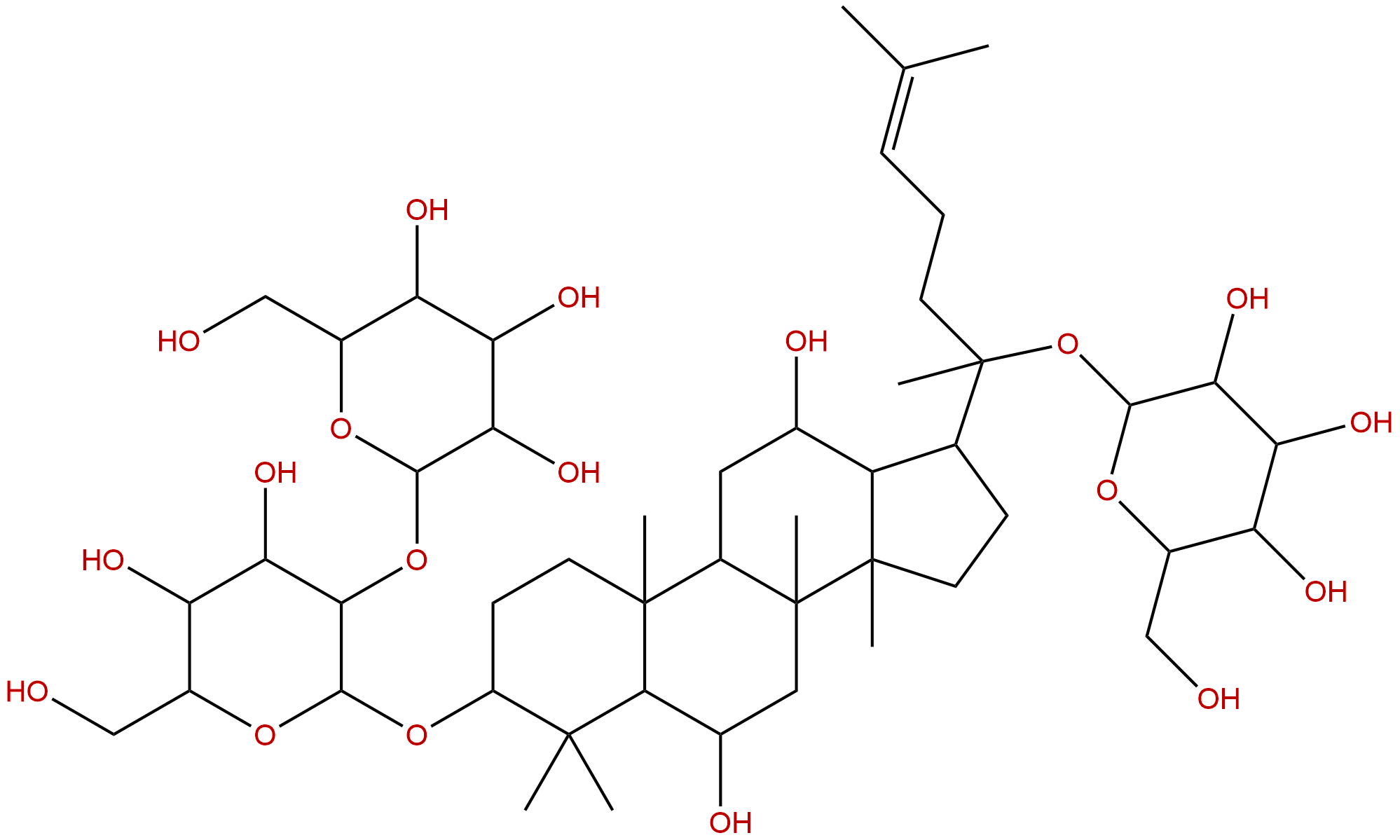
Vietnamese ginseng saponin R4 is a damaane type tetracyclic triterpenoid saponin, with a molecular formula of C ₄₈ H ₈₂ O ₁₉ and a molecular weight of 963.1650. Its structural skeleton is composed of hydrophobic aglycones and hydrophilic sugar chains, which are the structural basis for its biological activity. The glycoside moiety is Protopanaxadiol (PPD), with glycosides attached at positions C-3 and C-20, respectively. Its sugar chain structure may be relatively complex, usually containing monosaccharides such as glucose, arabinose, xylose, etc. This specific glycosylation pattern is considered to be the key to distinguishing it from other ginsenosides (such as Rb1, Rg1) and producing unique activity.
From the analysis of physicochemical parameters related to drug properties, the lipid water partition coefficient (LogP) of Vietnamese ginsenoside R4 is 1.9732, indicating that it has a certain degree of lipophilicity, but overall it still leans towards amphiphilic molecules. Its topological polar surface area (TPSA) is as high as 318.3700 Å ², which is mainly attributed to the abundant hydroxyl and sugar structures in the molecule, leading to its high polarity. The water solubility value is 0.1962 (usually measured in mg/mL or log mol/L, which is a calculated value indicating low solubility), which seems contradictory to the potential hydrogen bonding ability suggested by high TPSA values, but actually reflects the complex dissolution behavior of large molecular saponins under the influence of intramolecular hydrogen bonding and steric hindrance. The high polarity also determines its limited ability to penetrate biological membranes, and its blood-brain barrier permeability is predicted to be "low", meaning it is difficult to enter the central nervous system. In early safety screening, the compound did not show hERG potassium channel inhibitory activity (hERG inhibition: No), indicating a low risk of inducing QT interval prolongation in the heart; The Ames test result is 0.0, indicating preliminarily that it has no direct genetic toxicity. These physicochemical and preliminary safety properties lay the foundation for its subsequent development, but also indicate that improving bioavailability is the core issue that needs to be addressed.
Plant sources and extraction methods
Vietnamese ginsenoside R4 mainly comes from the Panax vietnamensis Ha et Grushv. plant in the Araliaceae family, also known as "Vietnamese Panax notoginseng" or "Pearl ginseng". This plant is mainly distributed in the central plateau region of Vietnam and is an important traditional medicinal plant commonly used for nourishing and strengthening the body, anti fatigue, and anti stress. The saponin composition of Vietnamese ginseng is similar to that of Asian ginseng and Panax notoginseng, but there are significant differences. It contains various unique saponin components, and Vietnamese ginseng saponin R4 is one of them.
The extraction of Vietnamese ginseng saponin R4 from plant materials usually follows the general extraction and separation process of natural saponins. Firstly, medium polarity solvents (such as 70-80% ethanol water solution or methanol) are used to heat reflux extraction or ultrasound assisted extraction of dried Vietnamese ginseng roots to fully extract saponin components. Subsequently, crude extract was obtained by vacuum concentration. The crude extract needs to be further purified, and macroporous adsorption resins (such as D101, AB-8 type) are often used for initial enrichment. Strong polar impurities such as polysaccharides and proteins are removed by washing with water, and then gradient elution is performed with ethanol solutions of different concentrations to collect fractions rich in target saponins.
After obtaining the saponin enrichment site, it is necessary to use modern chromatographic techniques for fine separation. Normal or reverse phase silica gel column chromatography and Sephadex gel (LH-20) column chromatography are often used for repeated separation. Ultimately, the preparation and identification of Vietnamese ginsenoside R4 monomer highly rely on high-performance liquid chromatography (HPLC), especially preparative HPLC, combined with mass spectrometry (MS) and nuclear magnetic resonance (NMR) for structural confirmation. The entire extraction and separation process takes a long time and has a low yield, which is also a common challenge faced by rare saponin research. In the future, developing efficient and environmentally friendly extraction and separation processes (such as high-speed countercurrent chromatography) is crucial for the large-scale acquisition of this compound.
Pharmacological activity research
The pharmacological activity research of Vietnamese ginsenoside R4 is currently mainly focused on the anti-inflammatory field and has shown significant effects in multiple in vitro and in vivo models.
In an in vitro cell model, Vietnamese ginsenoside R4 has a strong inhibitory effect on the inflammatory response of macrophages (such as RAW 264.7 cells) induced by stimuli such as lipopolysaccharide (LPS) and interferon - γ (IFN - γ). Research has shown that it can dose dependently inhibit the excessive production of inflammatory mediators such as nitric oxide (NO) and prostaglandin E2 (PGE2), while downregulating the expression of key inflammatory factors such as IL-6, TNF - α, and interleukin-1 β (IL-1 β) at the gene and protein levels. In addition, in animal models of acute inflammation induced by carrageenan or LPS (such as mouse toe swelling model and acute lung injury model), pretreatment with Vietnamese ginsenoside R4 can significantly reduce tissue edema, inflammatory cell infiltration, and histopathological damage, and lower the levels of pro-inflammatory cytokines in serum or tissue.
In addition to the classic anti-inflammatory model, preliminary studies also suggest that Vietnamese ginsenoside R4 may have a regulatory effect on pain pathways closely related to inflammation. Given that its target involves two important pain sensing ion channels, TRPV1 and TRPA1, it may have analgesic potential, but this requires more specialized pain model studies to confirm. Overall, the existing pharmacological activity data strongly indicate that Vietnamese ginsenoside R4 is a potent natural anti-inflammatory agent, and its activity intensity may be superior to some common ginsenosides.
Mechanism of action and molecular targets
The anti-inflammatory effect of Vietnamese ginsenoside R4 is not achieved through a single pathway, but through multi-target and multi-level network regulation. The existing research has preliminarily outlined the core framework of its mechanism of action, mainly involving the following key targets and signaling pathways:
-
Inhibition of NF - κ B signaling pathway Nuclear factor kappa B (NF - κ B) is the core transcription factor in inflammatory response. Vietnamese ginsenoside R4 can inhibit the activity of IKB kinase (IKBKB), prevent the phosphorylation and degradation of inhibitory protein I κ B, and thus retain NF - κ B dimers (such as p65/RELA) in the cytoplasm, preventing them from entering the nucleus to initiate the transcription of inflammatory genes such as IL-6, TNF, and NOS2 (inducible nitric oxide synthase, iNOS). This is one of the fundamental mechanisms by which it downregulates the expression of various inflammatory mediators.
-
Regulating the JAK-STAT signaling pathway Cytokines such as IL-6 amplify inflammatory signals by activating the JAK-STAT pathway, particularly the phosphorylation and nuclear translocation of STAT3. Vietnamese ginsenoside R4 can interfere with this process, inhibit the activation of STAT3, and thus block the IL-6 mediated inflammatory positive feedback loop.
-
Inhibit inflammasome activation The assembly and activation of inflammasomes (such as NLRP3) can lead to self splicing activation of Caspase-1 (CASP1), which in turn promotes the maturation and secretion of IL-1 β and IL-18. Research has shown that Vietnamese ginsenoside R4 may reduce the release of these potent pro-inflammatory factors by inhibiting the formation of inflammasomes or directly acting on CASP1.
-
Regulating cyclooxygenase and nitric oxide synthase Vietnamese ginsenoside R4 can inhibit the expression of inducible cyclooxygenase (COX-2, encoded by PTGS2) and inducible nitric oxide synthase (iNOS, encoded by NOS2). COX-2 is a key enzyme in the synthesis of PGE2, while iNOS is responsible for producing excess NO. By inhibiting these two enzymatic pathways, this compound directly reduces the production of important inflammatory mediators PGE2 and NO.
-
Affects ion channels As a potential regulator of transient receptor potential vanillic acid subtype 1 (TRPV1) and transient receptor potential anchor protein subtype 1 (TRPA1), Vietnamese ginsenoside R4 may exert anti-inflammatory and analgesic effects at the sensory nerve level by regulating the activity of these ion channels associated with pain and neurogenic inflammation.
In summary, Vietnamese ginsenoside R4 synergistically acts on multiple upstream signaling nodes such as NF - κ B, JAK-STAT, inflammasome, and downregulates downstream effector molecules such as COX-2 and iNOS, constructing a three-dimensional anti-inflammatory network. This may be the molecular basis for its highly efficient anti-inflammatory effect.
Evaluation of drug properties and pharmacokinetics
Although Vietnamese ginsenoside R4 has shown excellent pharmacological activity in vitro and animal models, its drug like and pharmacokinetic (PK) properties are key factors determining its successful development as a drug.
According to its physical and chemical properties analysis, the main challenges faced by this compound are Low oral bioavailability The high TPSA and large molecular weight (>500) severely limit its ability to cross the intestinal epithelial cell membrane through passive diffusion. In addition, ginsenosides are easily degraded by gastric acid in the gastrointestinal tract and serve as substrates for efflux transporters such as P-glycoprotein, further reducing their absorption into the bloodstream. Even if absorbed, it usually undergoes extensive changes in the body Metabolism In particular, the deglycosylation reaction mediated by gut microbiota converts prototype saponins into aglycones (such as PPD) or secondary glycosides, and the activity of these metabolites may differ from the prototype, forming a complex in vivo pharmacological substance basis.
At present, there are few reports on systematic pharmacokinetic studies of Vietnamese ginsenoside R4. Referring to studies on similar ginsenosides such as Rb1 and Rg1, it can be inferred that their prototype drugs may have lower exposure levels, shorter half lives, and limited distribution volumes in the bloodstream. Its poor blood-brain barrier permeability limits its direct application in central nervous system inflammatory diseases, but also reduces the potential risk of central side effects.
To improve its medicinal properties, future research may consider the following strategies: 1)Structural modification On the premise of retaining the pharmacophore, modify the sugar group or prepare prodrug to improve its lipid solubility and membrane permeability; 2)New drug delivery system Develop liposomes, nanoparticles, microemulsions, self microemulsifying drug delivery systems, etc. to improve their solubility and stability, promote intestinal lymphatic absorption or bypass P-glycoprotein efflux; 3)In depth PK/PD research Clarify its in vivo processes, major metabolites, and their activities, establish a correlation between exposure levels and drug efficacy, and provide a basis for dosage form design and optimization of dosing regimens.
Clinical application prospects and prospects
Vietnamese ginsenoside R4, as a natural compound with a clear multi-target anti-inflammatory mechanism, has a clinical application prospect mainly focused on the field of chronic inflammatory diseases.
-
Rheumatoid arthritis (RA) and osteoarthritis (OA)These two diseases are characterized by chronic inflammation of joint synovium and cartilage destruction. Vietnamese ginsenoside R4 is expected to alleviate synovitis, relieve pain, and delay bone destruction by inhibiting key cytokines such as IL-6 and TNF - α, as well as the NF - κ B pathway. It may serve as a supplement or alternative therapy to biologics or traditional anti rheumatic drugs.
-
Inflammatory bowel disease (IBD)Including Crohn's disease and ulcerative colitis. Its inhibitory effect on excessive immune response of intestinal mucosa and regulation of inflammasome activity may help control disease activity and promote mucosal healing.
-
Neuroinflammatory related diseases Although its blood-brain barrier permeability is poor, it may still have indirect or direct protective effects against peripheral inflammation associated with diseases such as Alzheimer's and Parkinson's, or by developing special drug delivery systems to break through the blood-brain barrier.
-
Acute inflammatory injury Such as sepsis, acute lung injury, acute liver injury, etc., their strong anti-inflammatory effects may help control inflammatory storms and improve prognosis.
-
Inflammatory pain By acting on the TRPV1/TRPA1 channel and upstream inflammatory pathways, it may be developed as a novel analgesic drug.
Looking ahead to the future, research and development of Vietnamese ginsenoside R4 need to be deepened in the following areas:
* Deep exploration of mechanisms Using proteomics, metabolomics, and gene editing techniques, further map its complete signal regulatory network and verify its direct target.
* Preclinical comprehensive evaluation Complete toxicology research on the system (acute toxicity, long-term toxicity, reproductive toxicity, etc.) and clarify its safety window.
* Innovation in formulation technology As mentioned earlier, developing advanced delivery systems that are suitable for its physical and chemical properties is the core step in promoting its clinical application.
* Explore combination therapy Studying its synergistic effect with existing anti-inflammatory drugs may reduce the dosage and side effects of existing drugs and improve efficacy.
Conclusion
Vietnamese ginsenoside R4 is a rare saponin with significant research value discovered from the traditional medicinal plant Vietnamese ginseng. Its unique chemical structure endows it with powerful, multi-target synergistic anti-inflammatory pharmacological activity, mainly achieved through the regulation of key signaling pathways such as NF - κ B, JAK-STAT, and inflammasomes. Despite facing challenges similar to most saponin components in terms of drug development, especially in oral absorption and bioavailability, its clear mechanism of action and good preliminary safety indicate its enormous potential as a lead compound for novel anti-inflammatory drugs. With the interdisciplinary integration and technological advancement of natural product chemistry, pharmacology, and pharmacy, Vietnamese ginsenoside R4 is expected to provide a new, naturally derived option for the treatment of chronic inflammatory diseases in the future through structural optimization, dosage form innovation, and in-depth systems biology research, continuing the outstanding contribution of ginseng plants in the field of human health.