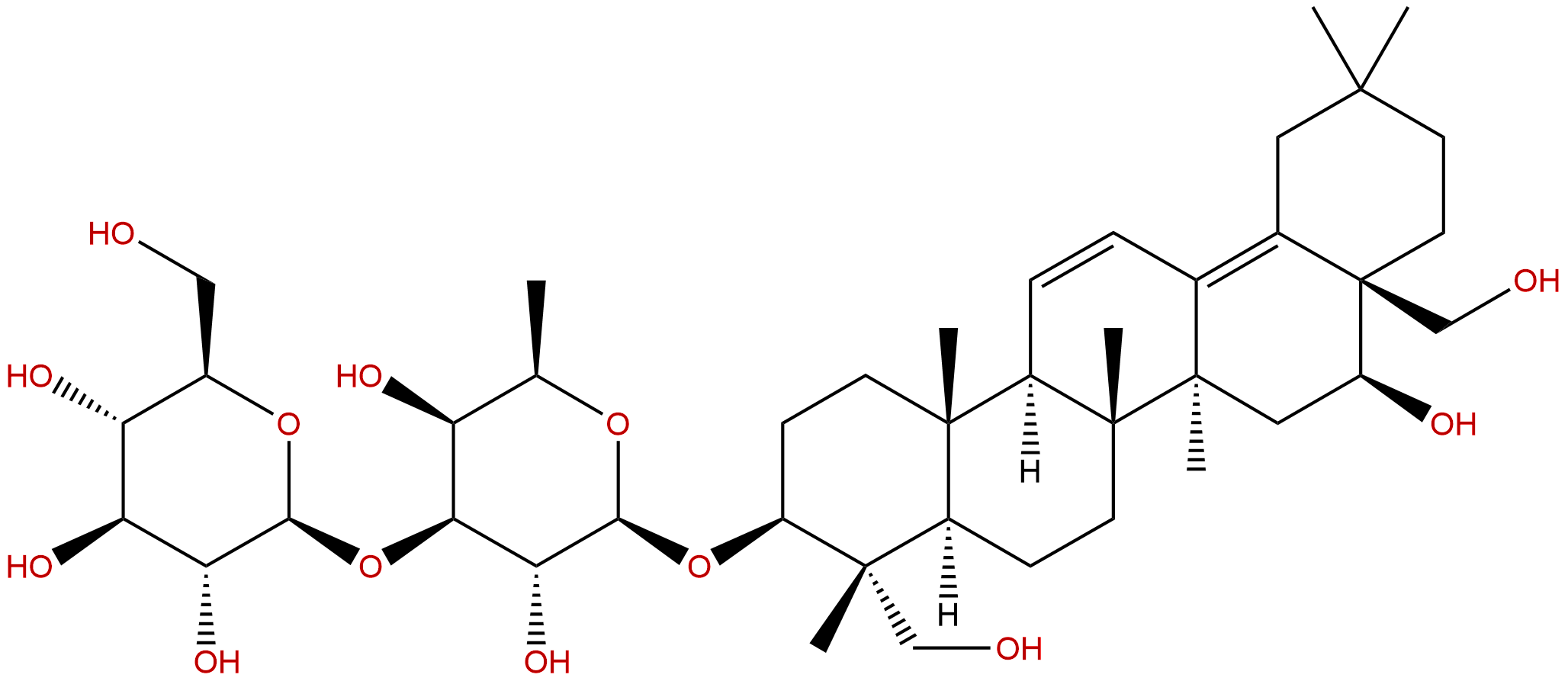


Product name: Saikosaponin B1
Synonym name:
Catalogue No.: BP1239
Cas No.: 58558-08-0
Formula: C42H68O13
Mol Weight: 780.993
Botanical Source: Bupleuri Radix
Physical Description:
Type of Compound: Triterpenoids
Purity: 95%~99%
Analysis Method: HPLC-DAD or/and HPLC-ELSD
Identification Method: Mass, NMR
Packing: Brown vial or HDPE plastic bottle
Storage: Store in a well closed container, protected from air and light. Put into refrigerate or freeze for long term storage.
Whenever possible, you should prepare and use solutions on the same day. However, if you need to make up stock solutions in advance, we recommend that you store the solution as aliquots in tightly sealed vials at -20℃. Generally, these will be useable for up to two weeks.
The product could be supplied from milligrams to grams
Inquire for bulk scale.
Description:
Saikosaponin B1 may be as anti-schizophrenic candidate drugs, it can suppress the signal transduction after binding of EGF.
References:
Biomed. Chromatogr., 2015, 30(3):191-6.
Recognition and identification of active components from Radix Bupleuri using human neuroblastoma SH-SY5Y cells
Aim to screen active components of Radix bupleuri (a traditional Chinese herb) and discover novel anti-schizophrenic candidate drugs by using human neuroblastoma SH-SY5Y cells. SH-SY5Y cells were used for preparation of the stationary phase in the Cell Membrane Chromatography (CMC) model.
METHODS AND RESULTS:
Retention components by the SH-SY5Y/CMC model were collected and then analyzed by GC/MS under the optimized conditions in offline conditions. After investigating the suitability and reliability of the SH-SY5Y/CMC method using amisulpride and haloperidol as standard compounds, this method was applied to screening active components from the extracts of Radix bupleuri. Retention components of SH-SY5Y/CMC model were saikosaponin A, Saikosaponin B1, saikosaponin B2, saikosaponin C and saikosaponin D, which were identified by the GC/MS method. In vitro pharmacological trials-MTT, Saikosaponin B1, saikosaponin B2 and saikosaponin C could protect SY5Y cells. The protect effect of Saikosaponin B1 and saikosaponin C were concentration dependent. Saikosaponin A and saikosaponin D inhibited cell viability at concentrations greater than 30 μg/mL (P<0.05). Via SH-SY5Y/CMC method and SH-SY5Y MTT trial, we rapidly detected target components from Radix bupleuri, accurately identified them and found out their different effects on SH-SY5Y cells.
CONCLUSIONS:
Saikosaponin B1, saikosaponin B2 and saikosaponin C may be as anti-schizophrenic candidate drugs.
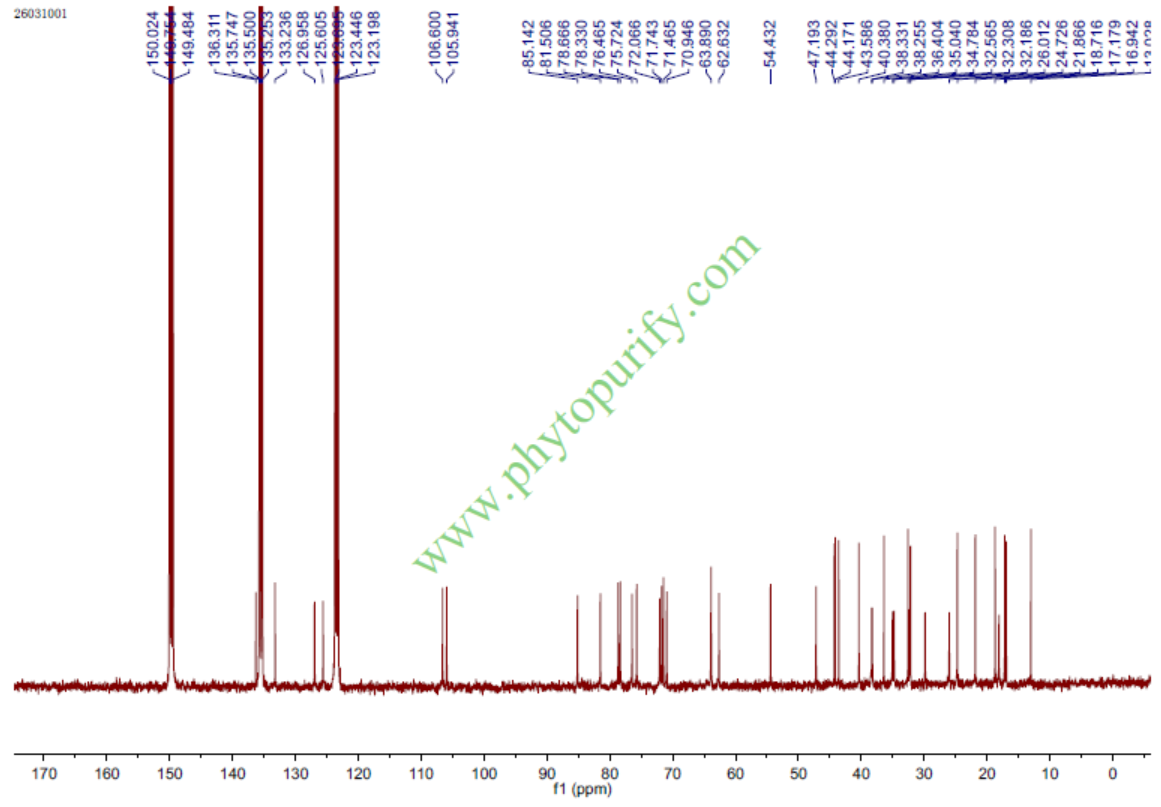
NMR of Saikosaponin B1
Storage conditions:Short-term storage at 2~8℃, long-term storage at -20 ~ -80℃
218.9900
2.7154
2.7151
.0432
.5769
.5870
Low
72.8022
6.0658
No
No
No
No
No
No
0.0
Yes
No
No
Yes
Chaihu, as the original plant source of traditional Chinese medicine "Chaihu", has a clinical application history of more than two thousand years. It is mainly used to treat fever, liver depression and qi stagnation, chest and rib distension and pain. Modern pharmacological research reveals that the various biological activities of Bupleurum chinense are mainly attributed to a class of triterpenoid saponins it is rich in - saikosaponin. Among them, Saikosaponin B1 (SSB1, CAS: 58558-08-0), as an important member of the saikosaponin family, has attracted much attention in recent years due to its diverse pharmacological activities and unique mechanism of action. Research has shown that SSB1 is not only an agonist of the 5-hydroxytryptamine 2C (5-HT2C) receptor, but also effectively inhibits the Hedgehog (Hh) signaling pathway by targeting SMO proteins, demonstrating significant potential for anti liver fibrosis and anti-tumor effects (such as medulloblastoma). In addition, its potential antiviral activity has opened up new directions for its pharmacological research. This article aims to systematically review the chemical structure, plant origin, pharmacological activity, molecular mechanism, pharmacological evaluation, and clinical application prospects of saikosaponin B1, in order to provide comprehensive scientific references for the in-depth research and development of this natural product.
Chaihu saponin B1 is an oleane type pentacyclic triterpenoid saponin. Its molecular formula is C42H68O14 and its molecular weight is 780.9930. Its basic skeleton is oleanolic acid, with sugar chains connected at positions C-3 and C-28, respectively. Specifically, its sugar moiety is usually composed of monosaccharides such as glucose and fucoidan, and this specific glycosylation pattern is the key structural basis for its biological activity.
In terms of physical and chemical properties, calculations and experimental data indicate that the logarithm of the lipid water partition coefficient (LogP) of SSB1 is approximately 2.7154, indicating a certain degree of lipophilicity but not high lipid solubility. Its topological polar surface area (TPSA) is as high as 218.99 Å ², which is mainly attributed to the large number of hydroxyl and glycosidic oxygen atoms in the molecule, resulting in strong polarity. This characteristic also directly affects its water solubility. According to reports, its water solubility is relatively low, about 0.0432 mg/mL, which may limit its bioavailability to some extent. In addition, preliminary predictions of drug efficacy indicate that SSB1 has a lower ability to cross the blood-brain barrier, suggesting that its direct effects on central nervous system diseases may require special delivery strategies. It is worth noting that preliminary toxicity predictions indicate that SSB1 has no significant inhibitory effect on hERG potassium channels (hERG inhibition: No), and the Ames test result is 0.0, suggesting that it may not have mutagenicity and potential cardiac toxicity risks, providing preliminary positive signals for its safety evaluation.
Chaihu saponin B1 mainly comes from the dried roots of plants in the Apiaceae family, such as Bupleurum chinense DC. and Bupleurum scorzonerifolium Willd. Different varieties, origins, harvest seasons, and processing methods can all affect the content and proportion of saponins in Bupleurum chinense.
Extracting SSB1 from plant materials typically follows the conventional process of natural product chemistry. Firstly, crush the dried Chaihu root and extract it using an appropriate solvent. The most commonly used method is the alcohol extraction method, such as using methanol, ethanol, or a certain concentration of ethanol water solution for reflux extraction or ultrasound assisted extraction to efficiently dissolve saponin components. Subsequently, the extract was concentrated under reduced pressure to obtain a paste. Due to the complex composition of total saponins in Bupleurum chinense, multiple separation and purification techniques are required to obtain high-purity SSB1. The commonly used methods include:
1. Solvent Extraction Method Using the distribution difference of saponins in n-butanol and water, extract the concentrated aqueous solution with n-butanol to enrich saponins.
2. Column chromatography This is a crucial step in obtaining monomeric compounds. Silica gel column chromatography, reverse phase silica gel column chromatography (such as ODS-C18), macroporous adsorption resins (such as D101, AB-8), etc. are commonly used to perform gradient elution in solvent systems of different polarities, gradually separating each component.
3. High performance liquid chromatography method As the ultimate purification method, preparative high-performance liquid chromatography (Prep HPLC) can efficiently and high-resolution separate structurally similar saponins, and is the standard method for obtaining chromatographically pure SSB1.
In recent years, some green extraction techniques such as supercritical fluid extraction and microwave-assisted extraction have also been explored, aiming to improve extraction efficiency and reduce the use of organic solvents.
Numerous in vitro and in vivo studies have shown that saikosaponin B1 has broad and significant pharmacological activities.
Anti hepatic fibrosis effect Liver fibrosis is a pathological process of excessive deposition of extracellular matrix after chronic liver injury. Research has shown that SSB1 can significantly reduce collagen deposition and improve liver function indicators in experimental animal liver fibrosis models induced by carbon tetrachloride (CCl4) or bile duct ligation. Its function is closely related to inhibiting the activation and proliferation of hepatic stellate cells, and reducing the expression of pro fibrotic factors.
Antitumor activity SSB1 exhibits inhibitory activity against various tumor cells, particularly in tumors that rely on the Hedgehog signaling pathway. Research has confirmed that SSB1 can effectively inhibit the proliferation of medulloblastoma cells and induce their apoptosis. In addition, it also has inhibitory effects on the growth of cell lines such as liver cancer and lung cancer, indicating its broad-spectrum anti-tumor potential.
Antiviral potential Based on the provided target information, SSB1 may exert antiviral effects by acting on multiple key proteins in the viral lifecycle. These potential targets include:
Neurological system related activities As an agonist of 5-HT2C receptors (EC50=147.41 μ M), SSB1 may have a regulatory effect on diseases related to 5-HT2C receptor function, such as anxiety, depression, and obesity. However, its low blood-brain barrier permeability requires further verification or improvement through structural modification of its direct effects on the central nervous system.
Anti inflammatory and immune regulation Chaihu saponins generally have anti-inflammatory effects. SSB1 can exert anti-inflammatory effects by inhibiting inflammatory signaling pathways such as NF - κ B and MAPK, reducing the production of pro-inflammatory cytokines such as TNF - α and IL-6. This is related to its partial mechanisms of anti liver fibrosis and anti-tumor effects.
The pharmacological effects of saikosaponin B1 stem from its interactions with multiple key biomolecules, and its mechanism of action network is becoming increasingly clear.
Inhibition of Hedgehog signaling pathway This is one of the core mechanisms of SSB1 anti-tumor therapy, especially in medulloblastoma. The Hh pathway is crucial in embryonic development and tumorigenesis. SSB1 has been shown to directly target and bind to the transmembrane protein Smoothened (SMO), thereby inhibiting the activity of SMO and preventing the activation of its downstream transcription factor Gli, ultimately leading to downregulation of Hh pathway target genes (such as Cyclin D1, Bcl-2, etc.), inhibiting tumor cell proliferation and inducing apoptosis.
Exciting 5-HT2C receptors 5-HT2C receptor is a member of the G protein coupled receptor family, widely distributed in the central and peripheral regions. SSB1, as an agonist of this receptor, may affect neuronal excitability, neurotransmitter release, and energy metabolism balance by activating downstream phospholipase C (PLC) signals, providing a molecular basis for its application in psychiatric and metabolic disorders.
Regulating fibrosis related signaling pathways In terms of anti liver fibrosis, the role of SSB1 involves multiple pathways. It can inhibit the TGF - β 1/Smad signaling pathway, which is the core pathway for hepatic stellate cell activation and collagen synthesis. Meanwhile, it can also regulate pathways such as PI3K/Akt and Wnt/β - catenin, jointly inhibiting the transformation of myofibroblasts and the generation of extracellular matrix.
Potential targets for antiviral effects As mentioned earlier, SSB1 may function by interfering with multiple stages of the virus replication cycle. For example, inhibiting HIV protease or integrase can block virus maturation and genome integration; Interference with the DNA polymerase or TK of herpes virus can inhibit its DNA replication; Blocking CCR5/CXCR4 can prevent HIV from entering host cells. These mechanisms of action are mostly based on their potential interactions with these viral proteins and require further biochemical and cellular experiments to confirm.
Inducing cell apoptosis and autophagy SSB1 can induce apoptosis in tumor cells through the mitochondrial pathway (regulating the Bcl-2/Bax ratio and activating Caspase-3) or the death receptor pathway. In addition, studies have suggested that it may regulate cellular autophagy levels and promote tumor cell death in specific environments.
Despite the significant pharmacological activity of saikosaponin B1, its medicinal properties still face challenges, mainly related to its physicochemical properties and pharmacokinetic behavior.
Absorption, distribution, metabolism, excretion:
Challenges and Strategies in Drug Development:
At present, there are insufficient reports on preclinical pharmacokinetic studies of the SSB1 system, which is a gap that must be filled as it moves towards drug development.
The multi-target properties of saikosaponin B1 provide broad prospects for its application in various disease fields, but its transformation still requires solid research work to pave the way.
Potential therapeutic areas:
Future research directions:
Chaihu saponin B1, as a natural active ingredient discovered from the traditional Chinese medicine Chaihu, has become a highlight in natural product pharmacology research due to its unique chemical structure and multiple pharmacological effects. From inhibiting the Hh pathway to anti-tumor effects, to activating 5-HT2C receptors, anti liver fibrosis, and potential antiviral activity, its multi-target mode of action reflects the advantages of natural products in the treatment of complex diseases. However, its inherent physical and chemical properties, as well as its yet to be fully understood pharmacokinetic characteristics, are also challenges that must be addressed and overcome in the process of its clinical drug conversion. In the future, through interdisciplinary collaboration and the use of modern research methods in medicinal chemistry, pharmacy, molecular biology, and clinical medicine, the mysteries of the action of SSB1 will be deeply revealed, and its shortcomings will be reasonably optimized. It is expected that this ancient natural molecule will be transformed into modern drugs with clear efficacy and good safety, bringing new treatment options for patients with related diseases.
