


Product name: Pseudoginsenoside RT5
Synonym name:
Catalogue No.: BP1165
Cas No.: 98474-78-3
Formula: C36H62O10
Mol Weight: 654.882
Botanical Source: Ginseng Radix Et Rhizoma
Physical Description:
Type of Compound: Triterpenoids
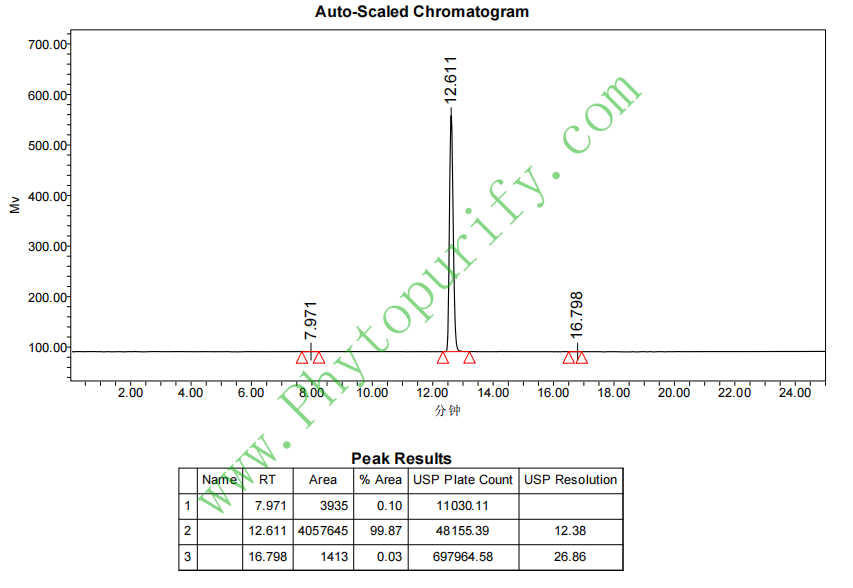
Purity: 95%~99%
Analysis Method: HPLC-DAD or/and HPLC-ELSD
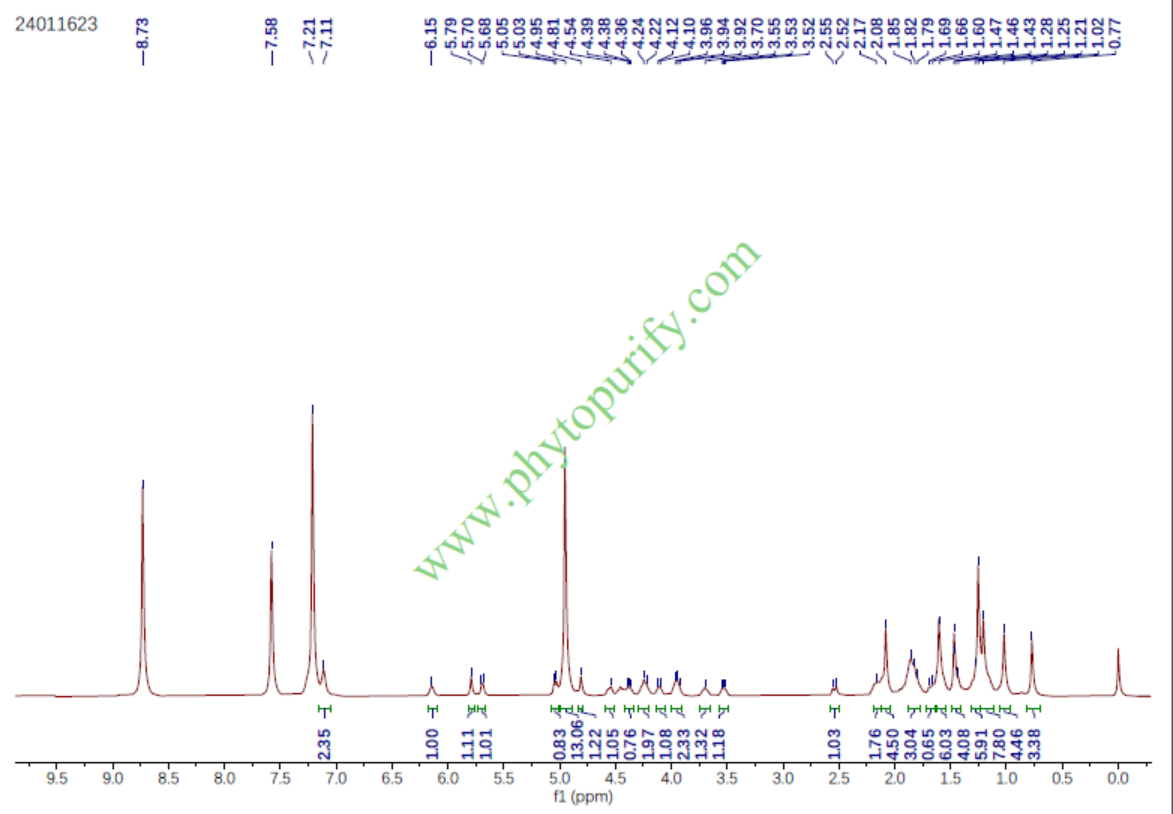
Identification Method: Mass, NMR
Packing: Brown vial or HDPE plastic bottle
Storage: Store in a well closed container, protected from air and light. Put into refrigerate or freeze for long term storage.
Whenever possible, you should prepare and use solutions on the same day. However, if you need to make up stock solutions in advance, we recommend that you store the solution as aliquots in tightly sealed vials at -20℃. Generally, these will be useable for up to two weeks.
The product could be supplied from milligrams to grams
Inquire for bulk scale.
Chengdu Biopurify Phytochemicals Ltd. is a leading company in the research, development, manufacture and marketing of High Quality Phytochemicals and Extracts(especially Active Ingredients from Traditional Chinese Medicine,TCM), Natural Active Pharmaceutical Ingredients worldwide.
The main services:
A. Supply active ingredients and reference standards of TCM, from mgs to kgs scale
B. Custom extraction and purification, target Herb Active Ingredients
C. Custom synthesis and semi-synthesis for Natural Active Ingredients
D. CR(contract research), CM(contract manufacture) and PD(process development) services from lab scale, pilot scale to commercial scale(GMP is also available)
E. TCM compounds library for drug screen,more than 3000 compounds available, many of them are rare and unique.
HPLC of Pseudoginsenoside RT5
HNMR of Pseudoginsenoside RT5
Storage conditions:Short-term storage at 2~8℃, long-term storage at -20 ~ -80℃
169.3000
2.8325
2.8325
.0157
.6860
.4603
Low
68.7186
5.6243
No
No
No
No
No
No
0.0
Yes
No
No
No
Cardiovascular disease (CVD) is the leading cause of death and disability worldwide, with a complex pathological process involving inflammation, oxidative stress, lipid metabolism disorders, endothelial dysfunction, and multiple other factors. Despite significant progress in modern drug therapy, the search for new therapeutic drugs that are efficient, multi-target, and have minimal side effects remains a current research focus. Natural products, especially the active ingredients in traditional medicinal plants, have become an important source of new drug discovery due to their structural diversity and multi-target action characteristics. Ginseng plants (Panax spp.), such as American ginseng (Panax quinquefolium), have long been renowned in traditional medicine and are widely used to replenish qi, strengthen the heart, and enhance the body's resistance. Its main bioactive ingredient, ginsenosides, has been proven to have a wide range of pharmacological effects, including neuroprotection, anti-tumor, and cardiovascular protection.
Pseudoginsenoside RT5, a rare saponin compound isolated from American ginseng, has attracted attention in recent years due to its potential cardiovascular protective activity. Compared with common ginsenosides Rb1, Rg1, etc., the anthropomorphic ginsenoside RT5 has unique chemical structure, which may lead to its differentiated biological activity and mechanism of action. Preliminary studies have shown that it exhibits multiple effects such as anti-inflammatory, antioxidant, regulating lipid metabolism, and improving endothelial function by regulating multiple molecular targets closely related to cardiovascular health. This article aims to systematically review the chemical properties, plant sources, pharmacological activities, molecular mechanisms of action, medicinal properties, and application prospects of ginsenoside RT5 in the prevention and treatment of cardiovascular diseases, in order to provide comprehensive scientific references for the in-depth research and development of this compound.
Anthropomorphic ginsenoside RT5 is a triterpenoid saponin compound with the chemical name (3 β, 12 β) -12,20-dihydroxydamam-24-en-3-yl O - β - D-glucopyranosyl - (1 → 2) - O - β - D-glucopyranoside. Its CAS registration number is 98474-78-3.
Structurally, the anthropomorphic ginsenoside RT5 is composed of a dammarane type tetracyclic triterpenoid glycoside (sapogenin), with a sugar chain connected at positions C-3 and C-20. The C-3 position is connected to a disaccharide chain, which is formed by one molecule of glucose (Glc) being linked to another molecule of glucose through a β -1,2 glycosidic bond, forming the structure of Glc (β 1 → 2) Glc. This specific glycosylation pattern is one of its key features that distinguishes it from other ginsenosides, such as Rb1 with Glc (β 1 → 2) Glc at the C-3 position, but with different numbers of sugar chains and connection positions. The C-20 position is usually connected to a hydroxyl or other sugar group, and in RT5 it is a hydroxyl group. This unique glycosylation modification has a decisive impact on its solubility, cell membrane permeability, and biological activity.
Its molecular weight is 654.8820 g/mol. The calculated lipid water partition coefficient (LogP) is 2.8325, indicating that the compound has a certain degree of lipophilicity, but not high hydrophobicity. The topological polar surface area (TPSA) is 169.30 Å ², reflecting the strong polarity brought by multiple hydroxyl and sugar rings in the molecule. The water solubility value is relatively low, about 0.0157 mg/mL, which is consistent with its saponin structure. Although it contains hydrophilic sugar groups, the larger glycoside skeleton limits its free dissolution in water, and usually requires the use of co solvents or special dosage forms to improve bioavailability. These basic physicochemical parameters are important starting points for evaluating its drug development potential.
The anthropomorphic ginsenoside RT5 is mainly isolated from the roots of the Panax quinquefolius L. plant in the Araliaceae family. American ginseng is mainly produced in North America and some parts of China. Its chemical composition is similar to that of Asian ginseng (Panax ginseng C.A. Mey.), but there are also characteristic differences. One of them is the anthropomorphic ginsenoside RT5, which has a relatively low content and is a rare saponin.
The extraction and isolation of ginsenoside RT5 from plant materials usually follow the conventional process of natural product chemistry, but optimization is needed based on its characteristics:
1. Extract Solvent extraction method is usually used. Dry ginseng root powder is first subjected to reflux extraction or ultrasound assisted extraction with methanol, ethanol, or ethanol water mixed solution to fully dissolve the saponin components. In recent years, green extraction techniques such as supercritical CO ₂ extraction have also been applied, but their efficiency in extracting polar saponins needs to be improved by adding entrainers (such as ethanol).
2. Enrichment and Coarse Separation The extract is concentrated under reduced pressure to obtain a paste. Due to the complex composition of the extract, macroporous adsorption resins (such as D101, AB-8) are often used for initial enrichment. Wash with water to remove strong polar impurities such as polysaccharides and proteins, and then perform gradient elution with different concentrations of ethanol (such as 30% -70%). Saponins are usually eluted in this range.
3. Separation and Purification The enriched saponin sites require further fine separation. Commonly used techniques include silica gel column chromatography with normal or reverse phase, and high-performance liquid chromatography (HPLC) with reverse phase C18 preparation. The separation of anthropomorphic ginsenoside RT5 requires high-resolution chromatographic conditions, typically using acetonitrile water or methanol water as mobile phases for gradient elution. The separation process was monitored by thin layer chromatography (TLC) or high-performance liquid chromatography evaporative light scattering detector/mass spectrometry (HPLC-ELSD/MS) to obtain high-purity ginsenoside RT5 monomer. Its structure was identified and confirmed by spectroscopic techniques such as nuclear magnetic resonance (NMR, including ¹ H-NMR, ¹ ³ C-NMR, 2D-NMR) and mass spectrometry (MS).
Numerous in vitro and in vivo pharmacological studies have shown that the anthropomorphic ginsenoside RT5 exhibits multiple beneficial activities in cardiovascular system protection.
1. Endothelial protection and anti atherosclerosis Endothelial dysfunction is the initial link of atherosclerosis (AS). Research has found that the anthropomorphic ginsenoside RT5 can significantly inhibit the upregulation of vascular cell adhesion molecule-1 (VCAM1) and intercellular adhesion molecule-1 (ICAM1) expression in human umbilical vein endothelial cells (HUVECs) induced by tumor necrosis factor - α (TNF - α) or oxidized low-density lipoprotein (ox LDL). These two types of adhesion molecules are crucial in the process of leukocyte recruitment and adhesion to blood vessel walls. By downregulating its expression, RT5 reduces the adhesion between monocytes and endothelial cells, which may delay the formation of early AS lesions. In animal models such as ApoE ⁻/⁻ mouse high-fat diet model, administration of RT5 has also been observed to reduce aortic plaque area and improve endothelial dependent vasodilation function.
2. Anti inflammatory and antioxidant stress Chronic low-grade inflammation is the core mechanism that runs through cardiovascular diseases. RT5 can inhibit the activation of the nuclear factor kappa B (NF - κ B) signaling pathway and reduce the production of downstream pro-inflammatory factors such as interleukin-6 and TNF - α. At the same time, it can enhance the intracellular antioxidant defense system, such as upregulating the activity of superoxide dismutase (SOD) and glutathione peroxidase (GSH Px), reducing the levels of reactive oxygen species (ROS) and malondialdehyde (MDA), thereby alleviating the damage of oxidative stress to myocardial cells and endothelial cells.
3. Regulating lipid metabolism Hyperlipidemia is an important risk factor for cardiovascular disease. Research suggests that the anthropomorphic ginsenoside RT5 may regulate cholesterol metabolism by affecting targets related to cholesterol synthesis, such as 3-hydroxy-3-methylglutaryl-CoA reductase (HMGCR). In cellular or animal models, RT5 shows a trend of reducing total cholesterol (TC), triglycerides (TG), and low-density lipoprotein cholesterol (LDL-C) levels.
4. Myocardial protective effect In myocardial ischemia/reperfusion (I/R) injury or drug-induced cardiomyopathy models, pretreatment with ginsenoside RT5 can reduce myocardial infarction area, inhibit myocardial cell apoptosis, and improve cardiac function. Its protective effect is related to activating survival signaling pathways (such as PI3K/Akt) and inhibiting mitochondrial apoptosis pathways.
5. Potential for blood pressure regulation Angiotensin converting enzyme (ACE) is a key enzyme in the renin-angiotensin system (RAS), and inhibition of its activity can lead to vasodilation and a decrease in blood pressure. Molecular docking and partial enzyme activity experiments indicate that RT5 may have a certain affinity for the ACE active site, suggesting its potential ACE inhibitory activity, but further functional experiments are needed for verification.
The cardiovascular protective effect of anthropomorphic ginsenoside RT5 is not achieved through a single target, but acts on a complex network, and its known or potential targets include:
In summary, the pharmacological basis for the cardiovascular protection of the anthropomorphic ginsenoside RT5 has been established through multi-target synergistic effects, including inhibition of inflammation and oxidative stress, protection of endothelial function, regulation of lipid metabolism, and inhibition of myocardial cell apoptosis.
Based on the provided parameters and existing knowledge, a preliminary evaluation of the pharmacological properties of ginsenoside RT5 is conducted
At present, there are insufficient public reports on the pharmacokinetic studies of the ginsenoside RT5 system (such as absolute bioavailability, tissue distribution, half-life, etc.), which is a key data gap that must be filled for its development.
Anthropoid ginsenoside RT5, as a natural compound with multi target cardiovascular protective activity, has broad clinical application prospects, but also faces challenges.
Potential application directions:
1. Primary/Secondary Prevention of Cardiovascular Diseases As a dietary supplement or functional food ingredient, it is used for people with cardiovascular risk factors (such as mild dyslipidemia and early endothelial dysfunction) to exert its multifaceted protective effects.
2. Adjuvant therapy drugs Combined use with existing first-line cardiovascular drugs such as statins and ACEI/ARBs may result in synergistic effects, especially for refractory or high-risk patients. Its different mechanisms of action may compensate for the shortcomings of existing drugs, such as the muscle side effects of statins and inadequate inflammation control of certain drugs.
3. Develop new compound traditional Chinese medicine or herbal medicine Using it as the main active ingredient, combined with other natural products with synergistic effects, develop new Chinese medicine or herbal medicine for diseases such as coronary heart disease, hypertension, heart failure, etc.
4. Treatment for specific pathological conditions: Based on its strong anti-inflammatory and endothelial protective properties, it may have a unique effect on inflammatory dominated vascular diseases such as early atherosclerosis and vascular complications of diabetes.
Challenges faced and future research directions:
1. Improved bioavailability This is the biggest bottleneck in its development into a drug. Future research needs to focus on novel drug delivery systems, such as nanocrystals, liposomes, self microemulsions, phospholipid complexes, etc., to improve their solubility and intestinal permeability.
2. In depth pharmacological and mechanistic research of the system Existing research is mostly preliminary exploration, requiring more rigorously designed in vivo disease models (such as AS models at different stages and heart failure models) to be studied, and precise validation of their interactions with various targets and upstream and downstream signaling pathways using gene knockout, specific inhibitors, and other methods.
3. Comprehensive pharmacokinetic and toxicological evaluation Systematic ADME and GLP toxicology studies that meet drug registration requirements must be conducted to clarify their in vivo processes, safe dosage ranges, and potential toxicity.
4. clinical research After completing sufficient preclinical research, gradually advance human clinical trials (phases I-IV) to verify their safety and efficacy.
5. Chemical modification and structural optimization Using it as the parent nucleus for rational chemical structural modification, aiming to enhance activity, improve pharmacokinetic properties, and reduce potential toxicity, is an effective way to discover better candidate drugs.
The anthropomorphic ginsenoside RT5 is a natural product with significant research value discovered from the traditional medicinal plant Panax ginseng. Its unique chemical structure endows it with multi-target and multi segmental pharmacological activities to intervene in the pathological process of cardiovascular disease, covering multiple aspects such as endothelial protection, anti-inflammatory and antioxidant effects, lipid regulation, and myocardial protection. Of particular importance is that the preliminary pharmacological parameters indicate no risk of hERG inhibition or Ames mutagenicity, indicating a high safety threshold. Despite challenges in terms of bioavailability, with the advancement of formulation technology and a deeper understanding of its mechanism of action, through rational drug design and development strategies, the anthropomorphic ginsenoside RT5 is expected to be developed into a novel drug or functional product for the prevention and treatment of cardiovascular diseases. It is not only a modern scientific footnote to explain the traditional effects of Western ginseng on "tonifying qi and nourishing yin, clearing heat and generating fluids", but also provides new candidate molecules and ideas for discovering guardians of the cardiovascular system from the natural treasure trove. Future research requires interdisciplinary collaboration to jointly drive this promising compound from the laboratory to clinical applications.
